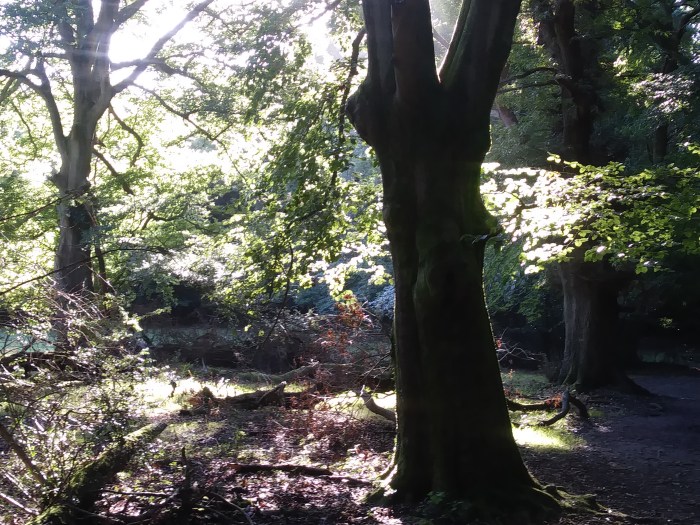
A YEAR ago, we spend two months quietly chronicling daily life in the Chilternsat the tail end of the year.
Those precious “mindfulness moments” were inspired by the glorious photographs of our regular contributors and provided a welcome opportunity for thoughtful reflection about the natural world around us.
Our hectic lives offer few such chances to allow our minds to wander away from the cares and tribulations of our daily routines, and our December reverie allowed us time to consider the glorious plumage of kingfishers, the supposed slyness of foxes and the cleverness of goldfinches and pigeons.
Amid the bare branches of winter trees or traversing flooded footpaths, there was time to contemplate forest law in the era of the Norman kings, reflect on why the sky appears so blue and explore the extraordinary history of the prickly teasel, which once played such a central role in the nation’s cloth production.
PICTURE POSTCARD: dawn at Coleshill PICTURE: Lesley Tilson
Against the warm yellow backdrop of ancient cottage windows, December days offer a range of moments to cherish: the smell of woodsmoke drifting across the fields, the lure of a roaring fire in a friendly pub or the cawing of rooks on a dusk walk along a darkened country lane.
From elegant egrets and colourful jays to chattering parakeets and territorial robins, there are plenty of feathered friends around to distract our attention while we ponder about the talents of ancient Babylonian stargazers, misty legends in foggy forests or the traditions associated with the winter solstice…
BLUEBELLS. If there’s one word which conjures up the Chilterns landscape in spring, it’s the flowers that have become such an intrinsic part of our woodland heritage.
SITTING PRETTY: bluebells among the trees PICTURE: Sue Craigs Erwin
And if there’s one abiding positive image which emerged during that horrendous lockdown month of April 2020, it will be those vistas of bluebells dancing in the local woods.
POSITIVE IMAGE: bluebells in the woods
We were lucky, of course. Living on the edge of open country, it was easy to disappear into the woods for our vital daily permitted escape from the house.
And what a great healer nature was during those difficult months. From the deluge of Twitter and Instagram pictures being shared from woodlands across the Chilterns, it seems we were not alone in finding this a welcome respite from the grim tally of deaths and infections on the news feeds.
CARPET OF COLOUR: respite from the news
It’s not a luxury we took for granted either – friends in Italy, Spain, China and Argentina were under virtual house arrest, unable to get out for anything more than a tightly controlled shopping trip.
Not to mention those trapped on cruise ships or stranded in a drab hotel in a foreign country stressing about how to get home.
CALL OF THE WILD: woods were a blaze of colour
But those walks offered so much more than just a welcome escape from the house, a breath of fresh air and all-important exercise.
From the moment that the prime minister addressed the nation on March 23 about government plans to take unprecedented steps to limit the spread of coronavirus, it was clear we were in uncharted and scary territory – not just in the UK, but all over the world.
UNCHARTED TERRITORY: lockdown begins PICTURE: Sue Craigs Erwin
Doubtless many volumes will be written about the awful spring of 2020, and it’s hard to write anything positive about that time without being conscious of the terrible human toll – some 27,500 deaths in the UK by the end of April, with all the associated individual family tragedies those figures reflect.
For a while, it felt as if we might be joining the statistics. A long feverish weekend paved the way to a fortnight of slow recovery. But lying in the night coughing and sweating, listening to relentless government press conferences and stories of doom from around the world, it was all too easy to succumb to the paranoia.
NATURAL HEALER: the great outdoors
Every cough and tickle took on a new significance. What if there was a problem breathing? Would this mean dying on a ventilator in a hospital unable to say anything to your nearest and dearest? And the social media feeds didn’t help – this was real, and friends around the world were already having to cope with the loss of loved ones.
Thankfully, the symptoms subsided and strength returned. And nothing felt quite so exhilarating as the fresh air of that first tentative walk, even if we couldn’t smell the flowers.
FIRST STEPS: the road to recovery PICTURE: Sue Craigs Erwin
It made those bluebell paths all the more enchanting, of course, a month-long carpet of colour on so many of our local paths…English bluebells, naturally, so long associated with the ancient woodlands of the Chilterns and a constant source of inspiration for local artists like Jo Lillywhite (below), whose paintings reflect the landscapes near her home in South Oxfordshire.
INSPIRATION: one of Jo’s paintings
As our first steps outdoors became a little more confident and we managed to stray further from home, there were new copses and paths to discover.
Enchanting and iconic, bluebells are said to be a favourite with the fairies – and the violet glow of these bluebell woods is an incredible wildflower spectacle that really does lift the spirits and warm the heart.
SPRING SPECTACLE: bluebells in Hodgemoor Woods
“There is a silent eloquence/In every wild bluebell” wrote a 20-year-old Anne Bronte in 1840.
The vivid hues may have begun to fade by the end of April, but the secret beauty of our ancient local woods helped to set us firmly on the road to recovery back in 2020 and provided a welcome gentler vision of a terrible month which will haunt so many for years to come.
ELOQUENT: bluebells delight the senses
Five years on, and paths across the Chilterns are set to spring into colour when April arrives.
From Henley to Cliveden, from the Ashridge Estate to Wendover, private gardens, huge estates and public nature reserves start to put on stunning displays, many of which will last well into May.
ELOQUENT: an April wander in the woods
Poets have written of blue bonnets, silken bells and dancing sapphires, waves of mystical blue and the fragrance of a thousand nodding heads.
It’s not hard to see why these modest blue flowers have won such a precious place in our hearts. As Anne Bronte realised, their “silent eloquence” still speaks volumes about the wonders of the natural world and the beauty of the ancient woodlands we are so blessed to know and love.
THERE’S no sound which better captures the atmosphere of the woods at night than the hoot of an owl.
NIGHT OWL: a little owl silhouetted against the moon PICTURE: Steve Gozdz
But even when they are at their loudest and most active, these nocturnal hunters are not always easy to spot – and there are even some popular misconceptions about the noises they make too.
LOCAL FAVOURITE: a little owl poses for the camera PICTURE: Steve Gozdz
Like that “twit – twoo” we so often mimic, for example, is not one owl, but two different owls calling – the high-pitched “kee-wick” of the female tawny owl, which is responded to by the “hoohoo” or “twoooo” note of the male.
Owls have evolved as specialised hunters with a wide range of skills to help them locate and catch their prey. Each species has a range of incredible “superpowers” that many other birds do not possess, but which give owls the ‘tools’ they need to survive.
Different species can see in almost total darkness, have soft feathers with a comb-like ‘fringe’ on the flight feathers which aids silent flight, have round facial discs with special feathers to ‘catch’ sound and a toe that swivels so talons can be used in different ways when squeezing prey or gripping a branch.
PERFECT CAMOUFLAGE: a tawny owl hides in the trees PICTURE: Andrew Knight
But for most of us, spotting any of the five species of UK owl can be tricky. They can be notoriously difficult to track down, are very well camouflaged and tend to set up home in some pretty hard-to-reach places.
The calls may echo around the woods on an autumn evening when pairs begin courting, ready for nesting around February, but can you tell your tawny owl from a barn owl or little owl?
DAYDREAMING: a little owl appears to yawn PICTURE: Steve Gozdz
For Steve Gozdz and partner Billie O’Connor, relocating to the Chilterns in 2019 to be closer to nature has sparked an ever-evolving fascination in the wildlife to be found near their home base where the ancient villages of Goring and Streatley straddle the Thames, the meeting point of two Areas of Outstanding Natural Beauty (the Chilterns and North Wessex Downs).
From here, Steve’s Owl Walks over the past couple of summers have introduced locals and visitors alike to the range of owls to be found in nearby woods.
EVENING RAMBLE: owl walks have proved popular with locals PICTURE: Steve Gozdz
Says Steve: “We are really lucky to live in an area which has four different types of owls all sighted in a small radius. Whilst the short-eared owls and barn owls are a less common sight for most, it’s been delightful to show a number of local residents the families of little owls we have nesting and breeding here in Goring & Streatley, and to help them learn more about them and the tawny owls we so often hear and sometimes also get to see too.”
Steve’s business, GG Wildlife Experiences, was born out of lockdown and his long-standing interest in wildlife.
“I think there really is a growing interest in the countryside and appreciate of the wildlife within it,” he says. “The difficulties of Covid-19 have been numerous, but during these hard times we have seen a positive by-product – the growing love and appreciation of our countryside and wildlife.”
FEATHERED FRIENDS: little owls nest and breed locally PICTURE: Steve Gozdz
Billie adds: “We already know we are incredibly lucky to live in such a beautiful location, of scenic countryside and amazing wildlife. Many of us might hear the evening and night-time calls of different evening creatures, the most recognisable for some being the tawny owl.”
Steve started Goring Gap Wildlife Walks back in 2019, but the broadening into a wider range of experiences was a natural step, says Billie. “We now offer guided wildlife spotting boat trips, and even nature breaks, so expanding the business and rebranding made sense, to show we now offer so much more.”
The pair believe that helping people understand local wildlife better will encourage them to want to look after it. “The more people understand, the greater their interes, and then a lot of people want to know about how to protect it, how to create good habitats in their garden or on their land to allow wildlife to flourish – which is a great way to protect and grow those species we really want to see thrive,” says Steve.
BIRD IN THE HAND: wildlife photographer Steve Gozdz
So much so, that last year Steve turned his woodwork skills to good use and began creating and installing custom handmade owl boxes for those in the local area.
“You can’t just put any box up and hope for the best. Different Owls require different habitats and very different homes; it also depends if you are creating just a roost, or are creating a nesting location,” he says.
Steve will check out the garden or land and advise on the most appropriate box for the owl type that is likely to frequent the area. And in some cases, he has advised against buying one, as the habitat just hasn’t been right. “The environment needs to be suitable for a long-term habitat in order for the wildlife to flourish, and so I want to ensure we give the right advice, and give the wildlife the best chance,” he explains.
HOME TO ROOST: owl and bat boxes have proved increasingly popular PICTURE: Steve Gozdz
A new request at the end of last year was bat boxes, and Steve began installing these for customers who enjoyed seeing bats in the garden and wanted to provide a safe haven for them.
As the guided owl walks season comes to an end, Steve is now busy with a series of owl box orders in the run-up to the roosting wintering period, ready for the next year’s mating period when new pairs will need to find new homes……
You can contact Steve at info@ggwildlifeexperiences.co.uk or visit his website for guidance or advice on your garden’s suitability for different wildlife. Guided Wildlife Experiences run all year round.
OCTOBER has been a spectacular month in the Chilterns – and you have been sharing some of your favourite images of local landscapes and wildlife during that time.
With Autumnwatch back on our screens and the woods ablaze with colour, families across the area have been getting outdoors at every opportunity to make the most of the seasonal spectacle.
FALLING LEAVES: a bench in Penn Wood PICTURE: Andrew Knight
And with half the country under strict lockdown restrictions, the natural world continues to provide a vital escape from the stresses and strains of mask wearing and social distancing – and for many, an absolutely essential boost to mental health.
WOODLAND WANDER: Hervines Park in Amersham PICTURE: Lucy ParksCOLOUR CONTRASTS: a footpath in Amersham PICTURE: Sue Craigs Erwin
But which sights, sounds and smells best sum up the spirit of the month for you? We asked fellow Beyonders to help us expand our selection of favourite pictorial memories of the past month for our online Chilterns calendar and the response was rapid and generous, as you can see.
LIGHT AND SHADE: Brush Hill near Princes Risborough PICTURE: Anne Rixon
This October was perhaps most memorable for its astonishing array of fungi – like these colourful but toxic fly agaric toadstools in Penn Woods (above) – prompting our appeal for help in identifying some of the less obvious local species.
TOXIC TOADSTOOL: fly agarics in Penn Wood PICTURE: Andrew KnightMUSHROOM MAGIC: fungi flourishing at Whiteleaf Woods PICTURE: Anne Rixon
It’s been a month of ripe berries and falling fruit, of eager foraging for humans and rich pickings for birds, insects and mammals, with trees and bushes bursting with tasty treats.
In kitchens across the Chilterns, pots and pans have been bubbling with jams and jellies, crumbles and preserves. Windows have been steamed up as cooks have dusted off their recipes for rosehip syrup, sweet chestnut stuffing or crab apple jelly.
RIPE FOR THE PICKING: rosehips can make tasty syrup PICTURE: Olivia Rzadkiewicz
The rich, rapidly-changing colours and glorious textures of October make it a favourite with photographers, especially deep in the woods where the green, yellow and russet hues contrast so beautifully with the rugged outlines of ancient bark.
COUNTRY CROSSROADS: footpaths meet at Latimer PICTURE: Sue Craigs Erwin
If the feature proves popular, it could be a regular monthly item, building into a year-round collection of shots capturing some of the natural wonders of our amazing landscape, like this stunning shot highlighted in our Picture of the Week feature.
SUNSET SILHOUETTE: stags locking horns at Grangelands PICTURE: Anne Rixon
If you have a picture or two you would like us to feature, drop us a line by email to editor@thebeyonder.co.uk, join us in our Facebook group or contact us on Twitter @TheBeyonderUK.
Let us know a little bit about where the picture was taken and make sure you include your full name for the picture credit.
FUNGI IN FOCUS: mushrooms in Whiteleaf Woods PICTURE: Anne RixonWATERLOGGED: the River Thame flood plain at Aylesbury PICTURE: Ron Adams
CHILLY nights and rainy days can turn your favourite walk into a muddy morass and take some of the fun out of autumn rambles.
But brighter days in October and November are a perfect time to capture autumnal colour when the sun breaks through the clouds and turns local parks into places of wonder and mystery.
Nowhere is more inviting in the sunshine that Burnham Beeches, a national nature reserve on the doorstep that is also a site of special scientific interest and special conservation area.
Much of Burnham Beeches was once wood pasture, with a mix of young and mature trees standing in open grassland or heathland. This type of habitat has been created by land use going back thousands of years, where the trees or pollards harvested for timber and the grassland beneath would be grazed by livestock.
The constant regrowth encouraged by oak and beech pollarding extends the lives of the trees and older trees often have features such as hollow rotten stems, dead or decaying branches and loose bark which can be a great habitat for animals, plants and fungi, some of which are very rare.
Dog walkers and families out for a weekend stroll quickly disappear into the 500 acres of beech woodland, and a map of paths and trails offer the opportunity to escape from other visitors, especially on weekdays and out of season.
This is also a very different world from your visits back in the spring (below), with so many of the vivid greens replaced with russets, reds and golds.
There has been woodland here since the last Ice Age and people have used the site since at least the Iron Age, as evidenced by the Seven Ways Plain hill fort located in the south west part of the Beeches.
And if the landscape looks familiar, it might be because the proximity of Pinewood, Shepperton and Bray studios have made this a perfect filming location, with everyone from Robin Hood to Harry Potter and James Bond using the Beeches as a backdrop for their woodland adventures.
Mind you, the same can be said for nearby Black Park, another perfect escape for families needing some fresh air, with a big adventure play area for youngsters wanting to let off steam and an extensive network of surfaced tracks to walk, cycle or run.
And since the park is spread over 530 acres, it allows older teenagers and more ambitious walkers to lose themselves for a little on the less well-trodden paths.
Although the area round the 14-acre lake and popular cafe tends to be packed with families and dog walkers at weekends, it’s still possible to get away from the crowds – especially during the week or early in the morning, when many of the pathways through the towering trees can be virtually deserted.
As part of the historic Langley Estate, Black Park was first mentioned in 1202 and has been in the ownership of Henry VIII and Elizabeth I, although it is now one of three country parks in the area managed by Buckinghamshire County Council.
Nearby Langley Park is another favourite autumn retreat, offering a peaceful oasis of colour and tranquillity looking out towards Windsor Castle.
This is a world of pooh sticks and Eeyore houses, where toddlers decked out in bobble hats and wellingtons are kicking leaves and splashing in puddles like generations before them.
For those wanting an even more spectacular vista, there is also the sprawling Cliveden Estate, 376 acres of magnificent Grade I listed formal gardens and woodlands with panoramic views over the Berkshire countryside.
Owned, managed and cared for by the National Trust, the dog-friendly grounds slope down to the River Thames and feature a number of woodland walks suitable for families, as well as perfect picnic spots for when the rain lets up.
This estate was the meeting place for political intellectuals in the 1920s and 30s, and in the early 1960s was the setting for key events in the notorious Profumo sex scandal that rocked the Macmillan government.
In 1893, the estate was purchased by the American millionaire William Waldorf Astor, who moved to Hever Castle and left Cliveden to his son Waldorf when he married in 1906.
The young Astors used Cliveden for entertaining on a lavish scale and it’s not hard to see how the spectacular location made it a popular destination for film stars, politicians, world leaders and writers of the day.
Witty, glamorous and fashionable, Nancy became a prominent hostess among the English elite and followed her husband into politics, in 1919 becoming the first woman to sit as an MP in the House of Commons.
That sense of history is all about you here, on the banks of the Thames – memories of autumn walks across the centuries where the timeless beauty of the trees has provided a backdrop to countless human dramas, hopes and fears…
For more information about Burnham Beeches, visit the City of London website. For Black Park, visit the park’s website and Facebook page or call 01753 511060. For Langley, visit the website or call 01753 511060. For more information about Cliveden, see the National Trust website.
Check out our nature guides page for things to do in the woods and our What’s On page for other local attractions and special events.
IF ONLY trees could talk, what secrets they could tell…
The ancient oaks and beeches of Burnham Beeches have provided a place of solace and refuge during difficult times this year.
Through the long summer holidays that followed the easing of lockdown restrictions, the woods have been alive with the cries of children and lolloping spaniels, a safe place to socially distance away from the pressures of supermarket shopping and public transport.
Paths wending through overhanging branches have provided shade from the sweltering heat of early autumn and shelter from the rain, a place for bug hunts and Pooh sticks, of family adventures and solitary wanderings.
From hungry ducks and moorhens to foraging ponies and cattle, the woods are home to an array of wildlife, from the ubiquitous pigeons and squirrels to the industrious ants, colourful dragonflies and elusive reptiles.
Spread across more than 900 acres, Burnham Beeches soaks up visitors and provides a cross-section of different habitats, from heathland ferns and heather to lily-covered ponds and carefully grazed wood-pasture.
A national nature reserve for almost 30 years, it is an oasis of calm in a hurried world, and one which hundreds of local families will remember with affection for the part it played in making the long difficult summer of 2020 just a little easier to cope with.
IT’S a perfect day for a walk in the woods…not totally airless, not too hot, but warm in the sunshine and even the darker glades are dappled with light.
But here at Burnham Beeches we are in a place where one can feel pretty insignificant, especially when wandering round a tree with a startling past like the Druid’s Oak.
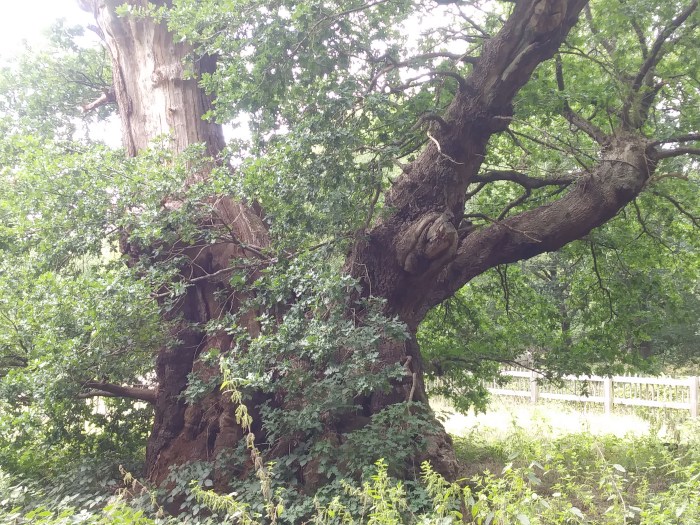
The old-timer may not look so majestic these days, but this tree is around 800 years old, dating back through the reigns of some 35 kings and queens to the era of King John, when the Magna Carta was being drawn up.
This is a time of the crusades and Marco Polo’s travels. It’s hard to believe the same oak will be standing here in later centuries to witness the Spanish Armada, Gunpowder Plot or Great Fire of London.
But time stands still in Burnham Beeches, where ancient sentinels silently recall generations of Victorian schoolchildren coming here for Sunday outings or the war years when the woods were awash with service personnel, with some 65 huts and other buildings hidden among the trees.
Wander down this path and you’re at the site of an Iron Age hillfort. Take that route through the trees and you find a small plaque commemorating the poet Thomas Gray, who wandered the woods in the 18th century and completed his famous poem ‘Elegy in a Country Churchyard’ in 1750 amid the peaceful graves surrounding St Giles’ church in nearby Stoke Poges.
The past is all around you here – and at no time is that more obvious than on an August afternoon when the dragonflies are flitting around, the wood ants are on the march and the cattle are lazily munching their way through the undergrowth.
Helpful Wildlife Trust contacts are able to suggest my fuzzy picture is a male ruddy darter, and a magnificent video from Roger Havercroft on the Wild Cookham facebook page soon confirms this.
At the other end of the size spectrum are the British white cattle casually sun-bathing on the grass. They, along with other traditional breeds such as Exmoore ponies and Berkshire pigs, have been used to bring grazing back to the reserve – a practice which helped to create this ancient woodland.
Back in the woods, the rowan berries are out, the first leaves have fallen and the ancient beeches rustle a little as the evening breeze begins to pick up.
It really is an extraordinary landscape: beautiful, haunting, ever-changing and intimately in tune with the past.
AS long-distance paths go, the Beeches Way is a minnow among leviathans.
Many national trails are more than 100 miles long, and some greatly exceed that – with routes like the Greater Rideway, Pennine Way or South West Coast Path being measured in hundreds rather than tens of miles.
But however modest the Beeches Way may sound at a mere 16 miles, it cuts a picturesque route through some magnificent Chilterns countryside, taking in a top trio of local country parks and sites of special scientific interest along the way.
It runs from Cookham on the Thames to the Grand Union Canal at West Drayton, a route developed by the Iver and District Countryside Association in conjunction with Buckinghamshire County Council.
It also links up with other long-distance routes, including the Berkshire Loop of the Chiltern Way and the Thames Path from Cookham.
Tim Bertuchi is another walker to provide a step-by-step guide to the route back in 2009 and if, like him, you find the section around Iver feels insufficiently picturesque, you can easily pick up the path in Langley Park, once a deer park that was the scene of royal hunting parties into the Middle Ages.
Since the war the park has been council owned, and although it’s only a stone’s through from Slough, you wouldn’t know it from the rural setting, with the heath and woodland of Black Park to the north and agricultural land to the south and east.
Walkers might want to linger here a while, watching the wildfowl round the serpentine-shaped lake, a landscape feature influenced by Lancelot ‘Capability’ Brown during the mid-1700s.
There’s an arboretum too, and in the spring the rhododendrons of the Temple Gardens are alive with colour.
From here it’s a short step across the busy dual carriageway into Black Park, a spectacular 530-acre network of 10 miles of footpaths through woodland, heath and open space.
It’s the perfect escape for families needing some fresh air, with a big adventure play area for youngsters wanting to let off steam and an extensive network of surfaced tracks to explore.
Thread your way past the grazing Sussex cattle and you face a short descent into Fulmer, where the Black Horse might prove tempting if you feel you have earned a pint or bite to eat.
Cross the road and you are entering Stoke Common, the largest remnant of Buckinghamshire’s once extensive heathland, one of the rarest habitats in England, also currently graced with its own visiting herd of Sussex cattle to help with the grazing.
If you’ve come all the way from West Drayton this is around the halfway mark. You may even want to take the weight of your feet to appreciate the new benches produced by Gina Martin and inspired by artwork by local pupils at nearby Stoke Poges school.
Among the heather, ling and purple moor grass and gorse you may hear the distinctive scraping sound of a stonechat or even catch a glimpse of a lizard, adder or slow worm.
From here you are heading to Farnham Common and another glorious swathe of ancient woodland, Burnham Beeches, a national nature reserve and conservation area that is another site of special scientific interest. It’s worth making a date to take this trip in the autumn too, when the woods are a blaze of colour.
The route is shown on the OS Explorer map 172 and is waymarked and signposted in both directions, but it’s easy to get distracted in Burnham Beeches and find yourself wandering away from the route. Try to get back on track to make sure you pick up the path to Littleworth Common and on towards Wooburn.
The Beeches Way links up with the Berkshire Loop near the Chequers Inn, a 17th-century coaching inn which has been transformed into a welcoming modern hotel and pub.
From here, the path leads down towards the 12th-century church of St Nicholas at Hedsor and on to Hedsor Wharf, where the old Roman road from Silchester to St Albans is rumoured to have crossed the Thames.
Anyone travelling by train can pick up the path at either end, either from West Drayton station, close to where the Grand Union Canal meets Yiewsley High Street, or in the picturesque Berkshire village of Cookham on the banks of the Thames.
More ambitious walkers can pick up the Thames Path here, or even diverge onto the Berkshire Loop of the 134-mile Chiltern Way, a more ambitious ramble through the characteristic Chilterns landscape of woods, downland and pretty old villages.
It may even inspire you to tackle some of the further-flung national trails or themed routes, which may take their name from historical or literary figures like Shakespeare and Bronte.
But there’s nothing wrong with savouring a short stretch of the route either, or diverging from it to take a lazy village wander like those around Cookham Village or a short local detour into the woodland paths around Wooburn.
Small is beautiful, they say – and as long-distance walks go, that’s certainly true in the case of the Beeches Way.
Check out the links below for a full range of Ordnance Survey map products, or get a subscription to access unlimited OS Explorer and Landranger maps on any device, making it easier for you to explore the great outdoors.
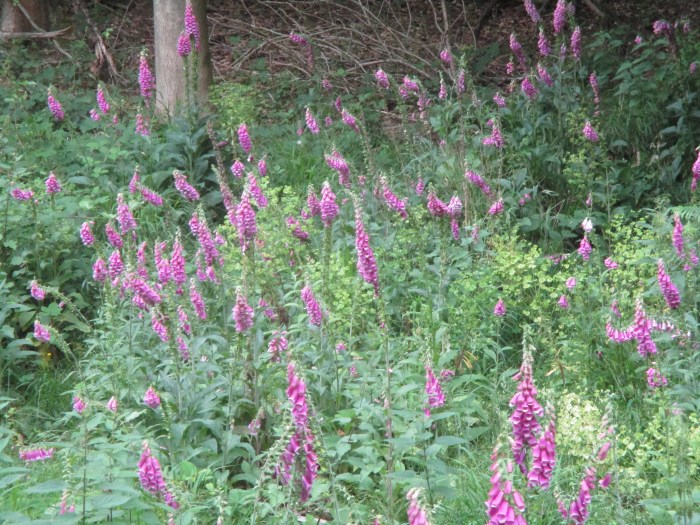
AT LAST the welcome relaxation of lockdown restrictions has allowed scope to roam a little further afield – and after the bluebells of April, it’s foxgloves and ferns which provide the focus of woodland forays in June.
What a joy to be able to escape into the trees of Denham, Langley and Black Park again. And after the hawthorn blossom and horse chestnuts putting on a show earlier in the year, now it’s time for the foxgloves to provide a welcome splash of colour amid the glorious greenery.
We may have missed those startling May displays of rhododrendrons in the Temple Gardens at Langley, but the wildflowers are out, the wildfowl are busy on the lake and the arboretum provides a welcome escape from face masks, shopping queues and worries about illness.
Once a hunting ground for medieval monarchs, this is part of a network of green spaces which make up the huge Colne Valley Regional Park, formed in 1965, which stretches from Rickmansworth to the Thames, Heathrow and Slough and provides the first proper taste of countryside west of London.
Cross the road from Temple Gardens and you are immediately in Black Park, another woodland oasis with more than 600 acres to explore.
From miniature mariners to unusual wildfowl, there’s always something to see on the lake, and with 10 miles of footpaths through woodland, heath and open space, this is one of those places where it really does feel possible to lose your bearings – for a short while, at least.
This is a perfect place for children to let off steam, but although the lake area tends to be packed with families and dog walkers at weekends, it’s still possible to get away from the crowds – especially during the week or early in the morning, when many of the pathways through the towering trees can be virtually deserted.
Need to get even further away from the family fun? Footpaths lead from here to Stoke Common, and the largest remnant of Buckinghamshire’s once extensive heathland, one of the rarest habitats in England.
There’s less for youngsters to do here, but for walkers wanting room to breathe, the 200 acres are a Site of Specific Scientific Interest (SSSI) which provides home to some very rare plants, animals and insects – although it may take a sharp eye to spot some of them.
A lot easier to spot are the 20 Sussex cattle currently being used to graze heathland plants on the common, which has been managed by the City of London Corporation since 2007, with friends and volunteers helping to restore it to its former glory.
The site has small areas of birch, pine and mixed woodland, with several ponds, and like nearby Burnham Beeches was grazed by livestock for centuries.
The only difference is that the wood pasture at Burnham is being grazed by seven British white cattle, along with Exmoor ponies.
Due to the they way they graze, livestock help to create a diverse plant structure which is great news for the local wildlife – although stumbling across a beast of this size behind a bush can be quite a surprise, despite their normally placid natures.
Like Black Park, Burnham Beeches is a marvellous haunt for families, and with 500 acres to get lost in, its ancient oak and beech pollards provide a perfect backdrop for those wanting to get back to nature after spending too long indoors.
Ramblers wanting to get a little further off the beaten track don’t have to look far in the Chilterns, of course. Footpaths criss-cross the area, including long-distance paths like Shakespeare’s Way, opened in 2006 from the great man’s home town of Stratford-upon-Avon to the Globe Theatre in London, passing through Marlow and Burnham Beeches on its way.
Or there’s always a chance to walk a section of the 134-mile Chiltern Way, particularly well signposted by the Chiltern Society and offering some particularly scenic sections around here, whether through the Marlow woods and on to the Hambleden Valley or sweeping north from the Chiltern Open Air Museum towards Chenies, Sarratt and beyond, in a huge circle heading towards Dunstable Downs.
The nature reserve is made up of beech, ash, sycamore and whitebeam with glades and open grassland.
Wild orchids flourish here, including the rare military orchid, and the place is a haven for butterflies such as the marbled white, white-letter hairstreak and the silver-washed fritillary – not to mention hundreds of species of moth.
Resident and visiting species of birds include chiffchaff, cuckoo and blackcap. Tawny owls can often by heard calling during the day. Fallow and roe deer are also regular visitors to the reserve.
If open vistas and sweeping views are more appealing than woodland wanders, check out some of the local National Trust common land like the pastures at Winter Hill with their breathtaking views over the Thames, or the hay meadows at Pinkneys Green, where a rich variety of grasses, flowers and buzzing insects have made their home.
The grasses in these open, unfenced meadows are left to grow tall all summer, with a wealth of wildflowers adding specks of colour across the open expanse of meadow, from delicate yellow cowslips and kidney vetch to bright white oxeye daisies and purple field scabious.
On a sunny day, walkers pause for a lazy chat under the trees, but on a windy evening there’s something invigorating about the gusts sweeping over the meadow and the clouds scudding across the sky, making it a perfect place for kite-flying too.
From Pinkneys Green to Dunstable Downs, the freedom to get out and about across the local areas is such a blessing after the dark days of lockdown. And who would prefer a packed south coast beach at Brighton or Bournemouth to the fresh air and open countryside of the Chilterns?