Byways provide a breath of fresh air

YOU wouldn’t think there’d be much chance of finding a deserted country lane a stone’s-throw away from Beaconsfield motorway services.

DESERTED: escape from the roar of traffic

After all, many rural main roads are litter-strewn rat-runs where nature seems under siege.

And if you do find a relatively straight stretch of tarmac round here, chances are that boy racers are deafening the local wildlife with their roaring engines and illegal pop-bang exhausts.

DAPPLED LIGHT: byways offer a peaceful backdrop

Well, whisper it quietly but in fact there are a wealth of smaller byways round these parts which hark back to a more peaceful era before the motor car ruled supreme.

More anti-social drivers tend to be deterred by the potholes, occasional floods, paint-scratching hedgerows and likelihood of encountering country hazards like tractors and horses to venture down these roads. And that suits the locals just fine.

SENSE OF CALM: Park Lane by Burnham Beeches

Here, away from the thrum and roar of traffic, life moves at a slightly slower pace, from the back roads around Burnham Beeches and Hedgerley and to those over by Wooburn Green and Hedsor.

The main tourist attractions round these parts include Cliveden and Odds Farm Park, but just yards from those hotspots you don’t have to venture far into the undergrowth to discover a network of footpaths offering a genuine breath of fresh air.

SERENE SURROUNDINGS: behind Odds Farm Park

Drivers haring along Wooburn Common Road probably don’t have a clue that there’s a serene park home estate right next to Odds Farm Park comprising 50 privately owned residential homes on the edge of glorious countryside.

It’s a tranquil place for the over-50s with meticulously cared-for gardens, and the footpath through the estate leads out towards surrounding farmland in the direction of Green Common Lane.

QUIET RAMBLE: Green Common Lane

This must win prizes for being one of the quietest roads in Buckinghamshire, making it possible to incorporate it into your ramble between footpaths without dicing with death.

If you’re lucky you may not see a vehicle at all before diving off the tarmac again at Hicknaham Farm.

The mixed farm is known as a wedding and duck shooting venue, and is a glorious location at harvest time.

Paths lead on towards Littleworth Common or you can circle back to Odds Farm or explore the other end of Green Common Lane.

HARVEST TIME: ripening crops

As you emerge onto the lane again and round the corner, excited shrieks from younger visitors at the adjoining farm park accompany you on the easy amble back towards Castlemans Farm Shop.

There, the cries of children are supplemented by a cacophony of ducks, geese, goats and other assorted animals adding to the bleats and braying from Odds Farm opposite.

Bird watchers and other more adventurous souls can add an extra loop to their ramble here by heading towards Springfield Farm Quarry, a 250-acre sand-and-gravel extraction operation which also acts as a landfill site.

High hedgerows shield the quarry from view and act as home to a wide variety of wildlife. Banks of nettles and brambles guard the shadows from unwelcome intruders, red kites circle overhead, butterflies flutter around and the occasional rabbit or fox darts across the path from the dense undergrowth.

EXTRA LOOP: beside Springfield Farm Quarry

Relatively few ramblers come this way, so although the views may be limited, the hedgerows are bustling with life, with plenty of intriguing scents to keep canine companions occupied too.

There are a couple of different opportunities to emerge onto Lillyfee Farm Lane, another contender for one of the area’s least-travelled roads despite the fast-moving traffic whizzing past at either end of it from Holtspur round to Burnham and Beaconsfield.

From here, you can cut across to Mill Wood, although some of the paths are hard to follow, and take the long straight path towards the pretty hamlet of Berghers Hill and Farm Wood before looping back round at Hedsor.

Local landmarks passing motorists may have missed round here include Hedsor Golf Course, which claims to be the most peaceful and beautiful pay-and-play golf course in Buckinghamshire.

PEACEFUL: Hedsor Golf Course

But you don’t have to be a golfer to appreciate the footpaths which flank the golf course.

On one side you can pick up the Beeches Way towards Littleworth Common and savour a glorious array of ferns and foxgloves, depending on the season.

In May, a circular detour on the other side of Sheepcote Lane exposes you to a glorious array of rhododendrons in full bloom, although at various times of the year the paths here can get pretty waterlogged.

Pick up the Beeches Way on the other side of Wooburn Common Road and you can head on to Littleworth, Burnham Beeches and beyond. The 16-mile long-distance path ultimately connects the Thames at Cookham with the Grand Union Canal at Denham, passing through various ancient woodlands along the way.

But those not wanting to wander too far can slip down a broad path on the other side of the golf course which also borders the home of the White Mark Bowmen, a field archery club.

Dire warnings remind ramblers of the dangers of straying off the path round these parts, since the 10-acre site is laid out in the form of a 14-target course for beginners and experienced archers alike: but the fencing is unambiguous and the marked route alongside straight and clear.

The good news is that from here, you’re close to where you started, just across the road from the Royal Standard, a cosy and convivial local adorned with colourful hanging baskets where a refreshing pint awaits.

It’s fair to say that most of these backroads are never going to be mobbed with ramblers, but they do provide a welcome chance to slip away from the busy main roads which criss-cross this part of the Chilterns.

There may be a motorway on one side and a quarry on another, but wandering these farms and footpaths on a summer’s evening, such noisy bustling places seem a world away.

Rewilding one of London’s lost railways

IT’S more than half a century since a train last ran through Crouch End railway station in north London.

But there are probably more people wandering along its platforms today than at the height of the steam railway era.

That’s partly because this line never really enjoyed a true “heyday” and partly because the route has been a parkland walk for more than 35 years.

It may be only a few miles from the modern transport hub of Finsbury Park, but the line through here to Highgate and the branch from there to Alexandra Palace never really took off in the way the developers had hoped.

It was built by the Edgware, Highgate and London Railway and opened on 22 August 1867, running from Finsbury Park to Edgware via Highgate.

Branches would follow to Alexandra Palace and High Barnet. Swallowed up by the Great Northern Railway and later the London and North Eastern Railway (LNER), part of the route would become the High Barnet branch of the Northern Line, but ambitious Tube expansion plans in the 1930s were thwarted by the Second World War.

In some ways Alexandra Palace was doomed from the start. The branch was constructed by the Muswell Hill Railway Company and opened on 24 May 1873 along with the palace. However, when the palace burned down only two weeks after opening, the service was considerably reduced and then closed for almost two years while the palace was rebuilt.

There were other periods of temporary closure too due to insufficient demand, though in 1935 it looked as if it would get a new lease of life when London Underground revealed plans to electrify the branch.

Works to modernise the track were well advanced when they were halted by the war, services reduced to rush hours only as a result of wartime economy measures.

After the war, dwindling passenger numbers and a shortage of funds led to the cancellation of the unfinished works in 1950 and British Railways withdrew passenger services to Alexandra Palace on 3 July 1954 along with the rest of the route from Finsbury Park.

After the track was lifted, most of the platforms and station buildings were demolished but two sections from Finsbury Park to Alexandra Palace, excluding the tunnels and station at Highgate, were converted into the Parkland Walk, which was officially opened in 1984.

Stroud Green station consisted of two wooden side platforms which were gutted by fire in 1967 and demolished shortly afterwards, but Crouch End was more substantial and both platforms survive.

The line continued to be used for goods into the 1960s and by London Underground for train stock movements until 1970 when it was completely closed. The track was lifted a couple of years later, by which time it was already being used as an unofficial walkway.

A hundred years ago the steam train took just six minutes to get here from Finsbury Park, and another 10 or 11 to chug all the way round to Alexandra Palace.

Today the journey takes a little longer but the 3.9-mile route is designated a local nature reserve, part of the 78-mile Capital Ring Walk round Inner London, and reveals a glimpse of north London life that motorists never see.

From here a glance back at the city skyline reminds you just how far this feels from the hubbub of central London – a green corridor of trees and birdsong providing 21st-century Londoners with a welcome respite from the concrete jungle and rumble of city traffic.

Woodland wander back in time

HOGBACK Wood is one of Beaconsfield’s hidden secrets.

An attractive area of old, mainly deciduous woodland on the western edge of the Seeleys housing estate, it’s owned by the National Trust but not mentioned on their website.

LOCAL SECRET: Hogback Woods in Beaconsfield PICTURE: Graham Parkinson

Indeed online references are rare, thought it’s one of a number of local woods mentioned by the Woodland Trust and is very popular with dog walkers and joggers, as well as boasting a plentiful cross-section of birdlife, including jays, goldcrests and firecrests.

Back in the 18th century there were some 30 farms and smallholdings around Beaconsfield, boasting a mixture of arable and pastoral farming, with wheat growing and the rearing of cows, pigs and sheep being the main activities.

Seeley’s farm was swallowed up and the land developed between the late 1940s and early 1970s, though the name lives on in local street names on the estate.

By 1881 the farm covered more than 200 acres and employed nine labourers. Like so many other local places, the land was well suited to growing cherry trees and in 1892 Job Wooster planted a huge 18-acre orchard of cherries.

HOME SWEET HOME: a nuthatch nest building at Hogback PICTURE: Graham Parkinson

Cherry trees are still abundant in the area today – but back then there were up to 60 people employed at the height of the picking season, when trainloads of fruit would leave Beaconsfield by rail for the Midlands.

Since the housing development of the 1960s, Hogback today is a natural playground for local youngsters, a perfect place for den-building or playing hide and seek.

The 22.5 acres form a narrow patch of wooded paths linking the village of Forty Green with the outskirts of Holtspur. Usually accessed from Woodside Road, the woods are also perfectly situated for a wander over to the Royal Standard of England for a welcoming pint or meal, when lockdown restrictions permit.

The pub itself is steeped in centuries of history, predating the 16th-century farmhouse at Seeleys, which was originally part of the Gregories Estate, probably taking its name from the Cely family who lived in Beaconsfield in that period.

BUSY BIRDLIFE: a green woodpecker in Hogback Woods PICTURE: Graham Parkinson

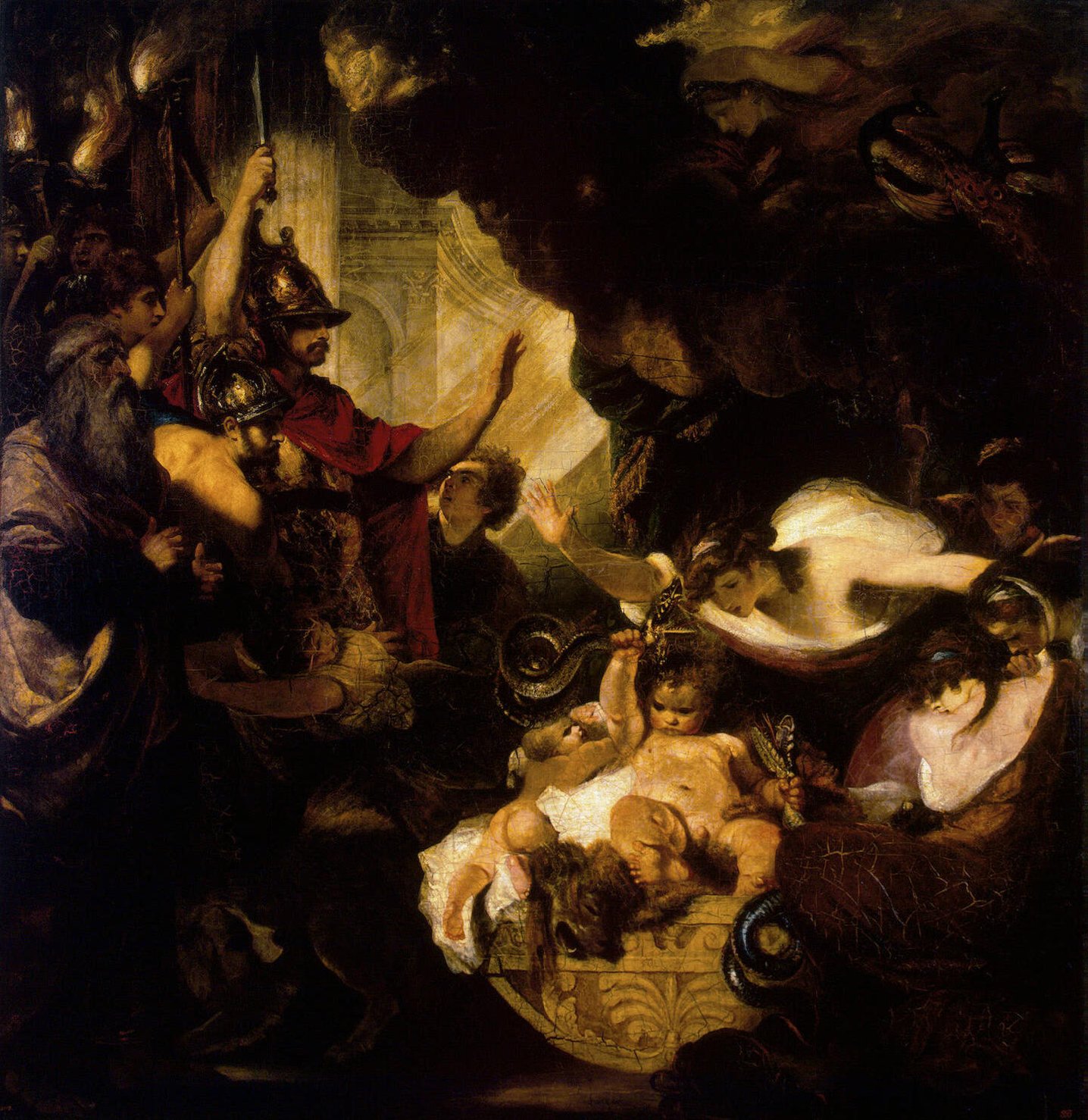
Researchers from the Beaconsfield & District Historical Society explain how the artist Sir Joshua Reynolds stayed at the farm in the 1780s and while in Beaconsfield fulfilled a commission from Catherine II, Empress of Russia, to paint an historical picture.

He chose as his subject The Infant Hercules Strangling the Serpents and the model he used was William Rolfe, the six-month-old son of a local family. Today the original painting still hangs in the Hermitage Museum in St Petersburg.

Farming days at Seeleys may be a distant memory, but the woods provide a perfect base for a circular ramble to Holtspur and beyond, picking up the Berkshire Loop of the Chilterns Way to head towards Wooburn Green, or returning along Riding Lane to Forty Green and that welcoming pint.

Rambles round Midsomer country

CHILTERNS villages don’t come much prettier than The Lee, and this area is a perfect base for a summer ramble.

It’s just a shame that HS2 construction is having such an impact on this part of the world – and you don’t have to wander very far to come across hand-made signs protesting about the “ecocide”.

HS2 apart, this is glorious countryside where there’s been a small community since the Domesday Book of 1086 – and doubtless earlier.

The name is believed to derive from the old Anglo Saxon word ‘leah’ meaning ‘woodland clearing’. At that time the Chiltern hills were largely covered with woodland and the community at Lee would have been closely linked to nearby lowland areas at Great Missenden and Wendover, which had land more suited to crops and grazing.

In the 13th century a chapel was built at Lee; known locally as The Old Church, it is now a Grade I listed building.

With ancient rights of way such as the Ridgeway passing close to the hamlet, the cluster of hamlets around Lee remain a magnet for ramblers and cyclists, not to mention an increasing number of Midsomer Murders fans keen to scout out popular locations from the series.

The Cock & Rabbit on the archetypically English village green is better known to followers of DCI Barnaby as the Rose & Chalice – and being handily placed halfway between Great Missenden and Wendover, it’s a good staging post for any walkers reaching and leaving the area by train.

Another local landmark that’s hard to miss is the Grade II listed wooden ship’s figurehead of the Admiral Lord Howe at the entrance to Pipers, a country house steeped in the history of the Liberty family, of Regent Street fame.

As Lord of the Manor in the 1890s, Arthur Liberty he extended the estate to encompass a dozen working farms, many houses, cottages and public houses, and there are still many visual reminders in the village of his influence. He died in 1917 having built Pipers for his nephew and eventual heir.

The figurehead comes from the Navy’s last wooden ship, dating from 1860, though it never saw sea service and was used as a training ship at Devonport before being broken up in 1921, with many of the timbers used for the mock Tudor extension to the Liberty store in London.

Ramblers and cyclists wanting a more dramatic forest setting don’t have far to go to explore Forestry England’s 800-acre site at Wendover Woods, recently expanded as part of a redevelopment funded by a massive HS2 community grant.

On a quiet day the trails offer miles of varied paths and gradients to explore, along with picnic areas, a children’s playground, Go Ape treetop adventure course and nearby mountain biking area at Aston Hill for those wanting a more challenging range of adventure trails.

Or if you still haven’t had your fill of Chilterns landmarks, make your way over to Hawridge & Cholesbury Common, designated as a local wildlife site and offering the perfect place for another circular stroll.

Cholesbury is an ancient hill top village and has much to interest the visitor, especially an Iron Age Hill Fort which is one of the most impressive prehistoric settlements in the Chilterns.

Starting from the 17th-century Full Moon pub, with its atmospheric views over the nearby windmill and common, you can opt for a two-and-a-half or five-mile round trip to the fort, which was probably built around 300-100BC and occupied from the Roman conquest into the middle of the first century AD.

For the less energetic, the area is criss-crossed with footpaths and is rich in wildlife, including fox, badger and muntjac deer as well as a range of birds and butterflies.

Against the reassuring backdrop of the crack of leather on willow (cricket has been played on the common for more than a century), you can enjoy a leisurely stroll here without veering far off the beaten track (or too far from the prospect of a welcoming pint at the Full Moon)…