
IT’S the month of first frosts and stormy nights when the sights, smells and sounds of autumn really bring the countryside to life.

The rapidly-changing colours and glorious textures of October make it a favourite with photographers, especially deep in the woods where the yellow, green and russet hues contrast so beautifully with the rugged outlines of ancient trees.

Amid all the leaf mulch, autumn is also one of the best times to head out foraging, with woods and hedgerows filled with a feast of delights from hazelnuts and rosehips to blackberries, sweet chestnuts and crab apples.

It’s a month of ripe berries and falling fruit, with trees and bushes bursting with tasty treats for birds, insects and mammals alike and a huge array of startling fungi hiding beneath the fallen leaves.

From the foul-smelling stinkhorns to poisonous toadstools, it’s thought there are more than six million species of fungi in the world, and we’re only really beginning to fully appreciate what an impact they have on our lives.
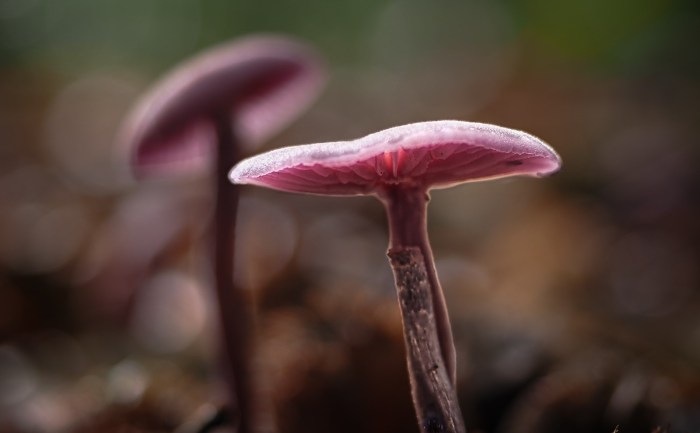
They can change our minds, heal our bodies and even help us to avoid environmental disaster, as Merlin Sheldrake showed us in his fascinating 2020 book Entangled Life.

But although we may have only formally identified around 150,000 of the millions of fungi out there, they are a source of fascination for photographers and nature lovers alike.

The colours and shapes fascinate us, even though we know their beauty can be deceptive and that there could be deadly consequences of dabbling with the most poisonous of them.

They vary in size from the microscopic to the largest organisms on earth and boast the most intriguing array of sinister-sounding names, from gelatinous jelly ears to toxic beechwood sickeners.

If you can’t tell a tasty morsel from a destroying angel, funeral bell or death cap, it’s perhaps best to give those colourful mushrooms and toadstools a wide berth.

Widely regarded as magical and equally frequently mistrusted, toadstools and mushrooms are associated with ancient taboos, dung, death and decomposition.

But as the Woodland Trust explains, trees and many other species rely on fungi and we’re only just starting to fully understand how close this relationship is: great woodland networks that link and support life.

As Gillian Burke explained in a previous Autumnwatch series: “90 per cent of our plants are utterly reliant on fungi for survival. By breaking down dead wood, cleaning the soil and recycling nutrients by the most intimate relationship with living plants, fungi are vital to life on Earth.”

At this time of year, those forest floors and woodland glades are full of colourful and intriguing characters, from puffballs and stinkhorns to earthstars and jelly fungi – and while many of them could be poisonous for us to touch and eat, it’s fascinating just how important they may be for our survival.
If you have a picture or two you would like us to feature in a future post, drop us a line by email to editor@thebeyonder.co.uk, join us in our Facebook group or contact us on Twitter @TheBeyonderUK or Instagram at thebeyonderuk.
