Another glimpse of secret London

MANY visitors to London’s Central Criminal Court never see the statue of Lady Justice straddling the distinctive dome of the Old Bailey.

Yet this is the statue used to illustrate countless news reports of the great criminal trials which have taken place here across the years.

IMG_1037 (2)

There’s been a court here since the 16th century, attached for much of its history to the adjoining Newgate prison, and it has witnessed hundreds of thousands of trials, including some of the most notorious and newsworthy.

Back in the 19th century, hangings were a public spectacle in the street outside and the condemned would be led along Dead Man’s Walk between the prison and the court to be met by riotous crowds pelting them with rotten fruit and vegetables.

Those crowds have long gone, but high on the dome above the court stands that bronze statue of Lady Justice, executed by the British sculptor F W Pomeroy, erected in 1906 and holding a sword in her right hand and the scales of justice in her left.

IMG_1043

It’s an iconic image that harks back to her origins as Iustitia, the Roman goddess of justice introduced by Emperor Augustus and subsequently a figure which every Roman emperor wanted to be associated with.

Though formally called a goddess with her own temple and cult shrine in Rome, it appears she was viewed more as a symbolic personification rather than as an actual deity with religious significance.

Today, she gazes down on streets steeped in history, although so much of this part of London was destroyed in the war and buried by modern monstrosities that you have to look hard to find those hidden traces of the city’s past.

IMG_1042 (2)

One such establishment is the Viaduct Tavern, a Victorian gin palace built to celebrate the opening of the Holborn Viaduct and with numerous claims over the years that its cellars incorporate old prison cells from Newgate Prison.

The Fuller’s pub is certainly in the right location for that – and it is also likely the pub stands on land which was the original site of a debtors’ prison which operated until 1853.

IMG_1009

Across the road and down a side street  and you find yourself in front of Cutlers’ Hall, home of the Worshipful Company of Cutlers, one of the most ancient of the City of London livery companies.

It its first Royal Charter from Henry V in 1416 and, as was the case with the other trade guilds of the day, its function was to protect the interests of its members, to attend to their welfare, and to ensure that high standards of quality were maintained.

Their business was producing and trading in knives, swords, and other implements with a cutting edge. Over time the emphasis shifted from implements of war to cutlery and other domestic wares such as razors and scissors.

IMG_1011

A ‘House of the Cutlers’ mentioned in 1285 is the earliest recorded regular meeting place of the Cutlers, but the current building (the fifth such hall) dates from 1888 and survived a great fire bomb raid on December 29th 1940 which left only St Paul’s Cathedral and Cutlers’ Hall standing virtually unscathed amongst the devastation.

Back up Newgate Street and in the Christchurch Greyfriars Church Garden you can find a much more recent tribute to the city’s past, commemorating Christ’s Hospital School’s 350-year presence in the City of London from 1552 until 1902, when the school moved to Horsham in West Sussex.

IMG_1015

The bronze sculpture by Andrew Brown was selected following an open competition run by The City of London Corporation.

From here, it’s but a short walk to Fleet Street and the first of many hostelries to have resonated with the exchanges of generations of journalists. The Punch Tavern is a Grade II listed refurbished 19th century gin palace once known as the Crown and Sugar Loaf.

IMG_1058 (2)

It is said to have been renamed in the 1840s in homage to the regular drinkers from the nearby Punch magazine, a weekly magazine of humour and satire which was at its most influential at that time, when it helped to coin the term ‘cartoon’ in its modern sense as a humorous illustration.

After the 1940s, when its circulation peaked, it went into a long decline, closing in 1992. It was revived in 1996, but closed again in 2002.

IMG_1047 (2)

Almost next door is another Fleet Street pub with a proud history, the Old Bell Tavern. Now part of the Nicholson’s chain, The Old Bell Tavern has been a licensed tavern for more than 300 years.

The claim is that it was built by Sir Christopher Wren to house his masons as they rebuilt St Bride’s Church after the Great Fire of London. Certainly it is still sought out by journalists returning for services at the church, with its centuries-old connections with the printing industry.

IMG_1048 (2)

Down in the crypt, the church chronicles 2,000 years of its history, which began with the Romans some six centuries before the name of St Bride, daughter of an Irish prince,  emerged from legend to become associated forever with the site.

By the time the Great Fire of 1666 left the church in ruins, a succession of churches had existed on the site for a millennium. It took nine years for St Bride’s to re-appear from the ashes under the direction of Christopher Wren, and for the next two centuries his unmistakeable wedding-cake steeple cast a long shadow over the rise of the British newspaper industry.

In 1940, St Bride’s fell victim once again to flames as German incendiary bombs reduced Wren’s architectural jewel to a roofless shell. This time 17 years elapsed before rebuilding was completed.

IMG_1004 (2)

Generations of newspapermen and women have prayed here and feel a special affinity for the place. Many have been married here – while others have come to honour dead colleagues, whose pictures stand on a side altar beside flickering candles.

After exploring the long history of the “journalists’ church”, it’s probably time for another convivial Fleet Street pint, perhaps this time in The Tipperary, which can claim to be the “original” Irish pub outside Ireland, though it has been closed for a long time while the area undergoes another redevelopment scheme.

IMG_1050 (2)

On a site which was once an island between the River Thames and River Fleet, a dribble of which is said to still run under the pub, The Boar’s Head was built in 1605 and, being made of stone and brick rather than wood, survived the Great Fire.

In around 1700 the S G Mooney & Son Brewery chain of Dublin purchased the pub and fitted it out in traditional Irish style. It became the first outside Ireland to have bottled Guinness and later draft, and was renamed in 1918 by the printers who came back from the Great War in honour of the song “It’s a long way”.

Greene King bought the pub in the 1960s and refitted the interior to the style of Mooney’s days, recapturing the original character of the 1700s.

Emboldened by an authentic pint of Guinness, there might just be time to pop across the road and visit another venerable Fleet Street watering hole which did not fare so well in the Great Fire.

IMG_1054 (2)

Ye Olde Cheshire Cheese is one of a number of London pubs to have been rebuilt shortly after the fire, although there was a pub here from 1538 and the establishment is chiefly known for its literary associations and lack of natural lighting, which lends a gloomy charm to its many little side rooms, bars and passages.

Hidden down a narrow alleyway and decorated with wood panelling from at least the 19th century, the pub boasts plaques showing famous people who were regulars, and who may have ranged from Dickens and Chesterton to Samuel Johnson and Sir Arthur Conan Doyle.

Talking of Dr Johnson, there may be time to look in on the charming nearby 300-year-old townhouse where the writer and wit lived and worked in the middle of the 18th century, compiling his great Dictionary of the English Language.

IMG_1051 (2)

Today, the hidden gem is open to the public with a collection relating to Johnson, a research library, restored interiors and a wealth of original features. But if you are pressed for time, there’s one famous local character you must look in on before saying a fond farewell to Fleet Street – Dr Johnson’s beloved cat, Hodge.

Hodge is remembered by a bronze statue unveiled in Gough Square in 1997 showing the cat sitting next to a pair of empty oyster shells atop a copy of Johnson’s famous dictionary.

IMG_1053 (2)

Sculptor Jon Bickley made Hodge about shoulder height for the average adult – just about right for putting an arm around. Most of the information on Hodge comes from Boswell’s account:

I never shall forget the indulgence with which he treated Hodge, his cat: for whom he himself used to go out and buy oysters, lest the servants having that trouble should take a dislike to the poor creature.

I am, unluckily, one of those who have an antipathy to a cat, so that I am uneasy when in the room with one; and I own, I frequently suffered a good deal from the presence of this same Hodge. I recollect him one day scrambling up Dr Johnson’s breast, apparently with much satisfaction, while my friend smiling and half-whistling, rubbed down his back, and pulled him by the tail; and when I observed he was a fine cat, saying, “Why yes, Sir, but I have had cats whom I liked better than this” and then as if perceiving Hodge to be out of countenance, adding, “but he is a very fine cat, a very fine cat indeed”.

Danny lambasts litter apathy

THE Kent businessman who invented a pioneering new app to tackle the country’s litter crisis admits it’s been a long, uphill struggle to get people to take his idea seriously.

Launched in a blaze of publicity back in 2015, the idea was a simple one, as Danny Lucas explains: “I decided to tackle the UK litter crisis in a way that had never been done before.

DANNY LUCAS

“As a child of the 70s I remembered public information films at school and Keep Britain Tidy logos on every crisp packet and sweet wrapper.

“Whilst that worked back then, it was clear that it had no effect today and I knew a new approach was needed.”

His solution was a simple, free app for smartphone users that allows individuals to tip off their local council with information about litter, dog fouling and fly-tipping. It was accompanied by a two-minute animated education film that could be shown to the kids at school assembly.

By August 2016 Danny was picking up an environmental champions award from the Mayor of Tonbridge in recognition of the contribution LitterGram had had on improving conditions in the borough.

But although he tries to remain positive, two years on he is the first to admit that the scheme hasn’t grown the way he had hoped when he first wrote about the idea of making “hating litter cool” and getting all of the UK’s 433 local councils involved.

IMG_0994

“Councils are just not interested,” he says. “Behind closed doors they see us as a pain in the arse.”

Having invested £300,000 of his own money in the project, it’s clear that the lukewarm response has been the source of considerable anger and frustration. As the boss of a multi-million pound business in the construction industry, employing hundreds of staff, this is a man who’s clearly accustomed to getting things done.

The company he owns is the same family-run business he joined as a teenager of 15, and for most of his life he has lived in Kent– the so-called ‘Garden of England’.

“I am proud to be British however when I look around Britain I can’t see what’s great about it any more. Littering has increased by 500% since the 1960s and 48% of the population admit to dropping litter.

“We now spend £1bn per year tackling the problem which clearly does nothing as we are now officially the third most littered nation globally behind countries in the developing world.”

waste 2

“This is a shocking statistic and purely down to a lack of education and awareness. This has in turn created a culture and attitude across the UK of not caring and has affected the very authorities whose duty it is to maintain standards and set examples. Effectively they now broadcast a message that says “we don’t care” and this fuels the problem.”

Danny was disappointed to find that relatively few head teachers were keen to take up the baton, some insisting that it was parents’ job to teach children about such matters.

Coupled with poor enforcement in many areas of the country, the apathy means that many people become “litter blind”, he believes – because the country is being so trashed and neglected that this is becoming the norm.

40159028_260235737948914_7216420972910346240_n

Not all council clear-up teams are as efficient as they could be, he believes. That is another waste of money and a cause for complacency, particularly if councils really don’t want to be told about the scale of the problem.

“Councils have to set standards but no one really cares,” he says. “I saw it as a great way to get the kids on board and I thought councils would embrace it.”

The LitterGram Live message of “Snap It. Share It. Sort It” was envisaged as a dynamic and fast-changing service which would include details of the most littered brands, the most active users and the most responsive councils, with enthusiastic litter spotters able to keep up with latest developments on Twitter @LitterGram.

But it hasn’t quite gone according to plan – even though there are dozens of litter-picking groups up and down the country doing their bit to help, and millions of nature and animal lovers doing their bit to highlight the scale of the crisis.

40374907_10156756065047533_4080764546665414656_n (2)

There’s been plenty of publicity in the press and on TV and radio, but that has not translated into LitterGram becoming the “fifth emergency service” as Danny might have wished.

Perhaps even more radical solutions are needed? “Take it off the councils. You could halve the costs and keep Britain spotless,” says Danny. And he’s not exactly joking. But nor is he despondent that the battle has been lost.

“I get phoned up all the time about it, so we are obviously getting the attention of a lot of people,” he says. “One way or another we will get there. The problem is now an epidemic that has a grip on the nation like cancer. If nothing is done, the problem will worsen and our children and their children will be swimming in filth.”

It’s an apocalyptic warning, but even a cursory glance along the average English roadside is enough to demonstrate that this is not empty rhetoric. The problem is there for all to see – and while LitterGram may not have become the quick-fix solution Danny Lucas might have wished for, you get the impression this is one campaigner who isn’t giving up the fight just yet.

Sacred space echoes to monks’ song

THERE’S something immensely restful and soothing about Gregorian chant – and the same can be said of the tranquil surroundings of Douai Abbey in Berkshire.

Here, buried in the depths of the English countryside, is a Roman Catholic Benedictine monastery founded in Paris in 1615.

Vespers is sung prayer – in Latin. Traditionally this evening sacrifice of praise to God takes place as dusk begins to fall, giving thanks for the day just past, and although guests are welcome and some services and concerts are well attended, it’s not uncommon to find the monks alone at this time.

IMG_1156

Uprooted by the French Revolution, the monks moved initially to Douai in Flanders and settled in England in 1903, when they moved to their current base at Woolhampton.

The Order of Saint Benedict, also known as the ‘Black Monks’ because of the colour of their habits, is a religious order of independent monastic communities like Ampleforth, Downside, Worth and Buckfast.

IMG_1158

They observe the Rule of St Benedict, a sixth-century Italian saint who studied in Rome and then turned his back on the world and lived in solitude before founding a monastery at Monte Cassino.

Here at Douai, under the patronage of the Edmund the Martyr (the East Anglian king who died in 869), the monks live a simple life of worship, study and work, centred around six daily services, from matins and lauds at 6.20am to compline at 8pm.

IMG_1162

Despite their crow-like appearance when their black hoods are raised – an indication that they are in silent communion with the Lord – they are individually friendly and welcoming to guests who seek them out.

But “listening” is central to the Benedictine doctrine, so silence is an important part of their daily life – and for guests, a welcome reminder of how important it is for us all to escape the incessant hubbub of the modern world.

IMG_1163

And so it is in preparation for the weekday service that we attend. Beforehand, individual monks sit in contemplation, both inside the abbey church and on benches around the grounds.

They then file silently to their places in the pews for a half-hour of praise and peace,  the two dozen male voices echoing round the impressive arches of the abbey where we are the only other members of the congregation.

IMG_1159

The abbey church was opened in the 1930s but not completed until 1993, and is a Grade II* listed building on the National Heritage List for England with marvellous acoustics.

Our simple evening service is without ceremony or accompanying music but is no less moving for that. The individual Latin words  may be indistinct or unfamiliar, but the message of praise is clear – and the underlying sense of self-sacrifice and humility which underpins the monks’ way of life shines through.

Douai monks still serve in parishes throughout England and welcome guests on retreats and courses,  as well as those seeking space for quiet or study.

There are facilities for  conferences and for youth and chaplaincy groups and throughout the year they host a number of  concerts in the abbey church.

Guests may take a peaceful walk in the nearby meadow or sit in a small wooded glade at the foot of a statue of Christ. This is a place of peace and contemplation – and a welcome escape from the unrelenting noise and activity of our everyday lives.

For more information about the work of the monks at Douai, see their website.

Snatch a glimpse of London’s past

LONDON’S skyline is under attack.

Well, in truth it has been under attack for years, but it’s only now that we can fully appreciate the scale of the onslaught as dozens of high-rise buildings reach completion.

When architecture critic Rowan Moore highlighted the problem back in 2014, more than 200 towers were being planned across the city, in urban and suburban locations alike.

IMG_1014 (2)

But it’s telling that today the London Town website actually says that this part of London is “aesthetically defined by its towers” and even suggests venues where high-rise visitors might want to savour a vertigo-inducing glass of bubbly and pricey meal while taking in the view of what remains of our once glorious capital.

Moore discusses the aesthetic dangers and practical drawbacks of this race to look like Dubai, Shanghai or New York, but if you haven’t wandered round the backstreets of the City lately, you could be forgiven for thinking that every cobble, every tiny alleyway, is being transformed – mainly into offices or high-rise luxury penthouse blocks.

IMG_1021

Much of that is driven by overseas investment – and a glance in the estate agent’s window quickly establishes that no “normal” rent-payer would find it easy to pick up a bargain around here, even in the few bijou low-rise developments which remain.

Property agents confirmed this month that overseas investors had shrugged off Brexit worries to invest nearly  £7bn in London property in 2018 – ahead of Hong Kong and Paris.

The only consolation is in tiny alleys and hidden squares there are a few remnants of the old city for the wanderer to stumble upon.

The main tourist attractions like St Paul’s still provide visitors with a focal point, of course. Sadly Hitler’s sustained bombing campaign during the Blitz saw swathes of central London flattened in 1940 and 1941, leaving only blue plaques to remind us of some of the buildings which had graced the historic square mile since that other great London disaster, the Great Fire of 1666.

The Museum of London is a great place to start an exploration of London’s past – and when it moves to its new home beside Smithfield Market it should be an even more fascinating attraction.

But what remains of that historic capital, the Roman and medieval city largely hidden under our feet? There are still glimpses of London’s history down dark alleys and quaintly named closes, although it has to be said much of it is masked by traffic fumes and the detritus of modern living.

Between the high-rise blocks, London’s financial heart has become relentlessly hipster in mood and appearance, although the obsession with quality coffee is nothing new. London’s coffee houses were famed across the centuries, even if Samuel Johnson declared himself  ‘a hardened and shameless tea drinker’.

But where to start after you emerge from the overheated hubbub of the Central Line in rush hour and step aside from the frantic City hordes to take your breath outstide St Paul’s?

Down on Ludgate Hill it’s reassuring to see an old Routemaster bus struggling to make any progress down towards Ludgate Circus and Fleet Street, but this throwback to the past is something of a sop to the tourists.

IMG_1007

The vehicle itself is authentic enough, now more than 50 years old, having been originally delivered to London Transport in July 1964.

But it was withdrawn from service in the 1980s and spent time in Hampshire, Perth and Glasgow before being selected as one of a handful of buses to operate “heritage routes” through London – in this case from St Paul’s down to Trafalgar Square.

IMG_1025

More authentic, perhaps – and a lot less well known – is a small park round the corner from St Paul’s which provides a welcome splash of green among the concrete.

Postman’s Park has an intriguing history in its own right, occupying an amalgamation of three burial grounds and taking its name from the fact that when it opened in 1880 it became a popular haunt with postal workers from the nearby General Post Office.

IMG_1023

Efforts to resist the attention of Victorian property developers in the 1890s ensured that the park was saved for posterity and when it reopened in 1900 it incorporated an extraordinary and moving memorial to self-sacrifice, remembering ordinary “humble heroes” who had lost their lives endeavouring to save the lives of others.

Chief proponents of the scheme to remember the extraordinary actions performed by everyday men, women and children were the artist George Frederic Watts (1817 – 1904) and his wife, Mary (1849 – 1938).

IMG_1024

The Watts Memorial contains 54 memorial tablets commemorating 62 individuals. The earliest case featured is that of Sarah Smith, a pantomime artist who died in 1863 and the latest is Leigh Pitt who drowned in 2007.

A short walk from the park is a somewhat grimmer memorial on the outer wall of St Bartholomew Hospital in Smithfield paying tribute to Sir William Wallace, one of the main leaders during the Wars of Scottish Independence – most famously portrayed by Mel Gibson in the film “Braveheart” – who was executed nearby on August 23, 1305.

IMG_1033 (2)

Wallace was charged with treason, to which he responded that he could not be guilty, for he had never sworn fealty to Edward I. Nevertheless, he was sentenced to the traitor’s death, one of the most vicious punishments devised during the medieval era.

He was taken to the Tower of London where he was stripped naked and dragged behind horses to the scaffold at Smithfield. He was first hung by the neck and then cut down while still alive. He was then eviscerated and castrated, and eventually beheaded. His body was cut into four parts, and his limbs sent to the corners of Scotland as a warning to the rebellious country. His head was set on London Bridge, where it was soon joined by other Scottish rebels.

IMG_1036

Hidden away from the main tourist thoroughfares, Wallace’s monument is a place of pilgrimage for Scottish visitors to London, while round the corner Sherlock Holmes buffs gather to see the vacant pathology block where Benedict Cumberbatch took his famed mystery plunge in the BBC series reimagining Sir Arthur Conan Doyle’s detective novels.

This part of one of Britain’s oldest hospitals is being redeveloped into a private healthcare facility. But opposite it is a reminder that this was once a rather seedy corner of medieval London where the Great Fire of London – ‘occasion’d by the sin of gluttony’ – finally stopped, as commemorated in a statue of the Golden Boy of Pye Corner.

IMG_1038 (2)

The fire which broke out in in the early hours of Sunday, 2 September 1666 swept across London from the Thames to Smithfield, destroying thousands of houses and more than 80 churches over five days.

Initially blamed as part of a treasonous plot by Roman Catholics, the 18th-century monument credited an alternative culprit in the shame of the extravagant feasting of well-off 17th-century Londoners.

At this corner of Cock Lane and Giltspur Street also stood The Fortune of War pub, a rather unsavoury drinking den where in the early 1800s corpses provided by body snatchers used to be held in a backroom for surgeons at the nearby hospital to view and purchase.

The high-rise office blocks haven’t quite obliterated this part of London yet, although they are certainly encroaching from all sides.

Not that anyone is suggesting that the medieval brothels of Cock Lane or nearby Victorian gin palaces provided a vision of London which tourists would enjoy today.

But between the soaring office blocks there are those glimpses of a different London skyline – like the distinctive dome of the Old Bailey, where the gleaming statue of Lady Justice, erected in October 1906, has long been used to sum up anything to do with the criminal justice system.

But that, as they say, another story…

See the Further Afield section of The Beyonder for additional snippets about London’s history.

IMG_1037 (2)

Postcard from . . . Bo’ness

IT’S HARD to think of a less likely tourist attraction that the UK’s second oldest oil refinery, at Grangemouth.

But if you drive past the gas flares and cooling towers for a few minutes, the detour off the busy M9 motorway from Edinburgh to Stirling will take you to a quite extraordinary reminder of a golden age of steam.

For this is the home of the Bo’ness and Kinneil Railway, a five-mile working heritage railway and home to Scotland’s largest railway museum.

BONESS

The view from the station platform – the main station at Bo’ness was actually relocated from Wormit, at the south end of the Tay Bridge – could hardly be more authentic, although the 0-6-0 tank engine decked out in British Railways black is also “in disguise”.

Despite the BR livery, this is not the former LNER Class J94 engine which once bore that number, but a lookalike – an engine once owned by the National Coal Board which was built by W G Bagnall in 1945 and acquired from the NCB’s Comrie Colliery in Fife.

In its gleaming BR livery it certainly looks the part, though, and it’s only one of a large selection of steam and diesel engines to be found here.

Another surprise is the surprisingly rural atmosphere of the route. Despite the proximity of heavy industry, the line takes passengers to a local nature reserve, and you can always walk back along the coast or disembark at another rural station that has been a favourite with film-makers.

The museum across the footbridge at Bo’ness is open seven days a week until October 28 from 11am-4.30pm and boasts three large buildings full of memorabilia – from full size locomotives to old-fashioned railway signs which once adorned the walls of busy railway stations across the country.

For full details of the railway, see the link above – and more information about the Scottish Railway Preservation Society can be found here.

Sanctuary where Disraeli worshipped

ANYONE following in the footsteps of Disraeli at the National Trust’s Hughenden Manor shouldn’t miss the chance to look in on the historic church where the former prime minister once worshipped.

IMG_0918

Disraeli lived at Hughenden from 1848 to 1881 – and today, visitors are not just intrigued by the Victorian stateman’s county home and colourful personal history, but by the manor’s secret wartime past as a base for mapmakers.

Codenamed ‘Hillside’, Hughenden played such a critical role supporting the pilots of nearby Bomber Command that it was on Hitler’s list of top targets. Around 100 personnel were based here, drawing up the maps used for bombing missions during the war, including the Dam Busters raids and a planned hit on Hitler’s secret bunker at Berchtesgaden.

Skilled cartographers produced maps from aerial photographs delivered by the RAF’s reconnaissance missions – yet the operation was so secret it only came to light 60 years later after a National Trust volunteer overheard a visitor telling his grandson he’d been stationed here during the war.

But away from the cellars, one of the less obvious gems of the estate is the church of St Michael & All Angels – the “church in the park” which provides a glorious oasis of peace amid the rolling parklands so much enjoyed by ramblers and families in the summer months.

The earliest records show a church on this site in the 12th century built by Geoffrey de Clinton, but it was substantially extended and rebuilt in the 1870s. The chancel is the remaining part of the original church, and during the Victorian extension works its floor was redone with beautiful ceramic tiles, the roof altered and the walls painted.

In 1992-94 a major redecoration of the nave and chancel was undertaken and all the Victorian paintings and artwork meticulously restored.

IMG_0916

Disraeli is commemorated in many parts of the church but the principal memorial is on the north side of the chancel, unique in that it is the only known example of a memorial erected by a reigning monarch to one of her subjects.

Various items in the church were paid for by the Hughenden Memorial Fund, in memory of the statesman, including the organ and the murals in the chancel.

A detailed history of the church can be found on the parish website and on summer Sundays and bank holidays guests can also sample a cream tea in the historic nearby church house, which in pre-reformation days was home to six monks and a prior.

IMG_0921

All aboard for quiz night!

THE lights on the country station platform are shining, the semaphore signals are at red and a handful of passengers alight in the drizzle.

It could be a scene from the 1960s, but despite appearances we are firmly in 2018 and just reaching journey’s end after an unusual sojourn through the Oxfordshire countryside.

IMG_0928

The occasion is one of the periodic “fish and chip” quiz nights organised by the Chinnor and Princes Risborough Railway – but unlike a country train at a platform like this half a century ago, this one is actually packed with passengers, all of whom seem to be in remarkably good spirits.

It’s the culmination of a leisurely three-hour trundle through the local countryside where teams having been pitting their wits against each other for the sheer hell of it.

There are no big prizes on offer here – but for more than 100 enthusiastic diners, that really doesn’t matter. It’s the experience which counts.

Quiz Night 1 (4)

What could be more English than a heritage railway, a pub quiz and a traditional meal of fish and chips? Put them together and you’ve got a sure-fire recipe for success, and this train and others like it are sold out long in advance.

The story of the line’s revival has been covered in detail in a previous post on this site, but the return visit is a welcome opportunity to savour the atmosphere of an evening journey in convivial company.

A team of enthusiastic and welcoming volunteers provide a cheerful and efficient table service throughout the journey as our quiz train ambles towards Princes Risborough and back.

IMG_0932

It’s a good time to visit too, because this is a week which sees the railway celebrating the opening of Platform 4 at Princes Risborough station – a long-awaited link up with the Chiltern Railways main line.

Tonight no one’s going anywhere very quickly after the Class 37 diesel-electric engine booked for the service subsides into silence and has to be replaced. But no one on board is too worried as the quiz picks up pace and another heritage engine clanks into place to take the strain.

IMG_0933

This one is a beautifully restored visitor to Chinnor, a Class 20 diesel decked out in the distinctive green livery of British Railways which spent its working life in the Sheffield area after entering service in 1961. It was withdrawn in 1990, one of more than 200 “Choppers” designed to work light mixed freight traffic which earned their nickname from their distinctive engine beat, which resembles the sound of a helicopter.

D8059 proves a more than worthy replacement for the short journey to Thame Junction, but as dusk begins to fall over the surrounding fields, all eyes are on the quiz questions until our return to Chinnor is met with the excited hooting of a driver racing up with our fish and chips.

Serving dozens of people simultaneously with piping hot chip shop fish and chips is no easy task, but our grinning hosts are up to the challenge and the beer and wine is flowing freely between rounds as competitors vent their frustration at being caught out by tricky foreign capitals or elusive logos.

By the time the results have been compiled – and needless to say our four-strong team is no match for some of the expert contestants on board – it’s after 10.30pm and the lights are shining bright at Chinnor station.

IMG_0936

As the passengers disperse into the night, there are sounds of cheerful farewells, train doors slamming and the smell of diesel on the night air.  Surely railway journeys back in the 1960s were never this much fun?

Tickets for quiz night trains cost £19 but the next trip in October is already sold out. See the railway’s website for full timetable details and other special events.


Hostelry that’s haunted by history

THEY don’t do history by halves at the Royal Standard of England.

There aren’t too many British pubs boasting a 2,000-word explanation on the menu of their historic origins – but then there aren’t too many hostelries as old or as atmospheric as this Forty Green favourite.

PILGRIM

“Bring the dog, come for a walk, bring the children” says the owner in a welcome video on the pub’s website and “welcome pilgrim” is the message to those lured into the Beaconsfield countryside by the promise of good food in quintessentially English surroundings.

The pub claims to be the oldest freehouse in England, but although that’s a pretty contested title, few pubs have done as much work on researching their history as the RSOE.

Curved walls, low beams, twinkling candles and an eclectic collection of helmets, weapons and other period paraphernalia hint at the pub’s long and intriguing past and an extensive menu of crispy whitebait, huge battered fish and much-vaunted Sunday roasts draws a large regular following and a good cross-section of excellent reviews.

ROOM 2

Like all busy and large establishments, it’s not possible to keep everyone happy and the long process of extending the historic alehouse generated some testy comments about the surroundings looking like a building site.

But the extension is open for business now and they’ve done a pretty impressive job of recreating something of the same sense of history to be found in the other rooms.

IMG_0899

Certainly on our visit the young staff were cheerful, chatty and helpful. On repeated subsequent visits the food has been outstanding – by 8pm at night on a busy Sunday evening it wasn’t perhaps as remarkable as usual.

But of more than 1100 reviews on TripAdvisor, 83% thought the food very good or excellent, so it looks as if standards are maintained pretty well, even if prices aren’t exactly cheap, with the popular pies, fish and chips and Sunday roast main dishes now setting you back more than £20 a head.

Forty Green is a small hamlet surrounded by ancient beech woodlands and quiet country lanes and the pub provides the starting point for a couple of invigorating rambles of between half a mile and two miles for those wanting to work up an appetite before they eat – or work off the calories afterwards.

It was a sleepy backwater until the coming of the railway to Beaconsfield in 1906 and home to only about 20 households in the mid-19th century, mostly employed in agriculture or lace-making.

The location of the inn is no longer on a major thoroughfare, yet in the early days it was an important trade route for transporting bricks and tiles from Penn and Tylers Green down to the River Thames at Hedsor Wharf and from there by barge to London.

Cattle were moved along the drovers’ roads to markets in Beaconsfield and High Wycombe and hospitality was also given to the medieval courts on their way to deer hunts in Knotty Green and Penn.

ROOM

The pub’s menus regale visitors with a history lesson about Roman Britain, Iron Age hill forts and the 1400-year-old brick and tile kiln industry in the area. Drinkers with sufficient time on their hands are invited to recall the last Viking raids, when longboats travelling up the River Thames to Hedsor Wharf.

Then it’s on to the Norman conquest, Domesday Book (1086) and droving days, when the Ship Inn, as it was then called, was a lodging house for royalty travelling to Windsor and Woodstock Palace.

From Tudor travellers to highwaymen and kings, the pub claims to have been hosting visitors and sitting at the heart of local life across the centuries…gaining its current name after Charles II’s restoration to the throne in 1663, the only inn in the country bestowed the honour of the full title, allegedly in recognition of the loyalty and support given to the Royalists by the landlord (or possibly as a reward for the king being able to meet his mistresses in rooms above the inn).

IMG_0906

How large a pinch of salt to take with these tales is a moot point, but the 900-year-old hostelry is sufficiently atmospheric not to really grudge any exaggerations to the stories of  cavaliers and roundheads, highwaymen and ghostly hauntings.

Could that drum beating the car park really be that of a 12-year-old drummer boy brutally slaughtered by the Roundhead soldiers? At the end of the day it maybe really matter too much whether Charles II actually hid in the roof or a shadowy figure disappearing through the wall is actually that of an unknown traveller crushed outside the inn by a speeding coach and four in 1788.

Immortalised in Midsomer Murders, The Theory of Everything and, perhaps most memorably in Hot Fuzz, this is a placed haunted by history, and it’s certainly not hard to imagine those figures from past centuries enjoying a cooling pint inside its hallowed walls.

For menus, prices, opening times and other information, see the pub’s website.

Cottages where history comes to life

HISTORY comes alive at the Chiltern Open Air Museum – literally.

One minute you’re wandering past an 18th century house wondering about its former residents and the next moment a lady in period dress has popped out to fill in some of the details and answer your questions.

She is one of a small army of committed volunteers at the museum who love nothing more than bringing the past to life in a very vivid and engaging way, whether that means baking bread in the Iron Age roundhouse or taking part in a school workshop about Victorian life.

It’s the perfect place for a school visit, of course – but what can ordinary families expect to find?

IMG_0860

It’s the perfect antidote to anyone who finds traditional museums stuffy and offputting. There are no glass cases here, just a series of lovingly rebuilt authentic buildings dotted around the spacious 45-acre woodland site close to Chalfont St Peter and Chalfont St Giles.

It was founded in 1976 to rescue historic buildings threatened with demolition and so far more than 30 buildings have been saved and rebuilt on the site, with more in store, spanning hundreds of years of local history.

These range from medieval and Tudor barns to a toll house, forge, chapel, 1940s prefab and a working Victorian farm.

On a sunny day there’s plenty of time for a leisurely stroll around each of the different buildings – and there are a range of paths laid out in the woods for those wanting to get a little more exercise.

IMG_0872

For older visitors there are vivid reminders of the Second World War and post-war housing crisis, with a “prefab” from Amersham vividly capturing life in the late 1940s, right down to the Anderson Shelter in the garden and pictures on the mantelpiece of the family who lived in the building from 1948.

IMG_0873

Outside, despite the July heatwave there’s a flourishing and colourful vegetable garden and a Nissen hut salvaged from Bedfordshire fitted out as an RAF pilots’ briefing room, where guests young and old can try on military uniforms and gas masks.

Atmospheric audio tapes in some of the locations add to the period feel, while in others volunteers are on hand to provide more personal detail. Easy-to-read information boards provide an at-a-glance summary of key facts, with more information on the website and in a family guide available from reception for £3.50.

IMG_0875

We get the personal touch at Leagrave Cottages, where a volunteer is on hand to show us round the building, which started life as an 18th century barn in Bedfordshire and was converted into cottages in the 1770s.

Interviews with the Marks family who lived in one cottage from 1913 to 1928 have enabled the museum to present one cottage accurately as it would have been in the 1920s.  The other side is presented as it might have been in the 18th century.

IMG_0877

From here, we continue to wander through different periods of Chilterns history – from the atmospheric Henton Mission Room built in 1886 in Oxfordshire to an 1830s cottage from Haddenham with walls made of a special type of local earth called wychert.

We still haven’t got to the working Victorian farm – complete with a small selection of rare-breed livestock – and by the time we have chatted with volunteers about iron age baking techniques it’s too late for an ice cream at the tea room, which closes at 3pm on weekdays.

There’s still plenty to see, though – the blacksmith’s forge, the industrial buildings and the 1826 High Wycombe tollhouse from the London to Oxford road which was home to a family of five in the 1840s.

This is perhaps the museum’s greatest strength: its focus on the houses and workplaces of ordinary people that have gradually disappeared from the landscape, particularly in an area on London’s doorstep where the pressures of redevelopment are particularly great and where much of this heritage would otherwise have been lost.

The charity relies very much on the support of more than 200 volunteers (and its association of friends) and those individuals we encountered were relaxed, helpful and not at all pushy. You take a tour here at your own pace and you don’t get history forced down your throat.

You can host a party here, take part in a variety of organised workshops and experience days, or even get married, should you fancy a civil ceremony in the roundhouse, toll house or tin chapel.

But most families will doubtless just enjoy the opportunity to ramble around the extensive site at their own speed, piecing together snippets of local history and appreciating some magical insights into the ordinary lives of people living in this landscape all those centuries ago.

Full details of prices, options and a calendar of forthcoming events are available on the museum website.

MAP

Secret wonders in the woods

BACK in 1990 the bare field next to Roy and Marie Battell’s house didn’t look too promising as a potential nature reserve…

MAR 1991

But anyone sceptical about the couple’s plan to transform around two acres of cow pasture north of Milton Keynes would be amazed to see just what can be achieved when you undertake a labour of love.

Flash forward more than a quarter of a century and today there are around 800 trees – plus four ponds and meadows attracting a huge cross-section of wildlife. What’s more, over the years the ‘Moorhens’ website depicting life in the Battells’ nature reserve has developed something of an international reputation.

Moorhens were the first waterbird to adopt the ponds that were dug to encourage wildlife – hence the name chosen for the website.

“They successfully raised one to three broods each year from 1991 to 2011,” Roy explains on the site.  The delight of all that activity earned the shy water birds the URL ‘dedication’ for the website – which since then has attracted more than 94,000 visitors intrigued by different aspects of the project the couple were undertaking.

“Planting, digging and caring for this lot has provided more, and more interesting, exercise than ever before in our lives,” says Roy.

Roy and Marie in front of Round Mound(r+mb Sample@576)

When the couple started to dig out the ponds they vaguely anticipated that this would attract the sort of visitors – ducks, coots and dragonflies – that they had been used to seeing at their previous homes, from Watford to Welwyn Garden City.

A then-and-now picture sequence chronicles the development of the reserve from early 1991 to the summer of 2007 – starting with fencing and hedge-planting and moving on to plant bare-root stock and digging out the ponds.

“The first 10 years were very slow with basically a sea of plastic tree shelters in grass that needed endless mowing,” Roy recalls. “But the trees suddenly took off and have become a dark canopy in summer.”

NOV 2007

The hedging is predominantly hawthorn, blackthorn, hazel, dog rose, elderberry and blackberry, but the native hedging of the area includes a lot of elm, which shoots and dies in rotation.

“Of the 50 or so chestnut and hazel trees we planted on the site, the squirrels do not leave us a single nut!” says Roy. “However nothing can decimate the blackberries we hack back each year and Marie makes gorgeous jam from the crop.”

‘The Field’ quickly evolved into an intriguing wooded area providing a surplus of wood for willow wands and similar coppice products, as well as offering home to all types of birds, wildlife and insects, from bluetits and swallows to foxes, badgers and the tiniest insects.

“The sky too is full of interest with breeding by corvids and occasional visits by buzzards, red kites, sparrowhawk and kestrels,” says Roy. “Of course we are delightfully infested by tits, finches, thrushes, robins, sparrows and in recent years tawny, barn and little owls.”

An avid photographer, Roy has not only posted a series of animated sequences showing the landscape and flowers changing through the seasons, but has been systematically chronicling visiting wildlife in a weekly newsletter distributed to dozens of loyal followers

His archive of daily wildlife pictures – including birds and insects in flight – dates from 2005 and has attracted more than 2,500 visitors since 2016.

His latest selection is pretty representative, it seems – from a young magpie with downy feathers to a hungry badger, a little owl, bustling butterflies and dragonflies, clustering rooks and feeding woodpeckers.

ROOK

But the event of the week was the repeated appearance over one night of a polecat on the hunt – possibly moving a kit in her mouth and then then carrying two dead rabbits back into her burrow.

It’s the quality of Roy’s photographs, coupled with his painstaking attention to detail in chronicling and recording the animals’ movements, which has attracted the interest of enthusiasts and academics around the world.

He sends these out every week to around 100 subscribers, some of whom are in regular contact. The couple also receive numerous requests from around the world for the original pictures.

“Our pictures are in about 10 wildlife textbooks,” he reveals. The couple are also in regular contact with the Bucks RSPB and other local enthusiasts and supply images to a variety of non-profit organisations and for use in museum displays and educational spreads. There is usually no charge, although those making commercial use of the images are asked to donate to the RSPB or Woodland Trust.

Vegans since 1972, the couple used to grow much of their own food in an allotment area: Marie is a painter who is also mad about gardening – as well as “collecting scruffy old books about the world before it was shrunk by modern communications”.
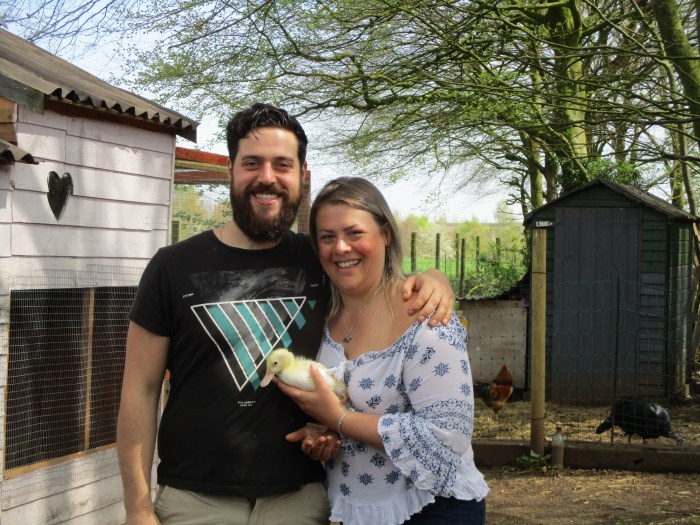
In recent years that became a little too much to maintain with all the rest of the maintenance and photographic work, and a third of the area has become a little apple orchard using 100 unwanted trees rescued and replanted from a nearby farm.

“We have a little salad bed near the house that used to be a huge cage for a golden
pheasant and his girls (that we inherited with the house 27 years ago),” says Roy. “We enjoyed their company for a couple of years before a fox tunnelled in and killed them.”

The Battells’ website is a modest one, but the archives provide an invaluable day-by-day record of the natural world around them – and an inspiring pictorial backdrop to the extraordinary transformation they have achieved on their doorstep.

Fresh case for the waste detectives

The Beyonder meets waste enforcement officer David Rounding on Buckinghamshire’s front line in the war against illegal dumping

IMG_0849
DIRTY WORK: David Rounding investigates a fly-tipping incident at Burnham

AN IDYLLIC single-track lane in the middle of the Buckinghamshire countryside sounds like an unlikely place for a crime scene.

But it’s surprising what goes on in our leafy rural backroads – and for David Rounding there’s sadly nothing out of the ordinary about the location of today’s investigation.

Responding to a tip-off from a concerned local, we’re standing in a small layby on a backroad near Burnham studying a pile of debris dumped at the side of the road.

It’s pretty standard household stuff – a sofa, bed, rug and other assorted bits and pieces. Infuriatingly, it’s less than half a mile from a household recycling centre where the items could have been unloaded legally for nothing.

Instead, they’ve been dumped here – spoiling the sylvan setting and posing a headache for the local council, who will now have to clear up the mess. But David’s on the lookout for clues – and is not disheartened.

The waste enforcement officer is part of a small team employed by Buckinghamshire Council – and he has quite a few weapons in his armoury that can help him solve this latest unpleasant ‘whodunnit’.

IMG_0854
FRONT LINE TROOPS: waste enforcement officer David Rounding

“When I started out it was really, really hard to prosecute,” he recalls. But times have changed – and for the past 15 years Buckinghamshire has led the way in the war on illegal waste dumping.

When David took up his job here in 2003, dumping was at a record high and rising, with more than 4,000 incidents a year across the county. By 2013 that had been reduced to under 1,500, partly as a result of an upsurge in prosecutions resulting in substantial fines, compensation payments and even jail.

Sadly fly-tipping is on the rise again – back up to more than 3,000 cases a year locally and costing taxpayers across England more than £57m.

Like other shire counties around London, Buckinghamshire is seen as an easy target because of good transport likes and easy access via the M40 and M25 to deserted country lanes like this one – the sort of idyllic country setting seen in so many episodes of the Midsomer Murders TV series.

From selfish householders leaving mattresses or fridges and rogue traders unloading tyres and plasterboard to criminal gangs dumping waste on an industrial scale, an increasing number of fly-tippers are littering fields, woods, roads and verges with unsightly piles of rubbish like this one.

For nature lovers and local residents taking a ramble or walking their dog, this sort of eyesore raises strong emotions. More than 11,000 fly-tipping cases – six a day on average – have blighted the local countryside in the last five years, costing tax-payers £500,000 a year in clear-up costs.

But it’s not all bad news, and as David Rounding launches his latest investigation, there’s a definite spring in his step.

After starting his career in Halifax he was working for the Environment Agency in 2003 when the various councils in Buckinghamshire first got together to combat the fly-tipping menace.

They realised that proper enforcement of the law was an invaluable deterrent and in the 15 years since the county council and four district councils launched their anti-fly-tipping campaign – ‘Illegal Dumping Costs’ – David and his fellow investigators have successfully prosecuted more than 600 fly-tippers.

As with most crime, a handful of individuals can cause a disproportionate amount of damage to the environment – and in serious cases prosecution can result in imprisonment, as well as hefty fines and compensation awards.

Don’t be fooled by the remote locations, either – in recent years hidden cameras have increasingly helped the team catch the criminals in the act.

waste 2
REPEAT OFFENDER: John Keenan dumped waste across Buckinghamshire

Like Letchworth builder John Keenan, 33, who was convicted in 2017 after CCTV twice caught him dumping waste from his tipper truck in local villages. Four other incidents of fly-tipping in rural Buckinghamshire and west Hertfordshire were traced back to him and work done by his company in and around London.

Keenan pleaded guilty to two counts of fly-tipping and four charges of failing in duty of care regarding waste he had produced. He was sentenced to 16 weeks’ imprisonment, suspended for 12 months, and ordered to pay costs totalling more than £4,700.

The cameras are a welcome boost for the enforcement team, who have seen detection rates improve.  “We are becoming better and better at convicting people. If the evidence is there, we will get them to court,” says David. “Since 2010 we have been averaging more than one conviction a week, and they each pay around £1,500 in fines and costs.”

Signs at dumping hotspots advertise the surveillance cameras but a succession of fly-tippers still get caught out. But CCTV accounts for only 40 per cent of the team’s convictions. Eye-witnesses account for another 20 per cent of convictions, with sharp-eyed members of the public equally keen to help catch the criminals spoiling their environment.

There aren’t many things which ruffle David’s composure, but he does get a little irritated by some of the myths which surround fly-tipping – like the claim that fines don’t get paid and costs aren’t recouped.

Last year alone, the team achieved 72 convictions and court-awarded costs of more than £75,000 towards the councils’ clean-up and legal costs, he points out.

“If you look at the evidence the fines and compensation costs do get paid,” he insists – and on top of that there’s the estimated £3m savings made over the past decade because of not having to clear dumped waste and send it to landfill.

Armed with the sort of evidence his team can gather, the net cost of a prosecution may be only around £300. But while nearly two thirds (62%) of fly-tipping convictions are for the act of dumping, the people who produced the waste can be prosecuted too for failing their duty of care if they do not ensure their rubbish is being disposed of legally.

David believes this is something many people may not realise, which could lead to someone unwittingly facing a heavy fine and a criminal conviction after paying someone else to get rid of their unwanted household items.

And he warns that cash payments to strangers are a recipe for disaster. It’s a trend that has been fuelled in the past couple of years by so-called “Facebook fly tippers” offering cheap waste collection services.

The waste detectives have become experts at finding clues to identify the source of dumped rubbish. And although David recalls late-night raids and dawn swoops with police when known dumpers have been caught red-handed, it is the sifting of rubbish for clues which he excels at and which brings 40 per cent of convictions.

IMG_0851
SMALL PRINT: David’s team are expert at sifting through rubbish for clues

The enforcement team works closely with Thames Valley Police, which can make it easier to trace a vehicle’s movements when a crime has been committed – and there’s close co-operation in more serious cases involving crooked commercial operators and even organised gangs.

Other crimes can also result in waste being dumped in rural areas, from professional shoplifters disposing of incriminating evidence to drugs stashes and paraphernalia from cannabis farms.

Another worry is an upsurge in more serious waste dumping by organised criminal gangs, and David’s next call is to visit a council site in High Wycombe where lorryloads of waste were dumped – the latest in a series of such incidents across Buckinghamshire in recent months.

Such large-scale, serious or organised dumping is investigated and potentially prosecuted by the Environment Agency, but their resources are hard-pressed and such crimes are on the increase, so David is only too keen to provide any practical help he can.

Clamping down on the criminals is also good for legitimate waste carriers, he points out, who potentially lose millions in business. But although the short-term profits may be tempting for lazy criminals, David is keen to make sure the prosecutions count.

One man was fined more than £1,000 for adding to rubbish which had already been dumped at the roadside by someone else. In January a Slough man was fined £2,200 for dumping 19 sacks of rubbish in Fulmer, and last month a Calvert Green man was fined £2,000 for dumping boxes near Aylesbury.

There have been a number of other successful prosecutions, as David has highlighted on his Twitter account.

“They might think the money makes it worth the risk but they can serve up to five years in prison, and we have jailed a few,” he points out.

To report a fly-tipping incident to David and his colleagues, visit the county council’s web page or the Fix My Street website.

Wake up with a smile

JAMIE ROSS WINNING BANNER PICTURE OFR THE DISCOVER BRITISH NATURE GROUP
LEAP OF JOY: Jamie Ross’s winning banner picture for the Discover British Nature Group

WHAT do you wake up to in the morning? For many of us it’s a news feed, TV breakfast show or radio news bulletin – and sometimes that can prove a pretty depressing start to the day.

Fake or otherwise, news can be bad for our health. The dangers were highlighted rather neatly a few years ago in an essay by Swiss entrepreneur Rolf Dobelli, who uses some pretty stark adjectives to describe our standard daily diet of toxic, stress-inducing snippets of irrelevant gossip.

With Dobelli’s warnings in mind of the damage this diet does to our ability to think creatively by sapping our energy, we at The Beyonder have been engaging in a detox with a difference.

Part of Dobelli’s cold-turkey approach involved ditching news in favour of magazines and books which explain the world and don’t shy away from presenting the complexities of life – go deep instead of broad, he advised.

That makes a lot of sense, but we don’t always want to sit down for a lengthy or complicated read, so what alternatives are there to the standard news feed?

In The Beyonder’s facebook group – still at the time of writing a very select gathering of a handful of like-minded souls – we’ve been exploring groups, pages and websites for outdoorsy people which might help us start the day in a more positive way than the conventional tabloid diet of death and destruction.

So, here are a handful of our suggestions which might provide a handy starting point for anyone wanting to start the new day with a jaunty spring in their step and a smile on their face…and we are only too happy to have suggestions of other groups that might be added to the list.

Of course the starting line-up of possible sites is almost too long to contemplate, from charities and country parks to heritage sites and TV naturalists. And there are those which might be a touch too specific for more general tastes, like Emmi Birch’s 1200-strong group of red kite enthusiasts or the 5000-strong followers of a group sharing locations of starling murmurations, or David Willis’s uplifting exploration of bushcraft skills.

So difficult is it to narrow down our top six feel-good sites, that it’s worth highlighting a few more which are calculated to bring a smile to the face before homing in on our top recommendations…

ssandy lane
CREAM OF THE CROP: Sandy Lane Farm in Oxfordshire

For those who like a regular update of life on the farm which doesn’t begin and end with The Archers, there’s always the news feed from Sandy Lane Farm, just a few minutes off the M40 in Oxfordshire.

This family-run farm is home to Charles, Sue and George Bennett and has been growing organic vegetables for over 25 years and raises free-range, rare-breed pigs and pasture-fed lamb. The farm shop is open on Thursdays and Saturdays for those wanting to visit in person, but for 1300 online followers there are regular updates of what they might be missing out in the fields.

Over in West Berkshire, a similar number of followers enjoy regular updates from Aimee Wallis and partner Dario at the Corvid Dawn Wild Bird Rescue Centre. The centre’s work, focused particularly on corvids, formed a full-length Beyonder feature back in May and the news feed provides regular pictures and video of rescued birds’ progress.

KIDDERMINSTER
KEEPING IT CLEAN: volunteers in Kidderminster

There’s nothing nice about litter, but a couple of inspiring community websites provide regular reminders that for every thoughtless or selfish individual treating the countryside with contempt there are a dozen highly motivated volunteers behind the scenes doing their best to make their local neighbourhood a better place to live in – and none more so that Michelle Medler and her pick-up team in Kidderminster.

On to our top five, then – and the 1800-strong Discover British Nature Group which describes itself as a place for members to share photos, ask for help with identification and to share their common interest in British nature.

Apart from hosting a friendly banner competition – for which Jamie Ross’s memorable shot above was a recent winner – the daily feed of spectacular shots of birds, insects and other wildlife is always a delight.

A similar website with a bigger 11,000-strong following is UK Garden Wildlife where foxes, hedgehogs, deer and badgers are in the spotlight, alongside a full range of birds, butterflies and other insects.

Given the sheer quality of many of the photographs on all these sites, there’s no such thing as an outright winner here, but in terms of the sheer amount of pleasure given on a daily basis, a clear contender is UK Through The Lens, a Facebook group with 23,000 members and a broader remit for photographs to share landscape and outdoor photographs.

Unlike some of the other groups, this provides scope for sharing pictures from urban and industrial landscapes as well as coasts, wild places and rural backwaters. It is also an excellent place to learn more about photography and is open to all, from outright beginners to full-on professionals.

ALAN BAILEY GROUP HEADER
FROZEN IN FLIGHT: Alan Bailey’s spectacular group header for Nature Watch

It’s a tough call to name a winner, then, but top of the tree of our photo-feeds for nature and animal lovers is Nature Watch which has a dedicated following of 31,000 members and a steady stream of inspiring photographs uploaded by enthusiasts across the country.

Another delight is The British Wildlife Photography Group, whose 21,000 members share very similar interests – and an equally stunning selection of photographs.

Of course this isn’t about choosing one website at the expense of the others, thankfully. It’s the combined input of all our contenders that helps to lift the spirits – and provides an inspiring and uplifting alternative news feed to those coming from the politicians, pundits and traditional news providers.

In the weeks and months since we have been following these pages (or joined the relevant group), the most noticeable thing about the vast majority of posts has been a real sense of humanity at its best.

Apart from the technical photographic skills of many of those contributing, it’s clear that these are people who care deeply about the environment – and what happens to it.

There’s plenty of scope on other sites to rage about climate change or animal cruelty or all the other things that are wrong with the world. But sometimes it’s important just to sit back with like-minded souls and marvel at the wonders of nature, from fluffy duckings and cute fledglings to stunning birds of prey, from some of the more elusive or nocturnal wildlife of our islands like moles and weasels to the less obviously breathtaking moths and beetles.

So, thank you to all those individuals on these websites whose startling snapshots of the natural world provide such a regular and genuine source of delight – and make each and every day just that little bit special.

We will be only too happy to extend our list to include further recommendations if appropriate – bearing in mind, of course, that membership of any of the closed groups mentioned is subject to acceptance, and abiding by the rules of that group.

Inside the ‘Cathedral of the Downs’

IMG_0671
‘CATHEDRAL OF THE DOWNS’: St Michael & All Angels at Lambourn

THERE’S a solidity to the church at Lambourn that you might expect of a landmark that has witnessed ten centuries of history.

A stone’s throw from the busy M4 motorway between Swindon and Newbury, the village provides a welcome escape from the traffic streaming west from London and the historic Grade I listed church is a cool, peaceful oasis at the heart of the village.

Nowadays Lambourn is perhaps best known as the largest centre of racehorse training in England outside Newmarket, but centuries ago it was the market town for the sheep farmers of the western Berkshire Downs – and the church of St Michael and All Angels is known as the ‘Cathedral of the Downs’.

At least four Anglo-Saxon documents refer to the town and the church and since the association of King Alfred with this part of England is well known and Alfred was a devout Christian, it is perhaps reasonable to presume that he may have had something to do with the founding or improvement of St Michaels. The dedication of Michael the Archangel was certainly a popular one in Saxon times; the addition of All Angels came later

From the outside, the visitor’s attention is perhaps initially focused on the distinctive lych-gate.

Nowadays we tend to have forgotten the purpose of these traditional gates but the name derives from the Old English ‘lich’, meaning corpse, and they were meeting places and shelters for the party bringing a corpse for burial.

Although some had been built earlier, the 1549 Prayer Book required the priest to meet the corpse at the churchyard entrance. This encouraged the provision of lych-gates to shelter the corpse and the funeral party for that purpose.

Lenton_Lincolnshire_Lychgate_geograh1761572_by_BobHarvey
FUNERAL SHELTER: a lych-gate at Lenton in Lincolnshire [PICTURE: Bob Harvey]

Medieval lych-gates were made of timber and most have long since disappeared. However many new lych-gates were erected in Victorian times, sometimes as memorials to prominent local people or as war memorials.

Although the numerous ancient barrows in this area are proof of much earlier settlements, as are finds of Roman pottery in the vicinity, Norman invaders later made their presence felt and the grand nave of the church dates from the 12th century.

IMG_0673
IMPOSING INTERIOR: St Michael’s boasts several chantry chapels

The first written record of a church at Lambourn dates from 1032, but it seems likely there was a Saxon church here several centuries earlier and the circular shape of the churchyard suggests that the site may have been in use in Roman times.

The current church was begun in the 12th century and the core of the building dates to about 1180 and is constructed on a cruciform plan. More information about the church’s history, transepts, chapels and stained glass windows can be found on a website run by the Friends of St Michael.

By the 13th century Lambourn had assumed some importance and a charter was granted by Henry VI to allow a market and two sheep fairs a year to be held. Around this time the Market Cross in the Market Square was erected.

IMG_0675
PAST GLORIES: some stained glass dates from the 16th century

Inside the church a variety of chapels provide plenty to interest the passing visitor – from the Holy Trinity Chapel built in 1502 by John Estbury, featuring a tomb chest decorated with coats of arms and a brass effigy, to the North Chapel, added in the late Elizabethan period and heavily restored in 1849, which contains a wonderful table tomb to Sir Thomas Essex and his wife Margaret.

At Sir Thomas’s head is a fiery salamander, emblem of the Essex family, while his feet rest upon a dolphin, an unusual symbol in an English church.

IMG_0676
CHAPEL OF REST: the table tomb of Sir Thomas Essex and his wife Margaret

After exploring the historic delights of the various chapels, you don’t have to go far for more earthly sustenance. The George across the road is not perhaps the most impressive looking of village hostelries from the outside, but the Arkell’s inn is friendly and bustling inside and the Sunday lunch proves a unexpected delight – and excellent value for money too.

IMG_0684
SUNDAY LUNCH: the George at Lambourn

Lambourn Church is at Parsonage Lane, RG17 8PA and The George on High Street, Lambourn, RG17 8XU.

Britain on the brink: still time to change?

greg-rakozy-53292-unsplash
BIG PICTURE: pondering our place in the universe  PICTURE: Greg Rakozy, Unsplash

THE MOST startling thing about Paul Kingsnorth’s 2008 portrait of England in decline (Seen and Heard – Books) is just how much of it sounds as if it were written yesterday.

And yet his round England journey was undertaken well over a decade or so ago. Which begs the question – why didn’t we all spot what was happening at the time?

Well, of course we did: we all had those bleak conversations echoing the book’s central message – moaning about those idiosyncratic pubs and cafes and shops being swept away amid the violent regeneration of our town and city centres.

And of course it wasn’t all bad, by any means. Many of those awful greasy spoons and appalling backstreet boozers were the very epitome of what was wrong with England. Those famous publicans who took pleasure in being rude to their customers, for example. Those village pubs empty on a Saturday night long before the smoking ban or the soaring cost of a pint had made a real impact on trade.

But as the song says, you don’t know what you’ve got till it’s gone – and in fact the lyrics from Joni Mitchell’s Big Yellow Taxi would make a pretty good soundtrack to Kingsnorth’s expose of a country which seems to have lost its way.

matthew-henry-49707-unsplash
PRICE OF PROGRESS: high-rise city centre offices PICTURE: Matthew Henry, Unsplash

What resonates most about his book is the cumulative effect of all this so-called progress – of its dehumanising effect on us, creating a culture of dependency on the consumer machine created by the apparently unstoppable march of global capitalism.

“We expect. We demand. We are like children. Everything must be instant and, if it isn’t, somebody must pay,” he writes.

This is the real tragedy and it’s a growing selfishness that we see around us every day, in impatient queues at the till or blaring horns in traffic queues, the careless dropping of litter or the way tempers flare up so quickly over the most minor disputes.

The problem is that we have lost our ability to relate to other people, to empathise with their plight, share their concerns. Instead, we are living in a world of artificial reality, fuelled by our self-absorbtion, our narcissistic Instagram uploads and Facebook selfies.

We tap our feet in the supermarket when the person in front of us has the temerity to chat to the check-out assistant. We thump on the horn if someone takes a micro-second too long to spot the traffic light has turned green. We are patronising and sarcastic or downright aggressive when hard-pressed rail staff or shop assistants struggle to cope with problems beyond their control.

And all the time we are taking pictures of our food or the concert or the view and telling our friends how cool and happy and chic and contented we are.

victor-xok-615429-unsplash
CONSUMER  CULTURE: global brands dominate our lives PICTURE: Victor Xok, Unsplash

And it’s this disconnect from any local community that poses the biggest danger to our wellbeing, not our reliance on global brands. It’s how we choose to use new technology that is the problem, not the fact that new technology exists.

And that’s nothing new. Joni Mitchell recognised the problem back in 1970 and we are far better informed today about the practical impact of our actions on the environment, as well of ways of starting to turn back the tide.

But if there is a more important message to be drawn from such a dystopian vision, it’s that there IS something we can do about it. As individuals, we can make choices. And as individuals working together we can be powerful.

That philosophy lies at the heart of what The Beyonder is about. At one level it’s about families exploring and enjoying the great outdoors so that it doesn’t feel as if we have totally lost touch with the landscape – or as if nature has just been contained and fenced in for our enjoyment (“They took all the trees / Put ’em in a tree museum / And they charged the people / A dollar and a half just to see ’em”).

It’s about youngsters feeling as carefree building a den in the woods or a sandcastle on the beach as they do battling dark forces in the latest computer game. It’s about having the patience to keep listening to the old boy in the pub rattling on about the way things were. And it’s about sharing our enjoyment for some of the simplest things in life – the new ducklings on the lake, the screech of an owl at night in the woods, the glimpse of a hare or badger disappearing into the undergrowth.

cropped-IMG_0792.jpg
SIMPLE PLEASURES: taking delight in the natural world

Kingsnorth recognised that if there’s any antidote to the ideology of mass consumption and growing disconnect between human beings, it lies in rediscovering the essence of the place itself, not just the field and stream, but the town and village too.

Human beings are social animals and enjoy being part of a community. We feel more anxious when we feel isolated, remote, separate from our environment, so it makes sense at every level to know our place and the other people who inhabit it.

We can’t bury our heads in the sand, turn off the news and live in a bubble, pretending the problems of the world don’t exist. But we can take a moment to share our appreciation of the natural world, our joy of living and our recognition that thousands – millions – of other people feel the same way.

Just as a sneak theft or random verbal attack by a stranger can spoil our mood and our day, so a random act of kindness can bring not just a smile to our face but a deeper inner joy.

There may be plenty wrong with the world, but there are other people out there who care just as much about what’s gone wrong – and who are working out the best way to put it right, one little personal step at a time.

Real England: The Battle Against The Bland by Paul KIngsnorth was published in paperback in June 2009 by Portobello Books at £8.99

ryan-jacques-465-unsplash
BACK TO NATURE: England’s threatened wildlife PICTURE: Ryan Jacques, Unsplash

Passionate lament for a lost land

51MHmrsc-iL._SX321_BO1,204,203,200_

PAINFUL at times to read and depressingly prescient, Paul Kingsnorth’s 2008 portrait of England in decline is even more disturbingly relevant a decade after its original publication.

Written with wit and charm rather than as an aggressive polemic, Kingsnorths personal journey around the country was effectively a manifesto against the homogenising forces of globalisation and a top-heavy state.

Following in the footsteps of Orwell and Chesterton, the former deputy editor of The Ecologist embarked on a quest to establish the nature of the ‘real England’ in the 21st century – and discovered a nation in disarray and under siege.

But this wasn’t merely a sentimental or nostalgic harking after yesteryear. In many ways Kingsnorth was as stark and hard-hitting in his portrait of the plight of the little man as Orwell – and at times he finds it hard to contain his anger.

“I am angry at what is being done to my country, angry at what is being lost and what is being deliberately erased,” he writes.

annie-spratt-160575-unsplash
UNDER THREAT: the archetypal English village PICTURE: Annie Spratt, Unsplash

Kingsnorth takes his cue from words written a quarter of a century earlier by Richard Mabey in The Common Ground (1980): “Time and again we have seen how most of the naturally rich areas that remain on the farm are now confined to land that is agriculturally marginal.”

But Kingsnorth’s premise is that Mabey’s pronouncement on agriculture can be more broadly applied to our modern lifestyles, where the richest and most interesting remnants of English culture are now only to be found at the margins, away from the shopping malls and busy motorways.

His meander around the country picks up various threads which reflect a litany of loss: of closed pubs, specialist shops and second-hand bookshops on one hand and the destruction of wildflower meadows, chalk grasslands and ancient woodlands on the other – together with the flora and fauna which they supported.

ryan-jacques-465-unsplash
LITANY OF LOSS: England’s disappearing wildlife PICTURE: Ryan Jacques, Unsplash

The “battle against the bland”, as the book is subtitled, is the battle against the apparently unstoppable spread of a manufactured corporate landscape, where individuality gives way to conformity, uniformity and mediocrity.

This is a world of identikit high streets, privately owned shopping malls and private security companies, where so-called progress destroys traditions, livelihoods and any sense of community.

STEEPED IN HISTORY: the White Hart in Waterloo

“We are not a society which appreciates value,” he writes. “We appreciate instant gratification, primary colours, simple answers. We appreciate celebrities and shopping and media scandals and premium rate phone lines.”

Here lies the rub, because amid the bewildering distractions of technological advances, investment opportunities and a plethora of consumer choice, we are in danger of losing our way entirely, he argues:  “We are losing sight of who we are and where we have come from. And we don’t care. Or do we?”

victor-xok-615429-unsplash
BRAVE NEW WORLD: inside a shopping mall PICTURE: Victor Xok, Unsplash

At the time it was published, the book was not unremittingly bleak and did contain various suggestions for steering a path to a more optimistic future, despite the dire warnings of  local pubs being turned into theme bars or pricey flats and rural villages becoming commuter dormitories or dead collectives of second homes for the wealthy.

Yet many of those warnings seem even more disturbing today after a decade of social networking, of the transformation of city centres and old docksides into high-rise offices and unaffordable penthouse flats.

The gentrification of whole boroughs of London is complete, grubby cafes and other  community meeting spots being swept away by stainless steel and smoked glass.

“The small and the local, the traditional and the distinctive were being stamped out by the powerful, the placeless and the very, very profitable,” Kingsnorth recalled in a Guardian article in 2015 – and not just in England, of course, but around the world, from Delhi to Sydney.

Yes, there have always been those determined to resist the Tescoisation of the land, but the author also believes this is not a straightforward issue in political terms, but about the individual against the ‘crushing, dehumanising machine’.

Back in 2008 the urgency of this book lay in its unequivocal message about the need for us to stop being complacent and do something before it’s too late.

matthew-henry-49707-unsplash
SKY’S THE LIMIT: Toronto’s financial district PICTURE: Matthew Henry, Unsplash

So is it too late? The onslaught on the whole cultural fabric of England’s local communities has continued unabated. The pubs and dairy farms have continued to close, the skyscrapers, motorways and luxury flats are still being built.

“The population is expected to exceed 70 million within 15 years, all in the name of growth and with no end in sight. Global capitalism is eating the soul of the nation,” wrote Kingsnorth in 2015.

Back in 2008 he lamented how consumerism specialises in creating a fake reality where new ‘needs’ are created by the brand marketing gurus and can be met, at a price, to help us fend off old age, pain, heartache, loneliness.

“We become narcissistic, self-absorbed, atomised. All that is real seems unreal; all that is false seems sublime. Everything is controlled – including us.”

It is a dystopia worthy of Huxley; ten years on and the unfolding tragedy seems to be even more vivid and terrifying. With Donald Trump as American president and Brexit looming, is England able to reclaim any of its lost character? The gulf between the haves and have-nots is even wider than it was in 2008. We live in any age of  suicide bombs and apocalyptic warnings about climate change and mass extinction.

But Kingsnorth still believes if there’s any antidote to the ideology of mass consumption and growing disconnect between human beings, it lies in the essence of the place itself: the woods, fields, streets, towns and beaches.

“We can be surrounded by plastic or be part of something real. We can be Citizens of Nowhere or we can know our place – know it and be prepared to stand up for it, because we understand how much it matters.”

That was his rallying call in 2008 and despite all the changes during the intervening years, it still makes a great deal of sense. All is not lost – not quite. And perhaps the growing resonance of that message in a world gone mad is that it’s never too late to stand against the tide – if we really want to.

Real England: The Battle Against The Bland by Paul KIngsnorth was published in paperback in June 2009 by Portobello Books at £8.99

steve-harvey-530335-unsplash
IDENTITY CRISIS: can England rediscover its soul? PICTURE: Steve Harvey, Unsplash

Waging war on plastic

scott-warman-525481-unsplash
GOING GREEN: vegetables without plastic wrapping PICTURE: Scott Warman, Unsplash

IT WAS a health scare that started Kathryn Kellogg first thinking about what she was putting in and on her body.

“I had never considered it before; I just assumed everything I was consuming was safe,” she says. “There’s very little regulation and testing for the products we buy. Cleaning companies don’t even have to release the ingredients they use.”

After starting to cook from scratch and starting to make her own cleaning and beauty products, the aspiring actress moved to California as was shocked to see all the litter and plastic in the ocean.

“I knew I had to do something; so, I decided to be the change I wanted to see. I stopped buying plastic and wanted to create a sustainable life. It felt like a really natural progression,” she recalls.

Living in the Bay area and spending her free time hiking and cooking, she worked a 9-5 job and is one of a number of young millennial women responsible for promoting a zero-waste lifestyle revolution that has taken off in a big way.

Kathryn’s blog, Going Zero Waste, was launched in March 2015 and by the time she was profiled in The Guardian a year later, was attracting 10,000 page views a month and had 800 subscribers.

The focus of her Instagram, Facebook and Twitter posts is all about homemade products and simple shopping tips that can help avoid unnecessary waste. The goal is to ensure her trash for the past year – anything that hasn’t been composted or recycled – fits in an 8oz jar.

She’s not alone – over in Chicago, Celia Ristow of Litterless espouses a similar zero waste vibe.

And it’s got to make sense. One of the best things about her blog is her desire to make things accessible and attainable: so that for anyone starting out on the zero waste journey or just wanting to be a little more eco-friendly, her first suggestion is always the ‘Big Four’ simple, easy swaps popularised by Plastic Free July, an initiative which originated in Western Australia but which now involves participants around the world.

Kathryn advises that these four items – plastic bags, straws, single use water bottles and takeaway coffee cups – are easy to avoid and make-up a huge portion of waste in landfills and the ocean.

It’s a great starting point for reducing litter at the point of consumption – and just one of a series of straightforward tips on Kathryn’s website.

heder-neves-177219-unsplash
LESS IS BEST: steering clear of plastic PICTURE: Heder Neves, Unsplash

In fact, this is just one of more than 300 blog posts full of zero waste tips. For anyone starting out on the journey, Kathryn’s Beginners’ Guide is as good a place as anywhere to start.

Peter picks up the baton

Peter_at_Beacondfield
ROADSIDE LITTER: Peter Silverman surveys the problem at Beaconsfield

PETER Silverman is a man on a mission.

It wasn’t always like this. But what began as an observation about the apparently worsening tide of litter on roadside verges around his home has turned into something of a crusade.

It was back in 2010 that the retired financial adviser became aware of specific problem areas that seemed to be being ignored by the relevant authorities.

“The amount of stuff on the verges was monumentally worse than it is now,” he recalls. But part of the problem then, as now, was working out which authority was actually responsible.

National Highways (formerly Highways England) and its contractors are responsible for keeping motorways and trunk roads clean, but in counties like Buckinghamshire, although the county council is responsible for highways, litter-picking is a district council function.

It soon became clear to Peter, now 75, that some spots – like slip roads around the Denham roundabout where the A40 meets the M40 – appeared to be slipping through the net and had been totally neglected.

Part of his frustration was that the authorities appeared to be failing to fulfil their duties under the Environmental Protection Act 1990 S89(1) to “ensure that the land under their control is, so far as is practicable, kept clear of litter and refuse”.

Not a motorist to be trifled with, Peter duly issued a Section 91 warning notice under the ‘EPA’ legislation to the transport secretary, prompting a sixfold increase in cleaning activity by the Highways Agency’s contractor, bringing the southern end of the M40 up to an acceptable standard by June of that year.

But of course the problem didn’t stop there. Eight years on, and Peter’s website pays testimony to his ongoing battle with the authorities – a fight which has been picked up by like-minded motorists around the country.

The problem hasn’t gone away, of course. Only this year another litter abatement order was required before Highways England fulfilled its legal responsibilities to clean up slip roads around the Denham roundabout.

Peter’s frustration lies not only with the agencies involved but with the lack of concerted and effective action from central government – exacerbated by funding cutbacks.

To make matters worse, responsibility for litter is “passed around like a hot potato” by government ministers, he maintains. Whereas an ‘important’ job like health secretary has been held by Jeremy Hunt since 2012, litter has not been prioritised in the same way.

“Jeremy Hunt has been in charge of the NHS for years and every year you get more expert,” says Peter. “With litter, the people do it for a year and move on. It’s the same with the people in charge of the Highways Agency.”

Undeterred, Peter’s website has continued to chronicle his mission to get the authorities to fulfil their duty to keep their land clear of litter – and to do far more to deter those who create it in the first place.

“For decades central government has failed to provide the leadership, funding and resolution needed to get to grips with the problem,” he maintains.

No organisation was charged with the task of policing compliance with EPA duties and he fears that the issue is far from being a top government priority, despite the publication of a “litter strategy for England” updated last July.

“In 2015 a Commons select committee concluded that England is a litter-ridden country compared to most of Europe, North America and Japan,” says Peter. “Our main roads and motorways are in the worst state of all. Local authorities pay less heed to through roads where there are usually no residents to complain about their condition.”

But the national litter strategy promises no additional funding for litter collection and fails to adequately tackle any of the key issues, he believes.

“The litter strategy is a total and utter joke,” he says. There are similarly harsh words for Keep Britain Tidy and many of those working for key government agencies, including ministers and civil servants: “We may not have the kind of widespread corruption you see in some countries but we have our own kind of corruption in the form of making life easy for civil servants, for not having the courage to actually deal with problems.”

There has been much talk about forcing councils to remove roadside litter and prosecute offenders, but he believes many council schemes where specialist contractors can issue on-the-spot fines for littering are only ‘token operations’ to show a council is doing something, with most officers instructed not to issue juveniles with such fines because of magistrates’ “reluctance to give a 15-year-old a criminal record for dropping a packet of crisps”.

It’s not just the roadside litter that’s a problem either, he points out, but spillages from skip lorries and bulk waste transporters. Despite evidence that this occurs on a regular basis, the Environment Agency has only prosecuted one such offending company since 2000, he claims – and that was at his instigation.

“Highways England obstinately refuse to accept that they can and should prosecute these offences,” he maintains.

And apart from our filthy motorways, there’s another major problem when it comes to clamping down on fly-tipping: that despite this being a criminal offence punishable by unlimited fines and a five-year jail sentence if convicted in a crown court, the Environment Agency appears to have prosecuted only ONE case involving large-scale fly-tipping in 2017.

The agency is responsible for investigating larger scale fly-tipping, hazardous waste and fly-tipping by organised gangs. But while Defra minister Therese Coffey referred to more than 200 incidents of large-scale flytipping being ‘dealt with’ by the agency in 2017, Peter’s Freedom of Information request asking about the number of prosecutions brought by the EA between 2006 and 2015 showed the number had declined from 96 in 2006 to 26 in 2015.

There’s plenty of tough talking from the EA, which says: “Our specialist crime unit uses intelligence to track and prosecute organised crime gangs involved in illegal waste activity. We are determined to make life hard for criminals.”

But Peter’s research revealed many of the recorded prosecutions were for the mis-management of waste transfer, treatment and storage sites rather than fly-tipping.

Enfield-fly-tip
EYESORE: large-scale fly-tipping in Enfield in March 2018 PICTURE: Peter Silverman

He explains: “In fact only three of the 30 cases in 2017 were definitely for fly-tipping. Two of these were in effect the same case as two members of the same family were prosecuted for the same incident. Their combined fines were £75,000. In the other case the fine was only £900.

If such statistics sound depressing, the good news is that it means Peter isn’t quite ready yet to stop being a thorn in the side of the authorities – whether that means government ministers and departments, local councils or the Highways Agency.

Sadly, the campaign still has to reach a wider national audience. Despite occasional outings on national TV (he was a guest on BBC Breakfast in April this year), his Youtube broadcast clips (as when he featured on BBC’s Don’t Mess With Me documentary series about littering back in 2014) are still seen by hundreds rather than thousands of viewers.

But there’s clearly huge support for his work nonetheless. The ‘Have Your Say’ section of his website contains hundreds of comments from drivers who share his anger and frustration at the roadside litter scandal – and who realise the battle is one worth fighting.

As contributor John Lindsay wrote in April: “Peter is doing a fantastic job to bring more attention to the litter disease that engulfs our country.

“We all have a choice to either do something about our littered nation or not. We must spread the word to educate our own families, neighbours and friends. By acting together we will leave a better legacy.”

It’s an important message. Peter’s website may testify to the fact that this is so evidently a one-man campaign – but it also reveals that it’s not one he has to fight entirely on his own.

Litter campaign gathers pace

TREE

IT’s exciting to see a dynamic new nationwide campaign being launched by a small group of professionals united by a shared passion for looking after our environment – and growing concerns about litter.

Clean Up Britain (CLUB) has been lobbying hard for a national litter campaign as well as inspiring and enabling communities and businesses to tackle a range of recycling and environmental issues, from reducing single-use plastics to clamping down on fly-tipping and roadside litter.

Founded by John Read, who has extensive experience in campaigning, corporate communications and public affairs, CLUB launched its Litter Kills initiative last month with the following message:

The UK has a serious litter problem. Take a look around you – every village, town, city, beach and roadside is blighted with the lazy leftovers of our daily lives.

We’ve been wrestling hard with how to properly ignite the conversation about litter and the damage it does.

In particular, we need to get to young women and men, age 16-30, who don’t even think about litter. This age group, while outwardly professing a love of the planet, recycling and other green issues, over-indexes on littering compared to other age groups.

It’s been ages since a national anti-litter campaign ran which changed littering behaviours, the topic of littering gets no airtime with this audience, and any wider efforts to prompt thinking and behaviour change has been largely ineffective.

Litter doesn’t really figure on their radar. Yet.

We had seen the RSPCA stats – they get 5,000 calls a year about animals injured by litter. Instinctively, we knew that this must be the tip of the iceberg.

We also knew, from previous research, that talking about hurt and dead animals was one of the only ways to ignite the conversation about litter with our target audience.

And so we began looking hard at the impacts of litter on animals, and with help of  the RSPCA, the British Veterinary Association and the pet charity Blue Cross, we built the bigger, shocking picture. Our campaign ‘Litter Kills’ was born.

CATSDOGS-JPG_For-website

CLUB recognises the images are shocking, but believes that’s necessary:

We need to give people a reason to react strongly to seeing others litter, and make those who do think twice. We have to shift attitudes and behaviour.

We’re supposedly a nation of pet and animal lovers. British households in total host 8.5m dogs and 8m cats. Millions of us care about wildlife and enjoy seeing wild animals where we live, work and play.

Yet our littering habit affects thousands and thousands of animals in a very bad, sometimes fatal, way.

Tragically, the images selected for the campaign are all real, selected from countless case studies of animals injured or poisoned by discarded takeaways, mouldy food or broken glass.

The “litter kills it’s time to act” message is part of CLUBs Now or Never campaign which kicked off in Leamington Spa and received widespread local and national media coverage.

And earlier news releases have focused on issues like fly-tipping, another issue close to our hearts at The Beyonder.

Back in March last year, CLUB warned busy residents not to unwittingly pay rogue traders to dispose of their waste.

The message was simple: make a quick check with the Environment Agency to see if they have a waste carrier permit, rather than risking a huge fine for having the waste disposed of illegally.  Any legitimate trader should be happy to provide their name or registration number. The agency can be contacted by phone on 03708 506 506).

IMG_0748

Felicity makes a splash

By Olivia Rzadkiewicz

DUCK

THIS afternoon a delightful, downy creature waddled into our lives and made a big splash in our hearts.

The river behind our house is home to some 20 adult ducks, and our neighbourhood has been waiting with bated breath for the arrival of the spring hatchlings.  We hadn’t spotted any – until today.

A grown parent pair was guiding their brood of two tiny ducklings upstream.  The river is very fast flowing and has a strong current, and it wasn’t long before the second duckling was struggling to keep up.

IMG_0800

We watched with a growing sense of alarm as the duckling began to lose strength.  Her bursts of ferocious paddling were growing weaker and she was floating further away on the current.  Meanwhile, the adult ducks had swum so far they were now around the next bend 20 metres upstream and out of sight.

We have quite an active colony of patrolling red kites that have made their home in the enormous cedar of Lebanon that watches over the waterway, and it didn’t take much for my maternal instincts to kick in with full force.

I waded out to the opposite bank of the river, struggling even at my height to keep balance in the flow.  The duckling was desperately trying to cling onto some ivy that creeps down to the waterline, chirping noisily to alert her parents.  They hadn’t noticed half of their brood was missing.

I scooped her tiny form out of the water easily and carried her to our landing bay.  She was still chirping wildly but did not resist my touch.  The next hour was spent in two ways: Andrew got on the phone to our friend Aimee Wallis at Corvid Dawn to find out what to do next, as she has rescued ducks herself and reared them for release.

I guarded the duckling, whom I have now named Felicity Duckworth, as she chirruped frantically from various vantage points around the garden in the hope that her parents would hear her and return.  I kept a watchful eye on our curious cat, Legotine, and shooed away a male mallard duck who was barking and snapping at Felicity with such ferocity that I snatched her away from him before he attacked.

IMG_6697

All the while, whenever I set the duckling down on the ground, she would run quickly to my feet and seek shelter under my long dress.  This behaviour, Aimee warned us, is called imprinting.  Ducklings have an instinct to follow moving objects that are bigger than themselves (animate or inanimate!), believing that object to be their mother.  I was flattered to say the least, and completely, utterly smitten.

Aimee told us the best thing we could do was to keep Felicity warm and take her to a wildlife sanctuary.  It is apparently rare for a mother duck to return for lost young after around two hours.  We duly waited and then, with Felicity tucked into a warm box lined and covered with tea towels, set off with heavy hearts for Tiggywinkles Wildlife Hospital in Aylesbury.

Whoever wrote the ugly duckling song had clearly never seen a duckling themselves.  In the car, Felicity kept jumping out of the box that was in my lap and clambering desperately into the crook of my neck where she nestled herself and kept warm.  I had a chance to see her close up when she was relatively still.

Her down was brown and yellow, and more like fine, fluffy fur.  Her eyes were intelligent, sharp and very trusting.  She could only be days old as her beak was sharpened to a point by her egg tooth which she had used to hatch out from the shell.   All in all, this little bundle was quite simply perfection.

She was starting to close her eyes and her neck was drooping, a sign of shock or exhaustion in ducklings, so I put on Classic FM, thinking the music would be the closest thing to birdsong we had access to in the car.  She quickly came to and cheeped volley after volley of duckling songs for the remainder of the journey.

We were greeted by two receptionists at Tiggywinkles, who humoured me as I struggled to break the bond that felt inseparable after only two hours of acquaintance.  Reluctantly, and with a lump in my throat, I handed Felicity to the veterinary nurse who lifted her in her blue latex gloves.  Three other ducklings had been handed over to the centre that morning after a female duck was killed in a road accident.  I am heartened to know that Felicity will be given a chance to ‘learn how to be a duck’ with three new siblings who will no doubt have stories of their own to tell.

Tiggywinkles in Aylesbury, The Wildlife Hospital Trust, is a specialist hospital dedicated to rescuing and rehabilitating all species of British wildlife.
 Wild animal casualties brought to the hospital are treated free of charge and released through a controlled programme back to the wild when they are fully fit. To find out more about the work of the hospital, which has a visitors’ centre, see the charity’s main website above or Facebook page.

Glorious display of floral fireworks

cropped-IMG_0792.jpg

IT’S rhododendron time again at Langley Park, which means a spectacular fireworks display of colour in the Temple Gardens.

From here you can look out over the park towards Windsor Castle – but not before spending a little time wandering along the pathways enjoying the dazzling range of different colours and blooms.

cropped-IMG_0774.jpg

In mid- to late May it’s a genuinely spectacular sight, and if you arrive early enough in the morning or on a weekday, you may have those winding paths pretty much to yourself, apart from the odd jogger or dog walker.

IMG_0767

Reds, pinks, whites, yellows – each time you turn a corner there’s a bush of a different hue or blooms in new dramatic shapes. See the link above for more details about the park, and the council website for opening times and parking charges.

IMG_0770
IMG_0790
IMG_0788
IMG_0794
IMG_0797

Ramblers return to R4

BALDING

FANS of Radio 4’s countryside programme Ramblings will be pleased to see its return this week for its 39th series.

For almost 20 years, broadcaster Clare Balding has been tramping around the British landscape transporting listeners on another Thursday afternoon aural adventure, accompanied by enthusiastic local walkers from all walks of life.

A chaotic and lively dog-walk near Honiton in Devon kicked off the new series, with rebellious golden doodle Nigel trying to upstage Clare and her guests.

But that’s not everyone’s idea of entertainment, of course. Back in 2013 Will Self, writing in the New Statesman, hit out at the show as being symptomatic of the state broadcaster “kowtowing” to its parliamentary paymasters with an “excessive amount of mittel-Englandry of the leather-on-willow, cask-aged-bitter, spinsters-cycling-to-evensong variety”.

He sniped: “Balding is a natural for this sort of thing. She comes from that stratum of the British who seem to love their dogs and horses more than their children and certainly a great deal more than the working class. ”

However even Self recalls the show as being “a thoroughly amiable affair: the walks are usually in areas of tolerable – if not outstanding – natural beauty and the chit-chat flows like milky-sweet tea from a Thermos flask”.

Of course the very concept of pitching a walking programme on radio is an extraordinary one. Speaking to Country Walking magazine in 2016, Balding explained how the show’s long-term producer Lucy Lunt originated the idea:  “She had such a conviction and faith in it; she saw the ideas and stories that could come from putting two people together on a walk with something to talk about. ”

Balding joined for series two because the original presenter wasn’t able to do it, and proved an immediate hit.

Elisabeth Mahoney, the Guardian’s radio critic, wrote: “The finest broadcasters make you forget the medium. They sound as if they are chatting to you, off-air and informally, and are just happening to say amazingly clever, interesting stuff.

“She is quite simply a radio natural, and presenting a format that couldn’t suit radio better: a walk and a talk.”

If you miss the Thursday afternoon broadcast, more than 200 episodes of Ramblings are available as podcasts. And at least one walking group for bereaved people was set up by people who had listened to Ramblings and loved the way the series helped to evoke the best memories of time spent with their partners.

“If Ramblings never accomplished anything again, that would be success enough for me,” Balding said in 2016.

Ramblings is broadcast on Radio 4 on Thursdays at 3pm.

Raven Alfie rules the roost

IMG_0662
MAKING MISCHIEF: Alfie the raven is determined to play

ALFIE the raven is in mischievous mood during our visit to Corvid Dawn in Berkshire.

This is not at all unusual, it transpires – and to be fair we were given plenty of warning to watch out for one of the more colourful characters looked after by Aimee Wallis at her wild bird rescue sanctuary.

The captive-bred raven flies free around their rural retreat and takes a very close interest in our movements. But then this is a bird who flies and trots along when the ‘family’ goes for a walk and enjoys playing games like ‘fetch’ and hide and seek (as long as he gets to make up the rules).

Alfie’s clearly in his element amid the motley assortment of other animals to be found in Aimee’s sanctuary, and as we embark on a guided tour there are soon plenty of curious onlookers in tow – a trio of dogs, a couple of rescue lambs from Wales and the neighbours’ children, for a start.

Cutest of the new arrivals is Missy the baby duckling, a tiny white mallard found by a couple on a canal, either abandoned by her mother or dropped by a predator.

The RSPB warns people only to interfere with fledglings as a last resort, and says: “Seeing ducklings and other young birds on their own is perfectly normal, so there’s no need to be worried. Just because you cannot see the adult doesn’t mean they are not there.”

IMG_0623
BALL OF FLUFF: Aimee and partner Dario with Missy the duckling

But the couple who found Missy could find no trace of mum and looked after her for a couple of days before bringing her to Aimee.

“They did so well, did all the right things, she’s a lucky girl. They’re off back to Australia at some point so couldn’t really take her on,” Aimee explains.

Missy will be in good company here. The rescue lambs are taking a close interest in her welfare as she settles into her paddling pool and there’s a lot of curiosity among the corvids too – the crows, rooks, jackdaws and ravens who are the main focus of attention at the centre.

IMG_0605
MAKING A SPLASH: Missy settles into her paddling pool

Yes, there are hens and turkeys here too, but it’s the corvids that are Aimee’s first love and which prompted her to create the sanctuary in the first place. Before all this she had a career in the beauty industry, though that life seems very distant to her now.

It’s a few years since Aimee’s first encounter with corvids, after she and her mother took an injured blackbird to a bird sanctuary and she became intrigued by the intelligence of the crows and ravens who were kept there.

In fact she ended up working at the centre as a volunteer and the love affair was cemented when she first encountered a blind five-week-old crow called Wonder. But as she began to learn more about the birds she also began to realise that she and the owner had very different ideas about how the rescue centre should be run.

She says: “My first question was when will the birds be released, but it was clear they weren’t going to be. He didn’t agree with nature, he thought the birds were better off with him than they would be in the wild.”

IMG_0645
FUN AND GAMES: playing with Alfie

It’s clear that there are plenty of unhappy memories associated with that period of her life, but Aimee doesn’t shirk from difficult questions and has publicly spoken out in the press about her experiences at the sanctuary, which was raided by police in 2015, after she had left.

“The former volunteers were all devastated by the outcome,” she says. “When I first went there I noticed that the cages were not in a great state and there wasn’t a lot of water. I just thought they needed some help so I started volunteering.”

Aimee started releasing healthy birds from the aviaries herself and taking ill birds to a local vet, learning a lot about the birds’ welfare in the process. She was allowed to take two birds with her when she left, but dozens of birds were seized in the police raid and a number had to be put down.

The corvid family includes crows, ravens, rooks, jackdaw, jays and magpies – all known for their intelligence – and it was clear to her that she wanted to set up her own rescue centre if at all possible.

After moving back home with her mum for a while she worked in a local pub and was able to keep her birds on land there for a year until the pub got planning permission to expand. By then, word had got around about her rescue work, prompting one farmer she also worked for to offer her the chance of establishing a proper base in the country.

That move in November 2017 provided the perfect opportunity to set up Corvid Dawn as a more spacious sanctuary able to offer a proper rescue and release service.

“We were in desperate need of a new base and the farm is run by a lovely older couple,” says 36-year-old Aimee.

IMG_0603
WOOLLY FLOCK: the lambs were too small to thrive where they were born

It’s a perfect location for her centre and it’s been a busy few months working on new accommodation for the growing family. It’s hard to keep track of exact numbers, though, with new arrivals most weekends. That all adds to a pretty demanding work schedule – not to mention proving a costly exercise, with so many mouths to feed.

The aim, wherever possible, is to rescue and release birds back into the wild, although some of the more badly injured will be longer-term residents, along with cruelty cases who may have been mistreated or neglected.

Eventually, Aimee hopes the centre will also be able to perform an important educational role, introducing school children to the birds through talks and displays at locations like the Nature Discovery Centre in Thatcham, Berkshire.

Her mission is to demonstrate just how intelligent and perceptive birds can be and, by sharing her experiences of rescuing and rearing corvids, promote a better understanding of  British wild birds among pupils.

“They are fantastic judges of character. It’s bizarre – they show jealousy and they have favourite objects,” she chuckles.

IMG_0610
SAFE REFUGE: spacious cages are home to a variety of rescued birds

Providing sanctuary to her family of animals and birds has involved some rapid cage-building, although one day she would love to have a free-flying flock of rooks.

For now, large cages will have to suffice. But partner Dario, 33, has been a willing worker, even embarking on a carpentry course to hone his woodworking skills.

An Italian with former experience in the military, he came to the UK to improve his English and had a job locally working with horses when they first met.

There are signs of his hard labour everywhere, from the fencing and cage construction to the newly turned over patch which will soon become a vegetable garden.

IMG_0639
MENAGERIE MANOR: Dario with the chickens and turkeys

It’s clear that he loves animals too, despite the hard work involved in almost every aspect of their care.

Alfie is looking down from a lofty perch inspecting us as we wander around his territory, a reminder that establishing such a close relationship with him has been no easy task.

Bred in captivity for the pet trade, he was angry and suspicious and it has taken many, many hours of cajoling – and plenty of slashes from his razor-sharp beak – to win his trust and establish the sort of easy rapport that we are able to witness.

IMG_0630
RULING THE ROOST: Alfie keeps a beady eye on what’s going on

But despite the tough times – the tales of animal cruelty and the trauma of dealing with ill and injured animals – Aimee finds people’s compassion and kindess a huge compensation.

The weekend after our visit sees an influx of new arrivals: badly injured baby blackbirds mauled by a cat, a jackdaw with an eye infection, an almost paralysed crow hit by a car.

“The saddest was three newborn baby blackbirds that came in,” she posted on the centre’s Facebook page, where some of her 1400 followers are quick to offer their support. “They all died one by one, despite antibiotics and heat.”

Yet almost in the same breath she is posting: “Can I just say what wonderful people I’ve met through these birds this weekend, really kind driving them to meet me or even bringing them here, really touching to see people show such compassion, thank you so much xx”

IMG_0635
FEATHERED FRIEND: Aimee with one of the hens

Alfie is far from being the only star of the show, of course – there’s Ratchet the rook grabbing an impossibly large twig for nest building, Dara the one-legged crow recovering from an operation at the vet’s, and a dozen other assorted corvids clamouring for love and attention.

Not to mention the animals too, of course. “We are busy with farm animals – we are suckers for it, to be honest, Aimee admits. “We have two little pigs – that was an emergency thing – and two lambs, and some rescue turkeys. And about 23 birds, mainly corvids.

IMG_0640
FEEDING FRENZY: Dario with the pigs

Out here in rural Berkshire, there’s quite a substantial population of wild animals too, including hundreds of rooks, jackdaws and starlings in nearby fields and woods, along with foxes and badgers.

The wild rooks may be a little perplexed by Alfie’s decision not to stray too far from home – but so far the fencing has proved a sufficient deterrent to keep the hens in and the foxes out.

Not that the education process is restricted to children. Many farmers regard crows and pigeons as pests, and dozens of fieldsports videos are dedicated to the merits of different guns and cartridges for disposing of the birds, citing their damage to crops and potential spread of disease as key arguments for pest control.

Aimee doesn’t mind discussing such matters with anyone, as long as they can keep the debate civilised.

IMG_0641
HOME FROM HOME: the rescue centre takes shape

“I’m just a normal girl who loves animals,” Aimee insists. Maybe so, but it takes a pretty dedicated individual to lavish this kind of time and attention on such a large and demanding family just for the fun of it.

All the hard work doesn’t go unappreciated, though, judging by the reactions of her feathered friends. And it’s Alfie who has the last word, of course, cackling loudly as we start making moves to leave, and even standing out there on the road to see us off…

For more information about Corvid Dawn, see the centre’s Facebook page.

IMG_0669

Kate goes back to the land

201853162_Back_to_the_Land_wit
SEAWEED FEAST: filming in Cornwall [PICTURE: 7 Wonder Productions/BBC]

THERE’S a growing appetite for lovingly produced high quality food – and for rural success stories, it seems.

That was certainly the message when BBC2 placed a supersized order for Kate Humble’s Back To The Land series following a three-part debut run last March.

After whetting audiences’ appetites with a handful of extraordinary tales of aspiring businesses turning seaweed into food and goat’s milk into probiotic drinks, the TV production company 7 Wonder got the go-ahead for a 12-part series of the 60-minute programmes after the show picked up an average audience of 2m on its first outing.

Presented by Kate Humble, the series celebrates rural Britain by championing the UK’s most inspirational rural entrepreneurs and meeting them at different times of the year as they struggle to bring their business dreams to fruition.

Screened four nights a week from May 8 until May 24, the new series allows Humble to roam the country from Cornwall to Yorkshire seeking out more aspirational and innovative businesses fighting to turn their ideas into commercial successes.

The series was ordered by head of popular factual and factual entertainment David Brindley and is executive produced by Alexandra Fraser and Sarah Trigg.

Trigg was quoted in Broadcast magazine as saying: “What we all enjoy about the creative process of making it is witnessing these incredible and aspirational people doing what they love to keep the countryside alive.”

Kate-Humble-Back-To-The-Land-776438
RURAL RETURN: Kate Humble [PICTURE: 7 Wonder Productions/BBC]

Humble is the ideal host for this sort of show, not just because of her long-standing interest in animals but because she brings a cheery enthusiasm and empathy to the task that  helps her interviewees to shine on screen as they describe their dreams and dilemmas.

The presenter was born in 1968 and grew up in rural Berkshire in a house next to a farm. She describes on her website how she enjoyed a ‘proper childhood’ – building camps, racing snails, and climbing trees, interspersed with trips to A&E to patch up things when they broke.

Of the first series, David Butcher wrote in Radio Times: “Some series have a cool, wholesome kind of vibe to them right from the off and this, happily, is one of them. It’s warm and watchable and full of heartening tales of rural entrepreneurs who are taking gambles with their livelihoods on innovative (in some cases, slightly crazy-seeming) business ideas.”

These days Humble and her husband, producer/director Ludo Graham, live on a smallholding in Wales where in 2011 they set up a rural skills school on a working farm in the Wye Valley. They live with a variety of feathered and furry livestock and three dogs.

Back To The Land may boast heartwarming tales but it’s not a rose-tinted portrait of rural life. Humble isn’t slow to play up the financial risks and gruelling working hours faced by the budding entrepeneurs – or the personal tragedies encountered along the way, as when in episode two, Mangalitza pig farmers Lisa and Tim in Yorkshire lose two broods of piglets.

In the first episode she meets Caro and Tim (above), who harvest seaweed by free-diving off the coast and have got big plans to cultivate their own crop by gluing seeds to ropes that are strung out next to a mussel farm. Elsewhere, we meet a mass of very sweet ducklings bred by egg-to-plate experts Tanya and Roger, and a forager who puts what he picks into craft beer.

Then she’s off to Yorkshire, meeting 69-year-old ex-submariner Bob, who on retirement bought a boat and set about catching lobsters off the beautiful coastline. We also meet a sustainable game-keeper who sells what he hunts directly to the public and visit an award-winning glass-blowing business based in the heart of the Yorkshire Moors.

Critics may find the hour-long slots a little slow paced on occasion and there’s always the danger of sounding too much like an advertorial when you home in on business ventures, but Humble steers a nice path through these challenges, introducing us to some intriguing and courageous individuals along the way.

Perfect site for red kites

EMMI 3
HUNGER PANGS: a red kite drops in for a snack PICTURE: Emmi Birch

RED KITES have become virtually synonymous with the Chiltern Hills over the past 20 years, but it wasn’t always that way.

Once a common sight in the towns and cities of medieval Britain, the birds had become virtually extinct by the end of the 19th century after a couple of centuries of human persecution, with perhaps as few as a dozen pairs surviving against all the odds in a sparsely populated region of central Wales.

PERSECUTED: red kites were almost extinct PICTURE: Carol Ann Finch

Nowadays the Chilterns is one of the best places in the UK to see red kites, thanks to a successful re-introduction project between 1989 and 1994 – and it was that re-emergence of the species which prompted Emmi Birch to set up a Facebook group for people to share photographs of the magnificent birds.

“The group was created in May 2016 to purely enjoy photographs and film of the red kites,” Emmi recalls. “Living in Buckinghamshire, I have had the pleasure of seeing the red kite population grow rapidly.

“Years ago, we would very occasionally see one and everyone would stop what they were doing and rush outside just to get a glimpse. We now have the privilege of seeing these incredible birds every day in the skies above us.”

Indeed the Chilterns Conservation Board nowadays publishes a leaflet about where to see red kites in the Chilterns, where there are now more than 300 breeding pairs.

Emmi is not alone in her appreciation of the birds, it seems. When she set up the group Red Kite Sitings UK she hadn’t anticipated that it would soon have more than 1,000 members.

ALAN EWART
SPLASH LANDING: a Welsh sighting in Ceredigion PICTURE: Alan Ewart

On the site’s welcome page, she wrote:  “I’m hoping that this group will allow others to post their photographs and film of red kites from around the UK, so that those who aren’t familiar with these magnificent birds can enjoy them and those, like me, who never tire of seeing the kites can just indulge themselves looking at yet more photos and film of these beautiful birds of prey.”

Fellow enthusiasts haven’t been slow to share their pictures of kites soaring on the breeze all over the UK, a reflection of the extraordinary success of this conservation movement, which had its roots in the foresight of some pioneering visionaries in the early 20th century who realised how close the birds were to extinction.

Contributors to the website include Fife-based enthusiast Allan Brown, who has posted a number of stunning pictures of the birds on the wing north of the border.

Allan Brown's stunning shot of a red kite at Argaty, Perthshire
ON THE WING: a red kite at Argaty in Perthshire PICTURE: Allan Brown

Describing himself as an “enthusiastic amateur” photographer, Allan says: “I am interested in all raptors, but I particularly like red kites for their agility, acrobatics and colours.

Another enthusiast who describes himself as “just an amateur with a camera” is Alan Ewart in Wales. He says: “I took up photography less than two years ago and I’m lucky enough to have two feeding stations both within an hour’s drive. Once I’d been once I was hooked on these magnificent birds.”

RED KITE
WELSH WONDER: a red kite at Bwlch Nant yr Arian PICTURE: Alan Ewart

The full story of the birds reintroduction is told in detail by Elfyn Pugh in an article for the online birdwatchers’ magazine Birds of Britain.

By the turn of the 20th century the remaining population were clinging on in their Welsh stronghold, having been plagued by unscrupulous egg collectors,  shot for their skins and mounted as stuffed birds in glass cabinets.

EMMI 2
PHOTO BOMB: Emmi’s site has contributors from all over the UK PICTURE: Emmi Birch

A determined group of individuals and landowners were appalled at the continuing destruction and formed the first kite committee in 1903 to start protecting nests, with the RSPB becoming involved a couple of years later.

But it wasn’t until the 1980s, with the red kite identified as a globally threatened species, that the RSPB and Nature Conservancy Council got together to discuss reintroducing the red kite to England and Scotland.

The programme has continued ever since, with colour-coded wing tags identifying the different places of fledging or release, from Yorkshire to Aberdeen and the Black Isle.

Red Kite on he hnt at Glen Quaich
MAJESTIC: on the hunt at Glen Quaich PICTURE: Allan Brown

But the Chilterns remains a major stronghold and a perfect place to photograph the birds soaring on the thermals above Stokenchurch and Radnage.

Says Emmi: “My interest started around 13 or 14 years ago when I saw my first red kite fly over the garden. I was absolutely amazed by the size of it.”

In Wales the kite is a national symbol of wildlife and was voted the country’s favourite bird in a public poll run by the RSPB Cymru and BBC Wales poll and announced by Iolo Williams in the final episode of Iolo’s Welsh Safari.

He said: “The red kite is an extremely deserving winner with a hugely uplifting story of recovery from the brink of extinction. We can be proud that, when red kites were facing such a difficult time elsewhere in Britain, they hung on in Wales and have since gone from strength to strength.”

red kite 2
FEEDING TIME: Bwlch Nant yr Arian visitor centre PICTURE: Alan Ewart

The enthusiasm is not universal – the tabloids do run occasional stories of residents complaining about being dive-bombed by birds of prey, but Emmi’s page followers are sceptical about such lurid claims, pointing out that the birds are natural scavenger, not hunters, and tend to gather to feed on carrion, mainly dead rabbits, mice and pheasant, and animals killed on the road.

An RSPB spokesperson was quoted in one Daily Mail article reassuring people: “They are not the fearsome predators that people in the Victorian era thought them to be and they are not like a sparrowhawk or kestrel, which would go for a live prey.”

EMM1
NATURAL SCAVENGER: kites prefer to feed on carrion PICTURE: Emmi Birch

Outside the breeding season the kite is a gregarious species and can be found in communal night time roosts, with up to 100 being counted in Britain and some 500 birds being counted in Spain, where large numbers of European kites spend the winter.

As Elfyn Pugh writes in his 2005 article: “It is a sobering thought but it is now clear that the remnant “native” British population of the red kite came perilously close to the brink of extinction. If that had been the outcome then we in Britain would have been deprived of one of our most magnificent and majestic birds of prey.”

DISTINCTIVE CALL: a familiar echo PICTURE: Carol Ann Finch

That’s a sentiment Emmi and her fellow red kite enthusiasts would endorse. The distinctive whistling call of roosting kites is echoing loud and clear across the Buckinghamshire countryside these days – and long may that continue.

Lakeside path comes into bloom

IMG_0595
NATURE RESERVE: spring sunshine transforms the quarry

WHEN spring finally arrives at the Spade Oak Lake in Little Marlow, the old quarry suddenly comes into its own.

So often in winter the path round the border of the former gravel pit turns into a mudbath, deterring all but the hardiest of anglers and birdwatchers.

SPRING IN THE AIR: the old quarry at Spade Oak

Torrential downpours make it hard for the shaded path to dry out, and with the nearby Thames towpath often flooded too, only those in wellies will be able to squelch very far in wetter winter weather.

WATERLOGGED: flooding beside the Thames

Roll on spring, when the welcome rise in temperatures transforms the landscape and the old quarry starts to look more like a nature reserve again.

It was here during the 1960s that aggregate was extracted that would be used for the M40 and M4 motorways.

MAKING A SPLASH: a swan on the water

But the restoration of the site saw the creation of a remarkable haven for wildfowl comprising the lake and surrounding woodland.

Much of the restoration work focused on encouraging birds to use the site as a breeding sanctuary, and breeding birds include little ringed plovers, kingfishers, reed warblers, great crested grebes and terns.

IMG_0596
DEEP WATERS: the lake is a sanctuary for water fowl

Alongside these are the ducks, gulls and geese who provide a cacophony of background sound on a still evening as the bats come out to flit and flicker around in the gloaming on the permissive path which runs around much of the lakeside perimeter.

This is one of nine fishing venues operated by Marlow Angling Club and is said to host carp, tench, bream, pike, perch, roach, rudd and eels.

GONE FISHING: anglers fish around the lake

It was back in 1966 that the Folley Brothers began to dig the former farmland in Coldmoorholme Lane to extract the valuable flood plain gravel that was in great demand for the motorway building program.

MOTORWAY BUILDING: gravel was in great demand

Gravel is no longer dug from Spade Oak but the area is used by the current owners, Lafarge, as a depository for gravel dug elsewhere.

In 1999, Little Marlow Parish Council and Lafarge began discussing a permissive path around the lake to celebrate the millennium, and the official opening took place in 2002.

IMG_0598
IN FULL BLOOM: the path towards the Spade Oak pub

And a very pleasant waterside ramble it is on a spring or summer’s evening, with the gulls and geese shrieking in dismay at some temporary disturbance and the gentle clank of the two-coach train lazily meandering its way from Bourne End to Marlow alongside the lake path.

WATCHFUL EYE: a muntjac poses for photographs PICTURE: Glynn Walsh

Ah, bliss! Nature has been quick to reclaim the former quarry, and the millennium project has proved a wonderful resource, not just for the villagers of Little Marlow but for all those tempted to take a waterside ramble on a warm evening.

Popular circular walking routes around here start from the free car park in Coldmoorholme Lane and offer appealing strolls for all ages, as the Marlow Mums confirm.

RIVERBANK RAMBLE: walking alongside the Thames

With feathered families out on the water in the spring, there’s plenty to hold the attention too, ducks and geese out in force alongside the walkers, sailors and rowers.

Train buffs can take a trip on the single-track branch line to Bourne End or Marlow, but if you’re happy to just watch the train clattering by, a pint or a bite is close at hand at the nearby Spade Oak, a popular upmarket country pub with a wide-ranging menu.

POPULAR PUB: the Spade Oak

Take a slow train back in time

IMG_0583
GETTING UP STEAM: the preserved railway at Chinnor


THERE could hardly be a more atmospheric little station than Chinnor, on the old GWR branch line to Watlington, especially with the steam mingling with the drizzle of a foul wet Sunday.

But it takes more than a little bad weather to dampen the spirits of railway enthusiasts, and the little branch line was bustling with activity as we arrived to take our seats in the buffet car for a birthday cream tea celebration.

This was a day out booked before Christmas, but the limited winter timetable delayed the opportunity to sample the delights of what is now known as the Chinnor and Princes Risborough Railway.

IMG_0561
END OF THE LINE: semaphore signals at Chinnor station

Originally the Watlington and Princes Risborough Railway Company, the eight-mile light railway was largely promoted by local land owners and authorised by  parliament in 1869. It opened in 1872 with two intermediate stations at Chinnor and Aston Rowant.

But the company immediately ran into difficulties and the Great Western Railway acquired it in 1883. Under GWR ownership the track was re-laid, with rail level halts being opened at Bledlow Bridge, Kingston Crossing and Lewknor Bridge in 1906 and Wainhill Crossing in 1925.

After the Second World War passenger traffic on the branch started to drop and by the mid-1950s had fallen to such a level that on July 1, 1957 the line was closed to passenger traffic.

From a personal perspective, the date is a little ironic, since the birthday we are celebrating is my own – just six months later in December, 60 years ago.

IMG_0567
GUEST APPEARANCE: Prairie tank engine 5526 backs on to the coaches

And talking of birthdays, this is also a special year for the engine now backing on to the train, No 5526, one of a series of small ‘Prairie’ steam engines built at Swindon in May 1928.

The ‘4575’ class engine has been loaned to Chinnor for her 90th birthday year courtesy of the South Devon Railway, another former GWR branch line which runs along the stunning valley of the River Dart between Buckfastleigh and Totnes.

There’s another small irony here, although not one I become aware of until researching the history of the engine, which will be hauling all steam services on the Chinnor line throughout 2018. This is not the first time we have met, it seems – although on the last occasion the engine was in a pretty sorry state and it would have been hard to visualise it ever being in steam again.

It’s one of 100 small mixed traffic locomotives designed by Charles Collett and mainly used on branch lines. A development of Churchward’s 4500 class, they were numbered 4575–4599 and 5500–5574; this one was apparently built at Swindon Works as part of Lot 251 and cost the princely sum of £3,602.

IMG_0581
GETTING UP STEAM: conversation on the footplate of 5526

For 30 years the engine was almost exclusively based in the West Country, much of the time at Truro, where workings would have included branch line services to places like Falmouth and Newquay.

These are the sorts of routes which get enthusiasts all misty-eyed because they were often so atmospheric – and in many cases long gone, especially once Dr Beeching got to grips with the loss-making network in the early 1960s.

In my pre-grouping atlas showing the old Great Western lines which existed before the war, these little spurs on the map always smacked of tiny stations like this one at Chinnor, condensation on the windows and steam and smuts in the air. And the branches down in Cornwall and Devon always counted among the most intriguing because of their picturesque seaside and moorland locations.

But there were plenty closer to home too, like this one to Watlington and those nearby, like Wallingford, Abingdon, Blenheim & Woodstock and Henley-on-Thames.

IMG_0559
TIME FOR TEA: passengers gather at Chinnor Station ahead of the 3pm departure

By March 1959 5526 had moved from Truro to Westbury and its final years in British Railways days were spent on local passenger and goods workings to destinations like Swindon and Bristol.

It was withdrawn from service in 1962 after travelling almost a million miles in 34 years, and sold for scrap to Woodham Brothers in South Wales on August 28, 1962.

And that’s when I last saw this particular engine, it transpires, because Dai Woodham’s famous Barry scrapyard became a place of pilgrimage for railway enthusiasts as the last resting place of almost 300 steam locomotives.

The story of the scrapyard is an extraordinary one, told on the Great Western Archive. Dai Woodham admitted having to travel to Swindon Works for a week in 1959 to “learn” how to scrap a steam locomotive, with old engines lining up in their hundreds in sidings around the country following BR’s 1955 modernisation plan decision to scrap some 16,000 of them.

By the end of steam in August 1968 there were still some 217 engines remaining at Barry, with the realisation dawning on enthusiasts and preservationists that this was now the only remaining source of steam locomotives which might be rescued for future generations.

5526 languished for 23 years in the corrosive sea air of Barry, and it was there that I stumbled across it as a teenager in June 1971, one of 70 former GWR engines in those grim sidings on that summer’s day, stripped to rusting shells but many reserved for posterity by different groups of enthusiasts desperately raising funds to rescue the locomotive of their choice.

And so it was for 5526, it seems, which was finally reprieved in July 1985 when it became the 166th locomotive to be saved from the cutter’s torch at Barry Island, moving initially to the Gloucester and Warwickshire Railway before finally arriving at Buckfastleigh on the South Devon Railway, to be fully restored.

Looking at the engine today, it’s hard to believe the transformation from that rusting hulk at Barry – and it’s quite an emotional reunion.

IMG_0584
BACK FROM THE DEAD: 5526 prepares for the short journey to Princes Risborough

Back on the station platform at Chinnor, passengers are beginning to mill around in the drizzle while volunteers prepare the buffet car ahead of the 3pm departure to Princes Risborough.

These days that’s all that’s left of the branch, and the volunteers are currently working on restoring a platform at Princes Risborough so that the preserved line can link up with Chiltern Railways main line there.

Back in 1957 when the line closed, the various halts were shut immediately, but the stations remained open for goods and parcel traffic until January 1961, after which the section from Chinnor to Watlington was closed completely and the track lifted.

The line from Chinnor to Princes Risborough was retained to serve the cement works and the wood yard in the village, with the final freight train to the cement works running in 1989 and maintenance of the branch being handed over to the Chinnor and Princes Risborough Railway Association the following year.

The first passenger service ran in 1994 and was extended to Thame Junction in 1996, although the battle to run trains into Princes Risborough was to take another two decades, as the railway’s website explains.

For now, though, all attention is beginning to turn to afternoon tea as we are ushered to our seats and get ready for the seven-mile round trip.

IMG_0566
BIRTHDAY GREETINGS: on board the 1959 buffet car

Our end of the carriage has been cheerfully decorated in honour of the various birthdays being celebrated by diners – I’m one of three, it seems, and feel a bit of a fraud as four months have passed since the milestone in question, but the buffet team are determined not to let the occasion go unnoticed. There’s even a birthday card on the table from the staff.

This is one of the old British Railways Mark I coaches built in the 1950s and early 1960s and once to be found on locomotive-hauled trains pretty much everywhere across the system.

They were long-lived too, gradually disappearing during the 1970s and 80s as new coaching stock was introduced, although remarkably some stayed in use until 2005, with many subsequently turning up on preserved railways like this one.

Reinvigorating these old carriages doesn’t come cheap, though – and there’s an envelope on the table for contributions as a reminder of the high price of our plush-looking seats and the long slow progress of restoration generally.

This particular 1959 carriage (a “restaurant miniature buffet” in formal railway parlance) was off the rails for 10 months in 2010 for a make-over that cost more than £42,000.

IMG_0565 (2)
COSTLY MAKE-OVER: smart-looking seats in the restored buffet car

This carriage earns its keep, though. It’s used to serve up cream teas and ploughman’s lunches on services throughout the year and the volunteers are already hovering with teapots of boiling water to make sure that these scones and cream won’t be too easily forgotten.

Outside, the signal clangs, the guard shows a green flag and our driver gently eases the regulator open. Because the engine is running behind the train, there’s little obvious sign of steam or smoke, but in any event all eyes are on the scones and refreshing cups of tea being poured into authentic GWR cups and saucers.

The lineside guide on the railway’s website tells us we are heading for the outskirts of Chinnor and Keens Lane Crossing, where the driver may give a warning toot to walkers waiting to cross the line.

This crossing is known locally as Donkey Lane, harking back to the time when the furniture industry was in full swing and chair legs fashioned by ‘bodgers’ (itinerant wood-turners) on the beechwood slopes above, would be brought down from the hills by pack animals to be taken by train to High Wycombe.

Although the windows are beginning to steam up with the hot tea and convivial conversation, it’s still possible to return the waves of walkers on a footpath which runs parallel to the ancient Upper Icknield Way.

What is it that makes it impossible to see a steam traing without waving at it? Looking across the open fields and returning the walkers’ cheery waves, it feels like a scene from the 1970 classic film of E Nesbit’s celebrated novel, The Railway Children. It also reminds me just how evocative the idea of enjoying a meal on a train actually is.

IMG_0577
MEAL ON THE MOVE: the train trundles towards Princes Risborough

As a young boy in short trousers I always remember standing on the platform at South Croydon station watching the legendary Brighton Belle thundering through. The iconic 1930s luxury pullman train was electric, not steam, but with its beautiful art deco interiors and distinctive table lamps it seemed to be the epitome of fine dining to the envious eyes of a 10-year-old.

The mythology was only increased by reading articles about the train – reminiscences by the actress Dora Bryan, for example, recording the extraordinary atmosphere of breakfast on board the one-hour journey from Brighton to London.

Our meal may not quite capture the exoticism of the Brighton Belle or the Orient Express, but the stewards are avidly refilling the metal teapots and the scones are going down a treat as we slow down for Wainhill Crossing Halt.

We cross the road at a sedate pace and head on towards Bledlow Cricket Club, the overgrown watercress beds which once provided many boxes of produce to the London markets, and Thame Junction at Princes Risborough, where we pause for a few minutes before tackling the return journey.

Eventually there will be an interchange with the main line here, but for the moment volunteers are busy restoring the platform and passengers are not able to alight.

Of course the incorrigible volunteers can’t let those birthdays pass without a formal announcement, a ‘Happy Birthday’ singalong and a celebratory cake and candle for the lucky trio.

CAKE
BIRTHDAY SINGALONG: the buffet car volunteers spring a surprise

John and Sue look similarly embarrassed by all the attention, but at least it’s actually John’s birthday…it’s a sweet touch, though, and their efforts and enthusiasm are much appreciated. After all, this isn’t how I remember buffet car service in British Railways days.

A few minutes later and we are back on the move, this time with the engine in front and authentic wafts of steam and smoke floating past the window. It’s a picturesque trip along the foot of the Chilterns escarpment but although the weather is closing in and the windows are steamed up, in some ways that just makes the journey seem even more atmospheric.

It’s not long before we are back in Chinnor and saying our farewells to the buffet staff. It’s been a lovely outing, despite the drizzle: not exactly cheap at £18 a head (the normal adult fare for a round trip without the cream tea is £12), but you can’t grudge the outlay given the energy of the volunteers and the eye-watering costs involved in trying to bring the past back to life.

IMG_0568
JOURNEY’S END: 5526 arrives back at Chinnor

The railway is open on Sundays from mid-March to the end of October, with occasional other dates, including Thursdays in August and Santa specials in the run-up to Christmas.

There are diesel days and special galas, Hallowe’en ghost trains, fish and chip quiz nights and even murder mystery evenings, so there’s certainly no shortage of ingenuity when it comes to attracting different types of visitors, and not only those who mourn the passing of steam.

IMG_0558
SIGN OF THE TIMES: the restored GWR signalbox at Chinnor

Facilities at the station include a small bookshop and an 1895 Cambrian Railway coach which has been converted to a tearoom. There’s disabled access and toilets too.

Without doubt it’s a labour of love for the regulars who give up their spare time doing everything from cleaning the trains to maintaining the station gardens. There are no paid staff on the railway, so there’s always an appeal for newcomers to join the team working behind the scenes to make the venture a success.

And all credit to them, say I. Everyone went out of their way to make us feel welcome – and we’ll certainly be back.

IMG_0564
TO THE TRAINS: the approach to Chinnor station


Wildlife adventure beside the Thames

IMG_0453
WINTERS TALE: an unseasonal icy blast casts a chill over Beale Park

THERE could hardly have been a worse time to visit Beale Park. It’s only a few days after unseasonal March snowstorms have been swept across the UK by the “Beast from the East” – there’s ice in the lake water, the wind is bitter and the few animals who are out and about look as if they would much prefer to be somewhere a whole lot warmer.

Despite that it’s still possible to see just what a lovely location this riverside spot would be on a summer’s day. The landscaped gardens between Pangbourne and Lower Basildon in Berkshire have the Thames as a backdrop – and on virtually any other day of the year that in itself would be a major attraction.

Back in 1956 when Gilbert Beale set about transforming 350 acres of private Thames-side farmland into a charitable trust, it was little more than a track and a couple of ponds.

IMG_0459
PEACOCKS ON PARADE: the park’s eccentric founder had a soft spot for the birds

Today the distinctive cry of a peacock is a reminder of just how much the eccentric Gilbert loved the birds – by the time of his death in 1967 at the age of 99 there were over 300 on site. Legend has it that his favourite, a peahen called Laura, followed him everywhere and even rode around the estate in his Rolls-Royce.

Flash forward half a century and nowadays the park boasts three main attractions: the collections of small exotic animals, farm animals and birds; the landscaped gardens and woodlands; and the children’s play areas.

For our chilly March visit it would be easy to be hypercritical. Many of the more appealing creatures are hunkering down out of the chill wind, some of the park is still being renovated ahead of the main season and sections of it feel more like a building site than landscaped gardens.

Icy ripples spread out over the closed paddling pool and everything looks distinctly grey – we are too early for even the bravest flora to be flowering and there’s virtually no colour in the gardens yet.

But that’s more to do with the timing of our visit than any lack of effort on the part of the management and it’s clear that over the years a lot of effort has gone into sympathetically landscaping the surroundings and expanding the range of attractions.

It’s still a family affair – thanks to the involvement of Gilbert’s great-nephew, Richard Howard, and his family, along with a dedicated team of staff, some of whom have been associated with the park from its earliest beginnings.

IMG_0483
ANIMAL MAGIC: the story for Beale Park’s transformation

The main appeal is definitely for parents with younger children – even aside from the animals, the big play area is an obvious attraction and the sand pits and paddling pool must be great fun in summer.

It’s worth checking out the park’s website ahead of your visit if you want to find out a little more about their conservation and education work. It’s possible that display boards were in the process of being refreshed for the main season, but we found relatively little information  explaining what was actually happening on the conservation front. In fact the website doesn’t tell you too much detail either, although there’s a rundown on all the animals you can meet on a visit, with a note about their natural habitat and behaviour.

The “park guide” leaflet contains virtually no information about the attractions, but you do get a handy map at the gate – as well as a free trip on the mile-long narrow-gauge railway which dawdles through the grounds, pulling four open carriages and up to 64 passengers.

MAP
PARK LIFE: Beale Park’s attractions are clearly signposted

Since the trust was formed the bird collection has advanced from a few peacocks to a collection of rare and endangered birds, but again there’s too little information about conservation programmes and what you are actually able to see.

We were captivated by the African grey-crowned cranes, for example, but couldn’t find any information about them on the cage or the website. Luckily a couple of staff were able to help identify them – and the 8,000 followers of the park’s Facebook page may get more regular updates and videos than are available on the website.

IMG_0464
CROWNING GLORY: one of the African grey-crowned cranes

The zoological collection has expanded too in recent years to encompass prairie dogs, coatis and unbearably cute slender-tailed meerkats. The larger paddocks are home to large flightless rheas, alpacas and wallabies, as well as fallow deer, pigs and sheep.

There are bugs, spiders and owls too, although again on the day of our visit everyone seemed to be lying low – and outside it was just too cold to fully enjoy the deer park or spend too long shivering at the lakeside.

IMG_0478
CUTE CUSTOMER: a slender-tailed meerkat

On this, the greyest of wintry days, the younger customers braving the weather still seemed to be having plenty of fun – and a surprisingly wholesome sausage and mash lunch for two in the cafe was the perfect antidote to combat the temperatures outside.

But Beale Park will be a whole lot more appealing when spring has properly sprung, and we pledged to return once the sun starts shining again and  everyone comes out to play.

Full details of attractions, admission prices and other details can be found on the parks website.

Postcard from . . . Black Park

boat 2

It’s great to see tiny sailing boats out on the Black Park lake – and other marvellous scale models like this little rowing boat.

The figures look so lifelike it’s sometimes hard to believe you are looking at models, unless there are a couple of ducks around to help put everything in perspective…

The park is home to the Black Park Model Boat Club, a friendly, non-competitive club which is open to new members at any time and covers all aspects of model boating from yachts to scale models.

The club uses the lake at Black Park on Thursday afternoons from 12pm and Sunday mornings. The park itself is signposted from the A412 between Slough and Iver Heath and  has toilets and cafés.

Once a year there is a whole-day regatta at the lake where other clubs are invited and money raised for a local charity.

For more information turn up at the lakeside on sailing days and ask for Frank or Alan, or e-mail the secretary at: secretary@blackparkmodelboatclub.org.uk

boat 1
boat 4
boat 3

Hedgehog numbers ‘halved’

hedgehog

HEDGEHOGS are continuing to decline in the UK, according to a new report.

Surveys by citizen scientists show hedgehog numbers have fallen by about 50% since the turn of the century.

Conservation groups say they are particularly concerned about the plight of the prickly creatures in rural areas.

Figures suggest the animals are disappearing more rapidly in the countryside, as hedgerows and field margins are lost to intensive farming.

But there are signs that populations in urban areas may be recovering.

David Wembridge, surveys officer for the conservation charity, People’s Trust for Endangered Species (PTES), said two surveys of the number of hedgehogs in gardens and one of numbers killed on roads show an overall decline.

But he said there is “a glimmer of hope” that measures to create habitat for hedgehogs in urban areas are paying off.

“Numbers haven’t recovered yet but in urban areas at least there’s an indication that numbers appear to have levelled in the last four years,” he said.

In rural areas, the number of hedgehogs killed on roads has fallen by between a third and a half across Great Britain, The State of Britain’s Hedgehogs 2018 report found.

Emily Wilson, Hedgehog Officer for the campaign group, Hedgehog Street, said the apparent decline in the rural population of hedgehogs was “really concerning”

Pub talk: what’s in a name?

RED LION
NAME GAME: The Red Lion in Chenies, Buckinghamshire PICTURE: Cathy Price

PUB names intrigue, bemuse and fascinate us – and across the centuries, there must have been a million rambling conversations over a pint or two about the particular origins or meaning of a hostelry’s moniker.

Of course, some names are clear enough references to animals, plants and sports or local landowners, occupations or geographical landmarks. Some are more generic mentions of smugglers or highwaymen, ships, steam engines or other modes of transport.

Others contain references that are perhaps a little more cryptic, especially if the myths, legends, historic events and literary works are no longer as familiar as they once were.

Our knowledge of heraldry may not be sufficient to immediately recognise royal connections, for example, even though royal names feature high on the list of the most popular choices, often demonstrating the landlord’s loyalty to the crown – whether genuine or otherwise – and particularly following the restoration of the monarchy in 1660.

Coats of arms came into general use by feudal lords and knights in armour to distinguish themselves in battle in the 12th century, although the Romans used similar insignia to identify military units.

Originally granted to individuals, they were made hereditary in England by Richard I (Richard the Lionheart) who, after his crusades in the Holy Land, is credited with introducing the “three lions” design of the Royal Arms of England which also forms the basis of several emblems of English national sports teams.

By the 13th century arms had spread from their initial battlefield use to become an emblem for families in the higher social classes across Europe, inherited from one generation to the next.

The use of arms spread to the clergy, to towns, cities and universities, trades, guilds and subsequently commercial companies. Every noble family had its own coat of arms and inns on their lands were often named after them, particularly encouraged in the 14th century when Edward III attempted to rebrand the monarchy after his father’s disastrous reign.

That explains the ubiquitous Queen’s Arms and King’s Arms, perhaps – along with the Crown, and the Queen’s and King’s Heads. But what about the Royal Oak, the White Hart and that dazzling array of lions – red, black, white and golden?

The Royal Oak refers to the oak tree in Shropshire where King Charles II hid to escape Oliver Cromwell’s Roundheads following the Battle of Worcester in 1651. The king told Samuel Pepys in 1680 how, when he was hiding in the tree, a parliamentarian soldier passed directly below it, and the story became popular after the restoration, lending the name to hundreds of pubs.

Even more popular is the Red Lion, often considered symbolic of the archetypal English pub and probably deriving from multiple origins. As Martyn Cornell argues convincingly in his Zythophile blog, the most likely source is the fact that the symbol features in the arms or crests of more than 150 local landowners the length and breadth of England.

Traditionally the red lion is also linked with James VI, having featured in the royal arms of Scotland from the 12th century and being incorporated into the coat of arms adopted by James in 1603 when he became king of Scotland, England, France and Ireland.

Another historical contender is John of Gaunt, one of the most powerful men in 14th century England and effectively founder of the House of Lancaster, but Cornell poses the valid question of why a man so profoundly disliked during his lifetime should have been commemorated so widely.

Cornell’s argument stands up to scrutiny well, particularly in places like Chenies in Buckinghamshire, where the local landowner and lord of the manor was the Duke of Bedford, whose coat of arms incorporates a triumphant red lion. And the names of the village’s two pubs? Yes, the Bedford Arms and the Red Lion (pictured above).

Even the ubiquitous Red Lion is in ongoing decline, however. The problem was highlighted in 2015 when personal trainer Cathy Price from Preston completed the task of visiting all 656 British pubs called The Red Lion – to find that in the years since her challenge began in 2011, some 90 Red Lions had closed.

DSCN1027.JPG

Another of the top 10 British pub names is the White Hart, the personal badge of the Plantagenet king Richard II (1377-1399), which takes its name from the archaic word for a mature white stag, often depicted with a chain and golden collar or crown round its neck.

Other “royal” names commemorate different times in our history – including William and Mary or The King and Queen in honour of William III and Mary II, who ruled from 1689, and the Rising Sun, often associated as the heraldic symbol of Edward III (1312-1377), though in rural areas the name may simply reflect the new day’s dawning.