AFTER all the mist and mud of those grubby December days, the first crisp, clear nights of a New Year provide a joyful if chilly contrast.
At night, a Cheshire Cat moon smiles down on silvery woods, the stars projected with crystal clarity on the night sky, turning it into a glorious outdoor planetarium.
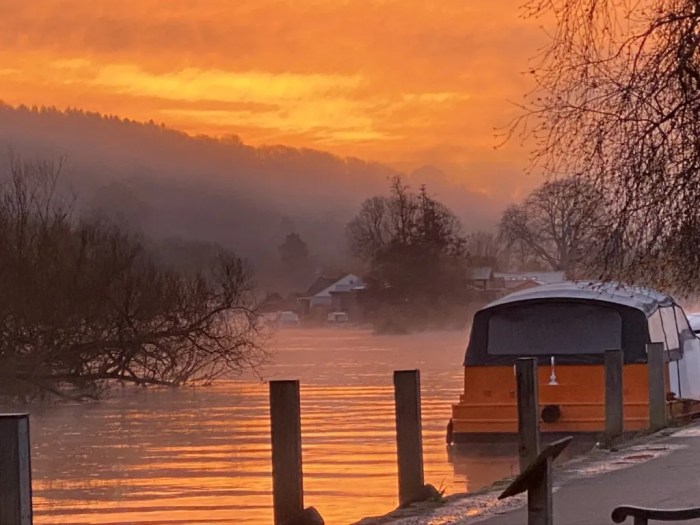
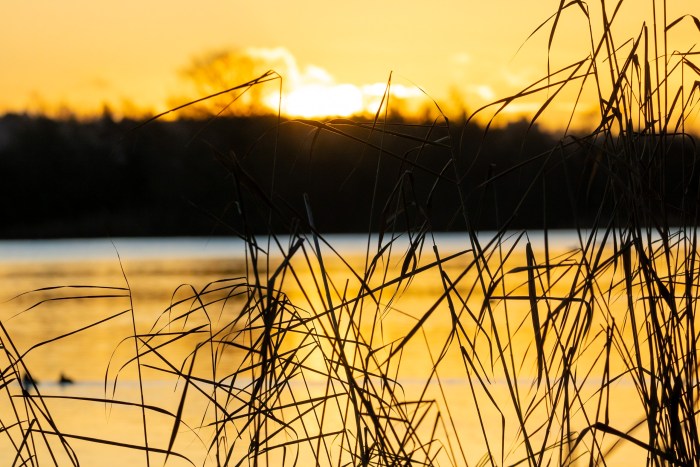
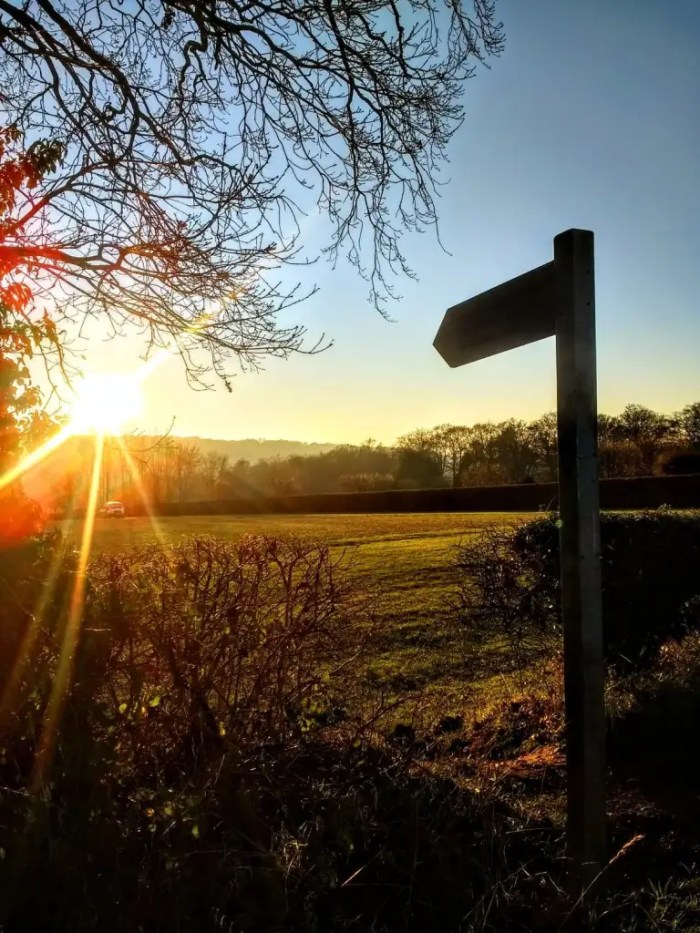
But it’s on those morning walks that the pleasure is most keenly felt, when the sky is aglow with orange and gold and the landscape is full of colour once more.
Countless literary works celebrate the first golden rays of the sun peeking over the horizon as a symbol of renewal and rebirth, the “mellow blush of day” banishing the fears and worries of night, and it’s easy to see why.
GOLDEN GLOW: a symbol of renewal PICTURE: Lesley Tilson
Spectacular sunrises make us reach for our smartphones to capture the fleeting beauty of the moment in the same way that our ancestors searched for the right word or phrase to capture the ethereal glory that accompanies the pulse of a new day.
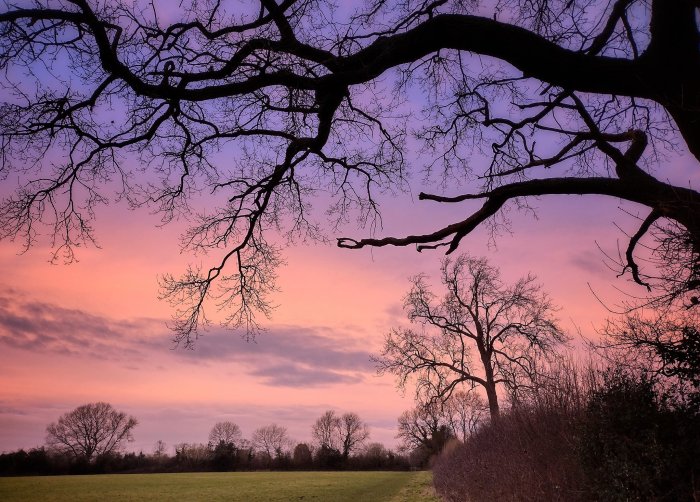
A symbol of hope and enlightment, beauty and illumination, dawn sees the canvas of the countryside splashed with hues of gold and pink as the landscape awakes to the promise of heat and light.
SUBTLE HUES: the countryside awakes PICTURE: Gel Murphy
And with these first sunny days of 2026 people are out in force to make the most of those all-too-brief rays of sunshine, the parks filling up with families and dog walkers eager to enjoy the novelty.
At times the colours hark back to those wonderful hues of autumn, even if the undergrowth has all died back. But that won’t last long, we fear.
Word is that there’s even colder weather on the way, so we’d better soak up those lukewarm rays while we can.
AUTUMNAL FEEL: sunlight on dead leaves PICTURE: Andrew Knight
Of course it’s not long into the new year before there’s heavy snow sweeping the country and causing widespread travel disruption.
COLD COMFORT: temperatures drop fast PICTURE: Lesley Tilson
In the Chilterns, the blizzard is brief for most: a picturesque dusting of white reminding us of Mary Oliver’s wind-bird with its white eyes summoning clouds from the north which thicken and fall into the world below “like stars, or the feathers of some unimaginable bird”.
DUSTING OF WHITE: sledgers search for a hill PICTURE: Lesley Tilson
But while we’ve been spared snowdrifts and flooding, the frosts have been cruel and uncompromising. The glitter is picturesque, but it’s the sort of bone-chilling cold that brings an icy sheen to pavements and roads, striking fear in the hearts of learner drivers and fragile pensioners.
As the sun rises, it’s enough to burn off the frosty layer and bring a deceptive appearance of warmth to those picnic tables in the park.
But it’s very much an illusion: even in the sunlight the temperature is sub-zero and we’re wrapped up warm against the freezing wind, with no temptation to linger.
BRIGHT SPOT: picnic tables in Farm Wood PICTURE: Andrew Knight
Our canine friends have no such hesitation about wanting to get out and about in all weathers, eager to sniff out news of last night’s visitors, their enthusiasm indomitable and infectious.
NO TIME TO LOSE: canine friends are eager to explore PICTURE: Gel Murphy
And however cold the morning air, there are other creatures out and about too: hungry birds searching for food, a disconsolate white egret plodding along the river bank, a dishevelled kestrel slumped on a post in the park, drizzle falling on his gorgeous feathers.
In a sunlit glade, a deer keeps a watchful eye on the morning dog walkers, wary but too comfortable to move.
On many mornings it’s still grey and drab, with little to catch our attention. It’s a bleak time of the year for those reluctantly returning to work after the holiday season, conscious of the shorter, darker days.
But on crisper mornings when there’s a renewed chill in the air after a cloudless night, the outdoors comes to life again and those colours shine rich and clear and true.
Doubtless the unpredictability of the weather contributes to the January mood swings affecting so many people, but just as unrelenting frosts still set the theme for many morning walks, glorious sunrises help to raise the spirits.
MORNING HAS BROKEN: a Chilterns sunrise PICTURE: Lesley Tilson
Some writers, like the Pre-Raphaelite poet and painter Dante Gabriel Rossetti, have portrayed this time of year with a shameless idealism, recalling a mythical era of “mighty fires in hall, and torches lit” and capturing images of fellowship, silk sheets and baked sweetmeats.
For other poets it is a rawer month, where the snow “feels no pity” for RS Thomas’s wounded fox or when “every friendly stream” is frozen fast and Death “leers in at human windows” for Hilaire Belloc.
It’s a time when the harshness of the weather may accentuate our feelings of love and loss, heightening the pain of those who are grieving.
Back in 2004, psychologist Cliff Arnall even came up with a scientific formula for the January blues, identifying the third Monday of the month (Blue Monday) as the most depressing of the year, thanks to a combination of factors ranging from post-holiday blues and bleak weather to people’s debt worries and low motivation levels.
But while many charities recognise how hard it can be to remain positive when struggling with feelings of loneliness or loss at this time of year, there are plenty of rays of light in the darkness too.
As well as those glorious sunrises and sunsets we are treated to sneaky glimpses of shy animals and intriguing patterns in the icy hedgerows.
ICY PATTERNS: an extra sparkle PICTURE: Lesley Tilson
Yes, there are days where the skies are bleak, the paths muddy, the hedgerows bare. But that’s when the sight of a brazen blackbird singing loudly or a red kite whistling overhead can transform our mood.
Or what about that gorgeous little vixen prancing along looking very healthy and well groomed? She’s looking very curious and brave, this formidable night-time predator, approaching close to the photographer, that intense gaze watchful but unafraid.
HEALTHY LOOK: an inquisitive vixen PICTURE: Malcolm Cridlan
Though we know foxes for their fear-inducing screams, barks and howls in the night and dog owners despair over the smell of their poo, we also know that they can be intelligent, friendly and playful, with videos capturing them bouncing on trampolines or stealing balls from gardens and golf courses.
Tame foxes are capable of bonding closely with humans and that those cute cubs play like puppies when they are in their “skulk” (a small group that typically includes a mother and her cubs).
INTENSE GAZE: a vulpine encounter PICTURE: Malcolm Cridlan
This vixen looks well fed and healthy, and her presence and proximity is enough to brighten the dullest of days.
Off she trots, ears alert for any small animals hiding in the hedgerow or high grass, an expert hunter in her element, unfazed by her human encounter.
NEW BEGINNING: a welcome sunrise PICTURE: Anne Rixon
Catching such glimpses of our local wildlife is good for our mental health, but let’s face it: few of us have ever seen a mole or weasel, stoat or vole. Britain’s wild animals can be furtive and elusive, fast-moving and hard to spot.
Even animals like hedgehogs or hares that might have seemed commonplace years ago are more difficult to stumble across than they were half a century ago. No wonder young people may tend to lose interest in spending time in the great outdoors once they’re past the Pooh sticks and conkers stage.
We know the causes of the dramatic decline in UK wildlife since the 1970s: the threats posed by plastics and pesticides, intensive farming and urban sprawl.
INTENSIVE FARMING: sheep in the mist PICTURE: Gel Murphy
But if young people find it impossible to engage with the natural world, the prospects of reversing the decline are bound to suffer. It’s a thought we ponder after remonstrating with a couple of young girls throwing their empty plastic bottles into the hedgerow.
They stare at us as if we’re insane to care what they do, never mind complain about it. And they certainly have no intention of picking up their litter.
But while it’s easy to despair at the state of the nation or bemoan the rudeness of (some) young people, things won’t improve until we can win over their hearts and minds to love and care for our countryside.
CHILLY VISTA: the January landscape PICTURE: Lesley Tilson
Many young people today despair about their futures and their lack of personal agency. Priced out of the housing market and weighed down by cost-of-living and debt worries, they see a world where taxes are rising and their prospects of living a stable, fulfilling life may seem to be crumbling.
With many battling mental health worries and feelings of anxiety and despair, the disillusionment isn’t just financial, but extends to existential fears about global conflict, the climate crisis and uncertainty about the prospect of inheriting a livable planet for themselves and their children.
MISTY MOMENT: a new day dawns PICTURE: Lesley Tilson
If many youngsters feel unhappy and isolated, let down by society and struggling to find meaning in their lives, we somehow we need to convince them that nature holds solutions to their problems and is not just a sad, drab outdoors space to be avoided, despised or abused.
Thankfully there is an army of young naturalists out there able and willing to pick up the baton thrown down by the likes of Chris Packham and David Attenborough.
They won’t face an easy task. But while it’s easy to despair at the scale of the challenge, there’s no better time than in the first few days of a new year to look on the bright side of life: after all, it’s a beautiful world out there, and it’s the only one we’ve got.
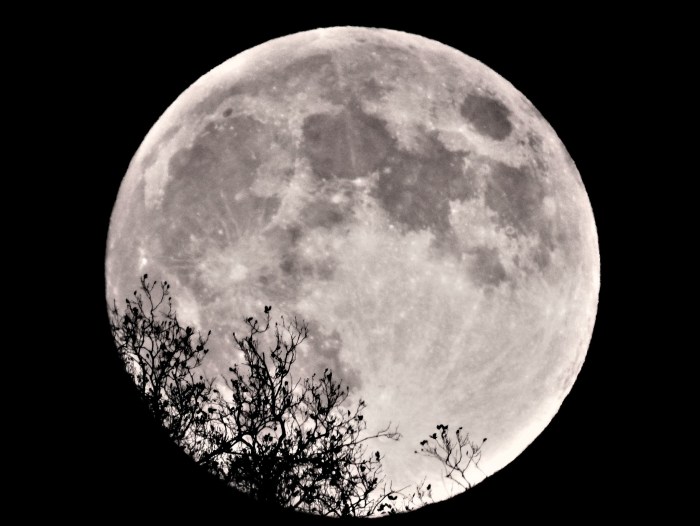
WOLF MOON RISING: fire in the sky PICTURE: Anne Rixon
A YEAR ago, we spend two months quietly chronicling daily life in the Chilternsat the tail end of the year.
Those precious “mindfulness moments” were inspired by the glorious photographs of our regular contributors and provided a welcome opportunity for thoughtful reflection about the natural world around us.
Our hectic lives offer few such chances to allow our minds to wander away from the cares and tribulations of our daily routines, and our December reverie allowed us time to consider the glorious plumage of kingfishers, the supposed slyness of foxes and the cleverness of goldfinches and pigeons.
Amid the bare branches of winter trees or traversing flooded footpaths, there was time to contemplate forest law in the era of the Norman kings, reflect on why the sky appears so blue and explore the extraordinary history of the prickly teasel, which once played such a central role in the nation’s cloth production.
PICTURE POSTCARD: dawn at Coleshill PICTURE: Lesley Tilson
Against the warm yellow backdrop of ancient cottage windows, December days offer a range of moments to cherish: the smell of woodsmoke drifting across the fields, the lure of a roaring fire in a friendly pub or the cawing of rooks on a dusk walk along a darkened country lane.
From elegant egrets and colourful jays to chattering parakeets and territorial robins, there are plenty of feathered friends around to distract our attention while we ponder about the talents of ancient Babylonian stargazers, misty legends in foggy forests or the traditions associated with the winter solstice…
A YEAR ago, inspired by the work of our extraordinary photographers, we set about documenting daily life in the Chilterns over the space of two months in autumn.
For 61 days between Halloween and New Year’s Day, diary entries recorded the changing sights, sounds and smells of the local landscape.
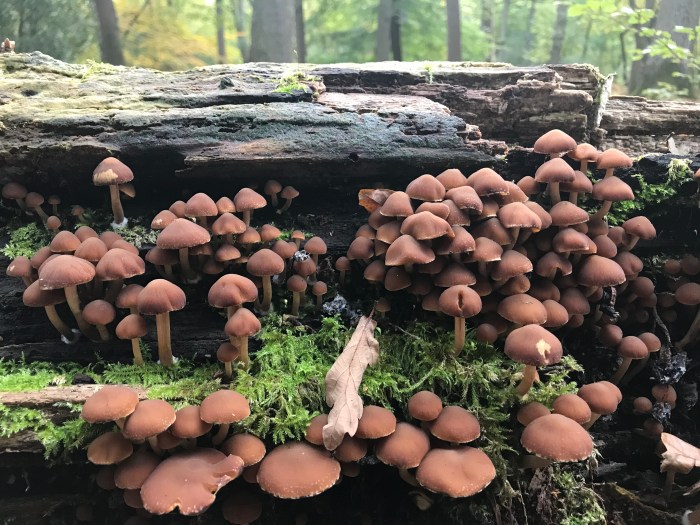
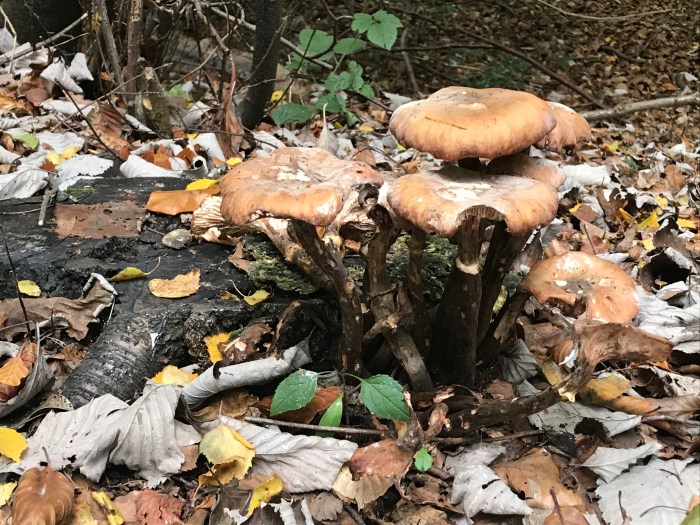
From frosty mornings to chilly nights, the daily forays provided an opportunity to take time to savour the small delights we so often take for granted: cobwebs glinting in the sunlight, fabulous fungi lurking in the leaf litter or glorious sunsets bathing the fields in pinks and purples.
Lazy rambles were a chance to listen out for rutting deer and hooting owls, contemplate the eyeshine of foxes or reflect on some favourite poetry about the natural world.
From fog over the heath to the “smoky smirr o rain” amid the trees, November is a time of mists and mirk, first frosts and chilly moonlit nights.
It’s a month of poppies and fireworks too, of peak leaf fall, the wonders of “leaf peeping” and the simple pleasure of wrapping up warm to guard against the plummeting temperatures.
It’s a perfect time for reflection about the outstanding natural beauty all around us, with the weathered brick and flint of ancient cottages, pubs and farmhouses providing a glorious backdrop for an autumn outing.
On these ancient paths, generations of invaders and settlers trudged across the Chilterns and built their castles, forts and palaces along the banks of the Thames.
MISTY START: Cock Marsh on the Thames PICTURE: Phil Laybourne
Beneath our feet amid the fallen leaves are those miraculous glimpses of colour and texture which have such an intriguing story to tell about life on earth.
Fungi are everywhere around us, largely hidden from view and poorly understood despite providing a key to understanding the planet on which we live through their extraordinary symbiotic relationship with plants and trees.
As local villages light up to welcome the season of advent, out in the woods the trees come alive in the gleam of a supermoon, slowly, silently walking the night “in her silver shoon”, as Walter de la Mare so memorably captured in a book of children’s poems back in 1913.
“This way, and that, she peers, and sees / Silver fruit upon silver trees” he wrote, a suitably poetic reflection on the closing moments of a glorious November day and a reminder that it will not be too long before the rosy-fingered goddess Aurora will be rising from her marriage bed to bring daylight back to us mere mortals…
SUPERMOON: November’s Beaver Moon PICTURE: Carol Ann Finch
Day by day, November in the Chilternsincludes a selection of pictures taken talented local photographers. If you would like to contribute any pictures, favourite moments or seasonal suggestions to our future calendar entries, join our Facebook group page or write to editor@thebeyonder.co.uk.
SOMETIMES you need a little help to capture your favourite wildlife on camera.
Hiring a hide for a morning could be one way of getting up close to fast-moving kingfishers, for example, which so often fly at lightning speed low over the water.
Even those living beside chalk streams often struggle to see more than a fizzing flash of turquoise that disappears round the bend and out of sight, giving the merest glimpse of those unmistakable blue and orange colours.
TURQUOISE FLASH: a kingfisher on the Chess PICTURE: Carol Ann Finch
Knowing a favourite hunting perch could be another way of capturing the birds at rest, and young Hertfordshire photographer Will Brown favours the wetland reserve at RSPB Rye Meads beside the River Lee, which is a firm favourite with birdwatchers and photographers thanks to its many trails and hides.
Down on the Chess at Sarratt, Carol Ann Finch and friends enjoyed a relaxing morning beside the river watching a colourful friend on the lookout for minnows, sticklebacks and small insects, using an Olympus camera with a 70-300mm macro lens to capture the action in close-up.
HUNTING PERCH: on the lookout PICTURE: Carol Ann Finch
Kingfishers can’t swim, so they tend to favour slow-flowing rivers or motionless water, making picturesque chalk streams like the Wye and Chess the perfect environment for a spot of fishing.
The birds hunt from riverside perches, occasionally hovering above the surface before diving at high speed into the water with their wings open and eyes protected by transparent eyelids. Once the fish is caught, it is taken back to the perch where the kingfisher usually stuns it before swallowing it head first.
MONDAY, DECEMBER 2
ARE foxes really as sly and cunning as they’re painted? It’s a pretty persistent stereotype that seems to date back millennia.
Foxes epitomise trickery and deceit in Shakespeare’s plays but references to their artfulness can be found much earlier, including repeated mentions in the fables collected by Aesop, a slave and storyteller living in ancient Greece centuries before Christ’s birth.
In medieval European folklore and literature foxes in general have the same dubious reputation and the specific character of Reynard is a legendary anthropomorphic red fox portrayed in some two dozen tales deceiving and outwitting his adversaries.
Doubtless much of the reputation is based on close observation of these highly adaptable, opportunistic animals. We know the common fox, vulpes vulpes, is a rapid learner, remembers where food is stashed and has adapted well to the presence of humans.
They appear bold around our cities, thrive in urban environments and farmers know them to be resourceful and ingenious in their hunting techniques, which probably helps to give the impression that they’re using their wits to get ahead.
But rather than being elborate tacticians, it’s their versatility that has been the key to their evolutionary success, allowing their survival in such substantial numbers despite being persecuted by hunters throughout history for spot, as a pest or for their fur.
Elegant, ingenious and much maligned, foxes know a thing or two about survival. Or as Chris Packham puts it: “I like foxes because they are widespread, beautiful and successful. It’s always a treat to see a fox dashing through some rusty bracken.”
TUESDAY, DECEMBER 3
IT’S hard to believe that at one time a third of the land area of southern England was designated as royal forest, including whole counties like Essex.
The recollection is prompted by a chance morning encounter with a few skittish deer. These days ramblers and dog walkers are probably pleasantly entertained by such brief meetings, usually at dawn or dusk, before the shy animals slink off into the undergrowth.
But estate managers have no such affection for the growing deer population that poses a real threat to our woodlands, while motorists have different reasons to fear the animals, of which more than 40,000 die in collisions on our roads every year.
Current exact numbers are not known, but the figure is probably at its highest for a thousand years and could even top two million.
Flash back across the centuries, and William the Conqueror’s arrival marked a whole new era of forest law designed to proect game animals and their forest habitat, as we discovered last year on a visit to Epping Forest.
The Norman kings were enthusiastic hunters and huge tracts of the country were designated as hunting areas reserved for the monarch and his aristocratic guests, with deer parks like those at Stowe, Langley and Whaddon equipped for the management and hunting of deer and other wild animals to provide a constant supply of food throughout the year.
The narrative of an evil foreign tyrant disrupting prosperous settlements and evicting tenants to create space for his leisure pastime featured prominently in the folk history of England, and one vitriolic poem written in 1087 on the king’s death lambasted him for his greed and cruelty.
Forest law was designed to protect the ‘noble’ animals of the chase like deer and wild boar, along with the greenery that sustained them, with verderers policing poaching and illegal felling while overseeing the rights of locals to take firewood, pasture swine, harvest produce and cut turf.
HUNGRY MOUTHS: there are six types of deer in the UK PICTURE: Sue Craigs Erwin
Today there are six types of deer to be found in the woods: the two native species, the red deer and roe deer, along with the fallow deer introduced by the Normans and three species of deer introduced from the Far East: the sika deer, Chinese water deer and the small and mostly nocturnal muntjac.
WEDNESDAY, DECEMBER 4
BARE branches allow us a clearer view of our feathered friends than we normally get, and none is a more cheering sight on a drab December day than the gorgeous goldfinch.
A colourful finch with a bright red face, black cap and yellow wing patch, it’s a very sociable little bird with a delightful twittering song and a fine beak that allows it to extract otherwise inaccessible seeds from thistles and teasels which other birds can’t reach.
Routinely trapped in Victorian times to be kept as cage birds, they also like lavender, dandelions and niger seeds.
In English a group of goldfinches is collectively known as a ‘charm’ from the Old English c’irm, referring to the tinkling noises produced by a flock. In Irish and Scots Gaelic their name lasair choille is equally appropriate, translating as “flame of the forest”.
Some UK goldfinches migrate as far south as Spain in the winter, but many “thistle-tweakers” will stay here throughout the winter months, adding a welcome splash of colour to the undergrowth with their superhero masks.
SYMBOLIC: the robin PICTURE: Carol Ann Finch
Both the red cheeks of the goldfinch and the red breast of the robin were accorded weighty religious symbolism in medieval minds, and the goldfinch featured in hundreds of Renaissance paintings.
The colours in both birds’ plumage was said to have been acquired while trying to remove Christ’s crown of thorns in an act of mercy.
THURSDAY, DECEMBER 5
ON dreary December days, it’s easy to mourn the loss of colour in the landscape: those dull, monochrome hours where the woodland tones are shrouded in rain or mist.
Thankfully there are still plenty of glimpses of sunlight to remind us that the glow of autumn is not quite a thing of the past.
Deep in the woods at Penn the weak sunshine lights up the russets and golds again and the breaks in the cloud remind us of the real beauty of autumn leaves.
GOING FOR GOLD: autumn leaves PICTURE: Lesley Tilson
But it’s not an easy time for ramblers. Apart from the unpredictable temperatures there’s widespread flooding and over at Hedsor, wildfowl have reclaimed the footpath.
UNDER WATER: a Hedsor footpath PICTURE: Andrew Knight
The gulls seem in their element here, but as dusk falls there’s a distinct chill in the air and the Thames is flowing fast, with many fields and gardens around Cookham and Bourne End under water.
On a bright spring day, this section of the Berkshire Loop of the Chiltern Way is a delight, a wander past churches which have been holy places for a thousand years or more, picturesque cottages in brick and flint and deserted lanes where the sound of birdsong echoes above the wild garlic.
DAMP PROSPECT: flooded fields PICTURE: Andrew Knight
But with light fading as we cross the bridge at Cookham, there’s a gloomier feel to the muddy Thames Path towards Bourne End, the smell of diesel in the air as boat owners hunker down for another cold night and the river fast becoming an inky black snake in the darkness, powerful and forbidding.
As night closes in, this is an aspect of life on the river that summertime strollers don’t see, when the Thames looks deep and cold and scary and the Christmas lights of those large riverside homes a lot more appealing than spending the night on the water.
FRIDAY, DECEMBER 6
YET more wind and rain leaves our local chalk stream cloudy and the footpaths transformed into sticky mudbaths.
Yet although it’s slippery welly-boot-wearing weather for walkers, it’s still possible to stumble across a little dry land in the woods, and the skies are nothing if not unpredictable.
On our evening walk, one minute those clouds are scudding across the sky, the treetops rustling like waves on the shore…the next, there’s a clear sky overhead and the stars are shining clear and bright over our path through the trees.
It’s the sort of weather when a casual glance out of the kitchen window might deter you from the thought of venturing out into the afternoon downpour…yet taking the risk and emerging from the cosy warmth of our homes can bring immense rewards, especially when the sun finally breaks through the cloud and dazzles us with one of those wonderful December surprises we might have otherwise missed.
ANOTHER day, another named storm: this time Storm Darragh, complete with ominous red weather warnings about possible loss of life and with winds gusting over 90mph in places.
We wake to lashing rain, swaying trees and birds being buffeted across the sky.
PICTURE POSTCARD: dawn at Coleshill PICTURE: Lesley Tilson
But the calm before the storm was a time to savour across the Chilterns, from dawn vistas of sleeping villages to sunlight glinting through the trees.
December days may be short and unpredictable, but there are still those all-important moments to cherish: the smell of woodsmoke drifting across the fields, the lure of a roaring fire in a friendly pub on a freezing day or being able to curl up with a good book with your pets snoozing around you.
MOMENT OF PEACE: the calm before the storm PICTURE: Sue Craigs Erwin
Inside or out, the serenity may not last for long, but it’s good to make the most of all those little things that make life worth living, including the sound of raindrops on wet leaves and the pleasant earthy scent of the woods once the worst of the storm clears.
For now, it’s time to get the wellies on and slip-slide our way along those muddy footpaths while Darragh blows itself out, leaving closed motorways, railway lines and airports in its wake.
WINTER WARMTH: watching for the sun’s return PICTURE: Lesley Tilson
But hopefully it won’t be too long before a little calm is restored to the countryside and the sun returns to warm the winter landscape.
SUNDAY, DECEMBER 8
DAWN breaks and the wind is still whistling, whining and howling around the house.
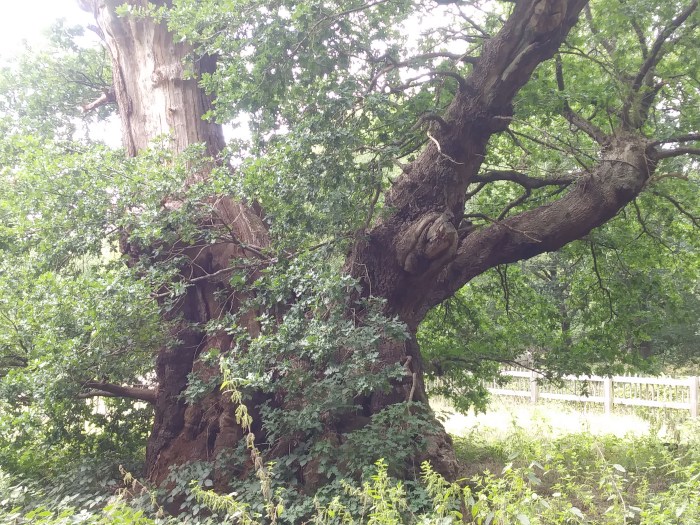
Around town, great oaks and cedars are shaking themselves like wet dogs and local paths and roads have been blocked with the debris of a stormy night.
In the woods, the “night has been unruly”, but not quite with such an ominous overtones as in Macbeth, despite the speed of the storm clouds scudding across the sky or those strange hues they sometimes cast over the countryside.
STRANGE LIGHT: the sky appears yellow at times PICTURE: Lesley Tilson
The Met Office tells us that the sky appears blue to the human eye because the short waves of blue light are scattered more than the other colours in the spectrum, making the blue light more visible.
Light from the sun is made up of a spectrum of many different colours, as we see when they are spread out in a rainbow, with different colours all having different wavelengths, from the shorter ones of blue and violet to red light, which has the longest wavelength.
ORANGE BALL: the sun sinks over Amersham PICTURE: Gel Murphy
When the sun’s light reaches the Earth’s atmosphere it is deflected by tiny molecules of gases like nitrogen and oxygen in the air with the amount of scattering dependent on the wavelength.
This effect is known as Rayleigh scattering after Lord Rayleigh, the eminent physicist who first discovered it.
Shorter wavelengths (violet and blue) are scattered the most strongly, so more of the blue light is scattered towards our eyes than the other colours, although it tends to be the most vibrant overhead and paler towards the horizon.
Rayleigh scattering also causes the sun to appear red at sunset, when the sun’s light takes a longer path to reach the horizon, so more of the shorter wavelengths are scattered out. This leaves mostly red light, which is why the sun appears red.
SETTING SUN: light through the trees PICTURE: Gel Murphy
Storm clouds can create some unusual effects in the sky, as can dust, pollen and smoke in the atmosphere, creating eerie yellow, green, red and purple hues.
MONDAY, DECEMBER 9
“DECEMBER afternoons do something to my heart,” writes Melissa Harrison in The Stubborn Light of Things. “Perhaps it’s the early dusk combined with approaching winter: a sense of drawing in, of lighting the lamps early, and the fire…”
It’s also the warm yellow glow from windows of ancient cottages, the cawing of rooks straying back to their ancient rookery, the dusk walks along darkened country lanes, the scatter of cottages round a Norman church.
WARM GLOW: December afternoons are special PICTURE: Sue Craigs Erwin
“At their best,” she writes, “rural villages bear witness to a lasting partnership of people, place and nature, and to me there is something deeply moving – almost sacred – about that.”
As so often, the Suffolk-based nature writer is spot on in summing up the importance of buildings feeling part of the landscape. The same is true of our wonderful old Chilterns towns, of course, where the buildings are intimately woven into the fabric of the surrounding countryside.
It could be the most humble cottage, or an imposing country house. But good architecture adds soul to communities and speaks to our senses and emotions in ways we may not fully understand.
LASTING LEGACY: an ancient church PICTURE: Gel Murphy
It’s perhaps part of the reason why we stare at ancient buildings with awe, or feel so much at home in cosy pubs or country houses that have survived the ravages of the passing years.
These buildings have protected and outlived their inhabitants, transcending the impermanence of human existence to become a lasting feature of the local landscape.
TUESDAY, DECEMBER 10
COULD there be a more comforting and contented sound that the cooing of wood pigeons on a summer’s evening?
Conversely, there are few sounds more frantic and frenetic than the fluster of pigeons disturbed from their roost at night on these chilly winter nights.
The contrast is brilliantly summed up by Daphne du Maurier in her 1938 Gothic novel Rebecca:
Once there was an article on wood pigeons, and as I read it aloud it seemed to me that once again I was in the deep woods at Manderley, with pigeons fluttering above my head. I heard their soft, complacent call, so comfortable and cool on a hot summer’s afternoon, and there would be no disturbing of their peace until Jasper came loping through the undergrowth to find me, his damp muzzle questing the ground.
Like older ladies caught at their ablutions, the pigeons would flutter from their hiding-place, shocked into silly agitation, and, making a monstrous to-do with their wings, streak away from us above the tree-tops, and so out of sight and sound.
Of course there are plenty of folk driven to distraction by the cooing of pigeons and numerous pest control sites awash with suggestions of how to make the birds less happy, secure and comfortable.
EXTRAORDINARY: pigeons became wartime heroes PICTURE:Nick Bell
They have played a vital role in medicine and saved countless lives in wartime carrying vital messages over long distances when other methods of communication were impossible.
When you drive down Park Lane, there always seems to be an old lady surrounded by a crowd of hungry pigeons, reminiscent of iconic Feed the Birds song from the 1964 Disney film version of Mary Poppins, filmed on the steps of St Paul’s Cathedral.
Perhaps there’s more to that scene than meets the eye: despite being so much maligned, we’re told that those “small blue busybodies” are not just smart but have bags of character and can be extremely loving.
With so many pigeons around, we tend to take these most humble of birds for granted, oblivious to their beauty and their many talents. Time to look at our feathered friends in a fresh light, perhaps.
WEDNESDAY, DECEMBER 11
HUMANS will spend billions of pounds this year immersing ourselves in high-tech virtual reality worlds, from virtual concerts and art galleries to hyper-realistic video games.
But who needs virtual reality when the real world is so spectacular? With some teens already spending up to eight hours a day on screens, it’s no surprise this may be associated with higher anxiety and depression and a lower overall quality of life and academic achievement.
Screen time overloads the sensory system and fractures attention, making it harder to process one’s internal and external environment and sometimes leading to explosive and aggressive behaviour.
Getting out and about on a windy day helps to root us in reality and remind us of the importance of real-world experiences and relationships.
Plus, how do we expect young people to be able to relate to the natural world (and want to protect it) if they don’t experience it at first hand?
COMMUNITY SPIRIT: Christmas lights PICTURE: Gel Murphy
Generations of teenagers have baulked at the idea of being forced to participate in “family time” or engage with other adults in the community, but perhaps there’s never been a time when it’s been more important for young people to become more aware of their surroundings and fully understand what’s real and what isn’t.
THURSDAY, DECEMBER 12
YOU might not give the brown spiky seed heads of the teasel a second glance if they weren’t so beautifully backlit by the morning sunlight.
But familiar as these striking prickly wildflowers are, it’s easy to forget what a central role cultivated versions of the teasel once played in cloth production in Britain.
Popular with bees and butterflies in summer and seed-eating birds like the goldfinch in winter, they are less popular with gardeners, who find weeding them a wet and painful businesses.
STRIKING: teasels in the morning light PICTURE: Sue Craigs Erwin
But take a trip back in time and the teasel played a central role in the textile industry as well as its extracts proving important components of the medicine chest in past centuries.
A cultivated sub-species has bristle tips shaped like tiny hooks which were used to ‘tease’ out the nap of cloth, explaining why teasels were grown as a cash crop in Britain from early times and even have a place in heraldry: the 1530 coat of arms of the Worshipful Company of Clothworkers depicts a golden teasel head.
As Robert McMillan explores, they were once cultivated on a huge scale to supply the country’s booming woollen mills and the process of fulling (or tucking or waulking, depending where in the country you live) helps to explain why Fuller, Walker and Tucker are such widespread surnames.
FRIDAY, NOVEMBER 13
LIVING beside a chalk stream means you’re never quite sure who you might encounter on your morning ramble.
Ducks and moorhens are commonplace. For months, a quintet of cygnets were getting their life instructions on a nearby stretch of water.
And today, to brighten the dullest of mornings when the sky is white, the footpaths sodden and the air distinctly chilly, a glorious little egret stands on the opposite bank staring balefully into the dark, fast-flowing water.
The small white heron is an elegant character with beautiful white plumes on its crest, back and chest, a black bill and black legs with strikingly yellow feet.
It lacks the height or statuesque prehistoric-looking appearance of the grey herons which can also be sometimes spotted contemplating their next meal on these banks, but both birds share a love of the minnows, sticklebacks and brown trout that thrive in healthy chalk streams.
Once a very rare visitor from the Mediterranean, little egrets are now a common sight in the Chilterns. They first appeared in the UK in significant numbers in 1989 and after first breeding in the UK on Brownsea Island in Dorset back in 1996, they have been expanding their range northwards ever since.
Today, it’s perhaps those amazing yellow feet that grab the onlooker’s attention as the bird strides rather self-consciously along the bank, lifting each leg high in the air like an avian John Cleese.
But ironically, the glamorous little bird had an important role to play in the RSPB’s history, as the organisation was founded by ladies campaigning against the use of feathers in the hat trade. Those long white neck plumes were once more valuable than gold and populations plummeted until laws were put in place to protect them.
SATURDAY, DECEMBER 14
THE colder and damper is gets outside, the more we crave a little light and warmth.
Wandering far from home in mid-December in The WInd in the Willows, Ratty and Mole patter through a little village on soft feet over a first thin fall of powdery snow.
Around them, “little was visible but squares of dusky orange-red on either side of the street, where the firelight or lamplight of each cottage overflowed through the casements into the dark world without”.
FAR FROM HOME: Walking Through The Village ARTWORK: Chris Dunn
The small backlit vignettes they witness – a cat being stroked, a small child being picked up and huddled off to bed, a tired man knocking out his pipe on a smouldering log – give the spectators a wistful feeling at the thought of their own homes being so distant.
We may experience just the same longing for a welcoming lantern or fire, for carols by candlelight or the warm glow of a welcoming homestead. And of course at this time of year there’s the added appeal of festive lights, from the twinkling welcome of a humble cottage to the grand displays of our largest stately homes.
We know that bright lights and colours trigger happy hormones and may even help to boost energy levels and happiness. For many, of course, Christmas is a magical time of nostalgia, a time of celebrating innocence and joy as well as a time of spiritual reflection.
Like Ratty and Mole we don’t just crave the warmth of those welcoming lights and fires, but the camaraderie and conviviality they symbolise: the opportunity to spend quality time with family and friends, the prospect of feasting and merriment.
The converse, of course, is equally true. If our wintry walk through the woods is blessed by the prospect of returning to a cosy hearth and home, it reminds us of the bone-chilling loneliness experienced by the homeless at this time of year or the millions facing hunger and misery in bombed-out buildings and refugee camps as conflict, the climate crisis and economic shocks drive more and more communities around the world towards starvation.
FESTIVE MOOD: a feast for the senses PICTURE: Lesley Tilson
It’s not just in war zones that people are struggling over the festive season, though. Those battling to cope with bereavement, health or money worries may feel every bit as lonely and isolated over the holiday period, especially faced with all those images of carefree families and friends spending time together.
Christmas is a wonderful time of year, but it’s challenging for so many who feel left out in the cold.
COLD COMFORT: Christmas can be challenging PICTURE: Lesley Tilson
SUNDAY, DECEMBER 15
AFTER days of white and slate-grey skies, there’s finally a break in the clouds and some welcome rays of sunshine to brighten the spirits and restore a bit of colour to the countryside.
But with so many trees stripped bare by the recent storms, those wonderful multi-coloured falling leaves of November are rapidly turning into a dark brown mulch.
Footpaths are awash with mud and the undergrowth looks drab and damp – it’s time to seek out some evergreen solace among the conifers, mosses and lichens of a favourite local wood.
SOLACE: evergreen hues PICTURE: Andrew Knight
Here the ferns and bracken may have died back but the trees soar high into the sky, there are patches of holly everywhere and a patchwork of different greens to provide a welcome contrast to all the December murk.
It’s the perfect therapy after those depressing days of drizzle and darkness.
The sunshine may be weak and fleeting, but it’s enough to bring the woods alive with shadows and put a new spring in our step as we try to make the most of the available light.
THERAPY: sunshine after the rain PICTURE: Andrew Knight
By the time dusk falls, there’s steam rising from the river and a mist over the park, with the temperature dropping fast and December’s cold moon casting a silver sheen through gaps in the clouds.
It will clear later to expose the heavens, including the shooting stars of the Geminid meteor shower, which has just reached its peak but will be visible for a few nights yet.
While most meteor showers are associated with comets, the Geminids are caused by debris from an asteroid, with particles vapourising as they enter our atmosphere at speeds to up to 150,000mph, creating multi-coloured streaks of light in the night sky because of elements such as sodium and calcium found within the celestial debris.
WELCOME RAYS: the woods come to life PICTURE: Andrew Knight
They were first observed in 1862 and according to the Royal Observatory in Greenwich they are thought to be intensifying every year.
Just before dawn the cold moon is still bright in the sky, making the Wye look like a grey satin strip rippling across the fields. It’s a welcome reminder that even on the dullest days or darkest nights, there’s plenty of beauty to be discovered in our ancient landscape.
MONDAY, DECEMBER 16
WHY not banish those Monday morning blues with a little colour therapy from the natural world?
We started December looking at the turquoise flash of kingfishers and last week celebrated the elegant plumage (and striking yellow feet!) of the little egret, but today it’s the turn of one of Britain’s loudest, most colourful and recognisable birds, the ring-necked parakeet.
Nowadays its cheeky chatter has become familiar to a couple of generations of Londoners, but how did an ‘interloper’ unknown in the UK a century ago and still relatively rare as recently as the 1990s become quite such a familiar sight up and down the country?
Tim Blackburn, professor of invasion biology at UCL, explained something of the bird’s back story earlier this year in The Guardian, concluding that the bird’s presence in such large numbers may stem from a parrot flu health scare in the early 1950s when fears about catching psittacosis from pet birds prompting owners to liberate their beloved birds into the London skies, where they settled and flourished.
CHEEKY CHATTER: the ring-necked parakeet PICTURE: Jane Jasper Merry
Though the capital remains their stronghold, they have spread across the country and their raucous cries and long-tailed silhouettes are increasingly common in the Chilterns.
Should we fear their spread in the way we have worried about other invasive species? Blackburn concludes that we probably should be concerned about their negative impacts on other birds and bats, given that they compete with them for food and nesting sites.
They also have a voracious appetite for flowers, fruits and seeds which might eventually pose problems for Britain’s soft fruit and growing wine businesses.
But for now, we’re celebrating the cheeky appeal of a colourful character that’s popping up on bird tables across the land.
Talking of colourful characters, perhaps it’s also a good time to toast a much shyer bird which has been hiding in our woods for a lot longer than the parakeet.
Jays are the most colourful members of the crow family, known for their screaming calls, love of acorns and glorious plumage.
GLORIOUS PLUMAGE: the shy jay PICTURE: Lesley Tilson
Instantly recognisable by their brilliant blue wing patches, jays eat invertebrates like caterpillars and beetles and spend the autumn hiding away precious nuts and acorns to enjoy later in the winter.
While jays clearly have a remarkable memory for where they store their acorns, some will inevitably remain buried, meaning that many of Britain’s oak forests are thought to have been planted by the birds.
Suffolk bird lover and writer David Tomlinson provides us with a marvellous description of the bird, making us pause to consider more closely not just that rare splash of Maya blue in its plumage but a forehead which looks as though combed with boot polish, ear-coverts suggestive of ruddy squirrel ears and two black thumbprints either side of the beak which some call a moustache.
The subtlety of the bird’s colouring is not perhaps matched by its raucous cries (although they are excellent mimics) or its behaviour, with some gardeners lamenting its pilfering from fruit trees and unscrupulous egg-robbing habits.
TUESDAY, DECEMBER 17
IT’S the week of the winter solstice, a time when ancient peoples feasted to mark the shortest day and longest night of the year, the first day of winter in the astronomical calendar.
And while the run-up to December 21 is often a gloomy or chilly period, the solstice had great symbolic importance in many ancient civilisations, where it was seen as a time of renewal and hope, symbolising the return of longer days.
SHORTEST DAY: a time of renewal and hope PICTURE: Sue Craigs Erwin
For Neolithic people who were farmers growing crops and tending herds of animals, winter may have been a time of fear as the days grew shorter and colder.
People must have longed for the return of light and warmth and marking the start of this yearly cycle may have been one of the reasons that they constructed Stonehenge – a monument aligned to the movements of the sun.
WEDNESDAY, DECEMBER 18
IT WAS only natural that the earliest hunter-gatherers, shepherds, farmers and fisher folk would scan the skies with fascination and, sometimes, fear. After all, their very lives and livelihoods depended on the heavens.
Some 6,000 years ago, the ancient Babylonians were avid stargazers, erecting watch towers to scan the night sky, mapping the stars and visible planets, and recording their observations on clay tablets.
Their meticulous data provided the foundation for the first calendars, used to organise the growing and harvesting of crops and the timing of religious ceremonies.
But although their vision of the universe was based on mythological beliefs, their astronomical observations were astoundingly accurate, enabling them to track and predict the movements of the sun, moon, Mercury and Venus.
CAREFUL OBSERVATION: ancient astronomyPICTURE: Anne Rixon
They accomplished extraordinary feats of knowledge without the benefit of telescopes, satellites or computer technology but through careful observation, generational record-keeping, pattern recognition and early mathematics.
THURSDAY, DECEMBER 19
THE dawn chorus won’t begin until spring, but that doesn’t mean our woods and gardens are completely silent in December.
One bird which sings all year round is the robin, which despite its apparents tameness and demure appearance is a fiercely territorial bird, with an estimated 10% killed each year in fights with other robins.
ON SONG: robins defend their territory PICTURE: Sue Craigs Erwin
Territories are marked by singing and posturing to rivals, and if these actions fail to dissuade an intruder, fighting may ensue.
The resident bird will begin by ruffling its feathers, craning its head and dropping its wings before striking at an intruder with blows from the feet and wings. If the intruder doesn’t back down, both birds may roll around kicking and wing-beating each other, with fights recorded to last anywhere from a few seconds to well over an hour.
Robins are so territorial they have even been seen attacking stuffed robins!
FRIDAY, DECEMBER 20
AFTER clear night skies, it’s a frosty start and the fields glitter a greeting to the pale sun.
There’s a rustle in the hedgerow as crisp leaves betray the paw of a careless mouse or vole.
CHILLY START: frost sparkles in the fields PICTURE: Sue Craigs Erwin
The palette may be wintry, but there’s a freshness to the morning air that inspires optimism, or perhaps a thoughtful moment, as Coleridge found:
The Frost performs its secret ministry Unhelped by any wind. The owlet’s cry Came loud—and hark, again! loud as before, The inmates of my cottage, all at rest Have left me to that solitude, which suits Abstruser musings
THE shortest day of the year may feel a little bleak and brief, but the winter solstice is traditionally a time of renewal and rebirth, of hope and optimism.
For weeks we have looked to the skies to celebrate those glorious sunrises and sunsets that remind us of the importance of light in our lives.
WINTER SOLSTICE: a time of renewalPICTURE: Anne Rixon
With fewer than eight hours of daylight, the shortest day is less than half the length of the summer solstice, so it’s not surprising that we welcome the prospect of the days getting gradually longer from now on, even if there’s still a long way to go until the end of the winter and the prospect of the spring equinox in March, by which time day and night hours are around the same length.
From Scandinavia to the Far East, the shortest day is traditionally a time of celebration and feasting, of fires being lit to symbolise the heat and light of the returning sun, of ceremonies to placate ancient gods.
RETURNING SUN: celebrations mark the solsticePICTURE: Anne Rixon
Advent candles in our churches symbolise the four themes of hope, peace, love and joy associated with the arrival of Jesus and around the world, all the great winter holiday celebrations focus around light.
ADVENT THEMES: hope, peace, love and joy PICTURE: Sue Craigs Erwin
For early civilisations, the celebrations paid homage to the “invincible sun” that plays such a central role in our daily lives.
And as we enjoy the candles being lit for Christmas carols, the twinkling festive lights or the warmth of fires and lanterns in welcoming windows, we might recall the words of Buckinghamshire-born children’s author Susan Cooper in The Shortest Day:
And so the Shortest Day came and the year died And everywhere down the centuries of the snow-white world Came people singing, dancing, To drive the dark away.
SUNDAY, DECEMBER 22
WITH the winter solstice behind us it feels as if there can only be brighter times to come.
The problem, of course, is that the return of the longer days is a slow, incremental process, at least during the next few chilly weeks of winter.
EARLY RISERS: dawn at Coleshill PICTURE: Lesley Tilson
Sunrise remains after 8am until mid-January and doesn’t creep forward to 7am until late February.
Nonetheless we do notice the days getting gradually longer all the time, hitting nine hours in late January and 10 hours by mid-February.
WINTER SUN: a chill in the air PICTURE: Lesley Tilson
Meanwhile we’re relying on those festive lights for much of our light, along with the flickering candles at Christmas carol services and a weak winter sun trying to inject a little warmth and colour into the surroundings.
A trio of red kites are circling and crying overhead, and while the temperature is only four degrees and the wind distinctly icy, but the sky’s finally turned blue. Time to savour the moment: sunset is due just before 4pm today, so there’s not a moment to lose…
MONDAY, DECEMBER 23
ON A bright crisp frosty morning, colourful birds and berries tend to catch the eye.
And berries don’t come any more spectacular than the distinctive purple ones of the callicarpa bodinieri shrub ‘Profusion’, often planted by gardeners for a welcome splash of winter colour.
TASTY TREAT: a blackcap visitor PICTURE: Nick Bell
Trouble is, those purple berries look particularly tasty to birds like blackcaps and blackbirds, so that impressive winter display could soon be looking a lot sparser, as wildlife photographer Nick Bell discovered when a pair of blackcaps spotted his shrub and started to visit several times a day.
SEASONAL SNACK: a chill in the air PICTURE: Lesley Tilson
Red berries are a little more familiar on our woodland wanders, and equally popular as a food source for our feathered friends.
In the winter months, birds can struggle to find enough food to get by and berries offer welcome sustenance when other sources are scarce and the ground is too hard to hunt for burrowing insects.
TUESDAY, DECEMBER 24
MIST cloaks the fields this morning and dog walkers loom out of the pale damp veil.
Possibly the Chilterns’ most iconic bird of prey, red kites often to be seen circling overhead on the thermals and their distinctive mewing call nowadays once more echoes across the landscape after years of persecution saw them hunted to extinction.
COMEBACK CRY: the red kite’s distinctive callPICTURE: Carol Ann Finch
Odd to think that these magnificent and distinctive birds, with their fanned forked tails and reddish-brown bodies, were actually protected by royal decree in the middle ages because their scavenging abilities helped keep the streets clean.
That was when they were a common sight across towns and villages in medieval England, regularly diving down into busy markets and streets to snatch up scraps of food and rodents.
FRIDAY, DECEMBER 27
A FIRST random pub quiz question for 2025: who or what connects the gorgeous cascading flowers of wisteria with the nighttime bark of a small deer in the woods?
The answer lies in the name of John Reeves, a keen English amateur naturalist working in China in the early 19th century as a tea inspector for the British East India Company.
Over a period of almost 20 years he developed a notable collection of Chinese drawings of animals, fish and plants, and was responsible for the introduction to the UK of a number of garden plants, including Chinese wisteria, chrysanthemums and azaleas.
CHINESE IMPORT: Reeves’ muntjac PICTURE: Malcolm Cridlan
By 1816 he was chief inspector of tea in Canton, where he obtained a pair of cuttings from the garden of a merchant and despatched them on two ships to the Horticultural Society of London.
Reeves returned to England in 1831 and was honoured by having his name, reevesii, applied to nearly 30 species of animals, including a variety of reptiles, a colourful pheasant he brought to Europe and Reeves’ muntjac (Muntiacus reevesi).
At least seven species of muntjac are known around the world, but the one that set up home in Britain is the Reeves’ muntjac, a small stocky Chinese deer introduced to the country not by Reeves himself but almost a century later by the then Duke of Bedford, who brought some to Woburn Abbey in Bedfordshire and later released them into the surrounding woods.
Other deliberate releases doubtless helped in the spread of the shy but voracious browsers, which are a russet brown colour for most of the year, turning to a dull grey in winter.
SATURDAY, DECEMBER 28
MISTY mornings and drizzly evenings aren’t conducive to great photographs, but there’s something immensely atmospheric about those damp grey days when the mist drapes itself around the trees and muffles the senses.
Strange shapes loom out of the ethereal haze: a twisted tree stump or startled muntjac, perhaps – or in Bushy or Windsor Parks, the rather more statuesque silhouette of a huge stag.
STATUESQUE: a stag in Bushy Park PICTURE: Lesley Tilson
Some sounds seem deadened, but the birds are still on song, and as dusk falls the hoots of owls calling to each other in the woods sound distinctly eerie.
ON SONG: a blackbird in the mistPICTURE: Carol Ann Finch
For a moment the mist lifts in a clearing and the line of the footpath is suddenly visible again. But the illusion of clarity does not last long before the clammy tendrils thicken and merge, and the trees start to recede back into the invisibility cloak.
CHILLY PROSPECT: deer at Amersham PICTURE: Lesley Tilson
On an unknown path fog in the forest at night time could be scary and disorientating, but these woods are friendly and familiar and there’s a mystical beauty to the scene as night descends on our homeward journey through a damp fantasy land of moss-covered trunks and dripping branches.
From Tolkein’s hostile forests of Middle-earth to the dreaded Wild Wood, foggy forests play havoc with our imaginations with their ominous shadows and strange noises.
Hazy days saturate the colours around us and blur the edges of everything, lending an extra air of mystery and ambiguity to the most mundane surroundings.
Deep in the woods, those feelings are dramatically heightened. Woodland is often portrayed as a place of danger, wild and untamed, awash with fearsome creatures lurking in the shadows waiting to pounce on unsuspecting travellers.
But they can be a place of refuge too, of shelter and sanctuary, an opportunity to confront our demons and overcome the fears and challenges that stand in our path.
And as the mist clears, the colours return and the small details stand out sharp and clear again, dispelling any doubts and worries we may have had.
Once again, the woods are a place of magic and mysticism, of connection and immersion with the natural world, monsters and predators banished from our thoughts with the last vestiges of mist.
BRIGHT BERRIES: colours return to the woods PICTURE: Sue Craigs Erwin
MONDAY, DECEMBER 30
AS the light starts to fade, the wood erupts in a veritable cacophony of sound.
Tonight it’s not just the pheasants whirring and crowing in the trees, but the cawing of crows and the wavering ‘hoo-hoo’ of a male tawny owl echoing through the branches.
The mist has lifted but there’s been no real sunlight to penetrate the deeper sections of the wood and the air is cold. But for all that it’s a peaceful, serene place to walk as darkness falls like a curtain along our route.
CACOPHONY OF SOUND: evening in the woods PICTURE: Andrew Knight
The evergreens here are towering, but there’s nothing sinister or forbidding about this place. Mirkwood it is not.
“The woods are lovely, dark and deep” wrote the American poet Robert Frost back in 1922 (he of The Road Not Taken fame):
The woods are lovely, dark and deep, But I have promises to keep, And miles to go before I sleep…
We do not have far to go, and Teddy the labrador rustles along in the undergrowth in companionable silence, oblivious to the whirring, cawing and hooting. By the time we leave the trees behind us and pad quietly along unlit country lanes towards the welcoming lights of the village, the birds have fallen silent again.
There’s talk of wilder weather to come in the New Year, but for now the night is blissfully calm and we feel blessed.
TUESDAY, DECEMBER 31
ON A cold winter’s night with storm clouds gathering, the sinuous black snake of the river could hardly look less inviting.
Surely this can’t be the same river which provided such idyllic surroundings for lazy picnics and other aquatic adventures in The Wind in the Willows?
In the timeless children’s classic, it acts as a catalyst for Mole’s coming of age, a place of freedom and independence. For Ratty the water vole, it’s home: a refuge of stability and familiarity where he finds peace.
And for generations of children, it became a place of intrigue and excitement, a joyous celebration of nature, camaraderie and loyalty that still feels fresh more than a century after it was penned.
IDYLLIC SETTING: Tranquil River ARTWORK:Chris Dunn
For many it would pave the way to their first experience of live theatre, with older readers perhaps recalling a visit to one of the many West End Christmas shows staged in the 1960s.
And for artist Chris Dunn, whose artwork is featured here, Ratty and Mole played a crucial role in establishing his career as a full-time children’s book illustrator.
Tonight, the river looks dark and cold, a far cry from those heady days of summer, despite New Year’s Eve fireworks casting an array of dancing colours across the rippling surface.
But since this is a night of hope, joy and optimism about the year to come, perhaps we’re allowed a glance ahead to sunnier days ahead when the grey skies are behind us and the prospect of messing about on the river will once again sound appealing.
For now, with the wind getting up and a night of rain and gales forecast, it’s perhaps a night to hunker down with friends and stay close to home, But wherever you end up at midnight, Happy New Year! And thank you all for your support, friendship and encouragement throughout 2024…
As always, we’re enormously grateful to the talented photographers who have been out and about in all weathers to chronicle the changing seasons and who have allowed us to publish their pictures throughout the past year. If you would like to contribute any pictures, favourite moments or seasonal suggestions to our regular calendar entries, join our Facebook group page or write to editor@thebeyonder.co.uk.
MISTY mornings and damp evenings often set the tone for November, so it was perhaps unsurprising that after all the hi-jinks of Halloween, many local photographers found haunting and atmospheric shots felt the most appropriate way to welcome in the new month.
Our calendar entry for November includes more than three dozen shots across the five counties which comprise our extraordinary Chilterns landscape, capturing the wildlife, flora and sunsets that help to make it such a magical time of year.
SEA OF GOLD: cobwebs at Princes Risborough PICTURE: Anne Rixon
In the run up to Halloween, a field of cobwebs near Princes Risborough caught the eye of Anne Rixon, transformed into a delicate sea of gold.
But a glorious picture which seemed to capture the magic of All Saints’ Day was Sue Craigs Erwin’s misty woodland scene which got widespread exposure through the Chesham Wildlife group and the Oxford Mail and Watford Observer camera clubs.
SATURDAY, NOVEMBER 2
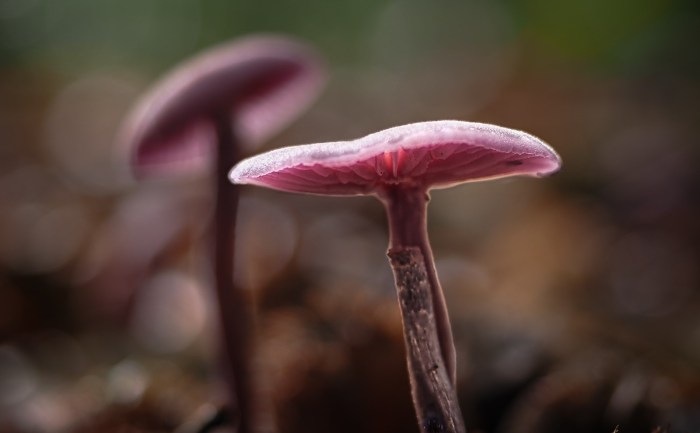
FOR Graham Parkinson, there’s nothing to beat the glorious autumnal colours of our fabulous fungi, and his macro lens captured an array of stunning shapes and textures during a trip to Davenport Wood at Marlow.
It’s hard to pick a favourite from the selection, but few fungi are more startling than the bright yellow coral-like branches of the stagshorn.
The beautiful inedible fungus jumps out of the leaf litter, looking like a freshly set fire emerging from conifer stumps or roots, and is also known in the States as jelly antler fungus.
The enduring fascination of fungi lies in their enormous variety, with thousands of different species offering an unlimited array of shapes and colours to be detected among the foliage.
Not that the uninitiated will want to get too close, perhaps: some of them are deadly and boast spine-tingling names like the destroying angel, funeral bell and death cap.
SUNDAY NOVEMBER 3
FOR some, getting out and about in nature is all about the wildlife, even if so many of our native creatures are quite difficult to spot.
LYING LOW: deer in Bushey Park PICTURE: Lesley Tilson
The undergrowth may be barer at this time of year, but that doesn’t always help, and the abundant leaf litter provides plenty of hiding places on the ground.
But larger mammals stand out against the bracken and even familiar farmyard friends can have their own beauty in this autumnal landscape, the sheep looking well insulated against the chillier of the season’s winds.
MORNING GLOW: deer in Bushey Park PICTURE: Lesley Tilson
And when the skies oblige, there’s nothing like an early morning glow to lend a mystical feel to the most comfortable of silhouettes.
MONDAY NOVEMBER 4
IT’S the tail end of the deer rutting season, when stags are fighting for territory, and that can mean some pretty dramatic displays by competing males pumped full of testosterone.
CALL OF THE WILD: the rutting season PICTURE: Lesley Tilson
The rut begins in September and lasts until around early November, during which time stags engage in a series of behaviours aimed at showing off to the hinds and establishing their dominance.
If they’re not roaring fiercely or stamping the hround, they could end up literally locking antlers to fight for the right to mate with all the hinds in a “harem”.
WINNER TAKES ALL: the victor gets mating rights PICTURE: Lesley Tilson
Fights are ferocious and decisive and the winner takes all, but although the rut can be an amazing natural spectacle to witness, visitors to local deer parks are warned not to get too close to the competing stags.
TUESDAY, NOVEMBER 5
AT one point in The Essex Serpent, Sarah Perry writes: “A vixen drew near and turned her gaslight eyes upon him, then drew back and sat surveying him a while.”
“Gaslight eyes” is a gloriously poetic phrase to capture the extraordinary stare of a curious fox and that remarkable bright amber glow we associate with the mammals.
Perhaps it also has echoes of the “eyeshine” we associated with noctural creatures whose glowing eyes may be the first thing we see reflected in a torch or headlight at night.
The tapetum lucidum is a layer of tissue immediately behind the retina which reflects visible light back through the retina, increasing the light available to the photoreceptors.
When light shines into the eye of an animal having this “bright tapestry”, the pupil or the eye, appears to glow, emitting a range of colours from white and yellow to red, blue, pink and green.
This unique adaptation allows for excellent night vision for nocturnal predators.
According to the Walking Mountains Science Center in America, generally mountain lions and bears have eyeshine in the yellow-to-red range. Deer and elk eyeshine is white, but moose eyeshine tends to be red. Rabbits and pikas have red eyeshine. Blue eyeshine is seen in other mammals, including horses. Foxes and domestic cats and dogs usually have green eyeshine, but cat eyeshine can also be orange to red.
WEDNESDAY NOVEMBER 6
LONDON poet and journalist Thomas Hood was no fan of November, it seems.
CLEAR VIEW: a Chilterns stream PICTURE: Lesley Tilson
Back in 1844 at the conclusion of his poem No! he penned the words:
No warmth, no cheerfulness, no healthful ease, No comfortable feel in any member— No shade, no shine, no butterflies, no bees, No fruits, no flowers, no leaves, no birds,— November!
But perhaps we need to remember that Hood was more familiar with the all-encompassing London smog of the mid-19th century rather than the clear air of the Chilterns: and indeed he was to die there from dropsy the following year.
So to combat his vision of a landscape with “No sky—no earthly view— No distance looking blue”, we’re published a trio of November views which rather give the lie to the idea of the month being one of smog and gloom!
LIGHT FANTASTIC: an Amersham sunset PICTURE: Gel Murphy
THURSDAY, NOVEMBER 7
IF Thomas Hood preferred to conjure up a somewhat bleak portrait of November, one Georgian poet had a distinctly more upbeat vision of the natural world.
Elizabeth Craven’s fascinating life was full of travel, love-affairs and scandals. Born into the upper class, she was pushed into marriage at 16 to Lord Craven and became a celebrated society hostess and beauty, as well as mother to seven children.
She went on to write a variety of poems, stories and plays, moving from Berkshire to France following separation from her husband in 1780 and living in seclusion there before travelling extensively all over Europe.
Later she went to live in Germany as the companion and eventually second wife of the Margrave of Ansbach before returning to England and mixing with the more rakish of the Regency set.
CLOSE OF DAY: blooms at sunset PICTURE: Gel Murphy
In her old age, she moved to Naples where she passed her time sailing, gardening and writing her memoirs, though a number of enigmatic gateposts at Hamstead Marshall near Newbury in Berkshire still stand as a reminder of the Craven family’s estates in the area.
But what’s all this got to do with the Chilterns countryside, you ask? Perhaps because we know Elizabeth Craven best for her most famous poem, one which remains popular at funerals today.
FAITHFUL EYES: Teddy the labrador
It’s a song of gratitude which begins:
I thank thee God, that I have lived In this great world and known its many joys: The songs of birds, the strong sweet scent of hay, And cooling breezes in the secret dusk; The flaming sunsets at the close of day, Hills and the lovely, heather-covered moors; Music at night, and moonlight on the sea, The beat of waves upon the rocky shore And wild white spray, flung high in ecstasy; The faithful eyes of dogs, and treasured books, The love of Kin and fellowship of friends And all that makes life dear and beautiful.
Even on the bleakest of November days, it’s easy for us to relate to the “many joys” of which she writes and perhaps add our own favourites to her list of things that make life “dear and beautiful”.
FRIDAY, NOVEMBER 8
MIST and fog get a bad press in literature, and we have dozens of words capturing the dank, dreary and drizzly associations of such weather.
Around the country we get mizzle and mirk, smirr, fret and haar: and none of them sound particularly healthy.
In many novels, not least Susan Hill’s The Woman In Black, fog and mist roll in to warn us of impending doom. Her fog creeps in and out of alleyways and passages, “seething through cracks and crannies like sour breath”, a yellow, filthy, evil-smelling fog, menacing and sinister, disguising the familiar world and confusing the people in it.
BLIND MAN’S BUFF: en route to Widmer PICTURE: Carol Ann Finch
For her, it’s as if people were “having their eyes covered and being turned about, in a game of Blind Man’s Buff”, whereas Dickens in Bleak House envisions people on the bridges peeping over the parapets into a nether sky of fog, with fog all round them, as if they were up in a balloon and hanging in the misty clouds.
SENSE OF FOREBODING: fog among the trees PICTURE: Anne Rixon
But if authors like Dickens have helped us to associate such images with the smog of Victorian London or the bleak expanses of the Kent coast or Essex marshes, other writers paint a gentler and more kindly picture of such weather conditions.
In his 1948 poem The Smoky Smirr o Rain, George Campbell Hay writes evocatively:
The hills aroond war silent wi the mist alang the braes. The woods war derk an’ quiet wi dewy, glintin’ sprays. The thrushes didna raise for me, as I gaed by alane, but a wee, wae cheep at passin’ in the smoky smirr o rain.
Unlike the fog’s sinister associations in The Strange Case of Dr Jekyll and Mr Hyde, Hay’s morning mist drifts gentle down, cool and kind and whispering, till land and sea disappear and all becomes “still an’ saft an’ silent in the smoky smirr o rain”.
Much as we love the delicious shiver of darker associations and images, of Gothic novels where the grey pall recalls the wild moors of Wuthering Heights or the chilling howl of the Hound of the Baskervilles, we can relate to Hay’s softly silent world too.
When the edges of the landscape close in on us in a fine grey blur, sounds are muted and the air is damp, it may be that we feel blissfully calm and at peace with our silent surroundings, rather than fearing an approaching monster in the mist….
SATURDAY, NOVEMBER 9
SOMETIMES a sneaky snapshot of a cheeky squirrel is enough to brighten the greyest of days.
CHEEKY SMILE: a squirrel poses for the camera PICTURE: Sue Craigs Erwin
This ubiquitous woodland mammal may not be universally loved, but their incredible agility and cheerful demeanour often endear them to photographers struggling to capture more fast-moving, elusive or nocturnal wildlife, like weasels and stoats, bats and owls.
November’s glorious autumnal colours provide a spectacular backdrop on a sunny day, of course, but even some of our largest wild animals can blend into the background quite convincingly, and are alert to the sound of approaching footsteps.
Wildlife photographers rely on a subtle combination of patience, skill and luck to produce their most spectacular shots, but for Phil Laybourne, one particular animal has been at the top of his bucket list for some time: the European polecat (Mustela putorius), part of the weasel family.
Detested by poachers and persecuted to the brink of extinction, polecats are roughly the size of their domesticated cousins, ferrets, but are nowadays a protected species in the UK under the Wildlife and Countryside Act 1981 and have been making something of a comeback in recent years.
BUCKET LIST: the European polecat PICTURE: Phil Laybourne
Part of the mustelidae family which includes species such the stoat, weasel, pine marten, otter and badger, as Phil’s startling portrait shows, polecats have a distinct bandit-like appearance, with white stripes across their dark faces.
They boast a two-tone coat with dark brown guard hairs covering a buff-coloured underfur, with a short, dark tail and rounded ears. Living in lowland wooded habitats, marshes and along riverbanks, they prey particularly on rabbits and have one litter a year in early summer.
SUNDAY, NOVEMBER 10
NOVEMBER is a month of remembrance, of poppies and poppy-strewn memorials, of old soldiers and wreath-laying ceremonies, of sombre thoughts of past battles and lost loved ones.
And in the wake of all the noise and light of bonfire night celebrations, Remembrance Sunday events across the world recall Armistice Day 1918, the end of hostilities in World War I.
LEST WE FORGET: poppies in Amersham PICTURE: Lesley Tilson
In countless brief, non-religious commemorations, wreaths are laid, the Last Post sounded and two minutes’ silence observed.
At the heart of these Royal British Legion events lies the reciting of the Exhortation, the best-known stanza of a poem written by British poet Laurence Binyon and published in The Times in 1914:
They shall grow not old, as we that are left grow old: Age shall not weary them, nor the years condemn. At the going down of the sun and in the morning We will remember them.
REMEMBRANCE: recalling the fallen PICTURE: Lesley Tilson
Down on the North Cornish coast a couple of plaques commemorate the spot near Pentire Point, north of Polzeath, where Binyon composed the poem while sitting on the cliff-top looking out to sea a few weeks after the first British casualties of the war, at Mons.
In 1945 the second Sunday of November was adopted as a day of remembrance for both World Wars.
SILENT REFLECTION: the Amersham display PICTURE: Lesley Tilson
Over time, despite concerns at the occasion being hijacked by politicians and others to justify or promote military engagement, Binyon’s words have been claimed as a tribute to all casualties of war, regardless of state, with the events, wreaths and memorials offering an opportunity for silent personal reflection about all that is lost in times of war.
MONDAY, NOVEMBER 11
AFTER all the noise and light of bonfire night and diwali celebrations, as the plaintive Armistice Day notes of the Last Post die away it’s time to get out into the damp woods and soak up the sights and sounds of nature’s most spectacular fireworks show of the year.
For this fortnight in mid-November our woodlands are at their finest, clothed in a glorious array of yellow, gold and russet hues before the bright colours begin to fade and a spate of windy weather strips the branches bare.
It’s at this time of the year that our beech woods come into their full glory, with the gold and yellow foliage standing out against the wrinkled textures of the bark and littering paths in a riot of wonderful tints.
Mosses, lichens and intriguing fungi begin to disappear among the leaf litter, while youngsters and puppies rustle along the paths and more curious souls perhaps try to spot the difference between the leaves of the oak, hazel, birch or field maple.
Is that a lime or hornbeam, elm, larch or sycamore? Even if leaf fall occurs earlier than usual, as in 2010, 2015 and 2020 when there was a sudden rush of colour at the end of October, some foliage may still last till late November or even December.
COLOUR CURTAIN: dozens of shades PICTURE: Gel Murphy
Of course when it comes the realisation that autumn colours are gone and the leaves are bare is always a sombre moment. But for now, it’s time to make the most of that glorious fireworks display, when even on a cloudy day the trees themselves seem to be radiating light and dozens of different shades of colour delight the senses.
TUESDAY, NOVEMBER 12
AFTER so many dark, dank, dreary November days, clearer skies and plummeting temperatures can offer a dramatic change of perspective.
And what better way of boosting our spirits than watching the sun come up?
In a world where staring at our mobile phones takes a huge toll on our physical and mental health, escaping into nature to watch the sun rise can be a transformative experience, helping to boost our mood and immune systems, not to mention inspiring us with a feeling of awe and helping us to see the world in a different light.
Sunlight is good for our soul, they say: and perhaps setting the alarm a little earlier could be just the boost we need to help banish those November blues.
WEDNESDAY NOVEMBER 13
WHEN the skies finally clear of mirk and smirr, there’s no sight more cheering than a red kite soaring on the thermals against a deep blue sky.
Beloved by poets, ramblers and dog walkers but detested by gamekeepers and once persecuted to the brink of extinction, today their shrill, distinctive whistle has become synonymous with country life in the Chilterns.
The graceful wings and distinctive forked tail cast a familiar shadow as they turn to catch the wind, several of them at a time wheeling effortlessly above the ridge, russet bodies catching the sun, sharp yellow bills glinting as those eyes scan the fields and hedgerows far below.
The poet David Cooke captures their place in history in the first stanza of Red Kites:
Plague birds, exquisite and focused, who scavenged Shakespeare’s unspeakable streets, they have drifted back from the borderlands of extinction on tense, splayed wings.
Given that they generally prefer scavenging for carrion, including roadkill, rather than hunting, the persecution seems even more misguided and unnecessary, but many are grateful that they are back in our skies again, soaring and serene, and in such numbers.
THURSDAY, NOVEMBER 14
NOWHERE does the past feel more vividly present in our daily lives than on the banks of the Thames.
The pattern of the river we know today would have been familiar to settlers thousands of years ago, and generations of invaders and settlers built their castles, forts and palaces along its banks.
MISTY START: Cock Marsh on the Thames PICTURE: Phil Laybourne
Phil Laybourne’s glorious portrait of Cock Marsh by Cookham lies far from the Roman city of Londinium, but this National Trust-owned land is a perfect place for a circular wander through a picturesque and unspoilt landscape of meadows and grassland slopes with panoramic views over the valley.
Here, shrouded in early morning mist, it’s easy to recall how the terraces above the Thames were colonised by nomadic hunter-gatherers of the Old Stone Age tens of thousands of years ago.
Habitation here has continued ever since, evident from Bronze Age tumuli and huge amounts of Roman pottery removed from the foot of Winter Hill in 1906, which is thought to have once been the site of a ferry across the river.
FRIDAY, NOVEMBER 15
IT MAY lack the scale and sheer spectacle of New England in the Fall, but autumn in the Chilterns lacks none of the vibrancy or splendour of displays “across the pond”.
Here, in countless woodland settings from Burnham Beeches to Penn and on towards the Vale of Oxford and the Cotswolds, or sleepy villages in Hertfordshire and Bedforshire, the annual display brings an extraordinary range of colours to the landscape.
In America, the leaf fall attracts travellers from across the world to the pretty villages and rugged landscapes of Vermont, New Hampshire, Maine and parts of Massachusetts.
There, they call it “leaf peeping”, when the crowds descend to view and photograph the dramatic colour changes in the autumn foliage, or set off on hiking trips to capture the colours at close hand.
In Japan, there’s a similar tradition called momijigari of going to visit scenic areas where the maple leaves have turned red in autumn.
We may not have a specific word for such outings in the Chilterns, but perhaps there should be.
LEAF PEEPING: autumn foliage at Burnham Beeches PICTURE: Andrew Knight
We are blessed to live in an area of outstanding natural beauty which pretty much epitomises quintessential English countryside, the weathered brick and flint of ancient cottages, pubs and farmhouses providing a perfect backdrop for an autumn walk.
But then again, perhaps it’s just as well the crowds haven’t cottoned on to the seasonal beauty of the Chilterns.
In the States, fuelled by Instagram and social media influencers, some areas are inundated with bumper-to-bumper traffic, with hiking routes becoming dangerously overcrowded and locals complaining of inconsiderate tourists littering beauty spots and overunning small communities.
Whisper it quietly, then. When the skies clear, get out and savour the woodsmoke and simple pleasures of dogs and children rustling their way through the fallen leaves. We don’t need crowds to remind us just how beautiful our local landscape is.
SATURDAY, NOVEMBER 16
EVEN deep in the dark woods, the bare branches and piles of leaves are bathed in silver.
Overhead, the skies are clear, the air is cold and the final supermoon of the year is casting its glow into the furthest recesses of our footpath through the trees.
SUPERMOON: November’s Beaver Moon PICTURE: Carol Ann Finch
Our breath hangs warm in the chill evening air and the full Beaver Moon is now high in the sky, the last of four consecutive supermoons to brighten our night skies since August.
Teddy the labrador nuzzles among the leaf litter unaware. A startled muntjac thumps off through the bushes, unimpressed by our intrusion.
DISTANT MEMORY: golden afternoon hues PICTURE: Gel Murphy
The gleam seems surreal, the gold and russet hues of the afternoon a distant memory now that the moon “walks the night in her silver shoon”. This is the world of which Walter de la Mare wrote:
A harvest mouse goes scampering by, With silver claws and a silver eye; And moveless fish in the water gleam, By silver reeds in a silver stream.
It’s called the Beaver Moon, probably because beavers are particularly active at this time of year as they prepare for the winter months ahead before sheltering in their lodges, or because this is when Native American fur trappers would set beaver traps before the swamps froze to ensure a supply of warm winter furs.
Supermoons occur when the moon is at its closest point to the Earth, when it appears bigger and brighter than usual, providing a treat for stargazers and photographers alike.
The next supermoon does not occur until October next year, so it could be worth catching it over the next night or two while we can.
SUNDAY, NOVEMBER 17
THOUGHT the fungi season was over? Think again.
They may be lurking under leaf litter and hidden from view, but those metabolic marvels are definitely out there, using cocktails of potent enzymes and acids to break down some of the most stubborn substances on the planet.
METABOLIC MARVELS: mushrooms in the woods PICTURE: Graham Parkinson
They come in all shapes and sizes and a startling of array of colours and textures, but it’s only in recent years that we’ve begun to realise quite how remarkable these extraordinary life forms are.
Merlin Sheldrake helped to open our eyes to that world in his book Entangled Life, introducing us to a hugely diverse kingdom of organisms that support and sustain nearly all living systems.
When we think of fungi, we probably think of mushrooms. But mushrooms are only the fruiting bodies of fungi, where spores are produced and dispersed.
Fungi are everywhere around us, but largely hidden from view, undocumented and poorly understood despite, as Sheldrake argues, providing a key to understanding the planet on which we live.
Perhaps it’s time to give those intriguing life forms a second glance, then. They may not look much lurking among the leaf litter, but they have a genuinely intriguing story to tell about life on earth.
MONDAY, NOVEMBER 18
ANOTHER day, another wet wander in the woods, another stunning range of fungi to delight the senses.
This time it’s the wood-rotting turkeytail, a bracket fungus which comes in a glorious array of colours and takes its name from its similarity to turkeys’ fan-like tail feathers.
Watching the dogs snuffling among the fallen leaves may make us wonder what wonderful scents they are discovering.
But then our own powers of smell are quite extraordinary too, even though we tend to take it for granted that we can tell the difference between, say, mustard and coal, or different fruits, herbs and flowers.
It’s said we have the capacity to detect a trillion different odours and can split complex mixtures into their constituent chemicals. But animals, plants and fungi do the same, changing their behaviour in response to the scent signals around them.
Truffle fungi use chemicals to communicate to animals their readiness to be eaten, for example, and the huge sums paid by top chefs for ripe truffles ensure that truffle hunting is a business steeped in dark tales of skulduggery.
So valuable are those white truffles of Piedmont or Perigord black truffles that all kinds of crimes have been committed by unscrupulous souls eager to cash in.
TUESDAY, NOVEMBER 19
THERE are flakes of snow falling and the temperature has plummeted, but there’s a final chance to reflect on the magical properties of those extraordinary organisms under our feet.
MAGICAL PROPERTIES: the humble mushroom PICTURE: Graham Parkinson
The rich autumn colours are still vibrant in the Chilterns, but cold air from the north is sweeping across the country and schools across Scotland, Wales and the north are closing in preparation for the anticiated snowfall.
There’s just time to savour some of those remarkable fungi before they disappear beneath the falling leaves, not to mention any potential snow and slush.
It’s at this time of year that Merlin Sheldrake takes us to the hills around Bologna at the height of the truffle season to find out at first hand about the secret world of those spore-producing organs.
Closer to home, we meet a dog walker deep in the woods using a ball coated in truffle oil to practise scent work with his faithful companion. Truffle hunting may be big business in France and Italy, but across the UK there are training workshops and experience days for those wanting to discover more about the subtle art.
For Sheldrake, part of the fascination of mycorrhizal fungi like truffles is not just the symbiotic relationship between fungus and plant roots, but the way this involves understanding the importance of subtle variations in soil, season and climate: a intellectually stimulating mix of disciplines from agriculture and forestry to microbiology, ecology and climate change.
WEDNESDAY, NOVEMBER 20
THE frost is penetrating and we walk under a canopy of branches where yellow leaves fall like rain.
A pair of blackbirds, brazen as ever, rootle among the crispy leaf litter oblivious to the proximity of our huge, curious black labrador.
SANTA’S HELPER: the humble robin PICTURE: Lesley Tilson
Back at the kitchen door, a robin cocks his head expectantly. Folklorists recall a variety of superstitions surrounding Britain’s favourite garden bird, used by generations of parents as a warning to children that “Santa’s robin” was keeping a watchful eye over their behaviour in the run-up to Christmas, reporting regularly back to the North Pole.
Tame and friendly, the birds have had a place in our hearts for centuries, prompting one aggrieved magazine writer in the early 18th century to ask why people had “so good an esteem of this bird” given that the robin was “as malicious and envious a bird as any that flies”.
Yet the common belief was that of all wild birds, the robin was not to be harmed. As A E Bray put it in 1838: “Very few children in this town would hurt the redbreast, as it is considered unlucky to do so; this bird being entitled to kindness… above every other.”
THURSDAY, NOVEMBER 21
IF plummeting temperatures bring an icy chill to the Chilterns countryside, the cold also lures wildlife into closer contact with their human neighbours.
CHILL WIND: the first snowfall of winter PICTURE: Sue Craigs Erwin
Clear skies bring out the sun, offering photographers the prospect of capturing better portraits of more elusive garden visitors like nervous muntjac or a hungry red-legged partridge.
GARDEN GUEST: the red-legged partridge PICTURE: Graham Parkinson
Pictured against ice-covered fields or snuffling through the fallen foliage, this is the time to catch a glimpse of an elusive fox or badger hunting for food, an owl swooping low at dusk or hungry birds silhouetted against bare branches.
A GLORIOUSLY clear night sky may have been a delight for stargazers, but bone-chilling temperatures meant many ramblers were content to gather round the fire rather than venture out into the frosty fields to survey the heavens.
The correspondingly icy start meant slippery footpaths and chilly looking wildlife until the weak afternoon sun brought a little warmth and light back into the landscape.
COLD COMFORT: horses enjoy a nuzzle PICTURE: Lesley Tilson
The autumn colours are still evident, but the frosts have taken their toll on the trees and much of the colour is now on the ground, in great drifts of crisp leaves. And with storms forecast, we have perhaps now passed the peak days for “leaf peeping”.
BROWN CARPET: fallen leaves in the woods PICTURE: Lesley Tilson
As dusk falls amid the trunks of a soaring conifer plantation we hear the reassuringly rasping “koch koch” calls of a dozen pheasants taking refuge among the trees.
Our evening stroll is punctuated by their brief moments of panic: one male rushes out of the undergrowth in his chestnut tweed suit, white silk scarf and big red cheeks, jinking and twisting down the path like a ridiculously overdressed sprinter trying to avoid a hail of gunfire.
LIGHT FROSTING: a frozen track PICTURE: Lesley Tilson
In the trees above, the mumbling and grumbling continues, punctuated by an occasional unearthly crow of alarm and drumming of wings as another victim is flushed and neighbours echo the call of alarm.
We leave them to their peace, roosting in the chilly branches as night falls fast, draining all remaining colour from the woods.
SATURDAY, NOVEMBER 21
AT DAWN, there are only the most modest signs that Storm Bert is on the way: grey clouds scudding across the sky and some ominous waving of upper branches.
The temperature is milder than it’s been of late, in the Chilterns at least. But from the north come warnings of heavy snow, strong winds and blizzards, with the prospect of flooding and widespread travel disruption.
CALM BEFORE THE STORM: high winds are forecast PICTURE: Lesley Tilson
By mid-afternoon the deluge is well and truly under way and the winds are getting up, with country parks and Burnham Beeches closed because of the dangers of falling branches. It won’t be a great day for pictures, but luckily we have yesterday’s to remind us of just how cold we’ve been. . .
WARMING UP: temperatures are rising PICTURE: Lesley Tilson
SUNDAY, NOVEMBER 24
STORM Bert is still rustling its way through the Chilterns woodlands, but while this windy weekend is stripping much of the natural colour from our trees, there are villages and towns across the region lighting up with Christmas trees and seasonal decorations.
Traditionalists may despair that the switching on of Christmas lights marks the start of a secular spending spree in the run-up to the holiday period, but for Christians Advent, which begins next Sunday, is the start of the liturgical year, a four-week-long period of reflection on the coming of Christ into the world at his birth.
Advent candles symbolise the four themes of hope, peace, love and joy associated with the arrival of Jesus and mark a time of shared meditation and prayer in Protestant, Roman Catholic, Orthodox and other Christian traditions.
TIME OF PRAYER: All Saints, Marlow PICTURE: Phil Laybourne
MONDAY, NOVEMBER 25
AFTER the ravages of Storm Bert, what a delight to see the sun again and realise that the golden glow of autumn is not a distant memory quite yet.
All trees rely on leaves to capture carbon in the form of carbon dioxide from the atmosphere through photosynthesis and scientists are still finding out just why trees have evolved leaves of so many different shapes and structures.
TUESDAY, NOVEMBER 26
WHY do conifers have thick needle-shape leaves whereas deciduous trees like maples have thin, flat leaves? Why are some leaves thicker than others?
CLEAR SKIES: colour contrasts outside Amersham PICTURE: Sue Craigs Erwin
We don’t know all the answers but it’s partly about capturing carbon as efficiently as possible according to local conditions.
In recent decades, scientists have discovered that leaf longevity is the cornerstone of two distinct strategies for trees: slow return on investment versus fast return.
CARBON CAPTURE: harnessing energy PICTURE: Gel Murphy
In harsher environments, where nutrients are scarce and the growing season is short, those thin evergreen needles acquire carbon over the long term and improve nutrient conservation, whereas short-lived leaves favour rapid carbon acquisition
Where resources like sunlight, water, and nutrients are plentiful, deciduous species generally thrive and outcompete evergreens, growing quickly and shedding their leaves once the growing season ends.
WEDNESDAY, NOVEMBER 27
CHALK streams are fascinating. A distinctive feature of the Chilterns landscape, they are important habitats for wildlife and support a massive range of species, including some of our most threatened plants and animals such as water vole and brown trout.
IMPORTANT HABITAT: the Misbourne PICTURE: Gel Murphy
Of all the world’s chalk streams, 85% are in Southern and Eastern England, making them one of the world’s rarest habitats, the most diverse of all English rivers and home to a profusion of invertebrates, fish, birds and mammals.
Despite being such rare ecosystems of global significance and having an intriguing history, supporting many thriving industries in the past, they are also under threat from a variety of dangers, from over-extraction to pollution, population growth, the HS2 project and invasive species.
WILD ON THE WATER: birds on the Misbourne PICTURE: Gel Murphy
Of the 283 English chalk streams, nine are in the Chilterns, among them the Wye, Chess and Misbourne, flowing south-eastwards down the chalk escarpment towards the River Colne and the Thames.
From ancient times, permanent settlements began to emerge clustered around the chalk streams and industries of all types have thrived over the millennia along the banks, from watercress beds to dozens of mills turning grain into flour and rags into paper.
RIVERBANK LIFE: a thrush looks for food PICTURE: Sue Craigs Erwin
Waterside locations have also been used for spiritual and religious activity since prehistoric times, from the Bronze Age burnt mounds on the Chess to Roman shrines and temples on the Ver and Hamble Brook.
THURSDAY, NOVEMBER 28
FROM wind and rain to chilly nights and frosty mornings, November can be a fickle month. But when the sun finally breaks through the clouds or dawn breaks on a clear day, there’s nothing more uplifting.
Sunlight shapes how we feel about the world, and it bathes our landscape in a range of glorious colours, from the lilacs and oranges of a misty morning ramble to the rosy glow of a mid-afternoon outing.
ROSY GLOW: a goldfinch poses for the camera PICTURE: Sue Craigs Erwin
And if it’s great for our health and wellbeing, even during winter, it’s good for our photography too, giving depth and contrast to our portraits of local wildlife.
DIFFERENT LIGHT: sunlight gives portraits depth PICTURE: Sue Craigs Erwin
Access to natural light during the day helps to improve our sleep, productivity and mood, but it seems we are spending longer and longer indoors: up to 90% of our days, according to one recent study. And as jobs become more automated and computer-focused, we are becoming even more severed from our natural environments.
How energising then to be out on the banks of a chalk stream on a frosty morning watching the mist rise on the water, escaping our screens and embracing the light.
FRIDAY, NOVEMBER 29
THERE’S nothing to beat a glorious sunrise when it comes to boosting our spirits.
It may be bitterly cold outside, but when dawn banishes the dark, it brings a promise of hope and anticipation, of new beginnings and fresh adventures.
Back in Homer’s day, dawn was personified by the rosy-fingered goddess Eos (Aurora in Latin), rising from her marriage bed to bring light to us mortals.
But whether this is a moment for quiet reflection, joyful thanksgiving or thoughtful preparation for the day to come, lacing up our boots for that dawn outing can be good for the soul, as well as our health.
VAPOUR TRAILS: the skies over Amersham PICTURE: Sue Craigs Erwin
It’s a chance to soak up the sights and sounds of nature in a very intimate and personal way, while our neighbours are still asleep and the countryside has not yet woken to the busy thrum of morning traffic or the pressures and time constraints of the school run.
EARLY SWIM: Rickmansworth Aquadrome PICTURE: Lesley Tilson
Wrapped up warm against the frost, walking in nature clears the mind of busy thoughts, each step part of a gentle rhythm keeping us in touch with the earth and alert to the sounds and movements of the wildlife braving the elements alongside us.
SATURDAY, NOVEMBER 30
LIGHT cheers us up in times of darkness. It reminds us that winter won’t last forever, and the sun will someday return.
Across ancient Europe, pagan peoples like the Anglo-Saxons celebrated the solar solstices and equinoxes, while the Celtic peoples marked the four midpoints between them.
CHEERING SIGHT: Christmas lights PICTURE: Phil Laybourne
Around the world, all the great winter holiday celebrations focus around light, and from the 1800s Christmas lights were added to the mix of candles, lamps, fireworks and roaring yule logs, reminding us of the divine connotations of the holiday season.
For early civilisations, the celebrations paid homage to the “invincible sun” that plays such a central role in our daily lives.
Hanukkah is also known as the festival of lamps and recalls how, following the reclaiming of the Temple of Jerusalem, a tiny cask of oil was made to last eight days — a token that God was still present with His people.
The Hindu festival of light, Diwali, is a time of music, feasting, family time and new beginnings while across the Pond, the seven candles in the kinara represent the seven principles of Kwanzaa, the holiday celebrated by African Americans, and people of the African diaspora, since 1966.
For Christians, the Star of Bethlehem may have inspired the custom of placing lights in Christmas trees, while Advent Sunday marks the start of the liturgical year, with advent candles symbolising the four themes of hope, peace, love and joy associated with the arrival of Jesus.
At a time of war and suffering, light represents the presence of divinity or enlightenment, a reminder of the first Biblical miracle recounted in Genesis, Chapter 1, Verse 3: “And there was light.”
We’re enormously grateful, as always, to the talented photographers who have allowed us to publish their pictures this month. If you would like to contribute any pictures, favourite moments or seasonal suggestions to our future calendar entries, join our Facebook group page or write to editor@thebeyonder.co.uk.
Not only can they sniff their way round one of the friendliest parks in the Chilterns, but footpaths lead off in virtually every direction across the valley offering the prospect of more adventurous outings.
WELCOMING: Wooburn Park
All credit to the local parish council for making Wooburn Park so welcoming to different sectors of the community.
For somewhere that’s so busy with four-legged friends of all shapes and sizes, it’s kept remarkably clean and litter free.
From young footballers to weekend cricket matches and floodlit tennis, it’s not just dog walkers who are catered for here, but somehow the different needs are met with the minimum of conflict.
DIFFERENT NEEDS: the park caters for various sports
In any major city, the sheer number of users would quickly see such a substantial park rapidly becoming a mess. But it helps that as well as regular patrols to empty the litter bins, the locals are happy to chip in too.
There aren’t any statistics to prove just how many people own a dog round here, but it sometimes seems as if there’s a four-legged friend on every street corner, and certainly all breeds are represented at Wooburn.
They’re a considerate bunch too: it’s rare to see someone not bothering to clean up after their pooch and organisers of those football clashes are also good at making sure their young charges don’t leave their rubbish behind.
Bins are well used, with local litterpickers helping to sweep up any odds and ends that may get blown into the undergrowth.
OPEN ASPECT: the footpath to Flackwell
Other well cared for open spaces range from Hervines Park at Amersham to Gold Hill Common in Chalfont St Peter and Gerrards Cross common.
But Wooburn is not only bigger than most but also well fenced in and in a glorious location, with views over the valley opposite and the Wye chalkstream running cheerfully down one side.
And at one end of the park lies the Warren Nature Reserve, a delightful enclave of woods and wildflowers by the river, which provides the perfect habitat for many wildfowl and other birds, from herons and kingfishers to swans, ducks and geese.
WOODED ENCLAVE: entering the nature reserve
Once home to a medieval manor house with chestnut trees lining the main path, today the 5.7 acre reserve boasts an array of English woodland trees and a picturesque wildlife pond, as well as a number of paths winding through the ashes, oaks, limes and elms.
NATURE RESERVE: swans on the Wye in The Warren
Back in the days of the Domesday Book, the manor boasted a couple of dozen households. Before the Norman conquest it was owned by Earl Harold; afterwards it was confiscated by William the Conqueror and split between two of his supporters.
At that time, the picturesque River Wye generated enough power to drive 20 mills and in later centuries the Wye Valley became a major centre for papermaking.
WILDLIFE POND: in The Warren
Soho Mill opposite the Old Bell closed in 1984 and Glory Mill was the last mill to close in 1999, part of the building now preserved at the Chiltern Open Air Museum.
Back in the park, there are cheerful shouts from the children’s play area while a dozen different breeds chase balls and each other until energy levels start to flag.
PICTURESQUE: the church in Wooburn Town
Perched on the edge of Wooburn Town, where the picturesque church of St Paul’s has been a holy place for over a thousand years, the park is as welcoming as it is bustling, a green space in the heart of the village catering for visitors of all ages, whatever the weather.
AS PRETTY country parishes go, Wooburn has a lot to recommend it.
Following the curving valley of the River Wye chalkstream from near Loudwater until it joins the River Thames near Cookham, this was always a place where the rich soil was easily worked and the meadows and woodlands made it a desirable place to live.
VALLEY VIEWS: looking down from Farm Wood
Sweeping views across the valley reveal a plethora of green spaces to explore, among them the delightful wildlife haven of Farm Wood, much enjoyed by dog walkers but easily overlooked by anyone passing through the village on the main road to Bourne End.
WILDLIFE HAVEN: Farm Wood
One of a number of open spaces cared for by Wooburn and Bourne End Parish Council, it lies just off Broad Lane at the top of Wash Hill, so anyone accessing the wood from the village has a reasonably stiff climb ahead of them.
UPHILL JOURNEY: the footpath to Farm Wood
But a small car parking area off the main road provides an easier starting point for dog walkers, and a level bridleway leads off towards the pretty hamlet of Berghers Hill and on to Mill Wood.
YOU ARE HERE: a guide to the local wildlife
This level route is popular with ramblers, being easily built in to a circular route encompassing Hedsor and Littleworth Common, or a more challenging 5km circuit encompassing the tougher gradients to be found in both woods.
CIRCULAR ROUTES: the wood is popular with ramblers
At the Broad Lane entrance, a parish council sign points out some of the main wildlife attractions to watch out for, including woodmice and tawny owls, slow worms and weasels.
PICNIC SPOT: benches for families
Picnic benches at both ends of the bridleway can be glorious on a summer’s day, although some of the paths can get muddy in winter.
SPLASH OF COLOUR: rhododendrons in bloom
Bluebells, rhododendrons and foxgloves add a splash of colour in the spring and there are plenty of mature trees to add to the appeal of this little oasis.
OPEN ASPECT: the outlook from Farm Wood
Towards the lower end of the wood a footpath cuts diagonally across open fields towards Wooburn Park, with views across the Wye Valley – perfect for anyone dropped off at the top of the ridge and wanting an easy downhill saunter into the village.
WOODLAND WANDER: mature trees soar around the rambler
More tables clustered around a small pond offer another picnic venue in the depths of the wood, with additional information boards for nature-conscious visitors.
POND AREA: another picnic venue
It’s not huge, but Farm Wood is well cared for and a perfect place to unwind, hidden away from the busy main roads that criss-cross the area.
PEACEFUL: a footpath near Berghers Hill
Berghers Hill is a picturesque conservation area which was the home of Kate Frye (Mrs Kate Collins), an Edwardian actress, suffragist activist and diarist whose home was at Hill Top from the latter part of the First World War.
As recounted by the suffrage historian Elizabeth Crawford, it was there that Kate chronicled when war ended in November 1918 and there too, perched on the ridge above Wooburn Green, that she recounted the drone of German planes overhead for hour after hour in September 1940, along with “a great red glow over London”.
TAKE A BREAK: picnic tables at Berghers Hill
Thankfully the paths around the settlement are a great deal quieter today, perhaps the perfect place to take a seat in the sun and catch up with Crawford’s painstakingly researched biography of Kate Parry Frye, whose diary ran from the late 1890s to 1958.
Alternatively, carry on walking to WIndsor Hill and you find yourself in Mill Wood, a relatively narrow strip of land above Wooburn Green bordered by busy roads.
LEVEL PATH: Mill Wood
It’s not as picturesque or peaceful as Farm Wood, but the flat main path towards Holtspur is popular with dog walkers and those wanting to tackle some more testing gradients can loop up and down through the ferns and foxgloves towards the valley bottom.
POPULAR: Mill Wood is a favourite with dog walkers
Depending on the wind direction, it’s not always possible to escape the roar of traffic from the nearby motorway and busy A roads, and on a bad day locals are none too happy about the “foul stench” emanating from the landfill site at Springfield Farm Quarry.
CALM SURROUNDINGS: an old tree in Mill Wood
But despite such distractions, paths through the private wood offer a calming space where echoes of modern life can quickly fade away, especially on a spring morning when the sound of birdsong is at its peak.
heading up into the wood
Most dog walkers park at the top of Windsor Hill and opt for the easy path, but those wanting a more challenging circuit can loop round to the bottom of the valley and head back across the fields, or take one of the circular rambles mentioned earlier.
Another option is to head the other side of Farm Wood and pick up the Berkshire loop of the Chiltern Way towards Hedsor and Cookham.
WALKING ROUTE: the Berkshire Loop
The Berkshire Loop is a 28-mile walking route diverging from the Chiltern Way south of Penn, crossing the Thames at Cookham Bridge and taking in Winter Hill, Ashley Hill and Remenham Hill before re-crossing the Thames at Henley Bridge to rejoin the Chiltern Way in Harpsden Bottom.
DELIGHTFUL: foxgloves line the path in May
Off this well-trodden path lies a delightful private wood much treasured by locals where you can get permission to walk on request.
WILD FRAGRANCE: among the evergreens
It’s such an oasis of calm that its precise location is worth protecting, but contact details are on the gate for those happy to respect the peace of the place, which remains gloriously free of litter, poo bags and the other detritus that can plague public parks.
WILD FRAGRANCE: among the evergreens
Here, amid the glorious fragrance of soaring evergreens, a basic figure of eight loop gives joggers and dog walkers a chance to find a place of calm away from the hustle and bustle of the modern world.
SPLASH OF COLOUR: rhododendrons flower in May
As in other local woods, bluebells carpet some of the dells in April, foxgloves line the paths in May and rhododendrons add to the splashes of colour against the backdrop of greens and browns.
To complete the full circuit involves some challenging gradients for those less fleet of foot, but to be deep among the trees as dusk starts to fall is to find a very special place of solace and respite, of refreshment and renewal.
WALKING ROUTE: back on the Berkshire Loop
Back on the Berkshire Loop towards Hedsor and the Thames, or returning to Farm Wood, Wooburn locals can relish the fact that their ancient valley offers so much space to roam and so much variety in its landscape.
SPACE TO ROAM: heading towards Hedsor
Slow Ways is an initiative to create a national network of paths, ways and trails designed to encourage people to leave the car at home and get back in touch with nature, on foot.
In the fields and woods around Wooburn, we have just such a network on our doorstep, and for hundreds of local families it’s a daily delight to escape into the fields and woods that make it such a special place to live.
SEPTEMBER. Suddenly, there’s a chill in the morning air.
It’s as if nature knows you have just changed the month on the kitchen calendar and wants to tell you to forget all about those long humid dog days of summer – autumn is definitely on its way.
It’s the time of year when we dust off our warmer coats and cardies and bemoan the loss of those long summer evenings.
SIGN OF THE TIMES: a footpath outside Amersham PICTURE: Sue Craigs Erwin
It’s not as if this should be a surprise. Days have been shortening since the summer solstice. But it’s the pace of change that suddenly seems to quicken.
From late May until near the end of July, sunset in the south-east is after 9pm. But we lose around three minutes of daylight every day from August through to late November…it just may take us a little time to notice.
CHILL IN THE AIR: sunset over Chesham PICTURE: Lesley Tilson
That’s why, on a crisp morning in early September, we suddenly start muttering about the nights drawing in and winter being around the corner.
The children have settled into the new school year after the long holidays, universities are reopening their doors and dramatic skies are warning us of more changeable weather to come.
EVENING LIGHT: the sun casts a warm glow over farmland PICTURE: Sarah How
Even though in practice September is often a month of long hours of sunshine and relatively warmth, sunset is now before 8pm and will be almost an hour earlier by the end of the month.
Psychologically, those long sunny summer evenings are already feeling like a distant memory, especially with the children back at school after the long holidays.
The colour palette is subtly changing too, the greens gradually giving way to golds, russets and browns.
NATURAL PATTERNS: a study in textures PICTURE: Sue Craigs Erwin
It’s still getting light early, and we’re woken by the reassuring honking of geese flying past in perfect formation – just one of some 4,000 species of birds around the world migrating in search of milder weather and more plentiful food.
It’s a friendly sound, as if the family are having a lively conversation, although scientists speculate that it is actually a way of keeping the flock together on their long flights, with those behind honking encouragement to the ones in front.
MORNING CALL: a small skein of pink-footed geese PICTURE: Tim Melling
The shape makes sense too, creating uplift for the bird immediately behind and adding much more flying range than if a bird flew on its own.
They swap positions en route, so that when the lead goose gets tired, it rotates further back in the ‘V’ and another goose heads up front.
TEAM SPIRIT: wild Canada geese in North America PICTURE: Tim Melling
Even more amazingly (and much quoted on team-building courses around the world), when a goose gets sick or is wounded and falls out of formation, a couple of other geese obligingly fall out with their companion and follow it down to lend help and protection, staying with the fallen goose until it is able to fly or until it dies; only then do they set off to catch up with the rest of the group.
The geese aren’t the only ones of the wing. The skies are hectic with criss-crossing migrants and down at the local gravel pit the numbers of gulls and cormorants will be building.
KNOTS LANDING: knots and dunlins at the Humber Estuary PICTURE: Tim Melling
Around the country from the Tweed estuary to Flamborough Head in Yorkshire and Spurn Head at the mouth of the Humber, birds are arriving in huge numbers, pausing before pushing on with their remarkable journeys.
Bats and owls are busy too, while baby birds like tits, robins, blackbirds and starlings are beginning to look a lot less scruffy as autumn approaches.
SHOWER TIME: baby blue tits get spruced up PICTURE: Nick Bell
Meanwhile in the woods, it’s conker season for pupils wandering home from school and the acorns have been dropping like rainfall.
As botanist and author @LeifBersweden puts it: “One of my favourite September activities is to sit in the sun near an oak tree, close my eyes and listen for the quiet plick-plock-thump of acorns pinballing between branches before falling to the ground. It might not sound like much, but that sound is just utterly wonderful.”
FUNGUS FORAY: many of the more colourful toadstools and berries are poisonous
Fungi are springing up on dead trees and fallen branches to the woodland floor and spiders are out in force, spinning their elaborate webs, intricate patterns glistening in the morning dew.
The foragers are out looking for mushrooms and other edible delicacies, although many of the toadstools and berries are far from safe.
Start nibbling the fly agaric, destroying angel, death cap or white bryony and you could face vomiting and diarrhoea, stomach cramps, hallucinations and even death. Maybe not such a great idea for the uninitiated, then.
Ants and hornets are busy at work building their nests in the woods, bats are swarming and the baby moorhens are skittering around on their lily pad rafts.
Hedgerows, shrubs and trees are bursting with berries, fruits and nuts, providing a welcome feast for birds and small mammals and a welcome splash of colour in the woods.
Some babies are still being looked after carefully by doting parents, while others are getting their first taste of independence ahead of the harder winter months.
MUM’S THE WORD: mother and fawn enjoy a family moment PICTURE: Lesley Tilson
Some dragonflies are still on the wing too for those photographers with the patience, stealth and a zoom or macro lens for close-up shots.
ON THE WING: a migrant hawker dragonfly PICTURE: Graham Parkinson
Around the country, harvest has been under way for weeks, with early finishes in some areas where the weather has allowed, and heavy rain delaying the combines elsewhere.
Normally falling towards the end of September or early October, the harvest thanksgiving festival dates from pagan times, traditionally held on the Sunday nearest the Harvest Moon, the full moon closest to the autumn equinox (September 22 or 23).
Once Lammas Day at the beginning of the harvest season on August 1 was the time of celebration, when farmers made loaves of bread from the new wheat crop and gave them to their local church for ‘loaf Mass’ to be used as the Communion bread during a special mass thanking God for the harvest.
THANK THE LORD: a prosperous harvest was a time for prayer and thanksgiving
The custom ended when Henry VIII broke away from the Catholic Church and nowadays we have harvest festivals at the end of the season which usually include singing hymns, praying, dancing and decorating churches with baskets of fruit and food.
Michaelmas Day is traditionally the last day of the harvest season: the feast of Saint Michael the Archangel on September 29. St. The patron saint of the sea, ships and boatmen, of horses and horsemen, he was the Angel who hurled Lucifer down from Heaven for his treachery.
In the past, the harvest festival differed, based on when all the crops had been brought in, and was a matter of life and death that would involve the whole community working together, including children.
LAND OF PLENTY: harvest was once a matter of life or death PICTURE: Sarah How
A prosperous harvest would allow a community to be fed throughout the potentially barren winter months and would be cause for much celebration.
As an occasion steeped in superstition, it’s no surprise that so many ancient customs and folklore pre-date Christianity but still reflect the importance of crop gathering and the reverence in which the harvest was held.
Even 150 years ago all the work was done by hand – including the cutting of cereal crops like wheat, barley and oats – and everyone was roped in to help out, including wives, children and roaming groups of migrant labourers who would seek employment from farms at the start of the season, especially in the eastern arable counties.
HARVEST HOME: hi-tech help in the fields PICTURE: Sue Craigs Erwin
Gathering sheaves into stooks was back-breaking work too and days were long, from 5am till dusk, but the compensation was extra pay, a midday meal and often all the beer or cider needed to keep a labourer going through a hot day.
After the harvest came the celebration – one of the great village festivals shared by all the local community and culminating in an evening of dancing and merry-making.
With daytime temperatures occasionally still straying up into the 20s, it’s clear that summer’s not quite over – but as September moves into October it’s the changing colours of our deciduous trees that provide one of the big natural spectacles of the year.
RICH PICKINGS: hedgerows are bursting with berries PICTURE: Lesley Tilson
Coupled with the bright red flashes of the berries and fungi, the glow of those dramatic sunsets and the spectacular hues of our birds and insects, it’s the perfect time to venture back into the woods and soak up some of that autumnal sunshine before winter really takes a grip.
As always, we’d like to give a very big thank you to all the keen local photographers who have allowed us to use their work this month. If you would like to contribute any pictures, favourite moments or seasonal suggestions to future calendar entries, contact editor@thebeyonder.co.uk on email or via our Facebook group page.
ONCE upon a time it was known for its cherry and apple orchards.
These days it’s easy to miss the little hamlet of Three Households, perched on the edge of a Domesday Book village with a much better known high street.
SMALL HAMLET: Three Households lies on the edge of Chalfont St Giles
Instantly recognisable as Walmington-on-Sea in the 1971 film version of Dad’s Army, Chalfont St Giles is where John Milton retired in 1665 to escape the Great Plague of London and complete his epic poem, Paradise Lost.
His cottage is still one of the main local tourist attractions, along with the pretty church, 18th-century cottages and picturesque duck pond.
LIMINAL SPACE: heading towards Hodgemoor Woods
But at the upper end of the village, Three Households is a liminal space close to the Seer Green parish border and to the impressive 250-acre expanse of Hodgemoor Woods, with its welcoming network of footpaths and bridleways.
And while it might seem almost as unremarkable as its name suggests to the casual motorist whizzing past, Three Households is a gateway to the great outdoors that locals really relish.
GATEWAY: exploring the great outdoors
Being on the edge of the village, the footpaths here skirt paddocks and fields where horses graze contentedly: a world of farms, livery stables and substantial country estates where the lights of the village instantly fall away as evening dog walkers disappear into the dusk.
EVENING LIGHT: dusk falls over Three Households
During the day, ramblers can enjoy big skies and sweeping views, a pleasant contrast to the dappled depths of Hodgemoor, where it’s only too easy to lose your bearings on a circuitous path through the ancient trees.
BIG SKIES: heading north
With little light pollution, it’s the perfect place to see the stars, or even capture the aurora borealis on one of those rare occasions when the light show can be seen in the south of England.
LIGHT SHOW: the aurora borealis at Three Households
2024 saw a number of nights when the Northern Lights were visible in the area, bright, swirling curtains of lights in the night sky that range in colour from green to pink and scarlet.
SWIRLING CURTAIN: the Northern Lights
They’re caused by charged particles from the sun hitting gases in the Earth’s atmosphere, and here those particles put on a real display, just yards from the main road.
DRAMATIC DISPLAY: changing colours
Sunsets and sunrises can be equally dramatic around these parts, and skirting along the edge of Hodgemoor Wood, it doesn’t take long to pick up the Chiltern Way north of the woods, with more dramatic open vistas to enjoy.
CHANGING VISTA: sunset at Hodgemoor
From there, ramblers can head further afield towards Coleshill, loop back round through the centre of Chalfont St Giles or head back through open fields towards the cover of Hodgemoor.
CHILTERN WAY: the Red Lion at Coleshill
Armed with a Chiltern Society handbook, you could also explore a substantial part of the Chilterns Heritage Trail, a 52-mile circular walk through the Chiltern Hills created as a millennium project and revived by the society in recent years.
OPEN FIELDS: skirting around Hodgemoor
Locally, the trail runs from the Ivy House on the Amersham Road across the fields to the edge of Hodgemoor and on to Seer Green, Jordans and Chalfont St Peter before looping back to Chalfont St Giles.
CLOUD COVER: evening light at Three Households
Back at Three Households, those wanting to linger a little closer to home can just enjoy an evening wander through the fields and take in those dramatic skies without straying too far afield.
As views go, you couldn’t ask for a better outlook.
AUGUST is a time of plenty, when gardens are in full bloom and the combines are rolling across local farmland.
TIME OF PLENTY: harvest time in the Chilterns PICTURE: Sue Craigs Erwin
It’s ironic that in recent years Britain’s farmers have an unlikely source to thank for thousands of us watching those crops being harvested with a more knowledgable eye.
Who would have thought that Jeremy Clarkson would end up as something of an agricultural hero, introducing a whole new generation of TV viewers to the trials and tribulations of farming life?
FRESH INSIGHTS: TV viewers tuned into farming PICTURE: Sue Craigs Erwin
Yet amid all the mysterious talk about spring beans and winter wheats, moisture content and disappointing yields, four series of Clarkson’s Farm have offered some unexpectedly revealing insights after Jeremy took personal charge of running the 1,000-acre Cotswolds farm near Chipping Norton that he bought back in 2008.
And despite all the hapless bumbling and frustrated swearing at the continual setbacks, we were treated to a warm-hearted gem of a series that potentially taught us more about farming than any other agricultural programme on the box.
OPEN OUTLOOK: the view from Chinnor Hill PICTURE: Anne Rixon
From cultivation to harvest, misty dawn starts to exhausted night shifts, the series introduced us to Clarkson as we have never seen him before, in a world where failures have real emotional and financial consequences.
The whole experience has changed his outlook too, he confesses. He told monthly magazine Farmers Guide back in 2021: “I get annoyed with what people think about farming. It’s either the huge barns in Texas where they brutally grow pigs or cows, or Kate Humble with a freshly scrubbed baby lamb on a clean bed of hay. Farming is somewhere in between.
CHANGED VIEWS: out in the fields PICTURE: Anne Rixon
“Farmers are trying to fill the supermarket shelves with cheap good food, and at the same time look after the countryside.
“Every one of them I talk to is responsible and doing this all the time, despite what is going on with Covid, Brexit or idiotic political decisions.
FRIENDLY FACES: sunflowers in August 2021 PICTURE: Lesley Tilson
“We should give farmers a lot more respect. We’re all eating what they produced.”
The majority of Chilterns crops are cereals like wheat and barley, used in a variety of foodstuffs from bread, cakes and biscuits to beer and whisky and part of the farmed landscape’s familiar patchwork of seasonal shades.
But there are glorious splashes of colour too, from sunflowers to poppies, from linseed and borage to oilseed rape, with its distinctive yellow flowers and pungent aroma.
FLYING HIGH: a kestrel at Whiteleaf Hill PICTURE: Anne Rixon
Those colours form part of a rich landscape famous for its windswept downlands, ancient woods, clear chalk streams and flower-filled meadows, home to a huge array of wildlife and plants.
Stretches of chalk grassland and pockets of ancient heathland offer habitats that are both rare and fragile, where butterflies dance in the breeze and lizards and snakes bask in the sun.
JOYFUL DANCE: a common blue butterfly PICTURE: Graham Parkinson
From the purple and yellow of heather and gorse on the heath to those glorious glimpses of butterflies and moths in the woods, this is a time of year when the countryside echoes to the buzz of insects and chirrup of crickets.
And above it all, from the cherry orchards to the sundrenched vineyards, the whistles of red kites are a welcome reminder of how birds which had become virtually extinct by the end of the 19th century have become commonplace in the Chilterns again.
WELCOME RETURN: the red kite PICTURE: Martin Allen
The birds are a favourite with photographers for their acrobatics and agility, as well as their glorious colours.
In Wales, the kite is a national symbol of wildlife and was even voted the country’s favourite bird in a public poll.
FIRM FAVOURITE: the poll-winning kite PICTURE: Graham Parkinson
While the arable farmers are busy with haymaking and silage collection, insects, birds and baby mammals are abundant too, the annual wildlife population at its highest this month, even if the birds are too busy moulting to make much noise.
ON THE PROWL: a hungry fox PICTURE: Martin Allen
Lambs born in the spring are back out in the fields, baby squirrels are beginning to put on weight and fox cubs are out playing and learning how to hunt as dusk falls.
Shy deer are losing their hiding places among the ripe crops as the combines gather in the grain and there’s a definitely chill in the morning and evening air that hints at the start of a new season, even if we are hoping there are plenty of sultry September days still to enjoy.
HIDING PLACE: a startled deer PICTURE: Sue Craigs Erwin
According to meteorologists, August 31 marks the end of summer, although it’s too early for the real golds, reds and browns of autumn.
The start of the month saw the annual Big Butterfly Count organised by Butterfly Conservation, and although it’s too early for this year’s results, there have been widespread concerns about the long-term trends.
WORRYING TRENDS: butterflies and moths have declined in numbers
As well as forming a vital part of the food chain, butterflies and moths are considered significant indicators of the health of the environment.
VITAL ROLE: the speckled wood PICTURE: Graham Parkinson
As we mentioned last month, the UK has 59 species of butterflies – 57 resident species and two regular migrants (the painted lady and clouded yellow). Moths are much more numerous, as our 2021 post explained – and they can be equally colourful.
DISTINCTIVE: the six-spot burnet moth PICTURE: Graham Parkinson
One of the most common and distinctive is the six-spot burnet moth, one of half a dozen similar species in the UK but the only burnet moth with six red spots on its long, narrow, glossy black wings.
COMMON SIGHTING: the comma PICTURE: Ron Adams
Other common August sightings include the comma, painted lady, common blue and small tortoiseshell.
But getting close enough to picture these fluttering beauties clearly poses its own challenges, of course.
UP CLOSE: the gatekeeper PICTURE: Ron Adams
Close-up photography is a must to capture the small and intricate details of insects, using a macro lens and possibly a tripod.
But it takes patience to capture that perfect moment when an insect lands on a colourful flower and stays still long enough not to be an indistinct blur.
FAST MOVER: a dragonfly at Chinnor Lakes PICTURE: Anne Rixon
Flying insects provide even more of a challenge, with photographers needing to choose a fast shutter speed or use flash to freeze the action.
Despite the difficulties, wildlife photography brings plenty of rewards too, not least the opportunity to immerse yourself in the natural world and explore new surroundings.
DELICATE: dragonfly wings PICTURE: Graham Parkinson
For some, it’s not just a technical challenge but the opportunity to capture a pose that conveys the character or behaviour of the bird or insect.
For others the excitement lies in the juxtaposition of sunlight and shadow, or a dramatic contrast in textures.
CAUGHT ON CAMERA: a contrast in textures PICTURE: Sue Craigs Erwin
But even if you don’t have the skill or equipment to capture an elusive weasel at dusk or a restless butterfly fluttering, just getting out and about in the summer countryside with a Smartphone is bound to offer some photographic possibilities.
Those glorious sunsets and the textures of stone against the greenery, scudding clouds or the gnarled bark of an ancient tree trunk…
LOOKING UP: cloud patterns at Amersham PICTURE: Gel Murphy
September is a big month for bird migration, with the British Isles a crossroads for millions of arrivals and departures, but the first to head south are already on the move in August.
Swallows, house martins and swifts are all migratory birds that winter in Africa. Swallows and house martin arrive back in the UK in late March to early April and leave again in September to October, but the swifts are first to leave, and young swallows and house martins are honing their flying skills and enjoying the abundance of insects before joining the exodus.
FEEDING FRENZY: insects are plentiful PICTURE: Sue Craigs Erwin
Other food is plentiful too, from bilberries and crabapples to wild damsons and mushrooms, ensuring a fertile feast for many species of birds, especially those eager to gorge on berries before their long migration.
Across the Chilterns, it still feels as if summer is with us, but this is a time when the leaves are beginning to dry out on plants and trees, flowers are fading and days are becoming shorter.
LAST BLOOMS: summer is starting to fade PICTURE: Gel Murphy
Whisper it quietly, but autumn is sneaking quietly in. We haven’t had the dramatic drop in temperature yet or the growing awareness that the leaves are beginning, ever so gradually, to change colour.
But it won’t be long, so enjoy the September sunshine while you can, before autumn finally makes its presence felt.
As always, we’d like to give a very big thank you to all the keen local photographers who have allowed us to use their work. If you would like to contribute any pictures, favourite moments or seasonal suggestions to future calendar entries, contact editor@thebeyonder.co.uk on email or via our Facebook group page.
FEW writers have captured the mood of midsummer quite as colourfully and evocatively as the poet and novelist Laurie Lee.
We may not live in Gloucestershire but Lee’s portrait of summer still resonates just as strongly here in the Chilterns, especially after a month of warmer days and long golden evenings.
SCENTS OF SUMMER: hay bales outside Amersham PICTURE: Sue Craigs Erwin
Lee’s portrait of the country lanes of sleepy Gloucestershire at the tail end of the First World War was already a history lesson by the time his famous Cider With Rosie was published in 1959.
Yet there is an easy familiarity to many of his images that still manages to bring the countryside vividly to life as he recalls a lost boyhood world from an age before the Second World War and the invasion of the petrol engine.
He wrote: “Summer was also the time of these: of sudden plenty, of slow hours and actions, of diamond haze and dust on the eyes, of the valley in post-vernal slumber; of burying birds out of seething corruption; of Mother sleeping heavily at noon; of jazzing wasps and dragonflies, haystooks and thistle-seeds, snows of white butterflies, skylarks’ eggs, bee-orchids, and frantic ants; of wolf-cub parades and boy scouts’ bugles; of sweat running down the legs; of boiling potatoes on bramble fires, of flames glass-blue in the sun; of lying naked in the hill-cold stream; begging pennies for bottles of pop; of girls’ bare arms and unripe cherries, green apples and liquid walnuts; of fights and falls and new-scabbed knees, sobbing pursuits and flights; of picnics high up in the crumbling quarries, of butter running like oil, of sunstroke, fever and cucumber peel stuck cool to one’s burning brow.
SUNSET SONG: dusk over Stoke Common PICTURE: Andrew Knight
“All this, and the feeling that it would never end, that such days had come for ever…”
Of course the whole thrust of Lee’s memoir is that change was just round the corner: a way of life which had survived for hundreds of years would be altered forever by the arrival of motor cars and electricity, the death of the local squireand the declining influence of the church.
But he manages to freeze a moment in time for us with his mesmerising descriptions, not least that of his unforgettable encounter with the bewitching Rosie of the book’s title: “She was yellow and dusty with buttercups and seemed to be purring in the gloom; her hair was as rich as a wild bee’s nest and her eyes were full of stings.”
COLOURFUL CROP: poppies outside Amersham PICTURE: Sue Craigs Erwin
The “real” Rosie, Lee’s cousin Rosalind Buckland, died in 2014 just days before her 100th birthday. But for generations of readers, she will always be remembered as the intoxicating Rosie Burdock, sharing a stone jar of cider under a hay wagon in the Cotswolds all those decades ago.
MAKING HAY: out on the farm PICTURE: Sue Craigs Erwin
It’s the time of year when arable farmers are out and about haymaking and collecting silage which will be used to feed sheep and cattle during the winter months. July is the start of the combine season for cereal crops, so larger machines are an increasingly common sight in fields and on country roads.
For nature lovers, it’s the season to enjoy the antics of baby birds and squirrels, and probably the best month of the year for butterflies and moths.
Butterflies that usually fill meadows and woods this month include the ringlet, marbled white, dark green fritillary and silver-washed fritillary.
But butterfly numbers this year have been the lowest on record in the UK after a wet spring and summer dampened their chances of mating, Butterfly Conservation has warned.
The UK has 59 species of butterflies – 57 resident species and two regular migrants (the painted lady and clouded yellow). Moths are much more numerous, as our 2021 post explained – and they can be equally colourful.
It’s not only moths which are colourful, either. The distinctive striped cinnabar caterpillars turn into equally colourful pinkish-red and black moths, and they’ve been seen in abundance across the Chilterns this month as ragwort has flourished across the countryside.
TASTY TREAT: cinnabar moth caterpillars PICTURE: Sue Craigs Erwin
Detested by horse and pony owners for its poisonous attributes, the “toxic weed” has many supporters among conservationists as a native wildflower vital for pollinating insects, as our post from Stoke Common last summer explained.
But then July is the month of plenty, from beetles to baby hedgehogs, spiders to hairy caterpillars, all popping up against the glorious backdrop of a countryside in full bloom, where meadows are full of wildflowers, the woods are rustling with baby squirrels and the skies resound to the whistles of red kites.
HAIRY HORROR: a vapourer moth caterpillar PICTURE: Roy Middleton
Poppy fields are still pulsating with colour across the Chilterns, the fields of red heralding the arrival of summer across western Europe, as we highlighted last month.
STUDY IN SCARLET: a field of poppies at Pednor PICTURE: Leigh Richardson
But away from those startling reds, a short drive might replace the colour scheme with the rich blue of linseed, or flax – the stems of which yield one of the oldest fibre crops in the world, linen.
The flowers would have been familiar to the ancient Egyptians, and the trade played a pivotal role in the social and economic development of Belfast, for example.
BLUE CARPET: linseed flowers outside Chesham PICTURE: Lesley Tilson
Or stray into north Hertfordshire and on the rolling slopes of Wilbury Hills, the family flower farm at Hitchin Lavender has become something of a local landmark over the past 20 years, providing a pick-your-own experience over 30 acres of lavender where visitors can also find sunflowers, take photographs and enjoy a family picnic.
Away from the woods and meadows, there’s the Thames and its tributaries to explore too, or a quiet stretch of canal towpath providing a welcome change of pace from the hustle and bustle of busy high streets.
GO WITH THE FLOW: the Thames at Bourne End PICTURE: Lesley Tilson
Mind you, you may not need to go far to come face to face with an exotic visitor: nature has the habit of springing surprises on us in the most unlikely places…even when you think you’ve managed to find a safe, quiet corner to park the car.
ROOF WITH A VIEW: a heron at Wycombe Rye lido PICTURE: Andrew Knight
Ah, glorious summer, with the whole world “unlocked and seething”, as Laurie Lee put it. Or, to quote another famous author, this time Evelyn Waugh in Brideshead Revisited: “If it could only be like this always – always summer, always alone, the fruit always ripe…”
As always, we’d like to give a very big thank you to all the keen local photographers who have allowed us to use their work this month. If you would like to contribute any pictures, favourite moments or seasonal suggestions to our calendar entries, contact editor@thebeyonder.co.uk on email or via our Facebook group page.
POPPIES. If there’s one iconic image of what the Chilterns landscape should look like in June, it’s that vibrant splash of colour we see when the corn poppies come into bloom.
STUDY IN SCARLET: a deer among the poppies PICTURE: Carlene O’Rourke
Of course, those scarlet fields herald the coming of summer across western Europe and have long been associated with the terrible sacrifices made by the millions who fought in past wars.
SPLASH OF COLOUR: a poppy among linseed flowers PICTURE: Lesley Tilson
The poppies – papaver rhoeas – spring up naturally in conditions where soil has been disturbed, and just as the destruction brought by the Napoleonic wars of the early 19th century transformed bare land into fields of blood-red poppies growing around the bodies of the fallen soldiers, the fields of Northern France and Flanders were ripped open again in late 1914.
SUMMER BLOOMS: poppies at Pednor PICTURE: Gel Murphy
During the war they bloomed between the trench lines on the Western Front and after the war ended, they were one of the few plants to flourish on the barren battlefields of the Somme where so many men had died in one of the bloodiest battles in human history.
POETIC INSPIRATION: John McCrae’s In Flanders Fields PICTURE: Leigh Richardson
And the sight of those poppies inspired Canadian surgeon John McCrae to write In Flanders Fields, a poem which would come to cement the poppy as a potent symbol of remembrance:
We are the Dead. Short days ago We lived, felt dawn, saw sunset glow, Loved and were loved, and now we lie In Flanders fields.
The poppy quickly became a lasting memorial to those who died in World War One and later conflicts. It was adopted by The Royal British Legion as the symbol for their Poppy Appeal, in aid of those serving in the British Armed Forces.
POPPY APPEAL: an insect visitor PICTURE: Gel Murphy
This distinctive red flower is not the only June highlight in the great outdoors, though.
Ferns and foxgloves provide the focus of woodland forays in June, with splashes of purple among those glorious greens dancing in the dappled sunlight.
WOODLAND FORAY: foxgloves amid the ferns PICTURE: Andrew Knight
It’s also the month of brambles and bee orchids, dog and field roses, of paths cutting through fields bursting with ripening crops of wheat and barley.
RIPENING CROPS: fields of barley PICTURE: Sue Craigs Erwin
And the striking blue of a field of flax in full flower is a remarkable sight too, the stem of the linseed yielding one of the oldest fibre crops in the world: linen.
Hans Christian Andersen wrote in his fairy tale The Flax: “The flax was in full bloom; it had pretty little blue flowers as delicate as the wings of a moth, or even more so.”
ANCIENT CROP: linseed flowers near Chesham PICTURE: Lesley Tilson
Like wheat and barley, the crop is believed to have originated in the fertile valleys of west Asia, including Jordan, Syria and Iraq, and was certainly being made in ancient Egypt, with drawings on tombs and temples on the River Nile showing flax plants flowering.
Linseed oil is also traditionally used in putty, paints and for oiling wood, especially cricket bats, and the flower even features in the emblem of the United Kingdom’s Supreme Court in Parliament Square, representing Northern Ireland, in recognition of the fact that Belfast was the linen capital of the world by the end of the 19th century.
PUTTING ON A SHOW: daisies at Amersham PICTURE: Sue Craigs Erwin
And yet one of the strangest features of flax is the fact the flowers open only in full sunlight and usually close shortly after noon, the petals normally dropping off the same day if there is the slightest breeze.
PURPLE PYRAMIDS: orchids at Great Missenden PICTURE: Lesley Tilson
It’s not just the floral displays grabbing our attention in June, though, as Laurie Lee recalled in Cider With Rosie.
We may live at a faster pace today, but we can still relate to many of his images of rural life from almost a century ago, even if the wildlife is less plentiful and chance of hearing a cuckoo much more remote.
“Summer, June summer, with the green back on earth and the whole world unlocked and seething,” he wrote, “with cuckoos and pigeons hollowing the woods since daylight and the chipping of the tits in the pear-blossom.”
FEATHERED FRIEND: a long-tailed tit PICTURE: Graham Parkinson
From baby birds leaving their nests for the first time to millions of tiny baby frogs and toads emerging from lakes, ponds and ditches, this is the month when the countryside really springs to life, from baby bunnies lolloping around the fields in the warmer evenings, fox and badger cubs play-fighting in the woods and some dramatic-looking moths on the wing, like the large pink elephant hawk moth.
TINY TERROR: a bunny at Little Marlow PICTURE: Carlene O’Rourke
Colourful damselflies are flitting over the ponds and baby bats the size of 50p pieces can be spotted in the warm evening air over the river. Early risers can watch the mist rise over the water at Spade Oak, or down by the Thames.
DAWN CALL: an early morning study at Spade Oak PICTURE: Nick Bell
After the bluebells of April and the hawthorn blossom, horse chestnuts and rhododendrons of May, the wildflowers are in full bloom, the wildfowl are out on the lakes and the summer visitors are flooding back to local country parks again.
There may not be the same plethora of natural life Laurie Lee wrote about, but at times you may still have that peculiar sensation of which Melisssa Harrison writes: “…of the past coexisting with the present, the England that existed for so long and exists no longer haunting the modern landscape, almost close enough to touch”.
SWAN SONG: on the water at Spade Oak quarry PICTURE: Nick Bell
As always, we’d like to give a very big thank you to all the keen local photographers who have allowed us to use their work. If you would like to contribute any pictures, favourite moments or seasonal suggestions to our next calendar entry, contact editor@thebeyonder.co.uk on email or via our Facebook group page.
IT’S a month of birdsong and abundant greenery, of foraging badgers and bats at dusk.
Or as the Welsh poet and tramp W H Davies put it:
Yes, I will spend the livelong day With Nature in this month of May; And sit beneath the trees, and share My bread with birds whose homes are there
HANGING CURTAIN: in full bloom PICTURE: Lesley Tilson
It’s that time when wildflowers burst into bloom, when the swifts arrive on our shores and the scent of blossom fills the air.
The morning symphony starts with the thrushes and robins and swells as others join the chorus, eager to convince a mate of their potential to provide a well-stocked larder.
CAUGHT ON CAMERA: a common whitethroat PICTURE: Graham Parkinson
With migratory songsters like whitethroats and nightingales having arrived back on these shores to join the fray, this is the month when the dawn chorus reaches its annual crescendo.
The millions of migrant birds have been pouring back in from Africa to their summer homes since mid-April, and by early May, against a backdrop of gorgeous green leaves and blossoming flowers, the trills, whistles and chirrups grow in volume to reach their peak as morning breaks.
FEEDING TIME: a hungry young starling asks for more PICTURE: Nick Bell
May 2024 was the warmest since records began in 1884, but for many the month felt like an endless deluge of rain, contributing to the wettest spring since 1986.
SUNSET SONG: startling skies over Chesham PICTURE: Leigh Richardson
But if warm and wetness collided to leave much of the nation drenched, gardeners, growers and farmers were glad to see the rain and those brave enough to venture out managed to capture some dramatic skies and glorious sunsets.
INTO THE BLUE: the colour palette changes PICTURE: Leigh Richardson
Photographers up and about early and late were still able to capture spectacular backdrops and elusive wildlife.
The explosion of spring colour that brought the Chilterns woodlands alive in April continuing to carpet woodland floors with swathes of bluebells, while hedgerows and woods from Hedsor to Penn were awash with purple rhododendron flowers.
CARPET OF COLOUR: bluebells at Coombe Hill PICTURE: Gel Murphy
From the white surf of hawthorn blossom to the pinks, whites and reds of the horse chestnut trees, the explosion of life in the meadows and woods is encouraging an array of insects are making the most of the array of food on offer.
GRUB’S UP: a treecreeper on chick-feeding duties PICTURE: Graham Parkinson
From fox cubs and goslings to woodpeckers and treecreepers, fresh life is emerging all around us, that wonderful timeless display that gave Milton such joy all those centuries ago:
Hail bounteous May that dost inspire Mirth and youth, and warm desire, Woods and Groves, are of thy dressing, Hill and Dale, doth boast thy blessing. Thus we salute thee with our early Song, And welcom thee, and wish thee long.
HAPPY FAMILIES: greylag goslings on the march PICTURE: Graham Parkinson
Wildlife photographers sometimes cover impressive distances in their search for an unusual subject: the chance sighting of an adder or water vole, perhaps, or an opportunity to capture the exotic colours of a green orb weaver spider or fast-moving damselfly.
RIVER DANCE: a female azure damselfly PICTURE: Graham Parkinson
Much of our wildlife can be quite elusive, making it hard to spot during a normal daytime walk in the woods but as always, our contributors have often managed to find the ideal spot to capture that perfect shot of an elusive butterfly, rare flower or striking sunset.
Their pictures capture some of the brighter moments amid the May monsoon and capture the glorious beauty of the Chilterns countryside through the changing months.
PERFECT TIMING: another Chesham sunset PICTURE: Leigh Richardson
As always, we’d like to give a very big thank you to all the keen local photographers who have allowed us to use their work. If you would like to contribute any pictures, favourite moments or seasonal suggestions to our calendar entries, contact editor@thebeyonder.co.uk on email or via our Facebook group page.
APRIL is the month of rebirth and renewal, a reminder of exciting things to come after the long winter, when the days are lengthening and the proverbial showers are helping nature to burst into life.
And as the bluebells bring that welcome splash of colour to the ancient Chilterns woods, there are reminders everywhere that this is the giddy month of soft suns and chilly breezes that tells us summer’s on the way.
SPLASH OF COLOUR: bluebells in a Chilterns wood PICTURE: Graham Parkinson
“Oh to be in England now that April’s there,” wrote Robert Browning, the poet perhaps capturing the very essence of homesickness with his vision of some English visitor to an exotic foreign country longing for the springtime beauty of their native England.
SITTING PRETTY: a fox on the lookout PICTURE: Sue Craigs Erwin
It’s the month when fox cubs are venturing into the sunshine for the first time, leaving the confines of their somewhat smelly earth to frolic and brawl in the sunlight while the mother vixen takes advantage of their increasing independence to forage for food.
Other animals are on the lookout for food too, and there’s a positive frenzy of activity among those colourful hedgerows.
TINY TITBITS: a mouse forages for food PICTURE: Graham Parkinson
Bluebells may still may be the ultimate symbol of the Chilterns countryside, but other colours are also fighting for our attention: the swathes of cherry and apple blossom, the cowslips dotting local fields or wild garlic springing up by a country roadside.
GLOSSY SHEEN: a starling among the blossom PICTURE: Anne Rixon
Oil seed rape is beginning to flower, the creamy coloured leaves of the blackthorn have been joined by hawthorn blossom, and between nest-building and feeding new families, our garden birds are frantically busy with their household chores.
HOME COMFORTS: a jay looks for nesting materials PICTURE: Graham Parkinson
There are all those young mouths to feed, tasty morsels to discover and take back home to deliver.
MOUTHS TO FEED: a robin picks up a tasty snack PICTURE: Graham Parkinson
It’s not just the birds who are on the lookout for food either: our resident mammals can also sometimes be spotted out and about on breakfast duty.
Living close to water we’re lucky enough to be treated to an array of delightful wildfowl too, all very individual characters.
DRESSED TO IMPRESS: a mandarin duck PICTURE: Graham Parkinson
But the circle of life can be cruel at this time of year. One day a proud mother duck appears at the door with 15 delightful fluffy chicks waddling in her wake.
FLUFFY BROOD: greylag goslings PICTURE: Graham Parkinson
But then we have to watch and wait as the family gradually gets whittled down in size by hungry herons and other local predators.
FISHING EXPEDITION: a pair of egrets PICTURE: Nick Bell
Soon there and nine…and then six…and then five. A week or two later and there are still a trio healthy looking ducklings snapping at insects on the pond, though their small size still makes them look a little too much like tasty snacks for mum to relax entirely.
TASTY SNACKS: a hungry heron PICTURE: Lesley Tilson
Close by, a cheeky starling has set up home in a neighbour’s eaves and has become a colourful and precocious addition to the characters round the feeders.
CHEEKY CHARACTER: an inquisitive starling PICTURE: Graham Parkinson
Prone to strut about in his smart distinctive plumage like a Cockney costermonger donning their Pearly King outfit for the first time, he is disproportionately cocky for his size, elbowing the bulkier ducks and pigeons aside as if it is they who are intruding on his patch.
THRIVING: the speckled wood butterfly PICTURE: Graham Parkinson
April sees the emergence of a whole array of insects, reptiles and butterflies, like the striking orange tip butterflies which have spent the winter months as a chrysalis hidden among last year’s vegetation, or the speckled wood, which seem to have been thriving in both numbers and distribution over the past 40 years as a result of climate change.
DISTINCTIVE WINGS: the orange-tip butterfly PICTURE: Graham Parkinson
Now they’re on the wing, feeding on spring flower nectar and looking for a mate, another welcome splash of colour in a landscape that has fully awoken from the drab, dreary days of winter.
FLORAL DISPLAY: the landscape wakes up after winter PICTURE: Sue Craigs Erwin
If the colours provide splashes of detail worthy of close inspection on those backroad rambles and woodland wanders, they also provide a striking backdrop of hues for distant vistas too, the green shoots and bursting buds a welcome reminder that spring has once again returned with a vengeance.
SPRING IN THE AIR: the view near Coleshill PICTURE: Lesley Tilson
There may still be a chill in the morning air, but the morning dog walk is no longer a battle against the elements, and now there’s something new and exciting to discover at every turn in the path.
INTO THE WOODS: an early morning walk PICTURE: Graham Parkinson
For the earliest risers there are sneaky glimpses of the natural world preparing to meet the day…deer browsing in the woods or a fox returning proudly back to its den with its prey.
STRANGER DANGER: a muntjac senses an intruder PICTURE: Graham Parkinson
In April 2020 Melissa Harrison wrote movingly of the bittersweet emotions associated with witnessing spring at the height of lockdown, a theme echoed in her podcast of the same name.
COLOUR CONTRASTS: a peacock butterfly PICTURE: Graham Parkinson
“For some, spring is making confinement feel worse,” she wrote. “But I find it immensely comforting to sense the seasons’ ancient rhythms, altered but as yet uininterrupted, pulsing slow beneath our human lives.
SWEET MELODY: a linnets looking for seeds PICTURE: Graham Parkinson
“Onwards spring romps, as miraculous and dizzying as ever, whether humans are there to witness it or not.”
SNAPPY DRESSER: the colourful goldfinch PICTURE: Graham Parkinson
For some, the pandemic helped to focus our minds on the beauty of the natural world on the doorstep that we so often take for granted.
LOCKDOWN LIMITS: the pandemic cast long shadows PICTURE: Graham Parkinson
Now that we can once again savour the freedom to travel further afield in search of the natural wonders around us, April is a time to appreciate the true wonder of that annual “miraculous” reawakening.
SPRING AWAKENING: the green-veined white butterfly PICTURE: Graham Parkinson
“There is a silent eloquence/In every wild bluebell,” wrote a 20-year-old Anne Bronte all those years ago – and from Ashridge to Cliveden, Hodgemoor woods to Watlington Hill, those vivid symbols of nature’s beauty that were so very precious in April 2020 remain as eloquent as ever, carpeting woodland floors across the Chilterns.
As always, we’d like to give a very big thank you to all the keen local photographers who have allowed us to use their work this month. If you would like to contribute any pictures, favourite moments or seasonal suggestions to future calendar entries, contact editor@thebeyonder.co.uk on email or via our Facebook group page.
YOU wouldn’t think there’d be much chance of finding a deserted country lane a stone’s-throw away from Beaconsfield motorway services.
DESERTED: escape from the roar of traffic
After all, many rural main roads are litter-strewn rat-runs where nature seems under siege.
And if you do find a relatively straight stretch of tarmac round here, chances are that boy racers are deafening the local wildlife with their roaring engines and illegal pop-bang exhausts.
DAPPLED LIGHT: byways offer a peaceful backdrop
Well, whisper it quietly but in fact there are a wealth of smaller byways round these parts which hark back to a more peaceful era before the motor car ruled supreme.
More anti-social drivers tend to be deterred by the potholes, occasional floods, paint-scratching hedgerows and likelihood of encountering country hazards like tractors and horses to venture down these roads. And that suits the locals just fine.
The main tourist attractions round these parts include Cliveden and Odds Farm Park, but just yards from those hotspots you don’t have to venture far into the undergrowth to discover a network of footpaths offering a genuine breath of fresh air.
SERENE SURROUNDINGS: behind Odds Farm Park
Drivers haring along Wooburn Common Road probably don’t have a clue that there’s a serene park home estate right next to Odds Farm Park comprising 50 privately owned residential homes on the edge of glorious countryside.
It’s a tranquil place for the over-50s with meticulously cared-for gardens, and the footpath through the estate leads out towards surrounding farmland in the direction of Green Common Lane.
QUIET RAMBLE: Green Common Lane
This must win prizes for being one of the quietest roads in Buckinghamshire, making it possible to incorporate it into your ramble between footpaths without dicing with death.
If you’re lucky you may not see a vehicle at all before diving off the tarmac again at Hicknaham Farm.
The mixed farm is known as a wedding and duck shooting venue, and is a glorious location at harvest time.
Paths lead on towards Littleworth Common or you can circle back to Odds Farm or explore the other end of Green Common Lane.
HARVEST TIME: ripening crops
As you emerge onto the lane again and round the corner, excited shrieks from younger visitors at the adjoining farm park accompany you on the easy amble back towards Castlemans Farm Shop.
There, the cries of children are supplemented by a cacophony of ducks, geese, goats and other assorted animals adding to the bleats and braying from Odds Farm opposite.
Bird watchers and other more adventurous souls can add an extra loop to their ramble here by heading towards Springfield Farm Quarry, a 250-acre sand-and-gravel extraction operation which also acts as a landfill site.
High hedgerows shield the quarry from view and act as home to a wide variety of wildlife. Banks of nettles and brambles guard the shadows from unwelcome intruders, red kites circle overhead, butterflies flutter around and the occasional rabbit or fox darts across the path from the dense undergrowth.
EXTRA LOOP: beside Springfield Farm Quarry
Relatively few ramblers come this way, so although the views may be limited, the hedgerows are bustling with life, with plenty of intriguing scents to keep canine companions occupied too.
There are a couple of different opportunities to emerge onto Lillyfee Farm Lane, another contender for one of the area’s least-travelled roads despite the fast-moving traffic whizzing past at either end of it from Holtspur round to Burnham and Beaconsfield.
From here, you can cut across to Mill Wood, although some of the paths are hard to follow, and take the long straight path towards the pretty hamlet of Berghers Hill and Farm Wood before looping back round at Hedsor.
Local landmarks passing motorists may have missed round here include Hedsor Golf Course, which claims to be the most peaceful and beautiful pay-and-play golf course in Buckinghamshire.
PEACEFUL: Hedsor Golf Course
But you don’t have to be a golfer to appreciate the footpaths which flank the golf course.
On one side you can pick up the Beeches Way towards Littleworth Common and savour a glorious array of ferns and foxgloves, depending on the season.
In May, a circular detour on the other side of Sheepcote Lane exposes you to a glorious array of rhododendrons in full bloom, although at various times of the year the paths here can get pretty waterlogged.
Pick up the Beeches Way on the other side of Wooburn Common Road and you can head on to Littleworth, Burnham Beeches and beyond. The 16-mile long-distance path ultimately connects the Thames at Cookham with the Grand Union Canal at Denham, passing through various ancient woodlands along the way.
But those not wanting to wander too far can slip down a broad path on the other side of the golf course which also borders the home of the White Mark Bowmen, a field archery club.
Dire warnings remind ramblers of the dangers of straying off the path round these parts, since the 10-acre site is laid out in the form of a 14-target course for beginners and experienced archers alike: but the fencing is unambiguous and the marked route alongside straight and clear.
The good news is that from here, you’re close to where you started, just across the road from the Royal Standard, a cosy and convivial local adorned with colourful hanging baskets where a refreshing pint awaits.
It’s fair to say that most of these backroads are never going to be mobbed with ramblers, but they do provide a welcome chance to slip away from the busy main roads which criss-cross this part of the Chilterns.
There may be a motorway on one side and a quarry on another, but wandering these farms and footpaths on a summer’s evening, such noisy bustling places seem a world away.
THERE are times of the year when the Thames Path between Bourne End becomes a bit of a mudbath.
But when it dries out, it’s the perfect place for an evening stroll, watching the world go by on the river.
Winston Churchill once described the Thames to the Queen as the “silver thread which runs through the history of Britain”.
The year was 1954 and she recalled sailing up the “dirty commercial river” at the conclusion of her six-month Australasia Commonwealth tour to be greeted by her prime minister.
“He saw things in a very romantic and glittering way,” the monarch later recalled.
She was perhaps being a little too self-deprecating. Both she and Churchill were only too well aware of the extraordinary history of Britain’s most iconic river, its banks lined by cultural landmarks and historic towns.
Today, the Thames Path is a long-distance walking trail tracing the route of England’s best-known river for 185 miles as it meanders from its source in the Cotswolds through several rural counties into the heart of London.
But the short section between Bourne End and Marlow provides a welcome chance to savour the river away from the hustle and bustle of the city.
Easily accessed from a free car park in Coldmoorholme Lane, this is a picturesque part of the river that runs alongside the railway line to Marlow.
Flat and undemanding, it’s an appealing stroll for families and suitable for all ages, with the Marlow Mums singling it out as a great choice for little legs.
With feathered families out on the water in the spring, there’s plenty to hold the attention too, ducks and geese out in force alongside the walkers, sailors and rowers.
In the spring, the hawthorn blossoms are in full bloom, the goslings are learning to swim and, a couple of fields away, the baby bunnies are out playing too as dusk falls.
During the summer months, locals drowse on their verandas on the opposite bank as the shadows lengthen and pleasure craft chug to and fro.
Popular circular walking routes here include a detour to study the wildfowl on Spade Oak Quarry, or there’s always the option of letting the train take the strain if you fancy a jar or two in one of the welcoming hostelries along the way, or a restaurant meal in Marlow, Bourne End or Cookham.
The branch line to Marlow is a single-track seven-mile line via Bourne End to Maidenhead, and very picturesque it is too. Passenger services are operated by the Great Western Railway using two-coach diesel multiple unit trains, normally every half hour, but hourly after 9pm.
Back in steam days the train used to be known as The Marlow Donkey, normally taking the form of a one-coach train powered by a small pannier tank. Although the exact derivation of the term is unclear, a pub near the station in Marlow is named after it.
But if you’re happy to just watch the train clattering off towards Marlow or Bourne End, a pint or a bite is close at hand at the nearby Spade Oak, a popular upmarket country pub with a wide-ranging menu.
IT SOUNDS as if it ought to be the subject of a pub quiz, or an obscure riddle from The Lord of the Rings.
Where, deep in the heart of an ancient Buckinghamshire wood, can you find names linking the land of the ancient pharaohs and pyramids with a biblical river that flows for more than 4,000 miles through the heart of Africa?
GREEN OASIS: Egypt Wood
The answer, of course, is not so hard for those familiar with Burnham Beeches and the surrounding area, because the tiny hamlet of Egypt lies north of Farnham Common and the roadsign has doubtless led to many a conversation between passing motorists about the origins of the name.
Nearby runs the Nile, a somewhat modest watercourse when compared to its mighty African namesake, which runs from Lake Victoria to the Mediterranean Sea.
SUNLIGHT AND SHADE: exploring the woods
By contrast, the Buckinghamshire Nile is just one of a number of small streams that trickle around the national nature reserve at Burnham Beeches,
Egypt Lane links the reserve with the small hamlet of just a few cottages clustered on the edge of woodland, a settlement with cottages dating from the 17th century.
RICH HISTORY: on the Portman Burtley estate
Egypt Wood borders the nature reserve and is the most ecologically important area of woodland on the Portman Burtley estate, a 2,000-acre slice of land with an organic beef farm at its heart, along with a large forestry business and a number of residential and commercial properties to let.
This is a mixture of ancient woodland and former common land with numerous ancient trees and very high biodiversity interest, managed under a joint agreement with Natural England and in regular consultation with the managers of Burnham Beeches.
ANCIENT FEEL: Burnham Beeches
By arrangement with the Forestry Commission, the estate allows access on permissive paths that criss-cross the wood and link to roads and public footpaths north of Burnham Beeches, joining the Beeches Way to Littleworth Common or looping round on Portman land down to Pennlands Farm and on to Hedgerley.
ROAD LESS TRAVELLED: heading to Hedgerley
The woods may have an ancient feel, but any connection with the North African country is somewhat misguided, thanks to a popular 16th-century misunderstanding.
Romany Gypsies have been in Britain since at least 1515 and the term ‘gypsy’ comes from ‘Egyptian’, which is what the settled population perceived them to be, perhaps because of their dark complexion or believing them to have come from ‘little Egypt’, the name given to a part of the Peloponnese peninsula in what is now Greece.
DESERTED PATH: heading to Abbey Park Farm
In reality, linguistic analysis of the Romani language proves that Romany Gypsies, like the European Roma, originally came from Northern India, but that didn’t stop parliament passing the Egyptians Act of 1530, specifically designed to expel the “outlandish people calling themselves Egyptians”, principally meaning Roma.
On pain of imprisonment, the Roma were given 16 days’ notice to depart the realm, the Act accusing them of using “crafty and subtle devices” to deceive people, notably by claiming to tell people’s fortunes while also allegedly committing felonies such as robbery.
WHAT’S IN A NAME?: gypsies may once have lived in Egypt Wood
Two further Egyptians Acts followed in 1554 and 1562, complaining that “Egyptians” were plying their “devilish and naughty practices and devices” and urging them to abandon their nomadic lifestyle.
Certainly local folklore and the Buckinghamshire Archives lend credence to the belief that the name of Egypt originates from gypsies who once lived in the woods some 500 years ago.
Today, these paths are often gloriously deserted, despite their proximity to Burnham Beeches and popular circular walks from Hedgerley.
RAMBLERS’ REST: the White Horse at Hedgerley
But on a quiet May day among the ferns and foxgloves of Egypt Wood, you can be blissfully unaware of the nearby motorway or fast-moving traffic on the main road from Beaconsfield through Farnham Common.
Here, squirrels rustle among the dead leaves and wood ants scurry about their business with a frantic intensity that can make the casual observer feel a little itchy.
This is certainly no place for a picnic, but their presence is a clear indicator of healthy woodland. If numbers alone are any measure, woodland doesn’t come much healthier than this.
AFTER those dull, muddy early weeks of the year, the world suddenly seems to explode into life in March.
CHEEKY CUSTOMER: a grey squirrel PICTURE: Sue Craigs Erwin
Suddenly – and only after long grey days of eager anticipation – the natural world is alive with activity, with something new to spot every day.
BEADY EYE: a kestrel on the lookout for prey PICTURE: Sue Craigs Erwin
Well, that’s the theory, anyway. Except that in 2024, the rain seemed to be unrelenting and the mud lingered remorselessly on until the end of the month.
WATERLOGGED: downpours leave their mark PICTURE: Sue Craigs Erwin
Fields languished under water and footpaths turned into claggy quagmires. But amid all the deluges and unpredictable temperatures there were still all those small, familiar, welcome signs that spring is inexorably pressing on with the business of encouraging new life to flourish.
CHILLY PROSPECT: wintry skies in Chesham PICTURE: Leigh Richardson
With the weather so grubby, nature lovers have been alert to the smallest changes in our local flora and fauna that signal those new beginnings and have been watching them with fascination.
MISTY MORNING: deer at Windsor PICTURE: Lesley Tilson
Delight in the little things, said Kipling – yet all too often simple daily pleasures slip past us without us taking the time to savour them.
FURRY FACE: a cute youngster PICTURE: Sue Craigs Erwin
But on a bright day in March, with the sun streaming in through the bedroom window after what seems like weeks of gales and torrential downpours, the birds are in full song.
DRESSED TO IMPRESS: a pheasant in full finery PICTURE: Sue Craigs Erwin
And to quote Wodehouse: “The snail was on the wing and the lark on the thorn – or, rather, the other way around – and God was in His heaven and all right with the world.”
First it was the daffodils and primroses replacing the snowdrops, a welcome splash of colour around nearby villages, prompting the predictable outpouring of Wordsworth quotes.
SPRING LAMBS: new arrivals PICTURE: Lesley Tilson
And if that old favourite is a little too familiar, what about a less well known one from the Twitter account of @A_AMilne: “I affirm that the daffodil is my favourite flower. For the daffodil comes, not only before the swallow comes, but before all the many flowers of summer; it comes on the heels of a flowerless winter. Yes, a favourite flower must be a spring flower.”
SEA OF BLOSSOM: fruit trees and hedges come to life PICTURE: Sue Craigs Erwin
Almost overnight, it seems, the blackthorn hedges have become awash with abundant small white flowers, like sea foam splashing against the shoreline.
EARLY PROMISE: a long-tailed tit at Dorney Wetlands PICTURE: Graham Parkinson
But while the earliest hedgerow shrub to flower may herald the onset of spring, country folk warn of the so-called ‘Blackthorn Winter’, when the white blossoms can be matched in colour by frost-covered grass, icy temperatures and even late snow flurries.
EARLY RISER: a muntjac deer in the mist PICTURE: Graham Parkinson
Although depicted in fairy tales throughout Europe as a tree of ill omen, blackthorn is given a rather magical reputational makeover by Dutch storyteller Els Baars, who suggests the “innocent” white flowers are the Lord’s way of telling the world that theblackthorn bush was not to blame for its twigs being used to make Christ’s crown of thorns.
And it’s far from being the only colour to catch the eye. Plumes of fragrant apple and cherry blossom appear all around too, a delight to bees and other pollinators before they start to shower to the ground like pink, white and red confetti.
Wonderful magnolia trees and glossy everygreen camellias and mahonias are fighting for attention in local gardens, while yellow gorse flowers have opened up across the heathland at Stoke Common and Black Park.
PRICKLY CUSTOMER: gorse flowers on Stoke Common PICTURE: Andrew Knight
The air is thick with birdsong in morning and early evening, robins, blackbirds and wrens shouting about territory while the local wood pigeons strut and coo. There’s frogspawn aplenty in local ponds and nest-building is under way in earnest.
FRIENDLY FACE: a fluffy garden favourite PICTURE: Graham Parkinson
Sometimes even the most familiar local residents are worth a much closer look. Living close to a river, we tend to take for granted the birds and animals we see every day: the squirrels, pigeons and the ducks who amiably wander through the garden or quack for food at the front door.
DRESSED TO IMPRESS: the distinctive head of a drake PICTURE: Graham Parkinson
But as Graham Parkinson’s remarkable portraits show, even the ubiquitous mallard is a remarkably handsome fellow, and while the female lacks such dramatic colours, she has a remarkable depth and subtlety to her plumage that is equally striking.
SUBTLE PLUMAGE: the female duck PICTURE: Graham Parkinson
There’s an important advantage to not being so dramatically dressed, though – camouflage. Nesting alone means female ducks suffer a higher mortality rate than males, so it makes perfect sense to blend into the vegetation on their nesting areas.
Warmer days are encouraging the first butterflies out for a flutter, like the bright yellow brimstone, peacock, small tortoiseshell or red admiral.
UP FOR A FLUTTER: a peacock butterfly PICTURE: Sue Craigs Erwin
Many beetles have been waking up after their winter hibernation too, most noticeably the bright red seven-spot ladybirds, glistening like little red jewels as they warm their bodies in the morning sunshine.
The warmer daytime temperatures also lure adders out of hibernation, but they can hard to spot, even when sitting motionless in the sun.
ON THE MOVE: scudding clouds in Chesham PICTURE: Leigh Richardson
Early morning is the best time to see them while they’re still cold from the previous night and a little slower on the move – once warmed up they can wriggle with remarkable alacrity.
Those early mornings and sunny evenings are the best time for photography, as well as catching the sounds of woodland creatures stirring – the yaffle of a woodpecker, perhaps, or the agitated chittering of argumentative squirrels.
ROAD LESS TRAVELLED: the Chiltern Way PICTURE: Andrew Knight
Country lanes are beginning to look a little more welcoming, with splashes of colour to offset the brown: the cowslips and coltsfoot, dandelions and winter aconites providing welcome dots of yellow against an increasingly green backcloth.
Although many think of wild flowers like dandelions as a nuisance, Brtiain’s wild flowers are increasingly being recognised as a valuable asset, with people rediscovering their ancient medicinal properties and old recipes being dusted off for salads, wines and health tonics.
OLD FAVOURITE: the common cowslip PICTURE: Graham Parkinson
Spring lambs are gambolling in the fields and local farms are a hive of activity too, with chicks hatching, vegetables to plant and spring cleaning to organise as the earth begins to warm – even if there are still plenty of frosty mornings and chill clear nights to freeze the bones.
MOTHER’S DAY: sheep at Great Missenden PICTURE: Lesley Tilson
Whichever aspect of spring gives you most enjoyment – those insects emerging from hibernation, early blooms, noisy rooks or natterjacks, frosty morning walks or the antics of playful baby goats, squirrels and lambs, it’s an extraordinary time of year.
WORM MOON: nights can still be chilly PICTURE: Sue Craigs Erwin
As Melissa Harrison says in her nature diary The Stubborn Light of Things: “It’s the oldest story: the earth coming back to life after its long winter sleep. Yet spring always feels like a miracle when at last it arrives.”
MORNING CALL: a barn owl hunting at dawn PICTURE: Graham Parkinson
As always, we’d like to give a very big thank you to all the local photographers who allow us to use their work. If you would like to contribute any pictures, favourite moments or seasonal suggestions to our calendar entries, contact editor@thebeyonder.co.uk on email or via our Facebook group page.
BLUEBELLS. If there’s one word which conjures up the Chilterns landscape in spring, it’s the flowers that have become such an intrinsic part of our woodland heritage.
SITTING PRETTY: bluebells among the trees PICTURE: Sue Craigs Erwin
And if there’s one abiding positive image which emerged during that horrendous lockdown month of April 2020, it will be those vistas of bluebells dancing in the local woods.
POSITIVE IMAGE: bluebells in the woods
We were lucky, of course. Living on the edge of open country, it was easy to disappear into the woods for our vital daily permitted escape from the house.
And what a great healer nature was during those difficult months. From the deluge of Twitter and Instagram pictures being shared from woodlands across the Chilterns, it seems we were not alone in finding this a welcome respite from the grim tally of deaths and infections on the news feeds.
CARPET OF COLOUR: respite from the news
It’s not a luxury we took for granted either – friends in Italy, Spain, China and Argentina were under virtual house arrest, unable to get out for anything more than a tightly controlled shopping trip.
Not to mention those trapped on cruise ships or stranded in a drab hotel in a foreign country stressing about how to get home.
CALL OF THE WILD: woods were a blaze of colour
But those walks offered so much more than just a welcome escape from the house, a breath of fresh air and all-important exercise.
From the moment that the prime minister addressed the nation on March 23 about government plans to take unprecedented steps to limit the spread of coronavirus, it was clear we were in uncharted and scary territory – not just in the UK, but all over the world.
UNCHARTED TERRITORY: lockdown begins PICTURE: Sue Craigs Erwin
Doubtless many volumes will be written about the awful spring of 2020, and it’s hard to write anything positive about that time without being conscious of the terrible human toll – some 27,500 deaths in the UK by the end of April, with all the associated individual family tragedies those figures reflect.
For a while, it felt as if we might be joining the statistics. A long feverish weekend paved the way to a fortnight of slow recovery. But lying in the night coughing and sweating, listening to relentless government press conferences and stories of doom from around the world, it was all too easy to succumb to the paranoia.
NATURAL HEALER: the great outdoors
Every cough and tickle took on a new significance. What if there was a problem breathing? Would this mean dying on a ventilator in a hospital unable to say anything to your nearest and dearest? And the social media feeds didn’t help – this was real, and friends around the world were already having to cope with the loss of loved ones.
Thankfully, the symptoms subsided and strength returned. And nothing felt quite so exhilarating as the fresh air of that first tentative walk, even if we couldn’t smell the flowers.
FIRST STEPS: the road to recovery PICTURE: Sue Craigs Erwin
It made those bluebell paths all the more enchanting, of course, a month-long carpet of colour on so many of our local paths…English bluebells, naturally, so long associated with the ancient woodlands of the Chilterns and a constant source of inspiration for local artists like Jo Lillywhite (below), whose paintings reflect the landscapes near her home in South Oxfordshire.
INSPIRATION: one of Jo’s paintings
As our first steps outdoors became a little more confident and we managed to stray further from home, there were new copses and paths to discover.
Enchanting and iconic, bluebells are said to be a favourite with the fairies – and the violet glow of these bluebell woods is an incredible wildflower spectacle that really does lift the spirits and warm the heart.
SPRING SPECTACLE: bluebells in Hodgemoor Woods
“There is a silent eloquence/In every wild bluebell” wrote a 20-year-old Anne Bronte in 1840.
The vivid hues may have begun to fade by the end of April, but the secret beauty of our ancient local woods helped to set us firmly on the road to recovery back in 2020 and provided a welcome gentler vision of a terrible month which will haunt so many for years to come.
ELOQUENT: bluebells delight the senses
Five years on, and paths across the Chilterns are set to spring into colour when April arrives.
From Henley to Cliveden, from the Ashridge Estate to Wendover, private gardens, huge estates and public nature reserves start to put on stunning displays, many of which will last well into May.
ELOQUENT: an April wander in the woods
Poets have written of blue bonnets, silken bells and dancing sapphires, waves of mystical blue and the fragrance of a thousand nodding heads.
It’s not hard to see why these modest blue flowers have won such a precious place in our hearts. As Anne Bronte realised, their “silent eloquence” still speaks volumes about the wonders of the natural world and the beauty of the ancient woodlands we are so blessed to know and love.
FEW Chilterns characters are quite as gloriously colourful as the male mandarin duck.
And although these stunning wildfowl originally hail from the Far East, nowadays they are a common sight on lakes and wetlands across the south-east of England.
MAKING A SPLASH: a mandarin duck PICTURE: Graham Parkinson
The unmistakable plumage features bright orange cheek plumes and ‘sails’ on their back, though females are much less ostentatious, with grey heads, brown backs and a white eyestripe.
Normally shy, the ducks breed in wooded areas near shallow lakes and marshes, often in tree cavities, with Springwatch managing to catch the cute fledging process back in 2018, as a succession of tiny fluffballs leaped to the ground.
BREEDING SEASON: grey herons are building nests PICTURE: Graham Parkinson
Equally dramatic in a more prehistoric-looking way are the silhouettes of grey herons taking a break from their solitary fishing expeditions to set about the business of building their nests.
This is the time of year the distinctive birds come together to breed, often in busy heronries where they have returned for many generations.
ICONIC: the red kite PICTURE: Sue Craigs Erwin
Other bright spots amid the February mud and mire include the glimpse of a graceful red kite soaring on the thermals: the birds were rescued from extinction to become virtually synonymous with the Chiltern Hills in recent decades.
More humble but equally popular feathered friends at local bird tables include the cheeky robins that follow gardeners around as they dig the ground, sometimes becoming tame enough to be fed by hand.
GARDEN FRIEND: the cheeky robin PICTURE: Lesley Tilson
Fluffy long-tailed tits are another endearing visitor, sociable and noisy in their small excitable flocks as they rove the woods and hedgerows building domed nests out of moss in bushes and tree forks.
These are majestic little homes, camouflaged with cobwebs and lichen, and lined with as many as 1,500 feathers to make them soft for the eight to twelve eggs the birds will lay.
ENDEARING: the long-tailed tit PICTURE: Graham Parkinson
But for an unparalleled avian spectacle, the photographers were out in their droves in 2024 to capture an extraordinary starling murmurations at Tring reservoir and watch thousands of birds swoop and glide in stunning patterns over their communal roosting sites as the last of the daylight fades.
Lesley Tilson was well placed to capture the drama of the aerial displays before that final moment when an unspoken signal seems to tell the group to funnel towards the ground with one last whoosh of wings.
DAZZLING DISPLAY: starlings swoop over Tring PICTURE: Lesley Tilson
Early February is the peak season for badger cubs to be born, but if we can’t look inside their very private underground homes, we can spot other mammals up and about, especially at dawn and dusk.
Early risers might be rewarded by deer moving shyly around or later in the day catch them lying in a sheltered spot resting, ruminating and dozing.
COLD START: deer in Windsor PICTURE: Lesley Tilson
At the other end of the day it’s the time of year when toads start plodding back to their breeding ponds and sometimes need the help of human volunteers to help them cross busy roads.
Floods, snow and sub-zero temperatures can make February a month of contrasts in the Chilterns, but a welcome flurry of warmer days may help to herald the first true signs of spring.
HAZY DAYS: the view from West Wycombe Hill PICTURE: Siddharth Upadhya
For those with better lenses it’s also a time to capture the insect world in close up: a female bumblebee, perhaps, venturing out of hibernation to refuel on early blooming plants before looking for a suitable place to lay their eggs.
Despite the flooded fields and footpaths, there’s plenty to see for those with an eye for detail, from the squiggly trails left by caterpillars to poisonous fungi helping to break down dead wood or hazel trees opening their optimistic catkins to release their pollen.
WATERLOGGED: fields near Coombe Hill PICTURE: Lesley Tilson
But with tree branches bare and vegetation withered, it’s a good time of year to pick out birds as the dawn chorus begins to pick up volume, and as the first flowers start to poke through the soil crust, ramblers are on the lookout for snowdrop displays, crocuses and early daffodils.
On patches of heathland, the gorse has begun to provide a backdrop of yellow flowers but elsewhere colours are still muted, at least until the last few days of the month.
Nonetheless, it’s the shortest month, when hibernation is coming to an end and spring is slowly starting to assert itself, so those early optimistic signs are important.
SPLASH OF COLOUR: gorse in bloom PICTURE: Lesley Tilson
Many need little encouragement to head off to the woods to revive body and soul, whatever the weather. But it’s perhaps understandable that teenagers might find the prospect of wandering around in a rain-soaked wood less than appealing.
Chris Packham bemoans the growing prevalence of “nature deficit disorder”, not an official mental health condition but an increasingly recognised reason for the disconnection from nature that both children and adults feel.
ON THE LOOKOUT: a kestrel hunts for food PICTURE: Graham Parkinson
The phenomenon was first identifed back in 2005 by child advocacy expert Richard Louv and linked to some of the most disturbing childhood trends, such as the rises in obesity, attention disorders, stress, anxiety and depression.
Louv argued that direct exposure to nature is essential for healthy childhood development and for our physical and emotional health.
HEALTHY OUTLOOK: the great outdoors PICTURE: Sue Craigs Erwin
Packham laments parents keeping youngsters indoors to protect them from danger and perhaps in the process perhaps exposing them to far more horrors in the online world that has nowadays become a replacement for outdoors adventures.
Back in 2018 it was already clear that British youngsters were spending twice as long looking at screens as playing outside, and for inner-city kids the opportunities to engage with the natural world may be minimal.
LAST LIGHT: a Chilterns sunset PICTURE: Sue Craigs Erwin
Louv’s book sparked an international movement to connect children and families to the natural world, as well as a growing recognition of the problem among the medical community.
Thankfully our photographers need no persuading to get out and about in all weathers, and we’d love to hear from any other nature lovers wanting to make the most of the Chilterns countryside, rain-soaked or otherwise.
If you would like to contribute any pictures, favourite moments or seasonal suggestions to future calendar entries, join our Facebook group page or write to editor@thebeyonder.co.uk.
CRISP mornings and plummeting temperatures replace the dreary days of December as the New Year casts a welcome sparkle over the timeless Chilterns landscape.
DAWN SPARKLE: mist on the fields PICTURE: Lesley Tilson
The branches may be bare and the fields covered in frost, but the first spring-flowering bulbs are beginning to poke through the leaf litter: snowdrops and winter aconites providing a welcome source of nectar for hungry bees at a time of year where other food may be hard to find.
WATERLOGGED: it’s wet in the woods PICTURE: Gel Murphy
As soon as the land heats up some paths are still waterlogged and our main roads are depressingly lined with litter, but as soon as you leave the main thoroughfares behind, the ramblers and dog walkers leave much less of an imprint on the surroundings.
OPEN COUNTRY: leaving the litter behind PICTURE: Sue Craigs Erwin
Here the birds are much more visible against the bare branches as they hunt out berries and there will be carpets of yellow and white flowers among the trees before too long.
BREAKFAST BERRIES: a robin finds a feast PICTURE: Lesley Tilson
From frosty dawn forays to chilly, starlit evening strolls, this is a time of year when the countryside may look asleep but small signs of life are everywhere now that the daylight hours are increasing.
DAWN LIGHT: a morning encounter PICTURE: Sue Craigs Erwin
You can hear the first signs of a dawn chorus, as our feathered friends start to prepare for the breeding season after the long hard winter and begin to realise there’s more to life than bickering over the scraps on the bird table.
TASTY TREAT: a blue tit finds some nuts PICTURE: Lesley Tilson
The volume will grow day by day during the month as the sparrows, robins, dunnocks and tits all start to get in on the act, switching from clicking call notes to more coherent song, full of thoughtful phrases issued from the highest perches.
BATH TIME: a wren takes a dip PICTURE: Nick Bell
It’s still a delicate balance, though. The nights are still interminably long for small birds fighting to find enough food during the short chilly days to avoid starving during the hours of darkness.
BALANCING ACT: a marsh tit gets peckish PICTURE: Graham Parkinson
2024 proved to be a waxwing winter, with the berry-loving birds flocking to the UK in large numbers and brightening up our town centres with their swooping crests, distinctive black “eyeliner” and orange, grey and lemon-yellow tails.
WAXWING WINTER: a colourful visitor PICTURE: Lesley Tilson
Another distinctive figure is the grey heron, the largest bird most of us will ever see in our garden with a wingspan of around 6ft, and also one of the earliest nesters.
EARLY NESTER: the grey heron PICTURE: Lesley Tilson
It’s not unusual to see herons picking up sticks and twigs towards the end of January, and some birds lay their first eggs in early February, though the normal start is early March.
ON SONG: a robin pointing the way PICTURE: Sue Craigs Erwin
Watching these dinosaur-like birds patrolling our river banks in search of a fishy snack, it’s hard to believe that roast herons were popular at medieval banquets. But they seem to be thriving these days, and they’re sociable birds, invariably nesting in long-established heronries which can include dozens or even hundreds of nests.
MAKING A SPLASH: a chilly swan PICTURE: Lesley Tilson
Early morning forays to local woods and beauty spots provide a vivid reminder of just how much wildlife is around us, even if many animals are still sheltering from the wintry blast or are quick to disappear at the sound of an approaching footstep.
FISHING TRIP: a heron on the lookout for breakfast PICTURE: Graham Parkinson
Mammals are on the move this month too: as well as secretive deer and badgers, the fox breeding season peaks after Christmas and January is a peak month for foxes fighting and being run over as they trespass on each other’s territories and range further afield in search of mates.
WHO GOES THERE?: a curious muntjac PICTURE: Sue Craigs Erwin
From the sounds of barking deer and fox mating calls in those first daylight hours to the thrum of a woodpecker or whistle of a red kite, there are plenty of audible clues to the wealth of wildlife around us, even if it sometimes requires a sharp eye, zoom lens and early morning start to spot that heron, egret or well camouflaged owl.
WELL HIDDEN: an owl at Cassiobury Park PICTURE: Carol Ann Finch
If the ancient wings of the heron make the bird look positively Jurassic, the owl has long been a symbol of wisdom in literature and mythology. Their hunting prowess and night vision, in particular, impressed the Ancient Greeks, who believed that this vision was a result of a mystical inner light and associated the owl with the Goddess of Wisdom, Athena.
SILENT HUNTER: a barn owl hunting PICTURE: Graham Parkinson
The late American poet Mary Jane Oliver expressed it in a rather different way in her poem Little Owl Who Lives in the Orchard:
His beak could open a bottle, and his eyes – when he lifts their soft lids – go on reading something just beyond your shoulder – Blake, maybe, or the Book of Revelation.
The ubiquitous grey squirrels are also very lively just now. Cheeky and incorrigible, as they enter the breeding season they can be seen chasing each other madly through the treetops in a frantic courtship dance.
CHEEKY: the acrobatic grey squirrel PICTURE: Nick Bell
The invasive greys may have many detractors but there’s no doubting just how clever, ingenious and adaptable they are, as we recalled in an article marking Squirrel Appreciation Day.
ADAPTABLE: the ubiquitous grey squirrel PICTURE: Sue Craigs Erwin
Smaller mammals like voles and mice may not be quite so outgoing, but rustles in the leaf litter might give away their presence as they trundle around on their daily chores, or you might stumble across one of the network of trails leading to their underground homes.
SHY RUSTLE: a bank vole at Warburg PICTURE: Graham Parkinson
Even if the birds are wildlife are too quick on the move to pose for your camera, there are plenty of lichens and mosses to provide glorious patterns on trees and walls alike, as well as perfect nesting materials for birds and food and shelter for invertebrates.
Fungi provide welcome splashes of colour too, and an array of intriguing patterns and shapes amid the soggy leaf litter.
FILLING THE GAP: bracket fungus on a tree bark PICTURE: Carol Ann Finch
The skeletal vegetation allows new vistas to open up too, however, exposing the earthworks, trails, mileposts and ditches so often hidden amid the undergrowth.
WELL TROD PATH: a mossy holloway PICTURE: Sue Craigs Erwin
While most plants tend to fruit or flower later in the year, you might spot the vivid yellow of mahonia or winter-flowering heather, the first hazel catkins starting to appear along hedgerows and the splashes of colour from the winter berries or vibrant red and yellow dogwood stems.
FEATHERED FRIEND: a tiny silhouette PICTURE: Sue Craigs Erwin
And if the landscape often lacks colour at this time of year, glorious sunsets and cloudless nights can often compensate.
COLOUR CONTRASTS: January’s wolf moon PICTURE: Carol Ann Finch
Clear January skies offer stargazers and nature photographers some great opportunities to turn their cameras skywards, as we examined in our full moon feature.
WOLF MOON RISING: January’s full moon PICTURE: Anne Rixon
Anne Rixon‘s stunning shot of this month’s Wolf Moon perfectly captured the timeless wonder of that striking vision when the moon shows its “face” to the earth.
Wolf moons and snow moons, blood moons and strawberry moons, harvest moons and worm moons…long before calendars were invented, ancient societies kept track of the months and seasons by studying the moon.
SLICE OF LIGHT: the moon’s surface PICTURE: Sue Craigs Erwin
Their shots reflect some of the amazing colour contrasts to be seen at this time of year, especially on dawn and dusk walks.
SKY’S THE LIMIT: sunset near Amersham PICTURE: Sue Craigs Erwin
It’s a wonderful antidote to the relative bareness of the countryside, and a reminder of just how spectacular the Chilterns can be throughout the changing seasons.
SEA OF MIST: dramatic colours at Coombe Hill PICTURE: Lesley Tilson
As always we’re greatly indebted to our wonderful team of photographers who have been out and about in all weathers trying to capture the perfect shot, and we’re always keen to hear from other contributors who may be out and about across our circulation area, from Berkshire to the Dunstable Downs, from the outskirts of London to the wilds of Oxfordshire.
LOCAL LANDMARK: Brill windmill PICTURE: Lesley Tilson
If you would like to contribute any pictures, favourite moments or seasonal suggestions to our future calendar entries, join our Facebook group page or write to editor@thebeyonder.co.uk.
In milder years the Chilterns may be spared the travel chaos caused by icy roads and seasonal storms but suffer dreary days of drizzle and mirk when we yearn for those clear skies and chilly mornings that make it feel like a proper winter.
THIN ICE: winter arrives witha vengeance PICTURE: Gel Murphy
Muddy footpaths don’t quite create the same Christmas spirit as sparkling frosts, and mild temperatures strike fear in our hearts about climate change.
Christmas Eve 2023 was the warmest for 20 years at Heathrow Airport, for example. And in 2022, New Year’s Day was the warmest on record, with temperatures thought to have been boosted by warm air wafting in from the Azores.
But even in those wetter weeks when steady downpours dampen our spirits and cause heavy flooding, as the festive lights go up in villages across the Chilterns, occasional breaks in the rain allow us the chance to enjoy the more subtle winter hues and the undoubted relief that nature can offer to those dispirited by the short, dull days.
IN THE PINK: birds silhouetted against a winter’s sky PICTURE: Paula Western
2021 saw the dullest December in 65 years, with only around 26.6 hours of sunshine across the UK, leaving many feeling dispirited.
CHILL IN THE AIR: 2022 saw a cold start to winter PICTURE: Lesley Tilson
But if 2023 was worryingly mild, the first two weeks of the previous December saw the coldest start to meteorological winter since 2010.
Even on the coldest days, bare branches and frozen berries provide striking patterns on early morning rambles, while the weak winter sunshine can create dramatic light effects.
DELICATE PATTERN: a spider’s web encased in ice PICTURE: Gel Murphy
And while there may be fog and mist to contend with, on crisper days when the ice forms delicate filigree patterns on spiders’ webs and animals’ breath hangs in the cold air, such rambles can be a genuine delight.
It’s a time of year when the past feels very close at hand in our ancient Chilterns landscape, where small villages sit clustered round their ancient churches as they have done for centuries, spirals of woodsmoke curling into the air as dusk falls and the inviting glow of lamps and lanterns lights up the cottage windows.
IN TOUCH WITH THE PAST: the Chilterns in winter PICTURE: Gel Murphy
Here, even those hallmarks of our industrial past, the railway bridges and canal towpaths, feel wholly immersed in the natural world, their weathered bricks polished and aged by time and the elements until it feels as if they must have always been here.
WEATHERED BRICKS: the canal at Wendover PICTURE: Lesley Tilson
Yet for many, especially those coping with bereavement, illness or personal tragedies, this is a particularly challenging time of year.
FIRE IN THE SKY: dawn and dusk offer dramatic contrasts PICTURE: Sue Craigs Erwin
For some, seasonal affective disorder is a more serious type of depression that comes and goes in a seasonal pattern, symptoms of which include a persistent low mood, loss of interest in everyday activities, an extreme lethargy and feelings of despair, guilt and worthlessness.
AWASH WITH COLOUR: fields outside Amersham PICTURE: Lesley Tilson
Even nature lovers can struggle with winter depression on those short days when the sun is obscured and the landscape full of greys and browns, but many find refuge and comfort in the great outdoors from the cares and tribulations of daily life.
MUTED COLOURS: a frosted tree outside Amersham PICTURE: Gel Murphy
For some, that renewed relationship with the natural world may be even more dramatic. As Catherine Arcolio explained in 2023, for her, nature became a genuine life-saver, a way of overcoming despair and addiction.
WOODLAND ESCAPE: peace among the trees PICTURE: Sue Craigs Erwin
“Each day was an abyss,” she recalled. “All the colour, light, purpose and connection had drained out of my life.”
PLACE OF REFUGE: the healing power of nature PICTURE: Lesley Tilson
That was before a move from the city to a tiny rural community offered her the chance to reclaim her life amid the quiet of the woods, the natural world allowing room to breathe, unwind and recover.
ROOM TO BREATHE: Amersham nature reserve PICTURE: Lesley Tilson
Catherine’s tale may be particularly dramatic, but she is far from alone – and even veteran blogger Peaklass admits to finding the dark of winter days very difficult.
WINTER LIGHT: savouring the outdoors PICTURE: Lesley Tilson
“Sometimes, on the darkest winter days, the very best place to be is in the woods,” she says. “Among the noisy rattle and creak of bare branches and the constant seethe of water over rocks, there’s a strange kind of peace and stillness.
Nonetheless, she writes with delight of the winter solstice: “From tomorrow, the sunset ticks later minute by tiny minute and the light gradually returns, ready to coax awake the sleeping seeds and fill the forests with gold again.”
SHORTEST DAY: a winter solstice sunset PICTURE: Anne Rixon
That’s when those snatched snapshots can provide a welcome foretaste of the excitement of spring, when a ray of sunlight falls perfectly on a leaf or the mist clears to suddenly leave the landscape awash with colour.
DAWN TO DUSK: the sky glows outside Amersham PICTURE: Gel Murphy
The sparse foliage makes it easier to pick out feathered friends against bare branches and first-time birdwatchers find it a perfect opportunity to begin recognising the different shapes and colours.
Plummeting temperatures can make winter a challenging time for small birds, but they have several adaptations which help them through the colder months, including a range of feathers which perform a range of different functions.
EVERGREEN APPEAL: a mistle thrush at Cliveden PICTURE: Nick Bell
Wing and tail feathers are used for flight, contour feathers cover their body and thousands of tiny downy and semi-plume feathers sit next to a bird’s skin for insulation.
Contour feathers have a waterproof tip and a soft, downy base and are arranged like roof tiles over the bird’s body, overlapping so the downy part of one feather is covered by the waterproof tip of another.
For those wanting to identify birds by the sounds they make, there couldn’t be a better starting point than Mark Avery’s guides to different types of birdsong, worth exploring in plenty of time ahead of the spring, when the dawn chorus starts to grow in volume and variety.
CHOCKS AWAY: a red kite launches into action PICTURE: Graham Parkinson
Certainly for those out in all conditions the occasional glimpses of winter sunshine help to expose some cheerful splashes of colour, like the rich plumage of a mandarin duck lit up like a painting-by-numbers gift set against dark water.
And once the sunlight finally does break through the mist and murk, the clarity of the winter air can provide some startling contrasts – the sails of a windmill silhouetted against the winter sky, the glorious colours of a red kite dramatically backlit by the afternoon rays or vibrant berries glittering like jewels among the winter foliage.
Some distinctive landmarks have dominated the skyline for hundreds of years, like the magnificent post mill at Brill which has timbers dating from the 17th century.
Over in Oxfordshire, the stone tower mill at Great Haseley suffered years of neglect before being fully restored to its original working order in 2014.
MILLER’S TALE: the Great Haseley windmill PICTURE: Siddharth Upadhya
For winter ramblers, dusk and dawn are favourite times to brave the elements, not just in the hope of a spectacular sunrise or sunset but because those quiet times are also often the most promising for catching wildlife unawares.
Even when nature is looking at its lowest ebb and many creatures are dormant or hibernating, the hoot of a tawny owl or bark of a fox or muntjac reminds us that our local wildlife is never too far away, even if we can’t always see it.
SLIM PICKINGS: a red kite looks grumpy in the snow PICTURE: Anne Rixon
The welcome whistle of red kites is familiar to anyone living in the Chilterns, while buzzards too are an increasing common sight above our woodlands once more, having quadrupled in number since 1970.
FROZEN TRACKS: leaves crackle underfoot in the woods PICTURE: Gel Murphy
Furtive and fast-moving, or sleepy and nocturnal, our stoats and weasels, dormice and badgers are not easy to spot, but tracks in the snow and rustles in the hedgerows may give away their presence.
WINTRY WANDER: a path through the trees PICTURE: Sue Craigs Erwin
At night the owls are calling loudly too, and on clear nights those with their lenses trained further afield have the chance of capturing the appropriately named “cold moon” or other features of the night sky.
COLD MOON: the final full moon of the year PICTURE: Anne Rixon
Wrapped up warm against the elements, a woodland wander on a winter’s evening can make it much easier to imagine how much more familiar early civilisations were with those night skies and glorious constellations.
FAMILIAR SIGHT: the night sky in December PICTURE: Sue Craigs Erwin
For those communities, the cycles of the lunar phases helped to track the changing seasons, with different Native American peoples naming the months after features they associated with the northern hemisphere seasons (including howling wolves, which give us January’s Wolf Moon).
FROSTED BERRIES: icy treats for hungry birds PICTURE: Lesley Tilson
Throw in some more of those spectacular sunsets to lift the spirits and it’s easy to forget the torrential downpours and muddy footpaths.
BLUE-SKY THINKING: a misty morning near Amersham PICTURE: Lesley Tilson
With the winter solstice behind us, the days start getting longer from here on. There’s plenty of grim winter weather to come, but it’s beginning to feel as if spring is just around the corner.
LONGEST NIGHT: the winter solstice PICTURE: Anne Rixon
Perhaps it’s hardly surprising that around the world the day should have been seen as such a significant time of the year in many cultures, with midwinter festivals marking the symbolic death and rebirth of the sun, and with some ancient monuments like Stonehenge even aligned with the sunrise or sunset at solstice time.
Wildlife may be hard to spot on these short days, especially when the sun is obscured and the countryside can appear bleak, but snatched snapshots provide a welcome foretaste of the excitement of spring, like a juvenile great crested grebe surfacing amid water glinting like mercury.
MERCURY RISING: a young great crested grebe PICTURE: Graham Parkinson
Even back at the bird table, the humble robin is dressed to impress, a welcome splash of colour on the drabbest of days.
Come rain, hail or shine, our photographers are out in all weathers capturing the beauty of the Chilterns countryside, and we are enormously grateful for their evocative portraits of our local flora and fauna throughout the year.
If you would like to contribute any pictures, favourite moments or seasonal suggestions to our future calendar entries, join our Facebook group page or write to editor@thebeyonder.co.uk.
FOR some it’s the most evocative, magical and colourful month of the year: a time of misty mornings when a chance ray of sunlight might highlight the delicate filaments of a spider’s web or a dramatic sunset provide the perfect finale to a rain-soaked ramble.
SUNSET SONG: spectacular colours at Coombe Hill PICTURE: Gel Murphy
After the fun and games of Halloween, the noise and lights of bonfire night bring our caveman origins to the fore: bathed in woodsmoke and the acrid smell of gunpowder, we draw closer to the flames and huddle together for warmth and light.
Mosses, lichens and intriguing fungi flourish in the damp woods, while for a fortnight or so the trees are draped in the glorious yellow, gold and russet hues that mark the most spectacular natural fireworks show of the year.
November is a month of remembrance too, of poppies and poppy-strewn memorials, of old soldiers and wreath-laying ceremonies, of sombre thoughts of past battles and lost loved ones.
LEST WE FORGET: November is a time of remembrance PICTURE: Sue Craigs Erwin
It can be a bleak, damp time, and with darkness falling by teatime and a fine drizzle all too often washing the colour out of the landscape, it can be all too tempting for us to stay close to the fire.
Making the extra effort to dress up warm and shrug off the rain can bring its own rewards, though.
RICH PICKINGS: a blue tit feasting on berries PICTURE: Lesley Tilson
There’s wildlife aplenty flourishing among the trees, with birds feasting on berries and hedgehogs settling down for the winter to a backdrop of whistles from the red kites that have become synonymous with the Chilterns in recent years.
Once a common sight in the towns and cities of medieval Britain, the birds had become virtually extinct by the end of the 19th century after 200 years of human persecution.
PERFECT CAMOUFLAGE: a kite among autumn leaves PICTURE: Anne Rixon
These days the Chilterns is one of the best places in the UK to see the birds, thanks to a successful re-introduction project between 1989 and 1994 which now sees them soaring on the thermals across the region.
IN FULL FLIGHT: red kites are flourishing PICTURE: Sue Craigs Erwin
Not that they are the only birds of prey to be spotted on a November day. Owls and buzzards, kestrels and sparrowhawks can also make an appearance, squatting on a fencepost or swooping over the fields.
EAGLE EYED: a juvenile female sparrowhawk PICTURE: Graham Parkinson
We are blessed to live in an area of outstanding natural beauty which pretty much epitomises quintessential English countryside, with its sweeping chalk hills, quaint market towns, historic pubs and breathtaking views.
PICTURE POSTCARD: a quiet country lane PICTURE: Gel Murphy
The weathered brick walls of a pretty cottage down a quiet country lane reflect the final blaze of autumn colour before the icy blast of December arrives and the trees get stripped bare by fierce winds and driving rain.
CHEEKY FACE: the ubiquitous grey squirrel PICTURE: Sue Craigs Erwin
The squirrels are stocking up too, their cheeky faces one of the most familiar wildlife sights in local woods.
STAR PERFORMER: the grey squirrel PICTURE: Carol Ann Finch
On bleaker days, it may be hard to find much to photograph among the drab, dripping branches, though more inventive souls are good at spotting those small shapes, shadows and textures that can still produce the perfect picture.
SMALL DETAILS: textures and shapes stand out PICTURE: Gel Murphy
For some, it’s the small details which catch the eye, from veins on leaves, unfamiliar fungi or seed cases strewn among the leaf litter.
OUT ON A LIMB: leaf patterns catch the light PICTURE: Ron Adams
Up in the Lake District they call the sullen no man’s land between autumn and winter “back End”, a lost “fifth season” of the year recalled by author and friend Alan Cleaver, better known as @thelonningsguy.
Writing in his blog back in 2013, Alan wrote: “It’s such a blindingly obvious fact to most Cumbrians that you really do wonder how the rest of the world copes with a mere four seasons.
SOFT EDGES: trees loom out of the mist PICTURE: Sue Craigs Erwin
“It comes between autumn and winter when autumn’s lost its glory but winter is yet to bite.” It’s a perfect phrase for summing up the dank, drab atmosphere on some days in late November, when the light feels bleached and the undergrowth sodden.
CARPET OF LEAVES: walking the dog PICTURE: Gel Murphy
But not all days are like that – chilly glimpses of winter sunshine uncover the glories of the Chilterns landscape, from colourful fungi to foraging birdlife.
And even on days when the landscape starts feeling somewhat bleak and unwelcoming, it’s a time when our bird tables come alive with tiny visitors and crisper mornings reveal gloriously intricate spiders’ webs and colourful mosses carpeting old tree stumps.
Some less familiar faces may join the native birds feasting on the hawthorn, holly and juniper berries, while hedgehogs and badgers are seeking out comfortable spots for a wintry snooze – and there might even be a chance to catch sight of a stoat in its winter coat of ermine…a camouflage tactic that offers somewhat less protection now that our winters are becoming less and less snowy.
As November comes to a close, there may be a true icy blast to remind us that winter is just around the corner.
CHILLY OUTLOOK: looking out over Aylesbury Vale PICTURE: Lesley Tilson
Chilly it may be, but our timeless Chilterns landscape has not lost all its colour yet, tempting us out in our scarves and mittens in the hope of hearing the whistle of a kite or hoot of an owl, watching the wildfowl squabbling at the local quarry or the bats coming out to hunt as darkness falls.
Evergreen trees and bushes provide an array of berries for native birds and migrants alike, while foxes are on the move, younger dog foxes and some vixens leaving their home territory to try to establish territories of their own.
Badgers too are are pulling moss, leaves and bracken into their underground setts where they spend so much time snoozing, while round in the gravel pit the wildfowl are squabbling and the migrants have arrived in force.
When the sun is low on the horizon, the rays pass through more air in the atmosphere than when the sun is higher in the sky, and there are more moisture and dust particles to scatter the light and produce those vivid red and orange hues we love so much.
GRAND FINALE: an evening display PICTURE: Lesley Tilson
Some of the most dramatic sunsets occur when clouds catch the last red-orange rays of the setting sun or the first light of dawn and reflect the light back towards the ground.
MOONSHOT: our nearest astronomical neighbour PICTURE: Sue Craigs Erwin
The skies offer plenty of other photographic opportunities too. And on a chilly November night in the heart of the woods, there’s nothing more atmospheric than a full moon casting a ghostly glow through the ancient branches.
Only an hour ago, the place was awash with autumn colour, the last afternoon rays of sunlight lighting up the russets and browns of the fallen leaves. Now, although it’s not late, there’s little stirring among the frost-tipped leaves. The dog walkers have long headed home and most creatures with any sense have burrowed down for the night.
LENGTHENING SHADOWS: in the woods near Latimer PICTURE: Sue Craigs Erwin
The call of an owl pierces the cold night air and the occasional explosive flurry of a startled pigeon or muntjac is enough to get the heart beating a little faster, but for the most part these dark woods seem deserted.
That’s something of an illusion, of course. It may be quiet, but this is still a refuge for wildlife of which we often catch only tantalising glimpses.
How often have we spotted a weasel or dormouse, for example? The occasional rustle among the leaf litter reveals we are not alone, and the reassuring hoots of the owls are a reminder that food is plentiful if you know where to look for it.
CHANCE ENCOUNTER: otters have been spotted on the Thames PICTURE:Nick Bell
But although a fortunate wild swimmer might bump into an otter in the Thames, or spot a bank vole preening its whiskers, you have to get up with the lark or mooch silently around at dusk to stand a chance of catching a glimpse of our more elusive mammals.
On night walks like these, it’s easy to have a sense of time standing still: of past generations sharing the same sounds and emotions as they trudged along the local drovers’ roads and ridgeways on just such a wintry evening in a past century.
FAMILIAR ROAD: time stands still on old footpaths PICTURE: Sue Craigs Erwin
Chilterns woodlands reek of history – of charcoal burners and iron age forts, of lurking highwaymen and wartime military camps.
Amid this picture postcard landscape, Romans built their ancient roads out from London, stagecoaches swept past on their way to Oxford or Amersham, and displaced Polish families lived for years among the trees after the Second World War…
IF TREES COULD TALK: ancient boughs at Burnham Beeches PICTURE: Andrew Knight
If the trees could talk, they could tell countless tales of past generations, of royal parks and medieval manors, entrepreneurs and philanthropists, poachers and politicians.
SPLASH OF COLOUR: autumn puddles PICTURE: Lesley Tilson
Speaking of one of her November rambles a couple of years ago, Melissa Harrison writes in The Stubborn Light Of Things: “Dusk is my favourite time to go out walking. As the light fades, the night shift clocks on: rabbits come our to feed, owls call from the copses and spinneys, and foxes, deer and bats begin hunting as darkness falls…”
GO WITH THE FLOW: the Thames at at Cliveden PICTURE: Siddharth Upadhya
She goes on: “But there’s another reason I love to be out of doors at day’s end. Here in Suffolk traces of the past are everywhere, from horse ponds glinting like mercury among the stubble fields to labourers’ cottages like mine with woodsmoke curling from brick chimneys hundreds of years old.
WHO GOES THERE?: a fallow deer buck PICTURE: Graham Parkinson
“In the half-light of dusk, the old lanes empty of traffic, it’s possible to leave behind the present day with its frightening uncertainties and enter a world in which heavy horses worked the land, the seasons turned with comforting regularity and climate change was unheard of.”
Here in the Chilterns too, the buried flints and pots beneath our feet remind us that this landscape has been home to people like us for thousands of years: we can smell the woodsmoke rising from ancient chimneys, watch the silvery Thames slicing through the fields and feel just a little more connected with the natural world around us.
AT THE CROSSROADS: a signpost at Ley Hill PICTURE: Sue Craigs Erwin
If you’d like to contribute to our “calendar” articles, contact us by email at editor@thebeyonder.co.uk or come and join us on our Facebook group page.
As always, a huge thank you to all the local photographers who have allowed us to use their work this month: click on their pictures to find out more about our regular contributors.
IT’S the month of first frosts and stormy nights when the sights, smells and sounds of autumn really bring the countryside to life.
GLORIOUS TEXTURES: fallen leaves and fungi PICTURE: Andrew Knight
The rapidly-changing colours and glorious textures of October make it a favourite with photographers, especially deep in the woods where the yellow, green and russet hues contrast so beautifully with the rugged outlines of ancient trees.
Amid all the leaf mulch, autumn is also one of the best times to head out foraging, with woods and hedgerows filled with a feast of delights from hazelnuts and rosehips to blackberries, sweet chestnuts and crab apples.
LEAF MAGIC: striking outlines at Penn PICTURE: Sue Craigs Erwin
It’s a month of ripe berries and falling fruit, with trees and bushes bursting with tasty treats for birds, insects and mammals alike and a huge array of startling fungi hiding beneath the fallen leaves.
FIERY FLAME: the yellow stagshorn PICTURE: Graham Parkinson
From the foul-smelling stinkhorns to poisonous toadstools, it’s thought there are more than six million species of fungi in the world, and we’re only really beginning to fully appreciate what an impact they have on our lives.
MUSHROOM MAGIC: fungi come in all colours PICTURE: Ken Law
They can change our minds, heal our bodies and even help us to avoid environmental disaster, as Merlin Sheldrake showed us in his fascinating 2020 book Entangled Life.
DELICATE OUTLINE: a saffrondrop bonnet PICTURE: Graham Parkinson
But although we may have only formally identified around 150,000 of the millions of fungi out there, they are a source of fascination for photographers and nature lovers alike.
FASCINATING: texture contrasts at Hughenden PICTURE: Ken Law
The colours and shapes fascinate us, even though we know their beauty can be deceptive and that there could be deadly consequences of dabbling with the most poisonous of them.
SUBTLE TONES: an amethyst deceiver PICTURE: Graham Parkinson
They vary in size from the microscopic to the largest organisms on earth and boast the most intriguing array of sinister-sounding names, from gelatinous jelly ears to toxic beechwood sickeners.
SPINY OUTLINE: a puffball in Bisham Woods PICTURE: Graham Parkinson
If you can’t tell a tasty morsel from a destroying angel, funeral bell or death cap, it’s perhaps best to give those colourful mushrooms and toadstools a wide berth.
TOXIC TOADSTOOL: fly agarics in Penn Wood PICTURE: Andrew Knight
Widely regarded as magical and equally frequently mistrusted, toadstools and mushrooms are associated with ancient taboos, dung, death and decomposition.
PEACEFUL SPOT: mushrooms at Penn PICTURE: Sue Craigs Erwin
But as the Woodland Trust explains, trees and many other species rely on fungi and we’re only just starting to fully understand how close this relationship is: great woodland networks that link and support life.
VITAL RELATIONSHIP: fungi play a crucial role PICTURE: Gel Murphy
As Gillian Burke explained in a previous Autumnwatch series: “90 per cent of our plants are utterly reliant on fungi for survival. By breaking down dead wood, cleaning the soil and recycling nutrients by the most intimate relationship with living plants, fungi are vital to life on Earth.”
SUPPORT NETWORK: many species rely on fungi PICTURE: Gel Murphy
At this time of year, those forest floors and woodland glades are full of colourful and intriguing characters, from puffballs and stinkhorns to earthstars and jelly fungi – and while many of them could be poisonous for us to touch and eat, it’s fascinating just how important they may be for our survival.
If you have a picture or two you would like us to feature in a future post, drop us a line by email to editor@thebeyonder.co.uk, join us in our Facebook group or contact us on Twitter @TheBeyonderUK or Instagram at thebeyonderuk.
Even armed with the handy downloadable map produced by the Hodgemoor Riding Association, once you stray off their network of bridleways, it’s likely to be only a matter of time before you lose your bearings.
HANDY MAP: the Hodgemoor bridleways
Perhaps that’s why many dog walkers stick to circular routes from the main car park on Bottrells Lane.
It’s not that the wood is huge: at 250 acres, it’s a good bit smaller than nearby Black Park or sprawling Burnham Beeches. But then there’s no easy grid system to keep you on track and in the densest parts, all the paths tend to look the same.
CAR PARK: the main entrance from Bottrells Lane
Owned by Bucks County Council but run by Forestry England, Hodgemoor lies sandwiched between the historic villages of Chalfont St Giles and Seer Green, bordered by farms, stables and almost deserted country lanes.
DESERTED: Bottom House Farm Lane
A natural heritage area designated a site of special scientific interest by Natural England, it’s sufficiently remote to remain unspoilt and is well maintained by riding association members as part of an impressive 20-year project to improve access for all users.
IMPROVED ACCESS: main paths are well maintained
Among the oaks, birches, beeches and hornbeams are elusive foxes and badgers, though it’s much more likely that walkers will stumble across a startled deer or scurrying squirrel.
At night the hoots of owls can provide an atmospheric soundtrack, but there are times when the trails feel almost eerily silent and near deserted, both by humans and wildlife.
EERIE SILENCE: some areas feel deserted
It’s pretty hard to believe that for 15 years the woods were home to more than 150 Polish families, and that these hidden paths must have echoed to the sounds of children playing as that post-war generation grew up.
It was in 1946 that Buckinghamshire County Council built and managed a reception and billeting camp for Polish soldiers and there are many families who remember Hodgemoor as providing a safe home after the war, with the camp’s population reaching more than 600 at its peak in the 1950s.
SAFE REFUGE: a plaque recalls the Polish camp
Few remnants remain of those prefabricated barracks buildings and Nissen huts that offered a refuge among the trees here until 1962, mainly to families of servicemen from the Third Carpathian division in Italy who could not safely return to Poland, where the country had fallen under the totalitarian regime of Stalin’s Soviet Union.
LAST REMNANTS: few traces remain of buildings
They were among some 120,000 Polish servicemen and women who had fought alongside the allies and accepted the British Government’s offer to settle in this country, initially housed in dozens of similar ‘temporary’ camps.
Conditions may have been primitive but those who lived there recall a real sense of community, complete with a church, infant school, post office, cinema, shop and an entertainment hall boasting a dance team, theatre group, choir and sports club.
‘LITTLE POLAND’: families grew up in the woods
Locals referred to Hodgemoor as ‘Little Poland’, although it wasn’t until 2017 that the first formal reunion took place at the General Bor-Komorowski Club in Amersham, itself built by former Hodgemoor residents and opened in 1974.
Today a commemmorative plaque recalls the days of the camp, though for the most part it’s hard to imagine just how busy the place would have been in the 1950s, with its own resident priest performing mass every day and with adults picking up jobs in Slough, Amersham and High Wycombe, where many would later settle.
ANCIENT CORE: some trees date back centuries
Deep in the heart of Hodgemoor much of the central area is ancient in origin, with records of its existence dating back to the 13th and 14th centuries, though the ancient core is surrounded by semi-natural woodland dating from the 18th century to the present day, one of the largest such tracts remaining in the Buckinghamshire Chilterns.
AUTUMN COLOURS: fungi among the fallen leaves
Generations of children recall riding their bikes up and down the slopes of its mysterious dells, some perhaps marking the remains of diggings for clay to be used in the local brick kilns.
PLAYGROUND: generations of children have enjoyed Hodgemoor
With a wide range of soil types and mixed history of planting, the woods boast an extensive array of trees, shrubs and insects.
SPRING DISPLAY: a bluebell path
Bluebells and foxgloves provide splashes of colour in the spring, while mosses, lichens and an assortment of fungi help to add texture and intrigue to the woodland palette.
STAGING POST: the Red Lion at Coleshill
To the north, more serious ramblers on the Chiltern Way may bypass the woods on their way down from Winchmore Hill and the Red Lion at Coleshill towards Chalfont St Giles, preferring open outlooks over the Misbourne Valley to an unfamiliar detour into the depths of Hodgemoor, perhaps.
OPEN OUTLOOK: the Chiltern Way skirts Hodgemoor
Likewise casual visitors to the farm shops which flank the woods – the Hatchery on the main Amersham road and Stockings Farm on Bottrells Lane – may be unaware of the extended network of woodland walks which surround them.
SNATCHED GLIMPSES: sheep in a farmer’s field
On the edges of the woods, those glimpses of sheep, cattle, pigs and horses are a reminder that civilisation isn’t very far away, and it’s always nice to see members of the riding association cheerily trotting along the bridleways, families building an Eeyore house or inquisitve spaniels nosing among the autumn leaves.
HORSE SENSE: the bridleways are well used
But some of the deeper recesses can feel almost silent, and frozen in time…sometimes a little too quiet for comfort. It’s a reminder of just how overgrown parts of the wood had become back in the 1960s and the extent to which they have been transformed in recent years.
DARK CORNER: a ruined building
Research carried out by the author and amateur sleuth Monica Weller in 2016 reveals a very different place, with charcoal burners who worked in the woods from the 1950s recalling how dense and impenetrable it had become by the time a brutal murder in 1966 focused the nation’s attention on Hodgemoor.
DIFFERENT PLACE: Hodgemoor was overgrown in the 1960s
Weller probes the killing of popular Amersham GP Dr Helen Davidson in her book Injured Parties, and in the process recalls a complex legal battle between the Forestry Commission and local residents over the future management of the woodland.
LEGAL BATTLE: how should the woods be managed?
Thankfully those early wrangles paved the way for what has become something of a model for private-public co-operation, with the horse-riding association members getting the right to use the trails in return for maintaining them.
MANAGED NETWORK: association members look after the trails
It’s an arrangement that’s worked well and for the most part helps to protect the area, with a network of riders and dog walkers on the lookout for any anti-social behaviour and the local parish councils working hard to discourage “unsavoury” activities of the sort that has brought one small area of nearby woodland some notoriety over the years as an alleged hotspot for casual sex.
DAPPLED LIGHT: sunlight falling on ferns
Back in the heart of Hodgemoor, the changing seasons provide a constantly shifting backdrop of different colours and textures, from spring greens to autumn leaves, from frost glittering in the dawn light to evening rays shining through the trees.
EVENING LIGHT: sunset through the trees
The variety is startling, altering with the time of day and the seasons, from those crisp frosty mornings of winter to muggy summer nights where the air is still and listless.
CHANGING LANDSCAPE: colours alter with the seasons
It’s 60 years since the Polish camp shut and those families moved out, but the woods still echo to the sound of children playing, the rustle of inquisitive dogs and hooves of horses on the bridlepaths.
OPEN OUTLOOK: fields north of Hodgemoor
These days, a new generation of ramblers, riders and dog walkers are disappearing into the maze of paths which make it so easy to feel you are alone, even when know other people are close at hand.
TIMELESS FEEL: the woods in autumn
In so many ways it’s a very different landscape from that which housed the postwar camp, yet often the place feels timeless: and for villagers in Seer Green and Chalfont St Giles, it remains a wonderful playground on the doorstep where the appeal of a walk in the woods never grows old.
So after an unseasonally mild October, perhaps it’s a relief to finally feel the chill in the air on a starry Chilterns November night.
SEPTEMBER SKIES: birds on the wing outside Amersham PICTURE: Gel Murphy
Back in the hot, dry summer, temperatures soared to a new UK record temperature of 40.3C in Lincolnshire and much of the local countryside looked brown and parched, with hosepipe bans in place across large areas.
EARLY START: morning mist creates an inviting haze PICTURE: Gel Murphy
The joint warmest summer on record for England, and the fourth driest, it meant wildlife enthusiasts having to rise early to catch the countryside at its best before the searing heat of the midday sun.
It takes patience and perseverance at the best of times to capture our native species on camera, but all the more so when they are taking refuge from such unpleasant heat.
POLLEN COUNT: hundreds of insect species pollinate plants PICTURE: Gel Murphy
What a delight, then, to savour the mellower temperatures of autumn and watch the sights, sounds and smells slowly switching to a different pace and palette.
Suddenly it’s crisper and colder in the mornings and darker evenings, though the woods are ablaze with colour as families look out their scarves and winter coats to make the most of the seasonal spectacle.
With Autumnwatch back on our screens and pumpkins suddenly swamping the shelves of local farm shops, a host of animals and birds are stocking up for the winter months.
And from the banks of the Thames to Ivinghoe Beacon, there’s no better time of year to venture outdoors to smell the ripening fruits and admire the beauty of the leaves as they change colour.
In just a few short weeks, the landscape has been transformed: from the August fields of sunflowers ripe for the picking, we have seen the dust of the combine harvesters blowing across the land and subtle changes in the light deeper in the surrounding woods.
In the grounds of Windsor’s Great Park the autumn rutting season may have had an extra resonance for visitors this year following the death of the Queen.
After so many thousands swamped the town to pay their final respects, many returning ramblers might be only too keenly aware of the monarch’s absence from her beloved castle, with the current herd all descendants of 40 hinds and two stags introduced in 1979 by the Duke of Edinburgh.
And from the historic Ridgeway to the depths of Burnham Beeches, a myriad other changes are taking place in this ancient and fascinating landscape, most noticeably the sudden golden glow as nature puts on its most spectacular fireworks display of the year.
The autumnal leaf fall is a clever form of self-protection, allowing deciduous trees to drop thin leaves that would otherwise rupture during the winter, making them useless for photosynthesis, giving the tree a fresh start in the spring while the nutrients from the decaying leaves are recycled to help grow the next generation.
RECYCLING PLANT: fallen leaves and fungi in Hodgemoor Wood PICTURE: Andrew Knight
Amid all the leaf mulch, autumn is also one of the best times to head out foraging, with woods and hedgerows filled with a feast of delights from hazelnuts and rosehips to blackberries, sweet chestnuts and crab apples.
FORMIDABLE: the woods are home to a huge variety of fungi PICTURE: Gel Murphy
The woods play host to a formidable array of mosses, lichens and fungi too, but not all of the intriguing range of shapes and colours to be found among the soaking foliage are safe to eat, as their spine-tingling names might suggest.
FRIEND OR FOE?: many fungi are poisonous PICTURE: Gel Murphy
If you can’t tell a tasty morsel from a destroying angel, funeral bell or death cap, it’s perhaps best to give those colourful mushrooms and toadstools a wide berth.
ANCIENT TABOOS: not all mushrooms are magical PICTURE: Gel Murphy
Widely regarded as magical and equally frequently mistrusted, toadstools and mushrooms are associated with ancient taboos, dung, death and decomposition.
SUPPORT NETWORK: many species rely on fungi PICTURE: Gel Murphy
But as the Woodland Trust explains, trees and many other species rely on fungi and we’re only just starting to fully understand how close this relationship is: great woodland networks that link and support life.
As Gillian Burke explained in a previous Autumnwatch series: “90 per cent of our plants are utterly reliant on fungi for survival. By breaking down dead wood, cleaning the soil and recycling nutrients by the most intimate relationship with living plants, fungi are vital to life on Earth.”
VITAL RELATIONSHIP: fungi play a vital role PICTURE: Gel Murphy
At this time of year, those forest floors and woodland glades are full of colourful and intriguing characters, from puffballs and stinkhorns to earthstars and jelly fungi – and while many of them could be poisonous for us to touch and eat, it’s fascinating just how important they may be for our survival.
As always, we’d like to give a very big thank you to all the keen local photographers who have allowed us to use their work.
If you have a picture or two you would like us to feature, drop us a line by email to editor@thebeyonder.co.uk, join us in our Facebook group or contact us on Twitter @TheBeyonderUK.
FEBRUARY. It might be one of the coldest, bleakest months of the year, but it’s also the shortest – and a time when families out on muddy wintry walks are eagerly on the lookout for the first signs of spring.
Not this year. This year, come February 24 and everyone’s eyes are on the other side of Europe and the shock Russian invasion of Ukraine.
LILAC WINE: a February sky outside Amersham PICTURE: Sue Craigs Erwin
Suddenly it seems a little trite to be chatting blithely about the Chilterns countryside awakening after winter. Instead, we are all glued to the television and the unthinkable images of war engulfing Europe.
As days turn into weeks and weeks turn into months, whole streets and towns are turned into rubble, sparking the biggest refugee crisis since World War II.
PALE HUES: dramatic colours over Coombe Hill PICTURE: Lesley Tilson
The devastation is already reminiscent of the streets of Syria and Iraq, and with families streaming over the border to Poland and other neighbouring countries, the fear is palpable and the threat is real.
How ironic then, that in the same week that war broke out we are visiting the Polish resettlement camp at Northwick Park in Gloucestershire and recalling how a previous Russian invasion more than 80 years ago changed the course of world history.
WARTIME ECHOES: Northwick Park camp PICTURE: Olivia Rzadkiewicz
It’s one of many reminders around the UK of those terrible events from the spring of 1940, made all the more painful by history being repeated so many years later.
Marysia, the wonderful woman we are visiting with, lived briefly in this camp when she first came to England as a teenager after the war – like so many others after a long and arduous journey via Russia, Persia and Africa.
LIVES IN TRANSIT: the monument at Northwick Park PICTURE: Olivia Rzadkiewicz
She was seven when the Russian soldiers arrived and her family was deported from their forest home to the icy wastes of Siberia.
After the war, Northwick Park was a brief stopping-off point before she was moved on to Herefordshire, but with many of the Nissen huts used to house families then still in use today for local businesses, in many ways the place looks very like it did more than 70 years ago, bringing memories flooding back.
FOREST CAMP: Polish families lived in Hodgemoor Woods until 1962 PICTURE: Andrew Knight
Many of the Polish families relocated to the UK lived in camps like this for years – including those in Hodgemoor Woods beside Chalfont St Giles, where the camp remained open until 1962.
Indeed by October 1946, around 120,000 Polish troops were quartered in more than 200 such camps across the UK.
All of which is an all-too-vivid reminder that the events being played out in the towns and cities of Ukraine today will have an impact on people’s lives for decades to come.
SHEPHERD’S DELIGHT?: a Chesham sunset PICTURE: Lesley Tilson
As the pale skies and dramatic sunsets of February give way to the brighter weather of March, we stumble across a young woman looking a little lost in local woods at sunset.
She has no dog and seems a little disorientated as dusk falls, but when we ask if she is OK she assures us that she is. She’s from Ukraine and adjusting to a new life in the Chilterns, insisting that she is fine.
FLYING HIGH: on the wing outside Amersham PICTURE: Sue Craigs Erwin
But as she wanders back to the village, we’re left wondering just how many families will be torn apart by the current conflict – and how many decades it will be before the shockwaves stop reverberating across Europe.
Here, the dawn chorus is beginning to pick up volume as the branches begin to look a little less bare and the first flowers poke through the frost: snowdrops and primroses, later to be followed by the daffodils and bluebells.
SPRING DANCE: daffodils brighten the hedgerows PICTURE: Sue Craigs Erwin
Once more photographers across the Chilterns are up with the lark, capturing the sights and sounds of the changing months as hungry badgers and foxes get braver in their hunt for an easy snack and insects and reptiles emerge from their slumbers.
There may still be a chill in the morning air, but the morning dog walk is no longer a battle against the elements.
THE EYES HAVE IT: a hare pauses for the camera PICTURE: Graham Parkinson
Beyonder stalwarts Nick Bell and Graham Parkinson are on the hunt for less usual sights, tiptoeing through the undergrowth on the trail of an elusive hare, fox cub or cautious deer.
Regular contributors Sue Craigs Erwin and Lesley Tilson also have their eyes peeled for those spectacular sunsets or rare moments when a bird or insect stays long enough on a twig for the perfect shot.
FIRST FLUTTER: a peacock butterfly PICTURE: Sue Craigs Erwin
Deep in the forest, there’s new growth everywhere, with fluffy lichen and moss coating tree barks and warmer weather tempting walkers back out onto footpaths no longer submerged in a sea of mud.
As the weather warms, there’s more time to study the colourful plumage of regular garden visitors, enjoy the first butterflies or spot a muntjac foraging in the woods or a fox returning proudly to its den with breakfast for the family.
We are so lucky to live here: only an hour from central London, yet a haven for wildlife, with a network of thousands of miles of footpaths stretching across the 320 square miles designated as an Area of Outstanding Natural Beauty.
Suddenly, after long grey days of eager anticipation, the natural world seems alive with activity with something new to spot every day, the green shoots and bursting buds a welcome reminder that spring has once again returned with a vengeance.
WARMER DAYS: Chess Valley reflections PICTURE: Andrew Knight
From historic market towns to sleepy hamlets, this is a landscape dotted with quintessentially English coaching inns, ancient churches and picturesque chalk streams.
It many no longer boast charcoal burners or “bodgers” in the woods, or an abundance of watercress farms and cherry orchards, but it’s still a world of muddy boots and excited dogs, log fires and historic pubs.
ANCIENT LANDSCAPE: St Nicholas’ church at Hedsor PICTURE: Andrew Knight
In the spring, the air is thick with birdsong in morning and early evening, robins, blackbirds and wrens shouting about territory while the local wood pigeons strut and coo.
There’s frogspawn aplenty in local ponds and nest-building is under way in earnest, though it’s still hard to fully concentrate on all the intimate daily changes in quite the same way it was before the war started to dominate the news agenda.
FURRY FRIEND: a holly blue butterfly PICTURE: Sue Craigs Erwin
After the anxieties and distractions of lockdown we are once again free to explore the local landscape fully, yet it feels almost insensitive to be savouring that freedom against the backdrop of the apocalyptic pictures and real-world horror stories emerging from Ukraine.
Pandemic, climate change, war – no wonder our teenagers are worried about the world and find it hard to concentrate in class.
But then just as lockdown gave us time to re-examine our relationship with the natural world, we know too just what an important role nature can play is maintaining or re-establishing our mental health.
Yes, we must do what we can to provide practical help to those fleeing the war, but it’s no bad thing for us to be immersing ourselves in nature again too.
SUMMER STORM: an ominous sky PICTURE: Sue Craigs Erwin
It’s easy to get depressed by the pointlessness, chaos and destruction of war, but perhaps it’s even more important that we celebrate beauty at such a time and remind ourselves of the importance of those small daily delights that still matter so much.
Whether it’s the sounds of woodland creatures stirring in the early morning sunshine, country lanes awash with spring colour, the screech of an owl as dusk falls, the spring lambs gambolling in the fields or a family of little ducklings learning to swim, the Chilterns landscape has the power to soothe our fears and revitalise us to face new challenges.
RUNNING FOR COVER: red-legged partridges PICTURE: Nick Bell
Our timeless landscape has witnessed its fair share of bloodshed and conflict across the centuries, but the froth of hawthorn blossom in the hedgerows, dancing bluebells in the woods, and nodding poppies in the cornfields remind us that life must go on, and sustain us at times when our spirits are low.
When the news feels overwhelming, there could be no better way of keeping a grip on reality, clearing away the cobwebs and banishing our own fears and anxiety among the bluebell woods and country paths of the Chilterns.
FIELD OF DREAMS: a deer among the poppies PICTURE: Lesley Tilson
As Melissa Harrison says in her nature diary The Stubborn Light of Things: “It’s the oldest story: the earth coming back to life after its long winter sleep. Yet spring always feels like a miracle when at last it arrives.”
As always, we’d like to give a very big thank you to all the keen local photographers who have allowed us to use their work. If you would like to contribute any pictures, favourite moments or seasonal suggestions, contact editor@thebeyonder.co.uk on email or via our Facebook group page.
WRITING in The Independent a few years ago, then environment editor Michael McCarthy pondered on how many people today know what Candlemas is all about.
One in a hundred, perhaps? Maybe even fewer than that. But as well as explaining the background to the Christian holy day he also painted a marvellously evocative picture of what this day would have looked and felt like in the Middle Ages, when everyone in the parish brought their candles to church to be blessed by the priest.
HOLY DAY: candles were taken to church PICTURE: Simon Godfrey, Unsplash
On that gloomy February day the dark interior of a medieval church would become a sea of light when the candles were lit and set before the statue of the Virgin Mary – making it literally the brightest day of the year and a welcome reprieve after the gloom of January.
SEA OF LIGHT: Candlemas contrasts PICTURE: Mike Labrum, Unsplash
February 2 is also the day of snowdrops, with windowsills of monasteries, abbeys and churches decorated with the pure white flowers, or Candlemas bells as they were once called.
As flawless symbols of purity, they were the perfect flowers for the feast, and even today many of the country’s best snowdrop displays are clustered around churchyards and ancient religious foundations, ruined abbeys and priories, where they were planted with Candlemas in mind.
Perhaps that makes it all the more appropriate for author Melissa Harrison to refer to them as “tiny, candle-carrying nuns” lighting up the woods and verges.
CANDLEMAS BELLS: snowdrops in bloom PICTURE: Lesley Tilson
A warm January can mean plenty of snowdrops flower early, along with primroses, winter jasmine, gorse and other splashes of January colour, despite the old rhyme which says: “The snowdrop, in purest white array, first rears her head on Candlemas day.”
And there are numerous locations where sheets of the small white blooms provide dramatic displays for visitors braving the chill January air, including great houses like the National Trust gardens at Cliveden.
EARLY ARRIVALS: snowdrops at Cliveden PICTURE: National Trust/Hugh Mothersole
A powerful symbol of hope since biblical times, Galanthus nivalis means “milk flower” in Latin and the “drop” is not a drop of snow but a “drop” as in eardrop, the old word for earring – although legend has it that after Adam and Eve were expelled from the Garden of Eden and Eve was despairing that the cold winters would never end, an angel appeared and transformed some of the snowflakes into snowdrop flowers to prove that even the harshest of winters eventually give way to spring.
Snowdrops are popular among gardeners and galanthophiles are avid collectors of different snowdrop varieties. But it’s not just the simple beauty of the snowdrop which appeals.
SYMBOL OF PURITY: Cliveden snowdrops PICTURE: National Trust/Hugh Mothersole
As McCarthy argues in his Independent article it’s the timing of the flowers’ appearance that is symbolic too: “They’re the very first sign of something else, the Candlemas bells, an undeniable signal that the warm days will come again; and I’m sure they fill me with elation because what I am looking at, against the dead tones of the winter earth, is Hope, suddenly and unmistakably manifest in white.”
SIMPLE BEAUTY: a sign of warmer days to come PICTURE: Anne Rixon
For more information about snowdrops, check out Julia Stafford Allen’s wonderful blog entry.
HAVE you ever seen a weasel or a stoat? A dormouse, perhaps, or an otter, badger or tawny owl?
So may of our wild creatures are fast-moving and furtive that it can be hard to catch more than the briefest glimpse of them disappearing into the undergrowth.
For city kids, the problem is even tougher. Other than an unwelcome house mouse or scruffy urban fox, many young people will have never encountered most of our iconic British wildlife – which is one of the reasons the British Wildlife Centre was founded back in 1997.
A dairy farmer for 30 years, David Mills had always been inspired by pioneering conservationists like Sir Peter Scott, Gerald Durrell and John Aspinall, who had started their own wildlife centres.
By the time he took the plunge to realise his own conservation dream and sold off his award-winning herd of pedigree Jersey cows, he had a very clear vision of the type of visitor attraction he wanted to create.
It took 18 months to get planning permission to transform Gatehouse Farm in the small Surrey hamlet of Newchapel, during which time David toured the country looking at the smaller collections of animals to see what people were doing and to make contacts.
Rather than opening a traditional zoo for rare or exotic species, he wanted to focus on British wildlife and the concept of “conservation through education”, teaching children to recognise, understand and appreciate Britain’s native wild species and encouraging them to develop a lifelong interest in their protection.
But when most of your collection is shy, small, nocturnal and elusive, how do you ensure that visitors are not just touring a series of apparently empty enclosures where snoozing animals are hidden from view?
It’s a problem that’s most obvious in the winter months, when many animals are hibernating. But it struck David that the secret to engaging visitors’ interest in his collection of fascinating but often reclusive native species lay in keeper talks.
The policy of actively encouraging keepers to form close bonds with animals is coupled with an extensive programme of breeding and release into the wild, helping to rebuild the country’s red squirrel population, for example.
Indeed, the appealing little animals played an important role in the conservationist’s personal life, too – he met his partner, the Oscar-winning actress Judi Dench, after inviting her to open a squirrel enclosure in 2010.
They have been together ever since, and in 2016 she was at Buckingham Palace to see the “elated” 73-year-old pick up an MBE for his conservation work.
Rather than attempting to maximise the centre’s footfall or income, the emphasis has been on becoming a non-commercial specialist attraction, remaining closed to the public on weekdays in term time so that school visits can take place.
“We can then focus on teaching children to appreciate and respect Britain’s own wonderful native wild species,” says David.
Building stimulating natural environments for the animals reflects growing concerns about seeing animals in captivity and encouraging close keeper-animal bonds of trust makes it easier to show the wildlife off to visitors without interrupting their natural daily rhythms.
Weekend visitors can learn about different species at half-hourly keeper talks, scheduled to coincide with feeding times or when the animals are at their most lively.
Here, animal welfare is the top priority, and visitors can’t expect wildlife to “perform” on cue. But even in winter, patient observers can be in just the right place at the right time to catch a particular resident popping their head out to see just what’s going on, or burrow into a darkened underground display where a bundle of cosy badgers can be found curled up asleep in their sett.
This is also not a place where healthy wild animals will be trapped behind bars for a lifetime, although the centre has occasionally offered a permanent home for rehabilitated animals that cannot be returned to the wild – for example those with a permanent injury or too used to human contact.
But wherever possible, animals will be reared and released, and the centre participates in a range of specific conservation projects dealing with everything from hazel dormice and Scottish wildcats to water voles and polecats.
A drizzly January day isn’t the ideal time to see the centre at its best, and two years of coronavirus restrictions have made life tough hard for visitor attractions across the country.
It’s also fair to say that Newchapel is hardly a wildlife wilderness. Thundering traffic on the adjoining main road or the roar of a jet from nearby Gatwick are reminders of just how much our natural habitat is under threat.
Information boards around the cente tell the now familiar story of mankind’s incursion on the natural environment, with a long list of animals hunted to extinction across the centuries or suffering overwhelming habitat loss.
Once bears, lynx and wolves stalked the landscape. Today it is much more humble creatures like hedgehogs, toads and butterflies, along with countless varieties of insects and birds, whose declining numbers are a cause for concern.
The British Wildlife Centre may not have all the answers to the problems of the modern age, but over the past two decades it has allowed generations of school pupils to get close to more than 40 different types of wild animals and birds, animal encounters which complement a range of national curriculum topics in science, history and geography.
The centre has also transformed 26 acres of former agricultural grazing land into a wetland nature reserve where a huge variety of wild birds, mammal and invertebrate species have set up home.
There’s also a field study centre for school nature trips, and the centre hosts a range of photography days and workshops for enthusiastic amateur photographers on days when the centre is closed to other guests.
For tickets, opening times and full details of other facilities, conservation work and special projects, see the centre’s website.
ON A chilly morning down at the lido on Wycombe Rye, mist rises over the warm blue-lit water.
Barely distinguishable swimmers emerge from the half-light, as if in an advertisement for an Icelandic geothermal spring.
SKY HIGH: autumn silhouettes against a backdrop of clouds PICTURE: Sarah How
As dawn breaks, swimmers turning their eyes skywards may see fluffy clouds tinged with pink, or vapour trails slicing through the fabric of a clear blue sky.
PURPLE RAIN: berries are in plentiful supply PICTURE: Lesley Tilson
It’s crisp and cold and calm: October in the Chilterns, when the woods are ablaze with colour and families are searching out their scarves and winter coats to make the most of the seasonal spectacle.
Autumnwatch is back on our screens, the pumpkins are suddenly swamping the supermarket shelves and a host of animals and birds are stocking up for the winter months.
STUDY IN SCARLET: a green woodpecker PICTURE: Nick Bell
It’s a month when the woods are alive with a glorious array of shapes and textures, when our attention might be grabbed by the night-time cry of a fox or muntjac, by honking geese or calling owls, by the fantastic colours of swirling leaves and ripe berries.
RUTTING SEASON: Windsor Great Park PICTURE: Leslie Tilson
This is the rutting season, where the roar of a stag can be heard from afar, and free-roaming red and fallow deer in parks across the area may be exhibiting some unusual behaviour, as well as physical changes.
In the grounds of Windsor’s Great Park the autumn rutting season may have an extra resonance for visitors following the deaths of the Queen and Prince Philip.
After all, the current herd are all descendants of 40 hinds and two stags introduced in 1979 by the Duke of Edinburgh, and visitors today may be only too keenly aware of the late monarch’s absence from her beloved castle.
SUNSET SILHOUETTE: stags at Grangelands PICTURE: Anne Rixon
It’s a month of eager foraging for humans and rich pickings for birds, insects and mammals alike, with trees and bushes bursting with tasty treats.
EAGLE EYE: a hungry sparrowhawk PICTURE: Graham Parkinson
In kitchens across the Chilterns, pots and pans have been bubbling with jams and jellies, crumbles and preserves. Windows have been steamed up as cooks have dusted off their recipes for rosehip syrup, sweet chestnut stuffing or crab apple jelly.
MORNING LIGHT: Raans Farm, Amersham PICTURE: Gel Murphy
The rich, rapidly-changing colours and glorious textures of October make it a favourite with photographers, especially deep in the woods where the green, yellow and russet hues contrast so beautifully with the rugged outlines of ancient trees and when the sky can contain so many surprises, especially at dawn and dusk.
EVENING GLOW: a spectacular Chilterns sunset PICTURE: Carol Ann Finch
Years after the pandemic, there may not be quite as many families exploring the local woods, but the natural world still provides a lifeline to millions, an escape from the stresses and strains of frantic modern living and the all-pervasive hubbub of social media.
MOMENT OF CALM: leaves falling at Penn PICTURE: Sue Craigs Erwin
As Peak District photographer Suzanne Howard – better known as @peaklass on her social media feeds – posted: “Sometimes, when the world is too noisy and sad, it helps to walk into the kaleidoscope of an autumn country lane.
EARLY START: morning mist creates an inviting haze PICTURE: Gel Murphy
“To hear nothing but your footsteps and the leaves falling, and to feel the solidity of old trees arching their boughs over you. I hope everyone can find their lane.”
COUNTRY LANE: a favourite footpath PICTURE: Sue Craigs Erwin
Nature writer Melissa Harrison picks up on the theme of sound in her book The Stubborn Light of Things. She writes: “Sound is such a vital part of our relationship with nature, and yet – apart from birdsong – it’s so easily overlooked.”
Marvelling at the silence surrounding her country cottage in rural Suffolk, she wrote: “For most of our history, total silence – and total darkness – would have been nothing unusual at all.
“This new quietness has made me more aware of sound , from the mysterious creature which processes across my roof each night to the rain gurgling relentlessly in the gutters and the noise the wind makes as it rushes through the last of the ash leaves, tattered and yellowing.”
INTRICATE PATTERN: a spider’s web PICTURE: Gel Murphy
As the end of the month approaches, houses bedecked with cobwebs, witches and carved pumpkin lanterns welcome the little parties of ghouls and ghosts trotting round to see neighbours, a prelude to the noisy parties of Bonfire Night.
PARTY SEASON: getting in the Halloween spirit PICTURE: Nicole Burrell
Away from the welcoming lights and lanterns, from the banks of the Thames to Ivinghoe Beacon, the ancient trees sleep on undisturbed: a fascinating landscape with thousands of hidden pathways, Roman roads and drovers’ routes to explore.
WORTH THE WAIT: a kingfisher poses for a picture PICTURE: Graham Parkinson
We’re grateful, as always, to those hardy souls who are out and about in all weathers capturing the beauty of the local countryside and its wildlife in all its glory, some with inquisitive canine companions, others content to savour the opportunity for peace and quiet reflection.
If you have a picture or two you would like us to feature, drop us a line by email to editor@thebeyonder.co.uk, join us in our Facebook group or contact us on Twitter @TheBeyonderUK.
MOTHS get a bit of a bad press, it seems, at least in comparison with their colourful butterfly cousins.
But that’s more based on myths and misunderstandings than any hard facts.
Drab, furry and stupid, they fly at candles, eat your clothes and lack the apparent grace, colour and beauty that we associate with butterflies. Or at least, that’s the perception.
But what about the delicate pale yellow colouring of the swallow-tailed moth, the gaudy attire of tiger moths, the unmistakeable markings of the cinnabar moth, or the six-spot burnet moth?
Some moths do have subtle colourings, but there are plenty which are every bit as beautiful as butterflies. There are some which fly by day and, of the 2,500 moths that live in Britain, only a few species eat clothes.
Some even have secret talents – like the death’s-head hawk-moth, which can squeak like a mouse or the Mother Shipton moth, which has a witch’s face on its wing. Spooky.
One man with more than a passing interest in moths is Mark Scott, whose naturalistweekly.com website was launched in April 2021.
Based in America, the site seeks to build a community focused around engaging and connecting with the natural world through prose and poetry.
Says Mark: “From paranormal podcasts to poems by Virginia Woolf, the site seeks to blend research with personal observation in order to create opportunities for the reader to connect with the natural world.”
His starting point for a series of four blog posts about moths was a celebration of National Moth Week, which began in 2012 in New Jersey and stemmed from an initiative in New Jersey that has grown into a global event that seeks “to promote the understanding and enjoyment of moths and to raise awareness about biodiversity.”
There are some 11,000 moth species in America, and they are important pollinators and provide food for many animals, birds, bats and spiders.
Mark goes on to examine The Poetry of Moths in a separate blog post, before focusing in more detail on The Death of a Moth, a 1942 essay in which the author observes a moth as it moves about her window.
As she ponders the moth’s movements, she begins to draw parallels between the moth’s life and the human experience – a little moth who is the embodiment of life, can “show us the true nature of life”, but at the same time help us also to contemplate the prospect of death.
Mark’s final post takes us to the role of moths at the movies, from the sinister Silence of the Lambs to The Mothman Prophecies.
In the UK, moth species outnumber butterflies by more than 40 to 1. They are closely related and, despite those myths, some moths are every bit as large and colourful as butterflies, the most dramatic being the hawk-moths: large, slow and fabulously patterned.
Some moths fly by day, some by night, and many use mimicry to protect themselves – around the world, moths resemble everything from wood slivers and broken twigs to bird droppings.
Their imaginative names, coined by Victorian naturalists, conjure up images of life in the ‘big house’, from satins, ermines and brocades to footmen and wainscots. But their numbers have been in sharp decline in some areas, sparking fears about collapsing eco-systems.
Back in 2013, Patrick Barkham highlighted concerns about declining numbers in southern England, with broadcaster Chris Packham, the vice-president of Butterfly Conservation, voicing concerns about habitat loss, light pollution and agricultural practices.
IT’S not a worm, it’s not a snake – and to be fair, it’s not particularly slow, either.
So what exactly IS the amiable slow worm, the glossy wriggler cheerfully slipping across a path at Littleworth Common and quickly disappearing into the undergrowth?
It’s actually a legless lizard, it turns out, this shy, elusive burrowing reptile (Anguis fragilis) also known as a deaf adder or blindworm (because of its small eyes), which spends much of its time hiding underneath things.
It has smooth skin, is marked out as a lizard by its ability to shed its tail and blink with its eyelids, and hibernates from October to March.
Found in heathland, gardens, allotments and on woodland edges where they can find pests to eat and a sunny spot where they can bask in the sun, slow worms are much smaller than snakes and come in a range of polished silvers, golds and browns depending on age and gender.
Amazingly, they can live up to 30 years and feast on slugs, snails and insects, though in turn they are preyed on by various birds, as well as badgers, hedgehogs and, in suburban areas, domestic cats.
All six of the UK’s native reptile species – the others are the common European adder (Vipera berus), grass snake (Natrix natrix), smooth snake (Coronella austriaca), common lizard (Lacerta vivipara) and sand lizard (Lacerta agilis) – slow worms are protected under the Wildlife and Countryside Act.
They have a number of ways of escaping predators. Sometimes they freeze, while at other times they will flee. moving pretty quickly when they want to, in spite of their name. But if they can’t get away easily, defecation could be the answer: their poo smells nasty enough to deter some predators.
The mating season kicks off in May and is quite a serious business, it seems. Males become aggressive towards each other and, during courtship, the male takes hold of the female by biting her head or neck, and they intertwine their bodies.
Courtship may last for as long as 10 hours, with females incubating the eggs internally and “giving birth” to live young in late summer.
ONCE upon a time, on her holidays in Scotland and the Lake District, a young girl grew up sketching the plants, animals and insects she stumbled across with a particular eye for detail.
From those humble beginnings, Beatrix Potter would go on to become one of the most famous and successful children’s authors of all time, renowned for her precise and enchanting illustrations reflecting her fascination with the natural world.
She became particularly interested in mushrooms and toadstools, and from the late 1880s to the turn of the century produced hundreds of finely detailed and botanically correct drawings of fungi.
She also visited her former governess, Annie Moore, and would send letters with amusing anecdotes to the Moore children, often illustrated with pen and ink sketches, which would provide the basis of some of her later books – including one about a particularly naughty rabbit named Peter.
Flash forward a century and a half, and a new generation of young people are exploring their interest in the natural world through art, painting and photography.
SNAP HAPPY: foliage in Penn Woods PICTURE: Sahasi Upadhya (11)
This week our Picture of the Week featured photographs by 11-year-old Sahasi Upadhya taken on family walks around the area.
And if one good thing has emerged from the pandemic lockdowns, it might be the number of young people and their families reconnecting with nature.
Adults too have found local landscapes a continuing source of inspiration and delight, with more than a dozen professional artists featuring in recent Beyonder articles about their work.
On social media too, Twitter and Facebook feeds have been awash with nature journal entries, sketches and photographs recounting people’s encounters with the natural world.
In her Drawn Into Nature blog, Bristol artist Jules Woolford explains how her love for the natural world led her to a career helping people to engage with nature and wildlife.
“When I discovered the world of journaling, it was a natural progression to begin keeping a traditional nature journal, like my idols Edith Holden and Beatrix Potter,” she says.
WILD ENCOUNTERS: nature comes alive in words and pictures @DrawnIntoNature
“Our modern lives are so frantic, often filled with noise, busy work, and negative stress. I’m on a journey to slow down and simplify; concentrate on experiences rather than things, (try to) worry less, be more grateful, and kind.
“Sometimes I take two (or three) steps backwards, but I’m trying to keep going. Nature is a great healer, teacher and an inspiration to me. Through my journals, I try to be an advocate for the earth, and all its life forms. I’m fascinated by the stories we’ve created about the natural world, and I love sharing these little tales from history, folklore and fable.”
ARTIST’S YEARBOOK: Stewart Sexton reviews some of the highlights of 2020 @Stewchat
Up in Northumbria, naturalist Stewart Sexton is a bird enthusiast whose paintings and photographs attract plenty of attention on Twitter @Stewchat, although he modestly claims: “A Northumbrian born and bred, I have been interested in natural history for as long as I can remember. I take photos but I’m no photographer, I paint but I’m not an artist either.”
That’s all very well, but if you lack Stewart’s obvious talent but still want to explore your artistic talent through nature, how do you get started?
Maureen Gillespie, an Oxfordshire artist whose chilly lockdown walks at Blenheim Palace saw her singled out as The Beyonder’s Picture of the Week recently, has some advice: “Probably the easiest way to develop your artist talents is to get outside and really observe nature.”
LOCKDOWN LANDSCAPE: one of Maureen’s series of wintry scenes at Blenheim Palace
Not that you have to go far to find inspiration, she stresses. “Your local park, trees on your road, flowers in your garden or window box, all these amazing things are there to see, smell and touch and when you really study them you can bring them to life in a drawing or painting.”
Fellow Oxfordshire artist and art teacher Sue Side agrees: “I focus on close looking with my young learners. We look – really look – at the world around us and then we interpret, through drawing, painting, sculpture,” she says. “The aim is to encourage exploration and response – to not worry about finding the right word or the ‘correct answer’.”
INTO THE SHADOWS: a moody shot at Homefield Wood PICTURE: Graham Parkinson
Photographer Graham Parkinson found his lifelong interest in wildlife was sparked as a six-year-old by the popular I-Spy books – and the fact his gran had a large garden with a field behind it to explore.
He wasn’t alone. The famous spotter books were first published in 1948, with Mansfield head teacher Charles Warrell the man behind the publishing phenomenon of the 1950s and 60s.
A believer in active learning who devised the spotter guides to keep children entertained on long car journeys, he saw the idea rejected by eight publishers and could hardly have known quite how popular they would prove when he set about self-publishing them (just like Beatrix Potter).
“Spotters” gained points for finding the contents of the books in real-life situations. On completion, they sent the books to Big Chief I-Spy, as Mr Warrell had become known, for a feather, an order of merit and entry into the I-Spy Tribe – which by 1953 had grown to half a million members.
The 40-odd titles went on to sell some 25 million copies by the time Michelin relaunched the series after a seven-year gap in 2009-10. Big Chief I-Spy himself died in 1995 in Derbyshire at the ripe old age of 106.
The National Trust lists keeping a nature diary as one of its “50 things to do before you’re 11 and three-quarters”, whether that means finding an old notebook or making one out of an old cereal box and decorating it with doodles, paper, leaves, feathers or any other natural items you can find nearby.
You certainly don’t need to have any specialist equipment to have fun – and who knows, the next Beatrix Potter could just be out there somewhere!
See The Beyonder’s Nature guides page for some more activity sheets, and check out the Local landscapes feature to meet more artists who have found inspiration in the Chilterns landscape. If you are a photographer, we welcome contributions to our monthly Chilterns calendar feature. Just drop us a line at editor@thebeyonder.co.uk
A NEW year, another lockdown – and with mud, floods and flurries of snow in the Chilterns, it hasn’t been an easy month for many.
GARDEN FAVOURITE: a robin poses for the camera PICTURE: Nick Bell
Looking back to this time in 2020 when the first news was emerging of the problems in Wuhan, it would still have been unthinkable for most of us to foresee how everyone’s lives would be changed irrevocably by the coronavirus pandemic.
WINTER LIGHT: Mill Meadows in Henley on Thames PICTURE: Samantha Evans
In 2021, with the UK death toll passing the 100,000 mark and many families grieving the loss of loved ones, the ongoing sense of separation, isolation and loss has been hard to handle – not to mention the devastating impact successive lockdowns have had on local businesses.
CHILLY PROSPECT: the snow arrives with a vengeance PICTURE: Sue Craigs Erwin
But those fortunate enough to have the countryside on the doorstep and willing to brave the storms, floods and freezing winds have been rewarded with some spectacular early morning walks, stunning vistas and glorious sunsets.
Even familiar “escapes” have been put under more pressure, though. Welcome as it has been to see more families getting out and about, that influx of extra footsteps has put a strain on the landscape, churning up muddy footpaths, damaging crops and threatening delicate environments like those at Stoke Common and Burnham Beeches, where new parking restrictions come into force in February.
WATERLOGGED: the landscape takes on a soggy appearance PICTURE: Sue Craigs Erwin
On brighter days those able to avoid the weekend crowds have found plenty to photograph and appreciate, though – especially those small glimpses of light in the darkness promising happier times to come.
SYMBOL OF HOPE: early snowdrops provide a dramatic display PICTURE: Nick Bell
Those obliging early snowdrops, for example, have been a powerful symbol of hope since biblical times, these Candlemas bells which once decorated the windowsills of monasteries, abbeys and churches marking an important Christian holy day when the dark interior of a medieval church would become a sea of flickering candles.
SMALL WONDER: a hungry blue tit on the lookout for tasty treats PICTURE: Keith Chant
NATURE’S LARDER: berries provide a welcome splash of colour PICTURE: Lesley Tilson
Photographers prepared to get up with the lark have been treated to some of the most impressive sights, not just gorgeous sunsets but in the array of wildlife they have been able to capture on camera.
STUNNING SUNRISE: dawn at Spade Oak PICTURE: Graham Parkinson
Graham Parkinson’s early-morning forays to Spade Oak quarry have provided a wealth of sightings, from bullfinches and kingfishers to a treecreeper and female kestrel.
FIRST LIGHT: dawn in Homefield Wood PICTURE: Graham Parkinson
Homefield Wood can be a similarly lively place in those first daylight hours, between the sounds of barking deer and fox mating calls, the thrum of a woodpecker or whistling of the red kites.
OUT OF THE SHADOWS: Homefield Wood comes to life PICTURE: Graham Parkinson
The Thames is another popular place for an early-morning escape, providing stunning waterside views and the chance to spot a heron or great white egret.
RIVERSIDE RAMBLE: an early walk beside the Thames PICTURE: Graham Parkinson
Graham was one of a trio of local wildlife photographers to feature recently in our Picture of the Week series, and his regular postings in online bird and wildlife groups continue to delight. A selection of his latest pictures will provide the basis for February’s prize picture quiz – a perfect opportunity for bird-lovers to pick up £25 worth of book tokens.
AMERSHAM SUNSET: the sky puts on a dramatic evening display PICTURE: Lesley Tilson
Meanwhile the skies over Amersham have provided plenty of dramatic postcard vistas this month, from Lesley Tilson’s stunning sunset (above) to Sue Craigs Erwin’s chilly morning vista (below).
COLD COMFORT: a wintry walk outside Amersham PICTURE: Sue Craigs Erwin
As always, we’d like to give a very big thank you to all the keen local photographers who have allowed us to use their work this month. If you would like to contribute any pictures, favourite moments or seasonal suggestions to our calendar entry for February, contact editor@thebeyonder.co.uk on email or via our Facebook group page.
IT BEGAN with a dull, damp, grubby couple of weeks and ended with an icy blast as temperatures plummeted and snow fell across much of the country.
ICE CRYSTALS: temperatures plummeted as 2020 came to a close PICTURE: Sue Craigs Erwin
After the murky start that left some areas hit hard by heavy flooding, it was a relatively unremarkable month in the Chilterns, but made a little bleaker as families prepared for a hug-less Christmas separated from loved ones amid growing fears of another surge in pandemic deaths.
SPLASH OF COLOUR: mandarin ducks at Burnham Beeches PICTURE: Carlene O’Rourke
Despite the dismal weather, muddy paths and bleak headlines, local photographers were soon managing to capture some of the brighter colours on show across the country, from classy mandarin ducks to dramatic sunrises and sunsets.
While Carlene O’Rourke found the ducks at Burnham Beeches bringing a welcome splash of colour to the grey weather, windmill enthusiast Siddharth Upadhya managed to take advantage of clear skies to capture the beauty of the magnificent post mill at Brill, which has timbers dating from the 17th century.
MILLER’S TALE: the restored windmill at Great Haseley PICTURE: Siddharth Upadhya
The skies were equally obliging over in Oxfordshire at Great Haseley, where the restored stone tower mill has dominated the countryside since the middle of the 18th century but suffered years of deterioration and neglect before being fully restored to its original working order in 2014.
DELICATE PATTERNS: wintry colours near Amersham PICTURE: Sue Craigs Erwin
Elsewhere bare branches and frozen berries provided some striking patterns for Sue Craigs Erwin’s early morning dog walks, with ice forming delicate filigree patterns on spiders’ webs – at least until temperatures started to climb again, much to the delight of four-legged explorers.
MORNING PADDLE: icy water is no deterrent to intrepid explorers PICTURE: Sue Craigs Erwin
Meanwhile widllife photographers were looking to the trees – as in Glynn Walsh’s striking Christmas Day picture of a noisy robin. Bare branches provide a better chance to pick out our feathered friends, so it’s a good time of year for first-time birdwatchers to get their eye in.
ON SONG: a robin shares a little of the Christmas spirit PICTURE: Glynn Walsh
METALLIC SHEEN: a curious starling at Abbey Park Farm PICTURE: Graham Parkinson
With the month’s striking and appropriately named “cold moon” also grabbing people’s attention, some photographers had their lenses trained slightly further afield, as Phil Laybourne demonstrated.
MOON SHOT: December’s “cold moon” PICTURE: Phil Laybourne
Back on earth there was fog and mist to contend with, not to mention torrential downpours and muddy footpaths where it seemed impossible to find any glimpse of colour to lift the mood. But of course there is always that exceptional sunrise or sunset guaranteed to lift the spirits – and with the winter solstice behind us, the days start getting longer from here on.
RAY OF HOPE: days start getting longer after the winter solstice PICTURE: Sue Craigs Erwin
After a year like 2020 and with so many families still ill, grieving or forced to stay apart, New Year celebrations around the country were muted, to say the least. And with another national lockdown looming, the first few weeks of 2021 will not be any easier.
OUT OF THE WOODS?: spring is just around the corner PICTURE: Sue Craigs Erwin
But for those able to get out of the house and escape the grim headlines for a little, the mud, mist and chill in the air doesn’t matter too much. We may not be out of the woods yet, but as the days start getting longer and lighter it really does feel as if spring is just around the corner…
A big thank you to all the keen local photographers who have allowed us to use their work this month. If you would like to contribute any pictures, favourite moments or seasonal suggestions to our calendar entry for January, contact editor@thebeyonder.co.uk on email or via our Facebook group page.
JANUARY brings the first signs of spring – and along with the early snowdrops and primroses, that also means the first echoes of the dawn chorus.
You have to be up early to catch it, but from now until July, the volume is steadily growing, from those first wintry warbles early in the New Year to the most spectacular natural orchestra on earth.
EARLY BIRD: robins are among the first to be heard PICTURE: Graham Parkinson
As the first snowdrops start to peek through the frosty January soil and the birds swarm to the birdtable to squabble over scraps of food, the slow increase in daylight means that love will soon be in the air, which means staking out your territory and trying to attract a mate.
During the dark days of winter, life has been all about survival, trying to find enough food during those bleak chilly days to get through the long night to come.
But as the days start to slowly lengthen, songbirds start to switch into breeding mode, timed to coincide with the warmest part of the year when food is plentiful and days are long.
SMALL WONDER: the goldcrest is the UK’s tiniest bird PICTURE: Graham Parkinson
The first songsters of the season are residents such as robins and great tits, joined later on by migrants like chiffchaffs and blackcaps to make May and June the peak time to enjoy the chorus.
But listen out early in January and you can already hear them, with the noise growing day by day and more than an hour of daylight being added between New Year and the end of the month.
FULL VOLUME: sound levels grow as the year progresses PICTURE: Graham Parkinson
The collective chirps and tweetings start to grow in volume as the year progresses, starting about an hour before dawn with a few songs from the robins, blackbirds and thrushes before the rest of the gang join in and the chorus gets into full swing.
As with an orchestra, there’s a set sequence. Skylarks, song thrushes, robins and blackbirds are among the earliest risers and their songs are complex and detailed, full of meaning and uttered from high perches.
Then the pre-dawn singers are joined by woodpigeons, wrens and warblers, while great tits, blue tits, sparrows and finches only add their voices when it’s light enough for them to see.
NOISY THRONG: blue tits and finches join the chorus PICTURE: Graham Parkinson
The most formidable defenders of territory, the robin and wren, are well into their flow by the turn of the year, soon to be joined by the blue, great and coal tits, dunnocks and chattering starlings.
Stars of the show are the loquacious song thrushes and glorious blackbirds, their music a clear signal that winter is giving way to spring.
If you’re prepared to get up early and head into the woods with a picnic, the singing lasts right through until July, but reaches its peak during May and June.
SOUND OF SUMMER: May and June are peak months for song PICTURE: Graham Parkinson
Early mornings are too dark to search for food, and too dark to be spotted by predators. That makes it the perfect time to sing, and because there’s less background noise and the air is still, sound carries around 20 times further than it would later in the day – an important consideration when you are looking for a mate.
Singing is hard work on an empty stomach and after a chilly night, so it will be the strongest, best-fed males who will produce the loudest songs. As the light strengthens food becomes easier to find, so hungry birds begin to move off and the chorus gradually diminishes.
There is another chorus at dusk, which is considered quieter, though some birds – like tree sparrows and blue tits – seem to prefer to sing at this time of day.
DAWN CHORUS: sound travels furthest on a still clear morning PICTURE: Graham Parkinson
The best days to listen are fine, clear mornings with little wind. Dawn chorus peaks half-an-hour before to half-an-hour after sunrise, but the variety of song can be confusing by then so why not get into position early to savour the arrival of the performers as each takes their turn on stage…
Sunday May 2 is International Dawn Chorus Day 2021. Many thanks to local photographer Graham Parkinson for permission to use his photographs with this article.
IT’S been a month of first frosts and misty mornings, fading fungi and the smell of fireworks.
WINTRY WEB: Willow Wood, Amersham PICTURE: Sue Craigs Erwin
It began with a final blaze of autumn colour in the run-up to Bonfire Night and Armistice Day, and ended with an icy blast, a reminder that winter is definitely on the way.
BLAZE OF COLOUR: Burnham Beeches PICTURE: Olivia Rzadkiewicz
November is a ‘game of two halves’ in many respects, starting with a fortnight of burnished golds, yellows and russet hues before the trees get stripped bare by fierce winds and driving rain, and we enter an altogether bleaker period of the year.
BURNISHED GOLD: Burnham Beeches PICTURE: Andrew Knight
Wordsmith, author and friend Alan Cleaver, better known in his neck of the Lake District by his Twitter monicker @thelonningsguy and for writing about the “corpse roads” of Cumbria, reminds us that Cumbrian farmers identify a fifth season of the year covering the dull, drab fortnight or so before winter properly sets in.
INTO THE SUNSET: Willow Wood, Amersham PICTURE: Sue Craigs Erwin
“Back End” is the term they use, and it somehow perfectly encapsulates this sullen no man’s land between autumn and winter, the ‘scrag end’ of the year.
Writing in his blog back in 2013, Alan wrote: “It’s such a blindingly obvious fact to most Cumbrians that you really do wonder how the rest of the world copes with a mere four seasons.
LOST SEASON: ‘Back End’ sees the last of the leaves falling PICTURE: Sue Craigs Erwin
“We’ve just entered the ‘lost’ season of Back End. It comes between autumn and winter when autumn’s lost its glory but winter is yet to bite. There’s some dispute but most people will place it around the first two weeks in December.”
No one is quite sure of the precise timing of this season, he concedes: “But we want to keep the rest of the world guessing. We’ve revealed there’s a fifth season – now let them work out when it is!”
INTO THE WOODS: misty walks mark the end of November PICTURE: Sue Craigs Erwin
As literary translator Antoinette Fawcett put it a couple of years later, “backend” is a “blunt-sounding word, plain and to the point. and…firmly associated with the northern counties of England”.
Northern roots or not, it’s perfect for summing up the dank, drab, lifeless feeling of some days in late November, when the light feels bleached and the undergrowth sodden. But not all days are like that – and chilly glimpses of winter sunshine uncover some hidden attractions.
FROZEN IN TIME: morning frost reveals some stunning patterns PICTURE: Sue Craigs Erwin
For a start, those crisper, clearer mornings reveal some stunning cloud patterns, glorious sunrises and mist-coated fields.
MORNING MIST: sunrise in Amersham PICTURE: Lesley Tilson
Evergreen trees and bushes provide a pleasant colour contrast and the array of berries provide rich pickings for native birds and migrants alike, like the wintering redwings arriving from Scandinavia, Russia and Iceland, or this tiny goldcrest, pictured at Burnham Beeches.
SMALL WONDER: a goldcrest at Burnham Beeches PICTURE: Nick Bell
Hawthorn, holly and mountain ash all provide valuable food sources for birds and small mammals during the winter months, along with blackthorn, juniper and dog rose.
TWISTED TREES: walking in Amersham PICTURE: Lesley Tilson
It’s that time of year when ladybirds huddle together in large groups and start looking for suitable sites to hibernate, sheltering under tree bark or leaf litter perhaps. Hedgehogs are seeking out a comfortable den after escaping the perils of bonfire night and badgers are pulling moss, leaves and bracken into their underground setts where they spend so much time snoozing.
RED MIST: sunset at Whiteleaf Hill PICTURE: Anne Rixon
Out on the local lakes and quarries the wildfowl are squabbling, the migrants have arrived in force and under and around the feeders the usual array of tits, squirrels, pigeons and blackbirds have been boosted by the occasional less familiar markings of a magpie, nuthatch, pheasant or parakeet.
SURPRISE VISITOR: a parakeet drops in for a peanut Hill PICTURE: Andrew Knight
Out in the woods the fungi may have faded but the mosses and lichens are creating a colourful carpet over the roots and branches, with many trees looking as if they are boasting furry green pyjamas.
GREEN CARPET: mosses and lichens coat the tree roots PICTURE: Sue Craigs Erwin
December is almost upon us, with the forecasters warning of icy blasts, though with no immediate threat of snow on the horizon, here in the south at any rate. Does that mean we are still in the “backend” season, then? I guess we need our farming friends in Cumbria to let us know about that.
A big thank you to all the keen local photographers who have allowed us to use their work this month. If you would like to contribute any pictures, favourite moments or seasonal suggestions to our calendar entry for December, contact editor@thebeyonder.co.uk on email or via our Facebook group page.
OCTOBER has been a spectacular month in the Chilterns – and you have been sharing some of your favourite images of local landscapes and wildlife during that time.
With Autumnwatch back on our screens and the woods ablaze with colour, families across the area have been getting outdoors at every opportunity to make the most of the seasonal spectacle.
FALLING LEAVES: a bench in Penn Wood PICTURE: Andrew Knight
And with half the country under strict lockdown restrictions, the natural world continues to provide a vital escape from the stresses and strains of mask wearing and social distancing – and for many, an absolutely essential boost to mental health.
WOODLAND WANDER: Hervines Park in Amersham PICTURE: Lucy ParksCOLOUR CONTRASTS: a footpath in Amersham PICTURE: Sue Craigs Erwin
But which sights, sounds and smells best sum up the spirit of the month for you? We asked fellow Beyonders to help us expand our selection of favourite pictorial memories of the past month for our online Chilterns calendar and the response was rapid and generous, as you can see.
LIGHT AND SHADE: Brush Hill near Princes Risborough PICTURE: Anne Rixon
This October was perhaps most memorable for its astonishing array of fungi – like these colourful but toxic fly agaric toadstools in Penn Woods (above) – prompting our appeal for help in identifying some of the less obvious local species.
TOXIC TOADSTOOL: fly agarics in Penn Wood PICTURE: Andrew KnightMUSHROOM MAGIC: fungi flourishing at Whiteleaf Woods PICTURE: Anne Rixon
It’s been a month of ripe berries and falling fruit, of eager foraging for humans and rich pickings for birds, insects and mammals, with trees and bushes bursting with tasty treats.
In kitchens across the Chilterns, pots and pans have been bubbling with jams and jellies, crumbles and preserves. Windows have been steamed up as cooks have dusted off their recipes for rosehip syrup, sweet chestnut stuffing or crab apple jelly.
RIPE FOR THE PICKING: rosehips can make tasty syrup PICTURE: Olivia Rzadkiewicz
The rich, rapidly-changing colours and glorious textures of October make it a favourite with photographers, especially deep in the woods where the green, yellow and russet hues contrast so beautifully with the rugged outlines of ancient bark.
COUNTRY CROSSROADS: footpaths meet at Latimer PICTURE: Sue Craigs Erwin
If the feature proves popular, it could be a regular monthly item, building into a year-round collection of shots capturing some of the natural wonders of our amazing landscape, like this stunning shot highlighted in our Picture of the Week feature.
SUNSET SILHOUETTE: stags locking horns at Grangelands PICTURE: Anne Rixon
If you have a picture or two you would like us to feature, drop us a line by email to editor@thebeyonder.co.uk, join us in our Facebook group or contact us on Twitter @TheBeyonderUK.
Let us know a little bit about where the picture was taken and make sure you include your full name for the picture credit.
FUNGI IN FOCUS: mushrooms in Whiteleaf Woods PICTURE: Anne RixonWATERLOGGED: the River Thame flood plain at Aylesbury PICTURE: Ron Adams
AFTER our recent post about toadstools and mushrooms flourishing in Burnham Beeches, we’ve been back out in the woods uncovering an even wider range of fascinating and beautiful fungi.
And what an amazing range of shapes and colours we found. The only problem is that we still couldn’t tell a tawny grisette from a glistening inkcap – not to mention a horn of plenty, velvet shank, parrot waxcap or weeping widow.
The names alone are enough to want to make you find out more – from the stinking dapperling to the charcoal burner, golden scalycap, grey knight or wrinkled peach.
So we put out an appeal to our friends on Twitter and Facebook to help us complete our captions – and the response was terrific.
All 20 pictures were taken on a single afternoon on a short woodland walk at Burnham Beeches.
Within minutes our friends in the Wild Marlow facebook group were pointing us towards the Buckinghamshire Fungus Group – and overnight, group secretary Penny Cullington was able to fill in a lot of the gaps in our knowledge.
If you have similar problems in identifying specific species, check out the group’s detailed alphabetical picture guide – look up the name in the list to locate the photo, with helpful tips about identification.
‘Mushroom man’ John Harris from Leicestershire also has an incredibly useful blog that can help with all aspects of mushroom identification, not to mention a pocket guide for those wanting to investigate further.
And sincere thanks to all those who helped in our quest and commented in forums on Facebook or on Twitter.
PICTURE 1: just a rotting fungus past its sell-by date?PICTURE 2: our friend @PipsticksWalks helped to pin this down as upright coral fungus (Ramaria stricta). Apparently there are an incredible number of species of coral fungi, but this one is pretty common in our Chilterns woodsPICTURE 3: too little detail to identify this one?PICTURE 4:Penny from BFG pointed us towards Tricholoma sulphureum, the poisonous Sulphur Knight, once known as the gas works mushroom because of its pungent odourPICTURE 5:Lycoperdon pyriforme, the stump puffball, says Penny from BFGPICTURE 6: too many possibilities to choose from here?PICTURE 7: a faded Amethyst deceiver, Laccaria amethystina, we are toldPICTURE 8: probably the common rustgill or Gymnopilus penetrans, we now believePICTURE 9: too far gone to identify?PICTURE 10:Penny from BFG identifies this as the birch bracket or Fomitopsis betulina (formerly known as Piptoporus betulinus)PICTURE 11: the poisonous beechwood sickener (Russula nobilis) is known for its bright colours and crumbly gills. It plays a vital role in the woodland ecosystem since beech trees rely on fungi in the soil to pass minerals to them in exchange for sugars from the treePICTURE 12: maybe a dappled webcap, but other angles needed for a confirmed identificationPICTURE 13:Penny from BFG suggests the bonnets in the foreground may be saffrondrop bonnets (Mycena crocata) with common stump brittlestem in the background (see below)PICTURE 14:Psathyrella piluliformis or common stump brittlestem is common and widespread in woodlands, we discoverPICTURE 15: the stinkhorn (phallus impudicus) is recognisable by its foul odour and relies on flies and other insects to transport its sporesPICTURE 16: a species of webcap, we believePICTURE 17: clustered bonnet (Mycena inclinata), known by some as the oak bonnetPICTURE 18: like Picture 4, Penny from BFG believes this is another Sulphur KnightPICTURE 19: very old honey fungus (Armillaria mellea)PICTURE 20: probably a shaggy parasol (Chlorophyllumrhacodes), says Penny from BFG, but hard to be sure without seeing the gills and stem
CHILLY nights and rainy days can turn your favourite walk into a muddy morass and take some of the fun out of autumn rambles.
But brighter days in October and November are a perfect time to capture autumnal colour when the sun breaks through the clouds and turns local parks into places of wonder and mystery.
Nowhere is more inviting in the sunshine that Burnham Beeches, a national nature reserve on the doorstep that is also a site of special scientific interest and special conservation area.
Much of Burnham Beeches was once wood pasture, with a mix of young and mature trees standing in open grassland or heathland. This type of habitat has been created by land use going back thousands of years, where the trees or pollards harvested for timber and the grassland beneath would be grazed by livestock.
The constant regrowth encouraged by oak and beech pollarding extends the lives of the trees and older trees often have features such as hollow rotten stems, dead or decaying branches and loose bark which can be a great habitat for animals, plants and fungi, some of which are very rare.
Dog walkers and families out for a weekend stroll quickly disappear into the 500 acres of beech woodland, and a map of paths and trails offer the opportunity to escape from other visitors, especially on weekdays and out of season.
This is also a very different world from your visits back in the spring (below), with so many of the vivid greens replaced with russets, reds and golds.
There has been woodland here since the last Ice Age and people have used the site since at least the Iron Age, as evidenced by the Seven Ways Plain hill fort located in the south west part of the Beeches.
And if the landscape looks familiar, it might be because the proximity of Pinewood, Shepperton and Bray studios have made this a perfect filming location, with everyone from Robin Hood to Harry Potter and James Bond using the Beeches as a backdrop for their woodland adventures.
Mind you, the same can be said for nearby Black Park, another perfect escape for families needing some fresh air, with a big adventure play area for youngsters wanting to let off steam and an extensive network of surfaced tracks to walk, cycle or run.
And since the park is spread over 530 acres, it allows older teenagers and more ambitious walkers to lose themselves for a little on the less well-trodden paths.
Although the area round the 14-acre lake and popular cafe tends to be packed with families and dog walkers at weekends, it’s still possible to get away from the crowds – especially during the week or early in the morning, when many of the pathways through the towering trees can be virtually deserted.
As part of the historic Langley Estate, Black Park was first mentioned in 1202 and has been in the ownership of Henry VIII and Elizabeth I, although it is now one of three country parks in the area managed by Buckinghamshire County Council.
Nearby Langley Park is another favourite autumn retreat, offering a peaceful oasis of colour and tranquillity looking out towards Windsor Castle.
This is a world of pooh sticks and Eeyore houses, where toddlers decked out in bobble hats and wellingtons are kicking leaves and splashing in puddles like generations before them.
For those wanting an even more spectacular vista, there is also the sprawling Cliveden Estate, 376 acres of magnificent Grade I listed formal gardens and woodlands with panoramic views over the Berkshire countryside.
Owned, managed and cared for by the National Trust, the dog-friendly grounds slope down to the River Thames and feature a number of woodland walks suitable for families, as well as perfect picnic spots for when the rain lets up.
This estate was the meeting place for political intellectuals in the 1920s and 30s, and in the early 1960s was the setting for key events in the notorious Profumo sex scandal that rocked the Macmillan government.
In 1893, the estate was purchased by the American millionaire William Waldorf Astor, who moved to Hever Castle and left Cliveden to his son Waldorf when he married in 1906.
The young Astors used Cliveden for entertaining on a lavish scale and it’s not hard to see how the spectacular location made it a popular destination for film stars, politicians, world leaders and writers of the day.
Witty, glamorous and fashionable, Nancy became a prominent hostess among the English elite and followed her husband into politics, in 1919 becoming the first woman to sit as an MP in the House of Commons.
That sense of history is all about you here, on the banks of the Thames – memories of autumn walks across the centuries where the timeless beauty of the trees has provided a backdrop to countless human dramas, hopes and fears…
For more information about Burnham Beeches, visit the City of London website. For Black Park, visit the park’s website and Facebook page or call 01753 511060. For Langley, visit the website or call 01753 511060. For more information about Cliveden, see the National Trust website.
Check out our nature guides page for things to do in the woods and our What’s On page for other local attractions and special events.
He worked for the RSPB for 25 years until standing down in 2011 to go freelance and was the wildlife charity’s conservation director for nearly 13 years.
WALK FOR WILDLIFE: Mark joins Chris Packham in Hyde Park in 2018
He’s also an author and blogger living in rural Northamptonshire, not to mention a tireless environmental campaigner, pictured above at Chris Packham’s 2018 People’s Walk for Wildlife in London.
Back in February 2020 his casual blog post about birdsong was meant to be a timely reminder about the wonders of the dawn chorus.
He wasn’t to know, of course, that within weeks the country would be in lockdown – and more people than ever before would be finding the sound of their local birds more reassuring and important than ever before.
DAWN CHORUS: a blue tit pictured by Yorkshire-based naturalist Tim Melling
In the first post he wrote about making his first cup of tea of the day at around 6am, taking a step outside the back door and hearing birdsong: a robin or two, a bunch of song thrushes and the occasional blackbird.
“Knowing the songs and calls of birds is a blessing,” he wrote. “I feel at home because I know those sounds, they are recognised, familiar, and loved.”
FAMILIAR FRIEND: the robin’s call is recognised and loved PICTURE: Graham Parkinson
February is the time to start learning bird songs, he suggested, because there aren’t many bird species singing at this time of year so it’s not too confusing. “Start now. Start today,” he urged.
“Try it and see – it’s fun,” he added. “All this stuff has been going on around you all your life but you may never have stopped to listen. Give it a try.”
TWO-NOTE PHRASE: the great tit has an easily recognised refrain PICTURE: Nick Bell
Perhaps it was inevitable that his first choice of bird to focus on (and one to which he repeatedly returned in subsequent blogs) was the great tit. As a junior research assistant in the zoology department in Oxford he produced scientific papers about the two-note tee-cher, tee-cher phrases that make this one of the easiest birds for novice ears to identify.
Song thrushes, dunnocks and blackbirds followed, and by March 20 it was the turn of the chiffchaff to take centre stage, just days before lockdown.
CLARION CALL: the chiffchaff signals that spring is unfolding PICTURE:Tim Melling
“Whenever I hear that first chiffchaff, even on the grottiest day, I know that spring is unfolding, as it always does, and that sunnier days and over the coming weeks a more or less predictable succession of other summer migrants are on their way back. And as a clarion call for spring, what could be better than the song of the chiffchaff?” Mark wrote.
SUNNY SOUND: the cheerful chiffchaff PICTURE: Nick Bell
A lifetime of listening has helped him accumulate a recognition of a range of different songs, and his blog entries encourage newcomers to make a start, ideally in February before the chorus grows, swelled by less familiar migrants.
To help the uninitiated, his posts link to recordings on xeno-canto, a website dedicated to sharing bird sounds from all over the world.
FIERCE RIVAL: the robin can be vicious to other robins PICTURE: Tim Melling
Mark advises newcomers to try to spot the songster first: then listening to some songs on the website can help to identify the most common species.
His blog introduces birds one by one, including the sparky robin – “lovely eyes but they are vicious little b*ggers” – along with the greenfinch, chaffinch, wren, skylark, willow warbler and cuckoo.
CANDID CAMERA:Tim Melling sees himself first and foremost as a naturalist
Accompanied by some glorious photographs from Tim Melling, “a naturalist who happens to take photographs of wildlife rather than a proper wildlife photographer”, Mark’s guides started taking on a life of their own, growing to more than 20 by the middle of April.
ON SONG: the humble dunnock is usually inconspicuous PICTURE: Nick Bell
The positive feedback might have been due in part to the fact that lockdown encouraged many families to take a new look at the world around them, exploring local lanes close to their homes and discovering some of the small delights of nature perhaps for the first time.
JOY IN THE GLOOM: the song of the greenfinch PICTURE: Nick Bell
It’s the same kind of explosion of interest in the natural world that made the Self-Isolating Bird Club such a success, with as many as half a million viewers turning up to watch the “home-made” live show hosted by Chris Packham and stepdaughter Megan McCubbin.
Back on Mark’s blog, the entries grew rapidly during the spring, boosted by early morning walks in the countryside near his home and by the enthusiastic exchanges with followers.
Accompanied by more evocative pictures from Tim Melling, the entries extended the scope into much less familiar territory, featuring yellowhammers and whitethroats, curlews, turtle doves and wood warblers: “This bird’s song is sublimely evocative for me. Hearing it, anywhere, even sitting here at my computer, takes me immediately back to the Welsh oakwood on the RSPB Dinas nature reserve.”
SUBLIME SONG: the wood warbler evokes fond memories PICTURE: Tim Melling
By May, Mark had reached his half-century of posts about birdsong, a singular achievement and a project that brought a great of pleasure to so many.
With lockdown restrictions starting to ease, he signed off with a message to subscribers which read: “It’s summer. I wonder what summer will bing in terms of wildlife to my garden and to my locality, and where we will all be in terms of coronavirus in another three months. It’s a bit difficult to tell isn’t it?
THREE’S A CROWD: goldfinches produce a musical twittering PICTURE: Glynn Walsh
“But nature is a source of solace in these times of uncertainty. I just hope that the last few weeks and the coming few months will embed the importance of nature around us in more minds, in more actions and in more government policies. That is one way that we can try to build a better world after this period of reflection.”
COMMON CALL: house sparrows have spread around the world PICTURE: Nick Bell
His followers probably shared the same emotions. As one, Bimbling, put it: “I think the series has been wonderful and a great idea. Some of the blogs have prompted nostalgia, others desire. All have been interesting while some have been fascinating. So thank you so much for both the inspiration and effort to put them together. Much appreciated.”
Now we just need to wait until February each year for the dawn chorus to start again in earnest to put our knowledge to the test. But for those who followed Mark’s extraordinary audio-visual journey through our heaths, hedgerows and woodlands, listening to the birds outside on a spring morning may never be quite the same again.
IT’S a perfect day for a walk in the woods…not totally airless, not too hot, but warm in the sunshine and even the darker glades are dappled with light.
But here at Burnham Beeches we are in a place where one can feel pretty insignificant, especially when wandering round a tree with a startling past like the Druid’s Oak.
The old-timer may not look so majestic these days, but this tree is around 800 years old, dating back through the reigns of some 35 kings and queens to the era of King John, when the Magna Carta was being drawn up.
This is a time of the crusades and Marco Polo’s travels. It’s hard to believe the same oak will be standing here in later centuries to witness the Spanish Armada, Gunpowder Plot or Great Fire of London.
But time stands still in Burnham Beeches, where ancient sentinels silently recall generations of Victorian schoolchildren coming here for Sunday outings or the war years when the woods were awash with service personnel, with some 65 huts and other buildings hidden among the trees.
Wander down this path and you’re at the site of an Iron Age hillfort. Take that route through the trees and you find a small plaque commemorating the poet Thomas Gray, who wandered the woods in the 18th century and completed his famous poem ‘Elegy in a Country Churchyard’ in 1750 amid the peaceful graves surrounding St Giles’ church in nearby Stoke Poges.
The past is all around you here – and at no time is that more obvious than on an August afternoon when the dragonflies are flitting around, the wood ants are on the march and the cattle are lazily munching their way through the undergrowth.
Helpful Wildlife Trust contacts are able to suggest my fuzzy picture is a male ruddy darter, and a magnificent video from Roger Havercroft on the Wild Cookham facebook page soon confirms this.
At the other end of the size spectrum are the British white cattle casually sun-bathing on the grass. They, along with other traditional breeds such as Exmoore ponies and Berkshire pigs, have been used to bring grazing back to the reserve – a practice which helped to create this ancient woodland.
Back in the woods, the rowan berries are out, the first leaves have fallen and the ancient beeches rustle a little as the evening breeze begins to pick up.
It really is an extraordinary landscape: beautiful, haunting, ever-changing and intimately in tune with the past.
MEET Norris. I’m not sure that’s his actual name, because he disappeared a little too quickly into the gorse to indulge in idle chatter.
But then it’s notoriously difficult to get close to an adder without scaring it away, even though local ramblers and rangers blithely talk about spotting them basking in the early morning sun as if the moor was awash with the wrigglers.
Nonetheless, after a couple of long years of scouring the local heath, we are delighted to get to meet our first adder at long last. (To see him in action, see the video below.)
Why not Anthony the adder? Or Adelaide, for that matter? Well, as you probably know, the snake’s common name is the result of a historical pronunciation error. Back in the day, this was a “nadder” in the same way that people once spoke of naprons, noranges and numpires.
In historical linguistics they call this metanalysis or rebracketing, when we break down a word or phrase into segments or meanings different from the original, so Norris the nadder it is for now, with a nod to Old English.
We are wandering amid the gorse and heather of Stoke Common, but this is our first encounter with its most formidable resident, one of Britain’s most exotic native species and our only venomous snake. And without doubt there’s a visceral thrill about seeing that distinctive diamond pattern and frankly scary wriggle.
“There’s nothing madder than a trodden on adder,” said Spike Milligan, but these are actually very shy, timid snakes that tend to bite only in self-defence, usually when someone is attempting to capture them or has inadvertently stepped on them.
After the recent storms, it’s a blustery day on the common, which may be one reason we have managed to get so close to our new friend before he makes a dash for it.
Each adder is unique and the patterns on their heads are as individual as a human fingerprint, apparently, although the markings are also amazing camouflage, making them difficult to spot in this ancient heathland landscape where they can hide among the scrub and gorse and venture out to bask, thermoregulating by moving between sun and shade, since they need to raise their body temperature before they become fully active.
As Shakespeare warned in Julius Caesar: “It is the bright day that brings forth the adder, and that craves wary walking.”
Like other members of the viper family, the eggs hatch within the mother and the young are born live. Hence that ‘viper’ name, derived from the Latin for ‘live birth’.
They love rough grasslands, heaths and moorland like this: anywhere with sunny spots for basking, dense cover for shelter and plenty of prey like small mammals, ground-nesting birds, reptiles and amphibians.
So how nasty is that bite? Pretty bad, apparently. Some 50 to 100 people every year get bitten, and a similar number of dogs, although human deaths are rare, with only around 14 recorded fatalities from adder bites since 1876, the last almost half a century ago.
That’s not to make light of the potential injuries, though. It’s only a month since a distraught dad was warning about the excruciating pain suffered by his three-year-old son when he was bitten at a family picnic in a country park.
Pet dogs have certainly died from adder bites and, since this is the only venomous snake in much of northern Europe, perhaps it was inevitable that myths and misunderstandings would surround the snakes, including a widespread belief that its “sting” lay in its forked tongue rather than delivering venom through their hinged, hollow fangs.
Legends and folk tales span the centuries and it’s hard to tell which are the more gruesome of the many and varied medical cures and traditions surrounding the poor snakes, many of which are recounted on Tim Sandles’ Legendary Dartmoor website.
Would you prefer to rub the bite wound with a dead snake, toad skin, the foot of a dead owl, a live pigeon or the straw from a swallow’s nest? Honeysuckle leaves are a slightly more palatable alternative.
Watching Norris wriggle off into the undergrowth, it’s hard not to shiver at the sight. It certainly doesn’t do to think too much about him and his mates hibernating together during the winter in large groups, as many reptiles do.
They can survive for months like that, it seems, emerging in the spring when it’s warm enough for them to bask in the dappled shade of a gorse bush before mustering the energy to start hunting again.
Our folklore is riddled with stories and superstitions relating to the snakes, and adders are often attributed with powers of wisdom or a sly nature.
But if they were sacred to the druids they were also much persecuted: killing the first adder of spring was supposed to bring the perpetrator good luck and bashing one with an ash stick before sunset would also supposedly neutralise evil sprits.
Wearing the skin of an adder inside a hat could ensure the wearer never suffered from headaches, a skin worn around the leg would banish symptoms of rheumatism and one hung over the fireplace would attract good fortune.
Noawadays it is illegal to kill one: since 1981 adders have become a ‘protected species’, although it was not always thus. Tim Sandles’ recalls the letter written to the Western Morning News in September 1925 when the Reverend Hugh Breton recounted: “I always kill them if I can, as they are dangerous to man and beast…”
Even the famous adder dance, in which pairs of snakes entwine themselves around each other and wrestle energetically, is frequently misinterpreted, it seems. Instead of being a courtship ritual, it is actually a duel between territorial males.
Poor old Norris. So many misconceptions! Still, mugging up on adder folklore has at least uncovered one certain way to spot an adder, according to Dartmoor legend at least.
Find a dragonfly, because if you see one hovering there will be an adder basking below it; many believed the dragonfly was put on the moor to warn mankind of presence of the poisonous snake. Sorted. Now we know how to find one in future…
WHAT’S IN A NAME?
The word adder comes from the Old English word for the species, naeddre. Over time this became ‘nadder’ and reference to “a nadder”, soon became “an adder”. In the development of language this process, whereby a letter is added or subtracted because of a nearby word, is called metanalysis.
They may not get much recognition, but they play a crucial role in protecting open spaces and common land across the Chilterns.
Parish and town councils are the most local level of government in England and they vary massively in size, from tiny villages with only a few hundred voters to larger towns where they may look after everything from street lighting and cemeteries to war memorials and markets.
PARISH PUMP: The Vicar of Dibley cast PICTURE: BBC / Tiger Aspect Productions
If the Vicar of Dibley left a lasting impression of parish council meetings being archaic and bumbling, it’s a little unfortunate because the reality is that these grass-roots councils are responsible for a huge range of important community functions.
Originally created in 1894 and called community councils in Wales and Scotland, they can represent from 200 to more than 30,000 people with budgets ranging from a few hundred to hundreds of thousands of pounds, levied through the council tax.
Parishes have numerous powers to provide community facilities – from clocks, bus shelters and litter bins to toilets, sports centres and playing fields. But for many local people it’s their role in protecting shared community land that is of most importance, looking after our commons, open spaces and local nature reserves across the Chilterns.
OPEN OUTLOOK: much of Dunstable Downs is managed by the National Trust
From Dunstable Downs to Ivinghoe, Pitstone and Ibstone, some of our most eye-catching Chilterns scenery is common land, from Chesham Bois to Chinnor Hill and Marlow to Chorleywood.
In fact there are 170 different commons within the Chilterns Area of Outstanding Natural Beauty (AONB), and another 88 within 3km of the AONB boundary.
WELCOME OASIS: Gerrards Cross common, once the haunt of highwaymen
Some, like Stoke Common, managed by the City of London Corporation, may cover 200 acres or more, whereas others may be smaller but much-loved oases of green or wooded land much cherished by dog walkers, runners and picnickers, like Gerrards Cross common, maintained by the local town council.
COMMUNITY ORCHARD: Temple Dell at Farnham Common
Some common land may date back to medieval times, whereas some local initiatives are more recent, including a range of millennium projects across the region – or the community orchard planted in 2011 at Temple Dell and maintained by Farnham Royal Parish Council .
The Warren nature reserve in Wooburn Green is one of around 16 such reserves in Buckinghamshire and looked after by the Wooburn and Bourne End Parish Council.
GO WITH THE FLOW: the River Wye flowing through Wooburn Green
A number of other small reserves, like that at Homefield Wood near Marlow, are managed by the local wildlife trust.
WILDLIFE HAVEN: birds, butterflies and moths find a welcome at Homefield Wood
District councils have a crucial role to play in waste disposal, while county and unitary authorities spearhead tha battle against fly-tipping.
But on many of our open spaces across the region it’s the humble parish council that’s on the front line in protecting our ancient open spaces – and coping with problems like litter, vandalism and anti-social behaviour along the way.
SPIDERS are the stuff of our nightmares, it seems.
From the giant spiders Bilbo Baggins and his dwarf companions encounter in Mirkwood on their quest in The Hobbit to the enormous, sentient Aragog in Harry Potter, fiction writers have been only too eager to play on our fears.
But why are we SO scared of spiders when the vast majority are harmless to humans and most are actively beneficial, gobbling up household pests?
Their silken webs are things of beauty on a dewy morning, as Roy Battell captures in startling images from his Moorhens website (below). And yet fear of spiders is just about the most common phobia in the world.
If that’s the case, you’d expect it to be because we have suffered some sort of trauma involving spiders.
But although spiders could bite if they feel threatened or endangered and most are venomous, in the UK we have little to actively worry about, even if there are literally hundreds of different species living here…and more than 35,000 known species worldwide.
But unlike the Americans, we don’t have to worry about the black widow or brown recluse, never mind the Sydney funnel-web spider, the most dangerous spider to humans in the world, which is native to Australia.
In fact very few of us have undergone any real spider trauma – so why is arachnophobia so prevalent, with children identifying fear of spiders as their biggest terror?
Back in 2015, spider expert Chris Buddle explained in The Independent some of the potential causes, although maybe it’s their sheer ‘legginess’ which gives us the shudders, coupled with cultural beliefs about the nature of spiders.
But if it was an evolutionary fear of animals which posed a threat to ancient humans, why do we not worry more about tigers or crocodiles?
Autumn is a good time to appreciate spiders, when they reach full maturity, and early morning walkers find their webs fascinating, gloriously backlit by the early morning sun.
Numerous online articles provide pictures of the most common types, with UK Safari highlighting 65 species, starting with the 16 about which they receive most queries.
For those intrigued by the delicate webs, there’s much more to discover, though. All spiders have two claws on their feet, but web-spinning spiders have three. They are used not only to pull the silk but also to grip and release the web’s threads and provide traction as they move around it.
Spiders spin two kinds of silk: sticky strands used to capture prey which make up the spiralling threads of the web and non-sticky or “dragline” silk used to provide structural support, and which spiders walk on to avoid getting caught in their own webs.
Female spiders build the webs and there are three main types: orb webs, funnel or sheet webs, and the irregular webs of common house spiders.
But not all spiders make webs: flower crab spiders alter their colour like chameleons to ambush their prey, the wolf spider leaps out on its prey like its namesake, the wasp spider disguises itself as a wasp to keep it safe from predators, the raft spider can walk on water, and the water spider even lives under water, building a bell-shaped tent between plant stems.
The nursery web spider rather cutely does not spin a web to catch food, but builds a silk sheet in the vegetation to act as a tent for her young, sheltering them until they are old enough to leave on their own.
On heathlands the gorse bushes can often be seen enveloped in huge gossamer webs. These webs are made by tiny animals known as gorse spider mites – bright red mites which live in large colonies and are used in countries like New Zealand to control the spread of gorse, which is regarded there as an invasive weed.
BUTTERFLIES are among our most beautiful summer visitors – and the only insects that we universally love to welcome to our gardens (unless you grow cabbages, perhaps).
But how well do you know the most common species? We have become so removed from daily contact with the countryside that many of us are unfamiliar with all but the most iconic or instantly recognisable, like the peacock, small tortoiseshell or painted lady.
It doesn’t help that they flit about so quickly that it can be hard to study them closely, though Butterfly Conservation have produced a handy series of spotters’ guides as part of their ongoing Big Butterfly Count, as featured on our Nature Guides page.
Britain has about 56 species in total, with about three dozen in the Chilterns, as captured in a colourful charity wallchart by members of the Chesham Wildlife group.
With many families exploring their local lanes and footpaths during lockdown, there’s been an upsurge of interest in the natural world, and TV programmes like Springwatch have helped spread the word – along with enthusiastic young naturalists like Rebecca’s Butterfly Farm on Twitter and Youtube.
Habitat loss is a major problem for many butterfly series, especially specialists like the marsh fritillary which can be extremely fussy, and if their food plant or habitat becomes scarce, so do they.
Some specialists, such as the high brown and pearl-bordered fritillaries, are near to extinction in Britain, while other wider countryside species have also declined in areas where agricultural activities have turned much of the countryside into an ecological desert.
Although many factors have contributed to butterfly decline – a changing climate, pesticides and habitat loss – some species have increased in abundance, so it’s certainly not all bad news.
More than 72,000 citizen scientists have been taking part in the annual butterfly count, with a million butterflies spotted – the top five being the large white, small white, gatekeeper, peacock and meadow brown.
But did you immediately recognise the species featured on this page? From the top they were: a gatekeeper at Stoke Common, a peacock at Woolman’s Wood, a silver-washed fritillary at Black Park and a cinnabar moth caterpillar at Stoke Common…
AS THE July afternoon sun falls across Stoke Common, there are some welcome splashes of colour to grab the eye.
There are times of the year on a drizzly day when this patch of ancient heathland can seem a little bleak and featureless, but it’s surprising how different it can look on a summer’s day.
The butterflies are dancing in the light breeze, the blackberry blossom is blooming and there are splashes of yellow and purple among the gorse and heather.
Many of the plant species recorded at Stoke Common are considered rare, at least in Buckinghamshire, and there are times when it looks more like a Scottish heath than somewhere that’s a stone’s throw from Slough.
Nowadays this is one of the rarest habitats in Britain, but these 200 acres of land represent the largest remnant of ancient heathland that was once extensive across Buckinghamshire.
Created by a combination of poor, acidic soils and land management which includes grazing, it is home to some very rare plants, animals and insects that are quite different from those of grassland and woodlands and account for its status as an important Site of Special Scientific Interest (SSSI).
A score of burnished brown Sussex cattle are currently doing their part to protect the heathland and look smooth, velvety and very healthy on their prickly diet.
Nowadays owned and run by the City of London Corporation, with the help of volunteers and supporters like the Friends of Stoke Common, the common is pleasantly quiet for walkers and runners trying to get away from it all.
But is the splash of yellow broom or gorse? What type of heathers grow here, what type of thistles are these – and what are all those other yellow flowers popping up here and there across the heath?
Pocket guidebooks can sometimes seem more confusing than helpful on such matters, offering you more than 20 pages of similar-looking yellow wild flowers to choose from, all with ever more exotic-sounding names, from creeping jenny and tufted loosestrife to yellow archangel and common fleabane.
Broom and gorse should be easy enough to distinguish, even though both are members of the pea family, have bright yellow flowers and tend to grow in the same kind of places. Gorse is the prickly one whose flowers smell of coconut, whereas broom stems are long, flexible and smooth.
Common broom’s old Latin name, planta genista, is said to have lent its name to the Plantagenet kings because they wore sprigs of it in their hats, while the Glasgow songwriter Adam McNaughtan based his song Yellow on the Broom on the hardships of the Scottish travelling community.
The song was inspired by a book of the same name recalling the memories of Perthshire traveller Betsy White, who wrote of her childhood and the feelings of her mother who, accustomed to travelling all year, married a man who wintered in town.
The hostility of the townsfolk towards the travellers and the unkindness of the other children at school towards her own made her long to see the broom start to flower in the spring – a sign that it was time to be back on the road:
I’m weary for the springtime when we tak’ the road aince mair Tae the plantin’, and the pearlin’ and the berry fields o’ Blair When we meet up wi’ our kinfolk fae a’ the country roon’ And the gaun-aboot folk tak’ the road when the yellow’s on the broom
If it’s easy to understand how the flowers of the broom would have lifted the hearts of many a traveller, gorse is not without its fans too.
Pioneering 18th century botanist Carl Linnaeus was so taken with it that he tried to grow it in his native Sweden but found the winters there too harsh for it to survive. On a visit to England in 1736 he is said to have wept with joy at the sight of it flowering on London’s Putney Heath.
Anyone who has come into direct accidental contact with gorse is less likely to be so impressed. We have three native gorse species in Britain: common gorse, western gorse and dwarf gorse, the latter restricted to the south and south-east.
Birds like the stonechat and Dartford warbler love this sort of environment, as do lizards and adders, though the reptiles are pretty good at keeping well hidden.
But sitting astride a gorse bush, the stonechat has no such reservations about issuing its distinctive call, which sounds like two pebbles being rubbed together.
Perhaps that confidence stems from the fact that in country folklore this little cousin of the robin, with its blood-red breast, was seen as the devil’s bird and therefore protected, its call representing a constant conversation with the devil, who would break the back of anyone foolish enough to take a stonechat’s eggs.
The abundant flowers of gorse and heather at Stoke Common are valuable sources of nectar and pollen for insects. Pollinated mainly by bumblebees and honey bees, they are valuable both as a food plant and as habitat for many invertebrates including moths and spiders.
But then the same is true of plants we regard as weeds, like thistles and ragwort. Despite its weed status, the spear thistle seeds are attractive to birds like goldfinches and the flowers are a nectar source for butterflies like the small copper.
The much-maligned ragwort (or “stinking willie”) is even more remarkable, providing a home and food source for at least 77 insect species, 30 of which rely on it exclusively for their food source, including the very distinctive cinnabar moth.
These insects are remarkable looking both as moths and caterpillars: the moths have distinctive pinkish-red and black wings, as shown in Charles Sharp’s magnificent photograph on Wikipedia, while newly hatched larvae feed from the underneath of ragwort leaves, absorbing toxic and bitter tasting substances from the plants, becoming unpalatable themselves.
The bright colours of both the larvae and the moths act as warning signs, so they are seldom eaten by predators.
Initially, the larvae are pale yellow, but later develop a jet-black and orange/yellow striped colouring. They can grow up to 30 mm (1.2 in) and are voracious eaters, with large populations able to strip entire patches of ragwort clean.
There is no more controversial and divisive flower around, it seems. Ragwort contains chemicals that are toxic to livestock and has been blamed for deaths of horses and other animals. Yet conservationists say it’s a native wildflower vital for pollinating insects.
The nature poet John Clare was firmly in the positive camp. In 1832 he wrote:
THE RAGWORT
Ragwort, thou humble flower with tattered leaves I love to see thee come and litter gold, What time the summer binds her russet sheaves; Decking rude spots in beauties manifold, That without thee were dreary to behold, Sunburnt and bare — the meadow bank, the baulk That leads a wagon-way through mellow fields, Rich with the tints that harvest’s plenty yields, Browns of all hues; and everywhere I walk Thy waste of shining blossoms richly shields The sun tanned sward in splendid hues that burn So bright and glaring that the very light Of the rich sunshine doth to paleness turn And seems but very shadows in thy sight.
Who would have thought a poisonous weed would become the stuff of poetry? But then, as they say, beauty is always in the eye of the beholder…
AS long-distance paths go, the Beeches Way is a minnow among leviathans.
Many national trails are more than 100 miles long, and some greatly exceed that – with routes like the Greater Rideway, Pennine Way or South West Coast Path being measured in hundreds rather than tens of miles.
But however modest the Beeches Way may sound at a mere 16 miles, it cuts a picturesque route through some magnificent Chilterns countryside, taking in a top trio of local country parks and sites of special scientific interest along the way.
It runs from Cookham on the Thames to the Grand Union Canal at West Drayton, a route developed by the Iver and District Countryside Association in conjunction with Buckinghamshire County Council.
It also links up with other long-distance routes, including the Berkshire Loop of the Chiltern Way and the Thames Path from Cookham.
Tim Bertuchi is another walker to provide a step-by-step guide to the route back in 2009 and if, like him, you find the section around Iver feels insufficiently picturesque, you can easily pick up the path in Langley Park, once a deer park that was the scene of royal hunting parties into the Middle Ages.
Since the war the park has been council owned, and although it’s only a stone’s through from Slough, you wouldn’t know it from the rural setting, with the heath and woodland of Black Park to the north and agricultural land to the south and east.
Walkers might want to linger here a while, watching the wildfowl round the serpentine-shaped lake, a landscape feature influenced by Lancelot ‘Capability’ Brown during the mid-1700s.
There’s an arboretum too, and in the spring the rhododendrons of the Temple Gardens are alive with colour.
From here it’s a short step across the busy dual carriageway into Black Park, a spectacular 530-acre network of 10 miles of footpaths through woodland, heath and open space.
It’s the perfect escape for families needing some fresh air, with a big adventure play area for youngsters wanting to let off steam and an extensive network of surfaced tracks to explore.
Thread your way past the grazing Sussex cattle and you face a short descent into Fulmer, where the Black Horse might prove tempting if you feel you have earned a pint or bite to eat.
Cross the road and you are entering Stoke Common, the largest remnant of Buckinghamshire’s once extensive heathland, one of the rarest habitats in England, also currently graced with its own visiting herd of Sussex cattle to help with the grazing.
If you’ve come all the way from West Drayton this is around the halfway mark. You may even want to take the weight of your feet to appreciate the new benches produced by Gina Martin and inspired by artwork by local pupils at nearby Stoke Poges school.
Among the heather, ling and purple moor grass and gorse you may hear the distinctive scraping sound of a stonechat or even catch a glimpse of a lizard, adder or slow worm.
From here you are heading to Farnham Common and another glorious swathe of ancient woodland, Burnham Beeches, a national nature reserve and conservation area that is another site of special scientific interest. It’s worth making a date to take this trip in the autumn too, when the woods are a blaze of colour.
The route is shown on the OS Explorer map 172 and is waymarked and signposted in both directions, but it’s easy to get distracted in Burnham Beeches and find yourself wandering away from the route. Try to get back on track to make sure you pick up the path to Littleworth Common and on towards Wooburn.
The Beeches Way links up with the Berkshire Loop near the Chequers Inn, a 17th-century coaching inn which has been transformed into a welcoming modern hotel and pub.
From here, the path leads down towards the 12th-century church of St Nicholas at Hedsor and on to Hedsor Wharf, where the old Roman road from Silchester to St Albans is rumoured to have crossed the Thames.
Anyone travelling by train can pick up the path at either end, either from West Drayton station, close to where the Grand Union Canal meets Yiewsley High Street, or in the picturesque Berkshire village of Cookham on the banks of the Thames.
More ambitious walkers can pick up the Thames Path here, or even diverge onto the Berkshire Loop of the 134-mile Chiltern Way, a more ambitious ramble through the characteristic Chilterns landscape of woods, downland and pretty old villages.
It may even inspire you to tackle some of the further-flung national trails or themed routes, which may take their name from historical or literary figures like Shakespeare and Bronte.
But there’s nothing wrong with savouring a short stretch of the route either, or diverging from it to take a lazy village wander like those around Cookham Village or a short local detour into the woodland paths around Wooburn.
Small is beautiful, they say – and as long-distance walks go, that’s certainly true in the case of the Beeches Way.
Check out the links below for a full range of Ordnance Survey map products, or get a subscription to access unlimited OS Explorer and Landranger maps on any device, making it easier for you to explore the great outdoors.
AT LAST the welcome relaxation of lockdown restrictions has allowed scope to roam a little further afield – and after the bluebells of April, it’s foxgloves and ferns which provide the focus of woodland forays in June.
What a joy to be able to escape into the trees of Denham, Langley and Black Park again. And after the hawthorn blossom and horse chestnuts putting on a show earlier in the year, now it’s time for the foxgloves to provide a welcome splash of colour amid the glorious greenery.
We may have missed those startling May displays of rhododrendrons in the Temple Gardens at Langley, but the wildflowers are out, the wildfowl are busy on the lake and the arboretum provides a welcome escape from face masks, shopping queues and worries about illness.
Once a hunting ground for medieval monarchs, this is part of a network of green spaces which make up the huge Colne Valley Regional Park, formed in 1965, which stretches from Rickmansworth to the Thames, Heathrow and Slough and provides the first proper taste of countryside west of London.
Cross the road from Temple Gardens and you are immediately in Black Park, another woodland oasis with more than 600 acres to explore.
From miniature mariners to unusual wildfowl, there’s always something to see on the lake, and with 10 miles of footpaths through woodland, heath and open space, this is one of those places where it really does feel possible to lose your bearings – for a short while, at least.
This is a perfect place for children to let off steam, but although the lake area tends to be packed with families and dog walkers at weekends, it’s still possible to get away from the crowds – especially during the week or early in the morning, when many of the pathways through the towering trees can be virtually deserted.
Need to get even further away from the family fun? Footpaths lead from here to Stoke Common, and the largest remnant of Buckinghamshire’s once extensive heathland, one of the rarest habitats in England.
There’s less for youngsters to do here, but for walkers wanting room to breathe, the 200 acres are a Site of Specific Scientific Interest (SSSI) which provides home to some very rare plants, animals and insects – although it may take a sharp eye to spot some of them.
A lot easier to spot are the 20 Sussex cattle currently being used to graze heathland plants on the common, which has been managed by the City of London Corporation since 2007, with friends and volunteers helping to restore it to its former glory.
The site has small areas of birch, pine and mixed woodland, with several ponds, and like nearby Burnham Beeches was grazed by livestock for centuries.
The only difference is that the wood pasture at Burnham is being grazed by seven British white cattle, along with Exmoor ponies.
Due to the they way they graze, livestock help to create a diverse plant structure which is great news for the local wildlife – although stumbling across a beast of this size behind a bush can be quite a surprise, despite their normally placid natures.
Like Black Park, Burnham Beeches is a marvellous haunt for families, and with 500 acres to get lost in, its ancient oak and beech pollards provide a perfect backdrop for those wanting to get back to nature after spending too long indoors.
Ramblers wanting to get a little further off the beaten track don’t have to look far in the Chilterns, of course. Footpaths criss-cross the area, including long-distance paths like Shakespeare’s Way, opened in 2006 from the great man’s home town of Stratford-upon-Avon to the Globe Theatre in London, passing through Marlow and Burnham Beeches on its way.
Or there’s always a chance to walk a section of the 134-mile Chiltern Way, particularly well signposted by the Chiltern Society and offering some particularly scenic sections around here, whether through the Marlow woods and on to the Hambleden Valley or sweeping north from the Chiltern Open Air Museum towards Chenies, Sarratt and beyond, in a huge circle heading towards Dunstable Downs.
The nature reserve is made up of beech, ash, sycamore and whitebeam with glades and open grassland.
Wild orchids flourish here, including the rare military orchid, and the place is a haven for butterflies such as the marbled white, white-letter hairstreak and the silver-washed fritillary – not to mention hundreds of species of moth.
Resident and visiting species of birds include chiffchaff, cuckoo and blackcap. Tawny owls can often by heard calling during the day. Fallow and roe deer are also regular visitors to the reserve.
If open vistas and sweeping views are more appealing than woodland wanders, check out some of the local National Trust common land like the pastures at Winter Hill with their breathtaking views over the Thames, or the hay meadows at Pinkneys Green, where a rich variety of grasses, flowers and buzzing insects have made their home.
The grasses in these open, unfenced meadows are left to grow tall all summer, with a wealth of wildflowers adding specks of colour across the open expanse of meadow, from delicate yellow cowslips and kidney vetch to bright white oxeye daisies and purple field scabious.
On a sunny day, walkers pause for a lazy chat under the trees, but on a windy evening there’s something invigorating about the gusts sweeping over the meadow and the clouds scudding across the sky, making it a perfect place for kite-flying too.
From Pinkneys Green to Dunstable Downs, the freedom to get out and about across the local areas is such a blessing after the dark days of lockdown. And who would prefer a packed south coast beach at Brighton or Bournemouth to the fresh air and open countryside of the Chilterns?
THERE aren’t too many country parks where it’s easy to get lost.
But with 10 miles of footpaths through woodland, heath and open space, Black Park Country Park near Slough is one of those places where it really does feel possible to lose your bearings – for a short while, at least.
And with that amount of room to explore, it really does have something to suit everyone.
It’s the perfect escape for families needing some fresh air, with a big adventure play area for youngsters wanting to let off steam and an extensive network of surfaced tracks to walk, cycle or run.
The surfacing is subtle and non-intrusive, so it still feels as if you are at one with nature, but it does make the park a little less muddy in winter than most footpaths.
And since the park is spread over 530 acres, it allows older teenagers and more ambitious walkers to lose themselves for a little on the less well-trodden paths.
Although the 14-acre lake area tends to be packed with families and dog walkers at weekends, it’s still possible to get away from the crowds – especially during the week or early in the morning, when many of the pathways through the towering trees can be virtually deserted.
As part of the historic Langley Estate, Black Park was first mentioned in 1202 and has been in the ownership of Henry VIII and Elizabeth I, although it is now one of three country parks in the area managed by Buckinghamshire County Council.
While the lake is a haven for waterfowl – ranging from grebes, coots and moorhens to the pretty mandarin ducks or even Indian runner ducks – under the water bream, pike, roach and perch swim. The other habitats provide a home for an intriguing cross-section of wildlife, from grass snakes to lizards, although you may have to be sharp-eyed to spot them.
A number of information boards provide a “habitat trail” with information about some of the less familiar flora and fauna which visitors can look out for.
A year-round attraction with accessible toilets and baby-changing facilities, in normal circumstances the park hosts a range of special events and activities from night walks to Easter Egg hunts.
There’s seasonal fishing on the lake, off-road cycling and Go Ape adventures for more ambitious souls wanting to take to the treetops. The park is also home to the Black Park Model Boat Club, whose lifelike models can often be seen bobbing around on the water.
This is a perfect place for children to let off steam, and you only have to go down to the lake entrance to find a new generation of children playing Pooh sticks over the small wooden bridge there or snatch a glimpse through the trees of youngsters building a small den of the sort that Eeyore might well call home.
One-off events are publicised on the park’s website and Facebook page. Picnics are encouraged but fires and barbecues are not permitted.
The park is open daily from 8am and closing times are seasonal and displayed in the car parks and on the main website.
For more information use the links above or call 01753 511060.
IS IT really only a few short weeks since we started to learn this strange new upsetting language about ventilators and self-isolation, social distancing, R numbers and PPE?
It seems an age – and it’s all been doubly disorientating because this sudden flurry of unsettling medical terms coincided with our plunge into lockdown, depriving us of all normal social contact.
And yet, despite all the scary language, grim statistics and huge toll of personal grief and suffering, there’s been another new language people have been learning in terms of their relationship with the natural world.
We’ve been forced to get out walking, explore our local patch, get on our bikes and spend time alone in the great outdoors.
Roads usually busy with traffic have become peaceful byways….and the walkers, joggers and cyclists have been out in force.
For those of us struggling to identify the most common plants and species, that’s meant quite a steep learning curve, so unfamiliar have we become with the insects, butterflies, flowers and trees around us.
Thankfully, there have been plenty of people able to come to the rescue, from TV naturalists like Chris Packham or Steve Backshall to ramblers, birdwatchers and wildlife enthusiasts sharing their pictures and queries on local forums (like the Chesham Wildlife facebook group whose butterfly pictures are featured below).
We’ve seen museums offering virtual tours and live talks, rangers organising online forest schools and parks hosting nature quizzes.
It’s been an extraordinary time to rediscover nature and re-examine our relationship with the natural world because there has been so much time to savour the experience of getting to know the local landscape better, as Lucy Jones mentioned in a recent Guardian article:
“I’ve found that my local natural areas feel like new destinations each day, even by the hour, for nature is in constant flux. Bird songs are richest at dawn and dusk. The wild garlic smells stronger when the soil is warm. The nettles glow Kermit-green when the sun is low in the sky. The scarlet pimpernel shows itself when light and humidity are just so.”
Like Lucy, slowing down and having the extra time to look around us means we have been discovering treasures we would previously have overlooked and savouring those small precious things, from the smell of petrichor – the scent of the earth after it has rained – to eye-catching hedgerow blossoms or unfamiliar wildflowers or insects.
But often that opportunity for closer scrutiny has raised more questions than answers, especially for someone only really familiar with half a dozen of our most common wildflowers and only barely able to pick out a horse chestnut or oak at 20 yards.
Suddenly the big question of the day might be how to tell hawthorn from blackthorn, do horse chestnut candles really change colour when pollinated, and how do you distinguish between poison hemlock and yarrow or elderflower?
Lucy’s timely new book Losing Eden explores how crucial the connection with the living world is for our minds – and how being deprived of easy access to the living world around us can be a public health disaster.
During the height of the UK coronavirus lockdown, thousands have turned to nature as a balm for dealing with loss and loneliness.
And the timing of the crisis, coupled with some unseasonally warm spring weather, meant that the limited allowance of daily exercise was a perfect opportunity for many to watch the natural world unfolding outside, savouring the intensity of the dawn chorus, the first blossom appearing, the bare tree branches suddenly cloaked in green.
When the news feels overwhelming, there could be no better way of keeping a grip on reality, clearing away the cobwebs and banishing the fear and anxiety among the bluebell woods and country paths of the Chilterns.
Even a short trip outside becomes an adventure into the unknown. But unlike our ancestors, many of us are no longer familiar with the flora and fauna on our own doorsteps.
Thankfully, help is at hand from a variety of sources. Through the worst weeks of the lockdown, Chris Packham and step-daughter Megan McCubbin provided a daily ray of sunshine with their Self-Isolating Bird Club which boasted 51 broadcasts, 132,000 comments and 7.7m views during its eight-week run, as well as bridging the gap until the BBC’s May Springwatch series.
You want to tell the difference between a honeybee, red mason bee and a buff-tailed bumblebee? No problem. Or what about the marvellously named white-tailed bumblebee or hairy-footed flower bee?
You could even print off a handy guide to some of the most common types from the website Wild About Gardens, set up by the Wildlife Trusts and the RHS to celebrate wildlife gardening and to encourage people to use their gardens to take action to help support nature.
Many of our common garden visitors – including hedgehogs, house sparrows and starlings – are increasingly under threat and much of our wildlife, from bats and barn owls to stoats and badgers, can be quite elusive, making it hard to spot during a normal daytime walk in the woods.
But getting to know the natural world better is a great way of engaging young people’s interest – and that in turn is vital if they are going to grow up as a generation respecting the natural environment.
That’s where a greater working knowledge of nature can help to win hearts and minds. The more flowers, insects, birds and animals we can spot and recognise, the more likely it is that we can fully engage with the wonders of the natural world.
For many families, lockdown has been a nightmarish experience. But for those able to share their nature notes, photographs and queries – on Twitter streams or Facebook groups like Chesham Wildlife, Wild Marlow, Wild Cookham and Wild Maidenhead – relearning the lost language of the natural world has provided a welcome respite from the doom and gloom.
ACID-SPRAYING giant ants with a brutal bite sound like the stuff of horror movies.
But at Burnham Beeches these formidable predators are actively encouraged and cared for, so they can’t be as terrifying as they sound.
Unwary visitors to the stunning Buckinghamshire nature reserve might not feel quite as warmly disposed to the mound-building woodland forager, especially if they inadvertently stumble over a nest.
But this site of special scientific interest is particularly well suited to support colonies of formica rufa, with its ancient oak and beech pollards and welcoming mountains of rotting wood.
More alert ramblers won’t take long to spot the small armies eagerly transporting building materials and prey back to their nests, which might support more than 100,000 ants.
They may not be as immediately likeable as the 56 species of birds which inhabit these woods, but they are fascinating creatures, and with numbers decreasing across the country it’s important to pay more attention to the role they play in our ecosystem.
Wildlife film maker Tom Hartwell’s film for Woodlands TV takes a closer look at the life of wood ants with the help of Helen Read, conservation officer at Burnham Beeches for nearly 30 years.
Helen explains how the woodlands provide the perfect location for these insects as they use rotting wood and tree stumps for their nests, collecting pine needles, twigs and other woodland debris to create a “thatch” exterior which acts like a sun trap for their ant cities.
Farming aphids for their food, the ants are known for the strong smell they emit when disturbed, spraying a pungent formic acid to protect themselves from predators. But it has been found that some birds visit wood ants nests to be deliberately sprayed, as the acid helps to repel lice and mites.
It’s said that there are more ants roaming the world than any other creature on the planet and it’s certainly not hard to believe that on a sunny day here at Burnham, where they can be seen scurrying everywhere with their burdens – up to 100 times their own weight.
The combined weight of all the ants on earth would total more than the combined weight of all the humans. Relative to their size, ants have the largest brain of any insect, with someone calculating that an ant’s brain has more processing power than the computer controlling the first Apollo space missions.
To hear the sound of a colony in action (above), tune in to a recording made at Burnham Beeches by Mark Wilkinson in 2017 and featured on The Badger’s Eye website.
Find out more about wood ants from the website of the National Wood Ant Steering Groupand more about Burnham Beeches in this short video produced by the City of London Corporation:
EARLIER than last year, the laburnum outside the bedroom window is suddenly in full bloom after the bare twigs of winter have reclothed themselves – and equally suddenly, it’s abuzz with life, literally humming with bees.
The yellow cascades are dramatic, pristine, eye-catching waterfalls which will be gradually turn into drifts of yellow husks on the grass, as if some benevolent monster has been eating a LOT of sweetcorn.
With World Bee Daylooming on May 20, those schoolday poems suddenly seem very vivid – particularly Tennyson’s onomatopoeic “murmuring of innumerable bees” and Yeats’ “bee-loud glade”.
Standing under the hanging blooms, this is no distant drone, but a frenzied flurry of activity and a very welcome one after all the negative publicity about bees becoming increasingly endangered.
GOLDEN RAIN: The Laburnum Tree by artistTim Baynes
Without bees, we cannot strive towards a world without hunger – and that’s the underlying message behind the World Bee Day project, as Boštjan Noč, author of the initiative and President of the Slovenian Beekeepers’ Association, says: “It is time for everyone to listen to bees, in particular, leaders and decision-makers.
“I believe that – with the proclamation of World Bee Day – the world will begin to think more broadly about bees, in particular in the context of ensuring conditions for their survival, and thus for the survival of the human race.”
That’s an enthusiasm shared by campaigner Amanda on her website BuzzAboutBees which also includes just about everything you could want to know about the thousands of different types of bees and their habits.
Even the Woodland Trust has got in on the act, with its easy guide to telling the difference between different types.
Even far from home, you can still hear them. As Yeats said (albeit in the context of the lake waters lapping), the sound tends to haunt you: While I stand on the roadway, or on the pavements grey, I hear it in the deep heart’s core.
This post was updated from a blog entry originally posted in May 2019.
WORRIES about coronavirus may have brought chaos to the supermarkets, but with 500 acres to get lost in, Burnham Beeches should be an ideal place to put social distancing to the test – although gathering in groups to socialise in the park totally defeats the whole purpose of the Government’s strategy.
Few places are more welcoming on a sunny day than this national nature reserve on the doorstep that is also a site of special scientific interest and special conservation area.
Much of Burnham Beeches was once wood pasture, with a mix of young and mature trees standing in open grassland or heathland. This type of habitat has been created by land use going back thousands of years, where the trees or pollards harvested for timber and the grassland beneath would be grazed by livestock.
A pollard is a tree that has been cut to just above head height, forcing the tree to send up new multiple shoots and preventing livestock grazing among the trees from eating the tender new shoots.
The constant regrowth encouraged by oak and beech pollarding extends the lives of the trees and older trees often have features such as hollow rotten stems, dead or decaying branches and loose bark which can be a great habitat for animals, plants and fungi, some of which are very rare.
Dog walkers and families out for a weekend stroll quickly disappear into the 500 acres of beech woodland, and a map of paths and trails offer the opportunity to escape from other visitors, especially on weekdays and out of season.
However the Mother’s Day weekend also brought government warnings that young people in particular were not taking social distancing seriously – and across the country there were concerns about crowds inundating beaches, parks and other public spaces.
The tarmac roads around the site are mainly closed to cars, so are ideal for cyclists and buggies, although the sensitive habitat here limits the scope for off-road cycling.
There has been woodland here since the last Ice Age and people have used the site since at least the Iron Age, as evidenced by the Seven Ways Plain hill fort located in the south west part of the Beeches.
If the landscape looks familiar, it might because the proximity of Pinewood, Shepperton and Bray studios have made this a perfect filming location, with everyone from Robin Hood to Harry Potter and James Bond using the Beeches as a backdrop for their woodland adventures.
Filming is restricted to no more than 20 days per year and is banned in environmentally sensitive areas, but the revenue goes directly to fund the upkeep and management of the site.
For more information about Burnham Beeches, visit the City of London website.
NATURE enthusiasts across the Chilterns are being invited to help monitor and protect local species on their patch.
A four-year citizen science project has started to recruit volunteers who can study how birds, butterflies and plants across the area are coping with climate and habitat changes.
WHAT’S OUT THERE?: a Duke Of Burgundy butterfly and cowslip PICTURE: Roy McDonald
Volunteers will survey the state of nature in the Chilterns and benefit from training courses in species identification and surveying techniques, with enthusiasts and experts joining forces to “own their patch”.
The data will then be used to track trends across the landscape and inform practical woodland, grassland and farmland habitat management projects.
Following on from the recent State of Nature report the project is calling for amateur surveyors to work with the experts across 50 1km survey squares to tell the story of the landscape, through understanding the relationship between different species groups.
BIRD IN THE HAND: a corn bunting PICTURE: Roy McDonald
The project will dovetail with existing national recording schemes (Breeding Bird Survey, Wider Countryside Butterfly Survey and National Plant Monitoring Scheme) to bolster coverage in a ground-breaking new partnership.
Unique to the project is its mentoring programme for those who can identify quite a few birds, butterflies or plants but want to learn more about surveying these local species.
The project will last initially for four years, starting in spring 2020. Volunteer surveyors are needed during the spring and summer.
To register an interest or find out more, contact the project lead, Nick Marriner, at nmarriner@chilternsaonb.org.
Chalk, Cherries & Chairs is an ambitious five-year scheme which aims to connect local people to the wildlife and cultural heritage of the Central Chilterns through 18 interweaving projects.
The Berks, Bucks and Oxon Wildlife Trust (BBOWT) is one of 46 Wildlife Trusts working across the UK to protect .wildlife and special places for generations to come.
The British Trust for Ornithology (BTO) is a UK charity that focuses on understanding birds and, in particular, how and why bird populations are changing.
Butterfly Conservation (BC) is the UK wildlife charity dedicated to saving butterflies, moths and our environment.
IT MIGHT be a barn owl, steam train or buzzing insect.
But whatever the sound, young people across the Chilterns are being encouraged to “listen to their landscape” in a unique project designed to promote mental health and wellbeing.
The ‘Echoed Locations’ project encourages 16- to 20-year-olds to get out into nature and urban spaces which are significant to them and contribute to the first sonic map of the Chilterns.
As part of the five-year Chalk, Cherries and Chairs Landscape Partnership Scheme funded by The National Lottery Heritage Fund and spearheaded by the Chilterns Conservation Board, the project will provide free sound recording workshops and online resources to empower youth groups and schools to map the sounds of the Chilterns.
Echoed Locations wants audio recordings from across the Chilterns, from the hoot of an owl to the first songs of the dawn chorus or the morning rush hour.
As the world becomes noisier and yet increasingly focused on the visual, Echoed Locations aims to reconnect people with their local wildlife and cultural heritage through the medium of sound.
Sometimes we can forget to listen to the world around us in an active way, and the project encourages residents to record the sounds around them and help create a sonic legacy of the Chilterns today.
Sound recording workshops help to hone people’s ability to disconnect from the hubbub and distractions of day-to-day life and enjoy the natural sounds all around them.
Anyone can participate by adding audio recordings via the Echoed Locations website page and schools, local community groups and youth groups are encouraged to reach out to book a free sound recording workshop in 2020, although spaces are limited.
Volunteers willing to act as ‘Sonic Champions’ in High Wycombe, Amersham, Aylesbury and Princes Risborough (or the surrounding areas) will help promote the project and be given full training.
Contact Elizabeth Buckley on lbuckley@chilternsaonb.org to sign up for a sound recording workshop or as a volunteer, or with any other questions about the project.
IT’S Squirrel Appreciation Day, apparently, so a suitable occasion to be celebrating the agility of our furry grey visitors here in the Chilterns.
Sadly my camera can’t really do justice to the incredible acrobatics of the pair doing their best to steal the peanuts and seeds from the blue tits and robins outside our kitchen window.
Nonetheless although the grey squirrel has plenty of detractors, it doesn’t seem a bad idea to have a day dedicated to the little rascals, bearing in mind the extraordinary variety of squirrels, with more than 200 species around the world, many of them capable of some quite extraordinary feats.
Squirrel Appreciation Day is observed annually on January 21, it seems, thanks to Christy Hargrove, a wildlife rehabilitator in North Carolina who launched the day in 2001.
But the true extent of squirrels’ talents was revealed in a 2018 BBC Natural World documentary The Super Squirrels, which introduced us to such exotic variants as the Malabar giant squirrel in India and put some home-grown varieties to a gruelling hazelnut-laden assault course to help demonstrate just how clever, ingenious and adaptable they are.
Of the various species, Christy confirms these fall into three types – ground squirrels, tree squirrels and flying squirrels.
The former include the rock squirrel, California ground squirrel and many others which blanket the prairies and deserts of North America.
Tree squirrels like our own red and grey squirrels make their homes in the trees and can be found all over the globe. The third type of squirrel leaps farther than the others with flaps of skin between the legs.
Flying squirrels glide greater distances giving the impression they can fly. When they leap from tree to tree or building to building, they spread their legs wide and float on the breeze to escape predators.
Thankfully there are plenty of better photographers around to do justice to the cheeky visitors, including the wonderful Roy and Marie Battell (or the Moorhens), whose weekly newsletter contains a host of high-quality images like the one above, taken in their own miniature nature reserve near Milton Keynes.
Their most recent round-up of visitors to their back garden includes not only squirrels, but deer, a tawny owl, sparrowhawks, chaffinches, woodpeckers and fieldmice.
To sign up for the Moorhens’ newsletter, visit their website. And check out the BBC to catch the Super Squirrels while you can. You can also look up the programme on Facebook to find out more about the tiny orphaned red squirrel featured in the programme and named after Scottish comedian Billy Connolly.
IT’S hardly surprising to hear the mental health charity Mind saying how time spent surrounded by nature benefits both our mental and physical wellbeing.
It’s almost self-evident that nature heals, connects and gives us a clearer sense of perspective, not to mention all those measurable bonuses in terms of blood pressure, heart rate and reduction of stress hormones.
Half an hour out of the house and striding through open meadowland with only the whistle of the red kites for company, I’m already feeling the benefit of escaping from the computer, the news feeds and the endless soul-destroying political intrigues about Boris, Brexit and our relentless destruction of our beautiful planet.
Apart from the startling view over the valley and the site of the soaring kites riding the thermals, there’s also a flurry of activity among the wild flowers as a handful of small heath butterflies flutter about in the breeze.
I wish I could accurately identify more of the insects and plant life around me, but for once, this one hung around long enough for me to see the markings…
I’m nipping across the fields to explore a section of the ‘Berkshire Loop’, an extension to the Chiltern Way created in 2010 by the Chiltern Society to mark the 10th anniversary of the opening of the 134-mile circular walking route.
As explained by Pete Collins on his excellent walking website, the 28-mile loop starts near Penn and branches south from the Chiltern Way, passing just west of Beaconsfield to cross the Thames at Cookham.
It then heads west through Cookham Dean, before re-crossing the Thames at Henley and eventually meeting the southern extension of the Chiltern Way at Harpsden Bottom.
From my lofty perch in the meadow on the climb up to Kiln Lane, it’s a picture of Buckinghamshire peace – although in times past from here you might have spotted a puff of steam across the valley from a train taking the old Great Western line from Maidenhead to High Wycombe.
Nowadays the rails stop at Bourne End, but they used to run through single-platform stations in Wooburn Green and Loudwater, closed with the line in 1970.
I pick up the Berkshire Loop in Wooburn Common just past the Chequers Inn, a 17th-century coaching inn which has been transformed into a welcoming modern hotel and pub with an interesting menu which will provide a welcome venue for my evening meal at the end of my six-and-half-mile ramble.
For now, open country is beckoning and I’m heading down a road marked as unsuitable for motor vehicles before taking the picturesque path through the woods which heads down towards the 12th-century church of St Nicholas.
The footpath leading across the field up to the church is particularly inviting – a real flashback to a bygone era and a well-trodden path across the centuries.
Given the spectacular location, there may well have been a Saxon church on this site – or even an earlier Pagan temple, as an old Roman road from Silchester to St Albans is rumoured to have crossed the Thames at Hedsor Wharf close by.
Hedsor Wharf is the where the route heads next, past a field of what look like coal-black dragonflies dancing in the breeze as the path leads down to the Thames at Cookham.
It’s not hard to see why this area has known different civilisations across the past 4,000 years. There is a small Bronze Age settlement between Marlow and Cookham, signs of a Roman settlement to the southern end of Cookham Rise, and crossing points were always crucial on a great river like the Thames.
Here, the stylish Ferry pub harks back to earlier times, before the building of a bridge in 1840 provided an easier crossing point. The current single-track road bridge dates from 1867 and was a toll bridge until it was bought by the council in 1947.
From here, after the briefest of encounters with the traffic queueing to cross the old bridge, it’s a pleasant and much less polluted riverside ramble west to Bourne End, accompanied by swans, coots and geese, and still pleasantly warm in the late-afternoon sun.
The narrow boat and cruiser owners are out tinkering with their mooring ropes, the dog walkers from Cookham are taking the air and there’s more of a bustle on the footpath than on the deserted sections north of the river.
But then this is a popular saunter down to Bourne End, and a more conventional route would be to cross the river there on the railway bridge and continue to take the Thames path on the other side on into Marlow.
Past the rail bridge, families are chilling out in the terrace of The Bounty pub at Cockmarsh, and an alternative option would be to follow the four-mile National Trust circular tour back across Cock Marsh to rejoin the Chiltern Way near the Winter Hill Golf Club.
Or you can stick to the riverside path a little longer before cutting away at an angle towards Winter Hill, another section of National Trust land where the terraces are known to have been colonised by the nomadic hunter-gatherers of the Old Stone Age (350,000 – 10,000 BC).
Habitation at the site has continued ever since, as is evident from the Bronze Age burial mounds at Cock Marsh, and huge amounts of Roman pottery were removed from the foot of Winter Hill in 1906, which is thought to have been the site of a ferry across the River Thames.
For now the marshy terrain looks slightly less welcoming, although it’s a very pleasing outlook over the valley and runners and dog walkers are out on the main paths, where the National Trust is working to maintain what it can of the surrounding chalk grasslands.
It makes a perfect hunting ground for a sneaky heron, however, whose hungry stance is a reminder that it’s time to get a move on and complete the final lap of the journey towards Marlow and dinner…
The weather becomes a little duller for this stretch, as I depart from the Chiltern Way again and make tracks towards Marlow, utilising part of the 11-mile Cookham Bridleway Circuit and being side-tracked through Longridge and Bisham before finally emerging onto the welcome last leg.
The historic bridge beckons, along with the equally iconic image of All Saints Church. From here, it’s an easy wander through the town’s picturesque back streets to the station, from where the weary traveller can still catch the “Marlow Donkey” back to Bourne End or Maidenhead.
It seems likely the nickname was actually bestowed on the little Great Western Railway 0-4-2 saddle tank locomotive which used to provide this service back in the early part of the 19th century rather than the two-coach multiple units which run the service today, but the name lives on the local Greene King pub and is too atmospheric not to treasure.
Back at the Chequers Inn for dinner, there’s time to ponder an earlier form of transport. What must it have been like travelling in these parts three centuries ago, when the first regular stagecoach services began?
By the mid-18th century, England was crisscrossed with coach routes, and hundreds of inns were spread out at seven to 10 mile stages across the land. The coach stopped at the end of each stage to change horses and allow passengers to refresh themselves.
From the 17th century onwards, a stage coach service was well established from London to Oxford, passing though Uxbridge, Beaconsfield and High Wycombe. By the end of the 18th century as many as twenty coaches might come by in a day – and as Clare Bull explains on the Beaconsfield & District Historical Society’s website, those early travellers must have been glad to reach a place of safety, as well as comfort.
Whether coming from London or Oxford they had to pass through some of the most notorious highwaymen’s haunts, it seems.
From Oxford, the steep climb out of the marshes of the Wye Valley up the hill to Holtspur presented ideal conditions for attacks on slow-moving coaches with tired horses. The wood through which the road passes just before reaching Holtspur is still known as Cut-Throat Wood, and The King’s Head at Holtspur had a reputation as one of the marauders’ favourite drinking dens.
On the Oxford Road the most notorious marauder was Jack Shrimpton, a native of Penn who was hanged in 1713. Earlier still, Claude Du Val, renowned for many stories of his gallantry, was hanged at Tyburn in 1670 at the age of 27.
The last man to be condemned to death for highway robbery in the area was tried in 1800 for holding up a coach at Beaconsfield and stealing thirty shillings; he was hanged at Gallows Road, Aylesbury – a suitably gripping fireside story to regale the weary traveller before a welcoming bath and bed.
PAUL Kingsnorth has chilled out a lot since the days when he was chaining himself to bulldozers and saw direct action as the best way of changing the world.
We saw this very clearly in the recent documentary by the Dutch TV channel VPRO, which visited him at home in Ireland for a few days to make a film themed around his essay collection Confessions of a Recovering Environmentalist.
But that doesn’t mean the writer and environmentalist has given up fighting for what he believes in – as a recent post from his Facebook page shows. And since it speaks for itself, here is Paul’s post in full, complete with links to his own websiteand that of Mary Reynolds, whose project he is discussing.
It’s by no means an isolated project, and the theme has been repeatedly reflected in other Beyonder stories and Tweets, as well as on the most recent series of BBC’s Springwatch. But that doesn’t make the story any less important, so over to Paul:
“Here is something entirely unrelated to my books, etc, which I want to tell everyone about, because I think you should all hear of it.
People often ask me ‘what can I/we do?’ about the ongoing grinding-down of life on Earth by industrial humanity. My twin answer is: nothing. And also everything. My other answer is: action, not ‘activism.’
What I mean by this is: future climate change is inevitable, and we are unable at this point to halt the momentum of the industrial machine, which needs ‘growth’ in order to sustain itself. ‘Growth’ in this context translates as ‘mass destruction of life.’ The human industrial economy is like cancer: literally. It metastasises, it must grow in order to survive, and it grows by consuming its host.
At some stage, this thing will collapse; I would say this is already happening. This creates despair in many people – as does the inability of ‘activism’, argument, campaigning, rational alternatives presented in nice books by well-meaning people, etc, to make any dent in the greed, destruction and momentum of this thing we all live within.
So far, so depressing. And yet, on the human scale, and on the non-human scale too, everyone reading this has the power of rescue. Everything I have just written is, to some degree, an abstraction. Reality is what you live with, and live within: grass and trees, hedgehogs and tractors, people and pavements. Reality is land, and how it is used. The planetary crisis is a crisis of land use. We are using it disastrously, as if it were a ‘resource’, not a living web. We think we own it, and can control it. The Earth is in the process of showing us just how wrong we are.
The alternative is to do the opposite: to build an ark, in which life can thrive. Or rather: a series of arks, all over the country, and the world. Here is a new initiative, set up and run by an Irish woman, Mary Reynolds, who calls herself a ‘reformed landscape designer.’
It is beautifully simple – home-made, very local, accessible to everyone. Its aim: not to ‘save the planet’, but to build small ‘arks’ in our own places – and then to tell people about them. To spread the word, and the idea. Whether you have a field or a window box, this is possible and inspiring and entirely doable. It is real action, and it has real, deeply valuable results. Best of all, it mostly involves doing nothing: just leaving things alone. Which, in my humble opinion, is probably the best way to ‘save the planet’ in the end.
I’d encourage you all to look at Mary’s website, and to ask yourself how you can build your own ark – and tell the world it exists.”
I’ll gush over the antics of visiting robins, blackbirds and blue tits, and chuckle at the acrobatics of the thieving squirrels. But I have been rather less than generous in my welcome to the local pigeon population.
We relish the friendly quacking of the hungry ducks, the cute scuttling of the moorhens and the bewildered meandering of the stray pheasant, so why do the ubiquitous Percy, Woody and their tubby pigeon pals – who mysteriously all have stolid names like Stan, Clive and Norm (from Cheers) – not get the same red-carpet treatment?
The real extent of my subconscious discrimination was brought home to me last year when we stumbled across an injured pigeon. Doubtless indoctrinated by press references to pests and vermin, not to mention the disdain for the birds expressed by the shooting fraternity, I presumed we would be leaving the limping victim to its fate, and natural selection.
CONTENTED COO: pigeons were war heroes PICTURE: Graham Parkinson
Partner Olivia had other ideas and after a quick call to the RSPCA our injured friend was duly delivered to the local vets’.
So where does this prejudice of mine stem from? Don’t I harbour dim memories of Jack Duckworth cooing over his beloved pigeons in Coronation Street, and weren’t many of these birds hailed as heroes during the war?
WARTIME HEROES: pigeons saved many lives PICTURE:Nick Bell
Our Buckinghamshire visitors are wood pigeons (columba palumbus) rather than the feral pigeons of the grimy London streets, and to be fair their purple and grey colouring is quite gorgeous in its own way, with those striking white neck patches.
But although they do tend to waddle round the neighbourhood like burly gangsters, there’s also something cute about the way they collectively roost in the local hedges, and a soothing reassurance in their constant cooing.
SOOTHING PRESENCE: pigeons roosting
But then even their grubby London counterparts have their supporters, despite being dubbed flying rats or being persecuted as pests, as Steve Harris explains in a feature for the Discover Wildlife website.
Oddly enough, the ancestors of these city slickers were the first birds to be domesticated, thousands of years ago in the Middle East. Since then, the rock pigeon (columba livia) has made an astonishing contribution to human wellbeing.
To help with background research, I turn to Aimee Wallis from the Corvid Dawn wild bird rescue sanctuary, remembering her enthusiasm for the birds from our visit there last May.
She says: “After corvids, pigeons were the second bird I completely fell in love with, mostly because I’d never paid them much attention before, but since rescuing them and working with them closely, I realised just how remarkable they are.
“Not only were they calm whilst being stitched up or glued together, like they knew you were helping them. They never forgot you: even as adults you can build a strong bond with a pigeon.
“They recognise faces, but not only that, they are extremely loving. They also pair for life. They will happily sit on your shoulder, preen your hair and try and follow you to work if they could.”
LOVING COUPLE: pigeons pair for life PICTURE:Nick Bell
Back in the day, a dovecote, rabbit warren and carp pond were the three essentials to provide fresh meat throughout the year, and in addition to food, pigeons produced guano so rich in nutrients that it played a key part in agricultural development.
Perhaps best of all, there was no need to catch and breed the birds. Just providing an alternative place to nest, usually a dovecote with rows of ledges or clay pots along its internal walls, was enough – and some designs could accommodate thousands of sitting females.
SOURCE OF PROTEIN: pigeons were bred for food PICTURE:Nick Bell
Typically producing about 10 squabs a year, pigeons were a perfect source of protein until chickens emerged as being better suited to mass production.
Darwin devoted much of the first chapter of On The Origin of Species to pigeons, and Aimee is full of respect for pigeons as parents. “The male bird produces crop milk as well as the mother and they share parenting equally,” she says.
“They make wonderful pets, you can free fly them and they will greet you from a long day and show up at your window in the mornings cooing away. They really are very special birds, with bags of character.”
BAGS OF CHARACTER: pigeons are very special PICTURE:Nick Bell
Though pigeons were still an important food source in the 1800s, they were stolen from lofts in large numbers as live targets to supply the newly fashionable sport of pigeon shooting. When the practice was made illegal in 1921, clay pigeon shooting was invented.
Even those who use pigeons largely as training tools for bird dogs are quick to praise their stoicism and endurance – even if the idea of surviving numerous retrieves “mangled and bloody” does not sound like the perfect life.
Writing in Outdoor Life in 2015, Scott Linden wrote: “But watching them roost, calmly ruffling feathers on a nest, elegantly circling the loft, even pecking the ground for grit, they are in many ways like our horses. Both exude a calming influence, a soft and peaceful aura enveloping nearby humans. There is therapy in being near them.”
Says Aimee: “One thing people aren’t aware of is these grey street birds are descendants from the war. Pigeon lofts were popular back then and people would eat their eggs and keep a flock in their garden, but sadly that died out and the lofts were brought down.
PIGEON THERAPY: Aimee Wallis
“Many pigeons couldn’t be caught so they were left to fend for themselves. Once family pets and companions, they had to learn to scavenge around humans that once fed and housed them.
“Thankfully they managed to survive even as domesticated as they were. They stayed among humans in towns as they have no wild instincts as such, only their racing skills that help them escape the city sparrow hawk.
“I continue to crave raising these gorgeous Jurassic little babies each spring and love their speaking voices.”
What about pigeon racing, then? Although the pastime of rearing and racing pigeons is waning in popularity, this year saw an extraordinary story about the “Lewis Hamilton” of racing pigeons selling for over £1m at auction.
MONEY MAKERS: pigeons have been exploited PICTURE:Nick Bell
The headlines revealed how the sport had become a multi-million pound enterprise in China, with millionaire enthusiasts struggling to outdo each other with extravagant coops and outlandish bets.
But Aimee believes the story behind the headlines is not such a happy one.
“Sadly this industry took off in the wrong direction,” she says. “The pigeons turned from an idealistic garden hobby to a huge money-making business.
“They use the term ‘necking them’ if they don’t come home to their mate on time, which is ringing their necks: this is very common. They exhaust the birds and hundreds over the last seven years have turned up tired and skinny. Nine times out of 10 the owners don’t want them back.”
The sport has been associated with flat-capped pensioners ever since Coronation Street’s Jack Duckworth and workshy cartoon character Andy Capp first expressed their enthusiasm for pigeon lofts.
Yet racing has also attracted devotees as diverse as Walt Disney, Prince Bernhard of the Netherlands and Pablo Picasso, who loved the birds so much he named his daughter ‘Paloma’, the Spanish word for a pigeon or dove.
MESSAGE CARRIERS: feathered messengers PICTURE: Sue Craigs Erwin
Pigeons are probably most famous for their ability to find their way home and deliver messages. This was first exploited 3,000 years ago and by the fifth century BC Syria and Persia had widespread networks of message-carrying pigeons. Pigeons carried the news of the winners of the first Olympic games, while Julius Caesar used them to send messages home from his battle campaigns.
In 1850, Paul Julius Reuter’s fledgling news service used homing pigeons to fly between Aachen and Brussels, laying the foundations for a global news agency, and the birds’ homing ability was extensively harnessed in the two world wars.
There’s even a display at Bletchley Park telling the extraordinary story of pigeons in wartime, when the avian secret agents saved countless lives – of 54 Dickin Medals (the animal’s VC) awarded in World War II, 32 went to pigeons.
The exhibition has been organised by The Royal Pigeon Racing Association, which also offers advice on its website for anyone interested in the sport (although animal activists PETA kicked up a storm in 2013 with claims of cruelty and calls for the sport to be banned).
The birds’ achievements are also recognised at the moving Animals in War memorial at Brook Gate on Park Lane. Along with millions of horses, mules, donkeys and dogs, some 100,000 pigeons served Britain in the First World War and 200,000 in World War II.
They saved thousands of lives by carrying vital messages, sometimes over long distances, when other methods of communication were impossible, from behind enemy lines or from ships or aeroplanes.
Stars like Ewan McGregor, Ricky Gervais, John Hurt, Hugh Laurie and Rik Mayall teamed up to tell something of the birds’ story in the 2005 animated film Valiant, but it was something of a box-office flop and reviews were mixed.
UNDERRATED: pigeons are still seen as a nuisance PICTURE:Nick Bell
Amazingly, despite decades of research, we are still not precisely sure how pigeons find their way home over terrain they have never seen before with such apparent ease.
How extraordinary. They have played a vital role in medicine (one study even trained pigeons to detect cancers), they have saved countless lives in wartime and they continue to entertained tourists in their millions, from Trafalgar Square to Venice’s Piazza San Marco, yet they are still widely regarded as a nuisance.
It seems wrong, somehow. Sorry, Percy, Woody and friends. You have been much wronged, but I for one will be looking with fresh eyes and a new respect at the “small blue busybodies” of Richard Kell’s poem, “strutting like fat gentlemen/With hands clasped/Under their swallowtail coats…”
MUSHROOMS, snowdrops and spaniels with floppy ears – spring is in the air at Penn Wood.
Youngsters are out building Eeyore houses, the February sunlight is streaming through the branches of the ancient beech and birch trees and the sound of birdsong is everywhere.
What better way to blow away the cobwebs than to take a wander into this Woodland Trust enclave which used to form part of Wycombe Heath, 4,000 acres of heathland and woods with a surprisingly rich and varied heritage.
Back in the 13th century this was where commoners would pasture their pigs, but the Romans roamed these woods centuries before that, with artefacts like brooches, dishes, coins and tools indicating the presence of a settlement here from 100 to 300 AD.
There is also strong evidence of iron smelting in the woods, with some pottery remnants discovered which could pre-date the Romans, indicating they were simply continuing the iron production that had already been established in the Iron Age.
From as early as 500AD the wood was used as a deer enclosure and the parish of Penn takes its name from this saxon enclosure, or ‘pen’. As in other areas of the Chiltern countryside, by the reign of Henry I (1100 – 1135 AD), the woodland was used as a hunting ground for the citizens of London.
Pigs were an essential part of the medieval woodland economy with commoners exercising their right to pannage, the entitlement to put pigs out to eat the acorns and other nuts found in the wooded areas of the common, to fatten them up in autumn.
Dry hollows found throughout the wood may show where flint, clay, sand, gravel or chalk have been extracted. Clay from this area was used to produce distinctive decorative flooring tiles which could be seen in royal palaces, churches and manor houses across England.
In the 19th century, the Enclosure Acts changed legal property rights to land that previously permitted communal use and in 1855, ownership of Common Wood and Penn Wood passed to the 1st Earl Howe, forcing many local people and their livestock off the land and sparking years of unlawful protest where poaching was rife.
During the Second World War, Penn Wood was used as an army training camp, complete with an assault course and a rifle range. Later it was used as a prisoner-of-war reception centre and then as a holding base for Polish soldiers.
Wandering through the woodland today, it’s easy to conjure up vivid echoes of different times in the history of the place amid the busy drumming of a woodpecker and the chirps and chirrups of the other woodland birds.
When Earl Howe took private ownership of the common land, he removed the livestock and set about arranging the re-forestation of the land with oak, beech and conifers.
He laid out ornamental drives and avenues lined with rhododendrons and azaleas, cherry laurel and spineless holly for the benefit of the Countess who was fond of driving in the woods.
The branches are bare at the moment and the ornamental species have yet to flower, but the memories crowd in: of aristocratic shooting parties visiting the estate in Victorian times, perhaps, or the bodgers who lived and worked here for centuries, fashioning chair legs and spindles for the furniture trade.
By the middle of the 19th century Hgh Wycombe had become a centre for furniture production and there were a hundred factories in the area, many using Penn and Common Woods as a source of timber, with tall narrow beeches being planted to replace more traditional oaks.
For two centuries, wood-turners called bodgers worked in shacks in the woods, cutting and shaping the wood into legs and spindles and drying them in piles before taking them to the factories to sell – with a small number continuing to work in the woods right up until the 1950s.
Over time, the once ancient pasture changed to privately-owned forest, although public access was not restored until 1999 when, after a long campaign to prevent the site being turned into an 18-hole golf course, Penn Wood was acquired by The Woodland Trust. Public ownership of Common Wood returned in 2002 when it was bought by the Penn and Tylers Green Residents’ Society.
The wild boar and wolves may have gone but grazing cattle have returned, helping to maintain open pasture by trampling down thickets and fertilizing the ground, with the aim of encouraging an array of flora and fauna to return to the site, including butterflies and other insects, nesting birds and wild flowers.
Birds to be found here range from tawny owls to kestrels and buzzards, while those lichen-covered dead branches provide welcome hiding places for a dozen scarce beetle species.
Butterflies range from the purple hairstreak up in the high canopy to the marbled white in the wide sunny glades.
But our leisurely February ramble is almost at an end as we retrace our steps towards the wonderfully peaceful churchyard of the ancient Holy Trinity church, which squats at the edge of the woodland.
Every generation for over 800 years has left its mark on this church, from the 12th century through the persecution of the Reformation to the present day, and emerging from the trees into the wintry evening sunlight, this feels like a place where the past casts long shadows.
As a pheasant scuttles for cover amid the silent gravestones, it feels a suitable place to pause a moment and ponder the moving individual stories recounted by each monument, from those of the landed local gentry to that of the most short-lived child.
Inside the church there is a great deal more to discover about the history, monuments and memorials of Penn – but that, as they say, is another story.
THERE’S a lovely autumnal chill in the air as we return to Spade Oak quarry for the first time in a few months.
This time we leave the car at Little Marlow and cut across the fields to the top edge of the quarry before circling round the gravel pit to the railway line and back up the other side of the water.
The sun’s out but the temperature’s dropping as evening approaches. Although we only find out later, this is a good slice of Walk 16 of the Chilterns AONB website, which takes walkers on a three-mile level ramble from Bourne End station to Little Marlow and back, savouring the picturesque village and nature reserve on the way, along with a very pleasant stretch of the Thames Path.
Our circuit of the lake is uneventful and a little on the chilly side; the last time we were here, the rabbits were lolloping around in the evening sunshine and the lake was busy with all kinds of birds, from cormorants to moorhens.
There’s a lot less going on today, it seems – at least that’s how it appears on the surface. But with a little help from the Buckinghamshire Bird Club it’s possible to piece together a more detailed picture of what you might be able to see here, especially if you come armed with binoculars and know what to look for.
At this time of year, gull and cormorant numbers are beginning to build up and just before winter gets under way redwings and fieldfare start to appear in the hedgerows, particularly along the railway bank. Lucky photographers may even catch a glimpse of a hungry kingfisher.
WATCHFUL EYE: a kingfisher ponders its next meal PICTURE: Glynn Walsh
Winter is one of the more interesting times to visit for bird enthusiasts, it seems, with good numbers of the commoner ducks including wigeon, teal, gadwall and shoveler.
The biggest concentrations of birds can be found around the large sand spit, best viewed from the west bank, with better views of the main island from along the south bank by the railway line.
The list goes on, with buzzards and red kites over the fields and woods to the north of the lake. while the riverside meadows may attract geese, pipits, wagtails, various migrant passerines and sometimes waders.
HUNGRY LOOK: a kestrel at Spade Oak PICTURE: Glynn Walsh
Having made a mental note to return with binoculars, we nod our way past the anglers who are taking advantage of a similar amount of life under the surface of the lake.
This is one of nine venues frequented by members of the Marlow Angling Clubon the look-out for carp, pike, tench, bream, rudd, roach and perch. Busy place, this quarry.
The waft from the sewage treatment works is a little riper than usual as we round the south side of the quarry, but the smaller gulls love the place amd sometimes there can be thousands of black-headed gulls gathering on the lake during the last hour or two before dusk.
Back in Little Marlow, the 12th century St John the Baptist Church has provided a picturesque backdrop for the antics of such famous fictional detectives as Poirot, Miss Marple and Lewis.
Even here you can never be too sure what wildlife you might stumble across, like this playful fox captured by Glynn Walsh.
PLAYING FETCH?: a cheeky fox PICTURE: Glynn Walsh
It also provides the focal point for a conservation area that incorporates the 16th century manor house and a score of other listed buildings: not to mention a couple of welcoming pubs for thirsty ramblers eager to take the weight of their feet.
BACK in 1990 the bare field next to Roy and Marie Battell’s house didn’t look too promising as a potential nature reserve…
But anyone sceptical about the couple’s plan to transform around two acres of cow pasture north of Milton Keynes would be amazed to see just what can be achieved when you undertake a labour of love.
Flash forward more than a quarter of a century and today there are around 800 trees – plus four ponds and meadows attracting a huge cross-section of wildlife. What’s more, over the years the ‘Moorhens’ website depicting life in the Battells’ nature reserve has developed something of an international reputation.
Moorhens were the first waterbird to adopt the ponds that were dug to encourage wildlife – hence the name chosen for the website.
“They successfully raised one to three broods each year from 1991 to 2011,” Roy explains on the site. The delight of all that activity earned the shy water birds the URL ‘dedication’ for the website – which since then has attracted more than 94,000 visitors intrigued by different aspects of the project the couple were undertaking.
“Planting, digging and caring for this lot has provided more, and more interesting, exercise than ever before in our lives,” says Roy.
When the couple started to dig out the ponds they vaguely anticipated that this would attract the sort of visitors – ducks, coots and dragonflies – that they had been used to seeing at their previous homes, from Watford to Welwyn Garden City.
A then-and-now picture sequence chronicles the development of the reserve from early 1991 to the summer of 2007 – starting with fencing and hedge-planting and moving on to plant bare-root stock and digging out the ponds.
“The first 10 years were very slow with basically a sea of plastic tree shelters in grass that needed endless mowing,” Roy recalls. “But the trees suddenly took off and have become a dark canopy in summer.”
The hedging is predominantly hawthorn, blackthorn, hazel, dog rose, elderberry and blackberry, but the native hedging of the area includes a lot of elm, which shoots and dies in rotation.
“Of the 50 or so chestnut and hazel trees we planted on the site, the squirrels do not leave us a single nut!” says Roy. “However nothing can decimate the blackberries we hack back each year and Marie makes gorgeous jam from the crop.”
‘The Field’ quickly evolved into an intriguing wooded area providing a surplus of wood for willow wands and similar coppice products, as well as offering home to all types of birds, wildlife and insects, from bluetits and swallows to foxes, badgers and the tiniest insects.
“The sky too is full of interest with breeding by corvids and occasional visits by buzzards, red kites, sparrowhawk and kestrels,” says Roy. “Of course we are delightfully infested by tits, finches, thrushes, robins, sparrows and in recent years tawny, barn and little owls.”
An avid photographer, Roy has not only posted a series of animated sequences showing the landscape and flowers changing through the seasons, but has been systematically chronicling visiting wildlife in a weekly newsletter distributed to dozens of loyal followers
His archive of daily wildlife pictures – including birds and insects in flight – dates from 2005 and has attracted more than 2,500 visitors since 2016.
His latest selection is pretty representative, it seems – from a young magpie with downy feathers to a hungry badger, a little owl, bustling butterflies and dragonflies, clustering rooks and feeding woodpeckers.
But the event of the week was the repeated appearance over one night of a polecat on the hunt – possibly moving a kit in her mouth and then then carrying two dead rabbits back into her burrow.
It’s the quality of Roy’s photographs, coupled with his painstaking attention to detail in chronicling and recording the animals’ movements, which has attracted the interest of enthusiasts and academics around the world.
He sends these out every week to around 100 subscribers, some of whom are in regular contact. The couple also receive numerous requests from around the world for the original pictures.
“Our pictures are in about 10 wildlife textbooks,” he reveals. The couple are also in regular contact with the Bucks RSPB and other local enthusiasts and supply images to a variety of non-profit organisations and for use in museum displays and educational spreads. There is usually no charge, although those making commercial use of the images are asked to donate to the RSPB or Woodland Trust.
Vegans since 1972, the couple used to grow much of their own food in an allotment area: Marie is a painter who is also mad about gardening – as well as “collecting scruffy old books about the world before it was shrunk by modern communications”.
In recent years that became a little too much to maintain with all the rest of the maintenance and photographic work, and a third of the area has become a little apple orchard using 100 unwanted trees rescued and replanted from a nearby farm.
“We have a little salad bed near the house that used to be a huge cage for a golden
pheasant and his girls (that we inherited with the house 27 years ago),” says Roy. “We enjoyed their company for a couple of years before a fox tunnelled in and killed them.”
The Battells’ website is a modest one, but the archives provide an invaluable day-by-day record of the natural world around them – and an inspiring pictorial backdrop to the extraordinary transformation they have achieved on their doorstep.
HUNGER PANGS: a red kite drops in for a snack PICTURE: Emmi Birch
RED KITES have become virtually synonymous with the Chiltern Hills over the past 20 years, but it wasn’t always that way.
Once a common sight in the towns and cities of medieval Britain, the birds had become virtually extinct by the end of the 19th century after a couple of centuries of human persecution, with perhaps as few as a dozen pairs surviving against all the odds in a sparsely populated region of central Wales.
PERSECUTED: red kites were almost extinct PICTURE: Carol Ann Finch
Nowadays the Chilterns is one of the best places in the UK to see red kites, thanks to a successful re-introduction project between 1989 and 1994 – and it was that re-emergence of the species which prompted Emmi Birch to set up a Facebook group for people to share photographs of the magnificent birds.
“The group was created in May 2016 to purely enjoy photographs and film of the red kites,” Emmi recalls. “Living in Buckinghamshire, I have had the pleasure of seeing the red kite population grow rapidly.
“Years ago, we would very occasionally see one and everyone would stop what they were doing and rush outside just to get a glimpse. We now have the privilege of seeing these incredible birds every day in the skies above us.”
Indeed the Chilterns Conservation Board nowadays publishes a leaflet about where to see red kites in the Chilterns, where there are now more than 300 breeding pairs.
Emmi is not alone in her appreciation of the birds, it seems. When she set up the group Red Kite Sitings UK she hadn’t anticipated that it would soon have more than 1,000 members.
SPLASH LANDING: a Welsh sighting in Ceredigion PICTURE: Alan Ewart
On the site’s welcome page, she wrote: “I’m hoping that this group will allow others to post their photographs and film of red kites from around the UK, so that those who aren’t familiar with these magnificent birds can enjoy them and those, like me, who never tire of seeing the kites can just indulge themselves looking at yet more photos and film of these beautiful birds of prey.”
Fellow enthusiasts haven’t been slow to share their pictures of kites soaring on the breeze all over the UK, a reflection of the extraordinary success of this conservation movement, which had its roots in the foresight of some pioneering visionaries in the early 20th century who realised how close the birds were to extinction.
Contributors to the website include Fife-based enthusiast Allan Brown, who has posted a number of stunning pictures of the birds on the wing north of the border.
ON THE WING: a red kite at Argaty in Perthshire PICTURE: Allan Brown
Describing himself as an “enthusiastic amateur” photographer, Allan says: “I am interested in all raptors, but I particularly like red kites for their agility, acrobatics and colours.”
Another enthusiast who describes himself as “just an amateur with a camera” is Alan Ewart in Wales. He says: “I took up photography less than two years ago and I’m lucky enough to have two feeding stations both within an hour’s drive. Once I’d been once I was hooked on these magnificent birds.”
WELSH WONDER: a red kite at Bwlch Nant yr Arian PICTURE: Alan Ewart
The full story of the birds’ reintroduction is told in detail by Elfyn Pugh in an article for the online birdwatchers’ magazine Birds of Britain.
By the turn of the 20th century the remaining population were clinging on in their Welsh stronghold, having been plagued by unscrupulous egg collectors, shot for their skins and mounted as stuffed birds in glass cabinets.
PHOTO BOMB: Emmi’s site has contributors from all over the UK PICTURE: Emmi Birch
A determined group of individuals and landowners were appalled at the continuing destruction and formed the first kite committee in 1903 to start protecting nests, with the RSPB becoming involved a couple of years later.
But it wasn’t until the 1980s, with the red kite identified as a globally threatened species, that the RSPB and Nature Conservancy Council got together to discuss reintroducing the red kite to England and Scotland.
The programme has continued ever since, with colour-coded wing tags identifying the different places of fledging or release, from Yorkshire to Aberdeen and the Black Isle.
MAJESTIC: on the hunt at Glen Quaich PICTURE: Allan Brown
But the Chilterns remains a major stronghold and a perfect place to photograph the birds soaring on the thermals above Stokenchurch and Radnage.
Says Emmi: “My interest started around 13 or 14 years ago when I saw my first red kite fly over the garden. I was absolutely amazed by the size of it.”
In Wales the kite is a national symbol of wildlife and was voted the country’s favourite bird in a public poll run by the RSPB Cymru and BBC Wales poll and announced by Iolo Williams in the final episode of Iolo’s Welsh Safari.
He said: “The red kite is an extremely deserving winner with a hugely uplifting story of recovery from the brink of extinction. We can be proud that, when red kites were facing such a difficult time elsewhere in Britain, they hung on in Wales and have since gone from strength to strength.”
FEEDING TIME: Bwlch Nant yr Arian visitor centre PICTURE: Alan Ewart
The enthusiasm is not universal – the tabloids do run occasional stories of residents complaining about being dive-bombed by birds of prey, but Emmi’s page followers are sceptical about such lurid claims, pointing out that the birds are natural scavenger, not hunters, and tend to gather to feed on carrion, mainly dead rabbits, mice and pheasant, and animals killed on the road.
An RSPB spokesperson was quoted in one Daily Mail article reassuring people: “They are not the fearsome predators that people in the Victorian era thought them to be and they are not like a sparrowhawk or kestrel, which would go for a live prey.”
NATURAL SCAVENGER: kites prefer to feed on carrion PICTURE: Emmi Birch
Outside the breeding season the kite is a gregarious species and can be found in communal night time roosts, with up to 100 being counted in Britain and some 500 birds being counted in Spain, where large numbers of European kites spend the winter.
As Elfyn Pugh writes in his 2005 article: “It is a sobering thought but it is now clear that the remnant “native” British population of the red kite came perilously close to the brink of extinction. If that had been the outcome then we in Britain would have been deprived of one of our most magnificent and majestic birds of prey.”
DISTINCTIVE CALL: a familiar echo PICTURE: Carol Ann Finch
That’s a sentiment Emmi and her fellow red kite enthusiasts would endorse. The distinctive whistling call of roosting kites is echoing loud and clear across the Buckinghamshire countryside these days – and long may that continue.
NATURE RESERVE: spring sunshine transforms the quarry
WHEN spring finally arrives at the Spade Oak Lake in Little Marlow, the old quarry suddenly comes into its own.
So often in winter the path round the border of the former gravel pit turns into a mudbath, deterring all but the hardiest of anglers and birdwatchers.
SPRING IN THE AIR: the old quarry at Spade Oak
Torrential downpours make it hard for the shaded path to dry out, and with the nearby Thames towpath often flooded too, only those in wellies will be able to squelch very far in wetter winter weather.
WATERLOGGED: flooding beside the Thames
Roll on spring, when the welcome rise in temperatures transforms the landscape and the old quarry starts to look more like a nature reserve again.
It was here during the 1960s that aggregate was extracted that would be used for the M40 and M4 motorways.
MAKING A SPLASH: a swan on the water
But the restoration of the site saw the creation of a remarkable haven for wildfowl comprising the lake and surrounding woodland.
Much of the restoration work focused on encouraging birds to use the site as a breeding sanctuary, and breeding birds include little ringed plovers, kingfishers, reed warblers, great crested grebes and terns.
DEEP WATERS: the lake is a sanctuary for water fowl
Alongside these are the ducks, gulls and geese who provide a cacophony of background sound on a still evening as the bats come out to flit and flicker around in the gloaming on the permissive path which runs around much of the lakeside perimeter.
This is one of nine fishing venues operated by Marlow Angling Club and is said to host carp, tench, bream, pike, perch, roach, rudd and eels.
GONE FISHING: anglers fish around the lake
It was back in 1966 that the Folley Brothers began to dig the former farmland in Coldmoorholme Lane to extract the valuable flood plain gravel that was in great demand for the motorway building program.
MOTORWAY BUILDING: gravel was in great demand
Gravel is no longer dug from Spade Oak but the area is used by the current owners, Lafarge, as a depository for gravel dug elsewhere.
In 1999, Little Marlow Parish Council and Lafarge began discussing a permissive path around the lake to celebrate the millennium, and the official opening took place in 2002.
IN FULL BLOOM: the path towards the Spade Oak pub
And a very pleasant waterside ramble it is on a spring or summer’s evening, with the gulls and geese shrieking in dismay at some temporary disturbance and the gentle clank of the two-coach train lazily meandering its way from Bourne End to Marlow alongside the lake path.
WATCHFUL EYE: a muntjac poses for photographs PICTURE: Glynn Walsh
Ah, bliss! Nature has been quick to reclaim the former quarry, and the millennium project has proved a wonderful resource, not just for the villagers of Little Marlow but for all those tempted to take a waterside ramble on a warm evening.
Popular circular walking routes around here start from the free car park in Coldmoorholme Lane and offer appealing strolls for all ages, as the Marlow Mums confirm.
RIVERBANK RAMBLE: walking alongside the Thames
With feathered families out on the water in the spring, there’s plenty to hold the attention too, ducks and geese out in force alongside the walkers, sailors and rowers.
Train buffs can take a trip on the single-track branch line to Bourne End or Marlow, but if you’re happy to just watch the train clattering by, a pint or a bite is close at hand at the nearby Spade Oak, a popular upmarket country pub with a wide-ranging menu.
HEDGEHOGS are continuing to decline in the UK, according to a new report.
Surveys by citizen scientists show hedgehog numbers have fallen by about 50% since the turn of the century.
Conservation groups say they are particularly concerned about the plight of the prickly creatures in rural areas.
Figures suggest the animals are disappearing more rapidly in the countryside, as hedgerows and field margins are lost to intensive farming.
But there are signs that populations in urban areas may be recovering.
David Wembridge, surveys officer for the conservation charity, People’s Trust for Endangered Species (PTES), said two surveys of the number of hedgehogs in gardens and one of numbers killed on roads show an overall decline.
But he said there is “a glimmer of hope” that measures to create habitat for hedgehogs in urban areas are paying off.
“Numbers haven’t recovered yet but in urban areas at least there’s an indication that numbers appear to have levelled in the last four years,” he said.
In rural areas, the number of hedgehogs killed on roads has fallen by between a third and a half across Great Britain, The State of Britain’s Hedgehogs 2018 report found.
Emily Wilson, Hedgehog Officer for the campaign group, Hedgehog Street, said the apparent decline in the rural population of hedgehogs was “really concerning”