Lockdown puts Steve’s life in sharper focus

SOMETIMES it takes a crisis to make you look at the world in a different way.

That was certainly true for Steve Gozdz. He and his partner Billie O’Connor relocated from Surbiton to the Chilterns in 2019 to be closer to nature, but he was due to head back into corporate life when Covid-19 struck.

BIRD IN THE HAND: wildlife photographer Steve Gozdz

Despite years working as a contracts manager, Steve had always had a keen interest in wildlife, especially birds.

And as he explored the local countryside during the initial lockdown taking pictures of the wildlife he saw and sharing them with others on social media, he was taken aback by the level of appreciation of his photographs – and later, by requests from people to join him on his walks.

OUT AND ABOUT: Steve’s guided walks proved increasingly popular

After setting up a Facebook page encouraging local people to engage with nature, as lockdown restrictions bit hundreds of followers starting to share their own photographs from their walks.

Could wildlife tour guiding provide a new career for the 46-year-old entrepreneur? Goring Gap Wildlife Walks was born.

GAP IN THE MARKET: Steve realised his hobby could provide the basis for a new business

“We agreed now was the time to swap that corporate lifestyle for my passion,” says Steve, whose friends dubbed him ‘The Bird Whisperer’ for his ability to help them seek out and enjoy the local wildlife.

On holidays abroad, the couple would often pay a guide to show them the sights and wildlife of different countries, from Gambia and Senegal to Portugal. Why not try running similar guided walks closer to home?

SNAP HAPPY: a pair of pheasants put on a show PICTURE: Steve Gozdz

Says Steve: “I have always been fascinated by wildlife and having moved to the Chilterns, I was able to really indulge in my “serious hobby” of wildlife photography and walking in our amazing countryside.”

Part of his mission is open people’s eyes to the area’s natural wonders, and the couple could hardly be better placed, given the unique Thameside location of the ancient villages of Goring and Streatley, the meeting point of two Areas of Outstanding Natural Beauty (the Chilterns and North Wessex Downs).

RIVERSIDE RAMBLE: Goring and Streatley straddle the Thames PICTURE: Steve Gozdz

Here two national trails intersect (the Ridgeway and Thames Path), making the villages a popular stopping-off point for those on long-distance walks, with ready access to both Oxfordshire and Berkshire.

While the immediate surroundings were ideal for guided tours, the area covered by his walks was soon rapidly expanding over neighbouring counties, with options ranging from short family walks geared towards children to private tailored walks for those interested in more specific “sightings”.

BALL OF FLUFF: a tawny owlet PICTURE: Steve Gozdz

“I think there really is a growing interest in the countryside and appreciate of the wildlife within it,” says Steve. “The difficulties of Covid-19 have been numerous, but during these hard times we have seen a positive by-product – the growing love and appreciation of our countryside and wildlife.

“I spend most of my time outdoors. I really believe in the power of nature as a healing agent and to bring about calm and balance. Scientific studies have certainly proven the power of fresh-air therapy – being in the outdoors, walking, and taking in nature.”

FRESH-AIR THERAPY: a firecrest poses for the camera PICTURE: Steve Gozdz

Current lockdown restrictions may have prevented Steve from running walks for customers, but he has kept up his daily exercise walks and has been taking plenty of photographs to share across Instagram, Facebook and Twitter.

“Winter brings a number of birds only seen this time of year such as fieldfare and redwing; both quite shy but beautiful birds, they winter here to escape the harsher climate of their mostly Scandinavian homes,” he says.

“We have also seen small groups of lesser redpoll feeding in the silver birches and alder, and flocks of goldfinch have made their way into our gardens to feast on feeders of nyger and sunflower hearts.”

WINTER VISITOR: a redwing among the rosehips PICTURE: Steve Gozdz

With kingfishers posing obligingly at various places along the river and the signs of spring all around, there’s certainly no shortage of sightings to write about, much to the delight of his social media followers.

“The birds are now more vocal, especially at dawn as they re-establish existing pair bonds and last year’s young are ready to become parents themselves,” says Steve. “We are fortunate in this area of the UK to have four types of owls we could see, especially during the stage of post-fledgling until the end of the summer; my owl walks prove extremely popular from June to August.”

LOCKDOWN ALBUM: a nuthatch PICTURE: Steve Gozdz

Steve’s clearly itching to get back out and about as soon as the restrictions allow, having organised walks for more than 200 people since starting the business in July 2020.

Future events include the Chilterns Walking Festival, more family-friendly wildlife walks with spotting guides, and partnerships with local hotels who want to offer wildlife tours and photography sessions for their guests.

FROZEN IN FLIGHT: the barn owl is one of four species found locally PICTURE: Steve Gozdz

Many walks take place on private land, allowing the small groups to be genuinely alone with the wildlife they come across.

“The children really love it and you never know whether you might be inspiring the next Chris Packham,” says Steve.

“I started out thinking this would be a temporary business to see me through lockdown but now I’m hoping to earn a permanent living from my passion. I feel very lucky with the success I’ve had so far.”

For more details see Steve’s website and follow him on Instagram, Facebook or Twitter.
Immerse yourself in nature’s sensory magic

YOU don’t need perfect vision to enjoy a deep and sustaining relationship with nature.

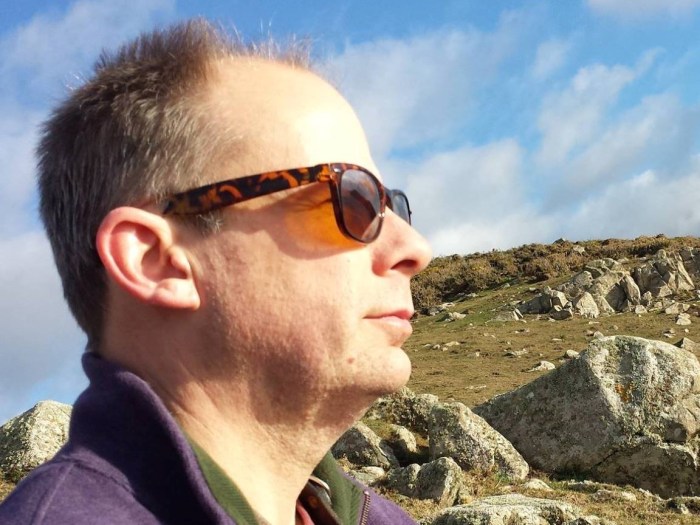
No one knows that better than Andy Shipley, who has been visually impaired for much of his life but whose love of the natural world is matched by his belief in an inclusive society – and his absolute determination to bring those two passions together.   

Over the years he has channelled his experience into his work as a facilitator, campaigner, speaker and coach – and he has even developed a fortnight-long sensory odyssey designed to deepen everyone’s relationship with nature.

“I believe our future depends on people acquiring a deeper relationship with those around them, and with the natural world,” says Andy. “To achieve this, we need to open people’s hearts to the value of nature and awaken their sense of belonging.”

The multi-sensory nature immersion experiences he has developed enable people to start to fully notice the textures under their toes, the breath of the breeze and the banter of the birds.

“They help reconfigure and rebalance your sensory relationship with nature, and shift your perspectives in everyday life,” says Andy.

“Nature is our life-support system.  As well as providing us with the air, water and food vital to keep us alive and breathing, time spent connecting with the natural world sustains our physical and mental health.

“By spending time experiencing nature’s diversity more deeply, we have the opportunity to propagate a life-sustaining relationship that will support us from here on.”

His sensory odyssey was all the more relevant with so many people in isolation because of coronavirus or finding more time to explore nature on their own or as a family.

The programme involves a series of daily audio messages lasting a few minutes which encourage participants to develop a more intimate relationship with the natural world.

​Each sensory exercise includes a link to “little nuggets of inspiration and revelation” – about how plants communicate, for example, or how the human nose can detect a trillion smells, along with other audio stimuli ranging from wind in the trees to the dawn chorus – or even the sound of rhubarb growing.

Participants can do the sensory exercises standing, seated or lying down, outdoors or even in the living room with the windows open wide.

And the resource allows visitors to repeat the odyssey, spending more time on the detail, changing the sequence, or repeating the exercises they enjoyed the most.

“Like any exercise, the more you flex your sensory muscles the richer your experience will become,” says Andy, an experienced campaigner and project leader whose activities have ranged from blindfolded team-building exercises, adventure activities and dining experiences to workshops exploring how natural heritage sites could become more inclusive for the visually impaired.

He explains: “Healthy habitats are those which are abundant with diverse species occupying all strata of the web of life, filling their particular niche, but also contributing to the health and well-being of the whole.

“It seems to me therefore, that for our own human communities to become healthy, we need to work to create the conditions for all, whatever their background and circumstances, to find their niche, flourish and contribute to the well-being of our world.”

Visit Andys sensory odyssey and find details of other events on his website. He has also launched a new podcast called Seasonal Sensations.

Present prompted a passion for pastels

OUR picture choice this week takes us to West Oxfordshire and the work of Eynsham artist Eric White.

Morning Frost is one of a number of striking images depicting landscapes within a mile or so of Eric’s home in the small historic village some six miles north-west of Oxford.

Morning Frost by Eric White

Like many of his recent pictures, it was created with an initial foundation in acrylic inks and subsequently built up with layers of soft pastel, reflecting a love affair with pastels dating back decades.

Eric recalls: “Having initially worked in watercolour and oils, my focus changed when I was given an expensive boxed set of 72 pastels. Initially daunted by such a gift I took my first tentative steps into the medium and was immediately hooked.

“That was some thirty years ago and since then the majority of my output has been in pastel in one form or another, from pure pastel to pastels worked over watercolour or acrylics and pastel screen prints.”

By The Evenlode by Eric White

Although entirely self-taught, painting and drawing was to become his lifelong interest and passion, endless experimentation and decades of practice helping him to evolve a flexible and personal style.

His galleries range from Cotswolds villages and Oxford townscapes to local landscapes and paintings taken much further afield, from France and Italy to Iceland, Morocco and America.

The locations may vary but his chief goals remain the same, he explains: “to capture the moment and to endow the image with a sense of place and atmosphere”.

Woodpile by Eric White

“Although I work from sketches and photos the challenge is always holding that sense of place and of the moment to capture the essence of the scene. I go out in all weathers – sometimes holding a pencil in the cold can be the biggest challenge of them all.”

Commissions have resulted in paintings of houses and gardens, from the humble to the grand, cricket club grounds and sporting scenes, along with more abstract work for business premises, and he even tackled a portrait as part of the NHS Portrait for Heroes project during the first lockdown.

Travel opportunities may have been limited this year – some coastal views from north Devon before movement restrictions were in place – but that hasn’t dampened his enthusiasm for the great outdoors.

“There’s beauty to be found everywhere in your local area if you look for it and I always try to make the most of the changing seasons,” he says. “Out walking during the various lockdowns my wife and I have spotted woodpeckers feeding their young, boxing hares and countless varieties of bird including our local abundance of yellowhammers. You can always count on the song of the skylarks to lift your spirits.”

Eric’s work can be found on his website and Instagram account.

Pop goes the weasel for sharp-eyed Nick

IT’S not every day you come face to face with a weasel.

But that’s certainly one of the most memorable wildlife encounters enjoyed by Nick Bell, the Maidenhead photographer whose pictures have been in the spotlight on this page for the past couple of weeks.

CAUGHT ON CAMERA: a weasel pauses long enough to be pictured PICTURE: Nick Bell

Stoats and weasels aren’t that unusual in the British countryside, but you don’t get to see them very often other than a quick flash as they streak for cover.

Nick recalls: “I was walking along a path in Ockwells Park, early on a crisp, beautiful March day, when the weasel ran across the path right in front of me.

“It jumped up onto the bottom rail of the fence and, when it came to a break in the undergrowth, stopped and looked at me, no doubt wondering if it could make it past me with no undergrowth to hide it, just long enough for me to get its photo.

“I wasn’t sure if it was a stoat or a weasel, so I did some research. I discovered that a stoat is the size of a cucumber and a weasel the size of a sausage. Stoats also have longer tails than weasels.”

HIDE AND SEEK: a grey squirrel appears to be in playful mood PICTURE: Nick Bell

Some animals are more obliging when it comes to posing for the camera, like the inquisitive grey squirrel which looks as if it’s playing a game of hide and seek.

Mustelids like stoats, weasels, badgers and otters all pose more of a challenge because they generally tend to be active at night, which makes them elusive.

Foxes and deer are timid too, but a little easier to stumble across if you are light on your feet and approach quite cautiously.

FUN AND GAMES: young foxes at play PICTURE: Nick Bell

“I get to see occasional foxes during my walks,” says Nick. “The day that I saw two was unusual, though. They were a couple of young foxes. I watched them play fighting for fifteen or twenty minutes. It was a complete delight. They were at the far end of a field, so I couldn’t get the best photos of them, but it was still a great experience.”

WATCHFUL EYE: a fox appears to be staring straight at the camera PICTURE: Nick Bell

Our previous selections have focused on Nick’s pictures of insects and birds, taken in a variety of locations near his home patch in Maidenhead. He was born in Cookham and moved back to the area after taking early retirement at the age of 61.

But mammals pose their own challenges – and rewards.

SPRING SETTING: a roe deer in the woods among the bluebells PICTURE: Nick Bell

Says Nick: “There are some spots in and around Ockwells Park where I know you are likely to see deer. The great thing about photographing them is that they usually stand absolutely still, no doubt thinking that that will prevent you from seeing them.

“My favourite time to photograph them is when the bluebells are out in the woods. Sometimes, they decide to run for it, and leap in the air as they run, which is great for photos.

ON THE RUN: a deer scampers for cover PICTURE: Nick Bell

“One of my most disappointing ‘near misses’ in a photo was when I spotted a very young roe deer kid standing in front of its mother in the woods. I had time for one photo only before they were gone. The photo was, sadly, not in focus. Oh well; you win some and you lose some.”

BALL OF FLUFF: a gosling among the daisies PICTURE: Nick Bell

From cute goslings to fast-moving dragonflies, Nick’s broad range of subjects have provided a lot of pleasure on local wildlife forums.

“I have heard it said many times during the coronavirus pandemic that many of us are using nature for relaxation during lockdowns. That is certainly true of me,” says Nick.

“Wildlife photography has undoubtedly helped with my mental health during these difficult times. Being outside with nature helps to ground me and to relieve stress. I usually get home with a great sense of well-being.”

NATURAL CURE: an early morning walk provides great stress relief PICTURE: Nick Bell

Coins have strange stories to tell

FIFTY years ago, decimalisation radically changed the way that the British understood money.

And as people marked the anniversary, looking back over half a century to that day in February 1971 when we exchanged pounds, shillings and pence for our new decimal currency, it encouraged a lot of them to think a little more deeply about the coins in their pocket.

The timing could hardly have been more significant, given the impact of coronavirus on our lives. While some cafes and other outlets had already gone cashless before the pandemic, the practicalities of lockdown meant people turning away from cash transactions entirely, in favour of online shopping.

For many, that meant giving up hard cash altogether, touch-card payments providing a potentially more hygienic way of buying goods rather than having to handle grubby coins and notes.

But as older people recalled the mathematical challenge of going decimal and the archive footage flashed us back to the arguments of the 1970s, the anniversary prompted a nostalgic outpouring of memories that reflect the profound importance of coins as part of our social history – and perhaps even our identity as a country.

Humans have been trading and exchanging goods for tens of thousands of years, as anthropology professor Chapurukha Kusimba explains in an article for The Conversation – whether in the form of beads, precious stones or even live cattle.

The Mesopotamian shekel emerged some 5,000 years ago and, several centuries before the birth of Christ, coins were in widespread use in Asia Minor.

Expert numismatist Lawrence Chard takes up the story in a fascinating explanation of the use of coins by Celtic tribes and the impact of the Roman invasion. The Romans even struck a coin to celebrate their conquest of Britain, although it probably never circulated here.

Flash forward to 1971 and you might be left wondering how the UK ended up with a system as complicated as pounds, shillings and pence in the first place. Blame the Franks, it seems.

Our trade links with Charlemagne’s Frankish Empire encouraged the Anglo-Saxon kingdoms to copy their system of currency, which consisted of 12 deniers (pennies) to the sou (shilling) and 240 deniers or 20 sous to the libra (pound).

Our pennies and pounds were based on the fact that 240 pennyweights weighed, at least in theory, a ‘tower pound’ of sterling silver. The English penny first appeared in Anglo-Saxon times as a silver coin, and the silver penny remained the primary unit of coinage for some 500 years.

MEDIEVAL MEMENTO: an Edward I silver penny PICTURE: Lara Maiklem

Down on the Thames foreshore, London mudlark Lara Maiklem has uncovered numerous coins and tokens spanning the centuries – like an Edward I silver penny harking back 700 years to the days of that true medieval king, famous for his feats in hunting, falconry and jousting, and best known for crusades, military conquest and extravagant living.

Another silver penny popped up last year in a farmer’s field in Wallingford, this time issued by Henry of Anjou during a time of civil war in the 12th century.

That’s why instead of there being 100 pennies in the pound there were 240: because pre-decimal money was based on multiples of twelve, as the Royal Mint Museum explains in its story of decimalisation.

Oddly enough Dominic Sandbrook in the Mail Online seems to blame the French for the decimal system, in an article entitled The day Britain lost its soul: How decimalisation signalled the demise of a proudly independent nation.

It was, he says, a “profoundly symbolic moment, marking the end of a proud history of defiant insularity and the beginning of the creeping ­Europeanisation of ­Britain’s institutions”.

The pound sterling, half-crown, shilling and sixpence were all, he insists, symbols of a country set apart, proud of its island status – and on that grey, drizzly day 40 years ago we lost “a little bit of our national soul”.

Hmm. Maybe not. But there’s undoubtedly a recognition that coins link us to the politics, rulers and religions of the past, providing a snapshot of the triumphs and aspirations of ancient kings and insights into the social history of different societies.

The Queen once recalled how Winston Churchill described the Thames to her as the “silver thread which runs through the history of Britain”, and down on the river’s mudbanks, Lara Maiklem has discovered more than her fair share of mementoes of Her Majesty’s predecessors.

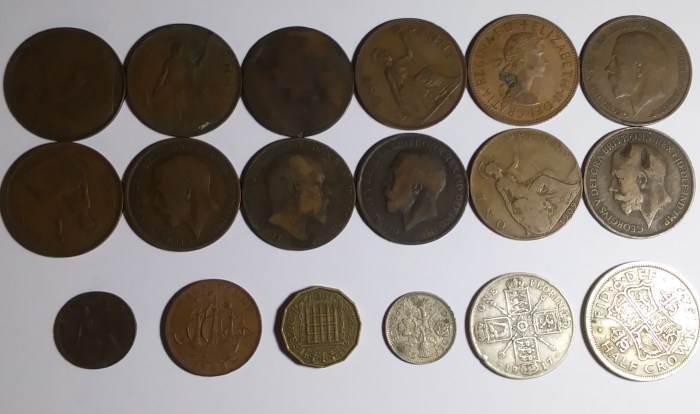
TIME MACHINE: a selection of coins and tokens found by the river PICTURE: Lara Maiklem

Some were big silver coins dating from the reign of Mary I (c1557) to George V (1925). Others were of Roman or foreign origin, originating from “all over the Empire and brought to our cold, wet little island by soldiers and traders”.

In a recent Behind the Spine podcast she said: “The foreshore is the closest thing to a time machine: it is like reaching back, physically, with your hand, through the past and touching history and it’s magical.”

So much for ancient history. But if we have long forgotten how much a sceat or groat was worth, what about those coins that filled our pockets half a century ago – the tanners and florins, half-crowns, bobs and thruppenny bits?

All coins since the 17th century have featured a profile of the current monarch’s head. But did you know the direction in which they face changes with each successive monarch?

So the Queen faces to the right and her father George VI to the left. And so on, all the way back to Charles II and Cromwell. Except for a tiny glitch in 1936….

As tradition dictated, Victoria faced left, Edward VII right, George V left…which successfully takes us from 1837 to 1936.

But in 2016 a rare Edward VIII gold sovereign went on display which showed how the monarch broke with tradition – by demanding his profile faced in the “wrong” direction.

THE FACE FITS: Edward VIII is depicted facing to the left PICTURE: Royal Mint

Edward thought his left side, showing the side parting in his hair, was better than his right, which featured a solid fringe, and insisted this was used – although because of his abdication, the coins featuring his image never went into public circulation.

The Royal Mint was due to start striking the coins on 1 January, 1937, but production was stopped when the King stood down after less than a year on the throne in order to marry the American divorcee Wallis Simpson.

When the Queen’s father Bertie – formally known as George VI – came to the throne in 1936, he was portrayed facing left, the same as his father, George V – as if Edward VIII’s coins had faced right, as they should have done according to tradition.

So what of those tanners, florins and other coins? For anyone old enough to remember pre-decimal currency, here’s a mathematical poser for you. (The answer can be found here.)

It’s 1960 and a man goes into a shop to buy a treasured old book, a collector’s item which the old-fashioned shopkeeper has priced at one guinea. The man puts down a ten-bob note and rakes in his pockets for loose change. He comes up with two half-crowns, a florin, a bob, a tanner, two thruppenny bits, 11 pennies, a ha’penny and two farthings. How much more does he need to buy the book?

Mudlarking by Lara Maiklem

Extraordinary portraits of life on the wing

THE great thing about wildlife photography is the extent to which it immerses you in the landscape.

Capturing the perfect shot means being in just the right place at the right time – and no one knows that better than Nick Bell, whose stunning insect photographs were in the spotlight last week.

BIRD ON THE WIRE: birds silhouetted against a huge sun PICTURE: Nick Bell

This week the focus is on Nick’s bird photographs, starting with a quite extraordinary silhouette taken on one of his forays into the countryside around his Maidenhead home.

The picture was taken at dawn in Ockwells Park, part of which is a local nature reserve.

“I think of each trip out as an opportunity to relax with nature, but also as an opportunity for exercise, so I tend to walk two to four miles on every trip out,” says Nick.

MOUTHS TO FEED: a pair of young kestrels PICTURE: Nick Bell

“This means that I move through different types of habitat – eg by water or through woods – and so see different types of wildlife. Get out there early, ideally for sunrise, when there are fewer people around and the wildlife is most active.”

Although Nick is a relative newcomer to wildlife photography, he has thrown himself wholeheartedly into it since his retirement a couple of years ago and has been a prolific contributor to online nature groups like Wild Maidenhead, Wild Marlow and Wild Cookham.

EYE FOR DETAIL: Cliveden House viewed through a water drop PICTURE: Nick Bell

He has also quickly demonstrated his extraordinary eye for detail and for pictures with dramatically different perspectives, like his unusual portrait of Cliveden House in a water drop or of his own reflection in a horse’s eye.

“Look for slight movements or variations in colour, constantly,” he advises like-minded enthusiasts wanting to capture the natural world on camera.

SELF-PORTRAIT: the photographer reflected in a horse’s eye PICTURE: Nick Bell

“Look up, look down, look to both sides. Look in the distance and also look nearby. You can so easily miss a photo opportunity if you’re not constantly alert,” he says. “Don’t be disheartened if you don’t seem to be seeing much. I can walk for two miles without seeing anything. Then, there’ll suddenly be a flurry of activity.

“In time, you’ll get to know where you’re most likely to see wildlife. In these areas, move slowly and quietly. In the best areas, stand still for five or ten minutes or so. The wildlife will come to you. Always creep round corners, in case there’s something just round the other side. Have your camera ready, just in case.

FLYING HIGH: a Canada goose in transit PICTURE: Nick Bell

“When you see something, photograph it immediately, even if it’s far away. Then gradually creep closer, taking more photographs every few steps.

“Photos are more interesting if the subject is doing something. So, for example, when I photograph a robin, I wait for it to start singing before I press the shutter button. A singing robin makes a better photo than a silent one.”

VALENTINE’S DAY: a robin in the snow PICTURE: Nick Bell

It helps if your subject is prepared to pose in just the right place long enough to provide you with the perfect Valentine’s Day portrait too!

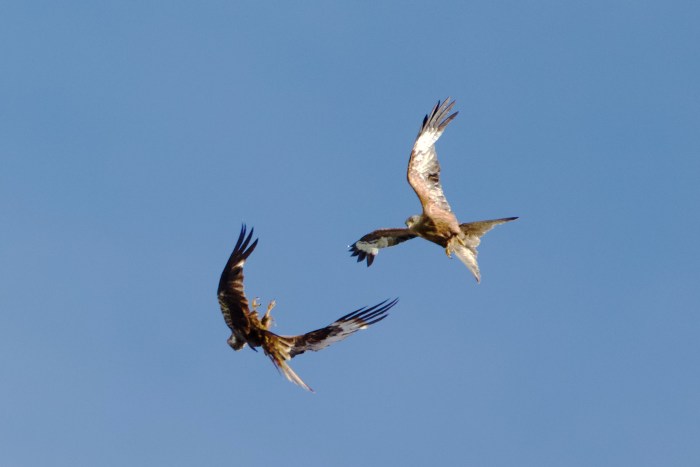
But a closer look at some of Nick’s most striking pictures shows that there always seems to be something happening to capture our attention, whether that means a bird gobbling a tasty treat or red kites swooping and tumbling against a clear blue sky.

CHILTERNS FAVOURITE: red kites at play PICTURE: Nick Bell

“Eyes are everything!” Nick is keen to emphasise. “I rarely keep a photo of any animal if I don’t have its eye clearly visible or well illuminated.

“Goldfinches can be quite a challenge, as their eyes often don’t show up well. The same goes for blackbirds and crows. Try to photograph them with their eyes in sunlight. When focusing the camera, try to focus specifically on the subject’s eye.”

THE EYES HAVE IT: a little owl perches among the branches PICTURE: Nick Bell

A zoom lens makes all the difference, he admits: “I started with a 16-300mm lens, then moved onto am 18-400mm lens, then onto a 150-600mm lens. Each lens change resulted in great improvements in my photos.

“I now use the 18-400mm lens for subjects that are close to me, like insects, and the 150-600mm lens for anything further away. 600mm lenses are heavy! I bought a dual camera harness that puts all of the weight on my shoulders, rather than on my neck. It makes carrying two big lenses (one on each side) relatively easy.”

ON SONG: a yellowhammer provides a rousing chorus PICTURE: Nick Bell

The pictures are taken in a variety of locations near Nick’s home patch in Maidenhead. He was born in Cookham, but lived in Gloucestershire and Wiltshire from 1994, until moving back to Maidenhead and taking early retirement at the age of 61.

An active marathon runner, he took up modern jive dancing in 2009. “I have been hooked on it ever since, competing in national competitions the last eight years or so,” he reveals. “I’ve been lucky enough to compete at Blackpool Tower Ballroom several times.”

KNOCK, KNOCK: a green woodpecker searches for food PICTURE: Nick Bell

In comparison, wildlife photography must seem positively sedentary, though Nick will happily roam a few miles in search of the perfect subject.

“Every day out gives me great pleasure,” he confirms. Thanks to his photographs, those are special moments we can all get a chance to share.

TASTY TREAT: a song thrush rustles up breakfast PICTURE: Nick Bell

And that is particularly valuable when such snapshots frozen in time are often hard to capture on family rambles, when our conversation may scare wildlife away, or a sudden rustle in the bushes is the only evidence that an insect, bird or tiny mammal is close at hand.

Depending on the available light, Nick will use a high aperture or fast shutter speed to freeze a movement, especially when dealing with fast-moving insects or birds like goldcrests, which never stop moving.

COLOUR CONTRASTS: starlings stand out against bright red berries PICTURE: Nick Bell

Insects and mammals feature just as frequently in his pictures, but sometimes it can be the early morning sky or the shadows in the woods at dusk that catch his eye.

“Those are the best times,” he says. “When you can stand silently, enjoying warm early morning sunshine, and being alone with nature, with no other people around.”

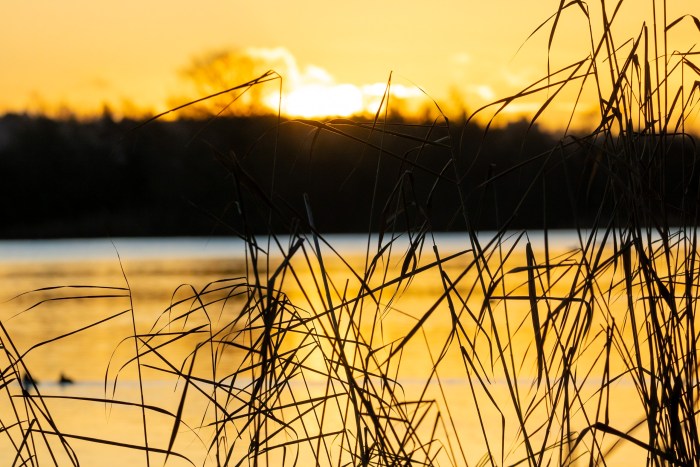
EARLY BIRDS: geese at sunrise PICTURE: Nick Bell

Next week: Our final selection of Nick’s pictures turns the spotlight on mammals

What’s new at the back of Beyonder?

SOME stunning new pictures have been added to the header pages of The Beyonder – thanks to the generosity of local photographers Nick Bell and Graham Parkinson.

FROZEN IN FLIGHT: a southern hawker dragonfly PICTURE: Nick Bell

The pictures form part of a carousel of around 30 images which appear as a background on the site whenever someone opens a new page.

LIGHT AND SHADE: a hot day in Homefield Wood PICTURE: Graham Parkinson

Until now the images used on the site have almost all been taken by Beyonder editor Andrew Knight, supplemented with occasional free photographs shared by photographers on the Unsplash photo-sharing website and credited on the magazine’s Support Us page.

SHADOWLANDS: local woodland provides an atmospheric backdrop PICTURE: Nick Bell

Says Andrew: “We have always wanted to feature local photographs on our pages, but in the early days of the site my cheap point-and-shoot digital camera simply wasn’t good enough to produce top-quality images.

AUTUMN COLOURS: fallen leaves in Staplefurze Wood PICTURE: Graham Parkinson

“We were grateful to the photographers on Unsplash who share their work in return for a credit, but we also wanted to ensure that all our pictures are local ones and feature a cross-section of wildlife as well as landscapes.”

READY TO DROP: a bee captured over a poppy PICTURE: Nick Bell

Original Beyonder display pictures featured a range of destinations pictured through the changing seasons, from Langley and Black Park to Burnham Beeches, Cliveden, Marlow and Penn.

MORNING GLORY: rays of sunshine in Homefield Wood PICTURE: Graham Parkinson

Several of the new pictures featured in the first part of a profile of Nick Bell featuring his insect pictures.

UNDER COVER: a ladybird potentially unaware of its prey PICTURE: Nick Bell

“Nick’s photographs are stunning and they help us to reflect the breadth of content on the site,” says Andrew. “Capturing fast-moving insects and birds is a very specialist skill, and it’s very exciting to be able to use images of this quality in this way.”

BIRD ON THE WIRE: birds silhouetted against a huge sun PICTURE: Nick Bell

As well as a quartet of insect photographs, other shots show sunbeams in woodland and a dramatic picture of clouds at sunrise. Additional pictures featured in a second article spotlighting Nick’s bird photographs.

MORNING GLORY: a dramatic sunrise PICTURE: Nick Bell

Other pictures taken by Graham Parkinson have featured in an article about his hobby and in local walks featuring a cross-section of his portraits of locations like Homefield Wood and Littleworth Common.

DAWN LIGHT: ominous shadows in Homefield Wood PICTURE: Graham Parkinson

“Not all pictures are suitable for these background displays because of having to be able to read type over them,” Andrew explains. “But we are looking forward to including more pictures when we can find just the right ones.”

TINY TERRORS: aphids on a rose PICTURE: Nick Bell

The random nature of the header selections means there’s no way of selecting which one will appear on any particular page – so anyone looking for a particular image may find they need to refresh the page quite a few times before it appears.

“It can be quite hard to replace images because some of the older ones have so many happy associations,” says Andrew.

“Many of them were taken on local walks at different times of year and conjure up other images of a particular day out – the colourful fungi in Penn Woods, the flooding by the Thames near Bourne End, an autumn day in Black Park or springtime coming to Spade Oak quarry.

“But Nick and Graham’s pictures are a reminder to visitors that there’s much more to the website than just people enjoying a ramble in the woods.

“We have a lot of articles about all sorts of things, from birds and insects to local history, interesting people with a story to tell, book reviews and places to visit once the lockdown restrictions allow.

NATURAL CURE: an early morning walk provides great stress relief PICTURE: Nick Bell

“For anyone stumbling on the website for the first time, there are now more than 200 different articles to read, so hopefully there will be something that catches their eye.”

Have you a photograph which might be perfect for The Beyonder? Drop us a line at editor@thebeyonder.co.uk

Blogger Mark begins a new chapter

HIS followers aren’t happy about it, but wildlife author, campaigner and blogger Mark Avery is planning to scale back the frequency of his blog posts.

After a decade in which his blog has enjoyed growing popularity, Mark says he is simply wanting to devote a little more time to his many other interests (which range from growing tomatoes to campaigning and writing more books).

While we wait to find out what the “downsizing” plan actually involves, the good news is that he is continuing with his Sunday book reviews for the foreseeable future.

Given the growth of importance of the nature book market – especially during lockdown – it’s very helpful to have someone casting an experienced eye over all those new titles, so long may that part of his blog continue.

And in case you missed some of the recent additions to the nature shelves, here are his thoughts on a trio of new arrivals:

“Three senior naturalists kept diaries of their encounters with nature and their thoughts about wildlife in the time of coronavirus. Beautifully written”

“IT WAS the best of times (the most glorious spring ever), it was the worst of times (a tiny virus had cut us off from normal life) but these tales of three naturalists capture the contradiction that many of us experienced. Were we allowed to enjoy ourselves when hundreds were dying? Was it OK to listen to bird song while NHS staff were sweating in PPE to keep our fellow citizens alive?”

Read Mark’s full review here.

“Uncomplicated, but well-written and enjoyable”

“THIS IS a book about lockdown and the fact that it has appeared well within a year of the start of UK lockdown last spring is quite an achievement by the author and the publisher – so, well done both!”

Read Mark’s full review here.

“a wonderful book, steeped in knowledge and experience of nature and of the more practical ends of nature conservation”

“ROY Dennis is a ‘name’ in ornithology and nature conservation – he was the warden of the Fair Isle Bird Observatory from 1964-70 (following Ken Williamson and Peter Davis), the RSPB’s person in the Highlands (under various job titles) from 1970-90 and, ever since, an independent conservationist mostly involved with species reintroductions and habitat restoration. This book is mostly about aspects of those last two periods and so takes us back to 1970 and partly even beyond then.”

Read Mark’s full review here.

Miniature world displayed in fine detail

NICK Bell’s never been one to shy away from a challenge.

His participation in no fewer than 18 London marathons can testify to his energy and a more recent fascination with modern jive dancing has seen him strutting his stuff in national competitions at the famous Blackpool Tower Ballroom.

Perhaps it should come as no surprise, then, that taking up a new retirement hobby a couple of years ago would see him throwing himself with just as much enthusiasm into the world of wildlife photography.

FROZEN IN FLIGHT: a southern hawker dragonfly PICTURE: Nick Bell

His output has been prolific, encompassing such a broad range of subjects that it needs a three-part series to do justice to his new-found passion, starting with a selection of photographs this week focusing on the smallest details of insect life.

“I took early retirement at the age of 61 two years ago,” says Nick. “With the start of the first lockdown, I took up wildlife photography and bought myself a 600mm lens, which I now couldn’t be without.”

That lens has allowed him to capture some extraordinary sights – none more dramatic than our picture choice this week of a southern hawker dragonfly in flight, captured at Stonor Park.

Nick recalls: “There were two or three of them flying over the ponds. They just wouldn’t keep still, so it was really difficult to photograph them. That photo was the best one from thirty minutes of attempting to photograph them. The great light that day helped, too. It was bright enough for me to us a very fast shutter speed – 1/4000th second.”

The large inquisitive dragonflies differ in colour between the male – dark with blue and green markings and the female, which is brown with green markings.

Common across the Chilterns, hawkers prefer non-acidic water and may breed in garden ponds but hunts well away from water, often hawking woodland rides well into the evening.

POLLEN COUNT: fine detail captured on a visiting bee PICTURE: Nick Bell

Other attention-grabbing shots range from flies, beetles and bees to a startling close-up of a wasp spider dangling by a thread.

UNDER COVER: a ladybird potentially unaware of its prey PICTURE: Nick Bell

For the technically minded, Nick explains that the lens which helped to transform his photos is a Sigma 150-600mm f/5-6.3 DG OS HSM Contemporary lens.

READY TO DROP: a bee captured over a poppy PICTURE: Nick Bell

“I also use a Tamron 18-400mm lens for close-up photography. I haven’t really got into macro photography, but it’s something that I want to do,” says Nick.

His studies capture a glorious range of colours and fine detail, as in his portrait of a banded demoiselle damselfly, a large fluttering insect with butterfly-like wings and spectacular metallic colouring.

METALLIC GLINT: a banded demoiselle damselfly PICTURE: Nick Bell

Other insects to catch Nick’s eye include the common darter, one of the most common dragonflies in Europe, but not always as obliging about posing for photographs as this one.

PERFECT POSE: a common darter dragonfly PICTURE: Nick Bell

The pictures are taken in a variety of locations near Nick’s home patch in Maidenhead, with the surrounding fields and woods sometimes taking centre stage too, providing a gorgeous backcloth to the fine detail of the insect, bird and animal studies.

SHADOWLANDS: local woodland provides an atmospheric backdrop PICTURE: Nick Bell

Dramatic colour contrasts range from tiny green aphids exploring a yellow rose to the distinctive body colouring of the wasp spider, a recent arrival in the UK from the continent which has slowly spread over the south of England.

TINY TERRORS: aphids on a rose PICTURE: Nick Bell

It builds large orb webs in grassland and heathland, looking just like a common wasp to keep it safe from predators, even though it is not dangerous itself.

That clever disguise may work with predators but it’s no defence for male spiders coming into close contact with their much larger female counterparts, who are prone to eat the males during mating!

CLEVER MIMIC: a wasp spider keeps predators at bay PICTURE: Nick Bell

Some of the fastest-moving insects and birds pose the biggest tests of both camera and photographer. But then that just adds a bit of spice to the chase for someone who has risen to the different disciplines of marathon running and jive dancing.

“I love taking challenging photos – like fast-moving dragonflies and birds,” says Nick. “In my retirement, I run, dance and take photos – not a bad life!”

Next week: Nick’s focus switches to local birdlife

Haunting portraits of forgotten landscapes

FACED with another week of lockdown, escapism is the theme of this week’s picture choice – in terms of theme, period and geography.

So while our chilly Chilterns landscape continues to provide plenty of inspiration for local artists and photographers, our weekly feature is taking a trip a little further afield – and a step back in time to the unsettling period between the wars when Eric Ravilious was at the height of his powers.

Train Going over a Bridge at Night, Eric Ravilious, 1935

Raised in Eastbourne, the outstanding British painter and designer is particularly known for his watercolours of the South Downs, and he remains as popular as ever almost 80 years after his early wartime death, when the aircraft he was in was lost off Iceland.

For the definitive story of the artist’s home life, the people and places he knew and the culture and customs of 1930s England, essays by art historian, lecturer and curator James Russell feature in a series of volumes published by The Mainstone Press collecting many of his most memorable watercolours.

Wiltshire Landscape, Eric Ravilious, 1937

Various other profiles fill in fascinating details about his work and life – including Paul Laity in The Guardian and Frank Delaney – while Henry Rothwell pays frequent tribute to Ravilious in his Twitter account @HenryRothwell.

More recently Rothwell has launched a trio of greetings cards featuring the artist’s work accompanied by short explanations by James Russell, whose published works include RaviliousRavilious in Pictures 1: Sussex and the DownsRavilious in Pictures 2: The War PaintingsRavilious in Pictures 3: A Country LifeRavilious in Pictures 4: A Travelling Artist, and Ravilious: Submarine.

Russell writes of Ravilious in his blog: “I love the fact that his watercolours and designs are both enjoyable and serious, light-hearted yet powerful, dream-like but rooted in reality.”

Wet Afternoon, Eric Ravilious, 1928

Although he settled in Essex and roved as far afield as Wiltshire and Wales, as captured in his Wet Afternoon portrait from Powys in 1928, Ravilious rediscovered the South Downs in 1934 and over the next five years painted a series of watercolours capturing the beauty of the Sussex landscape.

In a Youtube tribute in 2019, Tom Outdoors embarks on a six-mile circular walk in Essex following in the footsteps of the artist, visiting the church where a war memorial commemorates him and walking through the fields and woods that inspired some of his work.

As an official war artist, Ravilious visited ports, naval bases and airfields around Britain, witnessed the Allied invasion and retreat from Norway and produced watercolours of subjects ranging from the aircraft carrier HMS Ark Royal to the interior of a mobile pigeon loft.

He was only 39 when he died in 1942, yet he had already achieved amazing things. A brilliant wood engraver and designer, he remains best known for those haunting watercolours in which lighthouses, white horses, empty rooms and downland paths came to life. 

The Vale of the White Horse, Eric Ravilious c1939 PICTURE: Tate Gallery

Ravilious was an enigmatic figure who made little public comment on his work, but in his books and blog entries James Russell manages to piece together many of the jigsaw pieces of the artist’s short life.

And at a time when so many families have been taking a fresh look at their local landscapes, this seems a good week to spend a few moments in the company of Eric Ravilious; luminous, evocative and timeless, his extraordinary watercolours reflect the talents of an artist now regarded as one of the finest of the 20th century.

Train Landscape, Eric Ravilious, 1939 PICTURE: Aberdeen Art Gallery & Museums

Celebrities are wild about Poppy

CELEBRITIES have been lining up to endorse a new children’s book about a young girl rewilding her grandad’s farm.

Poppy is on a mission to save the farm by returning the countryside to a time when flower meadows grew wild and native animals flourished.

Can she succeed in helping nature to work its magic? Written by award-winning TV producer Nick Powell and illustrated by Becca Hall, Poppy Goes Wild was published in December by Little Steps Publishing and features a foreword by Hugh Fearnley-Whittingstall, the writer and broadcaster known for his commitment to seasonal, ethically produced food and his concern for the environment.

Praise has come from various celebrities, including actress Joanna Lumley and wildlife filmmaker Gordon Buchanan.

Lumley, patron of the environmental charity Earth Restoration Service since 2008, said: “Poppy is the child we all long to be: brave, curious, headstrong, compassionate and the best fun in the world. Her love for wildlife will chime with children everywhere: an adorable book.”

Buchanan said: “Poppy Goes Wild is a beautifully inspiring story wonderfully illustrated. To protect nature we must love nature and hear what our planet is telling us. This book serves as a reminder that we must also listen to our children.”

Nick Powell’s TV credits range from Supernanny to Nigella Bites and Escape to River Cottage. As a teenager he was transfixed by the magical sight of an otter catching a fish and sunning itself on the riverbank but didn’t see another one in the wild until decades later, when rivers began to be cleaned up.

He now lives alongside the South Downs National Park while Becca Hall comes from the Lake District but now lives in Cornwall, where discovering nature is a theme she finds particularly exciting.

PIONEERING PROJECT: Old English longhorn cattle on the Knepp Estate in West Sussex

Teaching resources for the book include information about large-scale rewilding projects like those on the 3,500-acre Knepp Estate in Sussex (above) and at Dundreggan in the Highlands.

TV naturalist and author Iolo Williams said: “Poppy is cheeky and irresistible in her quest to make the world a better place for wildlife.”

Farmer and TV presenter Jimmy Doherty said it was an “enchanting book”, adding: “There are many lessons that we can learn from the past and allowing more land to run wild and free is a vital one.”

In recent decades much of Britain’s wildlife has disappeared, with over half of our species in decline and with 15% threatened with extinction, with problems ranging from habitat loss and agricultural changes to pollution and climate warming.

But across the country, initiatives are being undertaken to restore the balance and to safeguard British wildlife for future generations. Poppy’s quest is to return the countryside to how it was 50 years ago, when hares, skylarks, otters and peregrine falcons flourished.

BACK TO NATURE: the Knepp Estate offers camping, treehouses and wildlife safaris

Broadcaster and wine critic Olly Smith, patron of The Bumblebee Conservation Trust, said: “This charming tale is a timely reminder of the deep value in connecting more deeply with the natural world and allowing it to flourish and grow ever more wonderfully wild.”

Poppy Goes Wild is published by Little Steps Publishing and is available to buy online or at local bookshops.

Capture the magic of the moment

ONCE upon a time, on her holidays in Scotland and the Lake District, a young girl grew up sketching the plants, animals and insects she stumbled across with a particular eye for detail.

From those humble beginnings, Beatrix Potter would go on to become one of the most famous and successful children’s authors of all time, renowned for her precise and enchanting illustrations reflecting her fascination with the natural world.

She became particularly interested in mushrooms and toadstools, and from the late 1880s to the turn of the century produced hundreds of finely detailed and botanically correct drawings of fungi.

She also visited her former governess, Annie Moore, and would send letters with amusing anecdotes to the Moore children, often illustrated with pen and ink sketches, which would provide the basis of some of her later books – including one about a particularly naughty rabbit named Peter.

Flash forward a century and a half, and a new generation of young people are exploring their interest in the natural world through art, painting and photography.

SNAP HAPPY: foliage in Penn Woods PICTURE: Sahasi Upadhya (11)

This week our Picture of the Week featured photographs by 11-year-old Sahasi Upadhya taken on family walks around the area.

And if one good thing has emerged from the pandemic lockdowns, it might be the number of young people and their families reconnecting with nature.

Adults too have found local landscapes a continuing source of inspiration and delight, with more than a dozen professional artists featuring in recent Beyonder articles about their work.

On social media too, Twitter and Facebook feeds have been awash with nature journal entries, sketches and photographs recounting people’s encounters with the natural world.

OUT AND ABOUT: Jules Woolford’s nature journal @DrawnIntoNature

In her Drawn Into Nature blog, Bristol artist Jules Woolford explains how her love for the natural world led her to a career helping people to engage with nature and wildlife.

“When I discovered the world of journaling, it was a natural progression to begin keeping a traditional nature journal, like my idols Edith Holden and Beatrix Potter,” she says.

WILD ENCOUNTERS: nature comes alive in words and pictures @DrawnIntoNature

“Our modern lives are so frantic, often filled with noise, busy work, and negative stress. I’m on a journey to slow down and simplify; concentrate on experiences rather than things, (try to) worry less, be more grateful, and kind.

“Sometimes I take two (or three) steps backwards, but I’m trying to keep going. Nature is a great healer, teacher and an inspiration to me. Through my journals, I try to be an advocate for the earth, and all its life forms. I’m fascinated by the stories we’ve created about the natural world, and I love sharing these little tales from history, folklore and fable.”

ARTIST’S YEARBOOK: Stewart Sexton reviews some of the highlights of 2020 @Stewchat

Up in Northumbria, naturalist Stewart Sexton is a bird enthusiast whose paintings and photographs attract plenty of attention on Twitter @Stewchat, although he modestly claims: “A Northumbrian born and bred, I have been interested in natural history for as long as I can remember. I take photos but I’m no photographer, I paint but I’m not an artist either.”

That’s all very well, but if you lack Stewart’s obvious talent but still want to explore your artistic talent through nature, how do you get started?

Maureen Gillespie, an Oxfordshire artist whose chilly lockdown walks at Blenheim Palace saw her singled out as The Beyonder’s Picture of the Week recently, has some advice: “Probably the easiest way to develop your artist talents is to get outside and really observe nature.”

LOCKDOWN LANDSCAPE: one of Maureen’s series of wintry scenes at Blenheim Palace 

Not that you have to go far to find inspiration, she stresses. “Your local park, trees on your road, flowers in your garden or window box, all these amazing things are there to see, smell and touch and when you really study them you can bring them to life in a drawing or painting.”

Fellow Oxfordshire artist and art teacher Sue Side agrees: “I focus on close looking with my young learners. We look – really look – at the world around us and then we interpret, through drawing, painting, sculpture,” she says. “The aim is to encourage exploration and response – to not worry about finding the right word or the ‘correct answer’.”

INTO THE SHADOWS: a moody shot at Homefield Wood PICTURE: Graham Parkinson

Photographer Graham Parkinson found his lifelong interest in wildlife was sparked as a six-year-old by the popular I-Spy books – and the fact his gran had a large garden with a field behind it to explore.

He wasn’t alone. The famous spotter books were first published in 1948, with Mansfield head teacher Charles Warrell the man behind the publishing phenomenon of the 1950s and 60s.

A believer in active learning who devised the spotter guides to keep children entertained on long car journeys, he saw the idea rejected by eight publishers and could hardly have known quite how popular they would prove when he set about self-publishing them (just like Beatrix Potter).

“Spotters” gained points for finding the contents of the books in real-life situations. On completion, they sent the books to Big Chief I-Spy, as Mr Warrell had become known, for a feather, an order of merit and entry into the I-Spy Tribe – which by 1953 had grown to half a million members.

The 40-odd titles went on to sell some 25 million copies by the time Michelin relaunched the series after a seven-year gap in 2009-10. Big Chief I-Spy himself died in 1995 in Derbyshire at the ripe old age of 106.

So it might be a modern I-Spy book that ignites today’s youngsters’ interest in nature – or any one of a dozen quizzes, scavenger hunts or nature guides produced by a variety of organisations from Wildlife Trusts to the Chiltern Society. and Chiltern Open Air Museum.

I-SPY OUTDOORS: there are plenty of family activity ideas at the Chiltern Open Air Museum

The National Trust lists keeping a nature diary as one of its “50 things to do before you’re 11 and three-quarters”, whether that means finding an old notebook or making one out of an old cereal box and decorating it with doodles, paper, leaves, feathers or any other natural items you can find nearby.

You certainly don’t need to have any specialist equipment to have fun – and who knows, the next Beatrix Potter could just be out there somewhere!

See The Beyonder’s Nature guides page for some more activity sheets, and check out the Local landscapes feature to meet more artists who have found inspiration in the Chilterns landscape. If you are a photographer, we welcome contributions to our monthly Chilterns calendar feature. Just drop us a line at editor@thebeyonder.co.uk

Picture of the week: 08/02/21

YOU’RE never too young to show an interest in nature – and to prove the point this week’s Picture of the Week is a stunning photograph taken by 11-year-old Sahasi Upadhya on a family walk at Little Chalfont.

CLOUD PATTERNS: crouching low creates a different perspective PICTURE: Sahasi Upadhya

Dad Siddharth is a keen photographer too but says his daughter started showing an interest after seeing him using his camera.

“I have since encouraged her by talking about the basics and left her to experiment on her own,” he says. “She just started off a couple of months ago and has been picking up pace now.”

Says Sahasi: “I had to crouch to take this picture to get the right angle of the sun lighting the clouds and get the right perspective of the subject against the blue sky.”

BACK TO NATURE: blue bracket fungi in Penn Woods PICTURE: Sahasi Upadhya

Sahasi has taken some equally attention-grabbing shots of colourful fungi and foliage on recent outings in Penn Woods using her dad’s Nikon D7000 Dslr.

“A single bit of nature can express so many different things as each person looks at it from different point of view,” she explains. “This is what draws me most to nature.”

COLOUR CONTRASTS: another study in Penn Woods PICTURE: Sahasi Upadhya

Her love of nature is reflected in her art too, where she particularly enjoys Madhubani painting, an Indian art form in which tribal motifs are brought to life with bright colours where nature can often figure prominently.

Siddarth says: “She is drawn to the colours and the flexibility the art form offers, from doing simple motifs to intermediate and very intricate ones.”

PROUD PEACOCK: Sahasi’s latest painting reflects a number of natural motifs

Madhubani art incorporates set motifs and symbols, but each artist will have a unique individual approach to these.

“The peacock is a common motif in Madhubani paintings and this one is Sahasi’s take on it,” Siddarth explains.

The paintings were traditionally done on freshly plastered mud walls and floors of huts in the Mithila region of India, with villagers around Madhubani later creating them on cloth, paper and canvas using colours derived from plants.

Walkers urged not to trample crops

FARMERS and conservation groups are urging people to keep to the paths and keep dogs under control when walking in the countryside.

Farmers’ livelihoods are at risk, with one farmer claiming to have lost the equivalent of 9,000 loaves of bread due to trampled crops.

MUDDY MESS: path widening at Penn Street Farm near Amersham

The latest lockdown has coincided with a period of particularly high rainfall making paths extremely wet and muddy. This, combined with far greater numbers of people using their local paths is damaging both paths and crops.

Paths have widened to several metres across, with people trying to social distance from each other, or seeking drier ground. Some people have abandoned the waymarked paths altogether and followed field edges instead to avoid the worst of the mud, damaging field margin habitats which are important for wildlife.

Georgia Craig form the NFU said: “Mud can’t be avoided at the moment, so your best bet is to put your wellies on and follow the signposted paths. People are welcome on the signposted rights of way but straying off those paths means crops will get trampled, affecting farmers businesses. At this time of year the crops might still be below the surface or look very similar to grass, but walking on them will compact and damage the growing plants.”

Daniel Hares, who farms at Buckmoorend Farm near Wendover, is one of the many Chilterns farmers affected. Walkers widened a path through one of his wheatfields to 10 metres across, equivalent to losing six tonnes of wheat, enough to make around 9,000 loaves.

Seventh-generation farmers in Lane End, the Lacey family, report a big surge in the number of walkers on the land they manage.

Ed Lacey said: “We have ongoing problems with people letting their dogs off the lead and out of control. We have had sheep killed and injured by dogs.”

Chilterns Conservation Board’s chief executive Dr Elaine King, said “It’s great that more people are getting out and enjoying the nature and the beauty of the Chilterns during lockdown, and we want that to continue.

“However, the Chilterns are also a place where people live and work, including the farmers that produce our food. We are working with a wide range of farmers, landowners and conservation partners to raise public awareness of this special landscape and ensure that everyone can enjoy the Chilterns safely.”

Tim Bamford from the CLA added: “It is perfectly natural, in times such as these, for people to want to enjoy the countryside. They are genuinely welcome and we encourage people to enjoy the thousands of miles of footpaths available to them. But we need to work together to ensure the public can have an enjoyable time while also protecting farmland, animals and wildlife.”

The Countryside Code sets out some simple guidance to ensure that people can enjoy their visit to the countryside while being safe and respectful of others.

Chilly hues capture the wonders of winter

OUR picture choice for the first week in February is a suitably chilly landscape by Oxfordshire artist Maureen Gillespie.

It is one of a series of paintings reflecting Maureen’s “lockdown walk” around the beautiful landscaped grounds of Blenheim Palace, north of Woodstock town centre.

Blue Landscape – Blenheim by Maureen Gillespie

She recalls: “On this particular day it was bitterly cold, -3 degrees. Looking across the lake, the scene before me was shades of blue, with a slight mist over the trees in the background.”

Maureen’s passion is to create pieces of artwork that bring a sensory experience to the viewer, working in oil and incorporating pastel into some of her work to give a textured dimension to the finished piece.

“I use a variety of techniques to obtain the desired result,” she explains. “This could include brushwork, scoring with a palette knife and the use of my fingers, especially for the moody skies.”

View from Bladon Bridge by Maureen Gillespie

Influenced by the impressionists, especially Claude Monet and JMW Turner, she is inspired by nature in her land and seascapes, capturing the mood, light and atmosphere of moments from walks by the coast and countryside – the light on a wave or the glimmer of sunlight through the trees.

INSPIRED BY NATURE: Maureen in her garden studio

Another picture in her Blenheim series is View from Bladon Bridge. She says: “It was a cold but rather grey day where the sky seemed to blend into the lake.  I wanted to convey the stillness of the lake and the almost sepia-like colour and total calm apart from a few ducks dotted about.”

Maureen works from quick sketches and photos, which she then transfers on to board in her garden studio, “a perfect location to capture the wonder of some amazing nature studies”.

A regular participant in Oxfordshire Artweeks and a member of Chipping Norton Arts, Maureen has also exhibited in Ireland, France, Jersey and the Cotswolds since returning to full-time art more than a decade ago.

The third of her featured artworks this week is another from the Blenheim series. She recalls: “One of my favourite walks, this was towards the end of autumn. There was a slight early morning mist on the lake, giving it an eerie atmosphere.

The Edge of the Lake by Maureen Gillespie

“I am a regular walker (with my dogs, Billie and Aggie) as this offers me a great source of inspiration and exercise. 

“Just as lockdown was introduced I received the all-clear from breast cancer; thankfully I had all my treatment. So having stayed positive throughout a difficult year, I wasn’t going to let lockdown get me down!

“My walks varied but as I live on the edge of Blenheim estate this was the natural lengthy walk and of couse stunning scenery allowing me to take in the seasons along the way.”

Maureen can be found on her website, Instagram and Facebook. She also designs a range of silk scarves reproduced from her original artwork, which can be found here.

Glimmers of hope lighten the gloom

A NEW year, another lockdown – and with mud, floods and flurries of snow in the Chilterns, it hasn’t been an easy month for many.

GARDEN FAVOURITE: a robin poses for the camera PICTURE: Nick Bell

Looking back to this time in 2020 when the first news was emerging of the problems in Wuhan, it would still have been unthinkable for most of us to foresee how everyone’s lives would be changed irrevocably by the coronavirus pandemic.

 WINTER LIGHT: Mill Meadows in Henley on Thames PICTURE: Samantha Evans

In 2021, with the UK death toll passing the 100,000 mark and many families grieving the loss of loved ones, the ongoing sense of separation, isolation and loss has been hard to handle – not to mention the devastating impact successive lockdowns have had on local businesses.

 CHILLY PROSPECT: the snow arrives with a vengeance PICTURE: Sue Craigs Erwin

But those fortunate enough to have the countryside on the doorstep and willing to brave the storms, floods and freezing winds have been rewarded with some spectacular early morning walks, stunning vistas and glorious sunsets.

 BRIGHTER OUTLOOK: evening skies outside Amersham PICTURE: Lesley Tilson

Even familiar “escapes” have been put under more pressure, though. Welcome as it has been to see more families getting out and about, that influx of extra footsteps has put a strain on the landscape, churning up muddy footpaths, damaging crops and threatening delicate environments like those at Stoke Common and Burnham Beeches, where new parking restrictions come into force in February.

 WATERLOGGED: the landscape takes on a soggy appearance PICTURE: Sue Craigs Erwin

On brighter days those able to avoid the weekend crowds have found plenty to photograph and appreciate, though – especially those small glimpses of light in the darkness promising happier times to come.

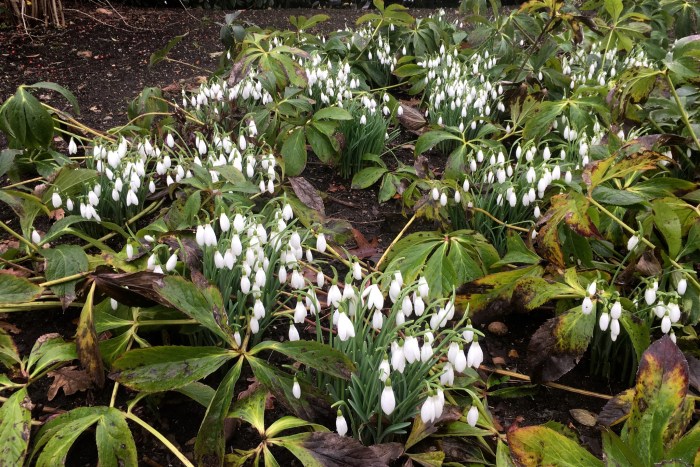
SYMBOL OF HOPE: early snowdrops provide a dramatic display PICTURE: Nick Bell

Those obliging early snowdrops, for example, have been a powerful symbol of hope since biblical times, these Candlemas bells which once decorated the windowsills of monasteries, abbeys and churches marking an important Christian holy day when the dark interior of a medieval church would become a sea of flickering candles.

SMALL WONDER: a hungry blue tit on the lookout for tasty treats PICTURE: Keith Chant

Feathered friends in the garden have provided a welcome ray of sunshine too, in the run-up to the RSPB’s Great Garden Birdwatch 2021.

POWERFUL SONG: robins can be heard all year round PICTURE: Keith Chant

This is the month where the dawn chorus really begins to grow in volume, and various Beyonder features have highlighted the chance to catch those first wintry warbles, the growing popularity of feeding the birds and how to recognise the different songs that make up the most spectacular natural orchestra on earth.

NATURE’S LARDER: berries provide a welcome splash of colour PICTURE: Lesley Tilson

Photographers prepared to get up with the lark have been treated to some of the most impressive sights, not just gorgeous sunsets but in the array of wildlife they have been able to capture on camera.

STUNNING SUNRISE: dawn at Spade Oak PICTURE: Graham Parkinson

Graham Parkinson’s early-morning forays to Spade Oak quarry have provided a wealth of sightings, from bullfinches and kingfishers to a treecreeper and female kestrel.

FIRST LIGHT: dawn in Homefield Wood PICTURE: Graham Parkinson

Homefield Wood can be a similarly lively place in those first daylight hours, between the sounds of barking deer and fox mating calls, the thrum of a woodpecker or whistling of the red kites.

OUT OF THE SHADOWS: Homefield Wood comes to life PICTURE: Graham Parkinson

The Thames is another popular place for an early-morning escape, providing stunning waterside views and the chance to spot a heron or great white egret.

RIVERSIDE RAMBLE: an early walk beside the Thames PICTURE: Graham Parkinson

Graham was one of a trio of local wildlife photographers to feature recently in our Picture of the Week series, and his regular postings in online bird and wildlife groups continue to delight. A selection of his latest pictures will provide the basis for February’s prize picture quiz – a perfect opportunity for bird-lovers to pick up £25 worth of book tokens.

AMERSHAM SUNSET: the sky puts on a dramatic evening display PICTURE: Lesley Tilson

Meanwhile the skies over Amersham have provided plenty of dramatic postcard vistas this month, from Lesley Tilson’s stunning sunset (above) to Sue Craigs Erwin’s chilly morning vista (below).

COLD COMFORT: a wintry walk outside Amersham PICTURE: Sue Craigs Erwin

As always, we’d like to give a very big thank you to all the keen local photographers who have allowed us to use their work this month. If you would like to contribute any pictures, favourite moments or seasonal suggestions to our calendar entry for February, contact editor@thebeyonder.co.uk on email or via our Facebook group page.

Rediscover our ancient coffin paths

Former Bucks newspaper editor Alan Cleaver explains the fascination of ‘corpse roads’ – and the facts and myths surrounding the ancient footpaths which criss-cross the country

CORPSE roads – the very name conjures up images of ghosts marching over misty fells. But what are the facts behind these ancient paths?

They were used in medieval times to carry the dead from a remote parish to the ‘mother’ church for burial and could be just a couple of miles long or anything up to 20 miles. They are also known as coffin paths, bier roads, lyke or lych ways and by other names.

LOST VILLAGE: the Shap Corpse Road runs from Mardale to Shap, but the village of Mardale was ‘drowned’ in 1935 to build a reservoir PICTURE: Alan Cleaver

The first question has to be: why not just dig a hole in the ground and bury them locally? The answer – as with most questions – is down to money and politics. Mother churches received good money for burials (and baptisms and weddings) and were not giving up that revenue stream easily. 

However by the late 17th and early 18th centuries many rural parishes successfully petitioned the bishop for burial rites at their own chapel.

Many of the petitions still survive in church archives and follow a typical ‘winning’ formula: “…by reason of their distance from the parish church and by reason of inundations and of storms frequently raging in those parts in the winter season, they cannot carry their dead to be buried without great trouble and inconvenience…”

LABOUR OF LOVE: husband and wife writing team Alan Cleaver and Lesley Park

So corpse roads ceased to carry the dead but their route and former sacred purpose survived, not least because of a firmly held belief that once a corpse was carried over a field or path that route was for ever a public right of way.

This belief survives even today but there is no basis in law for it. However, it seems to have ensured that in Cumbria and elsewhere corpse roads survive as public footpaths.

In Cumbria there are seven or eight famous corpse roads that can be found quickly on Google including Shap, Loweswater, Grasmere, Wasdale and Beetham.

Research by my wife and I over the last three years has uncovered around 30 others, some only known by oral tradition (you can view our map of them online. We’ve only studied those in Cumbria but they exist all over the country. For example, fellow corpse road enthusiast Stuart Dunn details one in Oxfordshire in his blog.

TOURIST TRAIL: the Grasmere corpse road runs from Rydal to St Oswald’s Church in Grasmere and has become popular with visitors PICTURE: Alan Cleaver

Perhaps the most famous is the Rydal to Grasmere corpse road which is always very busy with tourists. It is signposted from Rydal and skirts past Wordsworth’s former homes of Rydal Mount and Dove Cottage.

There are even a couple of coffin rests along the way. One of these is very dubious (it was almost certainly erected as a seat in the 1930s) but the other, near Dove Cottage, has a better pedigree.

Many coffin rests survive and are proudly pointed out by villagers but I know of none that were recorded in medieval times, most only being noted in the late 19th century. There is a modern misunderstanding of a coffin rest with many people saying they were large stones on which a coffin was rested by tired pall-bearers travelling the corpse road.

COFFIN REST: the ‘genuine’ stopping point on the Rydal to Grasmere corpse road close to Dove Cottage, former home of poet William Wordsworth PICTURE: Alan Cleaver

But this makes little sense not least because bodies were usually carried on a cart or on back of a horse, the body only being put in a coffin when they reached the lych-gate of the church.

Rather, the coffin rests appear to have marked a spot where the party rested (ie paused) to say a prayer or sing a hymn. The corpse road was as much part of the funeral and any service by the graveside.

WEEPING CROSS: the cross which once stood on the Whitehaven to St Bees corpse road has been moved to St Bees Abbey to ensure its safety PICTURE: Alan Cleaver

You may also see roadside crosses or even holy wells marking the route – or even a ghost. There are a couple of famous ghost stories associated with Cumbria’s corpse roads but for the most part the paths are simply a good excuse to go on a walk with a bit more history than most.

The popularity of the Rydal to Grasmere corpse road with tourists is undoubtedly down to signposts the local council has erected (it’s one of only two in the county to be signposted). I usually point friends in the direction of the Chapel Stile to Grasmere corpse road which is a much nicer walk and has fewer tourists on it!

WALK THIS WAY: the humble wooden signpost at Rydal has succeeded in attracting thousands of walkers every year PICTURE: Alan Cleaver

The parts of Cumbria outside the honeypot of the Lake District are desperate to woo tourists to their part of the county. I am hoping to persuade them to shout louder about their corpse roads (or indeed other ancient paths).

Spending £20 on a wooden sign with ‘coffin path’ painted on it would seem a cheap and easy way to start. Readers may wish to investigate their local corpse roads and do the same.

The Corpse Roads of Cumbria by Alan Cleaver & Lesley Park is £10 from bookshops (please support your local bookshop!) or online. Alan Cleaver is a former editor of the Wycombe & South Bucks Star who retired to Cumbria after a career in journalism which included 10 years as editor of the Hampshire Chronicle.

Capturing the vivid colours of the Lakes

OUR Picture of the Week normally focuses on artists inspired by the Chilterns landscape, but just occasionally it’s good to venture a little further afield.

And no one captures the mountains, lakes, seaside and dales of the Lake District in quite such vibrant and vivid colour as guest artist Mark A Pearce, a painter and printmaker brought up in Cumbria.

Ringed Plovers over Ravenglass by Mark A Pearce

Mark pursued a successful career in London as an award-winning graphic designer and co-founded a design consultancy in the 1990s, which by the time it was bought had more than 30 employees around the world and had been involved in a number of famous brand overhauls.

Now 64, he returned to the Lake District in 2006, where he now works from a home studio with panoramic views over the Ravenglass estuary and Lakeland fells, producing a range of oils, watercolours, pastels, and limited-edition reduction wood and linocuts (like our featured picture choice, above).

Autumn Migration by Mark A Pearce

It’s an extraordinary landscape where the mountains almost reach the shore and three rivers meet to form a perfect estuary, allowing Mark freedom to explore his excitement in the light effects, striking compositions and eye-catching colour combinations that are literally on his doorstep.

“In this beautiful part of the lakes it’s the skies, colours and the effect of the changing light on the water, sky and mountains that are particularly inspiring,” he says.

He always goes out with a camera so he can capture what is about him in real time and take it back to the studio to get it down on paper to share his wonder in the natural world.

Sunlight Through Trees by Mark A Pearce

“I get outside whenever the weather and work allow, and often spend an entire day walking out on the fells alone with the camera,” he says. “It always lifts my mood.”

His galleries range from original reduction linocuts like Autumn Migration to fine-art prints and original oils.

While some landscapes look reassuringly familiar to Chilterns residents, others are strikingly different views of mountains and coastline, often featuring wildfowl in flight, like those at St Bees Head, the county’s most westerly point, where the RSPB has a reserve.

Geese St Bees Head by Mark A Pearce

His home studio was set up in 2010 with his sister and business partner Sarah Bell, who helps to promote and market his work, both locally and further afield.

LAKESIDE VIEWS: Mark Pearce in his home studio PICTURE: Alan Cleaver

He says he rediscovered his own love of creating art partly due to necessity and having to earn a living, and partly his desire to be able to share with other people his view of the natural world in terms of colour, light and composition.

His interest now lies particularly with the format of lino and woodcuts due to their graphic nature. But if his linocuts are attention-grabbing in their use of colour, his oils are equally interesting, perfectly capturing the atmosphere of a family beach walk, spring riverbank, pine forest or rocky outcrop.

Beach Walk by Mark A Pearce

“I absolutely loved living in London: the energy, the culture and the night life,” says Mark. “Although I don’t miss the stress of the constant deadlines or the staying up till 3am to get a client’s brief finished, I couldn’t do that now.

“Having no distractions here gives me time to think and create.  I paint/print what I see, out of the window, on the beach or on the fells. I feel inspired to capture that moment so I can share my excitement of the effects of the light and  shadows in the landscape.”

Visit Mark’s website for details of forthcoming events and exhibitions, opening times of the Estuary Views Tea Room & Gallery in Rosegarth, Ravenglass and details of his online shop.

Mystery of the ship among the trees

Guest writer Tim Pinks discovers how a Royal Navy vessel came to be transformed into an ancient woodland burial ground

SO how does, exactly, one of Her Majesty’s Royal Navy ships (originally one of His Majesty’s) become a beautiful burial ground in an ancient English woodland?

And how did a little piece of coincidence ensure my father, who was alive on the one…come to rest eternally in the other?

And one other question. How did something that was commissioned for war and destruction (but also for our defence and freedom), become something dedicated to nature and renewal, to our natural history, and rebirth?

Well, with a little bit of literary sleight of hand, an abracadabra and a touch of Tommy Cooper (one of dad’s favourites), just like this…

During World War Two (that’s the one after the one that ended all wars), Portsmouth was heavily bombed due to it being the Royal Navy’s biggest base. Among the many operations there was the Signal School. Communications, in other words. It was actually housed near HMS Victory.

So after heavy bombing in 1940 and ’41, it was decided that some of these services had to be moved, and hidden around the country. The signalling school was one of them.

On April 19, 1941, a place called Leydene House was approved to be requisitioned, and by August 16 it was commissioned as a land ship and the Signal School had a new home. They moved into the massive house, set within the lovely Hyden Wood, and the land ship HMS Mercury was launched. It was only a lucky 13 miles north from Portsmouth as the Solent seabird flies.

Leydene House was built for Viscount Robert and Lady Peel in the years after the Great War. Yes, that one, the war that ended all…anyway, once completed it was described by L.H Troyde thus: “No larger house has been built for at least half a century, or has been built since.” Over the years and decades, HMS Mercury was expanded until it was practically the size of a large village or small town.

Also over the years, King George VI (1943), Earl Mountbatten (1956 and ’58) and Queen Elizabeth II and Duke of Edinburgh (1991) visited, the latter on the occasion of its 50th birthday…along with the hundreds of thousands who had of course been piped aboard its woodland setting. Under such a canopy of trees with their resident birds, tweeted aboard, perhaps, would be more apt…

Up to half a million people passed through, it’s believed. Prince Charles was to visit too, in 2006, but by then, that whole little naval woodland world had changed.

Oh, and why ‘Mercury?’ Well, because, like many of the ancient Roman gods, Mercury was a god of many things…including messages and communication.

And then, in 1993…it closed down. Many, many of the old buildings were still there. There was even a cinema. So how did this ship (OK, yes, a land ship…well I did say there’d be a little bit of literary sleight of hand) turn into an ancient woodland? Well, it was already built in the woods, of course, to hide it from German bombing, so there were trees galore.

And so the great metamorphosis began. Most of the land was handed over to the Defence Land Registry and nearly all the buildings were demolished. Some 55 acres were gifted to a newly created Earthworks Trust to help set up The Sustainability Centre. Between then and now, all sorts of things would happen, all green, all good, and all sympathetic to the area.

The Sustainability Centre? Yes, and this is what they’re for, to quote from their own mission statement: “to demonstrate, develop and promote knowledge, skills, technologies and lifestyles that improve people’s quality of life without damaging the local and global environment.” 

There is a campsite which originally was just for ‘traditional camping’ but now has the added attraction of tipis and yurts to stay in.

If you’re an ageing crock like me and find getting up off the floor hard – funny, I find it easy enough to slide off my bar stool to get down there – then one of the few surviving buildings was converted into a green, eco-friendly hostel. So, happily, 2004 saw the opening of The Wetherdown Lodge.

And soon, very soon (work has gone on during the pandemic), the Longdown Wing of the lodge is due to be opened. I can’t wait.

There is more, so much more, to tell you about the old wood that became a ship. About how it is being reconverted into the ancient woodland it once was. About the surviving buildings that became the heart of a green revolution. And about the surrounding woodlands that became a natural burial site.

For this is the one thing I’ve kept secret up to now. As part of the re-rigging of the old boat, in 1997 the South Downs Natural Burial Site was set up and now trees, instead of crosses, stand in memorial over those who rest eternally there.

Among whom is my father, Alfred Herbert George Pinks. Known to everyone as ‘Bill’. You see, like his father before him, he joined the Royal Navy. And apparently, anyone who joined the navy who had the surname ‘Pinks’ was nicknamed ‘Bill.’ Anyway, Dad joined up towards the end of the war, 1944, and he ended up in communications…

… And here is where another twist of fate comes in. My father died rather too quickly, aged 81, in 2006, and it all happened too fast to ask him, if the worst came to the worst, where and how he’d like to be buried. But our mother – I have a brother, Mike – had picked up a couple of items about ‘natural burials’ and the one at HMS Mercury just grabbed us instantly.

It was only after he’d died and we were quickly arranging things and checking places out that we learnt it had been developed in the war for the signals section. And with goose pimples on the skin and shivers down the spine, the possibility that dad had served there was too big a coincidence to ignore.

Also, on a completely different note, the big motorbike I’d bought once I’d passed my test back in 1980 was a 650cc Norton. It was my dad the engineer who rebuilt the thing on his own into the beauty it became. The well-known version of the model was the twin carb ‘SS’ model – the super sports.

But when they took one of the carbs off to make it into a ‘touring’ model, they gave it another name – the Norton 650cc Mercury. Well, well. Sometimes you just can’t script it. I love a good coincidence, even though I do wonder sometimes if they really are coincidences…

One day, if they exist, I would like to view my dad’s service records, and see where he went. Was he, while he was based at Portsmouth, sent with others for a visit to the signal section up at HMS Mercury? Was he based there, but never mentioned it, even after I got a Norton Mercury? It’s of little matter. Dad loved the woods. He loved gardens and flowers and birds and animals, and always the woods.

And he loved walking among the trees. Before his knees got too bad he went on woodland walks with his friends (with a pub as an important part of the outing). After his knees were fixed he kept on going on woodland walks with his friends. Of course, still with a pub somewhere along the way too… So my brother and I have no doubt he’d have been very happy with the site we chose, among this island’s countryside he loved so much.

What else is there, near-abouts? Lots, actually. Apart from beautiful scenery of course, there’s Butser Ancient Farm and Old Winchester Hill, an area rich in Mesolithic archaeology, from those Stone Age hunter-gatherers from after the ice age. There are Bronze Age barrows and an Iron Age hillfort.

There are the remains of a Roman villa nearby at Bury Lodge, and perhaps best, for some, and most English of all, one of the two Hambledons in England. (The other is in Surrey, and there is a Hambleden in Buckinghamshire.) But this one is Hambledon, Hampshire, and it has an oh-so-typically-English claim to fame. It’s the birthplace of cricket.

Up the road, next to the Bat and Ball pub, is the delightfully named Broadhalfpenny Down, where England’s leading cricket club played their cricket from 1765 until the MCC formed in 1787. And the stumps are still standing as they still play cricket there…

But best of all, for my brother and I, a short distance over some fields and hedgerows, and some tracks and woods, is the old HMS Mercury, now the South Downs Natural Burial Site, where my once, always, and future father lies, among the tree-filled woods he loved to walk in so much.

My thanks to one Chris Rickard for his 50-page history of HMS Mercury, and to Christina Seaward at the Sustainability Centre for sending me the Sustainability Centre History booklet, and their permission to use any of their photos that don’t show individuals. Thanks too to Al Blake, the manager, for sending me a load of those photos. There will be more about the place and the people, and the flora and fauna, once we’re unlocked again and can wander, hither and thither, free and happy as clouds….

I shall leave you with a poem, which sums up the beauty of being buried in our beautiful woods. It’s becoming very popular at woodland funerals and it’s going to be read at mine too. Though hopefully not quite yet! I don’t care if it’s one day looked upon as being as common as Frank Sinatra’s ‘My Way’ for a funeral…it’s a lovely poem.

It’s by the incomparable Pam Ayres, and combines not just her humour and heart, but her insightful sensitivity.

Woodland Burial, by Pam Ayres

Don’t lay me in some gloomy churchyard shaded by a wall
Where the dust of ancient bones has spread a dryness over all,
Lay me in some leafy loam where, sheltered from the cold
Little seeds investigate and tender leaves unfold.
There kindly and affectionately, plant a native tree
To grow resplendent before God and hold some part of me.
The roots will not disturb me as they wend their peaceful way
To build the fine and bountiful, from closure and decay.
To seek their small requirements so that when their work is done
I’ll be tall and standing strongly in the beauty of the sun.

Starling flocks have a story to tell

THE stunning colours in this week’s picture choice capture the spirit of the extraordinary landscapes produced by Oxfordshire artist and art teacher Sue Side.

Sunningwell Field by Sue Side

Based in the village of Cumnor near Oxford, Sue uses graphite and ink to tell the stories hidden in the local environment of tree, copse, land and sky.

“My journey to saying ‘I am an artist’ has been a slow one,” says Sue. “I’ve had a pencil and sketchbook in my hand for as long as I can remember and despite choosing the teaching profession as a career, have never stopped creating, learning and creating.

“I’m head of art at a fantastic school [The Manor Preparatory School in Abingdon] and I focus on close looking with my young learners.

“We look – really look – at the world around us and then we interpret, through drawing, painting, sculpture. The aim is to encourage exploration and response – to not worry about finding the right word or the ‘correct answer’.

“Their ideas and responses always surprise and excite. These inspire me and feed back into my own thinking.”

Sharing Light by Sue Side

As an artist, Sue specialises in illustration and portraiture. She exhibits regularly as a member of The Oxford Art Society, takes part in Oxfordshire Artweeks annually and has been selected to exhibit with The Royal Society of Portrait Painters, Royal Watercolour Society and The Society of Graphic Fine Arts.

She also exhibits in local galleries and in 2013 completed the artist teacher scheme at Oxford Brookes.

“My art has evolved,” Sue admits. “It is good to be able to explore different elements of art practice. I never get bored! I am at my most comfortable with a pencil or pen – they feel like an extension of my hand. I like the direct connection created between me and the paper as well as the range of marks you gain from using them. It feels elemental, basic. No fuss, no disguise.”

Those Dreaming Spires by Sue Side

Sue finds herself particularly drawn to stories hidden in the local landscape.

“Here the human story seems insubstantial and fleeting against the vast stage of nature,” she explains. “I enjoy watching the slow interaction between trees and the way they settle in the landscape. From their mossy root systems to their light-seeking crowns, my work focuses on these incredible carbon storehouses and the symbiotic environment they are part of.”

Filmmaker Will Side produced a study of her artistic process filmed over a period of months and capturing the creation of an artwork from inception to completion.

Her work includes portraits, etchings and drawings, but the past year has brought her into intimate contact with the woods and byways near her home.

“Wandering deep in Wytham Wood, which I am so lucky to live near, always brings a lift to the heart and peace to the soul,” says Sue. “The last year, for obvious pandemic reasons, has taken me down every path and byway of Oxfordshire, giving me a wealth of new material.

“Our local poet, Matthew Arnold, used to wander the fields near Oxford saying that it helped him escape the ‘repeated shocks’ and the ‘harsh, heart-wearying roar’ of the world (The Scholar-Gypsy). How true that has been for me this year! Walking our woods and gentle hills has brought me some solace, as well as lots of new ideas for artworks.”

Ridgeway + Copse by Sue Side

Using ink techniques, Sue explores the atmosphere of forest and tree in all their woody detail.

“I enjoy using ink – it can be both fluid and precise,” she says. “The clarity of inky colour is intense. It sits well in my illustrations; creating contrast between the inky depths of the deep woods and gentle translucent skies.

“It does have its own mind though. I like this – starting a work and not being absolutely sure how it will end up!

Midsummer by Sue Side

Sue is also fascinated by the behaviour of starling flocks as they settle in their treetop roosts at RSPB Otmoor Nature Reserve. She has a series of works capturing their amazing murmurations; thousands of individually ink-drawn birds overlapping one another again and again to create a quite remarkable fluidity of aerial display.

“It is only close up you see the pattern, the purpose and togetherness of these starling flocks,” she says. “A little like family, a starling murmuration is a story of protection, sharing, gossiping and the joy of homecoming on darker winter days.”

Winter roost by Sue Side

See Sue’s website , Instagram feed and Facebook page for details of her cards, prints and original works for sale, along with blog entries and news about forthcoming exhibitions.

Johnson’s cat casts a long shadow

FEW cats can boast such a lasting legacy as Samuel Johnson’s Hodge.

Immortalised in a statue, poetry and various literary references, Hodge was described by his owner as “a very fine cat indeed”, although relatively little is actually known about the favoured feline in question.

The most frequently quoted reference is from his friend James Boswell’s biography, The Life of Samuel Johnson, published in 1791 and unique for the period in that it directly incorporated conversations Boswell had noted down, along with far more personal and human details than contemporary readers were accustomed to reading.

Among such revelations was Boswell’s recollection of how Johnson treated his feline companions: “I shall never forget the indulgence with which he treated Hodge, his cat: for whom he himself used to go out and buy oysters.”

He goes on to explain that Johnson’s logic behind this was that if he got his servants to do this job, they would begin to hate the spoilt cat – a scene recreated with a bronze statue outside Johnson’s London home in Gough Square which was unveiled in 1997 and displays Hodge posing proudly on the famous dictionary next to a pair of empty oyster shells.

This is the charming 300-year-old townhouse, now a museum, where Dr Johnson lived and worked in the middle of the 18th century, compiling his great Dictionary of the English Language in the garret.

Although Hodge is undoubtedly the most famous of Johnson’s cats, the writer did have other four-legged friends, including Lily, a ‘white kitling’ who was ‘very well behaved’.

But it was Hodge who was so vividly described by Boswell: “I recollect [Hodge] one day scrambling up Dr Johnson’s breast, apparently with much satisfaction, while my friend smiling and half-whistling, rubbed down his back, and pulled him by the tail; and when I observed he was a fine cat, saying, ‘Why yes, Sir, but I have had cats whom I liked better than this,’ and then as if perceiving Hodge to be out of countenance, adding, ‘but he is a very fine cat, a very fine cat indeed’.”

Another friend of Johnson’s, the poet Percival Stockdale, wrote an ornate elegy in homage to Hodge in 1778:

Shall not his worth a poem fill,
Who never thought, nor uttered ill;
Who by his manner when caressed
Warmly his gratitude expressed;
And never failed his thanks to purr
Whene’er he stroaked his sable furr?

But that wasn’t the last time that Hodge would be remembered in print. Wood engraver and illustrator Yvonne Skargon wrote Lily & Hodge & Dr Johnson in 1991, juxtaposing a series of engravings of the two cats accompanied by quotations from Johnson.

And the writer William Boyd weaved an even more surreal reference into his 2002 novel Any Human Heart when his hedonistic protagonist, Logan Mountstuart, inadvertently sparks a furious argument in the Pyrenees through a chance reference to Hodge, who happens to bear the same name as his travelling companion.

More recently, Robin Saikia has paid his own tribute to Hodge through a dramatic monologue in which Samuel Johnson celebrates the life of his favourite cat and gives a spirited account of his adventures in London coffee houses.

MC Beaton’s fictional detective Angela Raisin called her cats Hodge and Boswell, while in 2020 a new rescue cat, Hodge – complete with his own Twitter account – was adopted by Southwark Cathedral to replace the late lamented Doorkins.

Back in Gough Square, thanks to the sculptor Jon Bickley, Hodge (actually modelled on his own cat, Thomas Henry) is permanently ensconced with his oyster shells round the corner from Ye Olde Cheshire Cheese, a pub renowned for its literary associations and maze of atmospherically gloomy bars.

Historically it’s always been a popular meeting place for writers and journalists, somehow epitomising the spirit of that most famous of all Johnson quotes: “Sir, when a man is tired of London he is tired of life: for there is in London all that life can afford.”

Arguably the most distinguished man of letters in English history, the poet, playwright, essayist, moralist, literary critic, biographer and editor found popularity and success when monumental dictionary was finally published in 1755 after nine years of work.

But for some, his fondness for animals was just another demonstration of his underlying compassion, or as Boswell put it, “the real humanity and gentleness of his disposition”.

Graham puts nature in the picture

FORTY years ago, as an eagle-eyed six-year-old, Graham Parkinson’s interest in wildlife was sparked by I-Spy books – and the fact his gran had a large garden with a field behind it to explore.

“She’s in her 90s now, and it’s lovely to be able to chat to her about the birds I’ve seen and the ones she has visit her garden,” he says. “I’m jealous of her daily bullfinches.”

Flash forward four decades and Graham’s fascination with what’s happening in his own backyard is undimmed but nowadays he is able to capture it on camera, as in this week’s picture choice, a remarkable if somewhat graphic encounter between a sparrowhawk and a goldfinch.

NATURE IN THE RAW: “This was such an amazing experience. I happened to be at my patio door photographing a woodpecker on a feeder. It disappeared, and as it did so this sparrowhawk flew in and caught a goldfinch less than two metres in front of me.”

“I’ve always had a lot of different birds that visit my garden in Marlow, and enjoyed lots of walks in the local countryside, but I was always keen to see more of the countryside and wildlife,” says Graham.

2020 proved the perfect opportunity to explore his longstanding interest in photography, and in the past few months his pictures have proved a big hit on local nature and wildlife forums.

FULL STRETCH: “This was in Little Marlow near to Spade Oak. I happened to turn round and it proceeded to stretch first this wing and then the other. I’d never seen this captured before.”

“I’ve been out of work, and my wife bought me a camera, a Canon 2000D (good beginner’s choice), and a friend lent me a good lens. I soon purchased a Canon 70-300mm lens, which was great, but even that wasn’t enough for wildlife.

“A kingfisher that came at the same time every day to Marlow Lock (for about two weeks) convinced me to upgrade the lens, so I now have a Sigma 150-600mm.

BEE’S KNEES: “This was by the riverbank in Pergola Field, Marlow. I love the pop of the flower’s colour and the fact you can clearly see the bee extracting nectar from the flower.”

“I still love taking photos of bird visitors to the garden, and all of the insects (hoverfies can be beautiful when you get to see them up close) and what can be seen around town (peregrine falcons, for example) and love going to Spade Oak.

“But what I really enjoy is going on local walks, typically 7-10 miles, and capturing what I can of the local wildlife, flora and the broader environment.”

ONE MOMENT IN TIME: “This was in Homefield Wood, a stunning place to visit, and I loved the light and the background behind the resting speckled wood butterfly.”

Using the Ordnance Survey OS Maps app to plan his own routes, he has visited many new locations, from local favourites like Homefield Wood, Farm Wood and the areas around Burnham Beeches to the many walks between Ibstone and Christmas Common.

“It’s been extremely rewarding, capturing wildlife I’ve never seen before. Also it’s great to take photos of great spotted woodpeckers in the garden, for example, but even more rewarding to spot one on a walk, to track it and then manage to get a good photo.

KITE FANTASTIC: “This is at Littleworth Common. It’s the shape it is forming, something I hadn’t seen a kite do before. I was at the end of a nine-mile walk and almost didn’t respond to the kite being there. I’m glad I stopped: you just never know when you might get a good photo.”

“I’m particularly interested in trying to capture a different pose or something that conveys the character or behaviour of the bird/animal I’m taking a photo of.

“The challenge with taking wildlife photos this way is that you are always on the move. I don’t wait long or have a hide set up at a particular spot where something is likely to come along. I do walk more slowly than I would normally, with all senses alert – it’s often movement that draws me to something.

ON THE MOVE: “This was Ockwells Park, Maidenhead. I love the colour of the light and the background and capturing the goldfinch feeding on the teasels.”

“The other challenge at this time of year is the short days make it more difficult to complete the walks in daylight. Though that has made me set off pre-dawn and led to some great photos in the dawn sunlight.

“At some point I’ll upgrade my camera and probably purchase a landscape-focused lens and take two cameras with me on my walks to more easily capture the landscape alongside the wildlife.”

Professionally, as a director of analytics, he senses that some people might find that quite far removed from something “creative” like photography.

But he adds: “Good analytics tells a story through data, insight, and visualisation; photography is a story of my walks and my garden and the wildlife, flora and environment I see.” Perhaps the two are not so very different after all.

LIGHT AND SHADE: “Homefield Wood again. It was a gorgeous hot day, the sun streaming down, but I got to a bit of the woods that was quite dark, with the sun just getting through to light this one fern frond. I love how it highlights the form of the fern.”

You can follow Graham’s photographs on his Instagram feed.

Rare attractions on the reserve

WEST of Marlow is prime walking country, with the Chiltern Way leading out through Bovingdon Green towards Rotten Row and picturesque Hambleden.

Enticing footpaths split off in every direction, and those favouring a circular loop can take a four-mile circuit from the Royal Oak that takes in both a section of the Chiltern Way and Marlow Common.

One highlight along the route is Homefield Wood, a site of special scientific interest owned by the Forestry Commission and managed by the Berkshire, Buckinghamshire and Oxfordshire Wildlife Trust.

LIGHT AND SHADE: fern fronds lit by the sun PICTURE: Graham Parkinson

Here, the chalk grassland of the small but peaceful nature reserve makes it one of just three sites in the country where rare military orchids can be found – not to mention offering a perfect habitat for birds, butterflies, moths and other insects.

WELCOME GUEST: bees are vital for pollination PICTURE: Graham Parkinson

The nature reserve may be small, at about 15 acres, but the herb-rich grassland offers a chance to see Chiltern gentians and upright brome grass, as well as a variety of orchids, though visitors need to be careful to avoid trampling rare plants that may not yet be in flower when the reserve is at its busiest towards the end of May and in early June.

As reserves manager Mark Vallance explains, the military orchid is so called because its dense spikes of pinkish-violet flowers have petals and sepals folded in such a way that they resemble a knight’s helmet, with the lower petal shaped like a human form with ‘arms’ and ‘legs’, and spots which resemble buttons on a jacket.

IN THE PINK: foxgloves flourish in late spring, bringing a splash of colour to the woods

Ferns and foxgloves make Homefield a delight in the late spring, and the wood has a mixture of young beech plantations, with some conifers and many native trees.

Resident and visiting species of birds include chiffchaff, cuckoo and blackcap. Tawny owls can often be heard calling during the day.

PARTRIDGE FAMILY: a variety of birds can be found in the woods PICTURE: Graham Parkinson

It’s only a couple of miles west of Marlow but parking is very limited, so getting there on foot is an environmentally kinder and more enjoyable way to travel.

MORNING LIGHT: Homefield features a variety of different trees PICTURE: Graham Parkinson

There’s been woodland on this warm slope for at least 200 years, though forestry work has created many changes. Nowadays the reserve is made up of beech, ash, sycamore and whitebeam with glades and open grassland.

CAUGHT ON CAMERA: deer browse woodland shrubs and herbs PICTURE: Graham Parkinson

The rides and glades are home to a range of mammals too, from inquisitive squirrels to shy fallow and roe deer. But for sheer variety, the prize has to go to the huge population of butterflies and moths.

WOODLAND CHOIR: a robin strikes up a song PICTURE: Graham Parkinson

Butterfly species range from the marbled white and white-letter hairstreak to the silver-washed fritillary and some 400 species of moth have been recorded, including blotched emerald and striped lychnis.

SUMMER DANCE: butterflies and moths flourish at Homefield PICTURE: Graham Parkinson

Visit the BBOWT website for more information about Homefield Wood and how to get there.

Poignant foray down English country lanes

Guest reviewer Tim Pinks finds his spirits lifted by an entrancing but bittersweet rural adventure from a little over a century ago

AS he walked out one Good Friday morning…

Once upon a time one Easter morning, a man walked out of his house in Balham, grabbed his bicycle and set off to walk and cycle south and south-westwards, in search of spring.

It was a very early Easter, Friday March 21st, 1913, and the man’s name was Edward Thomas: a London Welshman born into a Welsh family who loved nature, especially that of his family’s adopted country.

My apologies for borrowing and twisting the title of Laurie Lee’s classic memoir, but the book Thomas wrote and published the following April, in glorious innocent springtime before the nightmare abyss of World War One, is as beautiful and poetic as Lee’s. More so, actually. Cycling With Teddie, perhaps.

In Pursuit Of Spring is not just an evocative journey back to times past, but a homage to England’s countryside, from the flowers and the birds to its villages and pubs. Wonderfully, he took a camera with him.

Somerset Landscape by Spencer Gore (1878-1914) PICTURE: University of Hull Art Collection

Although written in prose, it reads so much like a poem in places that the American poet Robert Frost encouraged Thomas to take up poetry. Which he did. Thank you, Mr Frost. The two became friends, until Thomas’s death.

Philip Edward Thomas was born in 1878 and died in 1917. Yes, just four years after he walked out to find life one Good Friday morning, he died one Easter Monday morning in Arras, France. From one Easter to another, four years later, the writer who became a poet was dead. It would be almost poetically beautiful if it wasn’t so sad.

Philip Edward Thomas died in 1917 one Easter morning in Arras

It’s said he took any opportunity while in the trenches to look for any sign of a bud or see a flower bloom, to see a bird or hear its song. One can only hope that his last sight and sound was of the nature that he loved.

He left behind a wife and three children, some books and many poems. His wife Helen also wrote about him, so there is plenty to read from him, about him and his circle.

Somerset Landscape by Spencer Gore (1878-1914) PICTURE: Government Art Collection

You see, for those who don’t know, he had become known. It is down to not just his poetry, but his books. I first came across him thanks to a second-hand copy of The South Country, about his ramblings in mostly the southern counties of England. These gentle meandering books bring back a not-too-recently lost past and are full of the flora and fauna that surrounded his wanderings.

In Pursuit Of Spring takes us from Balham (yes, ‘the Gateway to the South’!) in a roughly straight but intermittently twisting tour to the coast and the Quantocks. On the way he stays in inns and walks the roads, byways and tracks of the southern lands. The very occasional ‘motor car’ passes, but horses and carts are more likely to be seen.

The Cricket Match by Spencer Gore (1878-1914) PICTURE: The Hepworth, Wakefield

The journey actually begins at chapter two of the book, ‘The Start – London to Guildford’. There’s a lovely bit where he hides from the rain by a shop that sells chaffinches and linnets, and ‘little, bright foreign birds’. All sold because they sing. The less battered, the more expensive. I know, I know…horrible.

A man enters and buys something and takes it away in a little paper bag. Further down the road, Thomas sees him stop, take the bag, and open it. A chaffinch flies away. Lovely. Told you Thomas loved nature.

The book winds delightfully through the southwest until the sea at Bridgwater Bay, and the Quantocks. The first paragraph of the last chapter has this: “The end of the rain, as I hoped, was sung away by the missel (sic) thrushes in the roadside oaks, by a train of larks’ songs which must have reached all over England.” Told you it was poetic!

His wonderful book ends with a little recount of some of the signs of spring he saw on his journey, writing: “Thus I leapt over April and into May, as I sat in the sun on the north side of Cothelstone Hill on that 28th day of March, the last day of my journey westward to find the Spring.”

The poet W H ‘The Autobiography of a Super-Tramp’ Davies wrote this poem about his friend’s death:

Killed in action

(EDWARD THOMAS)

Happy the man whose home is still
In Nature’s green and peaceful ways;
To wake and hear the birds so loud,
That scream for joy to see the sun
Is shouldering past a sullen cloud.

And we have known those days, when we
Would wait to hear the cuckoo first;
When you and I, with thoughtful mind,
Would help a bird to hide her nest,
For fear of other hands less kind.

But thou, my friend, art lying dead:
War, with its hell-born childishness,
Has claimed thy life, with many more:
The man that loved this England well,
And never left it once before.

It encompasses Thomas’s love of life and nature, and his death. I’ll leave the last words to Edward Thomas himself, from Light and Twilight: “And I rose up, and knew that I was tired, and continued my journey.”

Somewhere out there, I hope he wanders still, in this land he loved.

In Pursuit Of Spring by Edward Thomas is published by Little Toller Books and features nearly 40 photos Thomas took on the trip.

Gruelling year ends with an icy blast

IT BEGAN with a dull, damp, grubby couple of weeks and ended with an icy blast as temperatures plummeted and snow fell across much of the country.

ICE CRYSTALS: temperatures plummeted as 2020 came to a close PICTURE: Sue Craigs Erwin

After the murky start that left some areas hit hard by heavy flooding, it was a relatively unremarkable month in the Chilterns, but made a little bleaker as families prepared for a hug-less Christmas separated from loved ones amid growing fears of another surge in pandemic deaths. 

SPLASH OF COLOUR: mandarin ducks at Burnham Beeches PICTURE: Carlene O’Rourke

Despite the dismal weather, muddy paths and bleak headlines, local photographers were soon managing to capture some of the brighter colours on show across the country, from classy mandarin ducks to dramatic sunrises and sunsets.

CLEAR SKIES: Brill Windmill PICTURE: Siddharth Upadhya

While Carlene O’Rourke found the ducks at Burnham Beeches bringing a welcome splash of colour to the grey weather, windmill enthusiast Siddharth Upadhya managed to take advantage of clear skies to capture the beauty of the magnificent post mill at Brill, which has timbers dating from the 17th century.

MILLER’S TALE: the restored windmill at Great Haseley PICTURE: Siddharth Upadhya

The skies were equally obliging over in Oxfordshire at Great Haseley, where the restored stone tower mill has dominated the countryside since the middle of the 18th century but suffered years of deterioration and neglect before being fully restored to its original working order in 2014.

DELICATE PATTERNS: wintry colours near Amersham PICTURE: Sue Craigs Erwin

Elsewhere bare branches and frozen berries provided some striking patterns for Sue Craigs Erwin’s early morning dog walks, with ice forming delicate filigree patterns on spiders’ webs – at least until temperatures started to climb again, much to the delight of four-legged explorers.

MORNING PADDLE: icy water is no deterrent to intrepid explorers PICTURE: Sue Craigs Erwin

Meanwhile widllife photographers were looking to the trees – as in Glynn Walsh’s striking Christmas Day picture of a noisy robin. Bare branches provide a better chance to pick out our feathered friends, so it’s a good time of year for first-time birdwatchers to get their eye in.

ON SONG: a robin shares a little of the Christmas spirit PICTURE: Glynn Walsh

Others keeping their lenses focused on local hedgerows include Graham Parkinson, whose pictures have also featured in our recent Littleworth Common feature, and Nick Bell, who has provided an array of fantastic shots for our recent feature about garden birds and article about Mark Avery’s guides to different types of birdsong.

METALLIC SHEEN: a curious starling at Abbey Park Farm PICTURE: Graham Parkinson

With the month’s striking and appropriately named “cold moon” also grabbing people’s attention, some photographers had their lenses trained slightly further afield, as Phil Laybourne demonstrated.

MOON SHOT: December’s “cold moon” PICTURE: Phil Laybourne

Back on earth there was fog and mist to contend with, not to mention torrential downpours and muddy footpaths where it seemed impossible to find any glimpse of colour to lift the mood. But of course there is always that exceptional sunrise or sunset guaranteed to lift the spirits – and with the winter solstice behind us, the days start getting longer from here on.

RAY OF HOPE: days start getting longer after the winter solstice PICTURE: Sue Craigs Erwin

After a year like 2020 and with so many families still ill, grieving or forced to stay apart, New Year celebrations around the country were muted, to say the least. And with another national lockdown looming, the first few weeks of 2021 will not be any easier.

OUT OF THE WOODS?: spring is just around the corner PICTURE: Sue Craigs Erwin

But for those able to get out of the house and escape the grim headlines for a little, the mud, mist and chill in the air doesn’t matter too much. We may not be out of the woods yet, but as the days start getting longer and lighter it really does feel as if spring is just around the corner…

A big thank you to all the keen local photographers who have allowed us to use their work this month. If you would like to contribute any pictures, favourite moments or seasonal suggestions to our calendar entry for January, contact editor@thebeyonder.co.uk on email or via our Facebook group page.

Riverside encounter proves otterly engaging

OUR first picture highlight of 2021 is a quite remarkable wildlife shot captured by Phil Laybourne in the River Thames outside Marlow.

CHANCE ENCOUNTER: an otter pops up in the Thames PICTURE: Phil Laybourne

Phil recalls: “Standing in a freezing river early one morning with the cold water seeping into my boots, I was trying to photograph a kingfisher.

“The last thing on my mind was the Eurasian short-clawed otter that suddenly appeared behind me. I almost fell in. He stayed just long enough for me to get a couple of shots off before diving. That is still one of the best moments of my seven years in amateur photography.”

MORNING GLOW: a spectacular sunrise over Marlow PICTURE: Phil Laybourne

Based in Wooburn Green, Phil’s photographs range from stunning landscapes and sunsets to close studies of local wildlife, including swans and deer.

Favourite locations include Marlow, Bourne End, Bisham and Spade Oak and have extended to London and Ivinghoe Beacon – and since the sudden death of his wife Gail in May last year after a short illness, all of his prints have been on sale to raise money for Thames Hospice in Windsor, where she spent her last weeks.

INTO THE BLUE: the Compleat Angler at night PICTURE: Phil Laybourne

He says: “My late wife Gail was always my biggest critic and also my biggest fan. She would moan if i dared to wake her at 5am as I left for a photo shoot, yet would be really excited on my return to see what I had shot.”

In her memory he has set up a website of his pictures, where more than 250 are for sale at prices from £18 to £30, with all the proceeds going to the Thames Hospice.

“Sunrises and sunsets are my favourite medium,” says Phil. “I recently sold my starter camera and upgraded to a Nikon D850 with a Sigma 150-600mm for wildlife and a Sigma 14-24 f2.8 and Sigma 24-105mm for panoramics and day-to-day shooting.

DAWN DELIGHT: sunrise over Cock Marsh PICTURE: Phil Laybourne

“Walking along the Thames at dawn or dusk with the camera is a most rewarding experience. We are so lucky to have such a beautiful location on our doorstep.”

Walkers make tracks for the common

MAYBE it’s the proximity of a welcoming pub that has helped to make Littleworth Common so popular with walkers.

The location beside Burnham Beeches helps too, not to mention its handy position on the 16-mile Beeches Way, which runs from the Thames at Cookham to the Grand Union Canal at West Drayton.

LONG-DISTANCE PATH: the Beeches Way runs across Littleworth Common

Whatever the reason, a host of ramblers find it a handy starting point for a walk, whether that means a leisurely stroll around the common itself or a more demanding circuit taking in some of the substantial areas of woodland that surround this spot.

QUIET REFLECTIONS: a pond on the common PICTURE: Graham Parkinson

The 40-acre SSSI (site of special scientific interest) is common land owned by South Bucks District Council and comprises open heathland, most of which has developed into birch and oak woodland, although some remnants of acid heathland survive.

MORNING HAS BROKEN: dew drops in the sun PICTURE: Graham Parkinson

A network of paths criss-cross the common and the “muddy boots welcome” sign outside the Blackwood Arms says it all.

WALKERS WELCOME: the Blackwood Arms

The pub has featured in the Midsomer Murders series and provides a perfect base for a wander, one of several dozen Brakspear’s pubs which feature a number of local walks on a handy app.

HOME COMFORTS: a duck house close to the Blackwood Arms

A trio of routes are suggested, ranging from a half-hour wander around the nearby common to a longer three-hour adventure taking in nearby Egypt Woods and Burnham Beeches.

LOOKOUT POST: a red kite with hunger pangs PICTURE: Graham Parkinson

Across the common lies the pretty 150-year-old church of St Anne’s at Dropmore with its small graveyard, where passers-by on a Sunday may be able to drop in for a cream tea during the summer months.

CREAM TEAS: St Anne’s at Dropmore

It’s one of a few dozen buildings encircling the common, which is popular with dog walkers and other locals and the starting point for a range of routes allow you to quickly slip away from other ramblers to discover less well frequented trails.

RESTING PLACE: the graveyard at St Anne’s

Fancy Free Walks, for example, suggest a three-mile circuit that takes in some of the less familiar parts of Burnham Beeches for those who fancy a day exploring the ancient woodlands.

It’s one of more than 40 mapped routes contained on the not-for-profit website set up to introduce more people to the countryside and to connect with our historic land, towns and villages.

FOCAL POINT: routes fan out from the common PICTURE: Graham Parkinson

The site has a 10-mile circuit too, taking in Stoke Common and Hedgerley, and for those wanting to ring the changes, permissive paths on the Portman Burtley Estate provide an opportunity to explore a range of mixed woodland habitats.

PERMISSIVE PATH: Staplefurze Wood PICTURE: Graham Parkinson

Burtley Farm boasts around 1,000 acres of mixed woodland ranging from conifer plantations from the 1920s and 1950s to older oaks planted following the Napoleonic wars when there was a perceived shortage of timber for ships.

The most ecologically important area of woodland is Egypt Wood, part of the Burnham Beeches National Nature Reserve complex and reached on a footpath from Abbey Park Farm.

MIXED WOODLAND: the Portman Burtley estate PICTURE: Graham Parkinson

This is also part of a longer two- to five-and-a-half-mile signposted circular walk taking in a picturesque Buckinghamshire village of Hedgerley as well as an RSPB reserve and remnants of the once important local brick industry.

BRANCHING OUT: a footpath heads south towards Burnham

Many wanderers are happy to stay close to the common, but more ambitious ramblers can check out the long-distance route west to Hedsor and Cookham or east to Stoke Common, Black Park and Langley.

WATCHFUL EYES: starlings in Bristles Wood PICTURE: Graham Parkinson

For other ideas for local walks and places to visit, check out the highlighted pages.

Feathered friends flock to the feast

THE tiny square of pebble-covered ground outside our front door is a little humble to be classed as a front garden.

But a bird bath and feeding station have transformed it into a source of constant activity over the past three years.

DRESSED TO IMPRESS: an aristocratic-looking pheasant drops in for breakfast

Our smattering of largely unremarkable plants may be of only passing interest to wildlife, though our neighbour’s small pond is close enough to provide refuge for the occasional toad and the hibiscus hedge provides welcome cover for the dunnocks later in the year.

SHY VISITOR: dunnocks usually prefer to stay close to the ground PICTURE: Nick Bell

Around the country, millions of us have been relying on our feathered friends for company during the darkest days of the pandemic. And as a nation it seems we are now spending up to £300m feeding the birds in our garden each year.

GOOD COMPANY: UK bird lovers spend millions on garden visitors PICTURE: Angela Scott

Unsurprisingly, studies have shown that seeing and hearing birds in the garden has a direct link to lowering levels of stress, anxiety and depression – and that people who spend less time outside are more likely to feel depressed in their lifetime.

SPLASH OF COLOUR: jays have striking and distinctive plumage PICTURE: Nick Bell

Most of us probably don’t need any convincing that having trees, shrubs and birds close by makes a difference to how we feel – and the daily antics of our garden visitors are a source of delight to millions of us too, increasing our levels of happy hormones.

TASTY TREAT: a blackbird stops for a snack PICTURE: Angela Scott

Against a backdrop of unprecedented biodiversity loss, researchers have increasingly recognised the range of benefits provided to humankind by nature – and that became even more evident as people struggled to cope with lockdown pressures.

STANDING PROUD: a hungry heron stakes out its next meal PICTURE: Graham Parkinson

Research by the British Trust for Ornithology (BTO) has shown our growing love affair with feeding the birds has significantly altered the composition of our garden bird communities over the past 40 years, helping the populations of some species grow and increasing the variety of birds visiting feeders.

In the 1970s, feeders were dominated by house sparrows and starlings. Today, a much broader range is commonly seen taking advantage of the growing variety of supplementary foods on offer, with population growth across some 30 species, particularly those like goldfinches and woodpigeons.

SUCCESS STORY: goldfinch numbers have grown in recent years PICTURE: Neil Richards

The former were in long-term decline but with the introduction of sunflower hearts and nyjer seed to bird feeders, the numbers have been steadily increasing.

There are dangers too, of course, not least the possibility of disease transmission at feeders, but those following BTO tips to avoid such worries have delighted in the huge range of species appearing in our gardens – up from around 18 in 1987 to some 130 today.

OCCASIONAL GUEST: a stunning green woodpecker PICTURE: Nick Bell

Looking back over 2020 in our own small patch, there have been around two dozen different bird species dropping in to visit.

ENTERTAINING: squirrels are agile and cheeky visitors PICTURE: Angela Scott

Much of the time it’s the squirrels, pigeons, tits and robin providing the daily entertainment, and what delightful and uplifting visitors they are.

SONG OF JOY: the unmistakable sound of a thrush PICTURE: Nick Bell

As well as the blackbirds, there are plump thrushes and occasional magpies too. Living close to water means that ducks are daily visitors, with the occasional moorhen, pheasant or partridge showing up for breakfast.

Long-tailed tits are among the regulars, darting about in the bushes along with the other tits and dunnocks so that the undergrowth sometimes seems alive with movement.

RARE DELIGHT: the great spotted woodpecker PICTURE: Angela Scott

Rarer visitors have included woodpeckers, jays, starlings and even a ring-necked parakeet, currently in the firing line for a government cull because they have been spreading around the country so quickly.

Recent favourites have included goldfinches and a nuthatch, the distinctive black eye strip making him look like a cheeky bandit.

BANDIT COUNTRY: the nuthatch has a distinctive appearance PICTURE: Nick Bell

There was even a tawny owl audacious enought to turn up on the roof on the very night we had been unsuccessfully scouring the local woods for hooting owls – a delicious irony.

Living beside a small nature reserve means that we don’t have to travel far to encounter a wider range of birds – an egret, heron, mandarin duck or kingfisher along the river, perhaps – and Kevin the red kite has been a long-standing resident of the Cedar of Lebanon that towers above the houses here.

POETRY IN MOTION: a red kite captured in flight PICTURE: Graham Parkinson

But we are the lucky ones. An RSPB study a few years ago suggested that only one in five children are connected to nature and wildlife. Successive surveys by different bodies keep confirming what we might already guess – that youngsters spend about half as much time outdoors as their parents did, and twice as much time looking at screens than playing outside.

Perhaps lockdown will change that a little. It may be a pretty chilly January day but there are couples and families out in the woods walking everywhere. Yes, the novelty may wear off, but these cold family days out might just be sowing the seeds for a new generation to show more interest in the natural world around them…and that could only be a good thing, not only for everyone’s mental health, but for future of our troubled planet too.

WOODLAND WONDERLAND: hunting for insects PICTURE: Graham Parkinson

Back at the feeders, there’s a final flurry of activity from the robin, tits and dunnocks which the cat pretends not to notice, assuming an air of benign innocence.

Lockdown may have stopped us going out and seeing all the people we would love to spend time with, but it’s surprising how much pleasure these small creatures have brought us during these most difficult days – and hopefully their winter food gathering has been a little easier too.

Sincere thanks to Nick Bell, Graham Parkinson, Neil Richards and Angela Scott for their wonderful illustrations for this article.

Get up early to catch the choir

JANUARY brings the first signs of spring – and along with the early snowdrops and primroses, that also means the first echoes of the dawn chorus.

You have to be up early to catch it, but from now until July, the volume is steadily growing, from those first wintry warbles early in the New Year to the most spectacular natural orchestra on earth.

EARLY BIRD: robins are among the first to be heard PICTURE: Graham Parkinson

As the first snowdrops start to peek through the frosty January soil and the birds swarm to the birdtable to squabble over scraps of food, the slow increase in daylight means that love will soon be in the air, which means staking out your territory and trying to attract a mate.

During the dark days of winter, life has been all about survival, trying to find enough food during those bleak chilly days to get through the long night to come.

But as the days start to slowly lengthen, songbirds start to switch into breeding mode, timed to coincide with the warmest part of the year when food is plentiful and days are long.

SMALL WONDER: the goldcrest is the UK’s tiniest bird PICTURE: Graham Parkinson

The first songsters of the season are residents such as robins and great tits, joined later on by migrants like chiffchaffs and blackcaps to make May and June the peak time to enjoy the chorus.

But listen out early in January and you can already hear them, with the noise growing day by day and more than an hour of daylight being added between New Year and the end of the month.

FULL VOLUME: sound levels grow as the year progresses PICTURE: Graham Parkinson

The collective chirps and tweetings start to grow in volume as the year progresses, starting about an hour before dawn with a few songs from the robins, blackbirds and thrushes before the rest of the gang join in and the chorus gets into full swing.

As with an orchestra, there’s a set sequence. Skylarks, song thrushes, robins and blackbirds are among the earliest risers and their songs are complex and detailed, full of meaning and uttered from high perches.

Then the pre-dawn singers are joined by woodpigeons, wrens and warblers, while great tits, blue tits, sparrows and finches only add their voices when it’s light enough for them to see.

NOISY THRONG: blue tits and finches join the chorus PICTURE: Graham Parkinson

The most formidable defenders of territory, the robin and wren, are well into their flow by the turn of the year, soon to be joined by the blue, great and coal tits, dunnocks and chattering starlings.

Stars of the show are the loquacious song thrushes and glorious blackbirds, their music a clear signal that winter is giving way to spring.

If you’re prepared to get up early and head into the woods with a picnic, the singing lasts right through until July, but reaches its peak during May and June.

SOUND OF SUMMER: May and June are peak months for song PICTURE: Graham Parkinson

Early mornings are too dark to search for food, and too dark to be spotted by predators. That makes it the perfect time to sing, and because there’s less background noise and the air is still, sound carries around 20 times further than it would later in the day – an important consideration when you are looking for a mate.

Singing is hard work on an empty stomach and after a chilly night, so it will be the strongest, best-fed males who will produce the loudest songs. As the light strengthens food becomes easier to find, so hungry birds begin to move off and the chorus gradually diminishes.

There is another chorus at dusk, which is considered quieter, though some birds – like tree sparrows and blue tits – seem to prefer to sing at this time of day.

DAWN CHORUS: sound travels furthest on a still clear morning PICTURE: Graham Parkinson

The best days to listen are fine, clear mornings with little wind. Dawn chorus peaks half-an-hour before to half-an-hour after sunrise, but the variety of song can be confusing by then so why not get into position early to savour the arrival of the performers as each takes their turn on stage…

Sunday May 2 is International Dawn Chorus Day 2021. Many thanks to local photographer Graham Parkinson for permission to use his photographs with this article.

Lost world yields a rich harvest

ATTEMPTING to capture the atmosphere of rural England in the 1930s must have been as tricky as trying to tiptoe across a swampy field after a downpour trying to keep the water out of your boots.

How do you pick your way between gushing pastoral sentimentality and brutal mud-soaked realism?

Somehow Melissa Harrison manages to avoid those pitfalls in All Among The Barley, her third novel, a subtle and haunting tale published in 2018 that avoids becoming a cloying tribute to times past and instead explores timely and trenchant themes that resonate down the decades.

The story takes us back to the glorious autumn of 1933, when 13-year-old Edie Mather introduces us to the realities of life on the 60-acre Suffolk farm that has always been her home.

Like all good narrators, Edie is on a journey of discovery herself, particularly once the flamboyant Constance FitzAllen freewheels into her life on a bright red bicycle.

TOUGH TIMES: Landscape: Arable and Pasture Land, Claughton Pellew-Harvey, c1925
PICTURE: Manchester Art Gallery

But where so many nature writers would have found it hard not to get totally bogged down in pedantic intricacies, Harrison manages to weave her descriptions seamlessly into the unfolding plot, so that the series of vivid snapshots builds into an unflinchingly frank but never depressing portrait that is as poetic as it is nuanced.

There’s a heady cocktail of different influences and echoes here, from Cider With Rosie and HE Bates to Thomas Hardy and Lewis Grassic Gibbon. But Harrison’s prose lacks the tragic inevitability of Hardy or the brutality and brooding menace of Sunset Song, for example, despite capturing the timeless connection between farm workers and their land with a similar intensity at times.

Connie’s curiosity about the old ways of farming provides a perfect opportunity for us to find out more about the impact of the Great War on the local community and the financial and family pressures which emanate from eking out a living so dependent on the vagaries of the weather.

HARVEST HOME: Haytime in the Cotswolds, James Bateman, before 1939
PICTURE: Southampton City Art Gallery

Bookish loner Evie may be well read, but she is confused about a lot of things – witchcraft and superstition, her dislike of Alf Rose’s kisses, her embarrassment about her father’s drinking; yet for all her day-dreaming, she is a sharp-eyed observer of the human condition, capturing the rhythms and traditions of rural life in a fresh and vibrant way.

The folk song from which the book takes its title is a glorious evocation of harvest time:

The wheat is like a rich man, it’s sleek and well-to-do;
The oats are like a pack of girls, they’re thin and dancing too;
The rye is like a miser, both sulky, lean and small,
Whilst the ripe and bearded barley is the monarch of them all.

All among the barley, who would not be blithe,
While the ripe and bearded barley is smiling on the scythe.

But against the backdrop of this high point of the farming year are unnerving glimpses of more sinister influences too, not just of the reality of rural poverty and the gruelling oppression of the menial household tasks undertaken by womenfolk like Edie’s mother, but the conflicting social pressures between those calling for progress and others resistant to change.

PRIZED CROPS: Cornfield at Wiston-by-Nayland, Suffolk, c1932 by John Northcote Nash

At one level we have a lyrical coming-of-age story, but at such an uncertain time in human history, a wave of nationalism, xenophobia and anti-semitism is sweeping Europe, and Edie’s world is not immune to the political reverberations shaking wider society.

She is also not quite sure what to make of the stylish, pushy, disarming and persistent Connie – and nor are we, or the other bemused locals.

One may not have to look too hard to find parallels between that troubled decade of the Great Depression and our current era, as we emerge from 2020 battered by the coronavirus pandemic, political upheaval and Brexit fatigue.

It wouldn’t do to give too much away about the plot, but although the pace is a gentle one, this is a powerful and unsettling tale, and none the less so for being steeped so convincingly in the quotidian routines of a different age.

All Among the Barley by Melissa Harrison is available from Bloomsbury in hardback or paperback, and through her website.

Picture of the week: 28/12/20

NO single picture of the week this week – just a sincere Christmas “thank you” to all those local artists whose talent has been in the spotlight in our weekly feature during the past few months.

Summer Stroll by Sabbi Gavrailov

Since August we’ve been able to focus on the work of a dozen different creative folk working in a variety of different formats, from oils and watercolours to photography, linocuts and textiles.

ANNA DILLON
Whipsnade by Anna Dillon

From the Oxfordshire studio of Anna Dillon to the Hertfordshire home of Sabbi Gavrailov, we have met creative folk of all ages and backgrounds.

Mill End, River Thames by Katie Cannon

The formats and materials may vary enormously, but what all our guest artists have in common is a love of local landscapes and wildlife, which frequently provide them with sources of inspiration.

Sue Graham in her Buckinghamshire studio

In some cases that inspiration has proved a life-changing experience, as for Sue Graham, whose reflections on the disappearing dawn chorus ended up with her family buying a croft and planting hundreds of trees on a remote Scottish island.

Red Woods, a reduction linocut by Rosie Fairfax-Cholmeley

Other artists whose work is inextricably bound up in local landscapes include Jane Duff, a volunteer for The Earth Trust and an avid supporter of their efforts to create new wetlands and improve water ecosystems, and Rosie Fairfax-Cholmeley, who with colleague Robin Wilson has a permanent base among the trees of Wytham Woods in Oxfordshire.

A Walk in the Woods by Rachel Wright

From windmills to bluebell woods, local landscapes provide a visual escape for many artists, whether working in textiles like Rachel Wright or acrylics like Christine Bass, who spends many hours outside among the whistling red kites before developing paintings from her drawings back in the studio.

Pulpit Wood by Christine Bass

If Chilterns landscapes from Ivinghoe Beacon and Pulpit Wood to Hertfordshire parks have provided many of the settings featured in the weekly articles, there have been occasional forays further afield too, with Tim Baynes providing an online escape from lockdown restrictions with his portraits of Kent marshlands and West Wales shorelines.

Dungeness Afternoon by Tim Baynes

There has even been a chance to learn the secrets of fairground art in the company of Joby Carter from Carters Steam Fair, whose family were the subject of a recent profile feature on our People & Places page.

Hand-painted steam gallopers at Carters Steam Fair

We’ve already had plenty of nominations of artists across the Chilterns whose works should feature in future instalments of the series, but keep them coming.

Times are tough for artists in the current climate and we’re eager to do all we can to help promote such a vast array of local talent – particularly in a year when so many of the local open studios events have had to be cancelled.

Thank you to all those who have supported the feature and especially to those talented individuals whose art gives so much pleasure to so many.

To nominate an artist or painting we might feature in the future, simply drop a line to editor@thebeyonder.co.uk with a link to the work and the reason for your choice.

Kingfisher is Will’s favourite catch

THIS week’s picture choice is an extraordinary portrait of a hungry kingfisher by local wildlife photographer Will Brown.

The 19-year-old spends as much time as he can outdoors with his camera photographing wildlife in their natural habitats around his home in Hertfordshire.

TASTY TREAT: a hungry kingfisher by Will Brown

He recalls taking his first picture using his dad’s camera at RSPB Rye Meads, a local wetland reserve beside the River Lee which is a firm favourite with walkers, birdwatchers and photographers thanks to its many trails and hides.

That picture was a kingfisher, and these birds remain his favourite subjects, even though his growing portfolio includes owls, kestrels and small garden birds, as well as foxes and other mammals.

“Kingfishers have always been and always will be my favourite subject to photograph,” he says.

His striking shot was taken in October this year in Hemel Hempstead, when the bird was particularly obliging.

“Hemel has the canal, rivers and lakes with lots of access so it is ideal,” says Will. “It was posing beautifully for me on the bridge, hardly disturbed by people which is very unusual for kingfishers as they are usually quite nervous birds.

LATE BREAKFAST: a short-eared owl hunting by Will Brown

“Owls are my rarest and most challenging subject, and another one of my favourites,” says Will.

His striking owl pictures here were both taken on the same evening in November this year.

“By far the best owl experience I have ever had. Quite amazing,” he recalls. “The type of owl is a short-eared owl. They only stay here during winter months. In the summer they migrate to colder climates, such as Scandinavia.”

Still photography remains his main love at the moment, although he has experimented with video footage of owls and kingfishers. “I’m sure in the future I will do this more often,” he adds.

And to answer some of those technical questions about equipment, he explains: “When I first started getting into photography I used the Canon SX50 for the first couple of years. Then I moved on to the Canon 7D Mark II with a Canon 100-400mm Mark II. However, occasionally, depending on the situation I am in I sometimes use the Sony RX10.”

FAMILY PORTRAIT: fox cubs in Hemel Hempstead by Will Brown

Foxes are the main mammals to feature in his portfolio, including an eye-catching picture of cubs taken in Hemel Hempstead back in August 2018. “It is very rare to have them all out at once in the right place!” he says.

Clearly patience is a virtue when it comes to widlife, and that hasn’t always been easy to cultivate, he admits.

“Patience is a skill which has taken me years to develop. When I was about 10, I used to sit around in a bird hide with my dad, bored and uninterested as to what was going on with the wildlife. I use to drag myself along with him because we would always go and get a KFC after.

“After a while, I started to become more and more interested. Patience is a skill which requires the right mindset as well. These days, I am more than happy to wait around all day for a particular bird or animal to show and would not feel fustrated at the end of the day if I produced no results.

“I just enjoy being out and around nature. I never thought all those years ago I would be where I am now, sitting in a hide waiting for my dad to leave and get me a KFC!”

ON THE WING: another shot of a short-eared owl by Will Brown

When lockdown restrictions allow, he hopes to take a part-time photography course at college to help improve his skills and learn more about the industry.

For the moment, his main plans are to keep working on building his portfolio and continuing to sell his photos and reach as many people as he can.

“When someone buys some prints from me, I don’t get a buzz from the fact that I might be making money, I get a buzz from the fact that my photo is in someone else’s house,” he says. “That’s what I love about what I do.”

Framed copies of Will’s prints can be obtained from his website or follow him on his Instagram account.

Unleashing a creative outpouring of emotion

THIS week’s picture is a stunning Chilterns landscape taken from a winter exhibition organised by Herts Visual Arts featuring the work of more than 40 artists from across Hertfordshire.

The hand-signed oil painting is by self-taught artist Sabbi Gavrailov, who lives with his wife and two sons in Hemel Hempstead and only fully rediscovered his love of art earlier this year.

Over the Chiltern Hills by Sabbi Gavrailov

A keen photographer and cyclist, Sabbi is originally from Bulgaria, where he studied architecture and civil engineering before settling in the UK in 2003 to pursue a career in luxury hotels and hospitality.

A fascination with digital photography over the past decade has helped to encourage his love of local landscapes, but despite always wanting to become an artist one day, the opportunity had never really presented itself.

One of Sabbi’s extraordinary high-definition photographs

“When I was young, art was everything to me,” he says. Then in April, when his father died from cancer back home in Bulgaria, it seemed to unleash a creative outpouring of emotion.

“I must have produced about 50 paintings in the past five months,” he admits with a smile, having startled friends with the ease with which he began producing everything from classic portraits to eye-catching landscapes, using single strokes of a palette knife with feeling and precision.

Sabbi Gavrailov in his studio

Often using his own high-definition photographs as a source, he was soon hard at work, putting down some of the roots of his inspiration to the fact he spent his childhood and teenage years in a small town which has extraordinary artistic connections.

Brezovo is the birthplace of two iconic Bulgarian artists: Zlatyu Boyadzhiev, who died in 1976 and is known for his portraits and landscapes depicting the Old Town of Plovdiv, Bulgaria’s second largest city, and village life in the region, and Mincho Katsarov, an artist celebrated in France but virtually unknown in his home country.

Whether or not there is anything in the Brezovo water to explain Sabbi’s artistic endeavours, there’s been no stopping him this year.

Bluebells by Sabbi Gavrailov

“The devastating event of my Dad’s death has triggered an overwhelming desire to paint again,” he confesses. “It’s like something I have never known or done before in my life.”

As well as using his digital photographs and cycling trips into the Chilterns countryside as a starting point for his art, he has produced still lifes, portraits and seascapes too.

Autumn scene by Sabbi Gavrailov

“I see no sign of stopping, quite the opposite,” he says. Spurred on by his friends’ enthusiasm for his work, he has become an active member of Herts Visual Arts, where he now has a gallery in addition to his own art website and social media links on Facebook and Instagram.

With some of his paintings available as originals and others as high-res prints, he has also been undertaking commissions.

Campfire at dawn by Sabbi Gavrailov

“My college years gave me a different perspective on art while I studied architecture. Then I got drawn to digital photography very quickly and I felt the need to educate myself further to get the most out of it.

“I got my diploma in digital photography and this opened a different world, through the lens.  Now inevitably the painting and photography for me go hand in hand,” he says.

Summer stroll by Sabbi Gavrailov

“I constantly experiment with different styles of painting and push myself to learn new techniques. I love to paint portraits, seascapes and landscapes. I feel the power of nature and human expression around me: it is the greatest inspiration one can find and I express it through my paintings.”

Views where the past is never far away

ANCIENT landscapes provide the inspiration for many of our favourite artists, and Anna Dillon is no exception.

“As someone who enjoys long-distance walks, travel and exploration I am determined to visit and paint as many landscapes as possible within my life,” she says.

Whipsnade by Anna Dillon

That sense of exploration is reflected in her output, which includes collections ranging from First World War battlefields in France to Irish coastlines, and encompasses dozens of vibrant paintings portraying half a dozen different English counties from Cornwall to the Cotswolds.

But our choice for this week’s featured picture takes us to a painting entitled Whipsnade, showing the view from Ivinghoe Beacon looking out towards the famous chalk lion which has overlooked the Dunstable Downs in Bedfordshire since 1933 and was restored in 2018.

Born in Wallingford, Anna trained as an illustrator at Falmouth School of Art in Cornwall and ditched her job as a graphic designer in 2009 when she decided to paint for a living. “It was the best thing I have ever done,” she says. “I feel lucky and my passion for the landscape gets deeper each year as I learn.”

From her Oxfordshire studio she shows off some of the works which have been taking shape during months of lockdown, including a new series of Chilterns landscapes and aerial views for a collaboration with drone pilot Hedley Thorne.

The locations of each painting and photo connect with local history to provide a narrative which the pair hope will give valuable insights at their Airscapes exhibition planned for 2021, providing a ‘birds-eye’ view of the Oxfordshire and Berkshire countryside.

Lockdown has also provided opportunities to explore the local landscape on foot, and Anna incorporates notes from her walking diary to accompany some of the paintings, like that from Lodge Hill, north of Bledlow Ridge in Buckinghamshire.

View from Lodge Hill by Anna Dillon

It’s October and the elements are against her, she recalls, with strong winds and flurries of rain.

“Walking through the outskirts of Chinnor, the track becomes lined with beech trees in wonderful colours of yellow and orange. As I shuffle through the fallen leaves The Ridgeway takes a sharp turn right into a large, expansive and attractive piece of downland called Wain Hill as I cross into Buckinghamshire,” she writes.

“The track steadily climbs on to Lodge Hill where the grass on the track is like a green, velvet covering. The views from up here are spectacular with a 360 degree panoramic of the Chilterns.”

Frequently Tweeting about her enjoyment of the local countryside, from frosty walks by the Thames to visits to the “mother of all hillforts” at Maiden Castle, she has developed her style using bold and strong colour which reflect the form, contours and light of the land, using thin layers of oil paints built up gradually and slowly.

Original paintings might sell for up to £2,500 but many of her original paintings are also available as limited-edition Giclee prints and greetings cards.

Inchombe Hole, Buckinghamshire by Anna Dillon

One suitable seasonal walk portrays Incombe Hole at the end of December and forms part of her extraordinary Ridgeway series of oil on board paintings, of which prints are available.

“To my right I can see Dunstable Downs and behind me is the famous Whipsnade Lion,” she writes. “I bought my first house not far from here in a village called Slip End on the edge of Bedfordshire. The sun sets on an inspiring walk and the last day of a brilliant year.”

Further afield, her Battlelines Redrawn project started as a study of how some of the wartorn battlefields of the First World War in France and Belgium have regenerated over the last century and exploring poetic connections with the chalk landscapes of the North Wessex and Berkshire downs.

She also cites war artist Paul Nash as a particular inspiration and his special affinity for the wooded hills in South Oxfordshire called The Wittenham Clumps has been reflected in many of her own paintings.

Magazine rooted in outdoors adventure

Bourne End Community Association kindly carried this feature about The Beyonder in the Christmas 2020 edition of their Target magazine

IT’S a glorious November day at Burnham Beeches and journalism lecturer Andrew Knight is enjoying a morning walk in the woods.

The yellows and golds of the falling leaves provide a colourful backdrop that’s perfect for photography and he’s on the lookout for anything that could make an interesting feature for his website.

Recent posts have focused on the extraordinary range of fungi on display this year or unusual wildlife – like the busy wood ants in these woods or an adder stumbled across by chance at Stoke Common.

As well as listing dozens of ideas for things to do across the Chilterns, the website explores local history and folklore, colourful characters living in the area and local businesses and artists who share a fascination for the great outdoors.

The magazine stemmed from a conversation on a journey to the Lake District in 2017, a couple of years after Andrew moved from London to Buckinghamshire to be closer to fiancée Olivia, who grew up in Gerrards Cross.

“I had spent a lot of time in the Chilterns over the years but it was really starting to feel like home,” Andrew explains. “As we explored all over the region, we became more and more fascinated with the history, the landscape and the people.”

The pair returned from their holiday with a firm idea of the shape of the magazine, but there was a lot of work to do – and over the past couple of years more than 200 articles have been added to the website.

“As a journalist, I know only too well that you need to have some good quality content to make it worthwhile for people to come back again and again,” says Andrew.

“We wanted to share our love of the outdoors and encourage families to venture outside, to fall in love with the landscape we call home, and in turn, to take responsibility for their patch in whatever way they feel inspired – big or small.”

Earlier this year, the magazine was looking ahead to launch a comprehensive What’s On listings service for families looking for ideas of where to go for a great day out, designed to tie in with all the events and openings in April. But within days, the country was in lockdown.

“Suddenly everyone was very limited in where they could go and what they could do, with all the attractions, pubs and hotels shut. But it was encouraging to see an enormous upsurge of interest in the natural world, with more families than ever out and about together walking, rambling or cycling,” Andrew recalls.

“We may be in lockdown again but we can’t wait to see those places reopening in 2021. It’s been an incredibly difficult time for everyone, but so many people have spoken about nature and wildlife helping them cope.

“Since launching the magazine we’ve met some wonderful people, all passionate about the local area, and it’s allowed us to write about everything from highwaymen to hillforts and find out more about the natural world.”

The What’s On pages contain dozens of ideas about where to go when everything reopens in 2021, as well as lots of ideas for walks other free activities.

Andrew admits he gets upset by the huge amount of litter scattered along local roadsides, as well as the amount of fly-tipping in local woodland, the decline of wildlife species and the impact of HS2 building work.

“It’s very upsetting to see beautiful places under threat, but people need to know what’s out there in order to enjoy it and become enchanted by it. Education is the key. Once young people in particular are out there enjoying the outdoors, they are more likely to want to fight to protect it.”

Spiders’ webs and misty mornings

IT’S been a month of first frosts and misty mornings, fading fungi and the smell of fireworks.

WINTRY WEB: Willow Wood, Amersham PICTURE: Sue Craigs Erwin

It began with a final blaze of autumn colour in the run-up to Bonfire Night and Armistice Day, and ended with an icy blast, a reminder that winter is definitely on the way.

BLAZE OF COLOUR: Burnham Beeches PICTURE: Olivia Rzadkiewicz

November is a ‘game of two halves’ in many respects, starting with a fortnight of burnished golds, yellows and russet hues before the trees get stripped bare by fierce winds and driving rain, and we enter an altogether bleaker period of the year.

BURNISHED GOLD: Burnham Beeches PICTURE: Andrew Knight

Wordsmith, author and friend Alan Cleaver, better known in his neck of the Lake District by his Twitter monicker @thelonningsguy and for writing about the “corpse roads” of Cumbria, reminds us that Cumbrian farmers identify a fifth season of the year covering the dull, drab fortnight or so before winter properly sets in.

INTO THE SUNSET: Willow Wood, Amersham PICTURE: Sue Craigs Erwin

“Back End” is the term they use, and it somehow perfectly encapsulates this sullen no man’s land between autumn and winter, the ‘scrag end’ of the year.

Writing in his blog back in 2013, Alan wrote: “It’s such a blindingly obvious fact to most Cumbrians that you really do wonder how the rest of the world copes with a mere four seasons.

LOST SEASON: ‘Back End’ sees the last of the leaves falling PICTURE: Sue Craigs Erwin

“We’ve just entered the ‘lost’ season of Back End. It comes between autumn and winter when autumn’s lost its glory but winter is yet to bite. There’s some dispute but most people will place it around the first two weeks in December.”

No one is quite sure of the precise timing of this season, he concedes: “But we want to keep the rest of the world guessing. We’ve revealed there’s a fifth season – now let them work out when it is!”

INTO THE WOODS: misty walks mark the end of November PICTURE: Sue Craigs Erwin

As literary translator Antoinette Fawcett put it a couple of years later, “backend” is a “blunt-sounding word, plain and to the point. and…firmly associated with the northern counties of England”.

Northern roots or not, it’s perfect for summing up the dank, drab, lifeless feeling of some days in late November, when the light feels bleached and the undergrowth sodden. But not all days are like that – and chilly glimpses of winter sunshine uncover some hidden attractions.

FROZEN IN TIME: morning frost reveals some stunning patterns PICTURE: Sue Craigs Erwin

For a start, those crisper, clearer mornings reveal some stunning cloud patterns, glorious sunrises and mist-coated fields.

MORNING MIST: sunrise in Amersham PICTURE: Lesley Tilson

Evergreen trees and bushes provide a pleasant colour contrast and the array of berries provide rich pickings for native birds and migrants alike, like the wintering redwings arriving from Scandinavia, Russia and Iceland, or this tiny goldcrest, pictured at Burnham Beeches.

SMALL WONDER: a goldcrest at Burnham Beeches PICTURE: Nick Bell

Hawthorn, holly and mountain ash all provide valuable food sources for birds and small mammals during the winter months, along with blackthorn, juniper and dog rose.

TWISTED TREES: walking in Amersham PICTURE: Lesley Tilson

It’s that time of year when ladybirds huddle together in large groups and start looking for suitable sites to hibernate, sheltering under tree bark or leaf litter perhaps. Hedgehogs are seeking out a comfortable den after escaping the perils of bonfire night and badgers are pulling moss, leaves and bracken into their underground setts where they spend so much time snoozing.

RED MIST: sunset at Whiteleaf Hill PICTURE: Anne Rixon

Out on the local lakes and quarries the wildfowl are squabbling, the migrants have arrived in force and under and around the feeders the usual array of tits, squirrels, pigeons and blackbirds have been boosted by the occasional less familiar markings of a magpie, nuthatch, pheasant or parakeet.

SURPRISE VISITOR: a parakeet drops in for a peanut Hill PICTURE: Andrew Knight

Out in the woods the fungi may have faded but the mosses and lichens are creating a colourful carpet over the roots and branches, with many trees looking as if they are boasting furry green pyjamas.

GREEN CARPET: mosses and lichens coat the tree roots PICTURE: Sue Craigs Erwin

December is almost upon us, with the forecasters warning of icy blasts, though with no immediate threat of snow on the horizon, here in the south at any rate. Does that mean we are still in the “backend” season, then? I guess we need our farming friends in Cumbria to let us know about that.

A big thank you to all the keen local photographers who have allowed us to use their work this month. If you would like to contribute any pictures, favourite moments or seasonal suggestions to our calendar entry for December, contact editor@thebeyonder.co.uk on email or via our Facebook group page.

Top tips for a contented canine

Guest writer Lucy Parks continues her occasional blog about how Cypriot rescue dog Yella has adjusted to life in the Chilterns

YELLA will be three at the end of this year, which means I’ve had her in my life for 2.5 years. And what a learning curve it’s been!

I thought I was prepared: I’d done a lot of research before I got her, I’d asked my dog-owning Facebook friends to give me their best advice, I’d booked her in for training, I’d bought what I understood I needed… but reality is often a surprise.

What I offer here, based purely on my own experiences, through trial and error, are my top tips for happy dogs and happy owners. 

Training: as a first-time dog owner, I had both a one-to-one session with a dog trainer and took Yella to puppy classes. They gave me huge confidence and helped me to understand how best to train her, but two commands have proved invaluable: “wait” and “this way”.

“Wait” works in so many situations, whether it’s stopping her from running to the front door when someone rings the bell, to crossing the road safely or keeping her out of danger when it’s time to go back on the lead after a good run. 

“This way” is a great alternative to saying “no” when encouraging her to go in a certain direction. It’s a simple distraction in a positive way rather than shouting “no!” to stop her running off – and I’m convinced Yella even knows her left from right because of this.

Visibility: as regular blog readers will know, Yella loves to go exploring in the woods. Because of her colour, it can be tricky to spot her, especially among autumn leaves, but I invested in some dog bells, which fit on her harness and it means I can always hear her, even if I can’t actually see her. They’re a cheap lifesaver from constant worry about where she’s gone.

In the winter, I add a dog light to her harness for extra visibility. One early evening last year we managed to startle some walkers in the woods when they saw just a jangling red light belting towards them. It took them a moment to realise it was only a friendly little dog, rushing up in the dark to say hello.

Toys and beds: It’s easy to spend a fortune on dog toys. One friend gave me a great piece of advice: buy children’s toys from a charity shop, wash them, remove any choke hazards, and you’ve got a new toy at a snip of the price. Yella doesn’t really much care for playing with toys, but she loves to play tug and, for that, her “toy” of choice is the leg of an old pair of tracksuit trousers…

Dog beds can be equally expensive. I bought a cheap child’s bean bag chair from Amazon (cost about a tenner), covered it with a £2 washable fleece from Ikea and she was sorted. In fact, Yella and Nancy the cat have a bean bag chair bed each and Yella likes to spend her time between both of them.

Winter extras: I’ve found winter to be a more accessory-heavy time as a dog owner, a constant battle against the mud and wet. Early on I discovered Equafleece coats (above). They’re not cheap but they keep Yella warm, wick away moisture from her body and keep off the worse of the mud – plus she looks darn cute in it! She also has a stash of microfibre towels, which are great for towelling her down because they dry really quickly so there aren’t wet dog towels hanging around the house. A pack of (cheap) wet wipes by the front door also help to get muck off her paws when we’re back from a walk.

For me, Acai thermal, waterproof skinny trousers are a top find. They look good, dry fast, mud wipes off and they keep me toasty on winter walks. I could wear them all day, they’re so comfortable. Again, not cheap but worth every penny. The same goes for good walking boots and wellies. It’s worth spending a bit more (I know – I’ve tried the cheap ones and it’s a false economy). I favour Merrell walking boots and Hunter Balmoral wellies.

Practical tips: Yella is a shit-roller. Fox poo, badger doo-doo, bird mess, cow pats, even human excrement (I know: vile)… Yella has rolled in it all. I don’t like to bathe her too often but sometimes there’s no option and Animology dog shampoos do the trick for me. They get rid of the stink and she smells like biscuits afterwards. She hasn’t yet worked out the correlation between rolling in poo and having a bath, but she accepts her fate and quite enjoys having a good rub down.

Arden Grange liver paste is the answer when giving Yella meds. Simply wrap any tablet in a bit of paste and she’s mad for it. Nancy the cat has it, too, with her meds – it’s a winner in our house.

And, finally, if you allow your dog on the bed (Yella’s allowed only by invitation and usually only at weekends for a lie-in), a handheld vacuum cleaner is perfect to get rid of the dog hairs. It takes only a moment for a quick whizz over the duvet and saves finding dog hairs in your mouth at bedtime. And no-one wants that, right?

Next time: Some of our other favourite walks in the Chilterns.

Lucy Parks lives in Amersham, in the glorious Chiltern Hills. She adopted Cypriot rescue Yella in July 2018, her first dog. A journalist by trade, Lucy left corporate life in 2018 and set up her business, Parkslife, as a freelance journalist and artist. She’s also a veterinary receptionist, allowing her to indulge in her love of animals. Click on these links to see her earlier posts: Part 1, Part 2, Part 3, Part 4, Part 5 and Part 6.

Churches come in all shapes and sizes

OUR picture choice this week takes us on our final foray into the Moleskine sketchbooks of Beaconsfield artist Tim Baynes, who has been painting and print-making for more than 30 years.

For the past fortnight Tim has taken us on a lockdown journey to some of his favourite painting locations around the country, from the distinctive shorelines of Kent and Sussex which have featured in his Curious Coast adventures to the somewhat wilder coast of West Wales.

Flowers of the Ridgeway by Tim Baynes

Having spent years travelling the world working for Microsoft and the BBC, Tim’s sketches cover a plethora of destinations from New York to Japan and have been seen by millions on the BBC’s Passport travel blog and in Wanderlust magazine.

But much as he loves capturing the atmosphere of exotic places, there’s no place like home, and many of the almost 4,000 sketches in his notebooks are based on his wanderings around Chilterns villages and local churches – with wife Sian and Shih Tzu-Bichon Frise cross Rosie often coming along too.

James the Less, Stubbings, Berkshire by Tim Baynes

“Rosie especially loves churches, where she can investigate the sniffs and smells and perhaps a crumb dropped by the ladies when they are on their break from cleaning,” says Tim, whose fascination with church architecture even led to a book in 2016 chronicling his affectionate voyage in drawings around the Cathedrals of England.

Tim studied at the Colchester, Slade and Central Saint Martins schools of art and works in line and wash, watercolours and acrylics, as well as oils.

St Mary the Virgin at Radnage, by Tim Baynes

Since 2010 he has also been making regular blog entries chronicling some of his travels, and after 20 years exploring churches across the centuries up to 1900, has spent time in recent months exploring those around High Wycombe built since World War II, uncovering an intriguing hotch-potch of designs in all shapes and sizes, and wide range of materials.

“Anything goes,” says Tim, as characterised in the writings of his favourite polemicist, Jonathan Meades in Museum Without Walls (Unbound Books 2013): “Churches started to come in all shapes. There were bunkers and ships. There were churches that looked like silos… churches with swervy roofs and hyperbolic paraboloid roofs. The faithful must have had to work hard to convince themselves they were attending church at all.”

The Pastures Church in High Wycombe by Tim Baynes

But that’s not to say modern is bad. Tim’s burgeoning fascination with modern architecture from 1900 to the present has allowed him to embark on a new voyage of discovery

“My education is taking me to all kinds of wonderful places,” he says. “Touring and drawing what I call ‘the modern church’ – those places put up for God after 1945, some of which look like Scout Huts, others like office blocks. Huge fun. 

“I have been ‘churching’ locally or pretty locally. It’s been a time of frustration because they are closed and anger, because with thought they should be open. Nonetheless, rain or shine, the church is always there for us even though we cannot step inside; we can hunker down outside and enjoy each one.”

St Andrew’s, Sonning, Berkshire by Tim Baynes

His blog entries capture his passion for churching, from the discovery of an open church in Berkshire in July to his emotions at finally being able to take Holy Communion again in October.

Old or new, Tim’s drawings bring the churches to life in the same way that his landscapes capture the contours of the countryside, at home and abroad – and while his lockdown “stocktake” has provided an opportunity to sort out old photographs and revisit some favourite destinations in the studio, hopefully it won’t be too long before he can get back on the road, sketchbook in hand, adding some more churches, beaches and landscapes to his formidable portfolio.

Tim Baynes’ website features a variety of galleries of his work, downloadable minibooks and work for sale. His blog can be found here.

From Whiteleaf Hill, Monks Risborough by Tim Baynes

Seek out the best of Chilterns art

OXFORDSHIRE artist Anna Dillon has become the latest local painter to take the spotlight in our regular Picture of the Week feature.

Whipsnade by Anna Dillon

Since August we’ve been able to focus on the work of a dozen different creative folk working in a variety of different formats, from oils and watercolours to photography, linocuts and textiles.

Mill End, River Thames by Katie Cannon

The formats and materials may vary enormously, but what all our guest artists have in common is a love of local landscapes and wildlife, which frequently provide them with sources of inspiration.

Sue Graham in her Buckinghamshire studio

In some cases that inspiration has proved a life-changing experience, as for Sue Graham, whose reflections on the disappearing dawn chorus ended up with her family buying a croft and planting hundreds of trees on a remote Scottish island.

Red Woods, a reduction linocut by Rosie Fairfax-Cholmeley

Other artists whose work is inextricably bound up in local landscapes include Jane Duff, a volunteer for The Earth Trust and an avid supporter of their efforts to create new wetlands and improve water ecosystems, and Rosie Fairfax-Cholmeley, who with colleague Robin Wilson has a permanent base among the trees of Wytham Woods in Oxfordshire.

A Walk in the Woods by Rachel Wright

From windmills to bluebell woods, local landscapes provide a visual escape for many artists, whether working in textiles like Rachel Wright or acrylics like Christine Bass, who spends many hours outside among the whistling red kites before developing paintings from her drawings back in the studio.

Pulpit Wood by Christine Bass

If Chilterns landscapes from Ivinghoe Beacon and Pulpit Wood to Hertfordshire parks have provided many of the settings featured in the weekly articles, there have been occasional forays further afield too, with Tim Baynes providing our most recent online escape from lockdown restrictions with his portraits of Kent marshlands and West Wales shorelines.

Dungeness Afternoon by Tim Baynes

There has even been a chance to learn the secrets of fairground art in the company of Joby Carter from Carters Steam Fair, whose family were the subject of a recent profile feature on our People & Places page.

Hand-painted steam gallopers at Carters Steam Fair

We’ve already had plenty of nominations of artists across the Chilterns whose works should feature in future instalments of the series, but keep them coming.

Times are tough for artists in the current climate and we’re eager to do all we can to help promote such a vast array of local talent – particularly in a year when so many of the local open studios events have had to be cancelled.

To nominate an artist or painting we might feature in the future, simply drop a line to editor@thebeyonder.co.uk with a link to the work and the reason for your choice.

Picture of the week: 23/11/20

OUR picture this week allows us to continue our lockdown ‘travels’ with Beaconsfield artist Tim Baynes, who has been painting and print-making for more than 30 years.

Married to a gardener and with two grown-up daughters who live in London, his inspiration comes from both landscapes and urban life.

Towards Mathry, Pembrokeshire by Tim Baynes

Much of his work is drawn from his travelling when working for Microsoft and the BBC, and last week we focused on his Curious Coast collaboration with architect photographer Trevor Clapp exploring the shorelines of Kent and Essex.

This week the spotlight is on West Wales, and that part of Tim’s website focused on more recent visits to Carmarthenshire and Pembrokeshire – “a landscape, coastline and places that really inspire”, as he puts it.

From Dryslwyn Castle by Tim Baynes

Tim studied at the Colchester, Slade and Central Saint Martins schools of art and works in line and wash, watercolours and acrylics, as well as oils.

He aims to make one drawing every day and has amassed nearly 4,000 drawings in his meticulous Moleskine notebooks.

Since 2010 he has also been making regular blog entries chronicling some of his travels, which have taken him from Bombay to New York, Peru to Japan and all points in between, including regular perambulations round Chilterns villages and a host of local churches.

Croes-goch by Tim Baynes

But this year has seen a new focus for his art. He says: “I have fallen hopelessly in love with West Wales. I seem to spend all of my artistic waking moments thinking about painting this wonderful part of the world: the counties of Carmarthenshire and Pembrokeshire.”

Some of the Welsh trips have been more memorable than others, meriting special mention in Tim’s blog. “Croes-goch lies on one of the pilgrimage routes to St David’s cathedral,” he explains. “Nearby, at Mesur y Dorth, a specially carved stone indicates a spot where people shared their bread before the last stage of their journey. The stone is still clearly visible just to the north of the crossroads. 

“The leading painter John Knapp Fisher lived and worked here in Trevigan Cottage until his death in 2015. The cottage gallery is often open selling prints of his work.  I am greatly inspired by his work, paintings that capture the skies and seas and villages of this remarkable country – characteristic are a tiny collection of cottages, perhaps a chapel, crouched together under a dark sky.”

Abereiddy Beach, by Tim Baynes

Another discovery was a Pembrokeshire beach which boasts extraordinary colours. “It was one of those days in winter when it never seems to get light,” Tim recalls. “We pulled up at Abereiddy beach. Close by, its small hamlet of houses and cottages huddled together for warmth.

“We walked down to the water’s edge and back, across lots and lots and lots of lovely pebbles and extraordinarily dark sand made of pounded grey slate. Slate mining was once a big business on this part of the coast.

“Ruins of a small group of slate houses known as The Street remain near the beach, their stones peering across at you through the headland grass. These were built for the quarry workers of the ‘Blue Lagoon’ only abandoned after a flood in the early 1900s.

“The ‘Blue Lagoon’ itself is a beautiful little harbour – the hamlet’s breached quarry – round the corner just to the north. Its name ‘blue’ because when the sun does shine the slate under the sea causes it to shimmer all shades of turquoise.”

Garn Fawr from John Piper’s cottage by Tim Baynes

This month’s second national lockdown provided a perfect chance for Tim to trawl through old photographs in search of artistic inspiration.

“It has been and remains a distressing time for so many. Yet for some people it has presented the chance for more recreation,” he says. “There have been unprecedented levels of walking and cycling during the pandemic.”

It has also been a surprisingly productive time creatively, he admits. During the first lockdown in March he started to reach back into old experiences to generate new work, both in his mind and his studio, working through precious photographs and setting time aside to produce new works.

It has proved an invaluable “stocktake”, a chance to revisit some favourite destinations and pore over past blog entries, focusing on architecture and his fascination with churches, as well as landscapes.

Tim Baynes’ website features a variety of galleries of his work, downloadable minibooks and work for sale. His blog can be found here.

Next week: In our final glimpse into Tim’s notebooks, he explores the familiar landscapes of the Chilterns – and a new fascination with modern church architecture.


Taking it easy on the towpath

THERE’S something immensely satisfying about watching a canal boat negotiating a lock.

Whether that’s because of our fascination with water or the step-by-step ritual of filling the lock chamber and opening sluice gates to raise or lower a vessel, we’ve enjoyed studying the process for centuries.

“Gongoozlers” is what canal folk call those of us who idle on the towpath watching others do all the hard work in this way – but if it was used derisively in the past, nowadays there’s no shame attached to the curious spectators intrigued by the graceful art of lock navigation.

And so it is with a mixture of curiosity and admiration that we are on the towpath on a murky day at Denham Deep Lock watching the owners of The Hatch Shop showing just how to do it in style.

This is the deepest lock on the Grand Union Canal, bringing the canal down by a whisker over 11 feet – nothing dramatic by national standards, perhaps, given that those in Bath and at Sowerby Bridge in West Yorkshire are almost 20ft, but a decent drop nonetheless.

(If you really want to see a lock with a formidable drop, take a glance at the Ardnacrusha Lock on the River Shannon near Limerick, whose two chambers offer a total rise of 100ft, or the world record-breaking 138ft Oskemen lock in Kazakhstan.)

Anyway, Denham Deep Lock may not be able to compete with those figures, but it still offers plenty to distract the casual observer wandering along this section of the Grand Union Canal as it passes through Denham Country Park.

The original Grand Junction Canal, constructed more than 200 years ago, ran from Birmingham to London, some 137 miles and with 166 locks. Nowadays known as the Grand Union Canal, this is the trunk route of the canal system, passing through rolling countryside, industrial towns and peaceful villages as it gives voyagers access to Milton Keynes, Northampton and beyond.

TRUNK ROUTE: the Grand Union Canal PICTURE: Sue Craigs Erwin

Back in Denham, The Hatch Shop is making light work of the lock on its way to Uxbridge. Officially opened back in July but hampered by lockdown restrictions, the pop-up narrowboat shop – complete with Vietnamese rescue dog Sidney – has been moored in London and Oxford, selling a bohemian collection of trinkets and mementoes, from dream catchers and incense burners to cute signs and candles.

With the rear lock gates shut, it’s time to open the sluice gates and allow the boat to slowly slip down to the level of the canal on the other side of the chamber.

That means a little bubbling and boiling as the excess water slips through those atmospheric lock gates, coated with lichen and ferns.

Once the water level inside the chamber has subsided, it’s time to push open the heavy lock gates and move out into the lower level, ready for the onward journey.

With over 1500 locks on the canals, building new lock gates is a year-round job for the Canal and River Trust. Each one is unique, and made to measure by a team of carpenters.

An average lock gate lasts for about 25 years and it could take anything from a fornight to a month to build, using green, sustainably grown oak with steel fitted to strengthen the joints.

Safely out of the chamber, it’s time for The Hatch Shop to resume its journey to Uxbridge, leaving the country park behind.

On a drizzly day in November, it has to be said that this is not the most prepossessing section of the Grand Union, particularly with the roar of traffic from the nearby motorway and a motley collection of vessels in various states of repair dotted along the banks.

The park opens out to the north, towards Denham Quarry and a succession of other attractions in the Colne Valley Regional Park, but the mosaic of rivers, lakes and farmland is not looking at its best at this time of year, and HS2 construction work has left heavy scars on the local landscape too.

Walkers still flock here all year round, but we may have to wait until the spring until the place perks up again and the crowds return to Frans Tea Gardens for a welcoming cuppa by the side of the lock.

Dogs help beat the lockdown blues

Guest writer Lucy Parks continues her occasional blog about how Cypriot rescue dog Yella has adjusted to life in the Chilterns

DOG owners have their walking habits – Yella gets a short walk in the morning, before work, to the poo bin at the top of the road and back, and a longer, off-lead walk in the afternoon – but everything changed during lockdown in 2020.

With fine weather, a huge change to routine and little else to do, we suddenly started meeting many, many more dog owners on our daily walks: neighbours that we’d never spoken to before, neighbours who we didn’t even know had a dog, new friends for Yella to meet out in the fields and woods. It really was a warm, friendly and, well, community-bonding experience.

I missed bumping into Alfie and his human dad in the alleyway at 6.30am every morning to exchange a few pleasantries but relished the lie-in that lockdown brought and the expansion of our dog social(ly-distanced, of course) group.

Yella’s new BFF is Arthur, whose lovely human owners were shielding but walking round and round our small estate every day for exercise. We’d wave out the window or stop for a short chat.

Everyone we met on our walks, whether they had dogs or not, just seemed happier, more friendly and yet mindful of the strange situation we found ourselves in and the rules we had to follow.

We kept an eye out for Maggie, the octogenarian who lives across the road with her 12-year-old rescue dog Hector, and made sure she was getting the support she needed. Yella tried to run around with Hector but, frankly, he’s an old boy who’s landed on his feet with Maggie and he was happy to just have a head-scratch.

Yes, there were awful things going on around the world, but Yella and I will always look back with fondest at that spring and summer as a happy time of long walks, long lie-ins and new friends.

Next time: Lucy’s top tips for happy dogs and happy owners

Lucy Parks lives in Amersham, in the glorious Chiltern Hills. She adopted Cypriot rescue Yella in July 2018, her first dog. A journalist by trade, Lucy left corporate life in 2018 and set up her business, Parkslife, as a freelance journalist and artist. She’s also a veterinary receptionist, allowing her to indulge in her love of animals. Click on these links to see her earlier posts: Part 1, Part 2, Part 3, Part 4 and Part 5.

Eerie landscape of the Kent flatlands

OUR picture choice this week gives us the opportunity to escape lockdown restrictions in the company of Beaconsfield artist Tim Baynes.

And where could provide a bigger contrast with the rolling countryside of the Chilterns than the flatlands of the Kent coast and marshes?

The unique offbeat “kiss-me-quick” atmosphere of the East Anglian and Kent seaside and coast have fascinated Tim and his architect and photographer friend Trevor Clapp for the past decade.

Dungeness Afternoon by Tim Baynes

So much so that their Curious Coast project has taken on a life of its own: there’s even a free downloadable collection of some of Tim’s early sketches from the project, chronicling their visits to Canvey Island, Jaywick and Dungeness.

Tim’s travels working for Microsoft and the BBC gave him the opportunity to build up a formidable library of thousands of sketches, all meticulously chronicled in more than 30 Moleskine notebooks, the same kind favoured by painters and writers from Van Gogh to Picasso and Hemingway.

Millions have seen his work over the years – on the weekly Passport travel blog on the BBC.com website, as well as in Wanderlust magazine and major newspapers in America and the Far East.

Dungeness Boats by Tim Baynes

But away from the world’s major capitals, his day trips with Trevor have provided an intimate record of a rather different world – of oil and gas silos, beach cafes and wind-blown beaches, of passing barges, trailer homes and down-at-heel ports and military installations.

Nowhere is that sense of being on the edge of the world more dramatic than in Dungeness, a desolate headland on the Kent coast which boasts one of the largest expanses of shingle in Europe and an extraordinarily diverse plant, bird and insect population.

In this flat and isolated landscape, fishermen’s huts lie in the shadow of a nuclear power station, joined in more recent years by a series of striking architect-designed homes.

Two Huts, Two Boats by Tim Baynes

It’s a strange and sometimes eerie landscape that has attracted artists and film-makers, music producers and fashion photographers – and this year saw a huge charity crowdfunding campaign designed to save the cottage home of artist and filmmaker Derek Jarman.

Jarman moved to Prospect Cottage in 1986 after being diagnosed as HIV positive. He passed away from the illness in 1994 and bequeathed the cottage to Keith Collins, his close companion, who died in 2018.

Now the house will be taken care of by arts organisation Creative Folkestone, which will organise a permanent public programme and conserve the building including its renowned wild garden sown on the beach shingles.

Littlestone Beach by Tim Baynes

His former home continues to be a site of pilgrimage for people from all over the world, who come to be inspired by the stark beauty of the landscape and by Jarman’s legacy.

Here, as always on his travels, Tim is busy capturing the scene, just one of a formidable collection of almost 4,000 sketches.

“During each trip I have recorded my observations in spare moments,” Tim told Wanderlust in a 2011 interview. “At the beginning of a new day, an evening alone in a restaurant, in a bar waiting for colleagues, or in a few minutes stolen between meetings.

The Lady Rebecca by Tim Baynes

“I have this compulsion to capture a moment, getting it down on paper. My art is about the ephemeral impressions of time and place. I am searching for what is special about each place.

“The narrative that accompanies some of the drawings is an immediate response to the highs and lows, joys and wretchedness of travel; as a result, my comments are often emotionally charged and always direct.”

During the initial March lockdown, Tim found he was able to establish a routine that devoted three hours each day to painting and drawing and took him on a journey to all those places he had visited over the years.

“I have in my mind and in my studio been to New York, Tokyo and spent (figuratively) massive amounts of time in Kent,” he says.

From West Wales to his beloved Essex, that journey of rediscovery has focused on architecture as well as landscapes. Working oils and acrylics as well as watercolours, his work has been snapped up by private collectors around the world.

Tim Baynes’ website features a variety of galleries of his work, downloadable minibooks and work for sale. His blog can be found here.

Next week: Tim’s lockdown ‘travels’ take him to West Wales

New friends and fresh perpectives

IT’S BEEN a month of meeting new friends and embarking on fresh adventures, despite the restrictions of a second national lockdown.

Competition solving can be thirsty work – so we were delighted to be able to offer a tasty tipple as our first ever picture quiz prize.

The quiz has been running for over a year now but our friends Kate and Ben Marston at Puddingstone Distillery near Tring kindly stepped in to make the contest a little more enticing by offering a 10cl bottle of artisan gin worth £10 to the winner of our November quiz.

The story behind the success of the couple’s small Hertfordshire distillery was the subject of a feature on our Rearing & Growing page, where we would like to feature more stories about local growers, smallholders, farm shops and food producers in the future.

Previous articles included an item on Cornish forager Rachel Lambert, while Olivia’s hunt for rosehips and subsequent rosehip syrup recipe featured in another post.

Roaming a little further afield, we were delighted to be able to write about Adam McCulloch’s website featuring walks across Kent, although our most popular recent posts have been those focusing on local adventures, hunting down fungi in local woods and enjoying the spectacular colours of the fall.

Meanwhile guest writer Lucy Parks has continued to entertain readers with her adventures with Cypriot rescue dog Yella over in Amersham. Lucy and other members of the 50-strong Beyonder Facebook group have also been sharing pictures from their autumn rambles.

It has also been a real delight this month to expand our range of local artists featured in our Picture of the Week series.

Hot on the heels of the local landscapes of painters and printmakers like Jane Duff, Christine Bass and Rosie Fairfax-Cholmeley, it was a pleasure to be able to feature the photography of Anne Rixon and the extraordinarily intricate embroidery of textile artist Rachel Wright.

Apart from giving us a chance to support local artists during this difficult time, it has been fascinating to find out all the different ways in which they respond to local landscapes and wildlife in their art.

Watch this space for some more treats over the next three weeks as we embark on a lockdown adventure with Beaconsfield artist Tim Baynes.

In the meantime, our interest in the history under our feet was piqued by earthworks in a corner of Burnham Beeches which hark back to medieval times.

Following similar journeys into the past in search of highwaymen and the heyday of stagecoach travel, our latest trip back in time explored the story of Hartley Court, a medieval moated farmhouse buried deep in the woods.

There’s still time to enter the November competition if you fancy a sparkling G&T – and if you have any time to spare, our features archive now includes dozens of articles about some of the people and places we’ve had the honour to during the past couple of years preparing for the formal launch of the website.

Textile talent gives landscapes texture

THE incredible thing about this week’s Picture of the Week is that it is not a painting but a work of intricate embroidery, created by textile artist Rachel Wright.

“Embroideries enable me to draw and paint through the medium of fabric and stitch,” says Rachel. “My embroideries stand out because of the striking use of rich colour, which captivates and draws the viewer in. My aim is simply to delight the eye.”

Brill Windmill by Rachel Wright

Her Brill Windmill piece was part of a commission completed during lockdown earlier this year which also incorporated seven miniature pieces of the churches that form the Bernwode Benefice.

“The windmill part of the brief didn’t bother me at all as the subject matter was right up my street,” she says. “I loved creating the sky, giving a sense of drama with the feeling of wind and movement. The little churches were a much greater challenge. Working at such a small scale was new to me and trying to put in enough detail at that scale was tricky.”

Churches of the Bernwode Benifice by Rachel Wright

Rachel studied fashion and textiles at Birmingham City University and set up her own business in 1994, selling her work through various galleries and shops and exhibiting regularly.

“I grew up with art all around me because my father is a fine artist,” she says. “He paints in oil and watercolour and does wonderful wood engravings. We used to spend lots of weekends in galleries and museums.  My dad was a huge influence on me. He taught me so much about drawing and especially how to observe. I think that’s why I have an eye for detail.”

Her particular love of textiles stemmed from sitting at her grandmother’s knee as a child. “She was always stitching or mending something and she had an old sewing box full of sewing curiosities, which I found endlessly fascinating and just loved to root through,” Rachel recalls.

Flour Power by Rachel Wright

“I loved to draw and paint when I was young but I wasn’t very good at mixing up paint colours. Fabrics are like a ready-made paint-box full of glorious colours, textures, patterns etc. I realised that I could paint with the fabrics, using them as my palette of colour and the stitching like the stroke of a fine brush to add in details.”

She takes her inspiration from landscapes and cityscapes and has a particular love of the sea, harbour towns, boats and lighthouses. But Chilterns landscapes have featured in her work too.

She explains: “I am inspired by the beauty we find all around us, by the forces of nature which shape our surroundings, carving out our coastlines, sculpting landscapes and twisting mighty trees and painting wondrous sunsets in the expansive skies above our heads.”

A Blustery Day by Rachel Wright

One particular picture was inspired by a walk with her son. “It was one of those blustery days in March when the clouds were racing across the sky urged on by the wind and the light on the landscape was changing second by second.

“We were on the Waddesdon estate and I noticed a clump of trees with a stripy ploughed field in front of them. Something about the light and the feel of the day made me give my phone to my son and ask him to try to capture what I’d seen. I knew I wanted to make a piece based on that day and this was the result.”

She works a lot from photographs – “often taken by my family because they are better with a camera than I am” – and sketches directly onto her base fabric, which is cotton calico.

“Once I have a basic sketch I begin to gather together a palette of fabrics, which offer me the colours, markings, textures etc that I will need. I start to cut tiny pieces of fabric, choosing them very carefully and begin to lay them down, painting with them in small areas.

“Sometimes I use pins to hold them in place and then I begin to free motion stitch on my machine, a beloved old Bernina from the 80s.”

Dozens of works in her portfolio focus on animals and birds, as well as seascapes and landscapes – like one archetypal Chilterns view of bluebell woods near Christmas Common.

A Walk in the Woods by Rachel Wright

“This piece was also inspired by a family walk and I worked from photographs taken by my son on my phone again,” says Rachel.

“Apart from the obvious glory of the carpets of bluebells in the woods up by Christmas Common, I was drawn again to the light, dappled and soft as it filters through the bright spring green leaves on the branches. 

“It is both exciting and terrifying to see a piece of work emerging, battling through the tricky stages when it really isn’t working until at some point it turns a corner and everything comes together and finally you have the piece that you imagined in your mind’s eye at the start of the whole process.”

Exploring a land that time forgot

STARE at these reflections in the woods at Burnham Beeches for a bit and it’s hard not to be swamped by images of the past.

For this water surrounds Hartley Court, a medieval moated farmhouse built here at some time between 1250 and 1350 (in other words, after the signing of the Magna Carta and before the Black Death ravaged the land).

Buried deep in the woods near the north-western corner of Burnham Beeches and one of three ancient monuments on the national nature reserve, the site is sufficiently distant from the main car parks to be largely overlooked by visitors, although it lies just off the Beeches Way footpath.

And on a glorious November morning with the leaves on the ancient oaks and beeches an exotic array of golds, yellows and browns, it’s easy to feel like a traveller back in time.

What would this part of Buckinghamshire have looked like in the Middle Ages? Not so very different, perhaps. The people who lived here made a living from the land, with cattle, sheep and pigs grazing and foraging in the surrounding woodland.

Some of the oldest oaks could even have been here when those settlers from Hartley Court ventured out to get firewood for heat and cooking.

The monument itself takes the form of a roughly rectangular central island surrounded by a moat, broad ditch and an outer bank which might once have been topped by a wooden palisade fence.

The moated central island was situated inside a larger diamond-shaped enclosure and was surrounded by a ditch which retains water for much of the year, supplied by rainfall and the natural water table.

Moated houses were popular during this period, more for fashionable reasons than for defence, and there are other examples across Buckinghamshire. No buildings remain at Hartley Court today, but the archaeologists believe there is evidence of a principal dwelling, a well and possible other outbuildings which might have included kitchens, stores, brew and bake houses.

Cultivated land inside the enclosure would provide produce for the homestead, while the boundary earthworks may have been designed to keep out livestock, and other animals grazing the surrounding woodpasture like pigs and deer.

Many settlements in the Chilterns had been recorded in the Domesday Book of 1086, but populations were generally small, so that much of the area would have been characterised by scattered hamlets and isolated farms during the Middle Ages, with the Thames providing the easiest transport route for heavy materials.

Powerful lords of the manor became an established part of the feudal system introduced by the Normans following their victory at the Battle of Hastings, when William the Conqueror distributed land as a reward for loyalty – typically between 1200 and 1800 acres, which would support farming land, forests, common pasture land, a village, a mill, a church and a manor house.

The English landscape of the Middle Ages would have included numerous impressive manor houses, from where the lord of the manor would rule over the lives of their subjects, holding numerous privileges including hunting and judicial rights, presiding over the complaints of those working on the manor – from bailiffs and reeves to serfs, cottagers and servants – and overseeing the running of farm lands and collection of income and taxes.

Deer parks were common all over medieval England too, particularly in woodland areas, forming part of the lord of the manor’s demesne lands and providing an opportunity for sport, as well as the ready supply of venison.

There would have been castles around this area too – Windsor, of course, but Berkhamsted in Hertfordshire, Chalgrave and Totternhoe in Bedfordshire, Donnington in Berkshire, Boarstall and Oxford in Oxfordshire.

Woodlands were the biggest natural resource of the Chilterns during the Middle Ages, providing construction materials for houses, carts and fences, as well as all the fuel and heating needed by peasants and their feudal lords – not to mention providing clay for bricks and tiles, and food for livestock.

But the area around Burnham parish was always remarkably well wooded – woodland enough to feed 600 swine, according to the Domesday Survey – and Hartley Court may have been included in land bestowed with Burnham Manor in 1266 as part of the foundation charter for Burnham Abbey by Richard, Earl of Cornwall – or retained by Richard as part of his manor at Cippenham, which he had bought in 1252.

Richard is known to have maintained his land there as a deer park for hunting and was close to his brother Henry III, who lived at Windsor Castle.

You can imagine the pigs snuffling for acorns under these trees as the residents of Hartley Court went about their daily business on this smallholding, a rather more humble existence than the feasting of the royal hunting parties, but not an uncomfortable one, especially with such a ready supply of top-quality timber (and widespread carpentry skills).

It may be impossible to tell what life was like here all those centuries ago – and before the plague would devastate English populations in the 1340s. But staring into the still waters of the moat on a tranquil day, it’s only too easy to be transported back in time…

Grouse beater in the doghouse

Guest writer Lucy Parks continues her occasional blog about how Cypriot rescue dog Yella has adjusted to life in the Chilterns

IT WAS a beautiful summer afternoon and we’d taken the dogs – Yella and her daughter, Lumi – to what was one of our favourite spots: Shardeloes in Amersham.

As Lumi’s human mum and I sat on a bench, enjoying the view across Shardeloes lake and on to the Chilterns, we saw Yella belting across the field below us, having the time of her life.

WHO, ME?: Yella tries the cute and innocent look

And then realised that she was in hot pursuit of a brace of grouse. With equal horror and admiration we watched in almost slow motion as the birds flew away… apart from one, which decided to run rather than fly… and Yella caught it.

This was not Yella’s first rodeo. Although she now had all the home comforts she needed, Yella was still at heart a street dog. The first time this showed itself was when she was (unbeknownst to me) pregnant and obviously craving food. One of the cats caught and brought me a pigeon. Yella spotted it, grabbed it, rushed into the garden and ate the whole thing – feathers, bones, beak and feet. I could only watch in astonishment and Nancy, the cat, was furious.

A couple of days later on a walk down a wooded alleyway and Yella caught her own pigeon. In fairness, it must have been pretty dozey to have not flown off, but Yella had her prey. She ran off with it into the garden of a nearby large and rather fancy house and emerged without it only a few minutes later. From the mud on her nose and paws, I reckon she buried that one in someone’s garden…

PRIZE CATCH: Yella’s prey was shocked but unhurt

That afternoon in Shardeloes, Yella proudly brought us her catch. She growled when Lumi went near it but allowed me to see her wondrous prize: it was still alive and didn’t seem hurt (apart from being in the jaws of a small dog).

After some deliberation, we decided to seize a moment when Yella had dropped the poor bird to pop her lead on, drag her away from it and briskly leave the area. She wasn’t happy, though, and she never forgets.

Subsequent visits to Shardeloes resulted in Yella returning to the scene of her crime in search of grouse – to the point that we can no longer go back there because, so single-minded she is in her determination, she’ll go missing for 20 minutes at a time exploring any faint sounds of rustling.

It’s a shame because it’s a lovely walk but, while the squirrels and deer she chases will always out-pace her, Yella the Street Dog just can’t be trusted when it comes to dopey game birds.

Lucy Parks lives in Amersham, in the glorious Chiltern Hills. She adopted Cypriot rescue Yella in July 2018, her first dog. A journalist by trade, Lucy left corporate life in 2018 and set up her business, Parkslife, as a freelance journalist and artist. She’s also a veterinary receptionist, allowing her to indulge in her love of animals. Click on these links to see her earlier posts: Part 1, Part 2, Part 3, Part 4.

Next time: How lockdown brought the dog-walking fraternity closer

Couple capture that campfire spirit

FOR many of us, a summer’s day in the garden might sound the ideal setting to enjoy a gin and tonic: clinking ice cubes, a generous slice of lemon or lime, beads of condensation forming on the glass…

Not so Kate and Ben Marston. For these Hertfordshire gin enthusiasts, the perfect place to savour the eager anticipation of that first sparkling sip would be with friends round a roaring campfire.

And what if it wasn’t just a case of pouring your favourite tipple, but actually distilling the whole drink, mixing your own botanicals, coming up with the perfect recipe?

Ben and Kate decided to set up the distillery after buying two books: Difford’s Guide to Gin and Niki Segnit’s The Flavour Thesaurus. A holiday in Kenya sipping a sundowner cocktail round the fire and swapping tales with fellow travellers helped to cement their plans.

Back home, Ben had worked in a variety of creative design and marketing roles, including working at a brewery, and he saw the perfect opportunity to combine his own interests in exploring and creating too.

What better way for the couple to put their professional skills to good use than by producing an artisan gin of their own, blending unique botanicals to produce the perfect “spirit of the outdoors” that could be enjoyed with friends round that campfire?

Kate recalls: “It was a big step out into the unknown to establish the region’s first small batch gin distillery.”

It was 2014 that the idea started to take shape and the couple toured distilleries around the country to research the process and establish relationships with industry professionals.

As they finalised their distillery name and logo, it was a chance for Kate to put her marketing and graphic design skills to the test in the careful branding that epitomises Puddingstone Distillery and its products.

Puddingstone takes its name from a rare rock formation found in Hertfordshire and historically used in churches to ward off evil spirits, while Campfire gin, with its unique blend of ten botanicals, summed up the spirit of outdoor adventure which Ben was so keen to create.

“After 18 months of premises hunting across the beautiful Chiltern Hills, a chance meeting with a local farm owner who shared our vision of a destination for local food and drink producers took the distillery one step closer to becoming a reality,” Kate recalls.

Gin derives its predominant flavour from juniper berries and the name gin is a shortened form of the older English word genever, related to the French word genièvre and the Dutch jenever. All ultimately derive from juniperus, the Latin for juniper.

Once a medicinal liquor made by monks and alchemists across Europe, gin emerged in England after the introduction of the Dutch and Belgian jenever liquor, which was originally a medicine.

Its popularity exploded in the late 17th century after William of Orange came to the throne, when gin was actively promoted as an alternative to French brandy at a time of political and religious conflict with France. But the resulting “gin craze” of the early 18th century let to a succession of acts of parliament trying to control consumption.

Hogarth depicted a world of poverty and misery in his “drunk for a penny” Gin Lane portrait of 1851, and by the 19th century the gin shops had been replaced by thousands of glittering gin “palaces” where, despite the ornate fittings and gleaming mirrors, customers were expected to down cheap shots and leave pretty quickly, rather than lingering over a drink as they might do in a public house.

Nowadays gin is a much more sophisticated libation produced in different ways from a wide range of herbal ingredients, giving rise to a number of distinct styles and brands. After juniper, gin can be flavoured with a combination of botanical, herbal, spice, floral or fruit flavours.

The hipster tipple of choice, in the 21st century gin shrugged off both its grim “mother’s ruin” image and any stuffy colonial connections. A staggering increase in the emergence of artisan gins saw sales almost doubling between 2016 and 2018, with hundreds of different brands being launched by dozens of new distilleries.

That put Kate and Ben well ahead of the curve. After acquiring their licence to distil and launching a crowdfunding campaign to help finance their venture, the doors to their distillery opened in November 2016, the PE Mead & Sons farm shop at Wilstone Green, Tring, providing the perfect base.

The pair hit the ground running with their first delivery selling out in less than a week and a variety of awards following, their original Campfire creation being praised for its classic dry character: juniper, angelica root and coriander seeds being “elevated with subtle notes of florals, nuts and fruits”.

Situated next to Wilstone Reservoir, just five minutes from Tring, Kate and Ben were determined to create drinks of an “exceptional and inspirational nature, created with a mindfulness of community and environment”.

The success of that mission was reflected in awards, sales growth and the increasing popularity of tours and tastings – prior to the nightmare of lockdown restrictions, of course.

The distillery’s location also allowed it to team up with the neighbouring Hertfordshire and Middlesex Wildlife Trust for a rather special project involving an invasive plant which has proliferated in the area: Himalayan balsam.

Introduced to the UK during the Victorian era and notable for its pink orchid-like petals, Himalayan balsam has done rather too well at taking hold along the banks of local lakes, ponds and streams.

Nowadays wildlife trusts, backed by the support of volunteers, are setting about uprooting the plant to clear space for native species to grow – which seemed a perfect opportunity for Kate and Ben to step in to help, creating a rather special edition gin in the process, with money from the sales being donated to the Wildlife Trust.

So what does the future hold for the Puddingstone pair? Like all businesses, coping with lockdown restrictions has posed plenty of challenges, but while we may need to wait a little for the tours and tastings to restart, we can expect plenty of campfire cocktails and Christmas gift ideas in the meantime.

“We’ve been overwhelmed by the local support from everyone who is shopping locally supporting us and other independent retailers. It’s been disappointing to have to postpone tours and events but our fingers are crossed for 2021,” says Kate.

“We’ve plans for a new gin in collaboration with the Herts & Middlesex Wildlife Trust and will continue to head out and about to markets and events where we are able to and to welcome customers to the distillery shop on Fridays and Saturdays.”

Check out the Puddingstone Distillery website for news, events, gift ideas and to sign up for their newsletter.

Stunning contrasts between water and sky

THE stunning colours of this week’s Picture of the Week reflect Katie Cannon’s fascination with water, and the strong contrast in light between water and sky.

Her picture of Mill End between Marlow and Henley was painted a while before lockdown, when she says it became a little harder to paint with three children to entertain.

Mill End, River Thames by Katie Cannon

“I grew up by the sea so I love being near water,” says Katie. “The River Thames offers up some great picturesque spots and, after visiting, I always feel inspired to paint.

“There are many places along the River Thames where I can observe its tranquil beauty. I mostly paint locations that are a pleasure to spend time in and are good for the soul.”

Mullion Cove by Katie Cannon

Though now living and working in Oxfordshire, she admits to being heavily inspired by her seaside roots in Cornwall, which has provided the setting for many of her paintings in the past – like Mullion Cove (above), “a place I have painted a thousand times!”

“I particularly like painting water that has reflections,” she says. “I paint with acrylics and use quite vibrant colours in most of my artwork.”

Though pictures of boats and fishing villages have dominated much of her art, lockdown restrictions gave her an opportunity to spend more time enjoying local landscapes.

The White Mark, by Katie Cannon

“Whilst I usually concentrate on painting the sea or rivers, I have more recently started painting the woodlands and views from the Chilterns as well,” she says.

“I’m so grateful to have open countryside on my doorstep, especially now during these troubled times.”

Turville Windmill by Katie Cannon

Falling leaves and mushroom magic

OCTOBER has been a spectacular month in the Chilterns – and you have been sharing some of your favourite images of local landscapes and wildlife during that time.

With Autumnwatch back on our screens and the woods ablaze with colour, families across the area have been getting outdoors at every opportunity to make the most of the seasonal spectacle.

FALLING LEAVES: a bench in Penn Wood PICTURE: Andrew Knight

And with half the country under strict lockdown restrictions, the natural world continues to provide a vital escape from the stresses and strains of mask wearing and social distancing – and for many, an absolutely essential boost to mental health.

WOODLAND WANDER: Hervines Park in Amersham PICTURE: Lucy Parks
COLOUR CONTRASTS: a footpath in Amersham PICTURE: Sue Craigs Erwin

But which sights, sounds and smells best sum up the spirit of the month for you? We asked fellow Beyonders to help us expand our selection of favourite pictorial memories of the past month for our online Chilterns calendar and the response was rapid and generous, as you can see.

LIGHT AND SHADE: Brush Hill near Princes Risborough PICTURE: Anne Rixon

This October was perhaps most memorable for its astonishing array of fungi – like these colourful but toxic fly agaric toadstools in Penn Woods (above) – prompting our appeal for help in identifying some of the less obvious local species.

TOXIC TOADSTOOL: fly agarics in Penn Wood PICTURE: Andrew Knight
MUSHROOM MAGIC: fungi flourishing at Whiteleaf Woods PICTURE: Anne Rixon

It’s been a month of ripe berries and falling fruit, of eager foraging for humans and rich pickings for birds, insects and mammals, with trees and bushes bursting with tasty treats.

In kitchens across the Chilterns, pots and pans have been bubbling with jams and jellies, crumbles and preserves. Windows have been steamed up as cooks have dusted off their recipes for rosehip syrup, sweet chestnut stuffing or crab apple jelly.

RIPE FOR THE PICKING: rosehips can make tasty syrup PICTURE: Olivia Rzadkiewicz

The rich, rapidly-changing colours and glorious textures of October make it a favourite with photographers, especially deep in the woods where the green, yellow and russet hues contrast so beautifully with the rugged outlines of ancient bark.

COUNTRY CROSSROADS: footpaths meet at Latimer PICTURE: Sue Craigs Erwin

If the feature proves popular, it could be a regular monthly item, building into a year-round collection of shots capturing some of the natural wonders of our amazing landscape, like this stunning shot highlighted in our Picture of the Week feature.

SUNSET SILHOUETTE: stags locking horns at Grangelands PICTURE: Anne Rixon

If you have a picture or two you would like us to feature, drop us a line by email to editor@thebeyonder.co.uk, join us in our Facebook group or contact us on Twitter @TheBeyonderUK.

Let us know a little bit about where the picture was taken and make sure you include your full name for the picture credit.

FUNGI IN FOCUS: mushrooms in Whiteleaf Woods PICTURE: Anne Rixon
WATERLOGGED: the River Thame flood plain at Aylesbury PICTURE: Ron Adams

Nature puts on a fireworks display

IT’S great to see so many families getting out into the great outdoors in search of autumn colour.

Ramblers, dog-walkers, cyclists, foragers and picnickers locals have been shrugging off the misery of face masks and social distancing by escaping into the woods at the first glimpse of sunshine, however unforgiving the October temperatures.

And what a spectacular show they have seen on those days when the sun breaks through the rainclouds and turns woods and parks into places of wonder and mystery.

Our earlier post about autumn colours took us to Burnham Beeches, Black Park, Langley Park and Cliveden – but it seemed remiss not to return to Penn Wood, given that our last proper sortie here was on such a monochrome February day.

How different the landscape looks now. The colours at this time of year are truly spectacular, the falling leaves forming a tapestry of different shapes and textures, and the trees themselves a glorious variegated backcloth of yellows and greens, russets and pinks.

It’s warm enough in the sun to linger over the array of different fungi peeking out from beneath the leaves, or pause a moment to study the cattle grazing their way incuriously around this remnant of Wycombe Heath, managed by the Woodland Trust.

Across the centuries, Penn and Tylers Green are villages that can boast a long and illustrious history and until the middle of the 19th century, this was a 4,000 acre common of heath and woodland stretching over seven parishes from Tyler End and Winchmore Hill in the south up to Great Kingshill in the north.

The landscape has changed a lot over the years, but you can sense history all around you here, and the evidence ranges from iron age earthworks and Roman pottery to written records of royal hunting parties in the 12th century or aristocratic shooting parties in the Victorian era.

Indeed, recent suggestions that an important Roman official was living in Tylers Green 1700 years ago might force historians to rethink the importance of this area during the Roman occupation.

The southern edge of Wycombe Heath consisted of Kings Wood, St John’s Wood, Common Wood and Penn Wood, where there would have been little if any settlement during the Saxon and early Norman period.

Back in the woods, the wild boar and wolves of the middle ages may have long disappeared but grazing cattle have returned, helping to maintain open pasture by trampling down thickets and fertilising the ground.

In the heyday of the furniture industry, wood-turners called bodgers worked in shacks in the woods here, while during the Second World War, Penn Wood was used as an army training camp, complete with an assault course and a rifle range. Later it became a prisoner-of-war reception centre and a holding base for Polish soldiers.

Today it’s a place to spot colourful fungi and keep an eye open for rare beetles, tiny mice, amd squirrels gathering their winter hoards. Or listening out for the sound of a red kite or buzzard overhead…or a tawny owl calling as dusk falls.

It’s not quite warm enough to linger under a maple with a book, but this seat under the trees looks so inviting it seems a shame not to be able to while away an hour or two watching the leaves falling and waiting for any woodland creatures to get sufficiently confident to venture out…

Sunsets offer such dramatic backdrops

YOU dont have to be a professional photographer to take a stunning picture: sometimes it’s simply a case of being in the right place at just the right time.

At least, that’s the modest claim of Anne Rixon, whose recent photograph picked up hundreds of “likes” when she shared it on a local wildlife forum, and is our latest selection for Picture of the Week.

A keen walker, Anne took the picture beside the Grangelands nature reserve near her home in Princes Risborough.

“It is not often I get such a response to my photos. I am not a professional by any means but this was a perfect moment,” she says. “I was lucky that the sunset happened and shot these through a hole in a netting fence at the side of the bridleway.”

Photography is a relatively recent hobby for Anne, 64, who loves wildlife, sharing some of her shots with members of the Bucks Free Press and Oxford Mail camera clubs.

“I walk a lot and take the camera with me trying to capture the beauty of the Chilterns as I go,” she says. “I have been an avid photographer for about two years, more so since lockdown in March.

“I have updated a few months ago to a high zoom bridge camera, Nikon P900 83x zoom. I get a lot of advice from members of the camera club.

“I use no other special equipment. I edit slightly but no photoshopping, just basic windows 10. I try to capture life as I see it.”

Favourite local locations include Whiteleaf Hill and Pulpit Hill, the Wendover Arm of the Grand Union canal and the Tring reservoirs, along with Hughenden Park and Naphill Common.

She says: “During lockdown I discovered some lovely places to walk on my doorstep. I suffer from long-term health conditions and I have found walking and photography to be a wonderful therapy.”

Take a walk in Pooh’s paw prints

OUR local woods are a constant delight – and although Black Park Country Park is spread over 500 rather than 100 acres, it never feels as if Pooh, Piglet and Tigger are too far away.

bp3

If proof were needed that we are not alone in this sensation, you only have to go down to the entrance to the lake to find a new generation of children playing Pooh sticks over the small wooden bridge there.

Or snatch a glimpse through the trees of youngsters building a small den of the sort that Eeyore might well call home.

IMG_0281

All of which makes it all the more pleasurable to be able to savour some of Pooh’s adventures – and his creator’s words of wisdom – via a daily Twitter feed.

Upbeat daily Tweets celebrate words written or inspired by the author and incorporate some of the exploits of Winnie the Pooh and his companions which generations of children have enjoyed.

IMG_1426

Also included are quotes from Christopher Robin Milne, whose relationship with his father inspired the 2017 film Goodbye Christopher Robin.

The “real” stuffed toys owned by Christopher Robin may be a long way off – they have been on display in the New York public library since 1987 – but down among the trees it’s all too easy to hear the words of those childhood friends echoing among the autumn leaves, whether in search of a Heffalump, getting stuck in a rabbit hole or floating away on the string of a balloon.

It’s particularly easy to visualise those childhood friends at this time of the year, when the colours are so striking and the leaves are falling.

As C R Milne put it: “When a child plays with his bear the bear comes alive and there is at once a child-bear relationship. Then the child gets inside his bear and looks at it the other way round: that’s how BEAR feels about it… and sympathy is born.”

Perfect way to unwind with friends

Guest writer Lucy Parks continues her occasional blog about how Cypriot rescue dog Yella has adjusted to life in the Chilterns

top trails for tasty treats

AT THE weekends, Yella and I enjoy doing a longer walk – often with friends – that takes in a refreshment stop.

Okay, so maybe Yella (and canine companions) don’t enjoy the refreshment part quite as much as the humans, but it’s nice to reward yourself with a drink.

OPEN OUTLOOK: meet up with the Gruffalo and take in the views at Wendover Woods

Here are three of our favourites…

Wendover Woods is a well-managed woodland area on the side of the Chiltern Hills with ample car parking. Some fellow dog-walkers aren’t too keen on the structured approach, but I think it’s got a good variety of terrain and a lovely cafe that serves good coffee and homemade cake. Plus it’s high up and there are stunning views across the Chilterns.

There are a number of established routes around the woods and we particularly enjoy the Firecrest Trail, a five kilometre route along bridleways, through woodland and with the all-important open spaces for crazy running. It can get quite busy in the areas around the car park/cafe and presents a picnic hazard for inquisitive dogs on sunny days…

FAMILY FUN: Yella and daughter Lumi check out the Firecrest Trail
  • Wendover Woods can be found at HP22 5NQ. Parking is £2.50 for up to two hours.

Rickmansworth aquadrome is a popular public park and nature reserve that can become hideously busy on nice days… but hurry past the main areas near the car park and cafe and you’ll find a tranquil paradise, rich with wildlife.

There are lovely, level, paved walks around the main two lakes. If you’re feeling more adventurous (and your dog’s well-behaved), explore the more distant Stocker’s Lake Nature Reserve. Yella loves nosing around the water’s edge and then lets off steam in the wider open areas.

PAWS FOR THOUGHT: Yella takes a break from letting off steam

Again, there are picnickers on warmer days and lots of water birds – including swans that are quite happy to chase a small dog if it gets too close. And the cafe… oh, the cafe. The best meaty sausage rolls I’ve ever tasted, beautiful bacon sarnies and excellent coffee. It’s a hot-spot with yummy mummies during the week and with families at weekends, but it runs efficiently and is consistently good. Worth a trip for the cafe alone!

  • Rickmansworth Aquadrome is accessed via Frogmoor Lane, Rickmansworth WD3 1NB. Parking is free. More details on the cafe here: https://thecafeinthepark.com/

Penn Street woods is wet-weather favourite because of the thick tree cover. Park in the Holy Trinity Church car park (it’s free) and go where the mood takes you. There are clear paths, diversions down woody alleyways and an abundance of wildlife to chase (for the dogs). Penn Wood is one of the largest ancient woodlands in the Chilterns Area of Outstanding Natural Beauty (AONB) and it can get quite busy on Sunday afternoons. After a lovely dog walk, arrange for your walk to end at The Squirrel pub – it has a fabulous selection of libations, a big outdoor area and cosy nooks inside. Cheers!

Lucy Parks lives in Amersham, in the glorious Chiltern Hills. She adopted Cypriot rescue Yella in July 2018, her first dog. A journalist by trade, Lucy left corporate life in 2018 and set up her business, Parkslife, as a freelance journalist and artist. She’s also a veterinary receptionist, allowing her to indulge in her love of animals. Click on these links to see her earlier posts: Part 1, Part 2, Part 3.

Next time: Squirrels, pigeons, deer and grouse…Yella proves her street dog credentials

Where to find those secret gardens

A TIMELESS children’s story returns to the big screen in a new guise this week – featuring some spectacular locations around the UK.

Starring Colin Firth and Julie Walters, the retelling of Frances Hodgson Burnett’s 1911 novel The Secret Garden opens in the cinemas here on October 23, after the launch was delayed by the Covid-19 lockdown.

From the producer of Harry Potter and Paddington, the new version of the evergreen classic about an orphaned girl finding refuge in a neglected garden takes audiences to some extraordinary locations, including the flowering laburnum of the National Trust’s Bodnant Garden in North Wales (above).

Other scenes range from the twisted woodland of Puzzlewood in the Forest of Dean to Iford Manor in the Cotswolds, stopping off along the way at Fountains Abbey in Yorkshire and Trebah Gardens in Cornwall, where Mary is towered over by Triffid-like rhubarb.

The Secret Garden tells the story of Mary Lennox (Dixie Egerickx), a 10-year-old girl sent to live with her uncle Archibald Craven (Colin Firth), under the watchful eye of Mrs Medlock (Julie Walters) with only the household maid, Martha (Isis Davis) for company. The film is set in 1940s England at Misselthwaite Manor, a remote country estate deep in the Yorkshire moors. It opens in cinemas and on Sky Cinema from October 23.

Fans of the 1993 version can check it out on DVD.

Friends help solve our mushroom mystery

AFTER our recent post about toadstools and mushrooms flourishing in Burnham Beeches, we’ve been back out in the woods uncovering an even wider range of fascinating and beautiful fungi.

And what an amazing range of shapes and colours we found. The only problem is that we still couldn’t tell a tawny grisette from a glistening inkcap – not to mention a horn of plenty, velvet shank, parrot waxcap or weeping widow.

The names alone are enough to want to make you find out more – from the stinking dapperling to the charcoal burner, golden scalycap, grey knight or wrinkled peach.

But even armed with the Woodland Trust’s fungi identification guide and those of Wildfood UK and First Nature, the only mushrooms we could identify with any real confidence were the foul-smelling stinkhorn (Picture 15) and the beechwood sickener (Picture 11).

So we put out an appeal to our friends on Twitter and Facebook to help us complete our captions – and the response was terrific.

All 20 pictures were taken on a single afternoon on a short woodland walk at Burnham Beeches.

Within minutes our friends in the Wild Marlow facebook group were pointing us towards the Buckinghamshire Fungus Group – and overnight, group secretary Penny Cullington was able to fill in a lot of the gaps in our knowledge.

If you have similar problems in identifying specific species, check out the group’s detailed alphabetical picture guide – look up the name in the list to locate the photo, with helpful tips about identification.

‘Mushroom man’ John Harris from Leicestershire also has an incredibly useful blog that can help with all aspects of mushroom identification, not to mention a pocket guide for those wanting to investigate further.

And sincere thanks to all those who helped in our quest and commented in forums on Facebook or on Twitter.
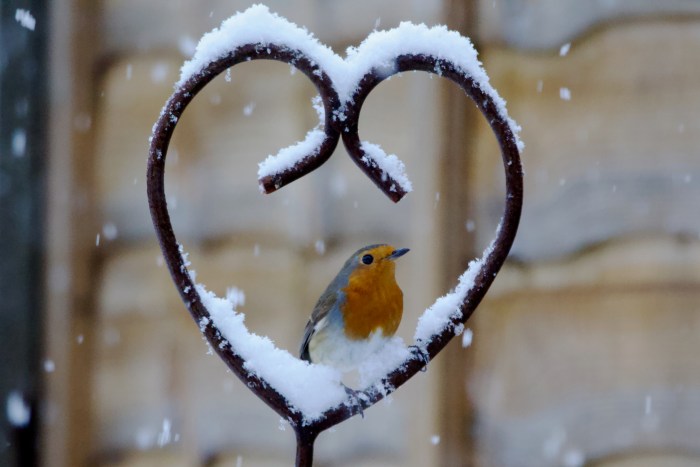
PICTURE 1: just a rotting fungus past its sell-by date?
PICTURE 2: our friend @PipsticksWalks helped to pin this down as upright coral fungus (Ramaria stricta). Apparently there are an incredible number of species of coral fungi, but this one is pretty common in our Chilterns woods
PICTURE 3: too little detail to identify this one?
PICTURE 4: Penny from BFG pointed us towards Tricholoma sulphureum, the poisonous Sulphur Knight, once known as the gas works mushroom because of its pungent odour
PICTURE 5: Lycoperdon pyriforme, the stump puffball, says Penny from BFG
PICTURE 6: too many possibilities to choose from here?
PICTURE 7: a faded Amethyst deceiver, Laccaria amethystina, we are told
PICTURE 8: probably the common rustgill or Gymnopilus penetrans, we now believe
PICTURE 9: too far gone to identify?
PICTURE 10: Penny from BFG identifies this as the birch bracket or Fomitopsis betulina (formerly known as Piptoporus betulinus)
PICTURE 11: the poisonous beechwood sickener (Russula nobilis) is known for its bright colours and crumbly gills. It plays a vital role in the woodland ecosystem since beech trees rely on fungi in the soil to pass minerals to them in exchange for sugars from the tree
PICTURE 12: maybe a dappled webcap, but other angles needed for a confirmed identification
PICTURE 13: Penny from BFG suggests the bonnets in the foreground may be saffrondrop bonnets (Mycena crocata) with common stump brittlestem in the background (see below)
PICTURE 14: Psathyrella piluliformis or common stump brittlestem is common and widespread in woodlands, we discover
PICTURE 15: the stinkhorn (phallus impudicus) is recognisable by its foul odour and relies on flies and other insects to transport its spores
PICTURE 16: a species of webcap, we believe
PICTURE 17: clustered bonnet (Mycena inclinata), known by some as the oak bonnet
PICTURE 18: like Picture 4, Penny from BFG believes this is another Sulphur Knight
PICTURE 19: very old honey fungus (Armillaria mellea)
PICTURE 20: probably a shaggy parasol (Chlorophyllum rhacodes), says Penny from BFG, but hard to be sure without seeing the gills and stem

Hip hip hooray for rosehip syrup

By Olivia Rzadkiewicz

I FEEL very fortunate to have spent 2020 in relative freedom in the Buckinghamshire countryside. 

I’ve watched the seasons roll round with every daily walk showing a different detail in that annual cycle of change. 

On one walk a couple of weeks ago, I noticed gleaming red rosehips punctuating the greens of the hedgerows, and I was reminded of an impulsive foray into foraging that overtook me a few years ago.  In one go, I had made a batch of rosehip syrup and an elderberry cordial. 

Nostalgia swept over me and before I knew it, I had armed myself with a plastic bag and my sturdy walking boots. 

I have never really been good at remembering exact timings for seasonal fruits, and when I got up close to the hedgerow, I realised I had cut it very fine.  The rosehips were nearly all soft and all the best ones had already gone to the birds. 

Undeterred, I picked what I could – a mixture of hard and softening fruits – and zoomed off to another site where I vaguely remembered seeing dog rose blooms earlier in the year. Alas, my fears were confirmed – I was late to the party. 

What followed was a maniacal spree around the whole of south Bucks searching my favourite walking haunts for rosehips.  The actual picking of the hips is quite meditative – you can get lost in the repetitive action of twisting the fruits away from the stems but be warned that the thorns often snap you painfully back to reality! At the end of the day, I counted hips from ten separate locations, with a meagre 1.3kg to show for it. 

Making rosehip syrup is something of a labour of love.  When you have your harvest, you have to wash each hip carefully (to get rid of animal pee and car fumes), and then top and tail each hip.  This takes some time, and I managed to get through a whole radio comedy series in the process.  Make sure you have a sharp knife and a sturdy chopping board for this. 

Next, roughly chop the hips (some recipes suggest popping the fruit in a blender for a quick whizz but I did it by hand).  You’ll notice that the insides of the rosehips have little furry seeds stuck pretty firmly to the fruit wall.  These hairs are used to make itching powder, so be careful when handling them.  You can choose to remove the hairs and seeds at this point but I didn’t- it’s too fiddly and time-consuming and everything gets strained in the end.

Pop all your chopped hips (soft ones and hard ones alike) into a large saucepan and cover with water (1 litre per kg of fruit).  Let it boil for 15 minutes.  You’ll notice the most heavenly aroma coming off the water – it really is a happy and beautiful scent.  Somewhere between rhubarb and custard boiled sweets, candy floss and strawberries. 

Next, strain everything in the pan through a muslin cloth and set aside the clear liquid in a clean pan.  Take the pulp that you have already strained once and boil it in a fresh litre of water for another 15 minutes. 

Then strain everything in that pan through a muslin cloth, letting the liquid run into the pan containing the first batch of strained liquid.  Next, add a kilogram of sugar per kilo of fruit you started with, and stir while boiling until the syrup is at your desired viscosity.  Bottle it up and it will last for a few weeks in the fridge. 

Rosehips contain more vitamin C than oranges so don’t feel too guilty if you find yourself taking shots of the stuff – it’s irresistibly delicious.  Alternatively, it goes really well on pancakes, porridge or drizzled over fruit or ice cream – all the ways you’d use maple syrup. It’s also delicious as a hot or cold cordial, so take your pick and enjoy the fruits of your labour!

Artistic outpost deep in the woods

THIS week’s picture takes us deep into Wytham Woods in Oxfordshire and a print with a distinctly autumnal feel by Rosie Fairfax-Cholmeley, who with colleague Robin Wilson has a permanent base among these trees.

The pair are artists-in-residence at the University of Oxford, which has owned and maintained this ancient semi-natural woodland since 1942.

MYTHIC PAST: Red Woods, a reduction linocut by Rosie Fairfax-Cholmeley

Says Rosie: “Wytham Woods is a singular place, not because there is anything exceptional about the woods themselves but because of the intensity of the attention they receive as Oxford University’s research woodland.”

Pioneers of ecology envisioned the woods as a living laboratory and the data collected here, running back to the 1950s, is invaluable to environmental disciplines that depend on long-term study.

Its 1,000 acres are a designated Site of Special Scientific Interest and rich in flora and fauna, with over 500 species of plants, a wealth of woodland habitats, and 800 species of butterflies and moths.

“Ornithologists, zoologists and plant scientists – so many of them have passed through Wytham or are familiar with its research and I’ve met people in all kinds of places, from Welsh hillsides to the Isles of Scilly, who have fond memories of these woods,” Rosie reveals.

“And yet it is an amazing piece of woodland because all woods are, and this one is a small realm of wildness in the very tame landscape of Oxfordshire.

“We have been working at Wytham now since 2012 and our studio is right in the middle of the woods. In the winter we get the sun setting through the bare trees, sliding between the icy banks of clouds, and in the summer late-night printing will mean disturbing hare, badger and deer on the journey home.

“There is a great stability, if you open up your idea of time, to landscape: the land just is and will continue, in whatever form, round and over the trinketry lives of man. It’s got infinitely more time than us. But landscape without man doesn’t have any thought – or at least, not one I can access – and I find it difficult to have interest without thought.

“It’s history and myth and legend that puts a whole load of mental life back into the landscape. Among other places, I’ve worked in Romania where landed peasants have a very active and practical relationship with the land, and undertake fieldwork in Lycia, Turkey, where time is kaleidoscoped up into nothing by the fallen amphitheatres and tombs that litter the mountainsides and all of this has helped develop my ideas about landscape. Then I print-make, write and draw, and my ideas come out in one of other of these mediums.

Red Woods is taken from a drawing I made through the trees on the main track up into the Woods, about ten minutes walk from our studio. During WW1 the woods were taken over as a training ground for the front, and in the print you can see the undulation of old trenches.

“It’s an autumn print, hence the colours, and the dry stems of the dead bluebells litter the ground. The little row of mushrooms along the front is for Tolkien, who has a similar line of mushrooms along the front of one of his pen and ink drawings of Milkwood.

“The mythic past that Tolkien invented has seeped its way into the landscape of Britain and Europe for me in the same way the classical world still inhabits the mountains of Lycia, or WW1 still dominates the landscape of the Somme. The past hasn’t gone anywhere and the landscape gives it back all the time.”

Rosie Fairfax-Cholmeley runs The Wytham Studio with Dr Robin Wilson at Oxford University’s Wytham Woods. Among other things, they run printmaking workshops. Rosie can be contacted at rosie.fairfax-cholmeley@admin.ox.ac.uk. Follow the studio on Instagram.

Adam roams the Garden of England

A MAJOR problem with exploring unfamiliar territory is knowing where to find the most rewarding rambles.

Where does that footpath lead? How can you discover the best views, magical country lanes or historic villages? How do you find just the right spot for bluebells, butterflies, berries or birdsong, depending on the season?

SPLASH OF COLOUR: Letts Green near Sevenoaks PICTURE: Adam McCulloch

That’s where journalist and musician Adam McCulloch can help take the guesswork out of a day trip to Kent.

Over the past few years, his Kent Walks Near London website has been building up a library of favourite rambles around the Garden of England, and it now boasts handy downloadable guides to more than two dozen walks, all between 2.5 and six miles long.

From wintry rambles on the North Downs Way to sunny afternoons looking out over the Weald, this is a delightful introduction to some of the county’s strikingly different landscapes.

PERFECT DAY: a winter sunset near Dunstall Farm PICTURE: Adam McCulloch

Born in the Petts Wood area of south-east London, Adam spent his childhood gallivanting around the nearby countryside in pursuit of his family’s two English springer spaniels – and, now 58, he’s been enjoying the great outdoors ever since.

You might recognise the byline from the travel pages of The Guardian, but although Adam freelances for a variety of publications writing about everything from farming to finance, his walks website is more of a labour of love, incorporating an occasional blog and slide shows of some of the sights and sounds encountered en route.

He recalls: “I started to write up the routes and add them to the website in 2015. I’d been meaning to do it for several years before that, though. I was working at a large publishing house and a lot of my colleagues were from other parts of the country and some were from abroad. When discussing what people did at weekends I began to realise that a lot of people didn’t really know much about this part of the world and how easy it was to get out here from south London.

WINTRY OUTLOOK: mist over the Darent Valley PICTURE: Adam McCulloch

“I was also thinking of university students and tourists who were curious about countryside close to London. I know that when I visit cities abroad I’m never just satisfied with museums, coffee shops, galleries and bars…I want at least one afternoon outside in the countryside.

“I feel strangely happy when I bump into foreign visitors in obscure corners of the North Downs enjoying a walk having ventured out on the train.”

A keen cyclist and golfer, his rambles are focused on that part of Kent south and east of Petts Wood, down to Westerham, Hever and Chiddingstone and out to Shoreham and Otford, with another batch south-east of Sevenoaks.

The walks encompass a range of attractions, from castles, churches, hillforts and manor houses to atmospheric oast houses and monuments, rolling lavender fields or far-flung views over the downs.

ROOM WITH A VIEW: The Mill at Shoreham PICTURE: Adam McCulloch

There are helpful tips about public transport too, along with whether buggies will cope with the route or if dogs need to be kept on leads.

“The good news is that there are beautiful fields, woods and villages to walk in just 30 minutes out of town by car or train,” he says.

Lockdown has encouraged people to stay local and walk more and he has seen a sharp rise in the number of people using the website this year.

“It’s kind of gratifying to think people have found it to be a useful outlet at this disturbing time. Sometimes out on the walks I come across people using one of my routes, either with a pdf print-out or on their phones. It’s always quite a laugh once they realise they’re talking to the ‘author’.”

DISTANT PROSPECT: St Mary’s Church at Chiddingstone PICTURE: Adam McCulloch

“One thing that I always knew to be the case and there’s no getting round is that describing walks accurately can be difficult – people look at trails and hedgerows differently. An instruction that seems simple to me, ‘Turn right just before a stand of trees’ for example, is actually really open to misinterpretation.

“My partner certainly thought so when she did one route with me yesterday… she really helped me improve my description. I’ve learnt to really try to nail down directions and be as accurate as possible – I think it’s working, no-one’s had a moan recently!”

Away from the footpath and keyboard, Adam is also a saxophonist and composer in the jazz, funk and soul genres who has been playing semi-pro since the mid-1980s and organises bands for weddings and other events from private house parties to festivals.

ICY BLAST: deer in the thaw at Knole PICTURE: Adam McCulloch

But he’s never happier than out on a walk – either alone or in company – and finding his interest piqued by an unusual wildflower, bird or insect.

“I love a social walk even more than a solitary one,” he admits – at the same time modestly confessing that the fascination with trying to recognise unfamiliar flowers in the hedgerows might just be compensation for him being a “pretty useless” gardener.

Birds have become an interest too, with expert local birder ‘Dave’ obligingly helping to identify bird calls and explain the connection between various species and different habitats and terrain.

IN TOUCH WITH THE PAST: St Peter’s Church at Hever PICTURE: Adam McCulloch

Adam has always paid a lot of attention to what’s happening in the sky, too. “Since I was a kid I’ve always tried to work out what was likely to happen to the weather from reading cloud formations,” he says.

“I haven’t lost this childlike fascination with weather. The sky in the UK is ever-changing, constantly offers up clues and is often as beautiful as the countryside. It’s the greatest art gallery of them all; maybe Turner would have agreed.”

WEATHER WATCH: the sky comes to life as storm clouds gather PICTURE: Adam McCulloch

History still comes alive here too, from following in the footsteps of Chaucer’s pilgrims whiling away the journey to Canterbury with their tales, to visiting Churchill’s home at Chartwell or the Roman villa at Lullingstone.

As Adam says: “These places are still magical, especially now I’ve understood how they chime with some fairly momentous history. Take the unassuming North Downs village of Downe (just 20 minutes’ drive from Bromley), for example.

“Here, a short walk will take you through Charles Darwin’s garden and, 20 minutes later, to the perimeter of an airfield crucial to the UK’s survival in the Battle of Britain, where Spitfires can still be heard and seen.

HISTORY LESSON: Ightham Mote near Sevenoaks PICTURE: Adam McCulloch

“And just down the road are the remains of an oak tree – the Wilberforce Oak – under which in 1787 Pitt the Younger and Wilberforce discussed ending the slave trade.”

There you have it, then: medieval pilgrims, old flint churches, soaring birds of prey, big skies, long views and a chance to come face to face with history – what more could you ask for from a quick trip round the M25?

With almost 30 routes described, Adam relies on other walkers to let him know when something has changed.

“The worst ‘change’ I’ve come across was when a beautiful rewilded meadow on my Downe walk was flattened by a farmer all of a sudden with all wildlife utterly eradicated. It had become a wonderful place full of wildflowers, grasses and hawthorn with healthy numbers of yellowhammers, mammals and insects.

KENT SKYLINE: oast houses at Chiddingstone PICTURE: Adam McCulloch

“But I guess the land changed hands and suddenly there was a winter crop of something in there, right up to the edge of the woods, and the path became a muddy mess.

“To balance that, a golf course that walkers had to cross on the Fackenden Down and Valleys East of Shoreham routes was closed down a few years back and has rewilded beautifully, a magical chalk downs landscape full of life.

“Those are probably the two walks I do most often – the train stops right where the path starts in Shoreham (Kent, not the West Sussex one!) and so 40 minutes after leaving Peckham you are in a remote-feeling natural wonderland of beech, yew, birdsong and searing timeless views.

ESCAPE FROM THE CITY: a stag at Knole PICTURE: Adam McCulloch

“That’s what the site’s all about,” he says. “To take you out of yourself and your neighbourhood and plonk you somewhere very different, yet very accessible.”

Adam’s website welcomes donations from those who find his downloadable guides useful. You can follow him on Twitter @kentwalkslondon.

Woods come alive with autumn colour

CHILLY nights and rainy days can turn your favourite walk into a muddy morass and take some of the fun out of autumn rambles.

But brighter days in October and November are a perfect time to capture autumnal colour when the sun breaks through the clouds and turns local parks into places of wonder and mystery.

IMG_2252

Nowhere is more inviting in the sunshine that Burnham Beeches, a national nature reserve on the doorstep that is also a site of special scientific interest and special conservation area.

Much of Burnham Beeches was once wood pasture, with a mix of young and mature trees standing in open grassland or heathland. This type of habitat has been created by land use going back thousands of years, where the trees or pollards harvested for timber and the grassland beneath would be grazed by livestock.

IMG_2258

The constant regrowth encouraged by oak and beech pollarding extends the lives of the trees and older trees often have features such as hollow rotten stems, dead or decaying branches and loose bark which can be a great habitat for animals, plants and fungi, some of which are very rare.

IMG_2256

Dog walkers and families out for a weekend stroll quickly disappear into the 500 acres of beech woodland, and a map of paths and trails offer the opportunity to escape from other visitors, especially on weekdays and out of season.

This is also a very different world from your visits back in the spring (below), with so many of the vivid greens replaced with russets, reds and golds.

IMG_1255

There has been woodland here since the last Ice Age and people have used the site since at least the Iron Age, as evidenced by the Seven Ways Plain hill fort located in the south west part of the Beeches.

IMG_2262

And if the landscape looks familiar, it might be because the proximity of Pinewood, Shepperton and Bray studios have made this a perfect filming location, with everyone from Robin Hood to Harry Potter and James Bond using the Beeches as a backdrop for their woodland adventures.

IMG_2264

Mind you, the same can be said for nearby Black Park, another perfect escape for families needing some fresh air, with a big adventure play area for youngsters wanting to let off steam and an extensive network of surfaced tracks to walk, cycle or run.

And since the park is spread over 530 acres, it allows older teenagers and more ambitious walkers to lose themselves for a little on the less well-trodden paths.

bp3

Although the area round the 14-acre lake and popular cafe tends to be packed with families and dog walkers at weekends, it’s still possible to get away from the crowds – especially during the week or early in the morning, when many of the pathways through the towering trees can be virtually deserted.

As part of the historic Langley Estate, Black Park was first mentioned in 1202 and has been in the ownership of Henry VIII and Elizabeth I, although it is now one of three country parks in the area managed by Buckinghamshire County Council.

bp4

Nearby Langley Park is another favourite autumn retreat, offering a peaceful oasis of colour and tranquillity looking out towards Windsor Castle.

This is a world of pooh sticks and Eeyore houses, where toddlers decked out in bobble hats and wellingtons are kicking leaves and splashing in puddles like generations before them.

IMG_2222

For those wanting an even more spectacular vista, there is also the sprawling Cliveden Estate, 376 acres of magnificent Grade I listed formal gardens and woodlands with panoramic views over the Berkshire countryside.

IMG_2225

Owned, managed and cared for by the National Trust, the dog-friendly grounds slope down to the River Thames and feature a number of woodland walks suitable for families, as well as perfect picnic spots for when the rain lets up.

This estate was the meeting place for political intellectuals in the 1920s and 30s, and in the early 1960s was the setting for key events in the notorious Profumo sex scandal that rocked the Macmillan government.

In 1893, the estate was purchased by the American millionaire William Waldorf Astor, who moved to Hever Castle and left Cliveden to his son Waldorf when he married in 1906.

The young Astors used Cliveden for entertaining on a lavish scale and it’s not hard to see how the spectacular location made it a popular destination for film stars, politicians, world leaders and writers of the day.

Witty, glamorous and fashionable, Nancy became a prominent hostess among the English elite and followed her husband into politics, in 1919 becoming the first woman to sit as an MP in the House of Commons.

IMG_2240.JPG

That sense of history is all about you here, on the banks of the Thames – memories of autumn walks across the centuries where the timeless beauty of the trees has provided a backdrop to countless human dramas, hopes and fears…

For more information about Burnham Beeches, visit the City of London website. For Black Park, visit the park’s website and Facebook page or call 01753 511060. For Langley, visit the website or call 01753 511060. For more information about Cliveden, see the National Trust website.

Check out our nature guides page for things to do in the woods and our What’s On page for other local attractions and special events.

Vibrant colours reflect the changing seasons

OUR latest Picture of the Week is a painting completed during lockdown by local artist Christine Bass.

Most of Christine’s paintings are inspired by the countryside where she lives on the edge of the Chilterns, where three counties meet.

Her contemporary landscapes are characterised by strong lines and shapes, flattened planes and the use of vibrant colour.

SENSE OF FREEDOM: The Ridgeway, Steps Hill by Christine Bass

She says: “This spring and summer, I walked almost daily up Steps Hill. My painting shows the start of that walk along the chalk track up the hill. My favourite route takes me from the base of Pitstone Hill, skirts round the top of Steps Hill, turns off into Ashridge Wood and descends to the meadow along the lip of Incombe Hole.

“There are some fabulous views on this walk: the dramatic curves of Incombe Hole as seen from the top of Steps Hill, expansive views across Aylesbury Vale, the softly rounded hills leading up to Ivinghoe Beacon, and the beauty of the beech woods. 

EXPANSIVE VIEWS: Ivinghoe Beacon from Aldbury Nowers by Christine Bass

“I love that combination of chalk downs with woodland and, this year in particular, in the midst of the lockdown, it gave me an exhilarating sense of freedom.”

Christine draws particular inspiration from landscapes where the natural lie of the land is accentuated by man-made interventions such as tracks, farmed fields and hedgerows, planted woodland and reservoirs.

ORDERED LANDSCAPE: Tring Park by Christine Bass

This year she has spent many hours working on very large drawings of Incombe Hole and Ivinghoe Beacon, but even at the height of summer, working conditions outside could be challenging.

She recalls: “Even on fine, sunny days, the wind at the top of Steps Hill was so fierce that I had to wrap up warmly and really secure the pages of my sketchbook.

WHISTLING KITES: Pulpit Wood by Christine Bass

“The soundtrack was that of burbling skylarks and whistling red kites. There were wild flowers in abundance: cowslips and buttercups, bluebells and orchids, knapweed and ragwort, wild carrot, ladies bedstraw, agrimony and scabious, bellflowers and harebells, clover, marjoram and yarrow.”

As the summer fades into autumn, Christine will work in her studio developing paintings from those drawings, working with layers of acrylic paint on a collaged base.

“I begin by drawing the composition onto board before collaging the whole surface with tissue paper,” she explains. “The drawn composition is important to me; when it begins to disappear beneath the layers of tissue, I re-draw it.  I then paint in acrylics onto that collage base, focusing on the original drawing but also incorporating many of the shapes which originate from the tissue layer. My aim is a synthesis between the drawing and the more abstract collage, with the painted layer bringing the two together.”

CHANGING SEASONS: Autumn at Wilstone by Christine Bass

It’s a change of technique from her early artistic career when she worked as an illustrator producing black and white pen and ink drawings. She grew up in Trinidad and the bright light and vivid colours of the tropics still exert an influence in her paintings.

“I longed to work in colour and my first, very vibrant paintings reflected that desire.  I still use strong, saturated colours in my landscape paintings but they tend to be more natural – greens and yellows, blues and greys, oranges and browns,” she says.

To see more of Christine’s work, visit www.christinebassart.com and her Instagram feed.

Crash course in puppy parenting

Guest writer Lucy Parks rises to the challenge of coping with two adorable puppies after rescue dog Yella delivers her biggest surprise

THE JOYS OF MOTHERHOOD

WE CALLED the puppies Eggy and Sock, a derivative of the Greek for “surprise” and “shock”. And I was in shock. With hindsight, we did everything wrong in those first few days.

SURPRISE DELIVERY: the new arrivals take a nap

I’d handled the pups within minutes of being born and, that weekend after they were born on the Friday, I had so many visitors to the house to see the new arrivals, all of them wanting to cuddle the little ones and Yella being hugely tolerant of the attention they were getting.

Not long after getting Yella I’d joined a Facebook group called Dogs of Amersham and Surrounding Villages, which proved to be a huge source of support in those first few days. Fellow dog owners donated a puppy crate, a video on how to raise puppies, puppy pads and emotional support.

The charity that had provided Yella was brilliant. They were as shocked as I was and gave immediate practical, emotional and financial help.

PROUD MUM: Yella and the pups in their makeshift whelping pen

I’d posted about the pups on Facebook the day they were born and, by that evening, I had five or six people who were interested in having one. First dibs went to my best friend, who’d wanted a dog for years, and Yella gave her the perfect opportunity.

They changed her name from Eggy to Lumi – short for “halloumi”, in a nod to her heritage – and Sock, the boy, was bagged by another friend. At least it took away one of the stresses, knowing that I had homes for them.

Yella’s timing could not have been more perfect: the fact she had the pups on a Friday afternoon, when I was at home; that I had the weekend to get my head around the new challenge I was facing; that I had started work at the vet’s that same week so had expert knowledge on tap. That Yella took to motherhood like a duck to water was an added bonus.

Oh goodness, I learned so much that first weekend. It was a true crash course in dog parenting and it passed in a blur. We made a make-shift whelping pen from Yella’s crate and cardboard. Later, we created a puppy pen in the hallway.

HOME COMFORTS: the pups move into the hallway

The eight weeks I had the puppies at home – incidentally, the same amount of time I’d had Yella before she gave birth – proved the hardest job I’ve ever done. These little eating, sleeping, shouting, pooing machines were relentless. Watching their development from tiny blind hamsters to cheeky, adventurous toddlers, though, was wonderful.

TIRED BUT HAPPY: Lumi and Sock sleep off another day of shouting and pooing

By the time they left for their new homes, we were all exhausted and relieved. Yella was ready to let them go and I was just happy to have my house back to normal.

Lucy Parks lives in Amersham, in the glorious Chiltern Hills. She adopted Cypriot rescue Yella in July 2018, her first dog. A journalist by trade, Lucy left corporate life in 2018 and set up her business, Parkslife, as a freelance journalist and artist. She’s also a veterinary receptionist, allowing her to indulge in her love of animals.

NEXT TIME: Our favourite walks with refreshments

Autumn adventures on the water

THE trees are changing colour, the nights are drawing in – what better time of year to take a relaxing break away from the crowds and explore Britain’s beautiful waterways?

That’s the message from the Canal and River Trust this autumn, especially for those struggling to recharge their batteries amid the stresses of coronavirus lockdowns.

For a self-catering staycation with a difference away from busy tourist areas, canal boat holidays offer a great opportunity to get back to what matters: spending time with family or friends, enjoying the natural world and being as lazy or as active as you like, walking, cycling, fishing or even canoeing if the fancy takes you.

The canals and rivers are beautiful at this time of year and offer plenty of scope to explore, with hire boat companies dotted around the country who have been working hard to make boats safe in line with the latest government guidance.

Research shows that people can feel happier and healthier by the water, which makes a canal boat the ideal option for a relaxing short-break escape.

You can plan your journey based around how you and your family or friends want to spend your days. If you love visiting attractions and eating out, go for a route that passes through a major city like Birmingham or Manchester. But if you prefer peaceful surroundings and spotting wildlife, there’s a huge choice of rural waterways.

Your skill level and confidence in driving the boat may also play a part in your route decision. If you’re new to boating, you may want to avoid areas with lots of locks. However, if you have energetic children, then locks will help to keep them entertained.

The trust looks after 2,000 miles of waterways and its website contains a host of ideas and resources for anyone new to boating – including free guides to fun local days out and comprehensive advice for beginners and where to find boat hire companies.

As well as offering the prospect of a more tranquil pace of life – and a greener holiday than jetting off to sunnier climes – boating holidays offer a chance for families to spend time together and discover some intriguing insights into Britains architectural history.

For those with a head for heights, the scary-looking Pontcysyllte Aqueduct in North Wales has been recognised with World Heritage Site status and is one of the most impressive engineering feats on the canal network (and one of seven wonders singled out by the trust for special mention). You can walk across or save your legs and go by boat.

To choose a location, you might look for a place that you’ve previously fallen in love with or an area that you have always wanted to explore. 

The trust has plenty of advice for first-timers and advice about circular routes or “cruising rings” which vary in length and could take anything from two days to three weeks without the need to retrace your steps or worry about the return journey.

You can also check out social media posts and capture the excitement of your own boating adventure when you get home by tagging #CanalMemories on Twitter and mentioning @CanalRiverTrust.

Who goes there, friend or foe?

OCTOBER has arrived with a vengeance, Storm Alex wreaking havoc across the country and depositing a month’s worth of rain in some areas over the weekend.

Those venturing out during gaps in the deluge have seen something of a transformation, with the storms stripping leaves off trees and the autumn colours of browns, reds and golden yellows replacing the green of late summer.

While the shops already gearing up for Halloween, the woods are awash with fallen acorns and apples, lichens, mushrooms and toadstools.

Amid the dripping leaves of Burnham Beeches, it’s suddenly a strange new world of unusual textures, shadows and colours.

The ferns are turning brown, along with the trees, an early hint of the glories to come later in the month as the autumnal colour palette really begins to explode.

Down at the ponds the stunning colours of the mandarin ducks stand out against the muddy browns, greys and blacks of tree roots and rain-spattered water.

But it’s at ground level that the real stars of the show can be found, with a small cross-section of the country’s 15,000-odd species of fungi providing an intriguing range of shapes and colours among the soaking foliage.

Not that the uninitiated will want to get too close to some of these amazing-looking fungi: some of them are deadly and boast spine-tingling names like the destroying angel, funeral bell and death cap.

Fungi live everywhere and vary in size from the microscopic to the largest organisms on earth. But perhaps we are most intrigued not just by their beauty, but the deadly consequences of dabbling with the most poisonous of them.

We instantly recognise the familiar scarlet cap of the fly agaric toadstool, which both attracts and kills flies, or the Scarlet elf cups or fairies’ baths, which make a tiny puffing sound when they release their spores into the air.

But on decaying branches and in damp spots scattered around the woodland floor there are an array of others whose offputting appearance may only be matched by their sinister names, like jelly ear fungus, foul-smelling stinkhorns or toxic beechwood sickener.

Or what about the gruesome beefsteak fungus, which looks like a raw cut of meat and even oozes a blood-like substance when cut…or the brown roll-rim, a common birch woodland fungus that looks benign, but is deadly poisonous.

Not that it’s all about innocent-looking killers. As well as many fungi being edible, some have medicinal properties, like the candlesnuff fungus, which is both anti-viral and active against tumours, or other uses like the common inkcap, once a source of ink for important documents.

Lichens play an important role in the ecology of woodlands too, offering valuable microhabitats, shelter and food for various small invertebrates which in turn are prey for larger insects and birds.

They can also be hosts for other species of parasitic fungi, as well as providing other ecosystem services such as carbon cycling and water retention.

Most organisms lack the ability to digest wood and return the nutrients to the soil, but fungi figured out the secret a few hundred million years ago. A good thing too, or otherwise dead trees would just pile up everywhere.

But down here among the lichens and leaf debris, could you spot the difference between a prized chef’s ingredient like a chanterelle or charcoal burner, and a deathcap, which has been used as a murder weapon for millenia?

Notable alleged victims of death cap poisoning range from Charles VI, ruler of the Austrian Habsburg Monarchy, to the Roman Emperor Claudius.

Voltaire even wrote that a dish of mushrooms had changed the destiny of Europe, since the death of Charles VI led to the War of the Austrian Secession from 1740.

The Woodland Trust does offer a handy guide to some of the most common fungi and lichens, coupled with some fascinating legends and facts – but even professionals can get things wrong, it seems: the distinguished German mycologist Julius Schaeffer died in 1944 after eating a succession of dishes containing brown roll-rim mushrooms.

In the ancient woodlands managed by the City of London Corporation, fungi have a vital role to play in the delicate balance of biodiversity, and in sites like Epping Forest commercial pickers – who can face prosecution – have been stripping the forest of wild mushrooms, depriving insects and animals of a valuable food source and threatening rare species.

Much maligned and mistrusted, toadstools and mushrooms are associated with ancient taboos, death and decomposition, but they have magical associations too and are nature’s natural recyclers, playing a vital role in the ecology of natural habitats like Burnham Beeches.

Down in the woods, hundreds of them are hard at work breaking down decaying organic matter and providing food for squirrels, deer and insects. It’s wonderful to see the fascinating shapes, forms and colours the fungi world has to offer – and yes, of course we want to leave them there for the next visitor to enjoy.

Picture of the week: 05/10/20

IT’S no normal picture of the week this week, but a focus on the lost skill of fairground art, which Joby Carter has been passing on to people from over the world through his unique online courses.

The coronavirus lockdown hit travelling funfairs hard, with all their spring and summer bookings cancelled. But Joby Carter of Carters Steam Fair wasn’t prepared to sit back and do nothing over the long summer months, as our recent feature revealed.

He discovered a growing demand around the world for his evening classes focusing on traditional signwriting techniques.

Different courses run live from his paint shop outside Maidenhead have been allowing classes to learn about traditional fairground art, signwriting and coachpainting, picking up expert tips acquired through a lifetime of restoring the fair’s beautiful rides, living wagons and transport.

Traditionally everything in the fair is moved around the country using vintage heavy lorries and magnificent showman’s living wagons with their cut-glass windows, lace curtains and gleaming wood interiors.

Latest online courses have included coachpainting and fancy lettering – as well as a five-part course showing how to paint a fairground horse, like the famous Carters gallopers, which date from the 1890s.

Details of Joby’s online signwriting courses can be found here.

Prayers for a troubled planet

FOR millions of Christians around the world, a month-long season of prayer culminates this weekend with the feast day of St Francis of Assisi.

The idea of celebrating September 1 as a day of prayer for creation began in 1989 at the wish of the Ecumenical Patriarch Dimitrios, a leading figure in the Eastern Orthodox church whose successor Bartholomew I is also seen as something of a “green” source of spiritual inspiration.

In 2013 Pope Francis – formerly Jorge Mario Bergoglio – chose his papal name in honour of St Francis, reflecting both men’s concern for the world’s poor, as well as the future of the planet.

The Pope subsequently urged the world’s 1.2 billion Catholics and all people of good will to take urgent action against the injustice of climate change and the ecological crisis, to protect the poor and future generations.

The Season of Creation has become an annual celebration uniting Christians in prayer and action for the protection of the earth, with many viewing this year’s event as being of particular significance in light of the coronavirus pandemic and global climate concerns.

NEW LANDSCAPE: a street food market in Japan PICTURE: Jérémy Stenuit, Unsplash

In July a cross-section of faith leaders urged the UK government to develop a new shared vision for the future ahead of the UN climate change conference in Glasgow next year, when the UK has the COP26 presidency.

The faith leaders spoke of the need to “restore balance in the very systems of life, affirming the need for equality, justice and sustainability” in the sharing of the earth’s resources.

They pointed out how, amid the fear and the grief for loved ones lost, many had found consolation in the dramatic reduction of pollution and the restoration of nature.

BACK TO NATURE: our global ecosystem is under threat PICTURE: Kunal Shinde, Unsplash

“Renewed delight in and contact with the natural world has the capacity to reduce our mental stress and nourish us spiritually,” they wrote. “We have rediscovered our sense of how interconnected the world is. The very health and future of humanity depends on our ability to act together not only with respect to pandemics but also in protecting our global ecosystem.”

On the plus side, less travel and consumption and more kindness and neighbourliness have helped us appreciate what society can really mean, they pointed out. But in times of crisis injustice becomes more obvious, and it is the poor and vulnerable who suffer most, as the Catholic Agency for Overseas Development stresses in its climate campaign.

DIVIDED PLANET: children playing in New Delhi PICTURE: Atul Pandey, Unsplash

“All this shows us how precarious our previous ‘business as usual’ was, socially, economically, ecologically and spiritually,” the faith leaders wrote.

“Our faiths teach us that our planet, with its rich resources and inspiring diversity, is lent to us on trust only and we are accountable for how we treat it. We are urgently and inescapably responsible, not just before God but to our own children and the very future of humanity.”

The Season of Creation ends on October 4, the Feast of St Francis of Assisi, but the call to action looks beyond the annual event and focuses on protecting biodiversity, reducing the risk of catastrophic climate change and pushing sustainability to the forefront of government decision-making.

CRY OF THE POOR: a homeless man in Athens PICTURE: Jonathan Kho, Unsplash

Pope Francis phrased it as the need to “listen to the cry of the Earth and the cry of the poor”, a message that resonates across the centuries from when Saint Francis chose to take the Gospel literally and lead a life of poverty in the name of the Lord.

“If God can work through me, he can work through anyone,” the saint said, yet on Sunday, almost 800 years after his death, his message about our intimate connection with God’s creation sounds more relevant and important than ever. 

GLOBAL OUTLOOK: a colourful view of the night sky PICTURE: Jeremy Thomas, Unsplash

Chris celebrates citizen science

TV presenter, author and naturalist Chris Packham has been confirmed as the keynote speaker for an online Chilterns conference celebrating citizen science.

Leading policy makers and practitioners from a wide range of organisations across heritage and wildlife are due to speak at the full-day event on October 24.

The ardent environmental campaigner will thank volunteers for their work in making citizen science in the UK the envy of projects around the world and showcase ways in which the data they gather can make a real difference.

The day includes Q&A sessions and a youth panel looking at how to get the next generation engaged in the world of conservation and volunteering.

“I never cease to be amazed when I hear about the efforts many thousands of volunteers go to in supporting conservation projects in the UK,” said Chris.

“Citizen science is hugely powerful in helping us not only better understand our wildlife and heritage but also informing decisions made by government and decision makers.”

Other expert speakers at the conference include Gavin Siriwardena from the British Trust for Ornithology, Michael Pocock from the UK Centre for Ecology and Hydrology, Mick Jones from Buckinghamshire and Milton Keynes Environmental Records Centre, Allen Beechey from the Chilterns Chalk Streams project, Wendy Morrison of the Beacons of the Past project and John Shaw from Chiltern Rangers.

The conference is presented jointly by the Chalk Cherries and Chairs Landscape Partnership and the Beacons of the Past project, both projects of the Chilterns Conservation Board and funded by the National Lottery Heritage Fund.

For more information and to book a free place at the conference, click here and for a full schedule of events organised as part of the Chilterns Celebration and details on how to book your place, click here.

Wildsong, wilderness and wetland havens

THE natural world dominates Jane Duff’s art in the same way it has dominated her life, and our latest Picture of the Week reflects that.

Jane’s childhood was an idyllic existence on the edge of Snowdonia in which she was largely left to her own devices, riding her bike or climbing hills with her dog as her faithful companion. By university her horizons were broadening and she was to spend much of her early twenties in the Nepal Himalayas, initially trekking and camping alone and later becoming a guide herself, taking groups for weeks at a time through Nepal’s magnificent peaks and forests.

When she returned to the UK a few years later to work for OUP as art editor, her passion was for photography and it was not for many years that she turned her hand to drawing and painting.

This led to her enrolling in an arts foundation course and her interest in the natural world also led to an advanced diploma in environmental conservation at Oxford University. She now fuses her interest in the environment with her love of painting.

Landscapes dominate much of her work as demonstrated by Winter Snow in the Wetlands, a 60x60cm oil on canvas painting of the Earth Trust’s River of Life wetland project near Wallingford.

She is also a volunteer for The Earth Trust in Little Wittenham and an avid supporter of their efforts to create new wetlands and improve water ecosystems along the River Thames and River Thame, as well as several new ponds in Little Wittenham woods, home to one of the country’s most significant populations of great crested newts.

“The new ponds, reedbeds, backwaters, wildflower meadows and wet woodland provide vital habitats for wildlife including otters, water voles, club-tailed dragonflies, kingfishers, skylarks , yellowhammers,” she says.

“Regular monitoring has shown that hundreds of thousands of fish fry are using the channels as a safe haven and that 12 of the Thames’ 20 species of fish are already present.”

Woolly thistle on Wittenham Clumps nature reserve by Jane Duff

Phase Two of the project will involve creating wetlands between Little Wittenham and Clifton Hampden and is due to start in 2021.

“The Earth Trust do amazing work,” she says “They look after miles of footpaths and open access land over Wittenham Clumps enjoyed by over 150,000 people per year as well as running a farm and an environmental education programme for local schools.

“ I’m not sure if the general public realise how much work is involved maintaining the paths and hedgerows and forests. Things are really tough for them as for many charities and they do need our support, especially right now.”

Jane put together a solo exhibition entitled Wildsong at the North Wall Arts Centre in Oxford showing 55 paintings of some of the wildest landscapes in the UK, including several west country seascapes and many paintings of the Welsh moors and mountains.

Early Spring in the Coed y Brenin by Jane Duff

They showed remote, dramatic and elemental landscapes – even if she laments there is no true ‘wilderness’ still to be found in the British countryside.

At present she is preparing for a solo exhibition at West Ox Arts gallery in Bampton in Feb-March 2021 entitled A Love of the Land.

Oxfordshire may lack the more dramatic landscapes reflected in her paintings of Mid-Wales, North West Scotland or the far west of Cornwall, but the softer surroundings of Oxfordshire nature reserves, heathlands, woodlands, chalk downs and open spaces, as well as the River Thames and its many tributaries, provide their own inspiration, she insists.

Light over Loch Kentra, Ardnamurchan by Jane Duff

Jane loves the ever-changing light of wild places, as well as the solitude and peace which helps to concentrate the mind, and despite the practical challenges of painting in situ she tries to do so whenever possible.

“I immerse myself in a landscape for hours, absorbing the atmosphere, the play of light and shadows, the textures and colours of the vegetation before finding the place that moves me enough to want to put up my easel and paint there,” she told OX magazine in an interview last year ahead of her Wildsong exhibition.

“I often struggle to get started and procrastinate a lot as I love it all too much! I find it overwhelming. But once I start I am away with a burst of energy and find myself reacting instinctively to the landscape, bringing the emotions, weather and light of the place into my paintings.

“I will often finish a painting in one sitting but will equally often work further on a painting back in the studio. It can make me a bit nervous painting in remote places especially if there are curious cows and horses around so if this happens, I sometimes pack up and go home armed with sketches and photographs. My two dogs sit alongside me for hours. They must wonder what on earth I am doing.”

She works mostly in oils, cold wax and acrylic and often on a large scale.

She firmly believes that art has a part to play not only in reminding people of the beauty of the landscape but highlighting the importance of protecting habitats and their biodiversity.

“We have such fantastic landscapes in the UK – we are fortunate beyond belief to have so much packed into such a small island. Thank heavens for the National Trust protecting so much of our beautiful British coastline and for our wonderful National Parks and nature reserves. Some of my paintings are of Sydlings Copse, a BBOWT nature reserve under threat from encroaching development to the north of the Oxford ring road.

Sydlings Copse by Jane Duff

“It is small – only 22 hectares – and is considered by many to be the jewel in the crown of Oxfordshire nature reserves. It has heathlands, amazing wildflower meadows, broadleaved woodland and a rare fen and supports over 400 plant species. It is of international ecological importance yet it is still under huge pressure from development.

“We need to respect and protect our natural world much more than we do. If an area is designated greenbelt, AONB, SSSI, SAC or SPA or landscape conservation area it means that it is likely to have very high biodiversity or landscape value and too often local authorities and government disregard their protection status such as with the recent loss of Calvert Jubilee nature reserve near Aylesbury.

Reedmace in Winter by Jane Duff

“This precious flagship reserve has a lake which is a haven for overwintering wildfowl, waders, bittern and tern and it has wildflower meadows with all five species of the rare UK hairstreak butterfly yet it is in the process of being razed to the ground to make way for HS2.

“One can’t always mitigate against loss of some habitats. It takes a very long time for a woodland to regrow with its complex ecology so we must do everything we can to take care of these special places. They are irreplaceable and I would say that it is deeply immoral to destroy them. I’m not sure if I’ve left it too late to paint Calvert jubilee nature reserve but I fear I might.”

You can see Jane’s work at The Wykeham Gallery, Stockbridge, at Iona House Gallery, Woodstock or through her website or Instagram account.

Bus stop which brightens journeys

NOT many bus stops can boast their own Facebook page, or receive fan mail.

But then the Bradenham Road bus stop on the outskirts of West Wycombe is no ordinary bus stop.

With more than 550 followers on Facebook, the bus stop launched its social media presence a year ago when it was being relocated – so that the Essex contractors involved in the move could let their partners know what they were working on in darkest Buckinghamshire.

By October it was open again, complete with books, comfy cushions and even a dog bowl and bottled water for anyone out for a stroll.

The summer displays might have faded, but there were winter pansies in place and daffodil bulbs planted. By December it was time for festive lights and Christmas decorations to be attracting the attentions of passing commuters.

Over the months it’s been only too clear from online comments and handwritten letters just what a delight the bus stop has been for queueing motorists and those taking refuge from sun and rain.

In July 2019 a grateful cyclist wrote a letter of thanks after escaping from 34-degree sunshine to mend a puncture, while a passing walker described it as “an awesome place of rest, respite and peace”.

After the March lockdown, the bus stop geared up for Easter with a seasonal children’s drawing competition, with prizes of Easter eggs – not to mention a bottle of Prosecco and top-quality steaks for two provided by a local butcher.

Those artistic offerings were soon followed by posters thanking the NHS and key workers.

By May there were Union Jack flags on show to celebrate the 75th anniversary of VE Day and the summer saw a return of the dramatic floral displays for which the bus stop is best known.

It was quite a while before local resident Emma Copley admitted to being the driving force behind the clean-up, once neighbours started to spot her in action.

She says: “I’m a great believer in reclaiming space that’s been neglected … nice areas attract good behaviour and respect.

“It’s all made worthwhile by the lovely comments and people stopping to look. I even had a lady give me money (donated to charity ) and a coachload of Japanese tourists stop to take photos.”

Of course the concept of brightening up bus stops and providing reading material for weary commuters is not a new one, with experiments around the world from Singapore to Greek and Turkey.

Back in 2011, a pair of Israeli artists launched a project in Haifa which spread to a number of cities providing bookshelves at a number of stops to see if travellers would swap books and replenish the shelves.

Installation artist and lecturer Daniel Shoshan envisoned that the initiative could serve as a new way of connecting people and possibly even improve literacy rates. Might authors one day give public performances at bus stops?

A couple of years later, bus commuters in Sydney and Melbourne were pleasantly surprised by a Christmas campaign that set up bookshelves at various bus stops to encourage Australians to read and buy local books. The creative move, which enabled commuters to take home free books, enticed so many people that they often missed their bus in the process.

West Wycombe’s glorious community bus stop may not be quite on the same scale, but there’s no doubt of its popularity with passing motorists – and the idea is clearly contagious, as it has now “twinned” with another local bus stop boasting bookshelves, looked after by the Piddington & Wheeler End Parish Council.

Whether it’s the sense of community spirit that captures the imagination or the beauty of the floral displays, it’s clear that fans of the Bradenham Road bus stop enjoy the simple things in life – and if a humble bus stop can put a smile on the face as well as providing shelter from the storm, that sounds like a winning idea that deserves to succeed on a wider scale.

Express delivery proves a surprise

Guest writer Lucy Parks recalls the time rescue dog Yella began behaving oddly…

sudden arrivals spark a panic

I’D HAD Yella, my first dog, for a few weeks and we were both settling into our new routine. She was adjusting to life in the UK and I spent a lot of time on Google, checking that I was doing the right things, too.

Yella was six months old and in season when she came to me from Cyprus; she was growing nicely with good food, exercise and lots of love. We’d noticed that her teats had started to get bigger and, over the course of a few days, she started “nesting”, gathering all her toys into different places around the house. Google told me she was probably having a phantom pregnancy. I wasn’t overly concerned.

NESTING INSTINCT: Yella three days before the birth

I’d decided that I needed a local, part-time job and was delighted to secure a role as a veterinary receptionist at a practice just down the road. I started my new job on the Monday. By the Friday, I was getting worried about Yella.

She was getting fussy about eating, she didn’t want to go for walks and – when I got home from work on Friday lunchtime – she was clearly in distress, shaking and howling like a lamb being slaughtered.

I called the vet to make an appointment and tried to encourage Yella into the garden for a pee before we left. She wouldn’t pee, the howling got worse and, when she came back into the house, she started squatting on the carpet.

“Oh, for heaven’s sake,” I thought, “you poor thing – you must be in a bad way.” And then, before my very eyes, as she continued to squat, a tiny bag of puppy popped out of her. I uttered a profane expletive as I continued to stare at the small bag. What on earth to do?

DOUBLE TROUBLE: Yella becomes a mum

I called my partner, who was driving to my house at the time: “Yella’s just had a puppy and I’m not even effing joking,” I said. “But I think it’s dead… oh no! It’s not! Gotta go.”

Yella had broken through the sac the puppy was born in, bitten the umbilical cord, eaten the placenta and was licking the tiny, mewling creature, no bigger than a hamster.

Through the haze of astonishment, practical issues kicked in. Right, we had an appointment to make. I scoured the house for a suitable receptacle for the puppy: yes, the recycling bin. I lined it with a towel, picked up the puppy and popped it in. Yella went nuts, trying to get to her baby in a bin. How on earth was I going to get them into the car?

I called the vets to let them know that Yella had delivered a puppy and that we might be a bit late for our appointment. Two minutes later, Holly the vet nurse called back: “Would you like me to come over?” Yes, please. “One more thing, Lucy: there might be more than one puppy.” What? WHAT? “Keep Yella and the puppy calm, if another comes out, you can help her by breaking the sac. Make sure they’re comfortable and warm. I’ll be there in five minutes.”

UNEXPECTED ARRIVALS: the two puppies

By the time Holly and my partner arrived at the house, Yella had delivered, cleaned up and was suckling a total of two puppies. For a street dog who was abandoned by her own mother at birth, she was doing an amazing job. I was a mess.

I’d gone from having one dog to three in eight weeks and one day. I was a new dog parent and now grandparent. I had no idea what was going on, while Yella’s maternal instinct had kicked in and she seemed to know exactly what to do.

Lucy Parks lives in Amersham, in the glorious Chiltern Hills. She adopted Cypriot rescue Yella in July 2018, her first dog. A journalist by trade, Lucy left corporate life in 2018 and set up her business, Parkslife, as a freelance journalist and artist. She’s also a veterinary receptionist, allowing her to indulge in her love of animals.

NEXT TIME: Yella and Lucy get to grips with motherhood.

Festivals put nature centre stage

NATURE is in the spotlight next month when a programme of outdoors events, walks and activities is being held across the Chilterns Area of Outstanding Natural Beauty.

The Chilterns Conservation Board hopes the nature-based activities will inspire families, young people and adults of all ages to get out and explore the AONB.

A new October festival marks a month-long ‘season of celebration’ aiming to bring communities together and inspire people to explore and enjoy the heritage and landscape on their doorstep.

Naturalist, TV presenter and environmental campaigner Chris Packham will be the keynote speaker at the first ever ‘Chilterns Champions’ conference, discussing the importance of citizen science and how everyone can get involved.

There’s a chance to explore a new heritage trail around the Wycombe Rye, get creative in art workshops with local wildlife champions the Chiltern Rangers and enjoy a range of walks, talks and local produce tastings.

The festival runs from October 1-31 and is also designed to help support communities and businesses following the Covid-19 pandemic.

Also in October, the Chilterns Walking Festival is now in its seventh year and boasts more than 50 guided walks, activities and events over 16 days, running from October 17.

The walks, all guided by experienced leaders, provide opportunities to meet countryside rangers, farmers, archaeologists, historians, food producers and storytellers of the Chilterns.

Annette Venters, the Chilterns Conservation Board’s people & society officer, said: “We are delighted to be offering lots of new walks that showcase the best of our stunning landscapes, wildlife and local producers.

“There are still plenty of challenging hikes, but we’ve included a greater number of shorter walks too, with the emphasis on learning and discovery, meeting the people and producers of the Chilterns, and spending time in our inspirational landscape.”

Find the full schedule of Chilterns Celebration events see www.chilternsaonb.org/ccc-fest. For walking festival details and bookings see www.visitchilterns.co.uk/walkingfest. Most events are free, though some require a small fee.

The Chalk, Cherries and Chairs Landscape Partnership Scheme is a five-year project which aims to connect local people to the wildlife and cultural heritage of the Central Chilterns.

The Chilterns Area of Outstanding Natural Beauty was designated in 1965 and stretches from Goring in Oxfordshire to near Hitchin in Hertfordshire. It is one of 38 AONBs in England and Wales and has a resident population of 80,000.

The Chilterns Conservation Board is an independent public body set up to conserve and enhance the natural beauty and increase awareness and understanding of the Chilterns AONB.

Picture of the week: 21/09/20

THIS week’s painting is a new work by Chilterns artist Sue Graham, who has often drawn inspiration from local landscapes.

A feature in April revealed how a series of paintings inspired by her love of the dawn chorus prompted her family to buy a croft and start planting hundreds of trees on a remote Scottish island.

One of her latest completed works takes its inspiration from a landscape at the other end of the country, in Cornwall.

EXPLOSION OF LIGHT: Sundown, St Ives, acrylic on board by Sue Graham

Sue explains: “In 2019 I decided to organise a group exhibition in St Ives, famous for its artist colony and a place I had always wanted to visit.

“It was a great week: off to have a beer and yoga on the beach every evening after I shut the exhibition doors, and wonderful company from my fellow artists. It was just a fabulous hard-working but energising experience.

“One evening I climbed up on the grassy slope above Porthmeor Beach as the sun was setting. The whole bay was lit up and the air itself seemed to glow.

“I wasn’t interested in catching a precise rendition in paint of St Ives viewed from the hill, more an expression of how it felt to be there at that moment: intoxicated by the sense of space, light, the natural world and infinite possibilities. 

“I started painting this in August 2019 when I got home: it started well and then I got lost in it. So I put it away, then Covid came and cancer came and by the time I felt like painting again I pulled it out and by then somehow in my mind I had resolved how to make it work.

“It’s often best to put things away when they get stuck, though I did at one point almost chop it into pieces. This is painted on board: it’s a weird surface, ungiving and thirsty, but it makes for some great textures if you layer the paint and scrape it back again. That’s the technique I used for the foreground, which is my favourite part.”

Pet rescue is no walk in the park

Guest writer Lucy Parks recounts the pleasures and perils of adopting a rescue dog

A DOG CALLED YELLA

I CAN’T remember a time I didn’t want a dog.

My mother – who doesn’t like animals, hence no childhood dog – tells stories of me toddling up behind German Shepherds as a kid, just to give them a hug. To me, dogs were there to be loved and cuddled and I knew that, one day, I would fulfil my dream.

Cats filled the gap as I worked full-time and simply didn’t have room in my life for a dog.

FRESH START: redundancy prompted Lucy to consider the possibility of owning a dog

Everything changed when I hit 50. Made redundant, I took the opportunity to pare back my life, stay local, work less. The moment had come. I always knew I was going to go down the rescue route but, having two cats at the time, it proved difficult with the UK rescue charities. They, understandably, want to be sure that when they re-home a dog into a house with cats, the dog (and cats) will be comfortable.

FACEBOOK STAR: Yella and Lucy’s artwork on the Cyprus Dog Rescue page

After a few months of looking, a friend with a Cypriot rescue dog suggested a Facebook group I might be interested in. To cut a very long story short, in July 2018, Yella flew into the country and into my arms.

Yella (Greek for “laugh” because, in the first photo we saw of her, she had a big grin) is a Kokoni-cross, a small, domestic Greek terrier known as “the daughter’s dog” for their gentle and devoted nature.

WINNING SMILE: the first picture Lucy ever saw of Yella

She was six months old, scared stupid and didn’t speak any English. But from the first moment we saw each other, on a dark night in the car park at South Mimms service station, it was love.

SECOND THOUGHTS?

I’VE made a terrible mistake…

The first few days with Yella, my new rescue dog, were terrifying for both of us. She was away from everything she knew – albeit that she was only six months old – and not just in a strange home but in a strange country. She’d had an arduous plane and truck journey to the UK from Cyprus and, despite having wanted a dog forever, I had very little idea of what it actually entailed.

Yella wasn’t house-trained; she’d never worn a collar or harness or walked on a lead before; she’d not seen traffic before; she didn’t know how to play; wasn’t interested in sticks or balls. Oh and I discovered that she was in season, which is why she hadn’t been neutered before she came to me.

She followed me everywhere. Everywhere. I thought I’d never be able to leave the house again. I thought I’d made a terrible mistake.

HALFWAY HOUSE: Yella’s first night in the hallway

That first night, I’d slept in the hallway with her, next to her crate, waking up regularly to take her outside for a pee. She never really took to the crate, though, and it became a bit of a tussle every night. The sound of a puppy crying in her crate is just heartbreaking.

But as time went on, we both adapted as we got to know each other. Yella came to ParkRun with me at Rickmansworth Aquadrome, she came to the beer shop in Amersham and she revelled in the love and attention she got from my friends.

I guess I was hideously naive at the start. I was impatient to have the perfect pet but any dog, especially a rescue dog, needs time, understanding and patience.

Yella hadn’t had a bad start in life, she wasn’t abused or neglected, but she’d been brought up in shelter and her new life in the Chilterns could not have been more different.

discovering the chilterns

ONE of the very best things about getting a dog has been discovering the Chiltern Hills.

I’d lived in Amersham for 15 years when I got Yella and I was familiar with the well-trodden commuter route between home and the station but, admittedly, I’d explored very little further than that.

EAGER ANTICIPATION: Yella ready for walkies

Yes, I liked going out for walks but it always felt a bit, well, empty without a dog. Now I was forced to venture down footpaths and into new places in search of good walking routes.

As well as finding the stunning scenery that had been right on my doorstep all along, I was blown away by the dog-owning community.

In my first few weeks with Yella, I spoke to more people in my home town than I had in the previous 15 years. Dog owners are always ready to stop for a chat, exchange stories and coo as their pets sniff each other’s butts.

It’s provided a totally unexpected, if slightly unusual, social avenue. I know very few owners’ names, but I know Lily, Arthur, Hector, JJ, Buddy and Billy – and Yella greets them as old friends.

One of my first regular walks with Yella was to Hervines Park in Amersham, which has the winning combination of open parkland to run in and long, deep woods to explore (where squirrels might be found).

The first time I lost Yella

IT WAS at Hervines Park where I lost Yella for the first time.

She’d not long been off-lead and I was still a bit nervous, but she’d always stayed close… but she was getting braver. In the woods at the edge of the park, she suddenly bolted off, chasing a squirrel. I called and called – Yella’s recall has always been a bit selective – and after a few minutes I started to panic.

OFF THE LEAD: exploring Hervines Park in Amersham

Hours passed. Well, it was probably more like five minutes but felt like hours, and then I spotted two women and their dogs walking up through the woods. They hadn’t seen Yella, but they sympathised for a while. As we stood there, a man approached us from the woods with five dogs in tow.

It took me a moment to realise that one of them was Yella. My heart leapt and, boy, was she happy to see me. It transpired that only two of the dogs actually belonged to the man; the others had just joined his walk…

There are always lots of dogs to run around with at Hervines Park and it remains one of our favourites. It can be approached from many different directions, there’s parking at the end of Hervines Road and, if you feel inclined, can walk for miles.

stunning views on the doorstep

WITH hindsight, twilight wasn’t the best time to embark on the new walk that a local runner had told me about, especially one through woods.

I was a bit scared but Yella was oblivious, excited to find a whole new world of sniffs.

It was literally five minutes down the road from home on the Amersham/Chesham Bois border and yet – like many of the other walks I’ve found – I had no idea it was there.

At the end of the quiet but well-established wooded path, I could see daylight and we hurried towards it. We found ourselves crossing a railway bridge and then – oh goodness me, what a sight to behold: the Chilterns Hills, laid out before me like a landscape painting in the late afternoon sun. I could only stand and stare. It was simply stunning.

REGULAR WALK: the light at the end of the footpath that leads to the Big Field

The Big Field, now one of our staple walks, lay ahead, a popular area with dog walkers and kite fliers. It’s on the side of the Chess Valley, exposed, open and perfect for crazy running.

We headed across the field to the left, following the path down the big hill. Only the occasional passing train on the Chesham branch of the Metropolitan line, high above you, reminds you that you’re in the Home Counties.

OPEN ASPECT: Yella takes in views of the glorious Chilterns

The footpath cuts through the valley, under a railway bridge with fine graffiti to the left and up into Blackwell Stubbs, a small but well-maintained woodland. Back up another hill – well, this is the Chilterns – and take the left fork up into Stubbs Wood (that’s a road, not a wood).

This is a lovely circular walk that takes about 45 minutes. Yella loves the variety of woodland and open space, the potential for deer and squirrels, and the chance to meet canine friends.

In the same area of Amersham are Chesham Bois Common and Great Bois Wood, both firm favourites with many different routes to explore.

FIRM FRIENDS: Lucy and Yella in the Big Field

It’s but a tiny area of the Chilterns and it offers so much. Yella and I have loved witnessing the changes of the seasons here, from slipping through snow and slopping through mud to hot summer evenings in the shade of the ancient beech trees. We are truly blessed to live in such a wonderful place.

Lucy Parks lives in Amersham, in the glorious Chiltern Hills. She adopted Cypriot rescue Yella in July 2018, her first dog. A journalist by trade, Lucy left corporate life in 2018 and set up her business, Parkslife, as a freelance journalist and artist. She’s also a veterinary receptionist, allowing her to indulge in her love of animals.

NEXT TIME: Yella delivers her biggest surprise

Picture of the week: 14/09/20

TO MARK Hertfordshire’s annual open studios programme, our third picture of the week is another featured artist from the event.

Our focus is on artists specialising in landscape, nature and wildlife working in any medium, and our latest selection is a colourful painting by Mary Ann Day.

BOLD COLOURS: Red Sky at Night, Hertfordshire, by Mary Ann Day

A self-taught artist whose work has featured in several exhibitions on the outskirts of London, Mary Ann has experimented with different styles and textures, using a palette knife in much of her work. She continues to be excited by the “magic of paint” and says she is travelling on “an artistic journey that continues on a never-ending rollercoaster of discovery”.

Her work features various themes but is notable for its bold, bright colours, sometimes laid on in thick layers but always vibrant and often evoking far-off wind-lashed islands like Hawaii and Fiji.

“Colour is the key to my work,” she explains. “Without colour life would be a very dull place.”

The Herts Visual Arts event runs until September 30 and features artists, artisans and designer-makers who live or work in or on the borders of Hertfordshire. Visit the Herts Visual Arts website for more details.

Do you have a favourite artist or sculptor specialising in landscape, nature and wildlife work? We’d love to receive your nominations for future works to feature in our Picture of the Week slot – drop a brief explanation for the reasons for your choice to editor@thebeyonder.co.uk.

Abstract world of sky and sea

TO MARK Hertfordshire’s annual open studios programme, our second picture of the week is another featured artist from the event.

Our focus is on artists specialising in landscape, nature and wildlife work in any medium, and this week’s painting is a new work by Alexander James Gordon.

LIGHT AND COLOUR: Daybreak by Alexander James Gordon

Inspired by colour and light, Alexander’s influence comes from watching the sky and imagining the possibility of colour to use within his oil paintings.

He lives and works in Barnet and his paintings are abstract landscapes using oils and a palette knife, which enables him to leave visible marks on the canvas, creating a subtle textural layer to the painting.

His oil painting demonstration for the virtual open studios section of the Herts Visual Arts website shows him explaining his technique during the early stages of creating Daybreak.

More paintings are featured on his own website, which also includes information about future exhibitions.

The Herts Visual Arts event runs until September 30 and features artists, artisans and designer-makers who live or work in or on the borders of Hertfordshire. Visit the Herts Visual Arts website for more details.

Do you have a favourite artist or sculptor specialising in landscape, nature and wildlife work? We’d love to receive your nominations for future works to feature in our Picture of the Week slot – drop a brief explanation for the reasons for your choice to editor@thebeyonder.co.uk.

Postcard from . . . Burnham Beeches

IF ONLY trees could talk, what secrets they could tell

The ancient oaks and beeches of Burnham Beeches have provided a place of solace and refuge during difficult times this year.

Through the long summer holidays that followed the easing of lockdown restrictions, the woods have been alive with the cries of children and lolloping spaniels, a safe place to socially distance away from the pressures of supermarket shopping and public transport.

Paths wending through overhanging branches have provided shade from the sweltering heat of early autumn and shelter from the rain, a place for bug hunts and Pooh sticks, of family adventures and solitary wanderings.

From hungry ducks and moorhens to foraging ponies and cattle, the woods are home to an array of wildlife, from the ubiquitous pigeons and squirrels to the industrious ants, colourful dragonflies and elusive reptiles.

Spread across more than 900 acres, Burnham Beeches soaks up visitors and provides a cross-section of different habitats, from heathland ferns and heather to lily-covered ponds and carefully grazed wood-pasture.

A national nature reserve for almost 30 years, it is an oasis of calm in a hurried world, and one which hundreds of local families will remember with affection for the part it played in making the long difficult summer of 2020 just a little easier to cope with.

Mark’s ultimate birdsong guide

MARK Avery knows a thing or two about birds.

He worked for the RSPB for 25 years until standing down in 2011 to go freelance and was the wildlife charity’s conservation director for nearly 13 years.

WALK FOR WILDLIFE: Mark joins Chris Packham in Hyde Park in 2018

He’s also an author and blogger living in rural Northamptonshire, not to mention a tireless environmental campaigner, pictured above at Chris Packham’s 2018 People’s Walk for Wildlife in London.

Back in February 2020 his casual blog post about birdsong was meant to be a timely reminder about the wonders of the dawn chorus.

He wasn’t to know, of course, that within weeks the country would be in lockdown – and more people than ever before would be finding the sound of their local birds more reassuring and important than ever before.

DAWN CHORUS: a blue tit pictured by Yorkshire-based naturalist Tim Melling

In the first post he wrote about making his first cup of tea of the day at around 6am, taking a step outside the back door and hearing birdsong: a robin or two, a bunch of song thrushes and the occasional blackbird.

“Knowing the songs and calls of birds is a blessing,” he wrote. “I feel at home because I know those sounds, they are recognised, familiar, and loved.”

FAMILIAR FRIEND: the robin’s call is recognised and loved PICTURE: Graham Parkinson

February is the time to start learning bird songs, he suggested, because there aren’t many bird species singing at this time of year so it’s not too confusing. “Start now. Start today,” he urged.

“Try it and see – it’s fun,” he added. “All this stuff has been going on around you all your life but you may never have stopped to listen. Give it a try.”

TWO-NOTE PHRASE: the great tit has an easily recognised refrain PICTURE: Nick Bell

Perhaps it was inevitable that his first choice of bird to focus on (and one to which he repeatedly returned in subsequent blogs) was the great tit. As a junior research assistant in the zoology department in Oxford he produced scientific papers about the two-note tee-cher, tee-cher phrases that make this one of the easiest birds for novice ears to identify.

Song thrushes, dunnocks and blackbirds followed, and by March 20 it was the turn of the chiffchaff to take centre stage, just days before lockdown.

CLARION CALL: the chiffchaff signals that spring is unfolding PICTURE: Tim Melling

“Whenever I hear that first chiffchaff, even on the grottiest day, I know that spring is unfolding, as it always does, and that sunnier days and over the coming weeks a more or less predictable succession of other summer migrants are on their way back. And as a clarion call for spring, what could be better than the song of the chiffchaff?” Mark wrote.

SUNNY SOUND: the cheerful chiffchaff PICTURE: Nick Bell

A lifetime of listening has helped him accumulate a recognition of a range of different songs, and his blog entries encourage newcomers to make a start, ideally in February before the chorus grows, swelled by less familiar migrants.

To help the uninitiated, his posts link to recordings on xeno-canto, a website dedicated to sharing bird sounds from all over the world.

FIERCE RIVAL: the robin can be vicious to other robins PICTURE: Tim Melling

Mark advises newcomers to try to spot the songster first: then listening to some songs on the website can help to identify the most common species.

His blog introduces birds one by one, including the sparky robin – “lovely eyes but they are vicious little b*ggers” – along with the greenfinch, chaffinch, wren, skylark, willow warbler and cuckoo.

CANDID CAMERA: Tim Melling sees himself first and foremost as a naturalist

Accompanied by some glorious photographs from Tim Melling, “a naturalist who happens to take photographs of wildlife rather than a proper wildlife photographer”, Mark’s guides started taking on a life of their own, growing to more than 20 by the middle of April.

ON SONG: the humble dunnock is usually inconspicuous PICTURE: Nick Bell

The positive feedback might have been due in part to the fact that lockdown encouraged many families to take a new look at the world around them, exploring local lanes close to their homes and discovering some of the small delights of nature perhaps for the first time.

JOY IN THE GLOOM: the song of the greenfinch PICTURE: Nick Bell

It’s the same kind of explosion of interest in the natural world that made the Self-Isolating Bird Club such a success, with as many as half a million viewers turning up to watch the “home-made” live show hosted by Chris Packham and stepdaughter Megan McCubbin.

Back on Mark’s blog, the entries grew rapidly during the spring, boosted by early morning walks in the countryside near his home and by the enthusiastic exchanges with followers.

Accompanied by more evocative pictures from Tim Melling, the entries extended the scope into much less familiar territory, featuring yellowhammers and whitethroats, curlews, turtle doves and wood warblers: “This bird’s song is sublimely evocative for me. Hearing it, anywhere, even sitting here at my computer, takes me immediately back to the Welsh oakwood on the RSPB Dinas nature reserve.”

SUBLIME SONG: the wood warbler evokes fond memories PICTURE: Tim Melling

By May, Mark had reached his half-century of posts about birdsong, a singular achievement and a project that brought a great of pleasure to so many.

With lockdown restrictions starting to ease, he signed off with a message to subscribers which read: “It’s summer. I wonder what summer will bing in terms of wildlife to my garden and to my locality, and where we will all be in terms of coronavirus in another three months. It’s a bit difficult to tell isn’t it?

THREES A CROWD: goldfinches produce a musical twittering PICTURE: Glynn Walsh

“But nature is a source of solace in these times of uncertainty. I just hope that the last few weeks and the coming few months will embed the importance of nature around us in more minds, in more actions and in more government policies. That is one way that we can try to build a better world after this period of reflection.”

COMMON CALL: house sparrows have spread around the world PICTURE: Nick Bell

His followers probably shared the same emotions. As one, Bimbling, put it: “I think the series has been wonderful and a great idea. Some of the blogs have prompted nostalgia, others desire. All have been interesting while some have been fascinating. So thank you so much for both the inspiration and effort to put them together. Much appreciated.”

MELODIOUS SONG: the blackcap PICTURE: Tim Melling

Now we just need to wait until February each year for the dawn chorus to start again in earnest to put our knowledge to the test. But for those who followed Mark’s extraordinary audio-visual journey through our heaths, hedgerows and woodlands, listening to the birds outside on a spring morning may never be quite the same again.

LAST WORD: the redwing PICTURE: Nick Bell

Splashes of colour on the Nickey Line

TO MARK the start of Hertfordshire’s annual open studios event, we’re launching a new weekly art feature.

The focus is on artists specialising in landscape, nature and wildlife working in any medium and nominations are always welcome.

LOCAL LANDSCAPES: Avenue of Trees – Rothamsted Park by Andrew Keenleyside

To kick-start the series, our first ever Picture of the Week is one of a series of local landscapes produced by Hertfordshire artist Andrew Keenleyside, a regular exhibitor at the annual Herts Visual Arts event, which this year includes a wide range of virtual galleries and demonstrations.

Andrew is a painter and printmaker living and working in Hertfordshire who enjoys chronicling the changing seasons at a number of local locations.

His work and approach to painting have been influenced by a variety of artists: Pissarro and Sisley in terms of subject matter, Matisse and the Fauves in his use of colour.

He works in oils on both board and canvas and the picture chosen is one of 15 forming part of his online gallery for the open studios event showing Rothamsted Park, formerly part of the Manor of Rothamsted, owned by Sir John Lawes.

AVENUE OF LIMES: Rothamsted Park features in a series of Andrew’s pictures

Lawes initiated agricultural experiments in 1843 which led to the founding of the nearby Rothamsted Experimental Station, one of the oldest agricultural research institutions in the world.

He also created the formal entrance from Leyton Road to what is now the park and planted the avenue of lime trees in 1931.  Seven years later the Harpenden Urban District Council purchased the land to provide playing fields and preserve an important open space.

Other popular local spots featured in his paintings include Southdown Ponds on Harpenden Common, and the Nickey Line footpath and cycleway on the former railway line linking Harpenden and Hemel Hempstead.

Galleries featured on his website include paintings in Norfolk, where he has family connections, and other holiday destinations at home and abroad.

The Herts Visual Arts event runs until September 30 and features artists, artisans and designer-makers who live or work in or on the borders of Hertfordshire. Visit the Herts Visual Arts website for more details.

Do you have a favourite artist or sculptor specialising in landscape, nature and wildlife work? We’d love to receive your nominations for future works to feature in our Picture of the Week slot – drop a brief explanation for the reasons for your choice to editor@thebeyonder.co.uk.


A last chance to reset the clock?

BACK in March I posted a blog about the possibility that the pandemic might just encourage us to rethink our relationship with the natural world and our place in it.

Written just days before the lockdown, it was a plea of hope that our experience of coping with the virus and its horrors might just provide some sort of global opportunity for humanity to reset its values.

Later posts considered the impact of the UK lockdown and the opportunities it offered to reconnect with the natural world.

It was by no means a lone voice, of course. Numerous leaders and pundits have put forward blueprints for how we can rebuild in the wake of the pandemic, and the Pope has been dedicating his Wednesday general audiences on how the theological virtues of faith, hope and charity can help heal the world. 

But have we really forgotten the potential lessons we learned from lockdown so very quickly?

We always knew the importance of the economic imperative and getting people back to work as far as possible. Yet in Warwickshire this week we are seeing ancient oaks being pulled down as HS2 construction work continues at an eventual cost already estimated at more than £70bn.

Every week when we walk among the centuries-old trees at Burnham Beeches we marvel at the age and beauty of these giants, which have witnessed so much history.

The devastation across the Chilterns which has reduced local residents to tears is just one symptom of the race to resume all the things we were doing before the whole crazy coronavirus scare began.

Five months on, do we really need a new railway at this moment in time? A third runway at Heathrow? An Oxford-Cambridge expressway? Surely there might be less damaging job-creation schemes that might protect what little we have left of our countryside before it gets buried in concrete and litter?

The March post suggested: “How we cope with and survive from the current crisis is in our hands. It will undoubtedly mean looking at the world in a different way – and changing how we live our lives.”

I’m not sure that’s happening. The race seems to be on to declare that it’s “business as usual”. But it’s no longer business as usual. And it would be good to see more of our political and business leaders taking account of the new reality before it’s too late.

Take an amble around Hambleden

AS picture postcard English villages go, they don’t get any quainter than Hambleden.

This is the ultimate cliché, the stuff of jigsaw puzzles, chocolate boxes and tourism brochures.

Pretty flint-and-brick cottages jostle round an impressive medieval church in a village set in a broad open valley overlooked by hills topped with mature beech woods.

Nestled into the Chiltern Hills close to the River Thames between Henley and Marlow, this is your quintessentially English scene, mentioned in the Domesday Book and still providing the perfect starting place for a family rambles.

Predictably popular with film crews and providing a backdrop for a variety of murder mysteries and children’s classics like Chitty Chitty Bang Bang, Nanny McPhee Returns and 101 Dalmatians, the village nowadays forms part of the impressive Culden Faw Estate, some 3,500 acres of woods, rolling pastures, parkland and unspoilt chalk valleys. (It also had a slightly darker role as Tadfield, home of the Anti-Christ and his friends, in the 2019 mini-series Good Omens.)

On a sunny Saturday, it resembles a scene from The Darling Buds Of May, with children playing in the brook beside a footpath that stretches invitingly into the distance. Just “perfick”, as Pop Larkin might have put it.

This unspoilt setting is an important staging post on the Chiltern Way, a 134-mile perambulation around the Area of Outstanding Natural Beauty which manages to encompass all the most characteristic features of a historic Chilterns landscape, including those quaint villages, ancient beeches and crystal-clear chalk streams.

Opened in 2000 and maintained by Chiltern Society volunteers, this is one of the most dramatic sections, taking ramblers from the woods of Marlow Common towards the hamlet of Rotten Row and down into Hambleden, before looping north to Skirmett, Fingest and Turville.

Suitable for walkers of all abilities, the route is well signposted and popular, but for those who want to keep Hambleden as their base, there are numerous circular possibilities in the area, including one trail on the National Trust website.

This circular five-mile walk initially ascends the east side of the Hambleden Valley, descends through the hamlet of Pheasants Hill and then explores the west side before returning to the village from the south, following the route of the Hambleden Brook.

Back in the village hungry walkers gather outside the Village Stores & Post Office for coffee, cake and scones, or adjourn to the Stag and Huntsman Inn for a meal or refreshing pint.

Walkers wanting to tackle the Chiltern Way can find out more about the route from Pete Collins, who chronicles each stage of the journey in some detail on his blog.

And for those looking for something more than a leisurely amble round the village, there are plenty of alternatives – like the Thames and Chilterns walk highlighted on the Chilterns AONB website, which takes you from Henley-on-Thames along the Thames Path National Trail and back via Aston. You can even combine the walk with a boat trip on the Thames between Easter and October.

In the village itself, the key attraction by the old village pump is the fascinating medieval St Mary the Virgin church, an imposing structure boasting a beautiful Norman font and a range of other historical features including a bell tower with eight bells, the oldest of which may first have been rung at around the time of victory at Agincourt in 1415.

Apart from the ornate ceiling detail, there are a variety of features spanning the centuries to engage the visitor’s interest.

In the north transept, the oldest part of the church, is a magnificent monument to Sir Cope D’Oyley (d 1633), his wife Martha and their ten children. In traditional Jacobean fashion, the figures are portrayed kneeling, facing each other, with some of the children carrying skulls to show that they died before their parents.

Inside the church you can also find out about Saint Thomas Cantilupe, born locally and, in 1320, the last Englishman to be canonised before the Reformation; and see the sea chest taken to the Crimea by Lord Cardigan, who led the ill-fated Charge of the Light Brigade against Russian forces during the Battle of Balaclava in 1854.

But then there are associations spanning all the centuries here, from a small brass plaque on the south wall of the nave to WH Smith, the famous bookseller, who was a churchwarden at Hambleden, to the grave of Deep Purple rock legend Jon Lord, who lived locally for many years.

Trees remain in tune with the past

IT’S a  perfect day for a walk in the woods…not totally airless, not too hot, but warm in the sunshine and even the darker glades are dappled with light.

But here at Burnham Beeches we are in a place where one can feel pretty insignificant, especially when wandering round a tree with a startling past like the Druid’s Oak.

The old-timer may not look so majestic these days, but this tree is around 800 years old, dating back through the reigns of some 35 kings and queens to the era of King John, when the Magna Carta was being drawn up.

This is a time of the crusades and Marco Polo’s travels. It’s hard to believe the same oak will be standing here in later centuries to witness the Spanish Armada, Gunpowder Plot or Great Fire of London.

But time stands still in Burnham Beeches, where ancient sentinels silently recall generations of Victorian schoolchildren coming here for Sunday outings or the war years when the woods were awash with service personnel, with some 65 huts and other buildings hidden among the trees.

Wander down this path and you’re at the site of an Iron Age hillfort. Take that route through the trees and you find a small plaque commemorating the poet Thomas Gray, who wandered the woods in the 18th century and completed his famous poem ‘Elegy in a Country Churchyard’ in 1750 amid the peaceful graves surrounding St Giles’ church in nearby Stoke Poges.

The past is all around you here – and at no time is that more obvious than on an August afternoon when the dragonflies are flitting around, the wood ants are on the march and the cattle are lazily munching their way through the undergrowth.

Helpful Wildlife Trust contacts are able to suggest my fuzzy picture is a male ruddy darter, and a magnificent video from Roger Havercroft on the Wild Cookham facebook page soon confirms this.

At the other end of the size spectrum are the British white cattle casually sun-bathing on the grass. They, along with other traditional breeds such as Exmoore ponies and Berkshire pigs, have been used to bring grazing back to the reserve – a practice which helped to create this ancient woodland.

Back in the woods, the rowan berries are out, the first leaves have fallen and the ancient beeches rustle a little as the evening breeze begins to pick up.

It really is an extraordinary landscape: beautiful, haunting, ever-changing and intimately in tune with the past.

Snakes alive! It’s a nadder…

MEET Norris. I’m not sure that’s his actual name, because he disappeared a little too quickly into the gorse to indulge in idle chatter.

But then it’s notoriously difficult to get close to an adder without scaring it away, even though local ramblers and rangers blithely talk about spotting them basking in the early morning sun as if the moor was awash with the wrigglers.

Nonetheless, after a couple of long years of scouring the local heath, we are delighted to get to meet our first adder at long last. (To see him in action, see the video below.)

Why not Anthony the adder? Or Adelaide, for that matter? Well, as you probably know, the snake’s common name is the result of a historical pronunciation error. Back in the day, this was a “nadder” in the same way that people once spoke of naprons, noranges and numpires.

In historical linguistics they call this metanalysis or rebracketing, when we break down a word or phrase into segments or meanings different from the original, so Norris the nadder it is for now, with a nod to Old English.

We are wandering amid the gorse and heather of Stoke Common, but this is our first encounter with its most formidable resident, one of Britain’s most exotic native species and our only venomous snake. And without doubt there’s a visceral thrill about seeing that distinctive diamond pattern and frankly scary wriggle.

“There’s nothing madder than a trodden on adder,” said Spike Milligan, but these are actually very shy, timid snakes that tend to bite only in self-defence, usually when someone is attempting to capture them or has inadvertently stepped on them.

After the recent storms, it’s a blustery day on the common, which may be one reason we have managed to get so close to our new friend before he makes a dash for it.

Each adder is unique and the patterns on their heads are as individual as a human fingerprint, apparently, although the markings are also amazing camouflage, making them difficult to spot in this ancient heathland landscape where they can hide among the scrub and gorse and venture out to bask, thermoregulating by moving between sun and shade, since they need to raise their body temperature before they become fully active.

As Shakespeare warned in Julius Caesar: “It is the bright day that brings forth the adder, and that craves wary walking.”

Like other members of the viper family, the eggs hatch within the mother and the young are born live. Hence that ‘viper’ name, derived from the Latin for ‘live birth’.

They love rough grasslands, heaths and moorland like this: anywhere with sunny spots for basking, dense cover for shelter and plenty of prey like small mammals, ground-nesting birds, reptiles and amphibians.

So how nasty is that bite? Pretty bad, apparently. Some 50 to 100 people every year get bitten, and a similar number of dogs, although human deaths are rare, with only around 14 recorded fatalities from adder bites since 1876, the last almost half a century ago.

That’s not to make light of the potential injuries, though. It’s only a month since a distraught dad was warning about the excruciating pain suffered by his three-year-old son when he was bitten at a family picnic in a country park.

Pet dogs have certainly died from adder bites and, since this is the only venomous snake in much of northern Europe, perhaps it was inevitable that myths and misunderstandings would surround the snakes, including a widespread belief that its “sting” lay in its forked tongue rather than delivering venom through their hinged, hollow fangs.

Legends and folk tales span the centuries and it’s hard to tell which are the more gruesome of the many and varied medical cures and traditions surrounding the poor snakes, many of which are recounted on Tim Sandles’ Legendary Dartmoor website.

Would you prefer to rub the bite wound with a dead snake, toad skin, the foot of a dead owl, a live pigeon or the straw from a swallow’s nest? Honeysuckle leaves are a slightly more palatable alternative.

Watching Norris wriggle off into the undergrowth, it’s hard not to shiver at the sight. It certainly doesn’t do to think too much about him and his mates hibernating together during the winter in large groups, as many reptiles do.

They can survive for months like that, it seems, emerging in the spring when it’s warm enough for them to bask in the dappled shade of a gorse bush before mustering the energy to start hunting again.

Our folklore is riddled with stories and superstitions relating to the snakes, and adders are often attributed with powers of wisdom or a sly nature.

But if they were sacred to the druids they were also much persecuted: killing the first adder of spring was supposed to bring the perpetrator good luck and bashing one with an ash stick before sunset would also supposedly neutralise evil sprits.

Wearing the skin of an adder inside a hat could ensure the wearer never suffered from headaches, a skin worn around the leg would banish symptoms of rheumatism and one hung over the fireplace would attract good fortune.

Noawadays it is illegal to kill one: since 1981 adders have become a ‘protected species’, although it was not always thus. Tim Sandles’ recalls the letter written to the Western Morning News in September 1925 when the Reverend Hugh Breton recounted: “I always kill them if I can, as they are dangerous to man and beast…”

Even the famous adder dance, in which pairs of snakes entwine themselves around each other and wrestle energetically, is frequently misinterpreted, it seems. Instead of being a courtship ritual, it is actually a duel between territorial males.

Poor old Norris. So many misconceptions! Still, mugging up on adder folklore has at least uncovered one certain way to spot an adder, according to Dartmoor legend at least.

Find a dragonfly, because if you see one hovering there will be an adder basking below it; many believed the dragonfly was put on the moor to warn mankind of presence of the poisonous snake. Sorted. Now we know how to find one in future…

WHAT’S IN A NAME?

The word adder comes from the Old English word for the species, naeddre. Over time this became ‘nadder’ and reference to “a nadder”, soon became “an adder”. In the development of language this process, whereby a letter is added or subtracted because of a nearby word, is called metanalysis.

It’s a similar story with napron norange and numpire but works in reverse with newt and nickname.

Back on the murder trail in Thame

GUIDED walking tours of Midsomer Murders locations in Thame have restarted for the first time since last year.

Tour organiser Tony Long said: “We are delighted that the ever-popular Midsomer Tours can start again. We will be ensuring that the now smaller tour groups comply with social distancing guidelines.”

The move came after the tourism and hospitality industry was given the government green light to reopen this month.

ON LOCATION: Neil Dudgeon plays DCI John Barnaby

The tour runs on Wednesdays until October 28 and has proved a big success since its launch in 2017.

Guides take small groups on an hour-long tour around Midsomer filming locations in the town used in episodes of the popular ITV series.

Thame is one of the most frequently used places for filming, appearing in more than a dozen episodes and with 22 locations in the town centre. Among landmarks featured are Thame Museum, Thame Town Hall, Market House, Rumsey’s Chocolaterie, the Spread Eagle and Swan Hotels, the Coffee House, and the Black Horse Pub & Brasserie.

Midsomer Murders is still going strong after more than 20 years. Mr Long said: “Over six million people watch Midsomer Murders in the UK and millions more worldwide. It’s one of our biggest TV exports, and when people see it on TV, they want to come and visit the beautiful towns and villages of Midsomer, such as Thame.

“When they are here, they spend money in our restaurants, pubs, hotels, and shops – which has got to be good for the town and its economy, especially following the lockdown.”

The series is based on the novels of Caroline Graham and the original pilot programme, The Killings at Badgers Drift, was aired in 1997. John Nettles played DCI Barnaby for the first 81 episodes, stepping down in 2011 at the end of series 13. Neil Dudgeon has played DCI Barnaby ever since.

The tour costs £7.50, with funds going to charities. Tour start at 11am on Wednesdays from outside Thame Museum (79 High Street, Thame, OX9 3AE), one of the filming locations but must be booked online at www.ticketsource.co.uk/thamemidsomer.

Fans of the detective series can pick up a free Midsomer Murders leaflet about the deadly town locations from the Town Hall Information Centre or Thame Museum (from September 1).

Free pass for time travellers

HUNDREDS of Chilterns venues throw their doors open next month for ten days of free open days, tours, walks and talks as part of England’s largest festival of history and culture.

Each September thousands of volunteers across the country do their bit to allow guests to experience local history, architecture and culture with no entrance fees.

RAILWAY AGE: the ward-winning Victorian station house at Ridgmont in Bedfordshire

This year’s festival will take place from September 11-20, supported by players of the People’s Postcode Lottery.

From a Victorian station house in Bedfordshire to a derelict wire mill in Berkshire or a haven for wildlife in suburban Reading, venues offer a chance for local people to connect with the past – and the natural world.

POND DIPPING: Lousehill Copse is a haven for wildlife in suburban Reading

Nationwide, destinations range from castles to factories, town halls to tithe barns and temples. Not all events are registered yet, but several hundred Chilterns venues are already listed on the Heritage Open Days website.

As well as experiencing local events, this year virtual visitors can participate in activities further afield and see even more hidden places.

TWITCHERS’ TRAIL: try birdwatching at Linford Lakes Nature Reserve in Milton Keynes

For the first time, the programme will include a range of digital events allowing communities to celebrate their stories while adhering to social distancing measures. Some venues and outdoor spaces will open for pre-booked events and visits by small groups, while others will offer virtual tours and digital experiences.

Every year around 50,000 volunteers give their time and effort to help create the largest cultural grassroots festival in the country. Last year 5,700 events were organised which welcomed more than 2.4 million visitors.

This year’s theme is Hidden Nature, which offers an opportunity to discover the nature that exists on our doorsteps, as well as the built heritage. Areas of the countryside that aren’t normally accessible to the public will be opened up and events will reveal the hidden history of not just our natural landscapes, but also gardens, green spaces, urban parks, orchards, vineyards, farms and forests.

Annie Reilly, head of producing for the National Trust, said: “Heritage Open Days is about connecting people so we can share in the amazing stories of the places, spaces, nature, heritage and history around us.”

Heritage Open Days is coordinated and promoted nationally by the National Trust with support from players of People’s Postcode Lottery. All events are free, including access to many sites that usually charge for admission.

Parishes protect our common past

THREE cheers for our parish councils.

They may not get much recognition, but they play a crucial role in protecting open spaces and common land across the Chilterns.

Parish and town councils are the most local level of government in England and they vary massively in size, from tiny villages with only a few hundred voters to larger towns where they may look after everything from street lighting and cemeteries to war memorials and markets.

PARISH PUMP: The Vicar of Dibley cast PICTURE: BBC / Tiger Aspect Productions

If the Vicar of Dibley left a lasting impression of parish council meetings being archaic and bumbling, it’s a little unfortunate because the reality is that these grass-roots councils are responsible for a huge range of important community functions.

Originally created in 1894 and called community councils in Wales and Scotland, they can represent from 200 to more than 30,000 people with budgets ranging from a few hundred to hundreds of thousands of pounds, levied through the council tax.

COMMON GROUND: Southdown Ponds on Harpenden Common by Andrew Keenleyside

Parishes have numerous powers to provide community facilities – from clocks, bus shelters and litter bins to toilets, sports centres and playing fields. But for many local people it’s their role in protecting shared community land that is of most importance, looking after our commons, open spaces and local nature reserves across the Chilterns.

OPEN OUTLOOK: much of Dunstable Downs is managed by the National Trust

From Dunstable Downs to Ivinghoe, Pitstone and Ibstone, some of our most eye-catching Chilterns scenery is common land, from Chesham Bois to Chinnor Hill and Marlow to Chorleywood.

In fact there are 170 different commons within the Chilterns Area of Outstanding Natural Beauty (AONB), and another 88 within 3km of the AONB boundary. 

WELCOME OASIS: Gerrards Cross common, once the haunt of highwaymen

Some, like Stoke Common, managed by the City of London Corporation, may cover 200 acres or more, whereas others may be smaller but much-loved oases of green or wooded land much cherished by dog walkers, runners and picnickers, like Gerrards Cross common, maintained by the local town council.

COMMUNITY ORCHARD: Temple Dell at Farnham Common

Some common land may date back to medieval times, whereas some local initiatives are more recent, including a range of millennium projects across the region – or the community orchard planted in 2011 at Temple Dell and maintained by Farnham Royal Parish Council .

The Warren nature reserve in Wooburn Green is one of around 16 such reserves in Buckinghamshire and looked after by the Wooburn and Bourne End Parish Council.

GO WITH THE FLOW: the River Wye flowing through Wooburn Green

A number of other small reserves, like that at Homefield Wood near Marlow, are managed by the local wildlife trust.

WILDLIFE HAVEN: birds, butterflies and moths find a welcome at Homefield Wood

District councils have a crucial role to play in waste disposal, while county and unitary authorities spearhead tha battle against fly-tipping.

But on many of our open spaces across the region it’s the humble parish council that’s on the front line in protecting our ancient open spaces – and coping with problems like litter, vandalism and anti-social behaviour along the way.

Virtual visitors enjoy Herts arts

HERTFORDSHIRE artists are taking their annual open studios event online next month.

And although the move was forced by ongoing coronavirus restrictions, it means this year Herts Visual Arts will be able to host an extraordinary range of virtual events around the clock.

LOCAL LANDSCAPES: Harpenden Ponds, Southdown Road by Andrew Keenleyside

The county network for artists and creatives is celebrating its 30th anniversary and to mark the event is planning 30 themes over 30 days for its annual #HertsOpenStudios celebration of local talent.

As well as a social media wall, the group website features dozens of artist’s galleries and videos of them at work in their studios or explaining their techniques, like the oil painting demonstration produced by Alexander James Gordon (below).

The month-long art celebration follows similar events earlier in the year in Buckinghamshire and Oxfordshire.

There will be live personal events and exhibition visits too, normally involving advance booking and social distancing restrictions.

SPLASH OF COLOUR: Red Sky at Night, Hertfordshire by Mary Ann Day

But the virtual celebration means that visitors can seek out artwork and demonstrations at any of the day, popping back numerous times to explore different trails and techniques, with videos including studio tours, demonstrations and individual artists explaining and showing off their latest work.

The event runs from September 1-30 and features artists, artisans and designer-makers who live or work in or on the borders of Hertfordshire. Visit the Herts Visual Arts website for more details.

Objects tell Bucks’ special story

IS THERE a single object that somehow sums up why Buckinghamshire is such a special place to live?

A monument, statue or church, perhaps? A museum exhibit, bell tower, painting, buried treasure, pub – even a pint of beer?

Buckinghamshire Culture thought that lockdown might be the perfect time for people to reflect what makes the county unique, and launched a public search for the 100 objects which best define Buckinghamshire and celebrate its story.

That was back in May, and the nominations have been flooding in, with a host of famous faces with local connections only too happy to chip in their suggestions.

The concept derives from a landmark project devised by BBC Radio 4 and the British Museum to tell the history of the world through 100 objects, an ambitious 100-part radio series written and presented by British Museum director Neil MacGregor and broadcast over 20 weeks from January 2010.

For the Buckinghamshire version, the aim is to have a public vote to decide the best nominations, but to kick-start the project suggestions were invited from a plethora of local business, arts and political leaders living in Bucks, not to mention a past Prime Minister and an Olympic Gold Medallist.

Predictable places featuring an early mention include several listed in The Beyonder’s What’s On guide, including Bekonscot, Chenies Manor House, Cliveden House (nominated by TV presenter Gabby Logan), Milton’s Cottage, Stoke Common, and Waddesdon Manor.

Other locations included golf courses and nature reserves, museums and churches, like All Saints in Wootton Underwood, nominated by Cherie and Tony Blair.

The grave of William Penn in the grounds of the Quaker Meeting House in Jordans Village also gets a mention: the founder of Pennsylvania set out a legal framework for an ethical society that was radical for its time.

Animals receiving nominations include barn owls, Aylesbury ducks and the swan adopted as Buckinghamshire’s county emblem, not to mention the Caldecotte ichthyosaur, a fossil skeleton of an extinct marine reptile some 160 million years old which was found in 1982 by a workman during excavations near Milton Keynes.

Lions make the list too, in the shape of a statue made famous when Sir Winston Churchill used it as a platform to deliver a rousing post-Second World War speech to the people of High Wycombe in 1945 and the lion statues of Aylesbury’s Market Square.

The county has a rich collection of artefacts dating back over 300,000 years held in museums, stores, archives, National Trust properties, stately homes and gardens, and eventually Buckinghamshire Culture hopes to create an exhibition, publication, county trails and a website sharing details of the objects.

Now the organisation is asking other local residents to put forward nominations – before holding a public vote to help decide the final 100 objects.

For more details about nominations and those objects already put forward, see the website. You can also follow the conversation on Twitter #Bucks100

Did you recognise all the objects featured? From the top of the page: a pint of ale from the Chilterns Brewery, the Lenborough Hoard, a collection of more than 5,000 Anglo-Saxon coins, the traditional swan flag of Buckinghamshire, the wheelback Windsor chair, Palladian Bridge, a lithographic print by John Piper from a watercolour held in the Bucks County Museum collection, a thistle on Stoke Common, All Saints Church in Wootton Underwood, William Penn’s grave in Jordans, High Wycombe’s Red Lion statue, a mural created by local artist Teakster, and St Giles churchyard at Stoke Poges.

Keeping the fun of the fair alive

FANCY a day out on the dodgems? Or a chance to learn about signwriting?

The March coronavirus lockdown hit travelling funfairs hard, with all their spring and summer bookings cancelled.

But one Berkshire funfair family wasn’t prepared to sit back and do nothing over the long summer months, especially having spent years restoring a fleet of 1960s dodgems to pristine working condition.

Joby Carter soon found his traditional signwriting skills were in demand online – and when lockdown restrictions started to ease, the family launched a unique dodgems experience at their base near Maidenhead.

Restoring the worn-out 1960s cars has been a long labour of love for Joby and his team: a restoration process that has taken 25 years of on-and-off work.

“We were determined to finish them in time to reveal them at the first event of our 2020 tour but the COVID-19 pandemic meant that this was not possible,” he says.

The dodgems track was built in the 1960s by Supercar of Warwick and had spent its entire working life in an arcade until it was bought by Carters in 1989. But the original set of Supercar dodgems bought by Joby’s late father John in the 1990s were too worn out to operate.

“It’s believed to be the last traditional round-ended dodgem track that Supercar built,” says Joby. “There is no other dodgem set like this in the world and that’s why we are so excited to open our dodgem experience to the public.”

Unlike at the fair, visitors to the funfair’s base at White Waltham get exclusive access these original 1960s Supercar Italias for half an hour as a group, allowing them to enjoy the dodgems experience in their chosen bubble, with friends watching if they wish.

All 18 cars have now been restored, although the family managed to finish a few in time for them to enjoy a bit of Hollywood fame with the launch of the award-winning movie Rocketman about the life of Elton John.

“We managed to finish a few cars last winter in time and they looked fabulous on the big screen. We’ve worked on them even more since then to get the whole set perfect,” says Joby.

He was just 18 months old back in 1977 when his parents, show promoters John and Anna Carter, bought their first ride – a set of 1890s Jubilee Steam Gallopers that they could take to steam rallies and fairs.

As their passion for vintage fairgrounds grew, they added more rides to their collection and soon Carters Steam Fair became known as specialists in vintage fairground rides, with the artistic talents of Anna Carter put to good use restoring rides to their former glory.

In 1999 they found a new yard to house the fair during the winter months, but were shocked when John Carter was diagnosed with Hodgkins Lymphoma and died the following year. His enthusiasm and vision had been a guiding force for the fair, but his children had inherited his love for the fair and what it stood for.

After a very difficult few months, it was decided to get the fair back out on the road and continue what John had started.

Joby and his wife Georgina took over the managing of the fair from Anna a few years ago, and are heavily involved in the travelling, maintenance and restoration of the rides.

The fair has since gone from strength to strength, with Joby, Anna, Seth and Rosie Carter and their families all personally involved, and with many friends and supporters working hard to keep it on the road.

The original Gallopers were lovingly restored, most of the horses having been carved from wood by Andersons of Bristol around 1910, and all subtly different to one another. They are all named after friends and family on the fair.

The 46-key Gavioli organ (c1900) was bought from Roger Daltrey in 1979 and provides that unmistakeable fairground atmosphere.

But with rides and sidestalls dating from the late 1890s to the 1960s, the collection includes everything from the steam-driven yachts of the 1920s to a 1910 roundabout featuring an eclectic collection of creatures from running cockerels, to hungry-looking pigs and curious Lord Kitchener centaurs.

From a coconut shy to duck- and fish-hooking games and test-your-strength “strikers”, the funfair has all the traditional elements of a country fair that would have delighted our Victorian and Edwardian ancestors and it provides fascinating insights into British social history.

“When a ride comes into our care, we research as much as we can and try to trace its ancestry,” says Joby. “If we’re lucky, we can even find photos of it from its heyday.”

Skilled painters then work on restoring the ride back to its former glory using traditional sign-writing techniques and making sure that everything is accurate to the era.

Traditionally everything in the fair is moved around the country using vintage heavy lorries and magnificent showman’s living wagons.

Like the rides, each of the fleet of lorries, some dating from the 40s, 50s and 60s, has been lovingly restored to its former glory and repainted in the distinctive red Carters livery.

Every bit as impressive are the beautifully decorated living wagons with cut-glass windows, lace curtains and premium wood and veneer inside, each with their own story to tell and many previously owned by well-known showmen or circus owners.

The emphasis on traditional signwriting techniques is important to Joby, and it’s another skill which came to the fore during the Covid-19 lockdown, when he was able to offer online courses to people around the world.

In an interview for BBC South, he says: “Funny thing is, I can remember my dad saying to me it would good to have a skill to fall back on. Little did he know that I could stay at home in my garage, teach people around the world and that would actually be saving the fair.”

The collection of rides and side stalls makes Carters the largest travelling vintage funfair in the world, but fans will have to wait until 2021 to see it in its full glory.

Fair spokesperson Mercedes Lavin said: “The Dodgem Experience was intended to be for July and August but due to its popularity we are planning to open it on the weekends after August.

“The fairground is hoping to return in 2021. We usually begin touring around Easter time and travel the country until Bonfire Night. The tour dates will be published around February time.”

Carters dodgems experience at White Waltham runs until August 31 and then at weekends in September.

Details of Joby’s online signwriting courses can be found here.

All the images in this article are reproduced with the kind permission of Carters Steam Fair and more information about the fair’s history and the background to individual rides, sideshows and vehicles can be found on their website.

Project unearths iron age hillfort

LASER technology has helped researchers identify a previously unknown prehistoric hillfort in the Chilterns.

The discovery was revealed by the Beacons of the Past team based at the Chilterns Conservation Board following a recent laser scanning survey of the entire Chilterns Area of Outstanding Natural Beauty which citizen scientists have been poring over.

It adds a new monument to the score of existing Chilterns hillforts like Pulpit Hill, Cholesbury Camp, Church Hill, or Medmenham Camp – although the exact location has not been revealed.

SIGNS OF THE PAST: an enclosure at Pulpit Hill PICTURE: National Trust / Hugh Mothersole

Hillforts are a class of prehistoric monument constructed in Britain from between the Late Bronze Age and the Middle Iron Age, between four and 12 centuries before Christ, although they are often not on hills and may have been used for a variety of functions.

Confirmation of the new hillfort in the AONB coincides with the Online LiDAR Portal’s one-year anniversary. Launched in August 2019, the portal now has nearly 3,000 registered users, who have created records of more than 10,000 archaeological features.

LiDAR stands for “Light Distance and Ranging”, an airborne laser scanning survey technique used by archaeologists for nearly 20 years which can reveal underground features hidden beneath tree cover.

Beacons of the Past is a National Lottery funded project to discover more about the local hillforts, which seem to have a fairly regular distribution, with a few notable gaps.

“One of the aspirations of the project was to locate any hillforts that might have been hiding in plain sight or under tree cover,” said project manager and archaeologist Dr Wendy Morrison.

Archaeologist Dr Ed Peveler, landscape heritage officer for the project, and several citizen scientists independently identified an earthwork in the southern Chilterns as a potential hillfort.

Following careful assessment and an extensive walk-over survey by the team with the full co-operation of the landowner, the existence of a new hillfort was confirmed.

Dr Morrison said she thought it was likely from visual inspection of the rampart and ditch that it dated from around 800-500 BC – “Although one can never be certain of the age of a prehistoric earthwork without excavating for dating evidence.”

There is no public access to the site and the exact location is currently being withheld to protect sensitive archaeology and the landowner’s privacy.

Funded by a £695,600 grant from The National Lottery Heritage Fund and a number of partners such as the National Trust, Chiltern Society and local authorities, the project provides a focus for community and public involvement through techniques such as remote sensing and survey, practical excavation and research, as well as a programme of events and educational activities.

With full training offered, the Online Citizen Science Portal can be found here.

Rambles round Midsomer country

CHILTERNS villages don’t come much prettier than The Lee, and this area is a perfect base for a summer ramble.

It’s just a shame that HS2 construction is having such an impact on this part of the world – and you don’t have to wander very far to come across hand-made signs protesting about the “ecocide”.

HS2 apart, this is glorious countryside where there’s been a small community since the Domesday Book of 1086 – and doubtless earlier.

The name is believed to derive from the old Anglo Saxon word ‘leah’ meaning ‘woodland clearing’. At that time the Chiltern hills were largely covered with woodland and the community at Lee would have been closely linked to nearby lowland areas at Great Missenden and Wendover, which had land more suited to crops and grazing.

In the 13th century a chapel was built at Lee; known locally as The Old Church, it is now a Grade I listed building.

With ancient rights of way such as the Ridgeway passing close to the hamlet, the cluster of hamlets around Lee remain a magnet for ramblers and cyclists, not to mention an increasing number of Midsomer Murders fans keen to scout out popular locations from the series.

The Cock & Rabbit on the archetypically English village green is better known to followers of DCI Barnaby as the Rose & Chalice – and being handily placed halfway between Great Missenden and Wendover, it’s a good staging post for any walkers reaching and leaving the area by train.

Another local landmark that’s hard to miss is the Grade II listed wooden ship’s figurehead of the Admiral Lord Howe at the entrance to Pipers, a country house steeped in the history of the Liberty family, of Regent Street fame.

As Lord of the Manor in the 1890s, Arthur Liberty he extended the estate to encompass a dozen working farms, many houses, cottages and public houses, and there are still many visual reminders in the village of his influence. He died in 1917 having built Pipers for his nephew and eventual heir.

The figurehead comes from the Navy’s last wooden ship, dating from 1860, though it never saw sea service and was used as a training ship at Devonport before being broken up in 1921, with many of the timbers used for the mock Tudor extension to the Liberty store in London.

Ramblers and cyclists wanting a more dramatic forest setting don’t have far to go to explore Forestry England’s 800-acre site at Wendover Woods, recently expanded as part of a redevelopment funded by a massive HS2 community grant.

On a quiet day the trails offer miles of varied paths and gradients to explore, along with picnic areas, a children’s playground, Go Ape treetop adventure course and nearby mountain biking area at Aston Hill for those wanting a more challenging range of adventure trails.

Or if you still haven’t had your fill of Chilterns landmarks, make your way over to Hawridge & Cholesbury Common, designated as a local wildlife site and offering the perfect place for another circular stroll.

Cholesbury is an ancient hill top village and has much to interest the visitor, especially an Iron Age Hill Fort which is one of the most impressive prehistoric settlements in the Chilterns.

Starting from the 17th-century Full Moon pub, with its atmospheric views over the nearby windmill and common, you can opt for a two-and-a-half or five-mile round trip to the fort, which was probably built around 300-100BC and occupied from the Roman conquest into the middle of the first century AD.

For the less energetic, the area is criss-crossed with footpaths and is rich in wildlife, including fox, badger and muntjac deer as well as a range of birds and butterflies.

Against the reassuring backdrop of the crack of leather on willow (cricket has been played on the common for more than a century), you can enjoy a leisurely stroll here without veering far off the beaten track (or too far from the prospect of a welcoming pint at the Full Moon)…

Designs to stand the test of time

WHAT makes a truly iconic design?

Stumbling across a little Morris Minor postal van the other day, we find ourselves smiling with delight – but why should this flashback to 1966 give us so much pleasure to look at?

Is it to do with the retro look and nostalgic memories of “happier days”, or is there something intrinsically satisfying about the design of this popular little car?

Morris Minor postal van by the roadside

By any standards the Morris Minor was iconic. It made its debut at the Earls Court motor show in 1948 and was designed under the leadership of Alec Issigonis, who went on to produce the even more legendary Mini.

I remember interviewing a car designer at a launch many years ago where the legendary late racing legend Stirling Moss was putting the roadster through its paces on a Spanish mountainside.

I think it was the first time I had conceived of the satisfaction someone might get from seeing a concept that started life as an idea on a drawing board being transformed into a car that people can actually one day drive, own and enjoy.

Of course these days that would involve millions of pounds, multiple changes to the original concept and thousands of people in the manufacturing process.

More than 1.6m Minors were produced by 1972 in three series – and this gorgeous postal van was part of the third series, manufactured from 1956. Light commercial vehicle versions were introduced from 1953 and some 300,000 vans, pick-ups and chassis/cabs were built in total.

The Post Office was the biggest operator of such vans, with dedicated fleets for both postal deliveries and telephone engineers, the postal vans boasting a number of factory-fitted modifications such as internal partitions and additional locks.

But it’s not just classic cars that catch the eye, of course. Steam trains and canal boats also have the power to stir our soul – and perhaps even phone boxes, letter boxes, lock gates and old fairground rides, as well as churches and mansion houses?

This stunning steam engine at Chinnor is one of 100 small mixed traffic locomotives designed by Charles Collett and mainly used on Great Western Railway branch lines.

Like all steam engines, nowadays it has the capacity to rapdily draw a crowd of admiring onlookers – but why is that?

Surely it’s not simply nostalgia for times past: you need to be over 60 to actually remember having seen steam on the railways and many in the crowd are much younger than that. Isn’t it more the fact that these living, breathing machines are perceived as objects of beauty in their own right?

And what about architecture? As partner Olivia says, good architecture looks as if it’s part of the landscape – it feels totally at home in its setting, at one with the natural world.

When you look at the weathered brick of a Kent farmhouse or the tiles and textures in a medieval French village, it looks as if that’s exactly how it was always meant to look: at home in the landscape, not in conflict with it.

Contrast that with some of our big cities, where much of the beauty created by past generations has been swept away under a hotch-potch of high-rise towers which do not feel integrated into the cityscape at all.

Majestic churches and other landmarks from the past have to be searched for, sandwiched between monstrosities of concrete and metal, if they have not been obliterated altogether.

This image has an empty alt attribute; its file name is IMG_1014-2-1024x768.jpg

But this isn’t just lashing out at the modern. There are plenty of examples of good modern design all around us, whether on the roads, railways or on the skyline. We don’t always have to look to the past for inspiration.

It’s just a plea from the heart for designers to think about tomorrow, as well as today. We need new homes and new forms of transport, and affordability is always uppermost in our minds as consumers.

We have to accept that we won’t see modern buildings boasting all the ornate ornamentation of their neo-classical or neo-gothic predecessors.

But we have to live with design decisions for years to come – and it’s so much nicer to be surrounding by trains, homes and cars that can combine functionality with beauty, like the humble Morris Minor!

Litter heroes need our help

“DISHEARTENED, dispirited and disgusted”. Britain’s army of volunteer litterpickers have been feeling under siege since lockdown…

Peter Ryan, founder of the Dorset Devils (@dorsetdevils), a 600-strong litterpicking group on the Dorset coast, summed up the mood in a letter to his local paper, the Daily Echo.

The problem has been worse since lockdown, he says – with vast numbers of beach visitors leaving their rubbish behind them, now increasingly including face masks, disposable gloves, wet wipes and gel bottles, some of which could be infected.

It’s a horror story which has been repeated around the country – and exhausted and dispirited locals are at their wits’ end.

From Scotland and the Lake District to Cornwall and the Jurassic coast of Dorset, beaches, parks and other public spaces have been besieged on a daily basis, with councils and volunteer clean-up crews struggling to keep pace with the deluge, especially around popular beauty spots.

With temperatures soaring and lockdown restrictions eased, many families have headed to the beach to enjoy the sunshine, with the tabloids showing crowded scenes at tourist hotspots like Southend, Brighton and Bournemouth.

Despite pleas from local councils and frustrated residents, much of their rubbish has been left behind. As one Brighton resident wrote: “Brighton beach is an absolute state yet again this morning. It’s very sad. Apart from being lazy and gross it’s detrimental to our environment and wildlife.”

In Bournemouth council leader Vikki Slade said she was “absolutely appalled” at some of the scenes witnessed on local beaches.

Further along the coast local litter-picker Anna Lois Taylor (@annieloistaylor) tweeted: “So much litter. I’m done sacrificing my own time to clean up an area that’s repeatedly abused. We cleared it yesterday evening and returned today to find ourselves right back at the beginning. I cried all the way home.”

Elsewhere locals reported finding discarded tents, human excrement and the debris from family picnics and birthdays – including disposable barbecues that could pose a major fire risk in wooded areas.

In Cornwall, environmentalist Emily Stevenson (@PlasticWaive) spoke about finding 171 pieces of PPE discarded on the ground during a one-hour litter pick, compared to six items previously.

Meanwhile over in Ipswich, wildlife enthusiast Jason Alexander (@WildlifeGadgets, @UKrubbishwalks) was up at 6am clearing Bramford Meadows of litter after a group of young adults spent an enjoyable day drinking, having fun and some somersaulting off the bridge into the river.

Unfortunately little attempt to clean up after themselves, he says. “There desperately needs to be a serious national discussion to try to tackle the issue of littering and large chunks of the population taking responsibility for their actions,” he added on his Facebook page.

In an earlier video, he spoke about changing patterns in littering, with discarded wrappers from fast-food outlets declining during the lockdown to be replaced with an upsurge in PPE, wet wipes and fly-tipping.

Campaigners are divided in their support for national campaigns like Keep Britain Tidy (@KeepBritainTidy) and about potential solutions, with some calling for bigger fines and tougher enforcement, like John Read from Clean Up Britain (@cleanupbritain).

Others want to see registration numbers stamped on packaging issued at drive-in fast-food outlets, the introduction of deposit return schemes on bottles and cans or a return to more community service sentences involving litter-picking for those caught littering.

The Beyonder (@TheBeyonderUK) has highlighted littering and fly-tipping problems in the Chilterns, but believes the solution lies in a co-ordinated local approach that includes schools, churches, councils, landowners and other organisations.

Editor Andrew Knight said: “It’s tragic seeing local groups desperately trying not to lose heart when they see their efforts trashed day after day.

“Nature lovers shouldn’t have a feeling of dread every time they go out for a walk about what new horror they will discover. And the really good news is that the number of people who genuinely care about this is growing.
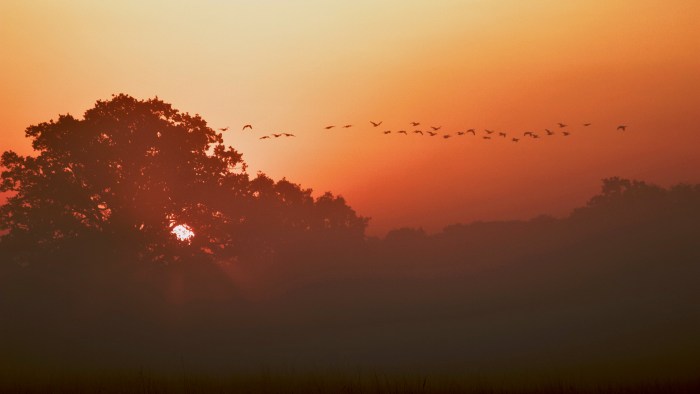
“The trouble is that once you see litter, it’s very hard for some of us to ignore – and of course it can totally ruin your day if you see a favourite beauty spot trashed by picnickers or fly-tippers.”

But he added that although the extent of the problem could often appear soul-destroying, campaigners, litter-pickers and nature lovers needed to keep helping each other to stay upbeat.

“The problem can seem overwhelming at times and in some cases there are big problems with enforcement, but there are signs of hope too, ” he said. “If Afroz Shah can achieve what he has in India, we can turn the tide here.

“At the moment the scale of the problem in the UK is incredibly depressing, but at least it is still hitting the headlines in the national papers and on TV. That shows people really do still care: the vast majority find such selfish disregard for the environment deeply upsetting.

“Some people have learned nothing from lockdown and are still oblivious to the impact of their actions, whether that’s flinging a plastic bottle out of their car window, leaving all their rubbish on a beach or dumping an old fridge at the side of the road.

“But there are millions of people working hard to protect our countryside and we really have to stop trashing our planet before it’s too late.”

He pointed to the national initiative launched by Clean Up Britain in it’s Don’t Trash Our Future campaign, praised the fly-tipping enforcement team at Buckinghamshire Council (@BucksFlyTipping) and urged schools and church groups to do more to get young people interested in the natural world.

“Part of the problem is that some young people simply don’t relate to the natural world at all,” he said. “There are some incredible young ambassadors out there helping to spread the word – for example @naturalistdara, @HollyWildChild, @BellaLack and @MyaBambrick1, not to mention @GretaThunberg – but for a lot of young people in our cities, the countryside is an alien world you just drive through to get somewhere.

“Lessons learned in school can last a lifetime, and faith groups are strong communities which can help spread the message too.

“We need young people to be getting out there and enjoying the countryside, and telling their parents it’s not acceptable to drop litter – that would be a massive step in the right direction.”

Farmers and landowners were often on the front line as victims of rural crime, he said.

“It’s hardly surprising that farmers are suspicious of strangers around their property with the upsurge there’s been in rural crime,” he said.

Recent articles in the farming press (@NFUtweets, @FarmersGuardian, @FarmersWeekly) say the cost of rural crime in the UK has reached an eight-year high with organised gangs targeting tractors, quad bikes and livestock.

“If it’s not fly-tipping or trespassing, it’s dogs attacking livestock, poaching, hare coursing or crop damage,” he said.

“But ramblers, cyclists, horse riders and dog walkers can all do their bit to keep their eyes open and help protect remote rural properties. They are often the eyes and ears on the ground who might spot something suspicious.”

Why are we so scared of spiders?

SPIDERS are the stuff of our nightmares, it seems.

From the giant spiders Bilbo Baggins and his dwarf companions encounter in Mirkwood on their quest in The Hobbit to the enormous, sentient Aragog in Harry Potter, fiction writers have been only too eager to play on our fears.

Bilbo Baggins faces a giant spider

But why are we SO scared of spiders when the vast majority are harmless to humans and most are actively beneficial, gobbling up household pests?

Their silken webs are things of beauty on a dewy morning, as Roy Battell captures in startling images from his Moorhens website (below). And yet fear of spiders is just about the most common phobia in the world.

If that’s the case, you’d expect it to be because we have suffered some sort of trauma involving spiders.

But although spiders could bite if they feel threatened or endangered and most are venomous, in the UK we have little to actively worry about, even if there are literally hundreds of different species living here…and more than 35,000 known species worldwide.

But unlike the Americans, we don’t have to worry about the black widow or brown recluse, never mind the Sydney funnel-web spider, the most dangerous spider to humans in the world, which is native to Australia.

In fact very few of us have undergone any real spider trauma – so why is arachnophobia so prevalent, with children identifying fear of spiders as their biggest terror?

Back in 2015, spider expert Chris Buddle explained in The Independent some of the potential causes, although maybe it’s their sheer ‘legginess’ which gives us the shudders, coupled with cultural beliefs about the nature of spiders.

But if it was an evolutionary fear of animals which posed a threat to ancient humans, why do we not worry more about tigers or crocodiles?

Autumn is a good time to appreciate spiders, when they reach full maturity, and early morning walkers find their webs fascinating, gloriously backlit by the early morning sun.

Numerous online articles provide pictures of the most common types, with UK Safari highlighting 65 species, starting with the 16 about which they receive most queries.

You can also take your pick from guides published in Countryfile, local wildlife trust, the Natural History Museum or even The Sun to get a better idea of the exact species you are looking at.

For those intrigued by the delicate webs, there’s much more to discover, though. All spiders have two claws on their feet, but web-spinning spiders have three. They are used not only to pull the silk but also to grip and release the web’s threads and provide traction as they move around it.

Spiders spin two kinds of silk: sticky strands used to capture prey which make up the spiralling threads of the web and non-sticky or “dragline” silk used to provide structural support, and which spiders walk on to avoid getting caught in their own webs.

Female spiders build the webs and there are three main types: orb webs, funnel or sheet webs, and the irregular webs of common house spiders.

But not all spiders make webs: flower crab spiders alter their colour like chameleons to ambush their prey, the wolf spider leaps out on its prey like its namesake, the wasp spider disguises itself as a wasp to keep it safe from predators, the raft spider can walk on water, and the water spider even lives under water, building a bell-shaped tent between plant stems.

The nursery web spider rather cutely does not spin a web to catch food, but builds a silk sheet in the vegetation to act as a tent for her young, sheltering them until they are old enough to leave on their own.

On heathlands the gorse bushes can often be seen enveloped in huge gossamer webs. These webs are made by  tiny animals known as  gorse spider mites – bright red mites which live in large colonies and are used in countries like New Zealand to control the spread of gorse, which is regarded there as an invasive weed.

Garden guards its timeless secrets

GENERATIONS of children have been entranced by the story of The Secret Garden, as told by the British-American novelist Frances Hodgson Burnett more than a century ago.

But as we in the UK await the delayed release of a new film version starring Colin Firth and Julie Walters, it might well be a good time to revisit the 1993 version of the movie – another all-star offering telling the timeless story of an orphaned girl sent to live in a gloomy, forbidding estate in Yorkshire.

child explores secret garden

In the new retelling, Dixie Egerickx plays Mary Lennox, the spoilt daughter of neglectful parents orphaned in India – although the action has been moved forward from the early years of the century to 1947.

But as the 2020 version goes on release in America ahead of its debut here, the 1993 offering has Kate Maberly in the starring role as the disgruntled Mary, left to roam the empty corridors of Misselthwaite Manor, where her reclusive uncle has never recovered from his wife’s untimely death.

children explore secret garden

The critics generally loved the 90s version, praising it for honouring its classic source material with a “well-acted, beautifully filmed adaptation that doesn’t shy from its story’s darker themes”.

After her long sea journey the prickly, repressed Mary is met with a mixture of disdain and disapproval by Mrs Medlock (Maggie Smith), who manages the manor in the absence of her uncle, Lord Archibald Craven (John Lynch), who seems to be perpetually roaming the world in an attempt to forget the heartbreaking death of his young bride.

There is little for the petulant and unhappy 10-year-old to do but explore and she soon begins to stumble on some of the secrets of Misselthwaite Manor, allowing her to slowly discover for the first time in her life what true friendship means.

Like all great stories for children, the powerful truths which lurk beneath the surface of the narrative allows younger audiences to learn something about the nature of life, and Agnieszka Holland’s version is bolstered by an extraordinary award-winning musical score by the Polish composer Zbigniew Preisner.

children explore secret garden

To some modern eyes the 1993 version may feel a little slow and dated, notable for its lack of special effects. But the late Roger Ebert, the Pullitzer Prize winning film critic of the Chicago Sun-Times, it was a work of “beauty, poetry and deep mystery, and watching it is like entering for a time into a closed world where one’s destiny may be discovered”.

American critics seem divided about how well the 2020 film shapes up in comparison, though its credentials are second to none.

This time Colin Firth plays the heartsore uncle, haunted by grief and forcing his son to lead the life of an invalid because of his misguided sense of overprotectiveness. With little dialogue and only a handful of scenes, Firth still manages to convey the profound nature of the uncle’s grief, we hear.
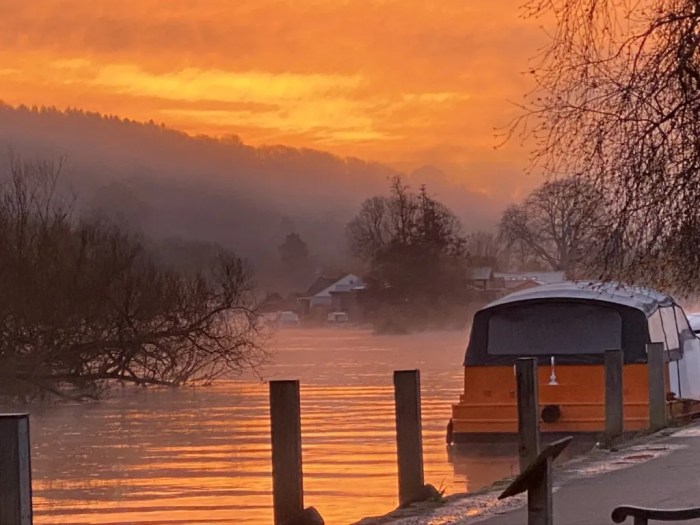
But if the New York Tiimes found this version charming and some audiences thought it “magical”, other critics have worried that in its visual overkill it lacks the “atmospheric poetry” of its predecessor, with director Marc Munden and scriptwriter Jack Thorne somehow sapping the story of its magic by over-reliance on CGI.

child explores secret garden

British audiences get to find out for themselves in October, so in the meantime, why not step back in time to an unsung gem from the year everyone remembers for Jurassic Park?

This is a tale about grief, and how damaged wounded individuals can manage to claw their way beack to life with the right tending and care. It was something Frances Hodgson Burnett knew about only too well: she had seen her elder son die of consumption 20 years before she wrote the book, and she sank into a deep depression as a result.

It was not to be greatly lauded during her lifetime – it was only later that it began to be appreciated as a classic of children’s literature and increasingly cited as one of the best and best-loved children’s books of the 20th century.

Writing for Entertainment Weekly, Maureen Lee Lenker suggests the new version misses the point: “Like the garden at its heart, The Secret Garden has always found its beauty in its quietude, a small story of hearts broken and healed through nature, attentive care, and true connection. But this adaptation doesn’t understand that, instead drowning the film in showy set pieces and magical realism rather than understanding the inherent magic in all things. They should’ve never underestimated the peace that can be found in simplicity and quiet.”

Right or wrong, there could hardly be a better reason for revisiting the Agnieszka Holland version – or even re-reading the original book. That way, we will all be better prepared to judge for ourselves if the latest version really makes the grade when it finally reaches these shores.

Big skies offer room to breathe

BIG skies aren’t normally a feature we associate too often with the Chilterns landscape, but for those who enjoy plenty of room to breathe on a walk, Pinkneys Green is perfect.

This glorious expanse of open grassland owned and managed by the National Trust is home to a rich variety of grasses, flowers and buzzing insects, thanks to the fact that the open unfenced hay meadows are left to grow tall in the summer, providing a perfect hiding place for a variety of wildflowers.

From delicate yellow cowslips and kidney vetch to bright white oxeye daisies and purple field scabious, specks of colour dance amongst the grasses for as far as the eye can see, allowing walkers to wander a network of paths cut into the hay until it is cut in late summer, encouraging the distribution of seeds for the next year.

Alive with the hum of bees and butterflies in the summer months, this grassland is a popular haunt for species like the marbled white, a medium-sized butterfly with black and white checked wings which is particularly fond of purple flowers like wild marjoram, thistles, and knapweeds.

Here you might listen out for the call of a skylark on a summer’s evening, spot the dunnocks, fieldfares and redwings sheltering in the hedgerows around the field or hear the rustle of a vole, shrew or field mouse in the long grass.

A perfect place for trying your hand at kite-flying, or just enjoying the wind in your hair on a blustery day, it’s one of a number of open spaces owned by the National Trust in the area.

Other nearby spots to explore include Maidenhead Thicket, famed for its associations with Dick Turpin, and the Cookham Commons from Cookham to Cock Marsh and Winter Hill, a landscape which inspired the artist Stanley Spencer and children’s author Kenneth Grahame.

A number of useful National Trust trails provide an opportunity to get to know the commons better, including a four-mile circular trail taking in Cock Marsh and the Thames and a longer trail incorporating Winter Hill, Maidenhead Thicket and Pinkneys Drive.

Rachel relishes a taste of the wild

LOOK at a hedgerow and what do you see? Rachel Lambert sees a feast – or a satisfying meal, at any rate.

Nettles and elderflower, dandelions and heather tea, gorse and seaweed – no wild flower is too much of a challenge for Rachel to rustle up a hearty meal, it seems, and the recipes all look frankly delicious…

From pink elderflower and rose cordial to gorse flower ice cream, wild moorland tea and home-made blackberry jam, this is all about harnessing the extraordinary colours and unique flavours of nature, and Rachel’s prolific foraging has seen her featuring as a guest on morning TV and her recipes popping up in every food magazine from Sainsbury’s to Waitrose.

Her wild food journey started many years ago by a crumbling Devonshire stone wall where friends introduced her to edible pennywort. “It quenched my thirst and tasted as fresh as peas – and my world changed forever,” she recalls.

“To me, foraging is a fun and enlivening way to appreciate the environment and access to fresh, seasonal food. It’s also an excuse for outdoor adventures, as well as quirky and labour of love investigations in the kitchen.”

It was back in 2007 that she started teaching other people about foraging, with that early discovery of pennywort building up into an encyclopaedic knowledge of how to harness the best of more than 100 other edible wild plants and weeds.

“Foraging is the glue that brings together the things that I love; nature, good food and people,” she says.

On hand to capture something of the atmosphere of her unusual lifestyle was Rick Davy, a photographer also based in Cornwall who has produced an extraordinary visual documentary of the lives of dozens of local people from different walks on life, featured on his A Day In The Life Of website.

His pictures – some of which are reproduced here – capture Rachel on a couple of foraging expeditions, including one to pick gorse flowers.

She recalls: “Last winter I went crazy about these flowers. I even made a little video about Foraging Gorse in Winter – such was my love affair with them.

“In my first foraging book I share a Gorse Flower Rice Pudding recipe, and I’ve made so much more with them since then. That day I was trying to perfect gorse flower truffles, and also wanted to dry some flowers for future syrups and cocktails. La, la, laaaa, the joys of foraging for gorgeous drinks and food.

“Those days that I shared partly with Rick are the good days – the outdoor days. As a forager I manage to get outdoors everyday, into nature. The rest of my time is spent cooking, preparing, writing, doing administration and contemplating new ideas and adventures.”

She published her first foraging book in 2015 and it sold out withing six months. She promptly created a second a year later focusing on edible seaweeds.

Having learned from many skilled nature teachers and previously worked within the arts, health and environmental education and community food projects, she was well placed to lead group foraging expeditions with adults and children from all walks of life – some even laced with the odd song or two.

“You may also find me singing my heart out (if no one’s listening) on clifftops and beaches and occasionally sharing one of those foraging songs on courses. It is a new love; that makes me, the plants and others smile (or so I’m told!).

“Joy and pleasure are key to my teaching style and life as a forager. With a self-confessed sweet-tooth, wild desserts and sweet treats made from foraged ingredients feature regularly in my courses and blog posts, as well as savoury delights!”

Rick didn’t need much convincing about the merits of foraging. “I’d be the first to admit that I do love a bit of foraging,” he writes in his photo-essay about Rachel. “Foraging for Rachel has brought together many different things she loves, walking, nature, plants, food, the senses and creative cooking.

“I joined Rachel foraging one early spring morning. She started picking stuff from the hedgerow and to you and I it might pass off as nothing other than weeds.”

Back in her kitchen the wild alexanders were transformed into sweet filo tarts, while she uses bright yellow gorse flowers in jewelled savoury rice, sugar syrups for ice creams and rice pudding, powdered sugar for truffles and cocktails.

“I enjoyed furthering the art of foraging and discovered some new recipes and food along the way,” says Rick, who has lost count of the number of “lives” he has featured on his site, from a beekeeper to a wildlife artist.

“The project will continue to evolve – it has no end,” he says. “I’ve shot and documented the coastal lives project for the love of it. I love what I do for a living.”

Rick Davy is a creative commercial and lifestyle photographer based in Cornwall. All the photographs in this feature are reproduced with his kind permission from his website documenting the lives of individuals living and working by the Cornish coast.

Rachel Lambert is an author and forager based in Penzance who runs wild food foraging courses for groups, families and couples.

‘Give litter louts £1,000 fines’

SELFISH litterbugs should face the prospect of £1,000 fines, say campaigners.

With tourists trashing beaches and beauty spots around the country in the wake of the lockdown easing, InYourArea and Clean Up Britain joined forces to launch a nationwide anti-littering campaign called Don’t Trash Our Future.

Spearheaded by a number of famous faces including JLS singer JB Gill, the campaign encourages people to organise local clean-ups, push for higher fines and put pressure on councils to enforce penalties.

The campaign calls for volunteers to organise neighbourhood clean-ups in August and September tackling “grot spots” from parks and beaches to scrubland or messy roadsides.

Supporters are also being asked to sign a petiton calling for the maximum fixed penalty fine for dropping litter in the UK to be raised to £1,000.

Councils are called on to play their part too. Research by Clean Up Britain found the vast majority of local authorities in the UK were not using their enforcement powers enough – with 72% of councils in England and Wales either not enforcing the law at all, or not enforcing it effectively.

Those questioned said littering had got worse since lockdown began to ease and made them miserable, angry, sad or depressed. And the vast majority (97%) thought councils should enforce the law properly.

Don’t Trash Our Future has been backed by a number of high-profile names including JLS singer-turned-farmer JB Gill, a passionate advocate for farming and the environment who has made numerous appearances on Springwatch and Countryfile.

He said: “It’s great to see that people recognise that litter is a public health concern and a major problem.”

The campaign has also received the backing of broadcaster and animal rights campaigner Clare Balding and her partner Alice Arnold, along with TV presenter Gabby Logan and her husband, former Scottish international rugby star Kenny.

Journalist and television presenter Jeremy Paxman is Clean Up Britain’s patron. He said: “It depresses people because mucky surroundings make them feel worthless. It’s expensive – councils across the UK spend over a billion pounds a year trying to clean it up.”

Packham loses HS2 legal challenge

ENVIRONMENTAL campaigner and TV presenter Chris Packham has lost his Court of Appeal challenge over the legality of the HS2 high-speed rail scheme.

He had argued there were failings in the way the government decided to give the project the go-ahead but judges have refused permission for a judicial review into the cabinet’s decision to give the multibillion pound project the “green signal” in February.

Expressing his disappointment in a 10-minute video to his 434,000 Twitter followers, Packham said: “Today is a dark day for us, our wildlife, our environment and our planet. And darker still for our government.”

But he added: “Winning is not giving up – and we’re not giving up.”

Environmentalists say the high-speed rail project is leading to irreversible destruction of ancient habitats and woodlands.

Packham said the case for HS2 should be revisited despite Friday’s ruling. He argues the Covid-19 pandemic’s impact on public finances and the need for a green recovery has undone the business and environmental case for the line.

“Obviously we are deeply disappointed by today’s ruling. But the fact is, we are a world away from the place we were when we issued the original claim for judicial review,” he said.

“People now see that a scheme for a railway which will tear up the countryside so that we can shave a few minutes off a journey time, makes no sense in the contemporary workplace.”

HS2 is set to link London, Birmingham, Manchester and Leeds. A spokesman for HS2 Ltd told the BBC it took its commitment to the environment “extremely seriously” and there was “safeguarding in place to protect wildlife and other natural assets”.

A Department for Transport spokesperson said the project was “crucial to rebuilding our economy from coronavirus”.

Five go down to the farm shop

TWO large eggs for breakfast. For lunch, farmhouse ham and fresh tomatoes on sourdough bread…

If it’s starting to sound like the sort of food that the Famous Five would tuck into on one of their adventures, that’s not so far from the truth – but actually it’s just the day after a visit to Peterley Manor Farm Shop.

If Enid Blyton were alive today, the NFU would be signing her up to handle their publicity. No one ever spread so much goodwill about farm-fresh food than the prolific children’s author, whose 750 books are awash with imagery about ice-cold creamy milk, crusty loaves and hot scones.

But then dropping in to a modern farm shop is like stepping into the pages of one of Blyton’s books – everything from red radishes and new potatoes to huge eggs and home-cooked cakes smacks of Famous Five territory.

No one worries about calories or cholesterol in Blyton books: “A large ham sat on the table, and there were crusty loaves of new bread. Crisp lettuces, dewy and cool, and red radishes were side by side in a big glass dish. On the sideboard was an enormous cake, and beside it a dish of scones. Great slabs of butter and jugs of creamy milk were there, too, with honey and home-made jam.”

“Hot scones,” said George, lifting the lid off a dish. “I never thought I’d like hot scones on a summer’s day, but these look heavenly. Running with butter! Just how I like them!”

Millions of children around the world have sat enraptured listening to these feasts, from India to rural America, marvelling at the vivid descriptions of ripe plums and huge hams, cherry tart and fruit cake.

Blyton’s descriptions have spawned a number of recipe books too, but to children on the other side of the world there was something magical about these feasts, however bemusing the taste combinations, a mix of wartime food restrictions and almost glorious excess.

Diya Kohli recalls: “To a child growing up in Kolkata of the 1980s and 1990s, tongue sandwiches, potted meat, anchovy paste and kippers and clotted cream were all part of an alien food lexicon. All I knew was that they sounded wonderful.”

Coookery writer Jane Brocket included Famous Five picnics in her top ten evocative food moments from the past: “It’s amazing how she manages to make hard-boiled eggs sound ultra-exciting and appealing; maybe it’s the addition of the inevitable “screw of salt” which does it? Or maybe it’s something to do with fresh air, freedom and the adventures that invariably follow any Famous Five picnic?

“Tomato sandwiches, lemonade, tinned sardines, melt-in-the-mouth shortbread, lettuces, radishes, Nestlé milk, ginger beer, tins of pineapple chunks, squares of chocolate. The Famous Five set a standard in picnics that has never been equalled.”

More culinary meanderings can be found on the World Of Blyton blog for the author’s many enthusiasts, but back at Peterley Manor there may just be time for a bacon sandwich at the Strawberry Shack before a happy homecoming laden with fresh vegetables, crusty bread and other treats.

What’s for tea? We don’t know yet. But George, Anne, Julian, Dick and of course Timmy the dog would definitely approve.