TWO large eggs for breakfast. For lunch, farmhouse ham and fresh tomatoes on sourdough bread…
If it’s starting to sound like the sort of food that the Famous Five would tuck into on one of their adventures, that’s not so far from the truth – but actually it’s just the day after a visit to Peterley Manor Farm Shop.
If Enid Blyton were alive today, the NFU would be signing her up to handle their publicity. No one ever spread so much goodwill about farm-fresh food than the prolific children’s author, whose 750 books are awash with imagery about ice-cold creamy milk, crusty loaves and hot scones.
But then dropping in to a modern farm shop is like stepping into the pages of one of Blyton’s books – everything from red radishes and new potatoes to huge eggs and home-cooked cakes smacks of Famous Five territory.
No one worries about calories or cholesterol in Blyton books: “A large ham sat on the table, and there were crusty loaves of new bread. Crisp lettuces, dewy and cool, and red radishes were side by side in a big glass dish. On the sideboard was an enormous cake, and beside it a dish of scones. Great slabs of butter and jugs of creamy milk were there, too, with honey and home-made jam.”
“Hot scones,” said George, lifting the lid off a dish. “I never thought I’d like hot scones on a summer’s day, but these look heavenly. Running with butter! Just how I like them!”
Millions of children around the world have sat enraptured listening to these feasts, from India to rural America, marvelling at the vivid descriptions of ripe plums and huge hams, cherry tart and fruit cake.
Blyton’s descriptions have spawned a number of recipe books too, but to children on the other side of the world there was something magical about these feasts, however bemusing the taste combinations, a mix of wartime food restrictions and almost glorious excess.
Diya Kohli recalls: “To a child growing up in Kolkata of the 1980s and 1990s, tongue sandwiches, potted meat, anchovy paste and kippers and clotted cream were all part of an alien food lexicon. All I knew was that they sounded wonderful.”
Coookery writer Jane Brocket included Famous Five picnics in her top ten evocative food moments from the past: “It’s amazing how she manages to make hard-boiled eggs sound ultra-exciting and appealing; maybe it’s the addition of the inevitable “screw of salt” which does it? Or maybe it’s something to do with fresh air, freedom and the adventures that invariably follow any Famous Five picnic?
“Tomato sandwiches, lemonade, tinned sardines, melt-in-the-mouth shortbread, lettuces, radishes, Nestlé milk, ginger beer, tins of pineapple chunks, squares of chocolate. The Famous Five set a standard in picnics that has never been equalled.”
More culinary meanderings can be found on the World Of Blyton blog for the author’s many enthusiasts, but back at Peterley Manor there may just be time for a bacon sandwich at the Strawberry Shack before a happy homecoming laden with fresh vegetables, crusty bread and other treats.
What’s for tea? We don’t know yet. But George, Anne, Julian, Dick and of course Timmy the dog would definitely approve.
BUTTERFLIES are among our most beautiful summer visitors – and the only insects that we universally love to welcome to our gardens (unless you grow cabbages, perhaps).
But how well do you know the most common species? We have become so removed from daily contact with the countryside that many of us are unfamiliar with all but the most iconic or instantly recognisable, like the peacock, small tortoiseshell or painted lady.
It doesn’t help that they flit about so quickly that it can be hard to study them closely, though Butterfly Conservation have produced a handy series of spotters’ guides as part of their ongoing Big Butterfly Count, as featured on our Nature Guides page.
Britain has about 56 species in total, with about three dozen in the Chilterns, as captured in a colourful charity wallchart by members of the Chesham Wildlife group.
With many families exploring their local lanes and footpaths during lockdown, there’s been an upsurge of interest in the natural world, and TV programmes like Springwatch have helped spread the word – along with enthusiastic young naturalists like Rebecca’s Butterfly Farm on Twitter and Youtube.
Habitat loss is a major problem for many butterfly series, especially specialists like the marsh fritillary which can be extremely fussy, and if their food plant or habitat becomes scarce, so do they.
Some specialists, such as the high brown and pearl-bordered fritillaries, are near to extinction in Britain, while other wider countryside species have also declined in areas where agricultural activities have turned much of the countryside into an ecological desert.
Although many factors have contributed to butterfly decline – a changing climate, pesticides and habitat loss – some species have increased in abundance, so it’s certainly not all bad news.
More than 72,000 citizen scientists have been taking part in the annual butterfly count, with a million butterflies spotted – the top five being the large white, small white, gatekeeper, peacock and meadow brown.
But did you immediately recognise the species featured on this page? From the top they were: a gatekeeper at Stoke Common, a peacock at Woolman’s Wood, a silver-washed fritillary at Black Park and a cinnabar moth caterpillar at Stoke Common…
EXILED Scots wanting to capture something of the atmosphere of the Highlands should take a trip round Stoke Common this month.
Amid the ferns and conifers on this slice of ancient Buckinghamshire heathland, the gorse and heather are springing into bloom, giving the common a distinctly Caledonian feel.
No distant mountains or deep, dark lochs to complete the illusion, of course, but the yellows, pinks and purples create a carpet of colour as the heather bursts into flower at the end of the summer.
The iconic British moorlands of Wuthering Heights and Hound of the Baskervilles fame are depicted as bleak, windswept and foreboding – but all that changes by the start of August.
A large proportion of the world’s moors and upland heaths are in the UK, making our moorland habitats internationally important – and none more so than this one, since these 200 acres of land represent the largest vestiges of a landscape that was once extensive across Buckinghamshire.
So there’s no need to head for the hills of the Scottish uplands to savour the late-summer spectacle. The lowland heaths of southern England and south Wales also have the heather showing off at is best alongside the golden yellow of gorse, and Stoke Common is a perfect example.
And if you think the yellow flowers look good enough to eat, forager and author Rachel Lambert has some intriguing recipes on her website; fancy a wild rice pudding, anyone?
Find out more about Rachel at a website documenting the lives of people living and working by the Cornish coast.
FARMERS around the UK are under siege from fly-tippers.
But campaigners and councils across the country are stepping up the fight to outlaw the waste criminals.
The issue gained national exposure after a dramatic increase in fly-tipping in rural areas reported after the Covid-19 lockdown.
TARGET: Andrew Ward found 40 tons of rubbish dumped on his land
Targets included Lincolnshire farmer Andrew Ward, who hit the national news after finding 40 tons of rubbish had been dumped on his property, costing thousands of pounds to move.
Some areas of the country saw a 300% increase in dumping as householders saw the lockdown period as an ideal time for a spring clean but found local tips closed or busy.
Rural and environmental organisations stress that fly-tipping has a significant impact on rural areas and pose dangers to wildlife.
Another victim was beef and arable farmer Richard Heady, who runs WF Heady and Sons near Milton Keynes in partnership with his father and uncle, and discovered a lorryload of household waste strewn across part of an emerging crop of spring oats.
A 🚛 load of fly tipping as appeared on our lovely oats overnight. A few different addresses have been found, all dated about 5 years ago 🤔 any ideas? Currently working with environmental health to try and track down the culprit #flytipping@BucksCouncil@aylesburyvalepic.twitter.com/AzlW50oqk8
Although many local authorities had to shut waste recycling centres at the height of the crisis, most have now reopened and initial long queues have reduced. But farmers’ fields, laybys and lanes have become hot spots for DIY remnants, unwanted furniture and garden waste.
One group of concerned organisations in Scotland said: “At a time when farmers are working around the clock to provide food for the nation and trying to keep their businesses running despite being short-staffed, it is heartbreaking to see their land being used as a giant tip.
“Fly-tipping is illegal, ugly and dangerous. It can be harmful to lambs, calves and other animals and wildlife too. But for farmers and other landowners, it is also costly to clean up.”
The National Farmers’ Union says two-thirds of farmers and land owners have been affected.
Andrew Ward told Sky News: “It really makes my blood boil to think that people will probably get away with this. The fact that they can do this to a lovely area, where we have families walking, we have children walking down here, we have wildlife.
DUMPING GROUND: fly-tipping on Andrew Ward’s farm included commercial industrial waste
“It’s on an absolutely huge scale; this is not your one man and a van who turns up at a house, this is probably three lorry loads of commercial industrial waste.”
Mr Ward’s partner, Rhonda Thompson, an NFU adviser in the county, said: “Fly-tipping needs to be regarded as a much more serious crime and I think the penalties have to be fairly hefty. The fines that are currently around just aren’t enough to deter people from doing this.”
DETERRENT EFFECT: campaigners want to see tougher penalties for fly-tipping
The Department for Food and Rural Affairs said that fly-tipping can lead to unlimited fines and a prison sentence of up to five years. But campaigners maintain prosecutions are rare in some areas and have called for heavier punishments for less serious littering offences.
Buckinghamshire County Council enforcement officer David Rounding confirmed fly-tipping in the county increased during lockdown, particularly smaller dumping incidents which might involve householders dumping their own waste.
But he added: “We have also seen even higher rates than previously of cross-border offending and we have been working in partnership with neighbour authorities where appropriate to address and seek to reduce this. It is still the case that most of the waste dumped in Buckinghamshire was transported into Bucks from outside.”
CALL FOR WITNESSES: offences across Buckinghamshire are pursued through the courts
He said surveillance work and eyewitness reports had helped in an ongoing programme of detection and enforcement through the lockdown period. Offences in the county are regularly prosecuted and in future warnings will be replaced by £400 fixed penalty notices.
He said: “The council has recently adopted powers to serve fixed penalties of £400 (the maximum rate allowed by Government) against people fly-tipping waste and also against people transferring their waste to unauthorised waste carriers. These powers will be used in addition to the existing use of court prosecution and will replace zero penalty simple cautions in the enforcement mix at the lower end of the scale. This means that people who were previously cautioned will now be fined.”
Householders are warned that when using waste carriers they make payment only online or by other traceable means so that they are able to provide the waste carrier’s details should their waste be found later to have been fly-tipped.
“Enforcement work by definition always follows offences and we will see many fixed penalties imposed and court cases which follow later through the usual process,” said Mr Rounding.
BIKE-MAD teenagers love Wendover Woods, and many runners find it the perfect place to work out their fitness routines.
But not everyone is over the moon, it seems, at the programme of improvements funded by a massive HS2 community grant – and not just because of where the money came from.
There’s a sense of adventure as you make your way up what seems an interminable entrance drive, and it gives you a chance to take in the full extent of the 800-acre site. This drive, the car park and the café are all part of the improvements financed by a £450,000 cash injection.
There’s even a promotional video from April 2020 saying how pleased Forestry England were with the redevelopment, although only a few hundred people have seen forest centre manager David Barnett explaining that it was “some 17 years in the making”.
Doubtless there are many who have found the easy car parking, new visitor hub and large café real improvements – and some visitors have praised all of those things. But there are also a number of reviews in recent months that have expressed less enthusiasm for the changes, with critics lambasting the parking and food charges, and finding the scale of the makeover a little overwhelming.
No one has any issues with the scenery, and on a quiet day the trails offer miles of varied paths and gradients to explore, along with picnic areas, a children’s playground, Go Ape treetop adventure course and nearby mountain biking area at Aston Hill for those wanting a more challenging range of adventure trails best suited to intermediate and expert riders.
But it rankles a little to pay £1.50 for the one-page map of the site, the coffee in the cafe was undrinkable on the day of our visit and the car park fees rack up for those staying for longer periods.
The signposting of trails around the cafe is far from clear for newcomers, and despite the facilities, the plethora of trail options and the impressive views out over Aylesbury Vale to the north, it’s clear several visitors have been disgruntled with aspects of their visit – though at the time of writing no one from Forestry England seemed to have answered their concerns.
Queues to pay for parking top the list of gripes, but some found the new cafe unappealing too: variously described as a “container” and “industrial warehouse”, dogs are not welcome inside, although some found the food reasonable and outside picnic area appealing.
Once in the woods and away from all the “commercial aspects” of the top area, it’s “magical” says one reviewer, but another found it a “dull commercialised version of nature” and yet another “little more than a countryside theme park”.
Sad to say, we found ourselves agreeing with the critics – especially compared to the blissful peace of Stoke Common or empty tracks at Black Park. And yet it was clear a lot of families were having a lot of fun at Wendover Woods, and long may it continue.
Outside peak periods the trails offer an escape from the cares of the outside world, and hundreds of families are taking advantage of that chance to engage with nature at first hand.
But Forestry England may need to pay a little more heed to the worries expressed by visitors. Numbers may be up, but that counts for little if the experience leaves a bad taste in the mouth or too large a hole in the pocket.
WALKERS at Stoke Common are being urged to watch out for dangerous caterpillars which can be a hazard to humans and animals.
The caterpillars of the oak processionary moth are pests of oak trees and have been found on the site.
OPM was first accidentally introduced to England in 2005 and is subject to a government-led programme of survey and control to minimise its spread and impact.
The caterpillars have the distinctive habit of moving about in late spring and early summer in nose-to-tail processions, from which they derive their name.
Walkers have been warned to steer clear of the caterpillars, whose hairs contain a toxin that can cause itchy skin rashes as well as eye and throat irritations.
Residents can report sightings but that the caterpillars should only be removed by pest control operators because of the health risk.
Pets, children and forestry workers who come into close contact with the caterpillars are most at risk and anyone who experiences an itchy skin rash or other allergic symptoms after being near oak trees in these areas should phone NHS111 or consult their GP.
Each caterpillar has around 62,000 hairs, which they can eject. The brown moths, which are harmless, live for only two to three days in July or August.
Action is taken to screen trees imported from Europe, but the species is established in most of Greater London and in some surrounding counties and there are restrictions on movements of oak plants from this protected zone.
HAIRY HAZARD: each caterpillar has thousands of hairs which can be ejected
The Forestry Commission and Animal & Plant Health Agency (APHA) have been working to identify infestations and spray infected trees.
Large populations can strip whole oak trees bare, leaving them more vulnerable to other pests and diseases, and to other stresses, such as drought.
Older caterpillars develop tiny hairs containing an irritating protein which on contact can cause skin rashes and eye irritations, as well as sore throats and breathing difficulties, in people and animals.
The caterpillars can shed the hairs when threatened or disturbed. The hairs can be blown by the wind and they accumulate in the caterpillars’ nests which can fall to the ground.
Signs have been erected at Stoke Common to warn visitors about the risk.
AS THE July afternoon sun falls across Stoke Common, there are some welcome splashes of colour to grab the eye.
There are times of the year on a drizzly day when this patch of ancient heathland can seem a little bleak and featureless, but it’s surprising how different it can look on a summer’s day.
The butterflies are dancing in the light breeze, the blackberry blossom is blooming and there are splashes of yellow and purple among the gorse and heather.
Many of the plant species recorded at Stoke Common are considered rare, at least in Buckinghamshire, and there are times when it looks more like a Scottish heath than somewhere that’s a stone’s throw from Slough.
Nowadays this is one of the rarest habitats in Britain, but these 200 acres of land represent the largest remnant of ancient heathland that was once extensive across Buckinghamshire.
Created by a combination of poor, acidic soils and land management which includes grazing, it is home to some very rare plants, animals and insects that are quite different from those of grassland and woodlands and account for its status as an important Site of Special Scientific Interest (SSSI).
A score of burnished brown Sussex cattle are currently doing their part to protect the heathland and look smooth, velvety and very healthy on their prickly diet.
Nowadays owned and run by the City of London Corporation, with the help of volunteers and supporters like the Friends of Stoke Common, the common is pleasantly quiet for walkers and runners trying to get away from it all.
But is the splash of yellow broom or gorse? What type of heathers grow here, what type of thistles are these – and what are all those other yellow flowers popping up here and there across the heath?
Pocket guidebooks can sometimes seem more confusing than helpful on such matters, offering you more than 20 pages of similar-looking yellow wild flowers to choose from, all with ever more exotic-sounding names, from creeping jenny and tufted loosestrife to yellow archangel and common fleabane.
Broom and gorse should be easy enough to distinguish, even though both are members of the pea family, have bright yellow flowers and tend to grow in the same kind of places. Gorse is the prickly one whose flowers smell of coconut, whereas broom stems are long, flexible and smooth.
Common broom’s old Latin name, planta genista, is said to have lent its name to the Plantagenet kings because they wore sprigs of it in their hats, while the Glasgow songwriter Adam McNaughtan based his song Yellow on the Broom on the hardships of the Scottish travelling community.
The song was inspired by a book of the same name recalling the memories of Perthshire traveller Betsy White, who wrote of her childhood and the feelings of her mother who, accustomed to travelling all year, married a man who wintered in town.
The hostility of the townsfolk towards the travellers and the unkindness of the other children at school towards her own made her long to see the broom start to flower in the spring – a sign that it was time to be back on the road:
I’m weary for the springtime when we tak’ the road aince mair Tae the plantin’, and the pearlin’ and the berry fields o’ Blair When we meet up wi’ our kinfolk fae a’ the country roon’ And the gaun-aboot folk tak’ the road when the yellow’s on the broom
If it’s easy to understand how the flowers of the broom would have lifted the hearts of many a traveller, gorse is not without its fans too.
Pioneering 18th century botanist Carl Linnaeus was so taken with it that he tried to grow it in his native Sweden but found the winters there too harsh for it to survive. On a visit to England in 1736 he is said to have wept with joy at the sight of it flowering on London’s Putney Heath.
Anyone who has come into direct accidental contact with gorse is less likely to be so impressed. We have three native gorse species in Britain: common gorse, western gorse and dwarf gorse, the latter restricted to the south and south-east.
Birds like the stonechat and Dartford warbler love this sort of environment, as do lizards and adders, though the reptiles are pretty good at keeping well hidden.
But sitting astride a gorse bush, the stonechat has no such reservations about issuing its distinctive call, which sounds like two pebbles being rubbed together.
Perhaps that confidence stems from the fact that in country folklore this little cousin of the robin, with its blood-red breast, was seen as the devil’s bird and therefore protected, its call representing a constant conversation with the devil, who would break the back of anyone foolish enough to take a stonechat’s eggs.
The abundant flowers of gorse and heather at Stoke Common are valuable sources of nectar and pollen for insects. Pollinated mainly by bumblebees and honey bees, they are valuable both as a food plant and as habitat for many invertebrates including moths and spiders.
But then the same is true of plants we regard as weeds, like thistles and ragwort. Despite its weed status, the spear thistle seeds are attractive to birds like goldfinches and the flowers are a nectar source for butterflies like the small copper.
The much-maligned ragwort (or “stinking willie”) is even more remarkable, providing a home and food source for at least 77 insect species, 30 of which rely on it exclusively for their food source, including the very distinctive cinnabar moth.
These insects are remarkable looking both as moths and caterpillars: the moths have distinctive pinkish-red and black wings, as shown in Charles Sharp’s magnificent photograph on Wikipedia, while newly hatched larvae feed from the underneath of ragwort leaves, absorbing toxic and bitter tasting substances from the plants, becoming unpalatable themselves.
The bright colours of both the larvae and the moths act as warning signs, so they are seldom eaten by predators.
Initially, the larvae are pale yellow, but later develop a jet-black and orange/yellow striped colouring. They can grow up to 30 mm (1.2 in) and are voracious eaters, with large populations able to strip entire patches of ragwort clean.
There is no more controversial and divisive flower around, it seems. Ragwort contains chemicals that are toxic to livestock and has been blamed for deaths of horses and other animals. Yet conservationists say it’s a native wildflower vital for pollinating insects.
The nature poet John Clare was firmly in the positive camp. In 1832 he wrote:
THE RAGWORT
Ragwort, thou humble flower with tattered leaves I love to see thee come and litter gold, What time the summer binds her russet sheaves; Decking rude spots in beauties manifold, That without thee were dreary to behold, Sunburnt and bare — the meadow bank, the baulk That leads a wagon-way through mellow fields, Rich with the tints that harvest’s plenty yields, Browns of all hues; and everywhere I walk Thy waste of shining blossoms richly shields The sun tanned sward in splendid hues that burn So bright and glaring that the very light Of the rich sunshine doth to paleness turn And seems but very shadows in thy sight.
Who would have thought a poisonous weed would become the stuff of poetry? But then, as they say, beauty is always in the eye of the beholder…
AS long-distance paths go, the Beeches Way is a minnow among leviathans.
Many national trails are more than 100 miles long, and some greatly exceed that – with routes like the Greater Rideway, Pennine Way or South West Coast Path being measured in hundreds rather than tens of miles.
But however modest the Beeches Way may sound at a mere 16 miles, it cuts a picturesque route through some magnificent Chilterns countryside, taking in a top trio of local country parks and sites of special scientific interest along the way.
It runs from Cookham on the Thames to the Grand Union Canal at West Drayton, a route developed by the Iver and District Countryside Association in conjunction with Buckinghamshire County Council.
It also links up with other long-distance routes, including the Berkshire Loop of the Chiltern Way and the Thames Path from Cookham.
Tim Bertuchi is another walker to provide a step-by-step guide to the route back in 2009 and if, like him, you find the section around Iver feels insufficiently picturesque, you can easily pick up the path in Langley Park, once a deer park that was the scene of royal hunting parties into the Middle Ages.
Since the war the park has been council owned, and although it’s only a stone’s through from Slough, you wouldn’t know it from the rural setting, with the heath and woodland of Black Park to the north and agricultural land to the south and east.
Walkers might want to linger here a while, watching the wildfowl round the serpentine-shaped lake, a landscape feature influenced by Lancelot ‘Capability’ Brown during the mid-1700s.
There’s an arboretum too, and in the spring the rhododendrons of the Temple Gardens are alive with colour.
From here it’s a short step across the busy dual carriageway into Black Park, a spectacular 530-acre network of 10 miles of footpaths through woodland, heath and open space.
It’s the perfect escape for families needing some fresh air, with a big adventure play area for youngsters wanting to let off steam and an extensive network of surfaced tracks to explore.
Thread your way past the grazing Sussex cattle and you face a short descent into Fulmer, where the Black Horse might prove tempting if you feel you have earned a pint or bite to eat.
Cross the road and you are entering Stoke Common, the largest remnant of Buckinghamshire’s once extensive heathland, one of the rarest habitats in England, also currently graced with its own visiting herd of Sussex cattle to help with the grazing.
If you’ve come all the way from West Drayton this is around the halfway mark. You may even want to take the weight of your feet to appreciate the new benches produced by Gina Martin and inspired by artwork by local pupils at nearby Stoke Poges school.
Among the heather, ling and purple moor grass and gorse you may hear the distinctive scraping sound of a stonechat or even catch a glimpse of a lizard, adder or slow worm.
From here you are heading to Farnham Common and another glorious swathe of ancient woodland, Burnham Beeches, a national nature reserve and conservation area that is another site of special scientific interest. It’s worth making a date to take this trip in the autumn too, when the woods are a blaze of colour.
The route is shown on the OS Explorer map 172 and is waymarked and signposted in both directions, but it’s easy to get distracted in Burnham Beeches and find yourself wandering away from the route. Try to get back on track to make sure you pick up the path to Littleworth Common and on towards Wooburn.
The Beeches Way links up with the Berkshire Loop near the Chequers Inn, a 17th-century coaching inn which has been transformed into a welcoming modern hotel and pub.
From here, the path leads down towards the 12th-century church of St Nicholas at Hedsor and on to Hedsor Wharf, where the old Roman road from Silchester to St Albans is rumoured to have crossed the Thames.
Anyone travelling by train can pick up the path at either end, either from West Drayton station, close to where the Grand Union Canal meets Yiewsley High Street, or in the picturesque Berkshire village of Cookham on the banks of the Thames.
More ambitious walkers can pick up the Thames Path here, or even diverge onto the Berkshire Loop of the 134-mile Chiltern Way, a more ambitious ramble through the characteristic Chilterns landscape of woods, downland and pretty old villages.
It may even inspire you to tackle some of the further-flung national trails or themed routes, which may take their name from historical or literary figures like Shakespeare and Bronte.
But there’s nothing wrong with savouring a short stretch of the route either, or diverging from it to take a lazy village wander like those around Cookham Village or a short local detour into the woodland paths around Wooburn.
Small is beautiful, they say – and as long-distance walks go, that’s certainly true in the case of the Beeches Way.
Check out the links below for a full range of Ordnance Survey map products, or get a subscription to access unlimited OS Explorer and Landranger maps on any device, making it easier for you to explore the great outdoors.
COULD there be a more restful spot for a moment of silent contemplation or thoughtful remembrance of loved ones?
Hats off to the gardeners at Stoke Poges Memorial Gardens: the rhododendrons and wisteria may have faded, the roses are losing their blooms but the gardens still look spectacular and provide a welcome oasis of peace and tranquillity.
The setting may lack that dramatic splashes of colour we saw back in the spring, but this is still a place of beauty and serenity – a haven for quiet reflection where dozens of small secret gardens are dedicated to local loved ones; a place often stumbled upon by poetry lovers making a pilgrimage to the nearby grave of Thomas Gray in St Giles’ churchyard.
It’s not a park, and visitors are asked to treat the gardens with respect and behave accordingly. But see our previous feature, Secret garden soothes the soul, for more detail about the gardens, Thomas Gray and the adjoining churchyard and National Trust monument.
HENRY Allum doesn’t need much encouragement to go for a walk.
Show him a footpath, ancient abbey or closed railway line and he’s off, map, phone and microphone at the ready, all set to plan another video upload for his Youtube channel.
So it seems only natural to suggest we meet in Black Park for a chat and ramble, given that Henry has been back home with his parents in Chalfont St Peter since the lockdown began in March – and using that time to visit as many interesting places on his old home patch as he can.
HOME TURF: Henry has featured more local destinations during lockdown
It was around 2016 that the 31-year-old first thought about uploading short videos about his visits to heritage railways, but now Henry’s Adventures have become a regular feature on Youtube, Facebook and Instagram, with hundreds of subscribers checking in to see what he’s been up to.
In the past couple of years his uploads have begun to attract a lot more attention – not only from railway enthusiasts but a more general audience intrigued by a range of different subjects, from outdoors rambles to historical sites.
REGULAR UPLOADS: Henry’s subjects range from steam railways to rural rambles
“I do some to do with railways, but also castles, canals, anything I’m interested in,” he says, perhaps with a slight flicker of frustration at being as being typecast too easily as a railway buff when there are so many other things that fascinate him.
Although dozens of the short videos do chronicle railway visits – some dating back to the 90s – others include visits to sites of historical or natural interest at home and abroad, taking him as far afield as Belgium, Portugal and Romania.
OUT AND ABOUT: Henry visits the ruins of Godstow Abbey on the Thames
Many focus on steam train trips or visits to rail centres, reflecting not only his own passion for steam transport but his professional role organising railway journeys for groups at home and abroad.
Based at Leek in Staffordshire before the lockdown, some of his videos look at abandoned lines in that area, while others capture steam trains in action around the country – and miniature railways too.
SMALL SCALE: Henry calls in at the Vanstone Woodland Railway in Hertfordshire
Henry worked for the National Trust and at Bekonscot Model Village before taking on his current role, but was furloughed when the coronavirus crisis instantly impacted on the travel and leisure sector.
That allowed more time to concentrate on his Youtube venture, but initially prevented him from straying far from Chalfont St Peter.
“The furlough scheme has given me the chance to make more videos and upload some archive stuff,” he says – including some railway clips from family videos his father had shot.
MINIATURE WORLD: Henry at Bekonscot model village, where he used to work
Prior to lockdown, it was only after setting himself the challenge of visiting all of the country’s miniature railways that he realised the sheer scale of the task – there are around 340 of them, not including those privately owned.
Undeterred, he’s made a good start by uploading the first 20 or so, while making plans for more visits when the opportunity arises.
BACK TO NATURE: exploring National Trust properties in West Berkshire
A prolific vlogger with more than 200 uploads to his credit, passing the 1,000 subscriber mark means his channel can carry advertisements and potentially generate Youtube income – though this is a labour of love and he is under no illusions about making any real money through his videos.
Most of the uploads are short and straightforward, with minimal editing, and mainly filmed on his own, with occasional help from his Hungarian girlfriend Barbara.
PROLIFIC: Henry’s Youtube channel features more than 200 videos
He has a relaxed, easygoing style when addressing the camera and realises in many cases the central attraction is the locomotive, castle or station in question, rather than him hogging the limelight.
He has also been making the most of the furlough period to go back through old family films and upload archive footage from the 90s, searching for appropriate railway clips that his subscribers might appreciate.
WATCH THIS SPACE: Henry has plenty more adventures in the pipeline
The regularity of his posting has seen visitor numbers grow, and while some short clips may only receive 150 visits, some have attracted much bigger audiences, with several hundred tuning in to two series of short films shot around the village of Chalfont St Peter and following the route of the River Misbourne, with many adding comments and expressing their interest in the footage.
Surprise hits might attract more than 1,000 views – from closed lines to Cheshire’s steepest railway to a ramble round the Romanian city of Oradea – and his Facebook page now boasts more than 7,000 followers.
Always restless for another outing, it’s sometimes hard to know what to tackle next. What about the 78-mile Capital Ring walk round London, perhaps – or local long-distance walks like the Chiltern Way? And of course there are still those miniature railways beckoning.
It looks as if Henry’s in-tray is overflowing, which means his Youtube subscribers won’t have to wait too long for his next adventure…
[Sure enough, here’s Henry back on the trail a few days after we spoke…]
THERE’S good news for walkers worried about bumping into crowds of other people who had exactly the same idea about trying to get away from it all.
The Chilterns Conservation Board and Chiltern Society have developed a series of 23 walks across the Chilterns which are social-distance friendly, avoiding crowded ‘honey-pot’ locations and narrow paths where possible.
Between two and six miles long, the walks start in market towns or villages with good public transport links or parking facilities and are being launched to coincide with the re-opening of many pubs and cafes.
The Chilterns has some outstanding food and drink producers and these walks highlight the many farm shops nearby that are open for business and selling Chilterns local specialities to enjoy on a picnic, or to take home – everything from local honey and beer to cheeses, charcuterie and grass-fed lamb.
The walks were developed by 18 volunteers, all experienced walk leaders who are passionate about the Chilterns and keen to share some of their favourite walks away from the crowds.
All the routes take in the beautiful rolling landscapes of the Chilterns, picturesque villages and plenty of historic interest too, from old drovers’ routes to iron age hillforts.
Discover places with wonderful names like Nanfan Wood, Lilley Hoe and Cobblershill. And some walks start on commons or at recreation grounds with lots of open space, making them ideal for families or friends to combine with a picnic and for kids to run around safely.
Annette Venters of the Chilterns Conservation Board said: “During Lockdown the Chilterns countryside has been used and enjoyed as never before, bringing comfort and joy to many. The well-used honey-pot sites can get very crowded, making social distancing difficult and putting pressure on the landscape. Luckily, the Chilterns has over 2,000km of footpaths, so there are plenty of quiet places to enjoy. We hope these walks will encourage people to explore the Chilterns and discover new places.”
Many of the walks are stile-free and most are under four miles long, making them accessible to many. But walkers are warned to take their litter home and avoid lighting fires and barbecues.
Highlights include pub walks from Great Offley and Pegsdon in the northern Chilterns. The Pegdson walk passes through Knocking Hoe and Hoo Bit nature reserves with outstanding views and witchcraft-sounding plant names like fleawort, eyebright and harebells.
Many of the walks take in famous TV and film locations. The Hound of the Baskervilles walk from Binfield Heath takes in the historic Crowsley Park.
Le De Spencer Arms on Downley Common, the Red Lion on Peppard Common and the Cock and Rabbit on Lee Common are just some of the wonderful country pubs along our routes.
The Chiltern Society was established over 50 years ago and is supported by 7,000 members. It manages 12 conservation sites and has 500 volunteers who work to maintain and improve the Chilterns for the benefit of both residents and visitors alike.
IT’S BEEN a month of making new acquaintances, small and large – from huge British white cattle at Burnham Beeches to tiny beetles, from inquisitive piglets to baby coots, goats, ducks and squirrels.
The largest livestock wandering our local commons are the cattle released each year to graze the vegetation at Black Park, Stoke Common, Burnham Beeches and Langley Park.
IMPOSING PRESENCE: British White Cattle at Burnham Beeches
Perhaps the most intimidating, size-wise, are the British White Catttle at Burnham Beeches, although they seem docile enough when lying down or thoughtfully munching their way through the local vegetation.
The modern day breed of cattle can claim direct links with the ancient indigenous wild white cattle of Great Britain, notably from the park at Whalley Abbey in Lancashire, and have become regular visitors in recent years as grazing has become increasingly seen as a way of creating diverse habitats in such ancient landscapes.
Once such woodlands would have been grazed by red deer, aurochs, wild boar and beavers. As humans increased their influence on the countryside they seriously reduced the numbers of wild herbivores, but introduced their own grazing pressures in the form of domestic livestock such as pigs, goats, sheep and cattle.
OLD FRIENDS:Sussex cattle are regular visitors at Stoke Common and Black Park
Overstocking of woodland grazers can cause a loss of plant and animal species and prevent natural regeneration, but balanced regimes with appropriate grazing pressure can increase habitat diversity, support important wildlife populations and encourage natural regeneration. A lack of grazing often allows more aggressive plants to outcompete and dominate sites, one reason why the past decade has seen the wider use of grazing cattle across the UK.
The livestock’s dung decomposes quickly as there are many insects and fungi which have evolved to feed on it, making it an important part of the ecosystem.
Bugs and beetles, moths and butterflies are just as important to the local ecosystem but a lot harder to photograph. Thankfully local forums like the Wild Cookham and Chesham Wildlife facebook groups are awash with experts good at spotting, capturing and chronicling their movements, or pulling together useful photo montages of which species to spot – and when.
SPLASH OF COLOUR: the red-headed Cardinal beetle
One of the smallest but most colourful discoveries in a Chalfont meadow was the red-headed cardinal beetle, a bright red beetle with black legs and knobbly antennae found in woodland, hedgerows, parks and gardens over summer.
But this glorious meadow was alive with insects, from crickets to marbled white butterflies: it’s just tricky to capture them on camera when they move so quickly.
INSECT HEAVEN: summer comes to a Chalfont meadow
Thankfully the experts in the Wild Cookham facebook group are able to come up with much better images of some of the butterflies I have failed to capture, like the marbled white, comma, red admiral and holly blue, along with an excellent guide to about three dozen of the most common local species; Butterfly Conservation also have a useful identification guide.
CAUGHT ON CAMERA: a silver-washed fritillary at Black Park
Apart from the insects, this is also the season for baby animals in all shapes and sizes. Living near water, we have several families of ducks among our regular visitors, although seeing the little family line dwindle as the weeks go past and local predators get to work can be a little disheartening, reminding us of our very special rescue duckling a couple of years ago.
FAMILY OUTING: ducklings drop in for a visit
Watching a family of young thrushes showering and playing in the birdbath was an unexpected delight, a reminder of just how many visitors dropped in during the dark weeks of lockdown to make our lives a little cheerier – from a flustered pheasant and partridge to tits, robins and blackbirds, dunnocks, magpies and goldfinches.
We were remiss in keeping a proper lockdown diary, but one weekly photographic record that is a regular source of delight is the photo-newsletter issued by the “Moorhens” from their base near Milton Keynes.
PIGEON POST: one of a series of pictures from Roy Battell
NAUGHTY NIBBLE: another of Roy Battell’s visitors
A couple of years ago we posted the story of the Battells’ transformation of a couple of acres of cow pasture into an impressive nature reserve and their weekly newsletter continues to chronicle the exploits of a vast array of bird, animal and insect visitors, from courting pigeons to hungry foxes and naughty young squirrels. Contact their Moorhens through their home page to sign up.
The local farm shops have had new arrivals too, from piglets at Sandy Lane Farm to newborn goats at the Crazy Bear Farm Shop at Stadhampton.
PATTER OF TINY HOOVES: new arrivals at Sandy Lane Farm
Baby coots, ducklings and goslings have been vying for visitors’ attention at Black Park, and similar scenes have been repeated in ponds and rivers across the Chilterns.
From bats and barn owls to moorhens and muntjacs, after those long weeks when the main highlights were the daily visitors on the bird feeders, it’s a delight to be out and about again, lucky to be alive and blessed to be able to enjoy the amazing flora and fauna on our doorstep.
AN ORGANIC farm between Oxford and Thame has become one of the latest to be featured on the Soil Association’s website.
Sandy Lane Farm is a 40-hectare family farm selling produce via veg boxes, markets and to local restaurants.
ANIMAL MAGIC: new arrivals at Sandy Lane Farm
The Soil Association, formed in 1946, is a campaigning charity which believes human health, environment and animal welfare issues cannot be tackled in isolation. It lobbies against harmful food and farming laws, runs a certification scheme for organic farmers and researches ways of improving existing farming systems.
The association believes that healthy soils hold the answer to growing better food: “They produce healthy crops that nourish people and animals. But when chemicals are used and lands are intensively farmed, soil is damaged. Keeping it healthy is essential if we are to feed a growing population, and protect our environment.
“All farms, big and small, organic and non-organic, have a part to play in making farming more rewarding for all. It’s a challenge, along with the stark financial and environmental changes farming faces. But the solutions to these challenges are coming from farmers who are finding new ways to grow better food, and protect our land for future generations.”
At Sandy Lane, the family partnership is managed by George Bennett who returned to the family farm eight years ago after working in IT.
FAMILY BUSINESS: George Bennett returned to the farmPICTURE: Mark Lord
The farm has grown organic vegetables for nearly 30 years and runs a produce market in their barn selling organic eggs and fresh vegetables, as well as rearing free-range, traditional breed pigs and lambs.
Sandy Lane has also hosted various ‘pop-up’ seasonal suppers, weddings and open days showcasing their produce, and maintained a click-and-collect service during the coronavirus crisis before reopening their barn to browsing visitors.
Certified organic for growing vegetables for more than 30 years, the farm has about 10 hectares for vegetable production and also grows arable crops, as well as rearing pigs, sheep and chickens.
In the Soil Association feature, George speaks about soil types, crop rotation and pests, as well as the need for biodiversity.
PERSONAL TOUCH: visitors enjoy an open day at the farm
As he explains: “By far the most important pest control is biodiversity. If you try and artificially create an imbalance somewhere down the line, it’s going to come back and bite you.”
When George returned to the farm, the focus was on wholesale vegetables, but he flipped the model to direct sales. He says: “Wholesale had been flat, so by selling direct we have kept the volume the same, but the value is much greater.”
There has been a growing demand for more provenance, flavour, freshness and organic, he says, which has offered huge opportunities. Now 80 per cent of their business is veg boxes – more than 200 a week – and the farm works with a local company Ten Mile Menu, that has a slick online ordering system and delivers the boxes.
SENSE OF COMMUNITY: visitors meet the lambs at a farm open day
The farm shop in their barn provides an outlet for other local businesses selling bread, milk, cheese and honey in what he describes as “a small, humble operation, that’s not at all glossy and loved by locals”.
It has created a sense of community for locals of all ages to come along for a coffee and chat, and to buy great food.
George says it’s important to be entrepreneurial: “If your budget and acreage is small, go for high value crops, such as salads, unusual veg and edible flowers.”
Among his specialities are a range of unusual oriental vegetables, not to mention 29 different varieties of pumpkins and squash which have proved a great hit in the autumn.
Looking to the future, he is continuing to think about ways of adding value to his produce, maybe through high-value organic ready meals. There’s no magic secret for business success in such difficult times, but expect more of the approach that has already put Sandy Lane on the map. As he advises: “Be different, interesting and connect with your customers.”
Apart from the risk of highway robbery, what was it actually like to take the stagecoach through Beaconsfield, Amersham or Tring back in the day?
Most towns along main roads boasted one or more coaching inns, often in a prominent position and acting as a focal point for the town’s main activities. And both Amersham and Tring museums have plenty of additional detail about the scale and nature of the local businesses.
TRANSPORT HUB: La Belle Sauvage Inn, Ludgate Hill by J C Maggs, mentioned by Dickens in The Pickwick Papers. Coaches left from here to destinations all over the country, including Windsor and Maidenhead PICTURE: The British Postal Museum & Archive
Just as in more modern times a dozen London railway termini have served different parts of the country – so that we still hear distinctive West Country accents at Paddington, those from Scotland, the north-east and Yorkshire at King’s Cross and those from Liverpool, Manchester and Glasgow at Euston – back in the day more than 100 London stagecoach inns offered services fanning out across the country.
As Greg Roberts explains in his fascinating Wicked William blog, the coaching inns with the biggest stables, such as the Golden Cross in Charing Cross, offered the widest selection of destinations, although most concentrated on specific routes – like the Blue Boar Cellar at Aldgate, which relied heavily on Essex trade.
NEW ARRIVALS: a coach and horses at St John’s Gate by John Charles Maggs, 1880 PICTURE: Museum of the Order of St John
He writes: “Inns sited near important industry or London markets such as Smithfield will place greater emphasis on waggons or carts with much less traffic by stagecoach.
“Some inns are owned by the same businessmen. The Swan with Two Necks, the Spread Eagle and the White Horse all belong to William Chaplin.
“Chaplin is ahead of his time in regard to corporate branding because all coaches have livery relating to the specific inn from where they operate. Thus it is common to see coaches with either a two-necked swan, a white horse or an eagle emblazoned across their rear.”
Outside London, coaching inns usually had an imposing entrance doorway leading to the interior of the inn, with an inner courtyard wide enough to allow a coach to turn round.
HOME FROM HOME: the White Hart was one of Beaconsfield’s smaller coaching inns
Surrounding this, or in the driveway leading to it, were rows of stabling with accommodation above for ostlers and drivers of stage wagons and carriers’ carts, and sometimes an inn owned its own meadows to provide an ample supply of fodder.
The Tudor period had seen the development of the road coach, but the earliest ones had no brakes, careful handling of the horses being the only way to keep the coach at a steady pace and control progress over inclines. On very steep hills passengers had to step down and walk.
Faced with other obstacles such as deep ruts, potholes and flooding, together with foul weather and stray animals, early passengers had to cope with more than their fair share of drama and discomfort.
ROUGH RIDE: an array of open wagons at Chiltern Open Air Museum
Stagecoaches took their name from the term ‘stage’, the distance between stops along a route. The aim was to convey fare-paying passengers and the first route, from Edinburgh to Leith, started in 1610. But with coaches making slow progress on primitive roads, coaching inns soon began to spring up to provide teams of fresh horses and sustenance for coach passengers, including overnight stops on long journeys.
In the earliest days, it was too precarious for passengers to sit on top, but later designs included two seats behind the driver and two over the luggage box at the rear; outside travellers needed to be aware that it was prudent to stay awake to prevent toppling over the side.
Towns like Beaconsfield, Tring and Amersham were ideally placed to pick up a share of the flourishing business, and in the reign of Charles I, Buckinghamshire had more carrier services a week from London than any other county.
Some of this traffic would have gone to High Wycombe, some to Stony Stratford via Hertfordshire and some passed along the Misbourne Valley en route for Aylesbury, with the ‘Carriers’ Cosmographie’ of 1637 listing four London inns where the Aylesbury carriers lodged.
STAGING POST: the Crown Hotel in Amersham Old Town
There were a dozen pubs in Amersham and a trio of important coaching inns – the Griffin, the Swan and the Crown. By 1737, two stagecoaches were passing through the town daily.
Numerous accounts of life on the road survive. But Dickensian-style tales of poor food, unpleasant fellow passengers and dishonest drivers or porters have to be balanced against more rose-tinted accounts of long lavish lunches in cosy inns en route.
If the earliest stagecoaches were expensive, unreliable, uncomfortable and beset with dangers, by the late 18th century, many main roads had come under the control of turnpike trusts and conditions had begun to improve.
GOLDEN AGE: John Charles Maggs’ portrait of the Bath Mail Coach PICTURE: The British Postal Museum
The period from the first royal mail coaches in the 1780s to the 1840s and the coming of the railways is now known as the ‘Golden Age of Coaching’, familiar to us today through sentimental Christmas card scenes of snow-covered stagecoaches arriving to a hearty welcome at a coaching inn.
Many of these portraits were the work of John Charles Maggs (1819-1896), a Bath-born artist who specialised in such scenes and who captured the atmosphere of the ‘golden age’ that was to last until the 1840s when the railways killed not just an industry, but an entire way of life.
Over in Amersham, while the railway boom spelt disaster for many towns which had grown up with the coaching trade, there was an alternative source of employment thanks to the success of the brewery taken over by William Weller in 1771 which employed half the male population of the town by the end of Victoria’s reign.
When Weller’s sold up in 1929 they owned 142 licensed premises in Buckinghamshire, Hertfordshire and Middlesex including local houses like The Kings Arms, Eagle, Chequers, Saracen’s Head and Wheatsheaf.
BREWERY EMPIRE: the King’s Arms was one of more than 140 once owned by Weller’s
Although the first turnpikes dated from the 17th century, main routes from London were tumpiked early in the 18th century, increasingly funded by the levying of tolls on certain kinds of traffic – particularly wheeled vehicles, horses, and cattle going to market.
During this period road surfaces improved and turnpike roads were often straightened, widened, and given gentler curves and gradients. Stagecoach construction also evolved with the fitting of better brakes and suspension, allowing speeds to increase from around six to eight miles per hour, inclusive of stops. The advances meant a journey from London to Manchester which would have taken days in 1750 could be completed in 26 hours by 1821.
Small toll houses provided accommodation for the gate keepers, with side windows angled to give views of approaching traffic from both directions and a board attached in a prominent position displaying the table of tolls.
TABLE OF TOLLS: the Wycombe toll house was rescued and re-erected at COAM
One of the few toll houses to survive of those once scattered across the county is one of five that once dotted the Buckinghamshire stretch of the A40, the road from London to Oxford, Birmingham and Worcester.
The section from Beaconsfield to Stokenchurch was turnpiked as early as 1719 and there were gates at Denham, Red Hill, Holtspur, High Wycombe and West Wycombe.
The Denham gate opposite the Dog and Duck was demolished in 1931 and the Red Hill gate near the 18th milestone in 1929. The Holtspur gate was at the north end of the road from Hedsor, the West Wycombe one at the junction with the Princes Risborough road. The gate in High Wycombe was by the 29th milestone and was dismantled in 1978 and re-erected in 1983/84 at the Chiltern Open Air Museum, complete with toll board.
Turnpike tolls ranged from a penny per person or horse to sixpence for carts, waggons and coaches. Mail coaches, the army and local labourers on foot were allowed to use such roads free of charge.
COSTLY TRIP: stagecoach fares to London were expensive PICTURE: Lesley Tilson
But stagecoach fares were expensive and only the well off could afford this form of transport: in January 1836 the coach operator Joseph Hearn & Co advertised ‘The Despatch’, an “elegant and light four inside coach” operating on the London to Aylesbury route. It left the King’s Head Aylesbury at 7am and travelled down the turnpike road through Watford to arrive at the King’s Arms in Holborn shortly after midday. Fares were 12 shillings inside and 7 outside.
Coach and horses were smartly turned out in the livery colours of their owners, or in the case of the Royal Mail coaches, in red, although this was changed to blue in 1833, supposedly as a compliment to King William IV.
COLOUR CODED: a Bristol-London mail coach from 1800 PICTURE: The British Postal Museum
When the Post Office started using stagecoaches in 1784, they became the most important vehicles on the road. By the 1830s and 1840s, the nightly departure of the mail coaches from the General Post Office in St Martins-le-Grand was one of the sights of London, but by 1846 it was over, replaced by the new, faster railway services.
On the passenger services there was increasingly fierce competition between rival coach proprietors, the exotic names conjuring up images of distant towns and cities: The Expedition to Banbury, King William and Britannia to Kidderminster or Leamington, arriving early in the morning in Tring with a distinctive bugle call.
Or what about the Dispatch – driven for 40 years by the same man, James Wyatt – or the Old Union from Buckingham, the Good Intent or the Young Pilot? The Express to Maidenhead or the Wonder to St Albans?
It was only appropriate that after Beaconsfield Services opened at Junction 2 on the M40 in 2009, Wetherspoons should in 2014 name their Hope & Champion pub there after two such services: the Hope, which carried passengers to Warwick, and the Champion, which ran to Hereford.
The stage and mail coaches were a driving force of the industrial revolution. They stimulated road improvements, brought news to remote areas and accurate timekeeping to villages, and gave employment to thousands.
But the end was in sight once the railways started to flourish. Stagecoaches from London to Birmingham were withdrawn in 1839, followed by Bristol in 1844 and Plymouth in 1848.
The last mail coach in the Midlands ran out of Manchester in 1858 though services continued in those areas the railways were slow to reach, like Cornwall, Mid Wales, the Peak District and far North of Scotland.
The routes and towns all remain and many of the old coaching inns survive, but the popularity of rail travel soon meant that the age of the stagecoach was well and truly over, memories of those difficult journeys consigned to historical journals and the pages of Dickens and Austen.
END OF AN ERA: Night Coach by John Charles Maggs
For more about coach driving, the working life of a coach horse and Royal Mail services, see the local museum websites in Amersham and Tring. For more information about stagecoach travel, see the Wicked William blog by Greg Roberts.
THE evening traffic is building up on the A40 at Gerrards Cross and further along the road Beaconsfield is getting busy again.
Lockdown may not quite be a thing of the past, but there’s plenty of hubbub ahead of the weekend when restrictions are finally being further relaxed.
Funny thing is, this is a road that’s been busy for centuries. It’s just hard to visualise what it must have been when the route was bustling with stagecoaches, carts and wagons.
These days we jump in our cars so casually for a trip to the shops – but getting about wasn’t so easy or comfortable in the days of horse-drawn transport.
Looking out from the trees on Gerrards Cross common on a sunny day, it’s hard to conceive that highwaymen once hid here, preying on stagecoaches heading to and from Beaconsfield’s busy Old Town.
STAND AND DELIVER!: highwaymen once hid out on Gerrards Cross common preying on stagecoaches passing to and from Beaconsfield Old Town
It’s only when we watch a period drama that we perhaps think what life must have been like from the 17th century onwards, when stagecoach services were established and coaching inns along main routes like this were bustling with life.
Beaconsfield and High Wycombe, Tring, Amersham and Aylesbury were all thriving hubs of the stagecoach age, with passengers from London heading out through Uxbridge to Oxford, Banbury and beyond – as far as Worcester, Shrewsbury and Wales.
TRAVELLERS’ REST: the White Hart was one of the Beaconsfield’s smaller coaching inns
In the heyday of coach services as many as 20 might come by here in a day – providing rich pickings for highwaymen along the route and good business for the coaching inns of Beaconsfield like the White Hart and Saracen’s Head.
“Despite the advent of the ‘flying coach’ most travellers chose to break their journey by staying in one of the many coaching inns in Beaconsfield.
PLACE OF SAFETY: the Saracen’s Head, where coaches stopped to change horses
“Travellers must have been glad to reach a place of safety, as well as comfort. Whether coming from London or Oxford they had to get here through some of the most notorious danger-spots in this country.
“On the London side, Gerrards Cross Common was one of the highwaymen’s favourite haunts.
“From Oxford, the steep climb out of the marshes of the Wye Valley up the hill to Holtspur – much steeper then than now and badly surfaced – presented ideal conditions for attacks on slow-moving coaches with tired horses.
“The wood through which the road passes just before reaching Holtspur is still known as Cut-Throat Wood, and The King’s Head at Holtspur had a reputation as one of the marauders’ favourite haunts.”
DANGEROUS DETOUR: a quiet lane around Holtspur
It’s odd how we tend to harbour romantic illusions about these criminals – many of them vicious thugs whose exploits became the stuff of legend for later generations in the same way that Robin Hood became a folk hero.
Louise Allen, author of the 2014 book Stagecoach Travel, might have a vested interest to see the best in such figures as Dick Turpin and the dashing Frenchman Claude Duval, given that two of her ancestors were hanged at Aylesbury for highway robbery in the first half of the 18th century.
But she is unequivocal about her own antecdedents: “So, were these two handsome masked men on flashy black stallions, setting ladies’ hearts a flutter as they relieved the gentlemen of their coin? I very much doubt it – from what I can establish of these two, and their circumstances, they were probably an unpleasant pair of muggers out for what they could get and unscrupulous about how they got it. ”
GENTLEMAN OF THE ROAD?: English artist William Powell Frith (1819-1909) depicts a group of highwaymen led by Claude Duval holding up the carriage of Lady Aurora Sydney on a heathland road where a young woman is made to dance with her captor PICTURE: Manchester Art Gallery
Although it seems likely that even the famous Dick Turpin was a violent thug who tortured victims and inn keepers, Victorian readers loved the tales of daring raids and escapes, and were delighted by the legend of how Claude Duval was said to have gallantly spared the possessions of any pretty lady prepared to dance with him. He was immortalised in a painting by Frith, but it didn’t stop him being hanged at Tyburn in January 1670, aged 27.
Clare Bull has colourful tales to tell of Duval’s fair day exploits in Beaconsfield and he certainly had his female admirers. His epitaph begins: “Here lies Du Vall: Reder, if male thou art,Look to thy purse: if Female to thy heart.Much havoc has he made of both: for allMen he made to stand,and women he made to fall.”
With hundreds of coaches heading out of London for destinations all over the UK and more than 100 coaching inns in the capital itself, it’s not surprising that the lawless roads outside the city were tempting places for robbers.
RICH PICKINGS: La Belle Sauvage Inn, Ludgate Hill by J C Maggs, one of dozens of busy coaching inns in the capital. Coaches left from here to destinations all over the country, including Windsor and Maidenhead PICTURE: The British Postal Museum & Archive
On heaths and commons and in woods and forests from Hounslow Heath to Windsor Forest, there was good reason for wealthy visitors and courtiers to worry; lurking in the thick undergrowth of Maidenhead Thicket or Windsor Forest might be the worst of their nightmares – including the most famous highwayman of all, Dick Turpin.
Maidenhead was a busy coaching stop and the Bath Road to Reading was one of the busiest roads in the country, with many escape routes through the Thicket, where highwaymen flourished until the early 1800s.
Many hostelries were associated with the most prominent rogues of the period, including the Dew Drop Inn in Burchett’s Green, which was said to have had an underground room where Turpin would hide his horse Black Bess in an emergency.
UNDERGROUND ROOM?: the Dew Drop Inn at Burchett’s Green
He was also rumoured to have used the Olde Swan Inn at Woughton-on-the-Green as a base, and legend links him with the George in Wallingford and Hind’s Head in Bracknell too. His ghost is said to haunt the roadside hamlet of Stubbings (while Duval is said to haunt the Holt Hotel at Steeple Ashton in Oxfordshire).
But even Turpin was finally caught: he was imprisoned in York and was later hanged and buried there in 1739.
VULNERABLE VISITORS: John Charles Maggs’ portrait of The Old White Hart, one of at least eight coaching inns in Bishopsgate which provided rooms and board for wealthy guests arriving in the capital or returning to the country. PICTURE: The British Postal Museum & Archive
With no national police force to clamp down on robberies, by 1713 it was said that ‘almost every coach running between London and Oxford was robbed’. The same year saw the hanging of the notorious Jack Shrimpton from Penn while another notorious gang of three brothers from Burford also suffered gruesome deaths – and may even have been the original “Tom, Dick and Harry” of the popular saying.
Tom and Harry Dunsdon were hanged at Gloucester in 1784 and their bodies brought back to Shipton-under-Wychwood and gibbeted from an oak tree. Dick Dunsdon is thought to have bled to death after his brothers had to cut off one of his arms to free his hand which became trapped in a bungled burglary.
The last man to be condemned to death for highway robbery locally was tried in 1800 for holding up a coach at Beaconsfield and stealing thirty shillings; he was hanged at Gallows Road, Aylesbury.
It was the end of an era; turnpike roads and toll houses had already curtailed the activities of the highwaymen and soon railways would make travel around Britain faster, more comfortable and a great deal safer.
Never again would worried passengers have troubled nightmares about being made to “stand and deliver” – or forced to dance at the roadside with a dashing French highwayman!
AT LAST the welcome relaxation of lockdown restrictions has allowed scope to roam a little further afield – and after the bluebells of April, it’s foxgloves and ferns which provide the focus of woodland forays in June.
What a joy to be able to escape into the trees of Denham, Langley and Black Park again. And after the hawthorn blossom and horse chestnuts putting on a show earlier in the year, now it’s time for the foxgloves to provide a welcome splash of colour amid the glorious greenery.
We may have missed those startling May displays of rhododrendrons in the Temple Gardens at Langley, but the wildflowers are out, the wildfowl are busy on the lake and the arboretum provides a welcome escape from face masks, shopping queues and worries about illness.
Once a hunting ground for medieval monarchs, this is part of a network of green spaces which make up the huge Colne Valley Regional Park, formed in 1965, which stretches from Rickmansworth to the Thames, Heathrow and Slough and provides the first proper taste of countryside west of London.
Cross the road from Temple Gardens and you are immediately in Black Park, another woodland oasis with more than 600 acres to explore.
From miniature mariners to unusual wildfowl, there’s always something to see on the lake, and with 10 miles of footpaths through woodland, heath and open space, this is one of those places where it really does feel possible to lose your bearings – for a short while, at least.
This is a perfect place for children to let off steam, but although the lake area tends to be packed with families and dog walkers at weekends, it’s still possible to get away from the crowds – especially during the week or early in the morning, when many of the pathways through the towering trees can be virtually deserted.
Need to get even further away from the family fun? Footpaths lead from here to Stoke Common, and the largest remnant of Buckinghamshire’s once extensive heathland, one of the rarest habitats in England.
There’s less for youngsters to do here, but for walkers wanting room to breathe, the 200 acres are a Site of Specific Scientific Interest (SSSI) which provides home to some very rare plants, animals and insects – although it may take a sharp eye to spot some of them.
A lot easier to spot are the 20 Sussex cattle currently being used to graze heathland plants on the common, which has been managed by the City of London Corporation since 2007, with friends and volunteers helping to restore it to its former glory.
The site has small areas of birch, pine and mixed woodland, with several ponds, and like nearby Burnham Beeches was grazed by livestock for centuries.
The only difference is that the wood pasture at Burnham is being grazed by seven British white cattle, along with Exmoor ponies.
Due to the they way they graze, livestock help to create a diverse plant structure which is great news for the local wildlife – although stumbling across a beast of this size behind a bush can be quite a surprise, despite their normally placid natures.
Like Black Park, Burnham Beeches is a marvellous haunt for families, and with 500 acres to get lost in, its ancient oak and beech pollards provide a perfect backdrop for those wanting to get back to nature after spending too long indoors.
Ramblers wanting to get a little further off the beaten track don’t have to look far in the Chilterns, of course. Footpaths criss-cross the area, including long-distance paths like Shakespeare’s Way, opened in 2006 from the great man’s home town of Stratford-upon-Avon to the Globe Theatre in London, passing through Marlow and Burnham Beeches on its way.
Or there’s always a chance to walk a section of the 134-mile Chiltern Way, particularly well signposted by the Chiltern Society and offering some particularly scenic sections around here, whether through the Marlow woods and on to the Hambleden Valley or sweeping north from the Chiltern Open Air Museum towards Chenies, Sarratt and beyond, in a huge circle heading towards Dunstable Downs.
The nature reserve is made up of beech, ash, sycamore and whitebeam with glades and open grassland.
Wild orchids flourish here, including the rare military orchid, and the place is a haven for butterflies such as the marbled white, white-letter hairstreak and the silver-washed fritillary – not to mention hundreds of species of moth.
Resident and visiting species of birds include chiffchaff, cuckoo and blackcap. Tawny owls can often by heard calling during the day. Fallow and roe deer are also regular visitors to the reserve.
If open vistas and sweeping views are more appealing than woodland wanders, check out some of the local National Trust common land like the pastures at Winter Hill with their breathtaking views over the Thames, or the hay meadows at Pinkneys Green, where a rich variety of grasses, flowers and buzzing insects have made their home.
The grasses in these open, unfenced meadows are left to grow tall all summer, with a wealth of wildflowers adding specks of colour across the open expanse of meadow, from delicate yellow cowslips and kidney vetch to bright white oxeye daisies and purple field scabious.
On a sunny day, walkers pause for a lazy chat under the trees, but on a windy evening there’s something invigorating about the gusts sweeping over the meadow and the clouds scudding across the sky, making it a perfect place for kite-flying too.
From Pinkneys Green to Dunstable Downs, the freedom to get out and about across the local areas is such a blessing after the dark days of lockdown. And who would prefer a packed south coast beach at Brighton or Bournemouth to the fresh air and open countryside of the Chilterns?
THERE aren’t too many country parks where it’s easy to get lost.
But with 10 miles of footpaths through woodland, heath and open space, Black Park Country Park near Slough is one of those places where it really does feel possible to lose your bearings – for a short while, at least.
And with that amount of room to explore, it really does have something to suit everyone.
It’s the perfect escape for families needing some fresh air, with a big adventure play area for youngsters wanting to let off steam and an extensive network of surfaced tracks to walk, cycle or run.
The surfacing is subtle and non-intrusive, so it still feels as if you are at one with nature, but it does make the park a little less muddy in winter than most footpaths.
And since the park is spread over 530 acres, it allows older teenagers and more ambitious walkers to lose themselves for a little on the less well-trodden paths.
Although the 14-acre lake area tends to be packed with families and dog walkers at weekends, it’s still possible to get away from the crowds – especially during the week or early in the morning, when many of the pathways through the towering trees can be virtually deserted.
As part of the historic Langley Estate, Black Park was first mentioned in 1202 and has been in the ownership of Henry VIII and Elizabeth I, although it is now one of three country parks in the area managed by Buckinghamshire County Council.
While the lake is a haven for waterfowl – ranging from grebes, coots and moorhens to the pretty mandarin ducks or even Indian runner ducks – under the water bream, pike, roach and perch swim. The other habitats provide a home for an intriguing cross-section of wildlife, from grass snakes to lizards, although you may have to be sharp-eyed to spot them.
A number of information boards provide a “habitat trail” with information about some of the less familiar flora and fauna which visitors can look out for.
A year-round attraction with accessible toilets and baby-changing facilities, in normal circumstances the park hosts a range of special events and activities from night walks to Easter Egg hunts.
There’s seasonal fishing on the lake, off-road cycling and Go Ape adventures for more ambitious souls wanting to take to the treetops. The park is also home to the Black Park Model Boat Club, whose lifelike models can often be seen bobbing around on the water.
This is a perfect place for children to let off steam, and you only have to go down to the lake entrance to find a new generation of children playing Pooh sticks over the small wooden bridge there or snatch a glimpse through the trees of youngsters building a small den of the sort that Eeyore might well call home.
One-off events are publicised on the park’s website and Facebook page. Picnics are encouraged but fires and barbecues are not permitted.
The park is open daily from 8am and closing times are seasonal and displayed in the car parks and on the main website.
For more information use the links above or call 01753 511060.
WANDERING around Langley Park, it’s not hard to imagine a medieval monarch mustering a royal hunting party here.
But then there was a deer park at Langley Marish as long ago as 1202, continuing in use throughout the Middle Ages.
Today, Langley is part of the Colne Valley Regional Park, managed by Buckinghamshire County Council and offering a peaceful oasis of colour and tranquillity looking out towards Windsor Castle.
Once Crown Property, the park and manor were granted to Sir John Kederminster in 1626 and sold in 1738 to Charles Spencer, third Duke of Marlborough, who used it as a hunting lodge.
In 1756, he commissioned Stiff Leadbetter to build the present house, finished in 1760. His son George commissioned Lancelot Brown (1716-83) to landscape Langley Park during his time working at Blenheim. In 1788 Robert Bateson-Harvey bought the estate which remained in the family until 1945 when it was sold to Buckinghamshire County Council.
It’s only a stone’s through from Slough – 3km from the town centre, in fact – but you wouldn’t know it from the rural setting, with the heath and woodland of Black Park to the north and agricultural land to the south and east.
Between March and June the masses of rhododendrons in Temple Gardens burst into bloom and in summer many species of butterfly chase around the heather and gorse on the open land leading down to Langley Lake, where a variety of wildfowl congregate.
Sir Robert Grenville Harvey planted the gardens in the early 20th century, apparently transporting 1600 tonnes of peat from Scotland by train to Langley Station for mulching the plants and employing local men to move the mulch by horse and cart to the garden.
The lake was originally rectangular, thought to have been created by the extraction of brick clay from the ground to build Sir John Kederminster’s ‘Chief Lodge’ in 1710. One of the main landscape features influenced by Lancelot ‘Capability’ Brown during the mid-1700s was the creation of a longer, serpentine-shaped lake.
The Arboretum is a fine collection of specimen trees and gardens running around the outside of the walled garden, which originally was a kitchen garden for the residents of Langley Mansion where they grew their own fruit and vegetables.
The western stretch of the arboretum is known as ‘Queen’s Walk’ because Queen Victoria used to pass through the arboretum when visiting Sir Robert Bateson-Harvey.
Nowadays the former royal hunting ground provides the perfect base for family days out, with trail guides, an orienteering course and conservation volunteer days, as well as a varied events programme.
Parkland trees range from English oaks to Wellingtonia and Cedar of Lebanon – and there’s a history trail produced by the Heritage Lottery Funded Friends of Langley Park, an organisation which also boasts a wonderful gallery of pictures.
The park is open daily from 8.15am. Accessible toilets and baby changing facilities are located in the cafe. More information from the website or call 01753 511060.
BUSINESSES across the Chilterns are preparing to welcome visitors back to high streets across the region this week.
Visit Buckinghamshire & The Chilterns, the region’s official tourism website, is excited about the chance to welcome guests back to the area’s market towns, as well as key tourist attractions and outdoor spaces.
But the organisation is keen to encourage local residents to #SupportLocal, #LoveWhereYouLive and #StaySafe, as well as opening their doors to day visitors from neighbouring areas.
Historic gems such as Waddesdon Manor, Hughenden Manor, Stonor Park and Stowe gardens are open for online booking with timed slots. Chiltern Open Air Museum has plenty of open space to enjoy too while exploring (but not entering) their collection of historic buildings.
Zoos and animal parks including Kew Little Pigs, Green Dragon Rare Breeds Eco Farm and Odds Farm Park are preparing to show off the baby animals which have been arriving during lockdown.
All attractions have strict social distancing guidelines in place to keep families and staff as safe as possible.
Buckinghamshire is also blessed with many bustling historic market towns, such as Marlow, Beaconsfield and Amersham where a range of independent shops are now able to welcome customers back, but with restrictions on numbers entering their premises at any one time.
For refreshments, some resourceful cafes and restaurants are providing takeaways until they get the all-clear to fully re-open.
Lucy Dowson of Visit Buckinghamshire & The Chilterns said: “Locals already know that Buckinghamshire is the perfect year-round destination for memorable day visits, stretching from the banks of the River Thames through the glorious rolling Chiltern Hills, and on into the verdant Vale of Aylesbury.
“Its close proximity to London, coupled with excellent road links, means that you can easily access exciting new destinations, discover fabulous attractions and enjoy the beautiful scenery.”
Country parks and nature reserves like Black Park, Langley, Stoke Common and Burnham Beeches offer miles of woodland trails to explore for the price of a car park ticket, while footpaths across the region offer a range of spectacular scenery, from a Thames Path ramble to a windy walk on Dunstable Downs or Ivinghoe Beacon.
During the coronavirus crisis, many local firms have survived by adapting to offer click-and-collect services or local deliveries, while some attractions have provided virtual tours during the lockdown weeks, from Waddesdon Manor to Beckonscot model village and the Chinnor and Princes Risborough Railway, whose steam and diesel train usually does a seven-mile round trip from Princes Risborough to Chinnor.
Now, those firms and attractions are looking forward to welcoming visitors back properly for the first time, if suitable social distancing arrangements can be put in place.
The Beyonder’s What’s On pages provide links to more than 50 attractions across the region for easy access to full details of opening arrangements as these develop.
IS IT really only a few short weeks since we started to learn this strange new upsetting language about ventilators and self-isolation, social distancing, R numbers and PPE?
It seems an age – and it’s all been doubly disorientating because this sudden flurry of unsettling medical terms coincided with our plunge into lockdown, depriving us of all normal social contact.
And yet, despite all the scary language, grim statistics and huge toll of personal grief and suffering, there’s been another new language people have been learning in terms of their relationship with the natural world.
We’ve been forced to get out walking, explore our local patch, get on our bikes and spend time alone in the great outdoors.
Roads usually busy with traffic have become peaceful byways….and the walkers, joggers and cyclists have been out in force.
For those of us struggling to identify the most common plants and species, that’s meant quite a steep learning curve, so unfamiliar have we become with the insects, butterflies, flowers and trees around us.
Thankfully, there have been plenty of people able to come to the rescue, from TV naturalists like Chris Packham or Steve Backshall to ramblers, birdwatchers and wildlife enthusiasts sharing their pictures and queries on local forums (like the Chesham Wildlife facebook group whose butterfly pictures are featured below).
We’ve seen museums offering virtual tours and live talks, rangers organising online forest schools and parks hosting nature quizzes.
It’s been an extraordinary time to rediscover nature and re-examine our relationship with the natural world because there has been so much time to savour the experience of getting to know the local landscape better, as Lucy Jones mentioned in a recent Guardian article:
“I’ve found that my local natural areas feel like new destinations each day, even by the hour, for nature is in constant flux. Bird songs are richest at dawn and dusk. The wild garlic smells stronger when the soil is warm. The nettles glow Kermit-green when the sun is low in the sky. The scarlet pimpernel shows itself when light and humidity are just so.”
Like Lucy, slowing down and having the extra time to look around us means we have been discovering treasures we would previously have overlooked and savouring those small precious things, from the smell of petrichor – the scent of the earth after it has rained – to eye-catching hedgerow blossoms or unfamiliar wildflowers or insects.
But often that opportunity for closer scrutiny has raised more questions than answers, especially for someone only really familiar with half a dozen of our most common wildflowers and only barely able to pick out a horse chestnut or oak at 20 yards.
Suddenly the big question of the day might be how to tell hawthorn from blackthorn, do horse chestnut candles really change colour when pollinated, and how do you distinguish between poison hemlock and yarrow or elderflower?
Lucy’s timely new book Losing Eden explores how crucial the connection with the living world is for our minds – and how being deprived of easy access to the living world around us can be a public health disaster.
During the height of the UK coronavirus lockdown, thousands have turned to nature as a balm for dealing with loss and loneliness.
And the timing of the crisis, coupled with some unseasonally warm spring weather, meant that the limited allowance of daily exercise was a perfect opportunity for many to watch the natural world unfolding outside, savouring the intensity of the dawn chorus, the first blossom appearing, the bare tree branches suddenly cloaked in green.
When the news feels overwhelming, there could be no better way of keeping a grip on reality, clearing away the cobwebs and banishing the fear and anxiety among the bluebell woods and country paths of the Chilterns.
Even a short trip outside becomes an adventure into the unknown. But unlike our ancestors, many of us are no longer familiar with the flora and fauna on our own doorsteps.
Thankfully, help is at hand from a variety of sources. Through the worst weeks of the lockdown, Chris Packham and step-daughter Megan McCubbin provided a daily ray of sunshine with their Self-Isolating Bird Club which boasted 51 broadcasts, 132,000 comments and 7.7m views during its eight-week run, as well as bridging the gap until the BBC’s May Springwatch series.
You want to tell the difference between a honeybee, red mason bee and a buff-tailed bumblebee? No problem. Or what about the marvellously named white-tailed bumblebee or hairy-footed flower bee?
You could even print off a handy guide to some of the most common types from the website Wild About Gardens, set up by the Wildlife Trusts and the RHS to celebrate wildlife gardening and to encourage people to use their gardens to take action to help support nature.
Many of our common garden visitors – including hedgehogs, house sparrows and starlings – are increasingly under threat and much of our wildlife, from bats and barn owls to stoats and badgers, can be quite elusive, making it hard to spot during a normal daytime walk in the woods.
But getting to know the natural world better is a great way of engaging young people’s interest – and that in turn is vital if they are going to grow up as a generation respecting the natural environment.
That’s where a greater working knowledge of nature can help to win hearts and minds. The more flowers, insects, birds and animals we can spot and recognise, the more likely it is that we can fully engage with the wonders of the natural world.
For many families, lockdown has been a nightmarish experience. But for those able to share their nature notes, photographs and queries – on Twitter streams or Facebook groups like Chesham Wildlife, Wild Marlow, Wild Cookham and Wild Maidenhead – relearning the lost language of the natural world has provided a welcome respite from the doom and gloom.
ACID-SPRAYING giant ants with a brutal bite sound like the stuff of horror movies.
But at Burnham Beeches these formidable predators are actively encouraged and cared for, so they can’t be as terrifying as they sound.
Unwary visitors to the stunning Buckinghamshire nature reserve might not feel quite as warmly disposed to the mound-building woodland forager, especially if they inadvertently stumble over a nest.
But this site of special scientific interest is particularly well suited to support colonies of formica rufa, with its ancient oak and beech pollards and welcoming mountains of rotting wood.
More alert ramblers won’t take long to spot the small armies eagerly transporting building materials and prey back to their nests, which might support more than 100,000 ants.
They may not be as immediately likeable as the 56 species of birds which inhabit these woods, but they are fascinating creatures, and with numbers decreasing across the country it’s important to pay more attention to the role they play in our ecosystem.
Wildlife film maker Tom Hartwell’s film for Woodlands TV takes a closer look at the life of wood ants with the help of Helen Read, conservation officer at Burnham Beeches for nearly 30 years.
Helen explains how the woodlands provide the perfect location for these insects as they use rotting wood and tree stumps for their nests, collecting pine needles, twigs and other woodland debris to create a “thatch” exterior which acts like a sun trap for their ant cities.
Farming aphids for their food, the ants are known for the strong smell they emit when disturbed, spraying a pungent formic acid to protect themselves from predators. But it has been found that some birds visit wood ants nests to be deliberately sprayed, as the acid helps to repel lice and mites.
It’s said that there are more ants roaming the world than any other creature on the planet and it’s certainly not hard to believe that on a sunny day here at Burnham, where they can be seen scurrying everywhere with their burdens – up to 100 times their own weight.
The combined weight of all the ants on earth would total more than the combined weight of all the humans. Relative to their size, ants have the largest brain of any insect, with someone calculating that an ant’s brain has more processing power than the computer controlling the first Apollo space missions.
To hear the sound of a colony in action (above), tune in to a recording made at Burnham Beeches by Mark Wilkinson in 2017 and featured on The Badger’s Eye website.
Find out more about wood ants from the website of the National Wood Ant Steering Groupand more about Burnham Beeches in this short video produced by the City of London Corporation:
No casual motorist driving through the scattered village and glancing incuriously at the front gates of the memorial gardens on Church Lane could possibly guess what lies inside.
And yet the extraordinary beauty and serenity of these gardens have made them a place of refuge and solace for more than 80 years.
It’s a secret stumbled upon by poetry lovers making a pilgrimage to the nearby grave of Thomas Gray.
And indeed the story behind the gardens started here more than 250 years ago when Gray completed his famous poem ‘Elegy in a Country Churchyard’ in 1750 amid the peaceful graves surrounding St Giles’ church.
Acclaim was instantaneous and overwhelming in the mid-18th century literary world following its publication – and indeed the 32-stanza poem was to become one of the most famous in the English language, learned and recited by generations of English schoolchildren:
The curfew tolls the knell of parting day, / The lowing herd wind slowly o’er the lea, / The ploughman homeward plods his weary way, / And leaves the world to darkness and to me.
The poem stood the test of time – and after Gray died in 1771, aged 54, he was buried in the churchyard where he had finished his greatest work.
He had not been the most prolific of poets, but the people of Stoke Poges seem to have taken him to their hearts, and a massive monument to him was erected in 1799 by John Penn, the soldier, scholar and poet whose grandfather had founded Pennsylvania and who was now in the process of transforming his Stoke Park estate with a new mansion.
Designed by James Watt and erected in 1799, the monument today stands proudly in a field which the villagers bought in the early 1920s before giving it to the National Trust in 1925.
But if it’s the monument and grave which attract National Trust members and poetry lovers to the churchyard, it is the nearby memorial gardens which are the most spectacular attraction, with their sweeping views across to Stoke Park, nowadays a five-star hotel, spa and championship golf course.
What makes the memorial gardens so unusual is that they were deliberately designed to ensure that no building, structures or monuments of any kind would be likely to remind one of a cemetery.
Instead the aim of Sir Noel Mobbs, the local Lord of the Manor, when he acquired the 20 acres of land was not just to preserve the tranquil setting of the church but to create a ‘living memorial to the dead and of solace to the bereaved’. The gardens were opened on 25 May 1935 and their 80th anniversary was commemorated in 2015.
Designed by landscape architect Edward White, they actually comprise hundreds of individual family gated gardens set amid wisteria and rhododendrons awash with a kaleidoscope of colour at this time of year.
It’s a glorious setting on a sunny day, dotted with benches and hundreds of inconspicuous memorials, a perfect place for reflection or remembrance, an oasis of tranquillity that’s very different in atmosphere from the more sombre graves under the ancient yew which caught Gray’s imagination, where Each in his narrow cell for ever laid, / The rude forefathers of the hamlet sleep.
The gardens are maintained and managed by South Bucks District Council and underwent significant restoration work prior to 2004 where much care was taken to recreate their original design and character.
A staff of gardeners is assisted by a volunteer group and the ‘Friends of Stoke Poges Memorial Gardens’ support the gardens with fundraising and with practical help.
Now Grade I registered by English Heritage, they contain water features, a colonnade, rose garden, woodland, rock garden and open parkland with stunning views across the Capability Brown landscape and Repton bridge to Stoke Park.
April and May are the best months for spring and early summer displays, as well as October for stunning autumn colour.
It’s the perfect place to escape with a good book or contemplate the elegance of Gray’s Elegy perhaps, which is not really an elegy at all since it doesn’t mourn any one individual, but is instead more of a meditation on death and the lives of simple rustic folk.
Was there ever a better description of the weariness of the evening after a hard day’s work and that time of day when labouring folk would retire home after toiling in the fields all day? Carol Rumens explains a little more about it in her Poem of the Week feature in The Guardian back in 2011.
She describes it as “musical, eloquent, moral”: not only a beautiful poem in its own right, but opening a network of cultural pathways and awash with impressive sound effects, especially in those memorable opening lines.
There’s politics here too in his reflection on the unsung heroes of England who pass their lives in anonymity: Full many a gem of purest ray serene, / The dark unfathom’d caves of ocean bear: / Full many a flow’r is born to blush unseen, / And waste its sweetness on the desert air.
The poem influenced subsequent generations of writers too: one stanza gave Thomas Hardy the title for Far From the Madding Crowd, encapsulating the rural remoteness of the novel’s setting.
But whether you admire the poem’s simple lyricism of Gray’s lament, its memorable language or political undertones – what talents might have sprung from the hearts and hands of those in the ground if their lives had not been constrained by poverty – this is a perfect place to reflect on the power of those opening stanzas, which generations of schoolchildren learned by rote.
From Gray’s ‘Elegy Written in a Country Churchyard’
The curfew tolls the knell of parting day, The lowing herd wind slowly o’er the lea, The ploughman homeward plods his weary way, And leaves the world to darkness and to me.
Now fades the glimmering landscape on the sight, And all the air a solemn stillness holds, Save where the beetle wheels his droning flight, And drowsy tinklings lull the distant folds;
Save that from yonder ivy-mantled tower The moping owl does to the moon complain Of such as, wandering near her secret bower, Molest her ancient solitary reign.
Beneath those rugged elms, that yew-tree’s shade, Where heaves the turf in many a mouldering heap, Each in his narrow cell for ever laid, The rude forefathers of the hamlet sleep.
The breezy call of incense-breathing morn, The swallow twittering from the straw-built shed, The cock’s shrill clarion, or the echoing horn, No more shall rouse them from their lowly bed.
For them no more the blazing hearth shall burn, Or busy housewife ply her evening care: No children run to lisp their sire’s return, Or climb his knees the envied kiss to share.
Gray’s Monument is located on Church Lane, Stoke Poges SL2 4NZ. Car parking is available in the St. Giles’ Church car park which is open to dusk each day.
THERE must be something enormously reassuring about having a centuries-old link to the land you live on.
Like those great old aristocratic English families whose estates have been passed down from father to son across the centuries, history oozing from every brick of the ancestral home.
Or hill farmers who can look back across the generations knowing every square foot of their local landscape in exactly the same way as their grandfather and great-grandfather once did.
In our fast-changing modern world, that certainty in one’s own identity must surely be comforting. But does it really matter that much?
We know identity has been a powerful theme in literature across the ages, and in a world of mass migration and climate change it will remain so in the future. But isn’t it possible for new arrivals to feel an immediate connection with their surroundings and be able to relate to their local landscape without those historical links?
Perhaps an awareness of history helps – and it’s certainly possible to soak up that sense of the past in the Chilterns countryside, however recently you have arrived…
Here, amid the rolling chalk hills and cathedral-like beech woods, the old days never seem too far away, and there’s always a strong awareness of people from the past who have walked this way before, from Iron Age families and Roman soldiers to 20th-century chair bodgers working in the woods or passengers on a steam train thundering along the old Great Central Railway.
I’m reminded of that on a wander round our “patch” – necessarily curtailed in my meandering by the requirements of the coronavirus lockdown.
Although we have only been here a few years, those links with the past make us feel a lot less like strangers.
Our parish magazine recalls how early hunter-gatherers adept at curing and stretching animal skins may have used coracles on waterways like the Thames, where flint tools and Roman remains hark back to a time before the Norman invasion, when two manors became the focal points of local life.
A short wander along part of the Berkshire Loop of the Chiltern Way gives you glimpses of churches which have been holy places for a thousand years or more, of picturesque cottages in brick and flint, of deserted lanes where the sound of birdsong echoes above the cow parsley and wild garlic.
Sauntering down the Church Path footpath towards St Nicholas’ church at Hedsor on a fine spring evening, it’s not hard to imagine the Chilterns equivalent of Thomas Hardy’s Mellstock choir heading homewards with their instruments and lanterns for a celebratory pint or two.
Iron Age roundhouses and hillforts excavated in the Chilterns remind us how this part of England has been continuously inhabited for thousands of years, with more than 20 sites harking back to a more dangerous age where communities needed to keep their possessions and livestock safe from marauders.
The earthworks are virtually the only major constructions that have survived from this ancient time, although the Chiltern Open Air Museum has done its bit to recapture something of the atmosphere of life in those times.
The Romans trod these paths too, finding ways of crossing the Thames, while footpaths and bridleways often traverse routes well known as ancient droving routes along which thousands of cattle, sheep, pigs, geese and turkeys were once driven, or sunken lanes known as hollow-ways or holloways, thoroughfares worn into the landscape by cartwheels, hooves and feet across the centuries.
It’s a landscape of coaching inns and highwaymen tales and of ancient woodlands which supplied vast quantities of charcoal before canals allowed easier access to coal from the Midlands – and later allowed the furniture industry to flourish.
The carefully managed beech woods supplied excellent raw materials for chair-making for the rapidly-expanding industrial population of London and small workshops flourished in the villages around High Wycombe, with the Chiltern “bodgers” toiling in the woods to produce the millions of chair legs needed.
The bodgers and paper mills may be long gone, but the past is still very much alive in the landscape, with woodland still making up around a fifth of the AONB landscape, making it one of the most heavily wooded areas in England.
The influence of the industrial past is hard to ignore, from brick-making to chalk and gravel extraction, but in the depths of a bluebell wood it feels easier to relate to those varied individuals who walked these paths across the years, savouring the same ancient woodlands, downlands and commons.
London may not be far away – and of course the proximity of the capital contributed to the establishment of those small furniture factories, paper mills, orchards and watercress beds, as well as fuelling an influx of day trippers once the railways and Tube stations began to open.
So is it a problem not to have centuries of family tradition to fall back on to help appreciate this ancient landscape? Hopefully not. Like countless other newcomers, it’s been easy for us to fall in love with the Chilterns.
That’s as much to do with marvellous neighbours as the sweeping views, leafy lanes and wonderful wildlife, but it makes for a winning combination.
So thank you, all the locals, businesses and new friends who have made it so easy to love your “area of outstanding natural beauty” (and it is): there’s no place like home, they say, and this place certainly feels like home…from those sweeping views over the Vale of Oxford to the timeless paths meandering through the beech woods or the stolen glimpse of a tawny owl in the treetops.
WHAT makes Chris Packham such an extraordinary broadcaster is the completely natural style of his delivery, whatever the circumstances.
It singled him out as a TV natural at an early age, thanks to his unique ability to remain unflappable, cheerful, entertaining and informative irrespective of any challenges live broadcasting might throw at him.
On Springwatch he found a perfect verbal sparring partner in Michaela Strachan, his old buddy from The Really Wild Show days in the 1990s, and the pair’s banter has underpinned the popularity of the series for almost a decade.
But in recent weeks there’s been a new face on the block – and although Chris’s step-daughter Megan McCubbin is an established presenter, photographer and conservationist in her own right, the pair’s decision to launch their Self-Isolating Bird Club in response to the coronavirus crisis has exposed her to a much wider audience.
With 30,000 followers on Facebook, 20,000 on Twitter and as many as half a million viewers turning up to watch the “home-made” live show, the club has proved an unlikely internet refuge for nature lovers eager to escape lockdown blues, although the total professionalism of the show itself means there have been few compromises in terms of the quality of the programming, despite Chris describing it to The Guardian as “Dad’s army makes TV”.
Like Chris, Megan has that rare skill of appearing totally at ease in front of a camera, neither nervous nor overtly self-aware and able to comfortably join in with the casual banter that is a hallmark of the best of this style of wildlife broadcasting.
The pair are also immensely knowledgable and they’ve done their homework…so 40-plus days into lockdown there’s nothing amateurish or hesitant about this surprisingly engaging escape from real-world worries.
The programme may be produced with mobile phones and Skype with earpods, mixed in a bedroom in Norwich, but it doesn’t look that way, and all the modern tech toys like nest box and trail cameras help to make modern wildlife reporting a whole lot more interesting than it ever used to be.
But this show is not about hi-tech wizardry or big budgets, simply an engaging, easy-going celebration of the natural world that extends beyond the ornithological roots of the title.
And the gang’s all here, of course: Michaela, Iolo Williams and the other Springwatch favourites, along with a stream of wildlife celebrities only too happy to share their short films, live cams and cheesy banter with the New Forest hosts.
The coronavirus lockdown may have shaped the straightforward format of the show, but it’s worked well, the enthusiasm of the daily exchanges providing a timely antidote to the bleak backdrop of national news and allowing hundreds and thousands of us to be drawn into the family intimacy of Packham’s culinary disasters and offbeat musical tastes (a separate #punkrockmidnight Twitter feed has featured Chris playing through his collection of classic punk singles).
Amid all the enthusiastic debates about barn owls and sea eagles, there has been room for bats, butterflies and hedgehogs too, for a chance to catch up with some of the leading young naturalists who have featured on Springwatch, like Bella Lack, Holly Gillibrand and Dara McAnulty, who will be reading his young naturalist’s diary on Radio 4 from May 25.
We have been invited to nose around other people’s gardens, with guests ranging from the wonderfully eccentic Martin Hughes-Games singing the praises of bats, chickens, earwigs and hornets, to Hugh Warwick waxing lyrical about hedgehogs and the author and natural history writer Patrick Barkham taking his delightful eight-year-old daughter Esme on a butterfly hunt.
But the guest list is already too long to credit them all, and growing by the week as long as the lockdown continues.
Packham himself is back on the BBC at the moment showing his true Attenborough credentials with the screening of Primates, which finishes on May 17.
But it’s closer to home that he and Megan have been proving to be the real wildlife stars of the coronavirus crisis – and helping to make people’s lives a lot happier into the bargain.
Half a million viewers for a weekday morning programme about birds? There must be a TV executive or two somewhere in the country kicking themselves for not thinking of this sooner…
EARLIER than last year, the laburnum outside the bedroom window is suddenly in full bloom after the bare twigs of winter have reclothed themselves – and equally suddenly, it’s abuzz with life, literally humming with bees.
The yellow cascades are dramatic, pristine, eye-catching waterfalls which will be gradually turn into drifts of yellow husks on the grass, as if some benevolent monster has been eating a LOT of sweetcorn.
With World Bee Daylooming on May 20, those schoolday poems suddenly seem very vivid – particularly Tennyson’s onomatopoeic “murmuring of innumerable bees” and Yeats’ “bee-loud glade”.
Standing under the hanging blooms, this is no distant drone, but a frenzied flurry of activity and a very welcome one after all the negative publicity about bees becoming increasingly endangered.
GOLDEN RAIN: The Laburnum Tree by artistTim Baynes
Without bees, we cannot strive towards a world without hunger – and that’s the underlying message behind the World Bee Day project, as Boštjan Noč, author of the initiative and President of the Slovenian Beekeepers’ Association, says: “It is time for everyone to listen to bees, in particular, leaders and decision-makers.
“I believe that – with the proclamation of World Bee Day – the world will begin to think more broadly about bees, in particular in the context of ensuring conditions for their survival, and thus for the survival of the human race.”
That’s an enthusiasm shared by campaigner Amanda on her website BuzzAboutBees which also includes just about everything you could want to know about the thousands of different types of bees and their habits.
Even the Woodland Trust has got in on the act, with its easy guide to telling the difference between different types.
Even far from home, you can still hear them. As Yeats said (albeit in the context of the lake waters lapping), the sound tends to haunt you: While I stand on the roadway, or on the pavements grey, I hear it in the deep heart’s core.
This post was updated from a blog entry originally posted in May 2019.
IT WAS disappearing birdsong which was to change the life of Chilterns artist Sue Graham and her family.
Many of her paintings are inspired by the local landscape and a series of her oil paintings which she started more than 10 years ago reflected her love of the dawn chorus.
But the painter could hardly have foreseen quite how that project would ultimately lead her family to buy a croft and start planting hundreds of trees on a remote Scottish island.
LOCAL LANDSCAPES: Sue in her home studio in Buckinghamshire
“When I started doing the Dawn Chorus paintings around 2008, there was a piercing resonance to the sounds I heard in my garden at four in the morning,” Sue recalls. “But even in the short time we have lived here there are fewer birds singing. That’s happening all over the place.”
What was obvious to Sue in her garden at Prestwood near Great Missenden was soon hitting the national headlines.
A survey in 2013 showed that in some cases the decline was dramatic and worrying. The sounds of the cuckoo, nightingale and turtle dove are enshrined in British folklore, yet populations of both summer migrants and many resident species have dropped in recent years.
CAUGHT ON CANVAS: Sue Graham’s painting And Birds Were Singing, To Calm Us Down
The scale of the problem had soon become apparent after the family moved back from America in 2002. “We always enjoyed the outdoors, but if you go out walking there’s always something missing,” she says. “None of the ground-nesting birds are there any more.”
The missing songbirds featured in a vivid series of paintings, but aside from inspiring her art, environmental worries were beginning to play a bigger part in the lives of the artist and her research scientist husband Gabriel Waksman – a professor of biochemistry and molecular biology whose work had taken them to New York and Missouri.
FEATHERED FRIENDS: Sue’s painting Dawn Chorus
By 2016, with the election of Donald Trump in America and the Brexit referendum in the UK, it seemed as if things were coming to a head.
Husband Gabriel was only too well aware that in almost 30 years as an academic and scientist, he had clocked up thousands of air miles travelling to international conferences, seminars and lectures at foreign institutions.
Many scientists and academics are increasingly worried about the environmental cost of such international travel – but Gabriel wanted to do something practical about it.
If travelling to conferences must remain part of a scientist’s life, what might be the best way to offset the carbon that will inevitably be released? The answer, it seemed to him, was to find a way that scientists, academics and others worried about the environment could offset their carbon emissions by planting trees in groves.
FRESH GROWTH: planting trees can help offset carbon emissions
In 2016, he teamed up with a couple of friends and the charity All Things Small and Green was born.
Writing in Nature magazine in February 2020, he explained: “Governmental action will be crucial in solving the problem of climate change, but individual responsibility has a major part to play.”
His charity allows air travellers to calculate their carbon emissions and work out how many native trees they need to plant to offset those, using a simple formula. The trees can then be planted in groves set up with Trees For Life, an environmental charity dedicated to rewilding the Scottish Highlands.
With more than 40 planting sites, the charity has overseen the planting of almost two million trees, growing thousands in its tree nursery and creating acres of new forest.
“I was especially drawn to native tree planting,” says Gabriel. “Carbon needs to be withdrawn from the atmosphere and I liked the idea of coupling carbon fixing with reconnecting to a wonder of nature such as a native woodland.”
CALL OF THE WILD: Gabriel officially launched his tree planting charity in 2019
Companies and universities can ask for groves to be set up for them – and he has also been in touch with partners in Spain and France to explore ways of allowing localised groves to be planted in other European locations.
The latest project is a grove which will allow French scientists, academics, and researchers to offset their carbon emissions by planting native trees closer to home.
“It is important to me, as a biologist, to ensure that the trees we work with are native,” he explains. “Native afforestation and reforestation increase biodiversity and restore degraded ecosystems. By contrast, monoculture conifer plantations — wrongly favoured by some governments — destroy biodiversity and damage natural ecosystems.”
The tree planting mission didn’t stop with the charity though. Sue found herself equally inspired by the need to do something more for the planet – particularly as the mother to two sons in their 20s.
“It was time to think about the legacy of what we leave and the only thing that would make us feel slightly better about putting two extra people on the planet,” she says.
The outcome was their dramatic decision to purchase a croft on the remote Scottish island of Gigha, with the aim of launching their own family rewilding project.
The 13-acre croft was once home to an old oat mill, although that is not habitable at the moment.
REWILDING PROJECT: the croft on Gigha
With their two sons working in Scotland, it might not have seemed so crazy to look at buying land in the area – but by any standards the croft is remote, Sue admits, although the location is picturesque too, looking out of the nearby island of Jura.
The island – with a population of under 200 – lies west of Glasgow off the coast of the Kintyre peninsula, accessed by ferry from Tayinloan, a small village about midway between Tarbert and Campbeltown.
OPEN OUTLOOK: the view towards Jura
“You think, ‘How much time have I got left?’ and of course it was always a project we should have started 20 years ago,” Sue admits.
But that didn’t stop them going ahead with the plan – and in November 2019 the first phase of their mission involved planting some 1300 trees on a three-acre site on the island.
“Planting trees is the best thing we can do for the future,” Sue insists. “I know it’s a drop in the ocean in terms of carbon capture, but I needed to sleep better at night.”
HOPE FOR THE FUTURE: the first wave of planting
It’s an enthusiasm her husband shares – although the project is separate from his charity activities: “Personally, an incidental outcome of this initiative has been my increased involvement in tree planting, from which I, my family and my friends have derived great joy,” he says.
“This is also one of the most selfless activities I have taken part in. A native woodland takes decades to come to maturity, so the results of my tree planting will hopefully be enjoyed by people much younger than me.”
The tiny saplings were selected with the help of the Woodland Trust to ensure they were best suited to the island’s soil and climate – a mixture of hazel, willow, birch, alder, oak and rowan.
LONELY LOCATION: the Gigha shoreline
“It gives us the opportunity in a very beautiful location to do something for the planet that we need to do for our psychological well-being,” says Sue, a self-taught artist with a degree in modern languages from Oxford University who loves walking, gardening, wildlife and cooking, as well as painting.
“I can barely remember a time when I didn’t paint, or wasn’t thinking about painting. I have had various other ‘real’ jobs but somehow my heart was never in them,” she says. “Somebody once asked me to reflect on why it is that I paint: the question has sat with me for years but I think the answer is this: to communicate feelings and ideas and to be accepted for who I am.”
Gigha was set to be a bold new chapter in the family story – but of course that was before the coronavirus crisis and personal health setbacks which have forced Sue to remain in Buckinghamshire for another year while she undergoes cancer treatment.
HIGH HOPES: Sue in her Buckinghamshire garden
But she remains unfailingly optimistic and determined about the island project and the prospects for their thousands of saplings, planted with such enthusiasm by the five-strong family team with two staff members and volunteers from the Woodland Trust.
With fertile soil and good climate – and friends on the islands keeping an eye on things – there’s every reason to hope the project will boost local biodiversity over the next couple of years.
Says Sue: “I was more afraid of looking back in 10 years’ time and thinking that we couldn’t do it.”
It’s also a welcome escape from health concerns and the challenges posed by chemotherapy.
“It’s going to be really interesting – and it’s nice to be able to think about something positive and lovely,” she says.
THERE’S nothing gardeners love more than sneaking a glance over someone else’s garden gate.
Over the years, that’s been the secret behind the success of the National Garden Scheme and its famous yellow book, the definitive guide to thousands of gardens which open for charity from time to time around the country.
Under normal circumstances, this is a perfect excuse to nose around someone else’s flowerbeds and enjoy countless afternoon mini-adventures, exploring spring snowdrops and summer floral displays in settings which range from sleepy cottage gardens to majestic manor houses.
The coronavirus lockdown may have prevented those adventures so far this year, but there are high hopes that visits might be able to resume by the autumn and the NGS is anxious to recoup some of the funds lost during the crisis.
We know that gardens are good for our health (as long as we don’t enjoy the home-made cakes too much!) but as well as being able to savour the fruits of someone else’s labout and perhaps get inspiration for ways of improving our own small plot, these open days have raised millions for charity since the NGS was founded in the early 1900s.
Back then the scheme originally supported district nurses, but nowadays the visits encourage donations worth millions of pounds to nursing and health charities.
That 90-year history gave one gardening enthusiast the idea of trying to visit 90 open gardens in a year, and in January 2017 Julia Stafford Allen began chronicling her perambulations around the country in her blog, The Garden Ga te Is Open.
Based in Norfolk, where she volunteers for the NGS and opens her own garden to the public, Julia is passionate about encouraging people to get out and visit gardens.
She says: “I think that garden visiting is a lovely pastime for families and gardens in the Scheme are usually private and children are admitted free.”
Although her blog is nationwide, her travels have frequently taken her through the Chilterns – to destinations like Welford Park in Berkshire, home of the Great British Bake Off since 2014, the Georgian manor house ar Walkern Hall in Hertfordshire or even a small wintry display of ornaments, mirrors and candles in the back garden of a house in Bushey, Hertfordshire.
“I loved the Bushey garden because children really enjoyed it,” she recalls. Other local forays – camera always firmly in hand – have taken her to see the display of snowdrops at Oak Cottage in the Berkshire village of Finchampstead and an unusual array of sculptures at Lord Carrington’s Bledlow Manor in North Buckinghamshire.
Her travels have taken her to Overstroud Cottage in Great Missenden, Rivendell in Amersham and even to Stoke Mandeville, although since the garden was still a building site, she returned a year later for the formal launch.
From extensive country landscapes and romantic cottage gardens to urban hideaways and ancient woodlands, there are thousands of open gardens to choose from, normally opening from February to October.
The £13.99 NGS handbook contains detailed descriptions of every garden, together with photographs, handy maps and calendars. This week NGS president Mary Berry launched a new appeal aimed at supporting gardens during the coronavirus crisis.
Speaking from her home, Mary said: “Right now people are not able to visit the gardens and there is no money being raised. In fact, as things are, the charity’s income is likely to be down by 80% during 2020. So a team at the National Garden Scheme made up of garden owners, volunteers and staff have organised a marvellous campaign centred about virtual garden visits. I urge you to support the campaign generously and to enjoy the stunning gardens.”
Since 1927 the National Garden Scheme has raised almost £60 million. Core beneficiaries include Macmillan Cancer Support, Marie Curie, Hospice UK and The Queen’s Nursing Institute.
See the charity’s main website for details of gardens open later in the year – and The Beyonder hopes to feature key attractions in our monthly calendar from the autumn. Check out The Garden Gate Is Open blog for details of previous garden visits around the UK.
WORRIES about coronavirus may have brought chaos to the supermarkets, but with 500 acres to get lost in, Burnham Beeches should be an ideal place to put social distancing to the test – although gathering in groups to socialise in the park totally defeats the whole purpose of the Government’s strategy.
Few places are more welcoming on a sunny day than this national nature reserve on the doorstep that is also a site of special scientific interest and special conservation area.
Much of Burnham Beeches was once wood pasture, with a mix of young and mature trees standing in open grassland or heathland. This type of habitat has been created by land use going back thousands of years, where the trees or pollards harvested for timber and the grassland beneath would be grazed by livestock.
A pollard is a tree that has been cut to just above head height, forcing the tree to send up new multiple shoots and preventing livestock grazing among the trees from eating the tender new shoots.
The constant regrowth encouraged by oak and beech pollarding extends the lives of the trees and older trees often have features such as hollow rotten stems, dead or decaying branches and loose bark which can be a great habitat for animals, plants and fungi, some of which are very rare.
Dog walkers and families out for a weekend stroll quickly disappear into the 500 acres of beech woodland, and a map of paths and trails offer the opportunity to escape from other visitors, especially on weekdays and out of season.
However the Mother’s Day weekend also brought government warnings that young people in particular were not taking social distancing seriously – and across the country there were concerns about crowds inundating beaches, parks and other public spaces.
The tarmac roads around the site are mainly closed to cars, so are ideal for cyclists and buggies, although the sensitive habitat here limits the scope for off-road cycling.
There has been woodland here since the last Ice Age and people have used the site since at least the Iron Age, as evidenced by the Seven Ways Plain hill fort located in the south west part of the Beeches.
If the landscape looks familiar, it might because the proximity of Pinewood, Shepperton and Bray studios have made this a perfect filming location, with everyone from Robin Hood to Harry Potter and James Bond using the Beeches as a backdrop for their woodland adventures.
Filming is restricted to no more than 20 days per year and is banned in environmentally sensitive areas, but the revenue goes directly to fund the upkeep and management of the site.
For more information about Burnham Beeches, visit the City of London website.
FORGET about the selfish shoppers piling their trolleys high with toilet rolls, or the shopkeepers marking up the price of their hand sanitiser bottles.
Crises have always brought out the best and worst in people, and the coronavirus pandemic is no exception.
But rather than focusing on the aggravating actions of that mean-spirited minority who always think of themselves first at any cost – including the scammers, fraudsters and other criminals eagerly targeting the most vulnerable of prey – it’s time to look at the bigger picture.
From the
locals in Madrid applauding public health workers and those on Italian
balconies singing into the night to the countless thousands of health and
service sector staff knowingly putting themselves at higher risk of catching the
virus, this is a time to salute the courage of the many, not the pettiness of
the few.
The epidemic
is not going to go away quickly. Indeed, it’s likely to spark a global
recession on a scale we have not seen before – and make us all rethink our relationship
with nature and the world around us.
New York
trend forecaster Li Edelkoort was one of many early voices predicting that the virus
could provide “a blank page for a new beginning” that could eventually allow
humanity to reset its values.
Could it mean us getting used to living with fewer possessions and travelling less, as the virus disrupts global supply chains and transportation networks?
The crisis has already impacted on virtually every aspect of our daily lives – as it did for this priest, who asked parishioners to send him a picture of themselves and their families so he could tape them to the pews and remember them during Mass while the parish is closed.
Some campaigners certainly believe the economic disruption has already had environmental benefits, pointing out how carbon emissions and pollution in China dramatically declined after the virus first hit.
“It seems we are massively
entering a quarantine of consumption where we will learn how to be happy just
with a simple dress, rediscovering old favourites we own, reading a forgotten
book and cooking up a storm to make life beautiful,” Li told the design
and architecture magazine Dezeen.
The woman named by Time magazine
in 2003 as one of the 25 most influential people in fashion said the impact of
the epidemic would be “layered and complex” but would force us to stop taking
planes, work from home more and entertain only among close friends or family.
With a younger generation increasingly concerned about the ownership and hoarding of clothes and cars, the transformation could be dramatic.
“Suddenly the fashion shows look
bizarre and out of place, the travel ads that enter our computer space seem
invasive and ridiculous,” she said. “Every new day we question each system we
have known since birth, and are obliged to consider their possible demise.”
It is a time of profound challenges for our national and world leaders but by taking the decision-making power out of our hands, the virus has forced us to wake up and take notice of what we have been doing to the world.
But if it offers the prospect of resetting
the dial when it comes to pointless travel, growing pollution and the
ever-increasing production of ugly and useless plastic toys and souvenirs, it
will come with a heavy price tag.
As well as potentially millions
of deaths around the world, we can also expect to see many existing companies
wiped out in the process of slowing down the pace – from luxury brands and
airlines to hospitality businesses and importers.
Going cold turkey in changing our
shopping and socialising habits is only the start. But as country after country
shuts down, the process of rediscovering old books, dusting off old recipes and
reconnecting with our nearest and dearest may do something to offset the
negatives.
Of course, there’s little room
for flippancy in celebrating any possible benefits of such societal changes. It’s
hard at this stage in the crisis to have any realistic comprehension of the
impact these events will have on our lives for generations to come – including the
loss of loved ones, the hidden fall-out in terms of anxiety and mental health
issues, the countless job losses and the extra strains likely to be imposed on already
struggling families.
Not to mention the fearfulness of those who are already ill, the impact of the virus in prisons, hospitals, refugee camps and war zones.
Yet clearly the shutdown will
also give people time to think – and maybe time to think differently, about new
ways of living. As one popular poetic quote being widely shared on social media
puts it: “And the people healed. And, in the absence of people living in
ignorant, dangerous, mindless, and heartless ways, the earth began to heal.”
We are not at that stage yet.
But we are already at a point where local communities are talking of ways of
pulling together to protect the elderly and housebound, to counteract the
selfish stockpiling of the greedy.
For many hunkering down at home, there may be different ways of supporting small independent businesses and allowing local ingenuity to flourish against the depressing backdrop of global economic pressures.
For those able to leave their house, there’s still the great outdoors to explore, even if that means a solitary walk rather than an outing with friends. But as these pictures show, when the sun breaks through the clouds, the natural world can provide a welcome escape from the gloomy news feeds or social media chatter.
Will we eventually enter an era where cottage industries flourish and arts-and-crafts initiatives prosper? Is our destruction of nature ultimately responsible for Covid-19 as some environmentalists believe?
We’ve suffered pandemics
before, of course, from the Black Death to the Spanish Flu, and all have had a
profund impact on society (and not just through the devastating impact on
population figures).
How we cope with and survive from the current crisis is in our hands. It will undoubtedly mean looking at the world in a different way – and changing how we live our lives. It’s also time for all of us to do so with a lightness of heart and kindness of spirit that perhaps belies our own worries and concerns. And one thing’s for sure: for the post-coronavirus generation things will never be quite the same again.
THE Chilterns may be a fair distance from the sea, but that’s no excuse for not getting down to the waterside for a ramble this month.
With the Thames rushing down to London from Oxford and the slightly more sedate Grand Union Canal linking Paddington Basin in West London with Aylesbury, Milton Keynes and Birmingham, there’s no shortage of towpaths and cosy canalside cafes to explore.
For wintry walks and an escape from traffic, the network provides a glorious break from office routine, with a stroll promising the opportunity to spot birds and wildlife, study industrial landmarks or just become a lazy “gongoozler” watching canal life from the towpath.And that’s one of the reasons we’ve added ‘Waterside wanders’ as a regular monthly reminder of the delights on our doorstep that we often take for granted.
It’s one of half a dozen free attractions that can provide a day out with a difference for cash-strapped families – and the Canal & River Trust website offers a range of maps and downloadable regional guides, as well as tips about nature spotting and details of open days and special events.
On its way through Reading, Henley, Windsor and Hampton Court, the Thames offers countless different vistas, and the Thames Path is a national trail offering walkers the chance to “follow the greatest river in England for 184 miles from its source in the Cotswold hills to the sea”.
From unspoilt rural villages to the heart of London, England’s longest river has been an integral feature of the country’s trade and culture since pre-Roman times.The Queen later recalled how she once sailed up the Thames to London with Winston Churchill in 1954. “One saw this dirty commercial river as one came up and he was describing it as the silver thread which runs through the history of Britain,” she said. “He saw things in a very romantic and glittering way.”
As popular today with pleasure craft as it’s always been, today the Thames boasts a range of towpath treats from rushing weirs to intriguing locks, from remote river banks reminiscent of Wind In The Willows to bustling towns like Henley and Marlow, with their races and regattas.From Hurley Lock to Maidenhead, Bourne End, Cookham and Cliveden, this is a world of weekend walks and messing about in boats, of riverside pubs and cosy cafes where you can watch the world drift by.
And if the pace of the Thames is too frantic, there’s always the Grand Union linking London to Birmingham or, out in Berkshire, the Kennet & Avon Canal striking west for a hundred miles from Reading towards Newbury and Hungerford on its way to Bath and Bristol.With a range of free maps and guides to help you find your way around the network, the Canal & River Trust is eager to get the message across that getting active down by the waterside could be a perfect way to enjoy a happier and healthier life.
From sailing and canoeing trips to boating holidays, fishing, art and cultural events, there’s no shortage of things to do – and if you like getting your sleeves rolled up, the trust relies on an army of towpath volunteers to keep the network thriving.Check out the Canal & River Trust website for events, free guides and more information about the industrial heritage of the local canal network. And keep a check on our What’s On pages every month for local events across the Chilterns area.
THE distinctive Chilterns landscape has been shaped by centuries of agriculture – and food and drink remain an essential feature of our local heritage.
From historic market towns to sleepy hamlets, this is a working countryside home to quintessentially English pubs, ancient woodlands and picturesque chalk streams, instantly recognisable as the backdrop to countless episodes of the Midsomer Murders TV series.
It many no longer boast “bodgers” in the woods, or as many watercress farms and cherry orchards as it once did, but the landscape known as London’s larder is still home to many artisan food and drink producers, as well as the historic coaching inns, upmarket restaurants, farmers’ markets and food festivals.
On the doorstep of the nation’s capital, an hour from central London, this is a haven for flourishing wildlife populations boasting a network of thousands of miles of footpaths stretching across the 320 square miles designated as an Area of Outstanding Natural Beauty.
From fine dining, famous chefs and Michelin stars in Bray, Chinnor, Cookham or Marlow to ancient inns like the Royal Standard of England in Forty Green, this is a world where you can take your pick from heartwarming soups to signature dishes.
Smart gastropubs jostle for your attention with sleepy village locals with carved beams, sunny beer gardens and 12th-century churches when you fully expect to bump into Inspector Barnaby.
This is a world of muddy boots and excited dogs, log fires and morris men, but without the tourist hordes of the Cotswolds or West Country.
Farm open days across the region allow visitors to come face to face with the local livestock, with cattle and sheep the most widespread and visible farm animal, with pigs and poultry also present in large numbers – not to mention goats and some more unusual livestock like red deer, alpacas and even European bison.
From Sandy Lane Farm near Thame to the Crazy Bear farm shop at Stadhampton, there may the chance to get close to some of the animals, especially during lambing season.
Many of the larger farm shops also have their own cafes or dining areas, offering everything from snacks to cream teas.
Parts of the Chilterns have a long history of orchards, particularly those growing cherries, and during the 19th century parties of cherry pickers came out from Reading and London at harvest time.
The Romans were the first to grow vines on the thin chalky soils of the Chiltern slopes and vineyards and breweries still thrive here, now including a gin distillery, all producing a range of award-winning wines, liqueurs, gin and ales. Visitors can sample home-grown brews in local pubs and restaurants or try them and buy them on the spot.
Most local vineyards offer tours and tastings, often hosted by the winemaker, giving you the chance to share in their passion and knowledge of wine. Check out individual websites for more detail, like Daws Hill at Radnage, the Chiltern Valley Winery & Brewery near Henley-on-Thames, Brightwell Vineyard outside Wallingford, the Harrow and Hope Vineyard near Marlow and, for gin lovers, there’s the Puddingstone Distillery just outside Tring.
And if you enjoy a pint of craft beer brewed with passion and skill by real-ale enthusiasts rooted in their local communities, the Chilterns boasts 10 breweries listed in this online guide.
From the watercress beds of the Chess Valley to the footpaths around Buckmoorend Farm, part of the Chequers Estate, a 16th century Elizabethan country house and the official country residence of the serving Prime Minister, local food tastes at its best when bought direct from farmers markets or just at the farm gate.
There’s also a chance to meet many local food producers at the Love Food festivals in Great Missenden in April and August.
FROM stately homes to steam railways and spooky caves, from wildlife sanctuaries to woodland walks, The Beyonder’s What’s On pages have been updated to include more than 50 of the Chilterns’ top attractions.
The at-a-glance array of picture buttons offers ideas for days out that range from free museums and rural rambles to palaces and zoos across four counties.
The buttons link directly to the websites and Facebook pages run by various organisations from the National Trust to town museums.
Attractions for animal lovers range from the Living Rainforest or Beale Park in Berkshire to Whipsnade Zoo and Woburn Safari Park in Bedfordshire.
If rescued hedgehogs are of more interest than lions and tigers, there’s always the Tiggywinkles Wildlife Hsopital in Haddenham, and youngsters wanting to get up close and personal with lambs and baby goats can visit Odds Farm or even foxes and ferrets at the Green Dragon Eco Farm.
History lovers aren’t forgotten, either – from stately homes like those at Stonor Park, Waddesdon or Hughenden, not to mention the majestic delights of Blenheim Palace or Hampton Court.
Museums include those in Amersham, Stevenage, St Albans, Tring and High Wycombe, while those preferring a steam trip can venture out to Chinnor or the Bucks Railway Centre at Quainton Road.
If youngsters need to escape from their smartphones and get the wind in their hair, they can always connect with nature at one of the country parks scattered across the region – or blow away the cobwebs with a walk in Wendover Woods, Penn or Burnham Beeches.
For something that little bit different, there’s always the model village at Bekonscot in Beaconsfield, the gloriumptious Roald Dahl museum at Great Missenden, the mysterious Hellfire Caves at West Wycombe or the exotic attractions of Kew Gardens.
Or what about stepping back in time at the Chiltern Open Air Museum, finding out more about science at the Look Out Discovery Centre or discovering more about the lives of writers like John Milton or CS Lewis by visiting their homes in Chalfont St Giles and Headington, Oxford.
Many of the websites featured offer a regular programme of special one-off events, displays and attractions too, so there’s always more to discover – with further buttons linking to the National Trust, English Heritage, Wildlife Trusts, Chiltern Society and National Garden Scheme for more ideas about places to visit and things to do.
With a host of additional events listed in the monthly What’s On pages too, there’s something for everyone who loves the great outdoors. For more information, click on What’s On whenever you need a little inspiration about how to make the most of your free time.
The website has also launched a “Where to go” section on its Further afield pages, which in the past have featured attractions which might involve Chilterns readers driving just a little further afield, to London, Surrey and Sussex.
The first half-dozen attractions listed include Winston Churchill’s family home at Chartwell, nearby Hever Castle in Kent which was the childhood home of Anne Boleyn and the steam railway centre at Didcot, much loved by railway enthusiasts.
Feeling left out? If we have inadvertently missed an attraction out of our listings, get in touch.
THE GOOD news these days is the sheer number of nature books weighing down the shelves in your local bookshop.
The bad news is the confusion of choice when faced with so many different titles and too little time in the week to read them all.
Luckily there has also been an explosion in the number of good local independent bookshops providing a welcoming place to browse and some expert advice about the best titles to choose. But just in case you haven’t got too many local nature lovers able to advise you, what are some of the most interesting reads fighting for your attention this year?
Given our excitment about Raynor Winn’s prize-winning writing debut The Salt Path, we are naturally looking forward to the September launch of her follow-up narrative about returning to normal life after the period of homelessness which inspired her first book.
The incredible journey she and terminally ill husband Moth made along the South West Coast Path in the wake of the collapse of their livelihoods was as thought-provoking as it was life-affirming, but what happened when their odyssey came to an end?
Or if you need something to get your teeth into before then, what about Lindsay McCrae’s lavishly illustrated memoir of life with an emperor penguin colony, which came out in November.
The award-winning wildlife cameraman spent the best part of a year in Antarctica chronicling the lives of 11,000 emperor penguins and this is the story of their existence in one of the planet’s harshest environments – or as fellow wildlife filmmaker Gordon Buchanan described it on Twitter, “an incredible chap in an extraordinary place”.
Anyone interested in slightly less extreme conditions can find out more about how weather actually works and what the future may hold for us in climate terms in an intriguing analysis from meteorologists Simon King and Clare Nasir.
From how rainbows are formed to whether we could harness the power of lightning, the pair break down our knowledge of the elements to explain the significance of weather in history and explore the science behind a subject that affects us all.
Or if you feel overwhelmed by all the doom-laden talk of climate change, find out what happens when 3,500 acres of land which has been farmed for centuries is left to return to the wild.
Isabella Tree and husband Charlie Burrell were facing bankruptcy working their farm in West Sussex when they decided to try something radical and restore the Knepp Castle Estate to the wild, using herds of free-roaming animals.
Flash forward a few years and the estate has become a breeding hotspot for rare and threatened species where the fabled English nightingale sings again. Despite local and government resistance, here is a story of optimism and hope against a backdrop of looming environmental disaster.
For younger readers who would enjoy and a funny and informative introduction to the natural world, Ben Hoare’s infectious enthusiasm is accompanied by elegant photography and lush illustrations from Angela Rizza and Daniel Long.
Hoare introduces some extraordinary plant life, not to mention the odd tarantula, rattlesnake or wombat.
One book last summer which quickly won plaudits from a number of celebrity fans was Joe Harkness’s groundbreaking testimony to the transformative power of birdwatching.
Described as “life-saving” by Chris Packham and “wonderful” by Bill Bailey, the book chronicles the author’s efforts to recover from a breakdown, and his discovery of how birdwatching could help his sense of wellbeing and self-acceptance.
A slightly different type of natural escape was that chosen by Mark Boyle, whose efforts to live off grid and escape from the pressures of modern technology form the basis for The Way Home.
With no running water, car, electricity or internet, this is about discovering the pleasure of an elemental life governed by the sun and the seasons: building a home with your bare hands, learning to make fire, collecting water from the stream, foraging and fishing to survive.
Nature’s healing powers are explored in more depth in another 2019 book, this time exploring the science behind why being in nature makes us feel alive and helps us thrive.
Why on earth do we spend countless hours indoors in front of screens when being in nature feels so good? This book explores how nurturing our emotional connection with nature can impact on our physical, intellectual and spiritual lives too.
Meanwhile Douglas W. Tallamy’s new book explores practical steps we can all consider to help avert the decline in wildlife populations.
Tallamy’s solution is to encourage a grassroots approach to conservation where home owners everywhere turn their backyards into conservation corridors to provide practical and effective wildlife habitats.
As well as sidestepping the whims of government policy, this encourages neighbours and heighbourhoods to work together to start preserving precious wildlife for future generations.
Of course there are still plenty of other classics to catch up on if you haven’t read them yet, including Robert Macfarlane’s exploration of the world beneath our feet in Underland.
From the burial grounds of the Mendip Hills to the catacombs of Paris and the ancient ice of Greenland, Macfarlane explores the netherworld in a mingling of myth, memoir lyrical travelogue.
NATURE enthusiasts across the Chilterns are being invited to help monitor and protect local species on their patch.
A four-year citizen science project has started to recruit volunteers who can study how birds, butterflies and plants across the area are coping with climate and habitat changes.
WHAT’S OUT THERE?: a Duke Of Burgundy butterfly and cowslip PICTURE: Roy McDonald
Volunteers will survey the state of nature in the Chilterns and benefit from training courses in species identification and surveying techniques, with enthusiasts and experts joining forces to “own their patch”.
The data will then be used to track trends across the landscape and inform practical woodland, grassland and farmland habitat management projects.
Following on from the recent State of Nature report the project is calling for amateur surveyors to work with the experts across 50 1km survey squares to tell the story of the landscape, through understanding the relationship between different species groups.
BIRD IN THE HAND: a corn bunting PICTURE: Roy McDonald
The project will dovetail with existing national recording schemes (Breeding Bird Survey, Wider Countryside Butterfly Survey and National Plant Monitoring Scheme) to bolster coverage in a ground-breaking new partnership.
Unique to the project is its mentoring programme for those who can identify quite a few birds, butterflies or plants but want to learn more about surveying these local species.
The project will last initially for four years, starting in spring 2020. Volunteer surveyors are needed during the spring and summer.
To register an interest or find out more, contact the project lead, Nick Marriner, at nmarriner@chilternsaonb.org.
Chalk, Cherries & Chairs is an ambitious five-year scheme which aims to connect local people to the wildlife and cultural heritage of the Central Chilterns through 18 interweaving projects.
The Berks, Bucks and Oxon Wildlife Trust (BBOWT) is one of 46 Wildlife Trusts working across the UK to protect .wildlife and special places for generations to come.
The British Trust for Ornithology (BTO) is a UK charity that focuses on understanding birds and, in particular, how and why bird populations are changing.
Butterfly Conservation (BC) is the UK wildlife charity dedicated to saving butterflies, moths and our environment.
NOISE is all around us – and much of the time it’s not even the sort of sound we want to hear.
Even if it’s not the intrusive irritation of someone else’s music on the train or other people’s children arguing, we frequently want to tune out of the environment around us by plugging into a podcast or our favourite music.
But what about all the noise we are not listening to which might just have huge benefits for our mental health and wellbeing? That’s where Echoed Locations comes in, a project aiming to create the first ever sonic map of the Chilterns.
The project has designed sound recording workshops for local schools and community groups which focus first on attentive listening before moving on to practical recording techniques.
Elizabeth Buckley, communications and community engagement officer for the partnership scheme, explains: “It’s the seemingly ordinary sounds which make the Chilterns a unique and special place to live.
“Echoed Locations was developed because soundscapes are unique and important and inform how we feel about a place.”
The sounds they hope to collect for the project might range from birdsong in the local park to rush-hour traffic, a babbling stream or hoot of an owl at night. It might be a steam train in the distance, rain on a window pane or even a poem, song or interview.
“When you step off the bus as you arrive home, it is not just the smell of your neighbours’ garden or the sight of your front gate that makes you feel at home,” says Elizabeth (below).
“It is likely also the steady hum of a radio nearby, your mother’s voice calling you inside, far away traffic rumbling by.
“It is only when these sounds are lost from our day-to-day lives do, we really begin to listen. For example, when you arrive in a wood where no birds are singing, it feels odd and we notice the absence of a familiar sound. “
From the chatter of children walking to school to the buzzing of insects or hum of traffic, the project aims to encourage residents, visitors and especially young people to contribute to the sonic map.
Anyone can participate by adding audio recordings via the Echoed Locations website page and schools, local community groups and youth groups are encouraged to reach out to book a free sound recording workshop in 2020, although spaces are limited.
Volunteers willing to act as ‘Sonic Champions’ in High Wycombe, Amersham, Aylesbury and Princes Risborough (or the surrounding areas) will help promote the project and be given full training.
Contact Elizabeth on lbuckley@chilternsaonb.org to sign up for a sound recording workshop or as a volunteer, or with any other questions about the project.
IT MIGHT be a barn owl, steam train or buzzing insect.
But whatever the sound, young people across the Chilterns are being encouraged to “listen to their landscape” in a unique project designed to promote mental health and wellbeing.
The ‘Echoed Locations’ project encourages 16- to 20-year-olds to get out into nature and urban spaces which are significant to them and contribute to the first sonic map of the Chilterns.
As part of the five-year Chalk, Cherries and Chairs Landscape Partnership Scheme funded by The National Lottery Heritage Fund and spearheaded by the Chilterns Conservation Board, the project will provide free sound recording workshops and online resources to empower youth groups and schools to map the sounds of the Chilterns.
Echoed Locations wants audio recordings from across the Chilterns, from the hoot of an owl to the first songs of the dawn chorus or the morning rush hour.
As the world becomes noisier and yet increasingly focused on the visual, Echoed Locations aims to reconnect people with their local wildlife and cultural heritage through the medium of sound.
Sometimes we can forget to listen to the world around us in an active way, and the project encourages residents to record the sounds around them and help create a sonic legacy of the Chilterns today.
Sound recording workshops help to hone people’s ability to disconnect from the hubbub and distractions of day-to-day life and enjoy the natural sounds all around them.
Anyone can participate by adding audio recordings via the Echoed Locations website page and schools, local community groups and youth groups are encouraged to reach out to book a free sound recording workshop in 2020, although spaces are limited.
Volunteers willing to act as ‘Sonic Champions’ in High Wycombe, Amersham, Aylesbury and Princes Risborough (or the surrounding areas) will help promote the project and be given full training.
Contact Elizabeth Buckley on lbuckley@chilternsaonb.org to sign up for a sound recording workshop or as a volunteer, or with any other questions about the project.
IF YOU see one film in 2020, make sure you track down a screening of 2040, an inspiring 2019 Australian drama-documentary directed by and starring film-maker dad Damon Gameau.
Alarming and disarming in equal measure, the film takes the form of a poignant letter to Gameau’s four-year-old daughter Velvet re-imagining how the effects of climate change could be reversed over the next two decades through the creative use of technologies that already exist.
From community-based solar power grids to progressive farming ideas and underwater seaweed beds, the environmentalist offers an upbeat explanation of ways in which workable “regenerative” community projects could help rescue us from the unthinkable alternative.
Set against a backdrop of predictably cutesy soundbites from children around the world talking about the sort of future they want, the film harnesses sophisticated visual effects and clever dramatisation to intersperse interviews with key experts in the climate change discourse in a way that successfully manages to avoid it becoming a montage of talking heads, even if some critics found the offbeat dad jokes and quirky CGI a little too much to handle.
Amid the children’s more outlandish visions of rocket boots and a round-the-clock National Hot Dog Day are some trenchant reminders of the wisdom that comes out of the mouths of the young, and their high hopes for a kinder, cleaner and greener planet are enough to reduce some of the audience to tears.
Yes, there’s scope to criticse the documentary for its “easygoing can-do approach in which there is no great emphasis on sacrifice and not even any obvious sense of emergency”, but although The Guardian’s reviewer only awarded three stars when the film was launched here in November, there was also a recognition of Gameau’s intrinsic likability and the underlying practicality of his approach.
Perhaps more significant is the success with which he moves the rhetoric away from righteous anger and confrontation. Basically he recognises there’s enough eco-anxiety around already and more pessimistic premonitions of doom simply leave us wringing our hands and hiding our heads under the covers.
Yes, the elephant in the room is the backdrop of melting ice sheets and increasing weather abnormalities, but rather than wallowing in fear and despair, Gameau focuses on how local communities in Bangladesh are already harnessing solar power to create micro-grids of electricity, how new farming models can sequester carbon and how new approaches to the cultivation of seaweed could help to promote marine biodiversity.
On his travels he also begins to realise how the education of a new generation of women and an accompanying reduction in population growth could be the single biggest key to success.
The visual letter cleverly juxtaposes visions of how Velvet’s life might have changed in two decades’ time if we make some inspired choices now with subtly understated reminders of the bleak and downright terrifying alternative.
This makes the film an ideal starting point for classroom and community discussions, because we’d all frankly prefer to live in Gameau’s world of green cities, driverless cars and better public transport than consider the prospect of how barren soils and oceans, coupled with rising sea levels and extreme weather, could create a hell on earth and force millions of migrants on the move.
Peopling his film with fellow optimists also allows us to recognise what we too can do to help a new generation of Velvets cope with the realities of modern life. Just as Gameau’s four-year-old must leave her safe bubble of childhood innocence, we also need to reject the blissful ignorance of climate inaction and embrace the opportunity to do our bit for the planet.
As he says, it is time to leave the bubble. And he wants to do that in a way which sounds the fire alarm but shows people where the exits are.
The film doesn’t resort to snide attacks or scapegoating, but there’s no shrinking from harsh realities either, of how our current paralysis may be stoked by a negative press which does not discuss solutions to climate change and a fossil fuel industry hell-bent on protecting its commercial interests at any price.
But while the film touches on the immense wealth and power wielded by vested interests to quell political action, it’s significant that some of the solutions are coming from the poorest people in the world whose lives and livelihoods are most immediately affected by intense weather events and rising sea levels.
It also means that our hopes for an optimistic future do not just rest of the innocent naivety of the young, but a groundswell of ordinary people: academics, campaigners, farmers and engineers who are already starting to create a new vision, pushing against the political tide.
Gameau urges us to join the regeneration revolution, and in the first six months after the film’s launch a surprising amount has been achieved.
Not all audiences may feel the documentary manages to occupy the “sweet spot between overexcited hopefulness and grounded realism”, but it does succeed in making a difficult subject eminently digestible for a universal audience.
UK screenings have been organised by environmental protest groups and other campaigners. Keep an eye out for a chance to see Gameau’s eccentric, engaging and essential contribution to the climate change debate at a local venue.
IT’S Squirrel Appreciation Day, apparently, so a suitable occasion to be celebrating the agility of our furry grey visitors here in the Chilterns.
Sadly my camera can’t really do justice to the incredible acrobatics of the pair doing their best to steal the peanuts and seeds from the blue tits and robins outside our kitchen window.
Nonetheless although the grey squirrel has plenty of detractors, it doesn’t seem a bad idea to have a day dedicated to the little rascals, bearing in mind the extraordinary variety of squirrels, with more than 200 species around the world, many of them capable of some quite extraordinary feats.
Squirrel Appreciation Day is observed annually on January 21, it seems, thanks to Christy Hargrove, a wildlife rehabilitator in North Carolina who launched the day in 2001.
But the true extent of squirrels’ talents was revealed in a 2018 BBC Natural World documentary The Super Squirrels, which introduced us to such exotic variants as the Malabar giant squirrel in India and put some home-grown varieties to a gruelling hazelnut-laden assault course to help demonstrate just how clever, ingenious and adaptable they are.
Of the various species, Christy confirms these fall into three types – ground squirrels, tree squirrels and flying squirrels.
The former include the rock squirrel, California ground squirrel and many others which blanket the prairies and deserts of North America.
Tree squirrels like our own red and grey squirrels make their homes in the trees and can be found all over the globe. The third type of squirrel leaps farther than the others with flaps of skin between the legs.
Flying squirrels glide greater distances giving the impression they can fly. When they leap from tree to tree or building to building, they spread their legs wide and float on the breeze to escape predators.
Thankfully there are plenty of better photographers around to do justice to the cheeky visitors, including the wonderful Roy and Marie Battell (or the Moorhens), whose weekly newsletter contains a host of high-quality images like the one above, taken in their own miniature nature reserve near Milton Keynes.
Their most recent round-up of visitors to their back garden includes not only squirrels, but deer, a tawny owl, sparrowhawks, chaffinches, woodpeckers and fieldmice.
To sign up for the Moorhens’ newsletter, visit their website. And check out the BBC to catch the Super Squirrels while you can. You can also look up the programme on Facebook to find out more about the tiny orphaned red squirrel featured in the programme and named after Scottish comedian Billy Connolly.
STARGAZERS and nature photographers have been comparing their images of Friday’s Wolf Moon over the weekend – and it’s fair to say they managed to capture some startling and memorable pictures.
The first full moon of the decade lit up the night sky and coincided with a lunar eclipse, which happens when the sun, moon and Earth are perfectly aligned.
Clear skies across much of England provided perfect conditions for
those staking out some of the country’s most iconic backdrops, like Stonehenge
and Glastonbury Tor.
And around the world, from the beaches of Malaga to the mountains of Macedonia, photographers on the American astronomy website space.com have been showing off their efforts to capture the moon – and the penumbral eclipse which took place between 5pm and 9pm UK time when the earth’s outer shadow falls on the moon, making it look darker than normal.
The term ‘wolf moon’ is thought to have been coined by Native Americans because of how wolves would howl outside villages during the winter. Space.com is one of a number of sites with dates of all the full moons of the year, including the occasional blue moon where the moon is full twice in a month (this year on October 1 and 31).
On Chesham Wildlife facebook group page, Graeme Kennedy, a voluntary duty warden with the Berks, Bucks and Oxon Wildlife Trust, managed to capture the moon early in the evening, so reflecting the sun’s orange glow (above).
Photographers across the UK managed to capture the moon throughout the night, but some of the most dramatic images were captured by Wiltshire landscape photographer and commercial drone pilot Nick Bull.
His YouTube Channelis dedicated to drone photography and his commercial licence allows him to capture crop circles and historical landmarks like Stonehenge (below).
Particularly dramatic footage this year includes his time-lapse footage of the Wolf Moon over Glastonbury Tor.
The full moon happens about once every 27 days when the moon and the sun are on exactly opposite sides of Earth. The moon looks illuminated because we see the sun’s light reflected from it.
Different tribes may have had other names for it around the world – spirit moon, goose moon or even bear-hunting moon, for example.
There are another three penumbral eclipses to look forward to this year – and the next full moon will occur on February 9, normally known as the “snow moon”, so get those cameras ready!
YOU don’t expect to find good food at a zoo. You certainly don’t expect to be tucking into a venison ragu or fish stew sporting the sort of seasonal organic credentials you’d expect from Hugh Fearnley-Whittingstall’s River Cottage.
But then ZSL’s Whipsnade Zoo is full of pleasant surprises, it seems, even on a wet and windy day. And if seems odd to start talking about catering facilities before mentioning the 2,500 animals on site, it’s just that food can make or break a family day out, as any parent can testify.
But we’re getting a little ahead of ourselves here. It’s a wild wintry day, so what possible logic is there for picking this as the perfect time to visit the UK’s largest zoo, which boasts 600 acres of land to explore, including areas where some animals can roam free, safari-park style?
One of the biggest surprises, perhaps, is the open outlook of the zoo’s location, which provides visitors with some stunning views over the surrounding Bedfordshire countryside.
If it feels odd to find penguins flourishing in this environment, it seems even stranger to see rural England laid out as a backdrop.
But this is “Europe” on the zoo map, a corner where lolloping wolverines rub shoulders with bears, wild boars and lynx – not to mention the penguins, who are clustered around looking a little disconsolate that the keepers are sweeping their rocks and giving their pool area a bit of a tidy up.
You don’t bump into too many wolverines in the Bedfordshire countryside these days. As with so many mammals, they were hounded out of England centuries ago by hunting and habitat loss, and now you would normally need to go to the Nordic countries or Russia to see the sturdy bear-like animal in the flesh.
At Whipsnade they appear quite happy frolicking in their paddock, but the largest member of the weasel family is a pretty tough customer with the capacity to travel 40 miles in a day and jaws that can crunch through bone – reindeer bone. Ouch.
A stone’s throw away are the zoo’s brown bears, but they are lying low at the back of their enclosure and not easy to spot. One of the great dilemmas for any zoo wanting to put their animals’ welfare first is that this may frequently mean guests can be a little disappointed when their most sought-after inhabitants don’t turn up on cue.
It’s clear from some of the more critical TripAdvisor guests that such problems can leave a sour taste, especially if the family has left the car outside the zoo in the free car park and is trekking around on foot only to find apparently empty cages.
But you have to take your chances when you visit Whipsnade and for us, the distant glimpse of those wonderful brown bears is strangely moving. We are also taking advantage of the fact that the fee to take your car into the zoo – normally an eye-watering £25 – is £12 until mid-February and worth every penny, even if it does mean worried parents keeping a wary eye out for the slow-moving traffic.
But we’ve made a day of it, arriving at opening time (10am), allowing plenty of time to meander around those rolling acres. In “Africa”, the lions may be asleep and the hunting dogs curled up in a family ball, but the white rhinos are getting a little frisky and the meerkets are obligingly cheeky.
We are also suitably refreshed with mid-morning sausage baps from Base Camp. Not all visitors have sung the praises of the new cafe set-up where you order by tablet, but we found the service cheerful, efficient and friendly, and the snacks freshly made and affordable.
While we are talking about moans, some guests seem to find the zoo layout confusing, but the colourful map gives you a clear overview of where everything is, and you can always retrace your steps if you feel you have missed a highlight.
To be fair, the complaints are clearly in the minority, with most guests happy to sing the zoo’s praises. It’s just tough to keep everyone satisfied…
Breakfast behind us, it’s a little easier to join the giraffes as they take their time savouring their food, delighted younger guests watching each ball of leaves travelling back up that long neck for some more grinding.
The wind may be blowing hard on top of the escarpment and there’s plenty of mud to wade through but the younger guests are all well prepared with their hats and wellies, and everyone seems happily reconciled to the cutting wind and occasional shower.
It’s something the zoo is keenly aware of because they do like to advise visitors of the range of indoor options available – not just cafes and an indoor play area, but other refuges dotted around the park, like the hippo enclosure – hot and smelly, it’s true, but a fascinating place to escape a shower if the residents are enjoying a satisfying wallow.
Other hot spots include a tropical butterfly house where 30 species of colourful and exotic butterflies flutter around and a new aquarium which discovers some of the secrets of freshwater fish, explores unusual habitats from flooded forests to mysterious caves, and tells the story of conserving some of the world’s most critically endangered species.
Back in the open air, it’s time to soak up the view again – and consider whether lunch River Cottage style is a sensible investment at this point. It has to be said that the franchise hasn’t enjoyed the best of reviews since it opened, but if previous guests have found the food disappointing or the restaurant closed, we found the reverse.
Yes, £25 for two main courses is on the dear side, but our dishes were good – and on a sunny day, the setting would have been breathtaking.
You don’t have to eat in the restaurant to enjoy the view, either – there are seats and picnic tables all around the grounds for picnickers on a tighter budget, and other cafes on site to choose from, including the cheaper adjoining deli section.
But for our visit the welcome was warm, the meals inviting and the overall experience enjoyable. And families with young children seemed to be coping well too, despite some of the reservations about the menu expressed online.
From this hilltop outlook it’s easier to get a feel for quite what an inspired investment this was when Hall Farm, a derelict farm on the Dunstable Downs north of London, was bought by the Zoological Society of London in 1926 for a little under £500.
The site was fenced, roads built and trees planted, with the first animals arriving in 1928 and the zoo welcoming its first guests on Sunday May 23, 1931.
The Zoological Society of London had been founded in 1826 by Sir Stamford Raffles with the aim of promoting the worldwide conservation of animals and their habitats, at to that end London Zoo was established in Regents Park. Almost a century later, Sir Peter Chalmers Mitchell, then the long-term secretary of the ZSL, was inspired by a visit to the Bronx Zoo in New York to create a park in Britain as a conservation centre.
The rest, as they say, is history, except that today the conservation message is stronger than ever and central to everything the zoo does, as the website explains. Nowhere is that more obvious than in the zoo’s breeding programme.
This cheeky female greater one-horned rhino was born to mum Behan and dad Hugo in December last year, weighing in at 70kg, more than twenty times the average human at birth.
Every New Year the zookeepers tot up the latest arrivals at Whipsnade, taking stock of every creature, great and small, from lemurs and lions to fast-moving vampire crabs and Madagascan hissing cockroaches.
With the total now topping more than 2,500, things have come a long way since author and conservationist Gerald Durrell worked as a junior keeper here after the war, with Beasts In My Belfry recalling events from the period.
Nowadays there are cheetahs and zebra, herds of camels, yak and deer romping across open paddocks and even a farmyard where visitors of all ages can get a little closer to rabbits and hens, miniature donkeys and baby goats – not to mention a shaggy Poitou donkey, with a larger-than-life character and distinctive coat.
The last time we visited there was another unexpected visitor pulling in the crowds, with birdwatchers from all over the UK dusting off their telephoto lenses to pay tribute to an Asian avian visitor blown off course by winter gales during its migration.
It might seem ironic that the surprise arrival – a black-throated thrush – could fly off at any time it wants, unlike most of the inhabitants at Whipsnade, but this is not a zoo that leaves you feeling sorry for its animals (though Owl Wood is overdue a makeover…).
SURPRISE ARRIVAL: Whipsnade’s unusual visitor PICTURE: Angela Scott
The pioneering conservation work, glorious location and acres of rolling paddocks make it pretty clear here what the top priorities are – and just how much affection and respect the staff have for their furry, feathered and scaly charges.
From the tiger’s enclosure a hungry growl echoes around the park, a sound to make the hairs on the back of your neck stand on end. But the Bedfordshire neighbours must be used to some strange sounds echoing down from the hills…
With the light fading, it’s time to head off, and allow Whipsnade’s motley assortment of wonderful animals to get a good night’s sleep away from prying human eyes.
For more details about tickets and opening times, membership packages, keeper experiences and overnight stays, see the zoo’s website.
VISITORS TO the stunning Chess Valley are getting the chance to stay in brand new self-catering accommodation this year, with the opening of a new holiday cottage at Watercress Farm in Sarratt.
The farm is home to the Tyler family, who have worked the land alongside the River Chess for more than a century. In fact this is now the only working farm of its type in the whole of the Chilterns, one of 19 which once existed between Sarratt and Chesham.
Jon Tyler’s great grandfather set
up the business in 1896 and Jon recalls how in previous generations the men
would travel by steam train from Chorleywood
to London to sell bunches at Covent Garden Market.
Now Jon and his wife Sarah have launched a new business venture, offering high-end self-catering holiday accommodation at the farm in a converted barn originally used for watercress seed drying.
Costs range from £250 for a two-night weekend break to £700 for a week’s stay from Friday to Friday, complete with welcome pack and fuel for the wood-fired hot tub.
The cottage provides a perfect base to relax, walk, cycle, birdwatch and fly fish brown trout in the River Chess or carp in the farm’s private lake. It’s only half an hour from Harry Potter world and easily accessible from London for those wanting an escape from the city.
From here there are stunning walks along the Chess Valley to neighbouring villages. Sarratt itself boasts a range of good pubs, a small village shop for groceries and a stunning 12th Century church, the Holy Cross, one of the locations used in the Hugh Grant film Four Weddings and a Funeral.
Watercress is one of the oldest green vegetables known to man and the peppery green leaves have been recognised as highly nutritious since Victorian times when they were eaten to help kept scurvy at bay. The River Chess, with its clean mineral-rich spring water, is still ideal for growing the cress, in gravel beds bathed in the flow of pure spring water .
Visitors to Crestyl Cottage can do their own basking in fresh spring water too, with a soothing soak in the wood-burning hot tub after a wintry walk up the valley.
Jon took over the farm when his father Terry died in 2014 and runs it with the help of his sister Suzanne Burr and his nephew Henry Cooper. But though you won’t find watercress any fresher than buying it at the farm gate, the business has its own red tape challenges at the moment, says Sarah.
“The holiday let is a diversification to support the business at the moment,” she says.
Raynor Winn and husband Moth lost their home just as Moth’s diagnosis with a terminal disease also appeared to rob them of a future together. Not knowing what else to do, they began to walk – and the true story of their journey along the South West Coast Path turned into a surprise bestseller
IF YOU owned a bookshop, it would be hard to know quite where to place Raynor Winn’s prize-winning writing debut, The Salt Path.
It’s not a nature book, yet the significance of the natural world is inescapable throughout. It wasn’t planned as a spiritual journey or a pilgrimage, yet it certainly was a journey of self-discovery. It wasn’t meant to be a sociological study. But it contains plenty of trenchant observations about homelessness in Britain today – and about human nature.
Nor was it ever planned as a book about long-distance walking. Back in August 2013 when Raynor and her husband Moth set off from Minehead in Somerset to walk the South West Coastal Path, they were a couple in their 50s without any clear plans for the future.
The spur for that decision was a combination of life-changing twists of fate – a toxic investment which led to them losing their home in a devastating court case, coupled with a shock diagnosis that Moth was suffering from a rare degenerative brain disease and probably did not have long to live.
“You can’t be ill, I still love you,” Raynor told the man she had
met at sixth-form college more than three decades earlier. But with the
bailiffs banging on the door it seemed that choices were limited – and tackling
some of the 630-mile South West Coastal Path seemed as good a way as any of buying
some time to figure out the next move.
With a friend storing their few remaining possessions in a barn,
they set off pretty much broke, equipped with thin sleeping bags, a tent bought
on ebay and with access only to the few pounds a week they were due in tax
credits.
Their journey – split over two summers, with the winter spent in a
friend’s shed – ended in 2014 in Polruan, Cornwall, when their lives changed
again with an offer from a kind stranger of accommodation on the coast path
they had been trekking along for so long.
Raynor’s story of that walk, originally an article for The Big Issue, turned into an inspiring, lyrical and emotional story of human endurance against the odds – and about what homelessness really feels like in 21st-century Britain.
Published
in 2018 and shortlisted for the Costa book award, the couple’s epic trek also proved
to be an eye-opening examination of a divided society where our preconceptions
about the homeless are often misguided.
Forget the stereotypes about people with addictions and mental health problems, Raynor suggests – what about the rural poor, many of them in temporary, seasonal or zero-hours jobs in communities where housing costs are astronomical?
As she revealed in a Big Issue interview in 2019 this problem is largely hidden, as local authorities eager to support their tourism industries want to keep the streets clear of rough sleepers.
Wild-camping along the coastal path in the footsteps of guidebook author Paddy Dillon, the bedraggled pair feel pretty out of place in the picture-postcard villages they pass through along the way – and not always welcome visitors once people discover they are homeless.
But if that heartbreaking loss of identity and self-worth is hard to handle, along with the physical hardships, it’s not a dark and depressing journey.
Writing with warmth and humour, Raynor manages to remain surprisingly free of bitterness about the circumstances which have combined to push them out on their journey, and equally unsentimental about what they have lost. While being forced to desert the Welsh farmstead they had transformed into their family home and business is tough, it’s the loss of sense of self which is the fundamental issue about becoming homeless, she explains in a 2018 Guardian interview.
Plodding along the path – and doing it together as a couple – helps to offer a sense of purpose and a new perspective, that home is not about bricks and mortar but a state of mind, about family, and about being at one with nature.
Alone for weeks in all weathers, that immersion in nature is inescapable, and Raynor is good at immersing the reader in the experience too, so that we can share in the highs and lows, the uplifting encounters with people and animals as well as the more depressing ones.
Thankfully, despite the aching bones and blisters it seems that the experience helps Moth regain some of his physical strength too, and straddling that void between life and death makes each experience all the sweeter, whatever the elements throw at them.
Walking the path hasn’t changed Moth’s diagnosis, but it may have helped stave off his terminal illness a little longer – and his routine of walking and physiotherapy has continued since the couple finally found their new base in Cornwall.
It’s that reconnection with nature that is perhaps the book’s overwhelming message, and while some readers may not be convinced by the health benefits of surviving on fudge, noodles and pasties, the pair emerged from their roller-coaster journey leaner, fitter and better equipped to face an uncertain future.
Growing up on a farm, Raynor was aware of nature being a fundamental part of her daily life. But most of us have lost that connection and need to rediscover it again. As she told The Big Issue: “Nature doesn’t just make a nice TV show, it’s what we actually need to survive, it’s the most important thing we have.”
Whatever the future holds for the Winns, it’s clear we are going to hear a lot more from Raynor this spring when her second non-fiction book, Wild Silence, is published by Michael Joseph , about nursing an over-farmed piece of land back to health.
Expect Raynor to explore some familiar themes here – of lifelong love, nature and what it means to find a home. And expect an army of well-wishers to be toasting her success as a writer as she and her beloved Moth continue to explore a new chapter in their lives.
The Salt Path by Raynor Winn is published by Michael Joseph at £14.99 and in paperback by Penguin (£9.99). The pictures reproduced in this article were taken by Raynor Winn.
CANADIAN visitors to Cliveden might be surprised to find a peaceful corner of the estate set aside for a small war cemetery paying tribute to their fallen countrymen.
When the First World War broke out, Cliveden was a grand country estate well known for its exclusive parties and famous guests.
But Waldorf Astor (later 2nd Viscount Astor) offered part of the estate as a military hospital, and the Canadian Red Cross took up the offer.
The Duchess of Connaught Red Cross Hospital opened in 1915 and by the end of the war was treating up to 600 injured personnel at a time.
Nancy Astor was often seen helping out in the hospital and famous visitors included Winston Churchill and King George V.
Of the 24,000 troops treated there, only a relatively small number died. In 1918, the 1st Viscount Astor’s sunken Italian garden was adapted to create a memorial garden for the deceased.
They came from Ontario and Manitoba, Alberta and British Columbia – and from Australia, America and England too.
A mosaic floor was replaced by turf in which grave stones were later set and a sculpture was created especially by Australian sculptor Bertram MacKennal.
He was commissioned by Nancy Astor to design and create a symbolic bronze female figure for which it is thought he used Nancy’s features as inspiration for the face.
Today the War Memorial Garden contains 40 war graves from the First World War, each marked with a stone set in the turf. MacKennal’s statue overlooks the graves and below it reads the inscription: ‘They are at peace. God proved them and found them worthy for himself.’
In September 1939 Waldorf Astor again offered the use of the land and the Canadian Red Cross Memorial Hospital was built. A further two war graves on the site date from World War II.
Guest writer Dr Wendy Morrison, project manager of Beacons of the Past, explains how local people can help uncover the secrets of our ancient Chilterns landscape
THE Chiltern Hills have been a focal point for people for thousands of years.
Any walk or ride through the Area of Outstanding Natural Beauty will take you past sites and monuments that stretch across huge spans of time and yet have survived the ravages of millennia and subsequent human activity.
In between Ice Ages, the region was sporadically occupied by people in search of game to eat and flint for making tools. These ancient artefacts are found all over the Chilterns, left by hunter-gatherers from 150,000 years ago up until the last of the Ice Ages (c. 11,000 years ago).
The warming landscape was filled with herds of deer and horse which were the main diet for the Mesolithic (9000-4500BC) people. The chalk streams and valleys were the perfect place for these nomadic groups.
The first substantial human alterations to the Chilterns begin in the Neolithic (4500-2200 BC) when farming technology begins to be practiced. Although the homes people lived in have long disappeared, we can see traces of what they were up to at places like Waulud’s Bank, a monumental enclosure in Marsh Farm, Luton.
We also know some of the places they buried their dead, in long barrows at Halton, Gerrards Cross, and Whiteleaf Hill. Some of the trackways they used to get around the landscape are still in use today!
The introduction of metals in the Bronze Age (2200-800 BC) to the Chilterns opened up a lot of possibilities to the people living here.
We can see the field systems that outline their agricultural activities at Pitstone Hill as well as their cemeteries – collections of barrow mounds – at Dunstable Downs and at Ivinghoe Beacon, where the Chilterns’ earliest hillfort was built around 1100 BC and where an incredible bronze sword was found.
The enigmatic earthworks collectively known as Grim’s Ditch are seen at various points across the AONB but can best be visited along the Ridgeway National Trail between Nuffield and Mongewell. Although little is known about these features, this particular section of Grim’s Ditch has been dated to the Iron Age.
BRAVE NEW WORLD: an Iron Age farmstead at the Chiltern Open Air Museum
The period we call the Iron Age ushered in the ability to increase production of grain on the Chiltern fields. Iron tools meant that more difficult soils could be tilled, surplus crops could be grown, and the resulting prosperity mean that some people could show off their wealth and power through the construction of enormous earthworks.
Some of our Chiltern hillforts were certainly these kinds of expressions of power. Some, however, may have had more humble functions, such as places of refuge during conflict or enclosures for livestock.
In the Chilterns we have at least 20 hillforts, varied and unique, and with stunning views. Visit Pulpit Hill, Cholesbury Camp, Church Hill, or Medmenham Camp to take in a sample of these ancient monuments.
PULPIT HILL: the Iron Age enclosure PICTURE: National Trust / Hugh Mothersole
The Chilterns are steeped in prehistoric remains, and a new LiDAR survey of the entire area is revealing hundreds of new features.
Beacons of the Past – a National Lottery funded project to discover more about the Chilterns Iron Age hillforts – flew a bespoke LiDAR survey of the Chilterns earlier in the year, the first of its kind in this area and the largest high-resolution archaeological survey ever flown in the UK.
RAMPARTS: traces of the past at Pulpit Hill PICTURE: National Trust / Hugh Mothersole
Encompassing 1400 km2, the survey is revealing hundreds of new archaeological sites across Oxfordshire, Buckinghamshire, Hertfordshire, and Bedfordshire.
The project team are asking for the public’s contribution to view and interpret the results of the data gathered by the LiDAR visualisations; in many cases these will be people who may have spent decades exploring the Chilterns landscape or those who live in it, and who will bring a unique perspective to the project.
The team will offer comprehensive training and tutorials to teach LiDAR interpretative skills, allowing users to decipher the results of the data and enter the findings on an online portal at chilternsbeacons.org.
This will enable anyone in the world to discover new archaeological features in the Chilterns from their computer. Encouraging people from all walks of life to engage with a resource that is usually accessible to a handful of researchers will open up the landscape for greater understanding and appreciation, and when we appreciate and understand a place, we begin to take more active roles in caring for it.
Funded by a £695,600 grant from The National Lottery Heritage Fund and a number of partners such as the National Trust, Chiltern Society and local authorities, Beacons of the Past is providing a real focus for community and public involvement through techniques such as remote sensing and survey, practical excavation, and research, as well as a programme of events and educational activities.
Results will be used to further engage communities with their heritage, through work in schools, with youth groups, public talks and workshops. The new discoveries will be made available to the relevant Heritage Environment Record officers in the four counties and will also help heritage managers, archaeologists and policy makers to consider how they look after the Chilterns landscape.
LiDAR, standing for “Light Distance and Ranging,” also known as Airborne Laser Scanning (ALS), is a survey technique that has been used by archaeologists for nearly 20 years. It has aided in the discovery of new sites and is particularly important for its ability to show archaeology beneath tree cover.
The Chilterns Conservation Board was set up following the passing of the Countryside and Rights of Way Act, 2000, to conserve and enhance the natural beauty and increase awareness and understanding of the Chilterns AONB. The Board, which also aims to foster the social and economic well-being of local communities, is supported by Defra and all local authorities in the area.
For further information follow @ChilternsAONB, @Hillfortian, and @edpev7 or search #Chilforts. Dr Morrison can be contacted atwmorrison@chilternsaonb.org.
THE SHEER sense of serenity you encounter at Stonor on a sunny day makes it hard to associate the place with persecution and torture.
But this extraordinary Oxfordshire home has some remarkable stories to tell and played a unique part in the history of English Catholicism.
Today, basking in the September sunlight, the only sound to be heard across the 1760 deer park is the clack of a cricket ball and occasional cries from approval from the small crowd round the green at the Stonor Cricket Club across the main Henley road, which overlooks the estate.
But although Stonor Park has been home to the same family for 850 years, it was let to the National Benzol Company during the war and was empty when the family moved back in 1945. Many family possessions were sold off during subsequent years of financial hardship.
It was only in 1978 that the current Lord Camoys was able to buy and start renovating the house, opening it to the public in 1979 and buying back many portraits, pictures and other possessions which had been sold.
It has been an extraordinary achievement, because there’s a wonderful sense of peace and warm about the manor house which the poet John Betjeman remarked upon – and the same sense of serenity can be found in the park and gardens.
Parts of the house date from the 13th century but the site has been inhabited for longer than that, as witnessed by the circle of standing stones by the front drive, deposited during the Ice Age and used as a pagan site of worship.
The family name (de Stonore in the 14th century) comes from the stones – and the crest, appropriately, is a hill with prominent stones.
But while the children might want to explore the adventure playground out in the woodland, it’s inside the house and 13th century chapel that the real story of Stonor Park unfolds.
This is where we first encounter those darker memories of centuries of persecution which followed the Reformation, when Elizabeth I was excommunicated by the Pope and unleashed a harsh crackdown against all those regarded as being guilty of heresy.
Any priest found on English soil was guilty of treason (as was anyone who harboured him), and that included a scholar by the name of Edmund Campion who had once found favour with the Queen as a young man.
Campion had been born in London and studied in Oxford before moving to Dublin, Douai and ultimately travelling on foot to Rome to become a Jesuit priest. He had been a professor in Prague before the Jesuit mission to England began and he arrived in London in June 1580 disguised as a jewel merchant, and began to preach.
He led a hunted life, administering the sacraments and preaching to Catholics in Berkshire, Oxfordshire, Northamptonshire and Lancashire while he started to work on his Decem Rationes (“Ten Reasons”), arguments against the validity of the Anglican Church.
Upstairs in a hidden room behind a chimneybreast at Stonor is where he and his colleagues hid their printing press which was used to print the famous tract – 400 copies were distributed on the benches of the university church in Oxford, causing a great sensation.
The hunt for Campion was stepped up and the “seditious Jesuit” was arrested at a house in Berkshire and soon publicly hung, drawn and quartered in Tyburn in London in December 1581, at the age of 41.
Back at Stonor, Dame Cecily and her son John were taken to the Tower of London too, but Dame Cecily refused to conform to the Established Church – meaning that the tiny family chapel is one of only a handful in the country to have remained Catholic despite 250 years of persecution.
Several rooms in the main house are open to the public, including the Gothic Revival hall dating from 1350, the library, drawing room and bedrooms. Throughout, there are dozens of portraits, photographs and family artefacts, meticulously documented in a “hand list” of contents.
Outside there’s time to unwind in the tranquil gardens to the rear of the house or meander up to the terraces which provide views across the roofs of the house to the park beyond, where the fallow deer may be seen grazing while red kites and buzzards glide on the thermals overhead.
Although the house and chapel are only open on Sundays in September and are generally closed until April, there are a number of special events planned, from an autumn food festival in October to candlelit tours of the house decorated for Christmas.
For full details of prices, opening times and future events, see the main Stonor House website.
VISITORS get a last chance to savour some spectacular floral displays and exotic butterflies this weekend as Aylett Nurseries’ “autumn festival” draws to a close.
The Hertfordshire family nursery has long been associated with cultivating dahlias, and has won awards for decades for its stunning displays of the bushy perennials which first arrived in Britain from their native Mexico more than 200 years ago.
A marquee in the main nursery contains a magnificent splash of colour with its array of home-grown dahlias on the travel theme of “The Way To Go”, while the Celebration Garden and dahlia field where the plants are grown are also open for charity as part of the National Garden Scheme.
Dahlias were a great passion of the late Roger Aylett, who started the business on the same 7½ acres of land at the age of 21 and was soon dispatching the stunning plants to all corners of the country.
Inside the marquee this year are more than 55 dahlia varieties freshly cut from the dahlia field, where visitors can use ribbons to pick out their favourites.
The “flagship” of the nursery for over 60 years, since 1961 Aylett displays have picked up 55 gold medals at Royal Horticultural Society annual shows – and it’s not hard to see why.
Declared the national flower of Mexico in 1963 and grown as a food crop by the Aztecs, there are 42 species of dahlia, with hybrids commonly grown as garden plants.
The official RHS classification lists 14 different groups and there are more than 57,000 cultivars providing an extraordinarily diverse array of colours and shapes.
For younger visitors less overwhelmed by the displays in the dahlia marquee, there is a last chance to visit “Butterfly Corner”, an enclosed area housing an array of tropical plants and exotic butterflies.
These include the postman, flambeau and stunning blue morpho, one of the largest in the world. Guests can learn about the fascinating life cycle of the butterfly and watch butterflies feed and fly.
There is a puparium where new butterflies emerge and younger gardeners can enjoy spotting the different species, caterpillars and butterfly eggs. The butterflies, eggs, caterpillars and plants will be relocated to the Butterfly House at Whipsnade Zoo when the exhibition closes this weekend.
Visitors to the nursery this weekend also get the chance to vote in the Around the World Crate Competition where individuals, schools, clubs and associations were invited to compete for £100 of gift vouchers.
The competition focuses on the theme of transport and travel and entrants were encouraged to create a miniature world inside a wooden crate which could be displayed during the festival.
Winners will be decided by public vote, with the winner announced on Monday.
TIS the season of mists and mellow fruitfulness, as Keats put it – of ripe fruit and harvest time, of an evening chill in the air and shorter days as we inch towards Michaelmas Day.
It’s the time of year where bats are swarming, birds are migrating and, deep in the woods, mushrooms and toadstools are flourishing.
But while shepherds, farmers, druids and astrologers might have been all too familiar with equinoxes and solstices, city dwellers may be a little less aware of the significance of the Latin terminology, religious ceremonies and country folklore associated with the month of September.
Michaelmas on September 29 is the third quarter-day of the year and marks the Feast of the three archangels mentioned in the Bible (Michael, Gabriel and Raphael).
Traditionally this was the time when accounts would have to be settled by tenants, when the harvest was over – and the impending autumn equinox means it is also associated in the northern hemisphere with the start of autumn.
More than 50 English churches take their names from St Michael and All Angels, including those at Aston Clinton and Hughenden (below) in Buckinghamshire.
Michaelmas is the start of school, university and legal terms, as well as being the last day of the year that blackberries can be picked, according to English folklore, since legend has it that when St Michael expelled Lucifer from heaven, he fell from the skies and landed in a prickly blackberry bush.
Satan promptly cursed the fruit and, depending which part of the country you come from, it is said that he scorched them with his fiery breath and stamped, spat or even urinated on them so that they would be unfit for eating.
Hence Michaelmas pie is made from the last berries of the season, while another ancient tradition suggests that a well-fattened goose fed on the stubble from the fields after the harvest should be eaten to protect against financial need in the coming year: “Eat a goose on Michaelmas Day, Want not for money all the year”.
Indeed the day was also known as “Goose Day”, apparently following the example set by Elizabeth I who was dining on goose on the saint’s day in 1588 when she was told of the defeat of the Spanish Armada.
Looking to the skies, this is also the month of the autumn equinox, one of the two times a year when day and night are almost equal all over the planet and traditionally taken as marking the beginning of autumn.
Since that makes Michaelmas the time of year that the darker nights and colder days begin, the celebration is associated with encouraging protection during the winter months when it was believed the forces of darkness were stronger – and who better to protect one than St Michael, the archangel who fought against Satan and his evil angels?
This is also the month of the most famous of all full moon names, the Harvest Moon, with numerous harvest festivals being celebrated around the world, from America to the Chinese mid-autumn Moon Festival.
In ancient times, it was common to track the changing seasons by following the lunar months, and for millennia people across Europe, as well as Native American tribes, named the months after features they associated with their seasons.
Today, we use many of these ancient month names as full moon names, including the Harvest Moon, which is the full moon nearest the September equinox.
Immortalised in music by Neil Young in a song on his 1992 album of the same name, it is not the only full moon to have provided musical inspiration. October’s Hunter’s Moon or Blood Moon provided the title for Night of the Hunter’s Moon, a track on the 1978 solo debut album from Sally Oldfield, older sister to Mike ‘Tubular Bells’ Oldfield.
From Anglo-Saxon times, the Hunter’s moon is associated with hunting, slaughtering and preserving meats for use in the coming winter months.
LITTER-PICKERS across the Chilterns have been rallying local communities to help clean up local neighbourhoods this month.
Within minutes of the launch last week of The Beyonder’s “ripple effect” campaign, local groups had been in touch about their activities.
In Chalfont St Peter, Jodie Burridge organised a clean-up day in the village, with another planned for October 5.
In Wycombe Marsh, Jean Peasley was in touch about the Wycombe Marsh Environment Group, which organises a monthly litter pick around the area (below), as well as gardening and planting on small uncared-for patches of land.
In Beaconsfield, the Considerate Beaconsfield group organised a litter pick in August and have another planned for the New Year, while Wooburn Green residents also have a litter-pick planned for September.
Nationally, dozens of such like-minded groups have been keeping in touch via the UK Litterpicking Groups page on Facebook, which has more than 2,000 members.
There are also dozens of similar local initiatives, including the two-minute beach clean movement, the zero plastic lobby and national climate change protests.
The Beyonder’s “ripple effect” campaign was designed to unite the hundreds of like-minded local organisations already doing their bit to keep their neighbourhood clean and spread the word about what more can be done locally to tackle the problem.
The campaign coincided with another international call from action from the Pope on the World Day of Prayer for the Care of Creation, ahead of the United Nations Climate Action Summit in New York.
Pope Francis has made many calls for environmental protection and has clashed over climate change with sceptical world leaders such as US President Donald Trump, who has taken the United States out of the Paris accord.
At a local level, his call may resonate with church communities across the Chilterns, many of whom can also organise small-scale local events from litter-picking to education in schools.
This week sees hard-hitting TV anti-litter advocate Jeremy Paxman addressing a two-day conference in Birmingham attended by thousands of recycling and waste business and local authority professionals.
Paxman is patron of the Clean Up Britain campaign, a national campaign specialising in changing anti-social environmental behaviour like littering and fly-tipping, and will be delivering a keynote speech on what he sees as the “national embarassment” of how filthy and run-down Britain looks.
He will tell his audience: “There’s only one sustainable solution, and that’s changing the behaviour of people who do litter. Government-supported initiatives have failed – we need a new joined-up, courageous and innovative approach to win the War on Waste.”
Another national campaigner has also called more a more proactive approach. On Twitter, Quentin Brodie Cooper of Zilch UK has spent the past five years building up a network of more than 12,000 followers working together to eliminate littering.
But he expressed disappointment that the Beyonder campaign focused “entirely on picking up litter rather than trying to do more to prevent it”.
His website lists a number of actions which he believes can make a positive and incremental contribution to the war against littering, including encouraging people to act as human camera-traps in car parks and other places where they can witness and report littering from vehicles.
But Beyonder editor Andrew Knight responded: “We do welcome all contributions to the debate and actively work to promote the work of those campaigners who are co-ordinating the fight.
“But we believe that communities working together can make a real difference in changing attitudes towards this problem. It’s not always safe for members of the public to confront litterers or try to prevent anti-social behaviour themselves, for example.
“However working together communities can help spread the word that littering is unacceptable, and Jeremy Paxman is right about the scale of the problem nationwide.
“It’s not just picking up a few bits of litter that makes the difference, but about thousands of local people spreading the word about how much they genuinely care about the local environment and about leading by example.
“Every week on the UK Litterpicking Groups web pages there are heartwarming stories of small triumphs that show many people do care and want to do their bit to help.”
Locally the National Trust rangers’ team based at Cliveden are still looking for more local litterpickers to help keep paths and car parks clean across 843 acres of land at Maidenhead and Cookham commons.
WHERE better for a picnic and evening of outdoor theatre than the stunning National Trust Cliveden estate near Maidenhead?
Heartbreak Productions set the perfect tone for the occasion last night with their tongue-in-cheek adaptation of Private Lives, Noel Coward’s 1930 comedy of manners about a divorced couple having an unexpected reunion when they honeymoon with their new spouses in the same French hotel.
And the energetic five-strong cast of this Midlands touring company presented a lively and engaging reinterpretation of the play at the tail end of their marathon summer season.
The company head back home to Leamington Spa after presenting more than 250 performances of a quartet of different shows during a hectic three-month summer season that has incorporated everything from Romeo and Juliet to David Walliams’ Gangsta Granny.
Some 200 theatregoers took their picnics to L’Hotel Crevecoeur to watch Elyot and Amanda struggling with their rollercoaster emotions after their unfortunate meeting in Deauville.
The parts were played by Coward himself and Gertrude Lawrence in the original 1930 production, and later by Richard Burton and Elizabeth Taylor in a 1983 Broadway production.
For this outdoor adaptation of the celebrated comedy, nostalgic music and dance helped to create the 1930s ambience as dusk fell on Coward’s delicious one-liners, but there were darker undercurrents too in the barely suppressed violence underpinning the central couple’s stormy relationship.
A fitting season’s end to Cliveden’s open-air theatre productions, as the Heartbreak team packed up and headed home for a final couple of shows and a welcome break.
THE Beyonder has launched a “ripple effect” campaign calling on communities across the Chilterns to join forces in a local war on litter and fly-tipping.
The move follows months of researchinto existing initiatives, speaking to campaign groups, rangers, councils and enforcement teams.
“It’s clear to anyone driving around our area that there is a major problem with littering,” says Beyonder editor Andrew Knight. “It’s becoming an epidemic on our back roads and roundabouts and it has become a national scandal. It’s the same problem we see on bank holiday beaches and people leaving their tents and camping equipment at festivals.
“A significant minority of selfish individuals are acting with complete disregard for our countryside. It’s costing a fortune to clean up, it’s killing our wildlife and it’s leaving us knee-deep in plastic which eventually ends up in our oceans.
“Thankfully the tide is really turning in terms of people’s awareness, but there’s still a long way to go.”
He points to the impact of programmes like David Attenborough’s Blue Planet series and praised teenage campaigners like Greta Thunberg for pushing environmental concerns higher up the political agenda.
“It’s easy for people to get angry or disheartened about the sheer scale of the problem, but during the past year we’ve been impressed with the positive news stories from all over the country,” he says.
“From joggers to dog walkers, community groups all over the UK are getting together to clean up public spaces near their homes. It might start with their own garden and spread to their street, estate or village.
“And that shared sense of achievement is very infectious – there are dozens of such groups on Facebook and sharing their experiences helps them cope with the negative things. It keeps people fit, it gets young and old and families out doing something good for the community and the cleaner an area is, the less likely people are to drop litter – the effect really does spread….”
The “ripple” campaign is based on the same principle, he explains, because dotted across the Chilterns are dozens of places where the tough clear-up work is already being done – in country parks and National Trust properties, by scores of parish and town councils, by ordinary farmers and landowners.
“Where property is owned by the Woodland Trust or local wildlife trusts, rangers and volunteers are already on the case, with local families, ramblers and dog walkers all doing their bit to help,” he says.
“The big problem is that the minute you go outside Black Park or Cliveden or a remote footpath and reach a main road, you are confronted with all sorts of rubbish just being chucked out of passing cars,” he says.
“We can’t change people’s habits overnight, but we think the “ripple effect” campaign can make a real difference once the word gets out. We have to get the message out there that this type of behaviour is unacceptable, anti-social and criminal.
“But if most people in the community are behind it and want to keep their town, village or street clean, it will make life a whole lot harder for those few selfish souls who don’t understand or don’t care what they are doing to the planet.”
Enforcement is part of the package too, as the magazine explored in an interview last year with enforcement officers like David Rounding (below) and his colleagues at Buckinghamshire County Council.
The online magazine encourages people to get involved in the campaign in any way they can, whether than means picking up a few items of litter when walking the dog, organising a community clean-up or taking steps to reduce the amount of plastic they buy and use at home.
“We hope people will want to get involved and tell us what they are up to,” says Andrew. “We know this will take time and determination and that nothing will change overnight, but our countryside is under siege and igoring the problem is simply not an option.”
For full details of the campaign, and how to get involved, follow the link.
IT’S hard to imagine quite how dramatic the state of disrepair at Basildon House was after the war.
Exploring the Grade I listed building today, or sauntering round its 400 acres of parkland, you are greeted with a lovingly restored Georgian country house maintained by the National Trust.
But that’s largely down to the vision and hard work of one extraordinary woman, Renée Lady Iliffe, who first saw the building in 1952 after it had suffered years of military occupation.
“To say it was derelict is hardly good enough,” Lady Iliffe wrote later. “No window was left intact, and most were repaired with cardboard or plywood.”
Walls were covered with signatures and grafitti from various wartime occupants and there was no sign of modernisation other than an army washroom catering for six people at a time.
Nonetheless, despite the cold and damp, the empty rooms and broken windows, she had fallen in love with the place and would spend the next 25 years carefully restoring it to its former glory.
“There was still an atmosphere of former elegance, and a feeling of great solidity. Carr’s house was still there, damaged but basically unchanged,” she wrote.
Lady Iliffe was born on the island of Mauritius and the family home was a remote and beautiful 5,000-acre plantation. With the collapse of the sugar industry, the family were increasingly strapped for cash and Renée, the eldest of four children, grew up to be sturdily independent.
But her life changed dramatically through the intervention of her aunt Edith, who insisted that the family decamp to England and paved the way for the family’s assimilation into the English aristocracy.
Cultivated and exotic, with film-star looks, Renée was introduced to Langton Iliffe, and the couple fell in love and married in December 1938 – an event captured for posterity by Pathe News.
Renée Iliffe soon set about the task of transforming their new home, honing a talent for interior decoration she had first show during the war, and establishing herself as a skilled and generous hostess – so much so that the couple’s lifestyle at Basildon Park would feature in the July 1966 edition of Vogue.
That photoshoot, along with the famous weekend parties in the 1950s and 60s where Lord and Lady Iliffe entertained guests such as Princess Grace of Monaco and artist Graham Sutherland, inspired a special display of select pieces of designer couture from the Fashion and Textile museum which runs until November 18.
From Chanel and Givenchy, Pierre Cardin and Christian Dior, 18 dresses and gowns are on display, including items owned and worn by Lady Iliffe herself.
She was a skilled and generous hostess whose genius was said to be her ability to create an atmosphere in which comfort was mixed with elegance, and to inject it with a sense of fun.
Sebastian Conway, the Trust’s house and collections manager – and whose pictures feature above and below – said: “The vivid life and colour that filled this house at weekends has for a long time been missing. It’s about time we celebrated Lord and Lady Iliffe’s socialite side, as they brought prestige and recognition to Basildon Park with their dazzling dinners and glamorous parties for their celebrity guests.”
She and Lord Iliffe lived happily at Basildon for many years and, after presenting it in 1978 to the National Trust along with a handsome endowment, remained there as tenants. He had succeeded to his father’s peerage in 1960 and died in 1996, while Lady Iliffe died in 2007 at the age of 90.
The Palladian house itself was built by John Carr of York for Francis Sykes, who made a fortune in service with the East India Company, while the interiors were completed for the Liberal MP James Morrison, who bought Basildon in 1838.
But the house stood empty and neglected throughout the first half of the 20th century.
Nowadays the interior boasts a richly decorated neo-classical hall, a spectacular staircase hall, an octagonal drawing room with heavy Italianate ceilings and a slightly overwhelming upstairs shell room created by Lady Iliffe.
It has to be said that the floral pinks and ornate fifties feel of some of the upstairs rooms are not to every taste, but for those unmoved by fashion and youngsters wanting to let off steam, the 400 acres of parkland provide plenty of space to escape from the house into the sunlight.
Although substantially damaged by wartime tank training, the long-term restoration of the grounds continues today and the parkland walks provide the opportunity to escape from the crowds, even on busy weekends.
For full details about Basildon Park and its history, along with prices and admission times, visit the National Trust’s main website.
YOU can never be too sure who you might run into at Hampton Court Palace.
It might be a sneaky fox sunbathing among the flowers – or possibly even a rogue monarch stopping for a chat in the Tudor garden.
Henry turns out to be a lot more approachable in real life than the history books might have had us believe.
But maybe that’s because this Henry is one of the actors playing Tudor roles around the site, nowadays a major tourist attraction run by the Historic Royal Palaces charity, which also looks after the Tower of London, Kensington Palace and Kew Palace, among others.
It’s an atmospheric touch much appreciated by many of the thousands of visitors who travel here to find out more about Royal history, or just explore the impressive landscaped gardens.
A major appeal of the palace is the chance to discover more about the public dramas and private lives of Henry VIII, his wives and children, and the extraordinary world of the Tudor court.
Nowhere is that more vividly on show that in the vast kitchens – one of the king’s earliest building works designed to turn the palace into a principal residence, no easy task given the 1,000-strong size of his household retinue.
Despite owning more than 60 sixty houses and palaces, none of them was really equipped for entertaining on the scale Henry VIII envisaged, so this 1529 transformation was perfect.
Perhaps it was equally predictable that Henry should be enthusiastic about adding a huge feasting room to the palace. His Great Hall was the last medieval great hall built for the English monarchy and took five years to complete, even with the masons working through the night by candlelight.
But Hampton Court isn’t all about Henry, and there really is an extraordinary amount to take in (so much so that you will want to return again, so the family membership fee for unlimited access to all six of the royal palaces makes a lot more sense than the day tickets).
When William III and Mary II (1689-1702) took the throne in 1689, within months of their accession they embarked on a massive rebuilding project, commissioning Sir Christopher Wren to build an elegant new baroque palace surrounded by formidable landscaped gardens.
Today, the palace houses hundreds of works of art and furnishings from the Royal Collection, mainly dating from the two principal periods of the palace’s construction, the early Tudor and late Stuart to early Georgian period, and ranging from Mantegna’s impressive Triumphs of Caesar in the Lower Orangery to numerous pieces of blue and white porcelain collected by Queen Mary II.
But that sheer variety of attractions is perhaps the greatest delight of Hampton Court. Even though the Royals left here in 1737, ever since Queen Victoria opened the palace to the public in 1838 it has been a magnet for millions of visitors.
Whether it’s the formal grandeur of the great Tudor kitchens and hall, the stories of ghosts, the famous maze or the fabulous art collection, there’s no shortage of different delights and distractions, from the magnificent chapel to the biggest vine in the world (the ‘Great Vine’, planted in 1768 by Capability Brown and still producing a huge annual crop of grapes).
Free audio tours allow visitors to make the most of the experience and thousands of Trip Advisor reviews are testimony to the enduring appeal of the palace.
The Magic Garden is an interactive play garden inspired by Hampton Court’s long history, while the gardeners have worked wonders in recent years to reconstruct the kitchen garden which once grew all the local fruit and vegetables for the Royal dining table.
Note the word local, because of course the king had no qualms about importing the most exotic delicacies from around the world to grace the tables in the Great Hall – and some of the extraordinary menus on display there do much to explain Henry’s imposing girth.
Time was when three sunken gardens were originally ponds used to house freshwater fish such as carp and bream for the Royal table, although when Mary II arrived at the palace, these sunken, sheltered, south-facing gardens were used to house her collection of exotic plants.
There’s a whole lot more which could be said about the palace of course, but why not set aside some time to pay Henry a proper visit?
See the main website for full details about prices, attractions and special events atHampton Court Palaceas well as those at other HRP destinations like the Tower of London and Kew.
IT’S hard to believe we are already more than halfway through August, but the sudden splash of colour from the hibiscus hedges at our front door are the most vivid reminder of the changing months.
We’ve enjoyed the fabulous summer displays from the roses, fuchsia and buddleia in our tiny back garden, and now it’s the turn of the front to have a final spectacular flourish.
Lammas Day (August 1) is past – traditionally the day when the first wheat from the harvest is made into a loaf to be the bread consecrated with the wine at a thanksgiving mass.
Lammas comes from an Anglo-Saxon word meaning loaf mass and has been celebrated for thousands of years, marking a bittersweet month of feasting and abundance, a time when growth is slowing and the darker days of winter and reflection are beckoning.
These are the dog days of summer, when the gardens and roadsides are full of goodies, fields are full of grain, and harvest is approaching.
In ancient times it was a time to celebrate the great Celtic sun king Lugh and reflect on the upcoming abundance of the fall months – the season when the first grains are ready to be harvested and threshed, when the apples and grapes are ripe for the plucking, and we are grateful for the food we have on our tables.
August is a traditionally a month of feasting and celebrations – of market fairs, games and bonfire celebrations, circle dances and community gatherings, as well as being seen as an auspicious month for weddings.
There are many customs throughout Europe around the cutting of the grain or corn.
The first sheaf – which guarantees the seed and symbolises continuity and rebirth – would often be ceremonially cut at dawn, winnowed, ground and baked into the harvest bread which was then shared by the community in thanks. The first barley stalks would be made into the first beer of the season.
The last sheaf was also ceremonially cut, often made into a ‘corn dolly’, carried to the village with festivity and was central to the harvest supper: a corn maiden after a good harvest or a hag or crone after a bad one.
Old Lammas Day on August 12 apparently also marked the day when the lord of the manor would allow commoners to graze the medieval flood plain meadows until Candlemas at the beginning of February.
Locally, the blackberrying has been in full spate and the visitors from earlier in the year – Fez the wandering pheasant and Snoot the sneezing hedgehog – have been replaced by the delightful ducklings, swarms of cheerful tits and agile squirrels.
It’s a reminder that it’s almost two years since we moved to Wooburn Green, and of what a delight that time has been, with the cooing of the pigeons and whistling of the red kite in the nearby Cedar of Lebanon a constant backdrop to life at “Bear Cottage”.
That slight chill in the evening air is also a reminder of the bittersweet aspects of August that former generations will have sensed – the imminent end of the harvest, the picking of the fruit and berries and the promise of darker winter nights to come.
Obviously, there are exceptions like the legendary Clive James and we all appreciate the sharpest observations of Theroux or Bryson, but for the most part I’d sooner be travelling than reading about someone else’s journey.
Jealousy, perhaps? But it’s not a lot better with nature writers. I genuinely want to savour their words of wisdom but although the bookshop shelves are groaning under the weight of a whole new generation of writers exploring the natural world, many seem to lack sufficient humour or depth to truly engage the reader.
But The Guardian’s natural history writer Patrick Barkham is an exception – and one who defies stereotypes as easily as he crosses literary genres.
Not only is it hard to neatly categorise his work, but he also seems to brilliantly tread that fine line between caring about things intensely without becoming too pompous, pessimistic or pretentious when it comes to sharing his passion.
Barkham is a convivial travelling companion whose infectious vitality is matched by a ferocious curiosity and forensic attention to detail when it comes to research.
His early literary offerings on butterflies and badgers firmly established him as a nature lover able to combine literary panache with an inspiring brand of boyish zeal. How else could a book about a quest to track down all 59 British butterfly breeds be accessible to anyone other that the most hardened lepidopterist?
BADGERLANDS: Barkham’s second book PICTURE: Robert Hoffman, Unsplash
Then he’s off on moonlit excursions on the trail of the enigmatic and elusive badger, exploring whether our striped companions deserve their reputation as farmers’ foe needing to be culled or are better served by the homely image of that stoic character from Wind In the Willows, making his way to bed in dressing gown and slippers.
Racking up prize nominations along the way, Barkham found that his next challenge was a commission coinciding with the 50th anniversary of the National Trust’s campaign to save the British coastline from development and destruction.
The strenuous fieldwork involved in that project may have been perfect preparation for Islander, his fourth book, published in 2017.
LIFE ON THE EDGE: the Coastlines project PICTURE: Ramon Vloon, Unsplash
More than a travelogue and closer to a personal quest, this is a book which subtly entwines the political, philosophical and sociological as he embarks on a fascinating tour of some of our more unusual island communities.
The book has attracted an extraordinay range of adjectives from reviewers, and for once these are not the glib, overblown phrases we so often see on DVD cover sleeves, perhaps because so many of these words of praise come from people who are themselves writers.
Engaging, enchanting, lyrical, beguiling, vibrant, memorable – take your pick. And what they are excited about is that this isn’t just your average magpie journalist’s article, seizing on a few glittering treasures and lazily presenting them to the reader in a haphazard way.
NEW HORIZONS: Barkham writes about island life PICTURE: Mike Smith, Unsplash
It may sound a little trite when it’s boiled down to the bare bones of “the British archipelago has thousands of islands, so author visits a few of the more interesting ones”.
But the premise is more intriguing than that, because this is a journey exploring what it means to live on an island and what it is about island life that intrigues and appals us.
Barkham takes as his starting point DH Lawrence’s 1928 short story The Man Who Loved Islands, where the unfortunate island-obsessed hero Cathcart was said to be somewhat cruelly modelled on his friend Compton Mackenzie, of Whisky Galore fame.
ISLAND HOPPING: travels in Scotland PICTURE: Antoine Fabre, Unsplash
This adds an intriguing historical dimension to the quest – and a touch of mystery too as we consider Compton Mackenzie’s island-hopping adventures and the similarity or otherwise of his life to that of Cathcart.
The nuts and bolts of the adventure were covered well in reviews at the time, particularly in the Guardianand Observer, but the combination of themes works well as a means of exploring what islands can teach us about human nature and how the atmosphere varies so dramatically around our shores as we move from one to another.
Now as always islands bring out the best and worst in people, inspiring us with fear and longing, the desire to escape, or possess, to be part of a community or apart from one, like Lawrence’s ill-fated hero.
REFLECTIONS: Barkham visits 11 islands PICTURE: Ross Sneddon, Unsplash
And there is always that background echo of eccentricity echoing across the century as we move from Eigg to Barra and on to Alderney and St Kilda, with Barkham arranging interviews and meetings with the locals wherever he goes.
These provide us with first-hand memories of Compton Mackenzie on Barra and moving testimony from the islanders of Alderney who became wartime refugees when their home was surrendered to the invading Germans and turned into a prison island.
Elsewhere there are a host of fascinating anecdotes and obscure facts, of mad owners and ambitious incomers, of resilience and rebellion, laughter and tears. And always, always the elements, ever present as a backdrop…the crash of the surf, the howl of the wind, the cry of the gulls.
I’ve been fortunate enough to visit a couple of Barkham’s 11 islands, sampling the desolation of St Kilda and conviviality of Barra. And he’s not wrong about the contradictions and contrasts, the eccentrics and castaways, the superstitions and hardships.
What lessons we can learn from the lives of those communities around the periphery of the British Isles is a moot point. But Barkham leaves us to draw our own conclusions, and frankly whatever the answers, it’s simply a delight to be taken along for the ride.
Islander by Patrick Barkham is published by Granta and available in hardback and paperback.
MY photographic skills are getting no better, it seems.
Taking an early morning stroll in the woods at Chartwell, near Churchill’s old home, I was in a perfect position to capture the drama of a bee systematically entering the bells of a wild foxglove.
Except that, as the evidence shows, the bee was a little too fast for me. Ho hum.
The good news is that reading Britain’s Wild Flowers by Rosamond Richardson has partially compensated for my incompetence by informing me that this is the fairies’ flower whose distinctive flowers might even be gloves for foxes, given to them by fairies so that they can silently sneak up on their prey. How nice an idea is that?
Mind you they are known by a variety of different names in different places, from goblins’ thimbles to dead men’s bells – a sinister Scottish warning reflecting the idea that if you can hear them ringing, you are not long for this world.
Elves hide in the bells, apparently. The Druids revered these flowers and used them in midsummer rituals, while they were also incorporated into an ointment which, when rubbed on witches legs’, enabled them to fly.
Oh yes, there’s more. We know digitalis is poisonous, of course, and yet it is also the source of the most potent and widely used sustances in the treatment of heart disease. Thank you, Rosamond, for radically reshaping my knowledge of this wild flower and its intriguing history.
Next up, butterflies.
Flushed with my success last time out, I’m able to capture another meadow brown in all its glory. But although the scene is idyllic – a field full of bustling butterflies against the backdrop of the Weald of Kent – this is, after all, the only butterfly I have been able to capture on film.
Imagine my delight, therefore, when a small tortoiseshell starts sunning itself in the flower garden at Chartwell. Out comes the camera and a flurry of shots later, it transpires the bird has flown. Well, the butterfly, to be precise.
Instead of the aforementioned tortoiseshell, there a host of flower pictures of where the offending insect had been. You will just have to take my word for it.
Likewise, the nesting house martins are out of focus and the other birds were too quick off the mark to feature in frame – there are some 45 species at Chartwell, apparently, but most of them weren’t hanging around long enough to pose for the world’s slowest and least talented photographer.
No matter. It was fun, anyway and I am enjoying the process of learning a little more about the natural world around me – the plants, birds and trees, for example. And I just have even more admiration for the wildlife photographers who have the patience, skill and stamina to capture nature in all its glory.
Yes, they may have the right equipment too, but they know how to use it – as demonstrated by Vincent Van Zalinge’s wonderful picture of a kingfisher from Unsplash.
Mind you, my picture of the fox wearing gloves came out pretty well, surprisingly. But hey, I don’t suppose you would want to see anything as run of the mill as that…
FOR more than four decades Chartwell in Kent was more than just a family home for the great statesman Sir Winston Churchill.
It was his refuge from the worries of the world, a place of inspiration for his art and provided surroundings in which he could fully indulge his love of nature.
The country house near Westerham boasts stunning views over the Weald of Kent which were the deciding factor in Churchill buying the estate in 1922.
And for National Trust members in the Chilterns wanting a change of scene, Chartwell is the perfect distance for a leisurely day out.
The legendary wartime prime minister stayed there until 1964, shortly before his death, and a prominent quotation around the property is his assertion that “a day away from Chartwell is a day wasted”.
It’s not hard to understand why the place became such a perfect retreat for the Churchills, and the visitor’s book in the hall reads like a who’s who of 20th-century history.
Those keen to find out more can get a timed entry ticket to the house where Winston and Clementine brought up their young family, and it is decorated pretty much as it was in the 1930s, with the library, study, sitting room and dining room laid out very much as if the family had only just left the room.
Everywhere there are mementoes drawn from different periods in his life, and upstairs there are museum rooms filled with gifts he received from around the world, along with some of his extraordinary collection of uniforms and other memorabilia.
Churchill may have demanded absolute quiet when he was working in his study, but his biographers recount how he joined in alarmingly strenuous high jinx with his children and turned the garden into a place of enchantment with a tree-house for the older children and a little brick summer house for the youngest that continues to delight visiting children.
In its heyday, Chartwell supported a staff of indoor servants, a chauffeur, three gardeners, a groom for the polo ponies and an estate bailiff.
Here, dinner parties would be hosted for family and friends, political and business associates, and celebrities from around the world. These were the highlight of the day for a man who inspired so many people through his use of language and went on to become one of the most quoted individuals in English history.
At these dinners, biographers recount how table talk, dominated by Churchill, was as important as the meal and the drinks and cigars might extend well past midnight – even though the great man himself might well return to his study for another hour or so of work once his guests had retired.
A recent addition to the displays at Chartwell, A History of Winston Churchill in 50 Objects contains a fascinating collection of the possessions accumulated by him during his lifetime, from personal mementos to gifts he received from friends, family and political contacts from around the world.
Those intrigued by his art can also find a huge collection of his paintings in his studio in the grounds, a favourite refuge teeming with his canvasses, many unframed and in various stages of completion, his oil paints still out and a whisky and soda poured.
Although he only began to paint in his forties, it soon became an engrossing occupation that would remain with him for the rest of his active life, with subjects ranging from local landscapes to places seen on his travels, from Paris to Egypt and Marrakech.
For those visitors keen to sample a taste of the great outdoors, livelier walkers can set off for a walk in the woods or even embark on a five-mark circular ramble linking the estate with the nearby Edwardian garden at Emmetts, also owned by the Trust.
The less energetic might prefer to loiter on the terrace listening to the twitter of the swifts and house martins, or soak up the buzz of insect activity around Lady Churchill’s rose garden.
The estate dates from the 14th century, but the house itself was largely rebuilt and extended by the society architect Philip Tilden in the 1920s.
In 1946, when financial pressures forced Churchill to consider selling Chartwell, it was acquired by the National Trust with funds raised by a consortium of the wartime prime minister’s friends on condition that the Churchills retain a life tenancy.
After Churchill’s death, Clementine surrendered her lease on the house and it was opened to the public by the Trust in 1966, becoming one of its most popular properties.
In the 50th anniversary year of its opening, more than 230,000 visitors made tracks for the Grade I listed building – and a new generation may have been inspired to find out more about the wartime leader following the release of two major films in 2017, the biopic Churchill and war drama Darkest Hour.
Today, guests can explore the house, studio and 80 acres of gardens, although check the main websitefor opening times and individual entry costs.
Anyone prepared to make the journey round the M25 to Kent can also visit a variety of other Trust properties nearby, including the impressive medieval moated manor house at Ightham Mote, the remains of a knight’s house at Old Soar Manorand the 14th-century moated castle at Scotney.
National Trust membership ranges from £120 a year for two adults living at the same address, and £126 for families.
ART lovers in Buckinghamshire who enjoyed this year’s open studios events should make a note in their diaries for June 2020.
Once again, hundreds of local artists and makers across the county will be throwing open their doors for a fortnight next summer to showcase their work.
SOUNDS OF NATURE: Two Wrens, Singing by Sue Graham
The Bucks Arts Weeks project – which follows similar events across Oxfordshire in May – allows the public a unique opportunity to hear artists, sculptors, printmakers, photographers and jewellery makers talk about their work and see them in action.
The open studios scheme has been running in Buckinghamshire since 1985 and all the events are free to the public – including exhibitions, pop-up displays and dozens of working studios.
From calligraphy to ceramics and sculpture to digital art, the skills on display include printmaking, jewellery, drawing and painting, metalwork and photography.
For wildlife and nature lovers, highlights include many works inspired by or reflecting the natural world, including animal portraits and sculptures, and paintings rooted in the local Chilterns landscape.
OPEN STUDIOS: artist Sue Graham at work
Geographically the open studios and exhibitions stretch from Milton Keynes and Buckingham in the north to Aylesbury, Chesham, High Wycombe, Chorleywood, Henley and Maidenhead, on the southern edge of the county.
Some towns like Princes Risborough, Amersham and Chesham have their own trail maps and exhibitors are grouped geographically to make it possible to visit a number at a time.
In 2020 the programme takes place from June 6 to June 21, incorporating three weekends.
Past highlights have included striking works by local artists like Sue Graham which have graphically illustrated the loss of birdsong from woods and gardens.
MISSING VOICES: Going, Going, Gone by Sue Graham
To the north of the county, the striking fine art photographs of David Quinn have reflected landscapes from the Outer Hebrides to Vietnam, while Katy Quinn has also found inspiration in the landscapes of Scotland and Scandinavia for her jewellery and glass art.
Pop-up exhibitions suddenly appear in churches and village halls across the county, but visitors have to slip into Bedfordshire to see the striking landscapes of Graham Pellow, who works in a variety of mediums and has found inspiration in his local surroundings since moving to Leighton Buzzard.
Another artist inspired by local landscapes is Alexandra Buckle, many of whose linocuts are woodland themed, reflecting her love of walking her dog in the woods. Her proximity to National Trust properties like Stowe, Waddesdon and Claydon also allows easy access to locations which can provide watery reflections and scenes with interesting combinations of colours or dramatic light.
SENSE OF HISTORY: An Epsiode of Sparrows by Julie Rumsey
Further south in the Chalfonts, working from her gorgeous garden studio in Chalfont St Giles, Julie Rumseyhas branched out into mixed media work using acrylic as well as her eye-catching collagraphs, many of which have been inspired by ancient naïve artefacts.
She haa exhibited alongside contemporary fine artist E J England, who often uses damaged vintage books as a canvas and whose works are inspired by the landscapes, cityscapes, flora and fauna of the British Isles.
Animals, flowers and the natural world also provide inspiration for the work of Jay Nolan-Latchford,whose eclectic body of art and home decor ranges from watercolour illustrations with embellishments through to large mixed media canvases.
INTO THE NIGHT: Jay Nolan-Latchford creates a mystical mood
Sally Bassett is another artist inspired by the Chiltern countryside, as well as the wild sea coasts of the west country. Her work explores and celebrates the seasons of the year, her paintings dynamic, bold and full of colour, energy and movement.
Similar themes are echoed by artist and tutor Susan Gray, who runs workshops and painting days from her studio in Wendover and exhibits in Cornwall and London, as well as in Buckinghamshire.
Also drawing inspiration from the beauty of the Chilterns countryside is Christine Bass, whose vivid tropical colour schemes betray her Trinidadian roots and feature extraordinary scenes across the Chilterns Area of Outstanding Natural Beauty from Ivinghoe Beacon to Bledlow Ridge.
She is one of a number of artists and craft workers who have shown their work in the atmospheric surroundings of St Dunstan’s Churchin Monks Risborough.
During the fortnight of displays and demonstrations, visitors can buy or commission work – or even try their hand at some of the skills or sign up for classes. Prices range from postcards and small gifts costing a few pounds to major pieces of original artwork or sculpture costing hundreds.
Any artist or maker interested in taking part next year should contact the organisers on admin@bucksartweeks.org.uk.
Hundreds of artists are featured at venues across Buckinghamshire from June 6 until June 21. Free hard copy directories are available from May from art galleries, libraries, tourist information centres and participating venues.
THERE’S such a deep melancholy about so many of Thomas Hardy’s novels that it’s almost a relief to re-read Under The Greenwood Tree, one of his earliest and gentlest works.
And yet there’s still something haunting about this relatively short love story between Dick Dewy and Fancy Day, traced through the course of the four seasons during one Wessex year.
One reason for revisiting the 1872 novel is to take temporary refuge from the travails of modern existence in a simpler earlier age – and who better to capture the English country scene of the early 1800s than a novelist famed for his pastoral depictions of rural life?
Actually, there’s remarkably little in-depth description of the countryside in this novel, apart from the atmospheric opening pages when we first meet the Mellstock Choir on a lonely country lane through the woods and learn how to wood dwellers, every species of tree has its own “voice”, from the sob of the fir to the whistle of the holly and hiss of the ash.
But Hardy’s second published novel, which takes its name from Shakespeare’s poem in his pastoral comedy As You Like It, is an extraordinary rural idyll which introduces some familiar themes which will recur in his later fiction – not least a fickle heroine struggling to choose between suitors of different social status.
And if it’s not stand-out descriptions of the scenery which make the novel memorable, Hardy achieves such an extraordinarily intimate depiction of the colourful characters in the choir that they all come instantly to life across the centuries, their banter and mannerisms as real and true as if we had bumped into them in the village pub at lunchtime.
Perhaps that’s not so surprising given Hardy’s familiarity with this world. Both his father and paternal grandfather were members of the local parish choir and this book was written in the cottage next to Thorncombe Woods where Hardy was born in 1840.
Bearing a remarkable resemblance to the tranter’s cottage, Hardy’s home – built of cob and thatch by his great-grandfather and little altered since the family left, is now owned by the National Trust and is open to the public.
It’s just one of a number of autobiographical elements in the book, including the author’s love of old rustic musical instruments, which he inherited from his father, a keen violinist.
You can almost imagine Hardy as part of the group as the choir makes its way up the chilly country lanes with their instruments and lanterns for that Christmas tour of the village in the book’s opening pages.
Village musicians reappear in Hardy’s later novels, reflecting his childhood memories of rural music and dance, and there’s already that sorrowful sense that old traditions are being lost or challenged by new ways of doing things.
It’s the same feeling you get when you visit the Chiltern Open Air Museum and start taking a journey back to a simpler age, where there’s a solidity and authenticity about the buildings and equipment that’s echoed in Hardy’s more colourful characters, like Gabriel Oak.
Already in Under The Greenwood Tree we can see a clash between the old and new order – in this novel reflected in the vicar’s attempt to replace the choir with a new mechanical church organ.
That emphasis on modernisation and the decline of traditional English country life anticipates Hardy’s later novels, particularly The Mayor of Casterbridge.
Not that Hardy was naive about the gruelling realities of agricultural life in the early part of the 19th century, when working hours were long and poverty was widespread.
But he was vividly aware of how industrialisation was sweeping away the old ways, as labourers moved to the cities and the railways began to transform the rural landscape.
And that was something he reflected on in his 1896 preface to Under The Greenwood Tree, in which he pays personal tribute to the merry band of church musicians of whom he has written, and in a further note from 1912 which appears to lament having treated the choir so “flippantly”.
The book has been filmed on three occasions: in 1918 and 1930, and in 2005 was adapted for television, starring Keeley Hawes as Fancy Day. But if the story is a little slow for modern tastes and Fancy a little too infuriatingly fickle, the novel still provides a wonderful glimpse into a long-lost way of life – to the extent that on a lonely path through the woods on a chill winter’s eve, you might just fancy you can hear a few strains of fiddle music from the Mellstock choir on the chill night air.
Numerous different editions of the book are available online and in booksellers, with the 2005 series available from BBC Video.
IT’S hardly surprising to hear the mental health charity Mind saying how time spent surrounded by nature benefits both our mental and physical wellbeing.
It’s almost self-evident that nature heals, connects and gives us a clearer sense of perspective, not to mention all those measurable bonuses in terms of blood pressure, heart rate and reduction of stress hormones.
Half an hour out of the house and striding through open meadowland with only the whistle of the red kites for company, I’m already feeling the benefit of escaping from the computer, the news feeds and the endless soul-destroying political intrigues about Boris, Brexit and our relentless destruction of our beautiful planet.
Apart from the startling view over the valley and the site of the soaring kites riding the thermals, there’s also a flurry of activity among the wild flowers as a handful of small heath butterflies flutter about in the breeze.
I wish I could accurately identify more of the insects and plant life around me, but for once, this one hung around long enough for me to see the markings…
I’m nipping across the fields to explore a section of the ‘Berkshire Loop’, an extension to the Chiltern Way created in 2010 by the Chiltern Society to mark the 10th anniversary of the opening of the 134-mile circular walking route.
As explained by Pete Collins on his excellent walking website, the 28-mile loop starts near Penn and branches south from the Chiltern Way, passing just west of Beaconsfield to cross the Thames at Cookham.
It then heads west through Cookham Dean, before re-crossing the Thames at Henley and eventually meeting the southern extension of the Chiltern Way at Harpsden Bottom.
From my lofty perch in the meadow on the climb up to Kiln Lane, it’s a picture of Buckinghamshire peace – although in times past from here you might have spotted a puff of steam across the valley from a train taking the old Great Western line from Maidenhead to High Wycombe.
Nowadays the rails stop at Bourne End, but they used to run through single-platform stations in Wooburn Green and Loudwater, closed with the line in 1970.
I pick up the Berkshire Loop in Wooburn Common just past the Chequers Inn, a 17th-century coaching inn which has been transformed into a welcoming modern hotel and pub with an interesting menu which will provide a welcome venue for my evening meal at the end of my six-and-half-mile ramble.
For now, open country is beckoning and I’m heading down a road marked as unsuitable for motor vehicles before taking the picturesque path through the woods which heads down towards the 12th-century church of St Nicholas.
The footpath leading across the field up to the church is particularly inviting – a real flashback to a bygone era and a well-trodden path across the centuries.
Given the spectacular location, there may well have been a Saxon church on this site – or even an earlier Pagan temple, as an old Roman road from Silchester to St Albans is rumoured to have crossed the Thames at Hedsor Wharf close by.
Hedsor Wharf is the where the route heads next, past a field of what look like coal-black dragonflies dancing in the breeze as the path leads down to the Thames at Cookham.
It’s not hard to see why this area has known different civilisations across the past 4,000 years. There is a small Bronze Age settlement between Marlow and Cookham, signs of a Roman settlement to the southern end of Cookham Rise, and crossing points were always crucial on a great river like the Thames.
Here, the stylish Ferry pub harks back to earlier times, before the building of a bridge in 1840 provided an easier crossing point. The current single-track road bridge dates from 1867 and was a toll bridge until it was bought by the council in 1947.
From here, after the briefest of encounters with the traffic queueing to cross the old bridge, it’s a pleasant and much less polluted riverside ramble west to Bourne End, accompanied by swans, coots and geese, and still pleasantly warm in the late-afternoon sun.
The narrow boat and cruiser owners are out tinkering with their mooring ropes, the dog walkers from Cookham are taking the air and there’s more of a bustle on the footpath than on the deserted sections north of the river.
But then this is a popular saunter down to Bourne End, and a more conventional route would be to cross the river there on the railway bridge and continue to take the Thames path on the other side on into Marlow.
Past the rail bridge, families are chilling out in the terrace of The Bounty pub at Cockmarsh, and an alternative option would be to follow the four-mile National Trust circular tour back across Cock Marsh to rejoin the Chiltern Way near the Winter Hill Golf Club.
Or you can stick to the riverside path a little longer before cutting away at an angle towards Winter Hill, another section of National Trust land where the terraces are known to have been colonised by the nomadic hunter-gatherers of the Old Stone Age (350,000 – 10,000 BC).
Habitation at the site has continued ever since, as is evident from the Bronze Age burial mounds at Cock Marsh, and huge amounts of Roman pottery were removed from the foot of Winter Hill in 1906, which is thought to have been the site of a ferry across the River Thames.
For now the marshy terrain looks slightly less welcoming, although it’s a very pleasing outlook over the valley and runners and dog walkers are out on the main paths, where the National Trust is working to maintain what it can of the surrounding chalk grasslands.
It makes a perfect hunting ground for a sneaky heron, however, whose hungry stance is a reminder that it’s time to get a move on and complete the final lap of the journey towards Marlow and dinner…
The weather becomes a little duller for this stretch, as I depart from the Chiltern Way again and make tracks towards Marlow, utilising part of the 11-mile Cookham Bridleway Circuit and being side-tracked through Longridge and Bisham before finally emerging onto the welcome last leg.
The historic bridge beckons, along with the equally iconic image of All Saints Church. From here, it’s an easy wander through the town’s picturesque back streets to the station, from where the weary traveller can still catch the “Marlow Donkey” back to Bourne End or Maidenhead.
It seems likely the nickname was actually bestowed on the little Great Western Railway 0-4-2 saddle tank locomotive which used to provide this service back in the early part of the 19th century rather than the two-coach multiple units which run the service today, but the name lives on the local Greene King pub and is too atmospheric not to treasure.
Back at the Chequers Inn for dinner, there’s time to ponder an earlier form of transport. What must it have been like travelling in these parts three centuries ago, when the first regular stagecoach services began?
By the mid-18th century, England was crisscrossed with coach routes, and hundreds of inns were spread out at seven to 10 mile stages across the land. The coach stopped at the end of each stage to change horses and allow passengers to refresh themselves.
From the 17th century onwards, a stage coach service was well established from London to Oxford, passing though Uxbridge, Beaconsfield and High Wycombe. By the end of the 18th century as many as twenty coaches might come by in a day – and as Clare Bull explains on the Beaconsfield & District Historical Society’s website, those early travellers must have been glad to reach a place of safety, as well as comfort.
Whether coming from London or Oxford they had to pass through some of the most notorious highwaymen’s haunts, it seems.
From Oxford, the steep climb out of the marshes of the Wye Valley up the hill to Holtspur presented ideal conditions for attacks on slow-moving coaches with tired horses. The wood through which the road passes just before reaching Holtspur is still known as Cut-Throat Wood, and The King’s Head at Holtspur had a reputation as one of the marauders’ favourite drinking dens.
On the Oxford Road the most notorious marauder was Jack Shrimpton, a native of Penn who was hanged in 1713. Earlier still, Claude Du Val, renowned for many stories of his gallantry, was hanged at Tyburn in 1670 at the age of 27.
The last man to be condemned to death for highway robbery in the area was tried in 1800 for holding up a coach at Beaconsfield and stealing thirty shillings; he was hanged at Gallows Road, Aylesbury – a suitably gripping fireside story to regale the weary traveller before a welcoming bath and bed.
PAUL Kingsnorth has chilled out a lot since the days when he was chaining himself to bulldozers and saw direct action as the best way of changing the world.
We saw this very clearly in the recent documentary by the Dutch TV channel VPRO, which visited him at home in Ireland for a few days to make a film themed around his essay collection Confessions of a Recovering Environmentalist.
But that doesn’t mean the writer and environmentalist has given up fighting for what he believes in – as a recent post from his Facebook page shows. And since it speaks for itself, here is Paul’s post in full, complete with links to his own websiteand that of Mary Reynolds, whose project he is discussing.
It’s by no means an isolated project, and the theme has been repeatedly reflected in other Beyonder stories and Tweets, as well as on the most recent series of BBC’s Springwatch. But that doesn’t make the story any less important, so over to Paul:
“Here is something entirely unrelated to my books, etc, which I want to tell everyone about, because I think you should all hear of it.
People often ask me ‘what can I/we do?’ about the ongoing grinding-down of life on Earth by industrial humanity. My twin answer is: nothing. And also everything. My other answer is: action, not ‘activism.’
What I mean by this is: future climate change is inevitable, and we are unable at this point to halt the momentum of the industrial machine, which needs ‘growth’ in order to sustain itself. ‘Growth’ in this context translates as ‘mass destruction of life.’ The human industrial economy is like cancer: literally. It metastasises, it must grow in order to survive, and it grows by consuming its host.
At some stage, this thing will collapse; I would say this is already happening. This creates despair in many people – as does the inability of ‘activism’, argument, campaigning, rational alternatives presented in nice books by well-meaning people, etc, to make any dent in the greed, destruction and momentum of this thing we all live within.
So far, so depressing. And yet, on the human scale, and on the non-human scale too, everyone reading this has the power of rescue. Everything I have just written is, to some degree, an abstraction. Reality is what you live with, and live within: grass and trees, hedgehogs and tractors, people and pavements. Reality is land, and how it is used. The planetary crisis is a crisis of land use. We are using it disastrously, as if it were a ‘resource’, not a living web. We think we own it, and can control it. The Earth is in the process of showing us just how wrong we are.
The alternative is to do the opposite: to build an ark, in which life can thrive. Or rather: a series of arks, all over the country, and the world. Here is a new initiative, set up and run by an Irish woman, Mary Reynolds, who calls herself a ‘reformed landscape designer.’
It is beautifully simple – home-made, very local, accessible to everyone. Its aim: not to ‘save the planet’, but to build small ‘arks’ in our own places – and then to tell people about them. To spread the word, and the idea. Whether you have a field or a window box, this is possible and inspiring and entirely doable. It is real action, and it has real, deeply valuable results. Best of all, it mostly involves doing nothing: just leaving things alone. Which, in my humble opinion, is probably the best way to ‘save the planet’ in the end.
I’d encourage you all to look at Mary’s website, and to ask yourself how you can build your own ark – and tell the world it exists.”
IT’S JUST as well a competent photographer was on hand to capture the magic of a recent crafty visitor to the Pond Gardens at Hampton Court Palace.
I’m normally quick to blame my photographic disasters on my equipment – the cheapest digital camera in the shop which has subsequently suffered plenty of bumps and scratches on our rural rambles.
Fortunately as I fumble with the zoom to try to capture a fleeting image of the surprise visitor in the foliage, partner Olivia is on hand to take charge of the equipment and show me how it should be done.
Hence for once we actually have some pictures of the animal in question that are not obliterated by branches or marred by careless camera movements.
However it also turns out our visitor is not so cunning or elusive as the folklore might suggest – and the warmth of a sun-drenched grassy spot proved too alluring to resist as the perfect place for a quick afternoon nap.
Even the excited squeaks of ‘Reynard!’ from the visiting French schoolchildren could not disturb the slumbers of this rather majestic palace guest…
PIGEONS have plenty of loyal devotees after all, it seems.
Not only did our recent blog singing their praises attract dozens of visitors to the site – making it the single most popular post since The Beyonder’s launch a year ago – but a coincidental mention of the birds in the Evening Standard echoed our sentiments too.
FEATHERED FRIENDS: pigeons have plenty of supporters PICTURE: Nick Bell
Columnist Ellen E Jones was writing in the wake of story about an RSPCA appeal for information about an unidentified person seen throwing nearly hatched pigeon eggs off the balcony of an Airbnb property in Holloway.
She was quick to throw her hat in the ring in praise of the Trafalgar Square stalwarts, pointing out how clean-living and monogamous they are.
Ellen wasn’t alone in feeling that the much-maligned birds were worthy of some long-overdue recognition.
When Aimee Wallis of Corvid Dawn Wild Bird Rescue posted a link to the articleher supporters were only too quick to add their own words of praise and appreciation too.
Not to mention all those wartime achievements, racing feats and Dickin medals, of course.
I may have been a little slow to realise the true talents of these feathered friends, but thanks to all who flocked to their support and proffered a range of supporting arguments about why we should be a lot more forgiving about the pigeons in our lives…
I’ll gush over the antics of visiting robins, blackbirds and blue tits, and chuckle at the acrobatics of the thieving squirrels. But I have been rather less than generous in my welcome to the local pigeon population.
We relish the friendly quacking of the hungry ducks, the cute scuttling of the moorhens and the bewildered meandering of the stray pheasant, so why do the ubiquitous Percy, Woody and their tubby pigeon pals – who mysteriously all have stolid names like Stan, Clive and Norm (from Cheers) – not get the same red-carpet treatment?
The real extent of my subconscious discrimination was brought home to me last year when we stumbled across an injured pigeon. Doubtless indoctrinated by press references to pests and vermin, not to mention the disdain for the birds expressed by the shooting fraternity, I presumed we would be leaving the limping victim to its fate, and natural selection.
CONTENTED COO: pigeons were war heroes PICTURE: Graham Parkinson
Partner Olivia had other ideas and after a quick call to the RSPCA our injured friend was duly delivered to the local vets’.
So where does this prejudice of mine stem from? Don’t I harbour dim memories of Jack Duckworth cooing over his beloved pigeons in Coronation Street, and weren’t many of these birds hailed as heroes during the war?
WARTIME HEROES: pigeons saved many lives PICTURE:Nick Bell
Our Buckinghamshire visitors are wood pigeons (columba palumbus) rather than the feral pigeons of the grimy London streets, and to be fair their purple and grey colouring is quite gorgeous in its own way, with those striking white neck patches.
But although they do tend to waddle round the neighbourhood like burly gangsters, there’s also something cute about the way they collectively roost in the local hedges, and a soothing reassurance in their constant cooing.
SOOTHING PRESENCE: pigeons roosting
But then even their grubby London counterparts have their supporters, despite being dubbed flying rats or being persecuted as pests, as Steve Harris explains in a feature for the Discover Wildlife website.
Oddly enough, the ancestors of these city slickers were the first birds to be domesticated, thousands of years ago in the Middle East. Since then, the rock pigeon (columba livia) has made an astonishing contribution to human wellbeing.
To help with background research, I turn to Aimee Wallis from the Corvid Dawn wild bird rescue sanctuary, remembering her enthusiasm for the birds from our visit there last May.
She says: “After corvids, pigeons were the second bird I completely fell in love with, mostly because I’d never paid them much attention before, but since rescuing them and working with them closely, I realised just how remarkable they are.
“Not only were they calm whilst being stitched up or glued together, like they knew you were helping them. They never forgot you: even as adults you can build a strong bond with a pigeon.
“They recognise faces, but not only that, they are extremely loving. They also pair for life. They will happily sit on your shoulder, preen your hair and try and follow you to work if they could.”
LOVING COUPLE: pigeons pair for life PICTURE:Nick Bell
Back in the day, a dovecote, rabbit warren and carp pond were the three essentials to provide fresh meat throughout the year, and in addition to food, pigeons produced guano so rich in nutrients that it played a key part in agricultural development.
Perhaps best of all, there was no need to catch and breed the birds. Just providing an alternative place to nest, usually a dovecote with rows of ledges or clay pots along its internal walls, was enough – and some designs could accommodate thousands of sitting females.
SOURCE OF PROTEIN: pigeons were bred for food PICTURE:Nick Bell
Typically producing about 10 squabs a year, pigeons were a perfect source of protein until chickens emerged as being better suited to mass production.
Darwin devoted much of the first chapter of On The Origin of Species to pigeons, and Aimee is full of respect for pigeons as parents. “The male bird produces crop milk as well as the mother and they share parenting equally,” she says.
“They make wonderful pets, you can free fly them and they will greet you from a long day and show up at your window in the mornings cooing away. They really are very special birds, with bags of character.”
BAGS OF CHARACTER: pigeons are very special PICTURE:Nick Bell
Though pigeons were still an important food source in the 1800s, they were stolen from lofts in large numbers as live targets to supply the newly fashionable sport of pigeon shooting. When the practice was made illegal in 1921, clay pigeon shooting was invented.
Even those who use pigeons largely as training tools for bird dogs are quick to praise their stoicism and endurance – even if the idea of surviving numerous retrieves “mangled and bloody” does not sound like the perfect life.
Writing in Outdoor Life in 2015, Scott Linden wrote: “But watching them roost, calmly ruffling feathers on a nest, elegantly circling the loft, even pecking the ground for grit, they are in many ways like our horses. Both exude a calming influence, a soft and peaceful aura enveloping nearby humans. There is therapy in being near them.”
Says Aimee: “One thing people aren’t aware of is these grey street birds are descendants from the war. Pigeon lofts were popular back then and people would eat their eggs and keep a flock in their garden, but sadly that died out and the lofts were brought down.
PIGEON THERAPY: Aimee Wallis
“Many pigeons couldn’t be caught so they were left to fend for themselves. Once family pets and companions, they had to learn to scavenge around humans that once fed and housed them.
“Thankfully they managed to survive even as domesticated as they were. They stayed among humans in towns as they have no wild instincts as such, only their racing skills that help them escape the city sparrow hawk.
“I continue to crave raising these gorgeous Jurassic little babies each spring and love their speaking voices.”
What about pigeon racing, then? Although the pastime of rearing and racing pigeons is waning in popularity, this year saw an extraordinary story about the “Lewis Hamilton” of racing pigeons selling for over £1m at auction.
MONEY MAKERS: pigeons have been exploited PICTURE:Nick Bell
The headlines revealed how the sport had become a multi-million pound enterprise in China, with millionaire enthusiasts struggling to outdo each other with extravagant coops and outlandish bets.
But Aimee believes the story behind the headlines is not such a happy one.
“Sadly this industry took off in the wrong direction,” she says. “The pigeons turned from an idealistic garden hobby to a huge money-making business.
“They use the term ‘necking them’ if they don’t come home to their mate on time, which is ringing their necks: this is very common. They exhaust the birds and hundreds over the last seven years have turned up tired and skinny. Nine times out of 10 the owners don’t want them back.”
The sport has been associated with flat-capped pensioners ever since Coronation Street’s Jack Duckworth and workshy cartoon character Andy Capp first expressed their enthusiasm for pigeon lofts.
Yet racing has also attracted devotees as diverse as Walt Disney, Prince Bernhard of the Netherlands and Pablo Picasso, who loved the birds so much he named his daughter ‘Paloma’, the Spanish word for a pigeon or dove.
MESSAGE CARRIERS: feathered messengers PICTURE: Sue Craigs Erwin
Pigeons are probably most famous for their ability to find their way home and deliver messages. This was first exploited 3,000 years ago and by the fifth century BC Syria and Persia had widespread networks of message-carrying pigeons. Pigeons carried the news of the winners of the first Olympic games, while Julius Caesar used them to send messages home from his battle campaigns.
In 1850, Paul Julius Reuter’s fledgling news service used homing pigeons to fly between Aachen and Brussels, laying the foundations for a global news agency, and the birds’ homing ability was extensively harnessed in the two world wars.
There’s even a display at Bletchley Park telling the extraordinary story of pigeons in wartime, when the avian secret agents saved countless lives – of 54 Dickin Medals (the animal’s VC) awarded in World War II, 32 went to pigeons.
The exhibition has been organised by The Royal Pigeon Racing Association, which also offers advice on its website for anyone interested in the sport (although animal activists PETA kicked up a storm in 2013 with claims of cruelty and calls for the sport to be banned).
The birds’ achievements are also recognised at the moving Animals in War memorial at Brook Gate on Park Lane. Along with millions of horses, mules, donkeys and dogs, some 100,000 pigeons served Britain in the First World War and 200,000 in World War II.
They saved thousands of lives by carrying vital messages, sometimes over long distances, when other methods of communication were impossible, from behind enemy lines or from ships or aeroplanes.
Stars like Ewan McGregor, Ricky Gervais, John Hurt, Hugh Laurie and Rik Mayall teamed up to tell something of the birds’ story in the 2005 animated film Valiant, but it was something of a box-office flop and reviews were mixed.
UNDERRATED: pigeons are still seen as a nuisance PICTURE:Nick Bell
Amazingly, despite decades of research, we are still not precisely sure how pigeons find their way home over terrain they have never seen before with such apparent ease.
How extraordinary. They have played a vital role in medicine (one study even trained pigeons to detect cancers), they have saved countless lives in wartime and they continue to entertained tourists in their millions, from Trafalgar Square to Venice’s Piazza San Marco, yet they are still widely regarded as a nuisance.
It seems wrong, somehow. Sorry, Percy, Woody and friends. You have been much wronged, but I for one will be looking with fresh eyes and a new respect at the “small blue busybodies” of Richard Kell’s poem, “strutting like fat gentlemen/With hands clasped/Under their swallowtail coats…”
MUSHROOMS, snowdrops and spaniels with floppy ears – spring is in the air at Penn Wood.
Youngsters are out building Eeyore houses, the February sunlight is streaming through the branches of the ancient beech and birch trees and the sound of birdsong is everywhere.
What better way to blow away the cobwebs than to take a wander into this Woodland Trust enclave which used to form part of Wycombe Heath, 4,000 acres of heathland and woods with a surprisingly rich and varied heritage.
Back in the 13th century this was where commoners would pasture their pigs, but the Romans roamed these woods centuries before that, with artefacts like brooches, dishes, coins and tools indicating the presence of a settlement here from 100 to 300 AD.
There is also strong evidence of iron smelting in the woods, with some pottery remnants discovered which could pre-date the Romans, indicating they were simply continuing the iron production that had already been established in the Iron Age.
From as early as 500AD the wood was used as a deer enclosure and the parish of Penn takes its name from this saxon enclosure, or ‘pen’. As in other areas of the Chiltern countryside, by the reign of Henry I (1100 – 1135 AD), the woodland was used as a hunting ground for the citizens of London.
Pigs were an essential part of the medieval woodland economy with commoners exercising their right to pannage, the entitlement to put pigs out to eat the acorns and other nuts found in the wooded areas of the common, to fatten them up in autumn.
Dry hollows found throughout the wood may show where flint, clay, sand, gravel or chalk have been extracted. Clay from this area was used to produce distinctive decorative flooring tiles which could be seen in royal palaces, churches and manor houses across England.
In the 19th century, the Enclosure Acts changed legal property rights to land that previously permitted communal use and in 1855, ownership of Common Wood and Penn Wood passed to the 1st Earl Howe, forcing many local people and their livestock off the land and sparking years of unlawful protest where poaching was rife.
During the Second World War, Penn Wood was used as an army training camp, complete with an assault course and a rifle range. Later it was used as a prisoner-of-war reception centre and then as a holding base for Polish soldiers.
Wandering through the woodland today, it’s easy to conjure up vivid echoes of different times in the history of the place amid the busy drumming of a woodpecker and the chirps and chirrups of the other woodland birds.
When Earl Howe took private ownership of the common land, he removed the livestock and set about arranging the re-forestation of the land with oak, beech and conifers.
He laid out ornamental drives and avenues lined with rhododendrons and azaleas, cherry laurel and spineless holly for the benefit of the Countess who was fond of driving in the woods.
The branches are bare at the moment and the ornamental species have yet to flower, but the memories crowd in: of aristocratic shooting parties visiting the estate in Victorian times, perhaps, or the bodgers who lived and worked here for centuries, fashioning chair legs and spindles for the furniture trade.
By the middle of the 19th century Hgh Wycombe had become a centre for furniture production and there were a hundred factories in the area, many using Penn and Common Woods as a source of timber, with tall narrow beeches being planted to replace more traditional oaks.
For two centuries, wood-turners called bodgers worked in shacks in the woods, cutting and shaping the wood into legs and spindles and drying them in piles before taking them to the factories to sell – with a small number continuing to work in the woods right up until the 1950s.
Over time, the once ancient pasture changed to privately-owned forest, although public access was not restored until 1999 when, after a long campaign to prevent the site being turned into an 18-hole golf course, Penn Wood was acquired by The Woodland Trust. Public ownership of Common Wood returned in 2002 when it was bought by the Penn and Tylers Green Residents’ Society.
The wild boar and wolves may have gone but grazing cattle have returned, helping to maintain open pasture by trampling down thickets and fertilizing the ground, with the aim of encouraging an array of flora and fauna to return to the site, including butterflies and other insects, nesting birds and wild flowers.
Birds to be found here range from tawny owls to kestrels and buzzards, while those lichen-covered dead branches provide welcome hiding places for a dozen scarce beetle species.
Butterflies range from the purple hairstreak up in the high canopy to the marbled white in the wide sunny glades.
But our leisurely February ramble is almost at an end as we retrace our steps towards the wonderfully peaceful churchyard of the ancient Holy Trinity church, which squats at the edge of the woodland.
Every generation for over 800 years has left its mark on this church, from the 12th century through the persecution of the Reformation to the present day, and emerging from the trees into the wintry evening sunlight, this feels like a place where the past casts long shadows.
As a pheasant scuttles for cover amid the silent gravestones, it feels a suitable place to pause a moment and ponder the moving individual stories recounted by each monument, from those of the landed local gentry to that of the most short-lived child.
Inside the church there is a great deal more to discover about the history, monuments and memorials of Penn – but that, as they say, is another story.
THERE’S so much about Alexander Payne’s movie Downsizing (15) that doesn’t quite work that it’s easy to overlook some of the many endearing facets of his ambitious 2017 sci-fi satire.
For a start, it’s not every day you get a film brave enough to play to audience concerns about global warming and eco-sustainability, but these aren’t subjects ideally suited to comedy so perhaps it’s no surprise that this unlikely fantasy never seems entirely clear what it is trying to achieve.
It’s a dilemma which clearly confused the writer responsible for the DVD sleeve, because if Downsizing is anything it’s certainly not “hilarious” in any laugh-out-loud way – unless you find a Vietnamese refugee speaking in pidgin English side-splittingly funny, that is.
Yes, there are some witty concepts, intriguing characters and entertaining dialogue, but despite the thoughtful and expansive premise, the film tends to fall between all the available stools – neither arthouse nor mainstream and not scoring a hit with the critics or at the box office, despite the familiar names on the cast list.
By its nature satire tends to cause discomfort and unease and yet there are plenty of life-affirming moments in Downsizing, which perhaps ensures that as dystopias go, this isn’t a journey that leaves us too emotionally exhausted.
Perhaps that’s the central problem – it’s hard to stay upbeat in the face of imminent apocalypse and there are times when we are not sure whether to laugh or cry about the whole experience.
The initial premise is original enough (although it’s worth remembering that Gulliver’s Travels was first published in 1726). Here the twist is that visionary Norwegian scientist Dr Jorgen Asbjørnsen (Rolf Lassgard) has uncovered a shrinking formula which provides a potential solution to the world’s population woes.
This raises the prospect that miniaturised people will consume only a fraction of the world’s resources but the utopian project is soon hijacked by American capitalism, paving the way for an explosion of tiny dome-covered communities boasting a lifestyle of ease and opulence marketed with a wide-eyed enthusiasm that makes the average car salesman look like a rank amateur.
The fundamentally sound qualities of central everyman figure Paul Safranek (Matt Damon) are somewhat offset by his beigeness. But it’s easy to see how our unfulfilled hero might be tempted by the prospect of upward mobility in micro-suburbia, and his new life as someone five inches tall provides plenty of scope for inventive satire as it becomes only too clear that life in the diminutive world of Leisureland is a literal microcosm of the big bad world outside.
There are plenty of surprises awaiting Paul when he starts to scratch the surface of the miniature community, starting with the potentially alluring lifestyle of his new neighbour, the larger-than-life Serb black marketeer Dusan, played by Christoph Waltz.
But if the disarmingly roguish Dusan seems cartoonish, how are we supposed to react to his cleaner, Ngoc Lan (Hong Chau), a one-legged Vietnamese illegal immigrant who was shrunk against her will while imprisoned as a dissident.
In some ways it’s only Hong Chau’s bravura performance that enables her to overcome the extraordinary list of clichés and stereotypes she has been saddled with, her staccato broken English troubling more politically correct audiences, although most were won over by her irrepressible energy and Payne assures us she was created and brought to life with a lot of tenderness.
Paul manages to resist the hedonistic attractions of party boy Dusan’s existence and is drawn instead into the darker world of Ngoc Lan’s life in the dirt-poor ghetto where she lives outside Leisureland’s walls.
So far, so good – after all, Payne has an excellent track record in exploring the anguish of humdrum middle-aged American men and the special effects are used cleverly to immerse us in the small world in such a way that the absurdist humour never allows us to become distracted by hi-tech gimmickry.
But if it’s a pleasant change to exchange Bond-style supermen for a “real” hero, Damon is sometimes not the most entertaining of companions and his relationship with Ngoc Lan feels a little cartoonish at times too as he blankly takes in the harsh realities of life for the disabled activist who has become part of Leisureland’s exploited underclass.
On the one hand we are being bombarded with bold reminders of humankind’s fundamental flaws, but many of the avenues are left unexplored and questions unanswered, despite the film feeling a little rambling and overlong.
Love may conquer all, but it may well do so in a somewhat bland and suburban way, despite the off-stage collapse of the world as we know it.
And if it feels like a very fitting message for our times to explore the lengths people will go to escape global overcrowding and the dangers of climate change, Damon is sometimes less than compelling company on the journey to enlightment and a little too passive to win our hearts, never mind the sharp-voiced and sharper-brained Ngoc Lan’s.
We understand the need to escape from the prison of materialism, and the spectre of a new kind of migration crisis lends a sense of urgency to the closing third of the film, but the loose ends rankle and ultimately Paul’s road to redemption feels a little too muddled to leave audiences feeling truly moved.
Downsizing gives us pause for thought and raises some intriguing questions about the world we live in, but never quite becomes the miniature masterpiece Payne’s fans might have hoped for.
AFTER the snow, the fog – a murky, swirling affair worthy of a night on the Kent marshes or a Whitechapel back street.
But aside from conjuring up images of Magwitch and London pea-soupers, this latest twist in the February weather story also manages to banish the hard crusting of ice and snow that has been resolutely frosting the local landscape.
And as the fog subsides, to be replaced by a steady drizzle, that’s great news for all those early flowers tempted into bloom by the mild January air and buried by last week’s wintry downfall.
Candlemas day is past and the snowdrops are out, but the chill in the air still makes it feel as if spring is a long way off.
Nonetheless there’s a definite sense of anticipation in the air as the natural world starts to sense warmer times to come, and the bare branches and withered vegetation provide a drab backdrop against which to watch the countryside starting to stir.
Certainly there’s a jauntiness to the dawn chorus this morning and the bare branches of the laburnum outside our bedroom window make it easier to spot the miniature army of blue tits, coal tits and long-tailed tits which have been frequenting our bird feeders.
The variety here is a little less dramatic than the visitors chronicled in this week’s newsletter from The Moorhens – alias Roy and Marie Battell, whose small nature reserve near Milton Keynes has been frequented by badgers, muntjac deer, red foxes and partridges, along with pheasants and woodpeckers.
But there have been a few less familiar visitors to our patch too, with one stray pheasant, a lone goldfinch and a cheeky lesser spotted woodpecker popping in for a quick bite.
Not that these colourful guests have displaced the regulars in our affections. As well as the robins, blackbirds, magpies and dunnocks, one of our firm favourites remains the baby moorhen who has become a regular saunter round the feeders looking for scraps the smaller birds have dropped on the ground – and whose distinctive tracks in the snow were a dead giveaway of her movements last week too.
IT SOUNDS pretty obvious that time spent outdoors can be good for our mental health as well as our physical wellbeing.
But a variety of different bodies have been quick to promote the wonders of the natural world to mark the start of the fifth year of Children’s Mental Health Week.
From the Woodland Trust to local wildlife trusts, forest schools and activity weeks, the message has been simple – that climbing trees, building dens and playing in the woods can all help youngsters learn valuable life skills, as well as reconnecting with nature.
On Sunday it was worrying to read in The Observer that emergency talks were being held over the future of children’s adventure playgrounds amid concerns that funding cuts are making some popular sites too dangerous to insure.
“Too many children are living a ‘battery hen’ existence, spending more and more time sitting in front of screens and less time outside playing. I want to see more playgrounds across the country, not fewer,” said England’s children’s commissioner Anne Longfield, who has championed play as a weapon against child obesity and poor mental health.
Mental health and the natural world was also under the spotlight last week in an emotional interview on Winterwatch between Chris Packham and Bird Therapyauthor Joe Harness.
Viewers were quick to phone, Tweet and email with their thoughts on the subject, pointing out how much pleasure even the housebound could obtain from watching garden birds at their kitchen window.
Certainly our own garden guests have been giving us great joy during the recent snowfall, with the tits, robins, blackbirds and pigeons being joined by curious moorhens, affable ducks and boisterous squirrels.
In America, a survey of managers of assisted living and nursing home institutions all agreed that watching garden birds had a positive effect on their residents’ morale, and that feeding and watching birds gives housebound residents a connection with the outside world and reduces isolation and depression.
Braving the wintry weather has allowed eagle-eyed youngsters to pick out the tracks of some of the more unfamiliar guests, while budding photographers have also been out and about, discovering that finding beauty in nature can help to ease the February blues.
Laura Howard, digital producer for The Watches, points out: “During the colder months, when the sun is low in the sky the world seems to slow right down. A sleepy darkness creeps in and colours often mute to greys.
“However if conditions are right, this season can also show nature at its most inspiring as precious winter light illuminates the world. Due to its low profile on the horizon and its distance from the earth, winter sun has a quality all of its own as evidenced by these terrific photos.”
It’s got to make sense – and on recent trips to Black Park, Burnham Beeches and Langley Park, it has been a delight to see people of all ages braving the sub-zero temperatures to make the most of the natural world in all its winter glory.
MORE than 2.5m tuned into the first night of BBC2’s four-part Winterwatch series this week, the best viewing figures for a couple of years.
And although some continued to lament the absence of Martin Hughes-Games, the move to the Cairngorms appeared to prove a big hit with presenters and viewers alike.
Veteran TV buddies Chris Packham and Michaela Strachan were joined by the affable Welsh naturalist Iolo Williams, 56, as well as biologist Gillian Burke, 42, who has been a regular presenter on the show for the past two years.
While some critics took to social media to say how much they missed Hughes-Games, with some arguing the show should have honoured his departure officially, the stunning snow-covered venue won plenty of praise.
Highlights included sleepy pine martens, superbly camouflaged ptarmigans and a moving interview between Chris Packham and Bird Therapy author Joe Harkness about the mental health benefits of bird-watching.
The Cairngorms National Park is the new, year-round home for The Watches, with this week’s show exploring how local wildlife adapts to get through the tough winter.
The presenters will then return to their new base throughout the year to cover the changing seasons, keep up with some of the key year-round residents and meet the seasonal arrivals as they flock to the wild landscape in spring and summer.
Home base is at the Dell of Abernethy, a lodge built in 1780 sitting on the edge of the Abernethy Caledonian pine forest and perfectly placed to link viewers to the whole of the Cairngorms.
From here, the team can showcase the whole region, seeking out the wildlife that thrives in this challenging habitat and looking at the people and projects working to conserve it, including the UK’s largest landscape-scale conservation project, Cairngorms Connect.
As ever, the programme reflects wildlife issues and spectacles across the UK in a series of pre-recorded films showcasing the diversity of habitats and species that make this group of islands a truly unique place for wildlife.
All the presenters spoke of their enthusiasm for the new base before the show and have taken to social media regularly to sing its praises.
Michaela Strachan said: “The Highlands have a wonderful diversity of wildlife and habitats. It’s one of those places in the UK where you can really connect with the natural environment.”
Scotland’s national tourist organisation, Visit Scotland, and RSPB Scotland have both been delighted by way the programme has highlighted the scenic and wildlife attractions of the Cairngorms, with some local papers predicting the show will prompt a tourism boost.
The Watches are produced by BBC Studios’ Natural History Unit.
GENERATIONS of children have delighted in the extraordinary miniature world of Bekonscot Model Village.
Before the war, a teenage Princess Elizabeth and her sister Margaret were among early visitors to marvel at the village landscapes created by accountant Ronald Callingham in the back garden of his home at Beaconsfield.
Originally, Callingham’s swimming pool and tennis courts had been used for garden parties attended by London’s high society, with politicians and aristocrats escaping from the city for a breath of country air.
But when Mrs Callingham intimated in 1928 that either his indoor model railway went or she would, his model railway moved outdoors and Bekonscot was born.
The world’s oldest model village was not conceived as a commercial visitor attraction but as a plaything to entertain Callingham and his guests.
Named after Beaconsfield and Ascot, where he had previously lived, it was only after 1930 that the existence of his garden empire became widely known, capturing the imagination of the press and public alike. It was formally opened to visitors in 1937 – and since that time has attracted more than £15m people through its gates.
With the help of his gardener, cook, maid and chauffeur, Callingham set about the business of painstakingly recreating the landscape of Britain in the 1930s, with local buildings and personal favourites of the staff providing much of the inspiration, all constructed from memory, photos or imagination.
Gloriously eccentric and intricately crafted, Bekonscot was always full of fun and character, rather than an exercise in precision, and that spirit lives on today in the countless tiny vignettes and terrible puns captured in the names of village stores.
It’s the challenge of spotting all those small humorous details that still gives visitors so much pleasure today. And yet, although Bekonscot’s founder never intended his creation to be taken too seriously, there was nothing small about the scale of his vision – his miniature world boasts some 200 buildings with more than 3,000 tiny people living in them.
And that’s not to mention one of the largest and most complex model railways in the UK, covering 10 scale miles at 1:32 scale.
This ultimate Gauge 1 train set was built with the help of the model railway manufacturer Bassett-Lowke (and the current computer control system was programmed by the same expert who programmed the Jubilee Line extension to London’s underground).
Overall, the site covers around two acres, much of it crafted as a miniature 1:12 landscape, with buildings constructed in natural materials, concrete or dense foamboard, and many dating from the 1920s.
There are pubs and cottages, shops and railway stations, cricket on the village green and even a zoo, circus, funfair, castle, port, colliery…well, perhaps it’s easier to think of a scene that hasn’t been recreated in miniature.
Bekonscot has seen many changes in its long history, but the biggest came in 1992 when it reverted back in time to the 1930s – where it has remained ever since.
That timewarp is also reflected in the education centre, which boasts an array of 1930s memorabilia and encourages children to find out more about the era – and even dress up in period clothes.
A dozen full-time staff maintain the village throughout the year and successive generations of modelmakers, gardeners and craftsmen have left their mark on the landscape and buildings.
It’s easy to see how these surroundings could have inspired the series of Borrowers books by Mary Norton, because in each of the six model villages are an array of tiny vignettes depicting different aspects of village life – from cricketers to choirboys and from railway passengers to rugby players.
An increasing number of small models are also mechanised, bringing further life to the scenes, whether in the form of a waving coal miner or a painter falling from his ladder.
From rock climbers in the fishing village of Southpool to George and Anna getting married in Hanton, from the Brownies dancing round their maypole to the gravediggers in the churchyard, there’s always another small detail to spot or drama unfolding in miniature – like the fire fighters struggling to put out a blaze in the thatched roof of a local cottage.
For railway buffs young and old the railway is a delight, with up to a dozen trains running at a time, including some original stock from the 1930s. Some trains have been running for over half a century, each covering about 2,000 miles per year.
There are a seven stations in total, two based on local examples, with lineside features including tunnels, a working level crossing and even a scaled-down replica of the Sydney Harbour Bridge, traversed by the branch line to the coal mine.
The model railway has changed many times over its history but the impressive signalbox at Maryloo incorporates lever frames from Purley and Ruislip Gardens which control the points and signals across the gardens to provide a large selection of different routes. The village website even features a driver’s-eye view of the journey.
Another miniature railway runs round the perimeter of the site, giving passenger rides. The 7¼ inch gauge Bekonscot Light Railway was extended in 2004 to a new terminus.
Equally impressive are the water features around the canal basin, warehouse and locks, the working tramway and cablecars, the sailing boats out on the lake (and even the real fish under their keels which dwarf the tiny sailors!).
Immortalised on TV in shows from Blue Peter and Countryfile to Midsomer Murders, Bekonscot is one English tradition which has clearly stood the test of time – and the children peering into the windows of the church and hospital seemed as delighted today by its quirkiness and eccentricity as they’ve always been.
Bekonscot has been run by the Church Army since 1978 and has raised millions for charity.
For full details of the attractions, prices and history, see the main Bekonscot website.
WRITER and environmentalist Peter Owen-Jones doesn’t need much encouragement to start singing the praises of the great British countryside.
That ensures the maverick Church of England vicar is in his element exploring the landscapes, history and wildlife of the New Forest, one of the UK’s most important ancient woodlands, for his latest documentary outing.
The Big Wave film follows a similar BBC4 walkabout last summer which saw the author donning his familiar hat to wander around his beloved South Downs, where he has his parish.
The New Forest: A Year In The Wild Wood, screened on January 9 on BBC4, provides a similarly personal portrait of a landscape shaped by man since Neolithic times.
Presented in collaboration with the Forestry Commission and the New Forest National Park Authority, the film follows a year in the life of the forest meeting many of the people who work to preserve and protect it.
Although that gives the documentary a slightly promotional feel, there’s no doubting the sincerity of the reverend’s enthusiasm for the extraordinary landscape, with its gnarled ancient woodland, purple heathland and boggy mires, and his particular empathy towards the role of the “commoners” whose lives have been inextricably intertwined with the landscape for centuries.
Opinions about Owen-Jones are divided, with some finding the intensity of his presenting style a little irksome at times; others find his approach much more charismatic and endearing, with online threads on mumsnet divided over the relative merits of his unkempt ‘wonderfully ravaged’ appearance and resonant public-school enunciation.
Whatever your response to his asides to camera, there’s no doubting his total enjoyment in the majestic sights around him – from a goshawk jinking through the trees in search of prey to a stag bellowing amid the autumnal foliage.
A national park since 2005, this is a timeless place with few fences where ponies, cattle and pigs are allowed to roam free. It covers 566 square kilometres and stretches from the edge of Salisbury Plain through ancient forest, wild heathland and acid bog down to the open sea.
The heathland is home to dazzling lizards, our largest dragonfly and carnivorous plants. And some of the trees in these ancient woods were planted by man to build battleships for the British Empire.
As the backdrop changes with the seasons, the Sunday Times’ walking correspondent strives to find out more about the lives of the Commoners, a group of around 700 people who have retained grazing rights for their animals which date back to medieval times.
From the first foals born in spring to the release of the stallions and the annual herding of the ponies, he reveals a hardy people who, despite the urban development around them and the pressures on the landscape of 13 million visitors a year, retain a deep love of the land and a determination to see their way of life survive.
He discovers how the brutal Forest Laws imposed by William the Conqueror were used to crush the Commoners in order to preserve the forest as a royal hunting ground. Yet it was these same laws that inadvertently helped protect the New Forest that exists today.
The Commoners now face perhaps their greatest threat as the cost of property spirals and rents increase beyond the reach of a new generation wanting to continue the ancient traditions.
“This has been an incredible year. I’ve met people who, against all odds, have retained this ancient way of life and a deep connection to and love of the land. It’s what shapes and defines this extraordinary place,” says Owen-Jones.
A passionate author and environmentalist, he started working life as a farm labourer, became an advertising executive and gave up the London lifestyle to become a vicar, moving with his wife Jacs to Cambridgeshire, where the couple brought up their four children on a fraction of their earnings in London.
Described in a Telegraph interview in 2001 as a “sort of Worzel Gummidge in cowboy boots”, Owen-Jones soon began to become a regular face on TV when he was commissioned to present a series on atheism.
Since then he has presented a number of BBC programmes, including Extreme Pilgrim and Around the World in 80 Faiths, as well as How to Live a Simple Life, a three-part 2010 series in which he turned his back on consumerism
Having served as a rector of three parishes just outside Cambridge, he is now a house-for-duty part-time vicar on the Sussex Downs.
Recent books include Pathlands: 21 Tranquil Walks Among the Villages of Britain and Letters from an Extreme Pilgrim: Reflections on Life, Love and the Soul.
Pathways is an anthology of walks, part travelogue, part celebration of the secret paths and bridleways that criss-cross rural Britain. It’s also a reminder of the importance of walking as part of the meditative process and very much part of Owen-Jones’ own spiritual journey – which includes a daily hike up Firle Beacon where he says his prayers and, he insists, where every morning is new and different.
Perhaps it’s that meditative power that makes Owen-Jones such a natural choice for this sort of documentary – and, along with his thoughtful appreciation of the natural world, which makes him a perfect companion to introduce us to such an unusual landscape and a unique way of life.
THERE’S something truly extraordinary about being hundreds of metres down in the depths of the ocean in a tiny submersible, surrounded by sharks.
But add to that the fact that you are hundreds of miles from civilisation and that the swell is suddenly threatening to smash you against the rocks, and things suddenly get a whole lot scarier.
It sounds like a scene from Jules Verne, but this is a modern-day voyage of discovery with natural history presenter Liz Bonnin following in the footsteps of Darwin in the remote Galapagos islands, 600 miles off the coast of Ecuador.
UNDERSEA WORLD: Liz Bonnin survives an underwater scare [PICTURE: BBC]
Well, not quite footsteps because Darwin never got this far under the waves. But the three-part BBC documentary series Galapagos had access to the most sophisticated underwater technology, permitting the sort of undersea adventure that Verne could only have dreamed of back in 1870 when his classic sci-fi adventure novel was published.
Not that the cutting-edge technology makes this in any way an easy excursion for celebrity biologist Bonnin, the French-born, Irish-educated presenter tagging along on a pioneering scientific expedition hoping to assess the survival prospects of some of the hundreds of unique species which populate the chain of 13 islands.
Two centuries on from the historic voyage of HMS Beagle, the aim is to explore the ocean depths, journey into volcanic craters and probe ancient forests in search of clues that could unlock the mysteries of these islands and their unique wildlife.
Like Attenborough’s Blue Planet, this is an adventure on a grand scale, as indicated by the portentous and cliché-driven two-minute introduction, which makes much of the fact that scientists know more about the surface of the moon than they do about the ocean depths and pulls in plenty of predictable lines about diving into the unknown on a voyage of discovery.
But if the intro feels a little overblown, we can forgive the documentary makers that self-indulgence once we have actually seen what’s in store for our intrepid heroine.
It’s easy to shrug off talk of dormant volcanoes and life-threatening currents when you’re sitting safely on your sofa at home, but although cheery Liz doesn’t dwell too much on what could possibly go wrong, in the second episode we share in her horror first hand when things start to get fraught under the waves.
We have already met upbeat and experienced submersible pilot Mark “Buck” Taylor earlier in the series and had our first taste of the amazing underwater world that can be accessed in his formidable eight-ton Triton submarine during the Blue Planet series.
DANGEROUS WATERS: exploring the reef beside Darwin’s Arch [PICTURE: BBC]
Buck himself has spoken in the past about his awe for the Triton’s abilities: not only can it undertake dives of up to 12 hours on occasion and reach depths of 1000 metres, but it can film a crab the size of your thumbnail in extraordinary detail.
It’s a machine which has been deployed in numerous scientific expeditions over the years, capturing the first ever footage of the giant squid in its natural habitat in 2013 and being used in a landmark series about the Great Barrier Reef with Sir David Attenborough in 2015, as well as Blue Planet II, which became the most watched UK series of 2017.
It’s clearly an honour to be one of the two passengers joining Buck on his descent into the deep and he does have that reassuring seen-it-all-before nonchalance of the expert which helps to put you at your ease.
But whereas last time we saw Liz’s unbridled joy over starfish, seahorses and coral winning out over sheer terror, this time the threat of impending doom is a lot more imminent and real: perhaps not quite what the Countrywise host envisaged when she embarked on the mission.
It’s all very well plunging into murky ocean depths that have never before been studied by science, posing wonderful questions about why hammerhead sharks school in masses and what sun fish actually do when they are underneath the ocean’s surface.
But when the ebullient Buck stops talking, you lose communication with the ship above and the currents start driving you towards the rock wall, you know it’s time to start worrying.
“I’ve had a few wildlife experiences where you get a sobering reminder of the power of the planet,” Liz said of the incident later in an interview for the Irish Examiner.
“There was this massive wall of soupy, opaque dark green water heading straight for us, and we were trying not to crash into the other submersible. The two of us were just spinning around in these currents like we were in a washing machine.”
Back on dry land, Liz sets off in search of rare pink iguanas and giant tortoises, flightless cormorants and scaly marine iguanas.
FOOTSTEPS OF DARWIN: Liz explores the Galapagos islands [PICTURE: BBC]
The aim is to find out more about the spectacular creatures which inhabit these volcanic islands and find out just how vulnerable they are in our rapidly changing world.
Although much of the environment here appears pristine, we know it is not immune to the effects of global warming and one of the mission tasks is to find out more about the impact of El Niño events on the islands.
In her three weeks on board the research vessel Alucia, Liz finds out more about what different scientists are doing to protect endangered species.
And as well as marvelling at the world’s largest gathering of scalloped hammerhead sharks partaking in a “complex mating ritual”, she takes to the water herself in one of the world’s most dangerous dive locations, Darwin’s Arch, hanging on for dear life to the reef as the currents threaten to sweep her away into the Pacific.
From swimming with boisterous sealions to having her mask pecked by a flightless cormorant, Liz is happy to get up close and personal with the local wildlife. Having studied biochemistry and wild animal biology, and with Charles Darwin as one of her “absolute heroes”, it is abundantly clear that this programme represents a dream come true for her.
But as well as serving up plenty of entertaining TV moments, there is also a sense that this mission is actively contributing to science through its ground-breaking findings, something that Liz, who has been appointed an ambassador for the Galapagos Conservation Trust, hopes will be a feature of her work in the future.
“It’s our duty to help communicate what we believe is the most important thing — to understand the wonders of this planet and do everything in our power to protect it,” she says.
Produced by the award-winning independent company Atlantic Productions for BBC Earth in a co-production with Alucia Productions and distributed globally by BBC Worldwide, Galapagos is available for the next three weeks on BBC iPlayer.
YOU don’t have to be a martyr or a hero to help save the planet. But you do need a certain amount of steely determination.
A few years have passed since California-based zero-waste guru Kathryn Kellogg set out to reduce the amount of waste she produces to almost nothing.
In that time, her eagerness and enthusiasm have also helped her to engage with other people concerned about the future of the planet – to the extent that the 20something’s lifestyle blog attracts more than 10,000 page views a month – and plenty of hate mail into the bargain.
SAVING THE PLANET: zero waste campaigner and blogger Kathryn Kellogg
Interview by the Guardian back in 2016 Kathryn, then 25, admitted to spending four hours a day on the blog, posting on Instagram, engaging with Facebook followers and writing about everything from homemade eyeliner to worm composting.
It was a breast cancer scare during her college years that sparked her interest in thinking about what we put in our bodies. And although the tumours were benign, living with the pain set her thinking about beauty and cleaning products.
“The whole experience really got me thinking about what I put in and on my body. I had never considered it before; I just assumed everything I was consuming was safe,” she recalls.
“What I learned is there’s very little regulation and testing for a lot of the products we buy. Many of these products contain endocrine disruptors which interfere with our hormones. I felt very motivated to take control of my health, try to balance my hormones, and naturally ease my pain.”
She started to reduce her contact with plastic, cooking from scratch, checking her sugar and caffeine intake and making my own cleaning products, and opting for green beauty products.
“After experimenting and moving to a more holistic lifestyle, all of my pain went away,” she says.
COMMUNITY EFFORT: Kellogg encourages followers to get friends and family involved
The aspiring actress majored in musical theatre and performed professionally after college before moving to California where she lives north-east of San Francisco with her husband Justin and their “fluffball” dog Nala.
Nowadays she buys secondhand, uses cloth bags and glass jars for shopping, composts her leftovers and views recycling as a last resort. Her aim is to fit a year’s worth of trash – anything that hasn’t been composted or recycled – into an 8oz glass jar.
Appalled by the litter and plastic lining the streets around her home, she’s also only too well aware that plastic isn’t just bad for personal health, but for the health of the planet.
Interestingly, back in October the global brands analyst team at Mintel identified concern over throwaway plastic as one of six key consumer trends impacting on industries and markets around the world in 2019 – so perhaps the campaigner’s time has come.
“I started my blog to help others improve their personal health, improve the health of the planet, and most importantly I wanted everyone to know their choices matter. Big or small, the changes you make add up to a huge positive impact,” she says.
“Small actions done by hundreds of thousands of people will change the world. You don’t have to be perfect to make a difference, you just have to try.”
Her followers may not quite be ready to follow in her footsteps as far as having a zero-waste wedding (as she did in 2017) or zero-waste Christmases (since 2015). But Kathryn’s enthusiasm is infectious and her message has always been that every little counts.
And for anyone interested in embarking on that first stage in the journey, her blog posts provide easy no-nonsense ways of getting started.
Another zero waste enthusiast is healthy living blogger and vegan Joshua Howard of ecolifemaster.com who has published a guide to waste-free living.
OUT WITH the old, in with the new. After the sombre removal of the Christmas decorations on Twelfth Night, January 6 sees a distinct change of mood with the celebrations marking the feast of the Epiphany.
And anyone feeling a little sad at the lights and tinsel disappearing for another year can always look forward to Candlemas Day on February 2, which since pre-Christian times has been a feast of lights celebrating the increasing strength of the sun as winter gives way to spring.
Epiphany, also known as Three Kings’ Day, originated in the East with Christians celebrating the birth and baptism of Jesus. The Western Church began following it in the 4th century as the day the wise men were led by the star to visit baby Jesus, according to the story of the Nativity.
THREE KINGS: Christians mark Epiphany on January 6 PICTURE: Inbal Malca, Unsplash
The traditional English Christmas has its origins in the ninth century, when King Alfred the Great enshrined in law the importance of keeping the church’s feasts. He commanded that there should be a holiday on Christmas Day and the 12 days that followed, for it was believed that the Magi had journeyed for 12 days to see the infant Jesus.
The twelve days of Christmas would have been a most welcome break for the workers on the land, which in Tudor times would have been the majority of the people. All work, except for looking after the animals, would stop, restarting again on Plough Monday, the first Monday after Twelfth Night, as Ben Johnson explains.
As with all good traditions, there’s no universal agreement over the exact timing of Twelfth Night, since some regard Christmas Day as being the first day of Christmas, while others believe the 12 days begin on Boxing Day.
But the Victorians began the tradition that it should be the night that Christmas trees and decorations should be taken down, to avoid bad luck after the season of merriment (and to encourage everybody to get back to work).
There’s similar disagreement over the precise details of the story of the Magi: how many wise men actually visited, for example? And when was this? Some theologians argue that Christ would have been around two years old, since the wise men followed the star for two years and King Herod had all children two years and under massacred; by that time the Holy Family would also have moved out of the stables and into more permanent accommodation.
TIMELESS TALE: the story of the Nativity PICTURE:Dan Kiefer, Unsplash
Maybe the precise details don’t matter too much – after all, it was Pope Julius I who had the bright idea of adopting 25th December as the actual date of the Nativity, helpfully blurring religion with existing feast days and celebrations.
By Shakespeare’s day, as well as the carols and church-going, Twelfth Night would have been marked by music, masked balls and feasting – and it was in this context that he wrote his raucous comedy Twelfth Night (or What You Will), as fitting entertainment to close the Christmas season.
The first record of its performance comes from Candlemas of 1602 to bring down the curtain on Tudor festive celebration which used to last throughout the month of January.
In fact, many of our favourite Christmas traditions date back to the Tudor period, it seems, including carol-singing, present-giving, mulled wine and mince pies, as the BBC’s History Extra magazine explains with the help of Alison Weir and Siobhan Clarke – authors of the 2018 book A Tudor Christmas.
So if the sight of those bedraggled Christmas trees got you feeling a little down, don’t despair – the spirit of Epiphany is upon us, and Candlemas is just around the corner!
JANUARY always seems the bleakest, dreariest, greyest month of the year.
But for anyone feeling down in the mouth about the lack of sunshine or suffering a bout of the New Year blues, help is at hand.
The 2019 almanac from the BBC’s Springwatch team provides a timely reminder that spring is around the corner – and in the meantime offers a host of tips of ways to step outside and make the most of the British winter.
The good news begins with a table of daylight hours: true, it’s a little depressing to be reminded that at the start of the year sunrise in London is after 8am and sunset a whisker after 4pm. But flick ahead to the next chapter and you’ve got pretty much an extra hour of daylight to look forward to in February.
For now, you can take advantage of any mud or snow on the ground to look out for the tracks of some of our more surrepticious wildlife, from hedgehogs to mink, weasels to water voles.
The bare tree branches make it easier to spot visiting birds and you can always take part in the RSPB’s Big Garden Birdwatch, which has been monitoring the drastic decline in our bird population since 1979.
The sharp-eared can listen out for the vocal exchanges between little owls or barking calls of flirtatious squirrels, while more intrepid winter walkers may head to the coastline on the lookout for treasures washed upby winter storms.
The chapters are not a day-by-day guide to the natural calendar, but a series of snippets of seasonal delights, with occasional offbeat and quirky facts thrown in for good measure.
You can find out about an ancient ceremony in Herefordshire to banish evil spirits, for example, or learn some of the score of different regional names for the humble woodlouse, or chiggywig.
Along the way there’s time to recall the horrors of the Big Freeze of 1963 or how the red kite was brought back from extinction to become a familiar sight once more, soaring on the thermals over the Chiltern Hills and elsewhere across the country.
Before you know it, you’ll be in February – the shortest month of the year, with Valentine’s Day a reminder that nature also has an extraordinary array of courtship unfolding during the month.
True, it’s a little early to say spring is on its way – but the almanac provides a perfect way of keeping the winter blues at bay until those welcome longer days arrive.
The Almanac 2019 by Michael Bright and Karen Farrington features a foreword from Chris Packham and is published by BBC Books at £12.99.
SOMETIMES it’s hard to get an image out of your mind.
For Daniel Webb, that sight was a litter-strewn Kent beach he encountered on an evening run in 2016.
RUBBISH MOUNTAIN: Daniel Webb PICTURE: Ollie Harrop
The 36-year-old had moved to Margate that summer, attracted by the sea, creative community and small-town feel.
But his plastic-riddled run along the coast one evening that September set him thinking about his own personal impact on pollution – just how much rubbish does one person living alone produce, and how much of it is actually recycled?
Surprised to be told by his local council that no recycling facilities were available at his block of flats, he set out to discover just how much plastic waste he produced in a year.
The staggering answer, chronicled in painstaking detail by researcher and earth sciences expert Dr Julie Schneider, was more than 4,400 individual items of plastic, categorised, weighed and photographed in the form of a huge mural used to launch his Everyday Plastic project.
The UK throws away over 295 billion pieces of plastic every year
93% of Daniel’s collected plastic waste was single-use packaging
67% of his throwaway plastic was used to package, wrap and consume food
70% of the plastic he threw away in a year is not currently recyclable
Only 4% of his collection would be recycled at UK recycling facilities
Dr Schneider said: “Daniel’s project was a unique opportunity to finally replace vague assumptions with concrete numbers. For instance, we wanted to know how much of our everyday plastic waste is actually recyclable. Plastic bottles can be properly recycled, but what about the plastic film that wraps our vegetables, pasta and sweets? All the plastic packaging stamped with the ‘not currently recycled’ logo? It turns out that 70% of Daniel’s plastic waste is not currently recyclable! This is an issue that needs to be addressed urgently.
“I wish everybody could have seen the room where we unpacked one year’s worth of Daniel’s plastic waste. In a massive warehouse in Margate, the floor was completely covered with thousands of plastic pots, trays, bags, films, lids and other everyday items. Everyone that entered the room had the same reaction: ‘Wow, that’s just one person’s plastic waste’.”
But what happens now? As Daniel said at the launch of his report: “We can’t just rely on recycling to fix plastic pollution. Most importantly, we need to produce and use much less plastic. Our fast-moving disposable society means that we are using more single-use things than ever, so we need to rethink how we consume.”
The report was released with the support of Surfers Against Sewage, whose CEO Hugo Tagholm said: “The Everyday Plastic report not only exposes the sheer diversity and volume of single-use plastic we all have to navigate daily, but as alarmingly, the inadequacy of current recycling systems, which only return a paltry amount of material back to shop shelves. Reducing the use of pointless plastics is a priority – there is just too much plastic currently being made. Then, all plastics that remain should be fully accounted for, captured and reprocessed by manufacturers. The future health of people and planet depend on drastically curbing plastic emissions.”
But we can all do our little bit to help, Daniel insists. “If I’d have given up plastic bottles, coffee cups, straws, stirrers, cutlery, carrier bags and swapped shower gel for soap, I would’ve thrown away 316 fewer items in 2017. If only half the UK population did the same thing, we could prevent 10 billion pieces from entering the waste system. So don’t ever let anyone tell you that individuals can’t make a difference!”
And what happens now? Last month Daniel hit his crowdfunding target, raising £4,315 to produce hard copies of the report help set up the Everyday Plastic charity.
“Everyday Plastic has changed my life,” he says. “By doing something weird such as collecting all the plastic I used in a year, I have had the fortunate opportunity to meet, learn from and help hundreds of people. And it’s a journey on which I would love to continue.
“I get to travel up and down the country, sharing my story, my thoughts and learn from amazing people.”
For latest news on how to help the project, see the websiteand Twitter feed.
THERE’S an easy chemistry between Chris Packham and Michaela Strachan that always makes them a delight to watch on screen.
It helps that the pair have known each other for so long, “growing up” together over the past three decades, because this is the sort of TV magic which you can’t create artificially.
They first met back in the 1990s when Michaela joined the Really Wild Show, taking over from Terry Nutkins as one of the main presenters. The pair clicked instantly and have spent many of the intervening years renewing their on-screen partnership on Springwatch and its seasonal spin-offs.
Adored by fans for their cheeky banter – which has also led to BBC bosses ticking them off on occasions when the innuendos have become a little too saucy – the pair were reunited for a surprise Christmas special that found them setting off on a quest to uncover the wonders of the winter skies.
The trip takes them from the wilds of the Arabian Desert in search of the fabled Star of Bethlehem to the opposite weather extremes of the Arctic Circle in the hope of witnesssing the magic of the Northern Lights.
“I’ve worked with many, many male presenters over the years – but with Chris there is instant chemistry, that little spark of something on screen,” Michaela told the Mirror last year.
“We both really enjoy working together, we work well together and we have a lot of fun.”
It’s a winning formula for television and what has worked so well on Springwatch translates easily into this exploration of celestial wonders.
Mishaps with camels, sandstorms and snow sledges create a chaotic backdrop for their journey from Jordanian desert to Arctic tundra, with some rare oryx, friendly reindeer and welcoming bedouin herders helping the duo share a little festive spirit along the way.
When the Radio Times asked the pair to identify each other’s most attractive traits, Chris mentioned Michaela’s “unwavering optimism and joie de vivre” while she referred to his intelligent humour and expansive knowledge – “not just about wildlife but all sorts of other random things”.
Perhaps it’s that mutual respect that is the secret ingredient which makes them such an appealing duo on the small screen. For anyone who missed the Christmas Eve special, Chris and Michaela: Under the Christmas Sky is available on BBC iPlayer for the next few weeks, with the promise of a new Winterwatch series to come from the Cairngorms later this month.
Last Christmas, one of the more unexpected revelations about the woman who played MI6 chief M in seven James Bond films spread over 20 years was the discovery of her lifelong love affair with trees, chronicled in a special BBC documentary screened shortly after her 83rd birthday.
If you missed the programme’s original screening, there’s another chance this year to catch up with her one-hour tribute to all things aboreal, in the shape of Atlantic Productions’ documentary, Judi Dench: My Passion For Trees.
Much of the filming takes place in her own “backyard” in Surrey, but then this is no ordinary garden, but a six-acre memorial forest dedicated to loved ones in her life who have died.
“I started planting trees here with my actor husband Michael Williams,” she explains. “Every time a relative or friend died, we would plant a tree.”
In other words, this is quite an emotional journey. As Fiona Sturges summed up in her Guardian review in 2017: “Judi looks at trees in the same way that other people look at vintage sports cars or newborn babies: benevolent, indulgent, endlessly astonished.”
But for nature lovers this is a marriage made in heaven, with one of our most beloved national treasures expounding on a subject which has her wide-eyed in admiration.
Shakespeare (another of her great loves) features prominently as we stroll with Dame Judi through the beautiful woodland which surrounds her home and where she has planted trees to commemorate family members and actor friends who have passed away.
We uncover a civil war-era cannon ball found wedged into a 1,500-year-old yew tree, learn how beech trees use tannin to deter roe deer and find out how trees can even summon ladybirds to fight off invading aphids.
It’s an engaging journey and a delight to spend a little time “backstage” with a living legend, picking up a host of intriguing titbits about the secret life of trees along the way.
WINTERWATCH will return to BBC Two next year, broadcasting live from a new location in the wildest landscape of the UK – the Cairngorms National Park – which is to be the new, year-round home for The Watches.
Presenters Chris Packham, Michaela Strachan and Gillian Burke will host the wildlife extravaganza, kicking off the year in the depths of winter in one of the toughest places in the country for our animals.
The freezing temperatures and blanket of snow make this an extreme environment to call home, and the team will explore how the local wildlife adapts to get through this toughest of seasons.
Winterwatch will only be the start though, as The Watches will come back throughout the year to cover the changing seasons in Springwatch and Autumnwatch, keeping up with some of the key year-round residents such as golden and white-tailed eagles, red squirrels and pine martens, as well as meeting the seasonal arrivals as they flock to this wild landscape in spring and summer.
By staying for a full year, the team will get to know the area like never before, exploring the snow-capped mountains, ancient forests, raging rivers and deep, silent lochs in intimate detail. The Cairngorms are home to some of the most revered and rare wildlife in the UK – and The Watches will follow that life as the seasons change, unravelling exactly what it takes to survive in this great Scottish wilderness.
The Winterwatch studio will be based at The Dell of Abernethy, a lodge built in 1780 which sits on the edge of the Abernethy Caledonian pine forest and is perfectly placed to link viewers to the whole of the Cairngorms. From here, the team will be able to showcase the whole region, seeking out the wildlife that thrives in this challenging habitat, and looking at the people and projects working to conserve it; including the UK’s largest landscape-scale conservation project, Cairngorms Connect.
As ever, the Watches will also reflect the wildlife issues and spectacles across the UK in a series of pre-recorded films for each series – showcasing the diversity of habitats and species that make this group of islands a truly unique place for wildlife.
Michaela Strachan said: “I’m so excited to be going to the Cairngorms for Winterwatch. It’s such a stunning place. Full of wildlife, dramatic, wild and very, very cold! The wildlife always delivers from Golden Eagles to Mountain Hares, Wild Cats to Black Grouse, Ptarmigan, Pine Marten, Red Squirrel, Water Vole, Otter. The Highlands have a wonderful diversity of wildlife and habitats. It’s one of those places in the UK where you can really connect with the natural environment.”
Chris Packham said: “Scotland – land of the brave, home of the wild and hope for the UK’s wildlife. This is the happening zone in conservation and home to the most amazing diversity of sexy species. I can’t wait.”
Winterwatch will return to BBC Two in January 2019. The Watches are produced by the BBC Studios’ Natural History Unit.
IT’S A shame Thames Water can’t do a little more to clean up its act around the Little Marlow sewage treatment works.
Given that the works lies next door to a nature reserve, you might think some effort could be made to keep the approach road neat and tidy.
But ramblers enjoying the otherwise picturesque circular tour of Spade Oak lake down to the River Thames are once again greeted by a growing pile of fly-tipped debris just where the footpath crosses the approach road to the works.
The pile looks remarkably similar to the rubbish dumped in the same spot some months ago, pictured below.
And given Thames Water’s pledges to invest in the area following its disastrous pollution problems some years ago, you might hope for just a little more effort to prevent the lane becoming a fly-tipping hotspot.
Back in March 2017 Thames Water was fined a record £20.3 million for polluting the River Thames with 1.4 billion litres of raw sewage.
The company allowed huge amounts of untreated effluent to enter the waterway in Buckinghamshire and Oxfordshire in 2013 and 2014, leaving people and animals ill, and killing thousands of fish.
Judge Francis Sheridan handed down the largest penalty for a water utility for an environmental disaster at a sentencing hearing at Aylesbury Crown Court.
Richard Aylard of Thames Water said outside the court that the company had learned its lesson, changed its ways and was also proud to be working in partnership with environmental groups across the area, working to improve rivers.
Following sentencing, Thames Water also announced it would allocate £1.5 million towards projects to improve the rivers, wildlife and surrounding environment at the six locations.
One small step might be to improve the approach road to the Little Marlow works. No one is blaming the company for the fly-tipping itself – but if future incidents are to be prevented, more needs to be done to prevent this becoming a permanent blot on the local landscape.
THERE’S a lovely autumnal chill in the air as we return to Spade Oak quarry for the first time in a few months.
This time we leave the car at Little Marlow and cut across the fields to the top edge of the quarry before circling round the gravel pit to the railway line and back up the other side of the water.
The sun’s out but the temperature’s dropping as evening approaches. Although we only find out later, this is a good slice of Walk 16 of the Chilterns AONB website, which takes walkers on a three-mile level ramble from Bourne End station to Little Marlow and back, savouring the picturesque village and nature reserve on the way, along with a very pleasant stretch of the Thames Path.
Our circuit of the lake is uneventful and a little on the chilly side; the last time we were here, the rabbits were lolloping around in the evening sunshine and the lake was busy with all kinds of birds, from cormorants to moorhens.
There’s a lot less going on today, it seems – at least that’s how it appears on the surface. But with a little help from the Buckinghamshire Bird Club it’s possible to piece together a more detailed picture of what you might be able to see here, especially if you come armed with binoculars and know what to look for.
At this time of year, gull and cormorant numbers are beginning to build up and just before winter gets under way redwings and fieldfare start to appear in the hedgerows, particularly along the railway bank. Lucky photographers may even catch a glimpse of a hungry kingfisher.
WATCHFUL EYE: a kingfisher ponders its next meal PICTURE: Glynn Walsh
Winter is one of the more interesting times to visit for bird enthusiasts, it seems, with good numbers of the commoner ducks including wigeon, teal, gadwall and shoveler.
The biggest concentrations of birds can be found around the large sand spit, best viewed from the west bank, with better views of the main island from along the south bank by the railway line.
The list goes on, with buzzards and red kites over the fields and woods to the north of the lake. while the riverside meadows may attract geese, pipits, wagtails, various migrant passerines and sometimes waders.
HUNGRY LOOK: a kestrel at Spade Oak PICTURE: Glynn Walsh
Having made a mental note to return with binoculars, we nod our way past the anglers who are taking advantage of a similar amount of life under the surface of the lake.
This is one of nine venues frequented by members of the Marlow Angling Clubon the look-out for carp, pike, tench, bream, rudd, roach and perch. Busy place, this quarry.
The waft from the sewage treatment works is a little riper than usual as we round the south side of the quarry, but the smaller gulls love the place amd sometimes there can be thousands of black-headed gulls gathering on the lake during the last hour or two before dusk.
Back in Little Marlow, the 12th century St John the Baptist Church has provided a picturesque backdrop for the antics of such famous fictional detectives as Poirot, Miss Marple and Lewis.
Even here you can never be too sure what wildlife you might stumble across, like this playful fox captured by Glynn Walsh.
PLAYING FETCH?: a cheeky fox PICTURE: Glynn Walsh
It also provides the focal point for a conservation area that incorporates the 16th century manor house and a score of other listed buildings: not to mention a couple of welcoming pubs for thirsty ramblers eager to take the weight of their feet.
THERE’S a brutal and unflinching honesty about James Rebanks’ memoirs of a shepherding life in the Lake District that takes you by surprise.
Not that you would expect a book of this type to shrink from telling tough tales of a harsh climate, a difficult lifestyle, an imposing landscape…
But what gives Rebanks’ 2015 bestseller such a resonance is the author’s lack of equivocation when it comes to discussing his own flaws and shortcomings – as well as those of the education system, politicians, bureacrats, thoughtless incomers, naive consumers, irresponsible dog walkers and all those who understand little about the practicalities of a modern farmer’s life.
The last time I read a book about shepherding it was 1983 and Iain Thomson had just published Isolation Shepherd, an extraordinary account of 1950s shepherding in the wilds of Wester Ross.
Although there are inevitable parallels in that account of an intimate and often harsh contact with the untamed world, and the shared all-consuming sense of purpose which shepherds share, Rebanks’ starting point is very different.
Indeed the opening pages are a devastating indictment of the comprehensive schooling offered to his generation of rebellious 1980s teenagers that has more in common with an Alan Sillitoe novel than a rural memoir.
Rebanks pulls no punches about the negativity and disillusionment this engendered in his 13-year-old self and he is equally open about the fractious nature of family relationships at times: “Fathers and sons in our family tend to bicker like hyenas around the remains of a zebra,” he recalls.
He is equally straightforward about the positive influence of the young woman who would become his wife: “From the moment we got together twenty years ago she made me want to buckle down and make our life a good one. She makes me better than I am.”
But there is a pattern emerging here, of a straight-talking, unsentimental portrait of a way of life that has changed little across the hundreds of years when previous generations of his family tended flocks here.
The narrative is as firmly rooted in the landscape as a Grassic Gibbon novel, and some aspects of that daily routine are every bit as harsh and unforgiving. This is the land where Rebanks trailed around in the footsteps of his grandfather as a child, argued with his father as a young man and which he still works today with his wife and three children.
This is where he tends for the beloved Herdwick sheep which are such an intrinsic feature of these fells. And while his book chronicles a year in the changing landscape, it also flashes forward and back from boyhood to manhood, chronicling not only the daily challenges but some of the momentous memories across the years, from his grandfather’s death to the horrors of the 2001 foot-and-mouth outbreak.
There is irritation and anger here too, inevitably. Farmers are vulnerable to the whims of too many people far removed from their isolated farmsteads not to have strong opinions about the impact of the policymakers, bureaucrats and supermarket buyers on their precious but precarious existence.
Hence too that youthful frustration and anger with teachers who seemed to believe that anyone with the remotest hint of talent and ambition would surely want to seek a living elsewhere.
Rebanks detested school and left at 15, able to write only in block capitals. But that didn’t snuff out his desire to learn — far from it. At 21, he took his A-levels at evening classes in nearby Carlisle, where in due course he discovered that he might actually be Oxbridge material.
The dreaming spires beckoned, but if they helped to cement his literary credentials, they were to provide only a temporary change of scene from those beloved fells. The young couple spent a couple of years in Carlisle after Oxford, but moving back to the farm was always Rebanks’ longer-term dream.
Much of his autobiography chronicles the trials and tribulations of that life, the colourful local characters, the high points in the farming calender, the crises, the triumphs, the sheer blood, sweat and tears.
Rebanks could hardly have hoped for a more effusive reaction from the literary establishment for his authentic, moving and passionate book, as lean, sharp and tough in its writing style as one of his loyal sheepdogs.
But if the author is always keenly aware of that link across the generations that ties him to the land, he is also no enemy of modern technology, with more than 110,000 Twitter followers enjoying his words and pictures chronicling his family’s way of life (and perhaps half a million or more sharing the farm’s puppy videos).
That disgruntled 13-year-old has come a long way — if not geographically, then at least in his knowledge of the ways of the world.
And as he later wrote, reminiscing over those fiery family clashes: “I know my dad, and grandad, in ways that most people never do. I saw and shared in their finest moments. I was part of their world, and understood the things they did and cared about.
“I let them down at times, as they let me down to. I made them proud at times, as they, too, made me proud. We clashed sometimes. But who wouldn’t.
“Our lives were entwined around something we all cared about more than anything else in the world. The farm.”
THERE’S an almost primeval pleasure about cooking over a campfire that appeals to all ages.
No one knows that better than David Willis, whose bushcraft courses and other outdoor events encourage families to get out into the woods and reconnect with the natural world.
We meet at his Buckinghamshire base, an 18-acre expanse of private woodland near Little Chalfont where Winnie the Pooh and Piglet would feel very much at home.
Owned by a builder friend, this provides David with a base camp for bread-baking and wood whittling, foraging and other outdoor adventures for families, small groups and corporate clients.
It’s quite a change of direction for someone who spent 30 years as an IT consultant, but at 58, David is showing no signs of missing the corporate world. In fact it has been a welcome opportunity to rediscover the simple pleasures that played such an important part of his childhood.
As a boy, he loved being outdoors and would spend many happy hours exploring the local woodlands, building camps with his friends. As father to two sons, those camping experiences were fun to share with the family too – and today he is clearly getting just as much pleasure helping other people recapture some of those lost childhood experiences.
“There was woodland at the end of our garden and as a young boy still in short trousers, this provided a wild place to play,” he recalls in a blog posting about his childhood. “A child of the 60s, I found my own amusement. There were a few large trees that were great for climbing, balancing on limbs, that would no doubt now send many parents racing in, to save their children from any potential harm. I’d happily play there in the trees for hours, only to be called in when it was time for dinner.”
Nowadays he delights in guiding families on woodland walks, showing children how to light a fire and cooking over an open fire, perhaps helping to restore people’s confidence about coping in the great outdoors.
Genial, enthusiastic and immensely knowledgable about his natural surroundings, his invitation to families and corporate clients to escape from their computer screens and mobile phones and get back to nature is clearly one that resonates with his guests.
More than 1,000 people have joined him for his woodland wanders, learning about a variety of things on the way – from recognising different trees to appreciating the uses made of different types of wood and the delights of foraging.
“It’s a very primal thing,” grins David. “There are half a dozen different ways of lighting a fire.”
Guests needn’t worry about having to hunt, trap and enviscerate cute woodland creatures though. Although he has spent time in the army – he joined the Royal Engineers as a teenager and spent six years as a surveyor, serving in Belize – there’s nothing military or survivalist about his courses.
He launched this outdoor events business back in 2010 after years of studying bushcraft and leadership skills, culminating in a year-long course with John Rhyder’s Woodcraft School in West Sussex, which he enjoyed immensely.
Teaching experience with the Scouts was consolidated through trips abroad – like a visit five years ago to spend time with Maasai tribes in Kenya’s Rift Valley, which confirmed the pleasure he gets from imparting knowledge to young people.
When he was growing up, he learned through play – building structures and making things, then improving them when they fell down or broke. Those practical skills are still in demand today as a new generation of woodland adventurers learn how to tie ropes, erect hammocks, light fires and make shelters. They might even end up making bows and arrows.
“It’s great just generally for mental health,” says David. “It does everyone a lot of good to be outdoors.”
These events are all about pitching in and getting involved, so even as we speak, the flour, yeast and water is being mixed so that we can try our hand at bread-making.
It may not be the most sophisticated of kitchens and the woodsmoke is swirling everywhere, but we make a decent fist of kneading a couple of small loaves that can be baked in David’s Dutch oven while we discuss the relative merits of hornbeam, burch, cherry and larch wood.
A local lad, David and his friend started to cycle further afield as boys, exploring Black Park and Burnham Beeches before his family moved to the New Forest for a while, helping to cement his love of wild places and woodland surroundings.
So is it the solitude, the sound of the birds, the grounding in nature, the safety of a home-made shelter among the trees that makes this feel like home? Probably all of these reasons, he confirms.
He’s clearly never happier than when rustling up a tasty meal over a campfire, especially if it means having the chance to share the skills needed to enjoy living the outdoor life to the full.
Our bread is beginning to rise rather impressively and tastes divine. The lamb kebabs take only minutes to cook and are equally delicious, all the more so for being speared on hand-whittled sticks and rotated over the roaring fire. Ah, simple pleasures.
But then this sort of experience is at the heart of David’s woodland events, which can be tailored to suit all ages, abilities and tastes.
From rustling up tasty campfire treats to wood-whittling skills and uncovering the magic of trees, he runs a variety of day and longer courses both here in Buckinghamshire and further afield, while his own thirst for adventure has seen him travelling as far away as Namibia to spend time with the bushmen of the Kalahari.
The learning never stops it seems – although the same might be said for his visitors, as they lap up his wisdom on how to make nettle risotto, which berries are poisonous or which trees are best for warding off witches…
Go down to the woods
To find out more about David’s bushcraft courses, including whittling and woodcraft, campfire bread baking and The Art of Fire, or to arrange private family or group sessions, visit his website.
David’s free guided family walks (booking required) are the first Sunday of the month. Follow him on Twitter and Instagram.
To see David in action, see the Sorted Food Youtube channel
BRILLIANT scholar, poet, philosopher, internationally renowned children’s author – CS Lewis was many things to many people.
And although it’s as the author of his Chronicles of Narnia fantasy fiction that he is best known, for millions of believers it was his inspirational writing and broadcasts about Christianity that had the most lasting impact.
Whatever the motivation for finding out more about the prolific Irish author, a great starting point is the house where Lewis lived from 1930 until his death in 1963, The Kilns in Headington, outside Oxford.
This is where he wrote and worked, where he sat and smoked and debated philosophy and religion with his brother ‘Warnie’ and great friend and fellow fantasy novelist JRR Tolkien, creator of The Hobbit and The Lord of the Rings.
Tours of the home are conducted by appointment only, but those joining a small group to explore Lewis’s life and legacy are not entering a museum but a study centre which is also temporarily home to a number of young scholars.
The American foundation which runs The Kilns wanted to honour the author’s memory by encouraging its continued use as a quiet place of study, fellowship and creative scholarly work, much as it was during his own period of residency there.
The Kilns was built in 1922 on the site of a former brickworks and the lake in its eight-acre garden was a flooded claypit.
CS Lewis bought The Kilns jointly with his brother and Mrs Janie Moore in 1930 and the extensive wild grounds would provide the inspiration for the Narnia chronicles, which started off as a tale told to children evacuated from London in 1939.
Although the house had been totally transformed by the time the foundation bought the building in the 1980s, much has been done to achieve an authentic recreation of how it looked during the years when Lewis lived there.
Few authors of fantasy literature are as beloved as Lewis – or Jack, as he was always known to family and friends from childhood. Born in Belfast in 1898, he created an unforgettable, magical world to which readers return again and again, both as children and adults.
He wrote more than 30 books which have been translated into more than 30 languages and have sold millions of copies. And of course many of those books were produced here at The Kilns, including the philosophical writings widely acclaimed by Christian apologists from many denominations.
A brilliant academic, he was educated at Oxford University and returned there after service in World War I to become a fellow and tutor of English literature at Magdalen College.
He had been wounded in France during the Battle of Arras and his former friend and roommate Paddy Moore was killed in battle. As part of a pledge the pair had made, Lewis looked after Paddy Moore’s mother and her daughter, living with them in Oxford from the early 1920s.
A full timeline of his life and works also appears on the HarperCollins official website, but it was here in Headington that Lewis and fellow novelist and Oxford academic JRR Tolkien became friends.
They were both active in the informal literary circle known as The Inklings, who for 16 years from 1933 held regular discussions about their work in a corner of the local Eagle and Child pub. The pair also argued about philosphy and religion in the “common room” at The Kilns, where the carpet was ingrained with pipe ash and the curtains fashioned from wartime blackout blankets.
Christened Clive Staples Lewis, Jack and his older brother Warren, or ‘Warnie’, spent long hours in their childhood creating and chronicling the adventures of the inhabitants of their combined imaginary kingdom of Boxen.
Tribute is paid to that early creativity in an upstairs attic room here at The Kilns, next door to the bedroom where young wartime evacuees would hear stories paving the way for the seven Chronicles of Narnia, which were written and published between 1948 and 1956.
Lewis’s conversion to Christianity was not a sudden experience: in his 1955 autobiography Surprised by Joy he likened the process to being hunted down by God, or even being defeated by him in a game of chess.
But his influences were, as always, books and a few close friends, and the final stage in his conversion took place here. By the age of 32 he had become a ordinary layman of the Church of England and began writing his Christian apologetic books, with Warnie recruited to painstakingly type out his handwritten manuscripts.
Lewis also gave a series of talks about Christianity on BBC radio between 1941 and 1944 which brought him wide acclaim, the text of which would later be published in a book called Mere Christianity.
His literary output in these years was considerable and as his fame grew, many people wrote to him – including the American writer who would become his wife, Joy Davidman Gresham, whom he married in 1956.
Their love story formed the basis of the celebrated 1993 film Shadowlands, directed by Sir Richard Attenborough and starring Anthony Hopkins and Debra Winger.
Joy was a New York teacher of English literature and a recent convert to Christianity. Outspoken and witty, she had been corresponding with Lewis for two years before moving to England with her two sons, where they became frequent visitors to The Kilns.
She was divorced in 1954, but two years later her work permit expired and she faced having to move back to America. Lewis decided to marry her and claimed the civil marriage ceremony, quietly performed in a registry office, was a purely legal measure to allow her to stay in the country.
Whatever their feelings for each other might have been at this stage, shortly afterwards Joy was diagnosed with advanced cancer and Lewis realised he loved her and decided to make their marriage public.
The ceremony was performed around her hospital bed and when she was able to leave hospital, she and the boys moved into The Kilns.
Miraculously, her health improved and they enjoyed more than three years together before her cancer returned and claimed her life in July 1960.
Her death hit Lewis hard and tested his Christian faith, as he revealed unflinchingly in a record of his thoughts and feelings throughout the grieving process, published as A Grief Observed.
He himself died on the 22nd November 1963, a week before his 65th birthday. He never wanted his death to be widely acknowledged and he got his way: American president John F Kennedy was assassinated on the same day.
On the 50th anniversary of his death, he was honoured with a memorial in Poets’ Corner at Westminster Abbey, but his grave lies much closer to home in the peaceful surroundings of nearby Holy Trinity church in Headington Quarry, where he and Warnie worshipped over the years.
Inside the church are many reminders of his life – from the ‘Narnia window’ installed in 1991 in memory of children George and Kathleen Howe, who died young, to the small plaque on the pew where the brothers chose to sit.
Another peaceful oasis nearby is a small nature reserve around the corner from The Kilns which is now maintained by BBOWT, the wildlife trust for Oxfordshire.
Whether or not this location played any serious role in inspiring such fantasy worlds as Narnia and Middle Earth perhaps is not perhaps too important. But The Kilns itself provides a restful setting to reflect on the life and legacy of an extraordinary writer whose work was to prove such a lasting and pervasive inspiration to future generations.
Tours are held on Tuesdays, Thursdays, and Saturdays and cost £20 per adult, £15 for students/seniors (60+), and £10 per child. (Prices correct in 2024.) See The Kilns website for details.
MANY visitors to London’s Central Criminal Court never see the statue of Lady Justice straddling the distinctive dome of the Old Bailey.
Yet this is the statue used to illustrate countless news reports of the great criminal trials which have taken place here across the years.
There’s been a court here since the 16th century, attached for much of its history to the adjoining Newgate prison, and it has witnessed hundreds of thousands of trials, including some of the most notorious and newsworthy.
Back in the 19th century, hangings were a public spectacle in the street outside and the condemned would be led along Dead Man’s Walk between the prison and the court to be met by riotous crowds pelting them with rotten fruit and vegetables.
Those crowds have long gone, but high on the dome above the court stands that bronze statue of Lady Justice, executed by the British sculptor F W Pomeroy, erected in 1906 and holding a sword in her right hand and the scales of justice in her left.
It’s an iconic image that harks back to her origins as Iustitia, the Roman goddess of justice introduced by Emperor Augustus and subsequently a figure which every Roman emperor wanted to be associated with.
Though formally called a goddess with her own temple and cult shrine in Rome, it appears she was viewed more as a symbolic personification rather than as an actual deity with religious significance.
Today, she gazes down on streets steeped in history, although so much of this part of London was destroyed in the war and buried by modern monstrosities that you have to look hard to find those hidden traces of the city’s past.
One such establishment is the Viaduct Tavern, a Victorian gin palace built to celebrate the opening of the Holborn Viaduct and with numerous claims over the years that its cellars incorporate old prison cells from Newgate Prison.
The Fuller’s pub is certainly in the right location for that – and it is also likely the pub stands on land which was the original site of a debtors’ prison which operated until 1853.
Across the road and down a side street and you find yourself in front of Cutlers’ Hall, home of the Worshipful Company of Cutlers, one of the most ancient of the City of London livery companies.
It its first Royal Charter from Henry V in 1416 and, as was the case with the other trade guilds of the day, its function was to protect the interests of its members, to attend to their welfare, and to ensure that high standards of quality were maintained.
Their business was producing and trading in knives, swords, and other implements with a cutting edge. Over time the emphasis shifted from implements of war to cutlery and other domestic wares such as razors and scissors.
A ‘House of the Cutlers’ mentioned in 1285 is the earliest recorded regular meeting place of the Cutlers, but the current building (the fifth such hall) dates from 1888 and survived a great fire bomb raid on December 29th 1940 which left only St Paul’s Cathedral and Cutlers’ Hall standing virtually unscathed amongst the devastation.
Back up Newgate Street and in the Christchurch Greyfriars Church Garden you can find a much more recent tribute to the city’s past, commemorating Christ’s Hospital School’s 350-year presence in the City of London from 1552 until 1902, when the school moved to Horsham in West Sussex.
The bronze sculpture by Andrew Brown was selected following an open competition run by The City of London Corporation.
From here, it’s but a short walk to Fleet Street and the first of many hostelries to have resonated with the exchanges of generations of journalists. The Punch Tavern is a Grade II listed refurbished 19th century gin palace once known as the Crown and Sugar Loaf.
It is said to have been renamed in the 1840s in homage to the regular drinkers from the nearby Punch magazine, a weekly magazine of humour and satire which was at its most influential at that time, when it helped to coin the term ‘cartoon’ in its modern sense as a humorous illustration.
After the 1940s, when its circulation peaked, it went into a long decline, closing in 1992. It was revived in 1996, but closed again in 2002.
Almost next door is another Fleet Street pub with a proud history, the Old Bell Tavern. Now part of the Nicholson’s chain, The Old Bell Tavern has been a licensed tavern for more than 300 years.
The claim is that it was built by Sir Christopher Wren to house his masons as they rebuilt St Bride’s Church after the Great Fire of London. Certainly it is still sought out by journalists returning for services at the church, with its centuries-old connections with the printing industry.
Down in the crypt, the church chronicles 2,000 years of its history, which began with the Romans some six centuries before the name of St Bride, daughter of an Irish prince, emerged from legend to become associated forever with the site.
By the time the Great Fire of 1666 left the church in ruins, a succession of churches had existed on the site for a millennium. It took nine years for St Bride’s to re-appear from the ashes under the direction of Christopher Wren, and for the next two centuries his unmistakeable wedding-cake steeple cast a long shadow over the rise of the British newspaper industry.
In 1940, St Bride’s fell victim once again to flames as German incendiary bombs reduced Wren’s architectural jewel to a roofless shell. This time 17 years elapsed before rebuilding was completed.
Generations of newspapermen and women have prayed here and feel a special affinity for the place. Many have been married here – while others have come to honour dead colleagues, whose pictures stand on a side altar beside flickering candles.
After exploring the long history of the “journalists’ church”, it’s probably time for another convivial Fleet Street pint, perhaps this time in The Tipperary, which can claim to be the “original” Irish pub outside Ireland, though it has been closed for a long time while the area undergoes another redevelopment scheme.
On a site which was once an island between the River Thames and River Fleet, a dribble of which is said to still run under the pub, The Boar’s Head was built in 1605 and, being made of stone and brick rather than wood, survived the Great Fire.
In around 1700 the S G Mooney & Son Brewery chain of Dublin purchased the pub and fitted it out in traditional Irish style. It became the first outside Ireland to have bottled Guinness and later draft, and was renamed in 1918 by the printers who came back from the Great War in honour of the song “It’s a long way”.
Greene King bought the pub in the 1960s and refitted the interior to the style of Mooney’s days, recapturing the original character of the 1700s.
Emboldened by an authentic pint of Guinness, there might just be time to pop across the road and visit another venerable Fleet Street watering hole which did not fare so well in the Great Fire.
Ye Olde Cheshire Cheese is one of a number of London pubs to have been rebuilt shortly after the fire, although there was a pub here from 1538 and the establishment is chiefly known for its literary associations and lack of natural lighting, which lends a gloomy charm to its many little side rooms, bars and passages.
Hidden down a narrow alleyway and decorated with wood panelling from at least the 19th century, the pub boasts plaques showing famous people who were regulars, and who may have ranged from Dickens and Chesterton to Samuel Johnson and Sir Arthur Conan Doyle.
Talking of Dr Johnson, there may be time to look in on the charming nearby 300-year-old townhouse where the writer and wit lived and worked in the middle of the 18th century, compiling his great Dictionary of the English Language.
Today, the hidden gem is open to the public with a collection relating to Johnson, a research library, restored interiors and a wealth of original features. But if you are pressed for time, there’s one famous local character you must look in on before saying a fond farewell to Fleet Street – Dr Johnson’s beloved cat, Hodge.
Hodge is remembered by a bronze statue unveiled in Gough Square in 1997 showing the cat sitting next to a pair of empty oyster shells atop a copy of Johnson’s famous dictionary.
Sculptor Jon Bickley made Hodge about shoulder height for the average adult – just about right for putting an arm around. Most of the information on Hodge comes from Boswell’s account:
I never shall forget the indulgence with which he treated Hodge, his cat: for whom he himself used to go out and buy oysters, lest the servants having that trouble should take a dislike to the poor creature.
I am, unluckily, one of those who have an antipathy to a cat, so that I am uneasy when in the room with one; and I own, I frequently suffered a good deal from the presence of this same Hodge. I recollect him one day scrambling up Dr Johnson’s breast, apparently with much satisfaction, while my friend smiling and half-whistling, rubbed down his back, and pulled him by the tail; and when I observed he was a fine cat, saying, “Why yes, Sir, but I have had cats whom I liked better than this” and then as if perceiving Hodge to be out of countenance, adding, “but he is a very fine cat, a very fine cat indeed”.
THE Kent businessman who invented a pioneering new app to tackle the country’s litter crisis admits it’s been a long, uphill struggle to get people to take his idea seriously.
Launched in a blaze of publicity back in 2015, the idea was a simple one, as Danny Lucas explains: “I decided to tackle the UK litter crisis in a way that had never been done before.
“As a child of the 70s I remembered public information films at school and Keep Britain Tidy logos on every crisp packet and sweet wrapper.
“Whilst that worked back then, it was clear that it had no effect today and I knew a new approach was needed.”
His solution was a simple, free app for smartphone users that allows individuals to tip off their local council with information about litter, dog fouling and fly-tipping. It was accompanied by a two-minute animated education film that could be shown to the kids at school assembly.
By August 2016 Danny was picking up an environmental champions award from the Mayor of Tonbridge in recognition of the contribution LitterGram had had on improving conditions in the borough.
But although he tries to remain positive, two years on he is the first to admit that the scheme hasn’t grown the way he had hoped when he first wrote about the idea of making “hating litter cool” and getting all of the UK’s 433 local councils involved.
“Councils are just not interested,” he says. “Behind closed doors they see us as a pain in the arse.”
Having invested £300,000 of his own money in the project, it’s clear that the lukewarm response has been the source of considerable anger and frustration. As the boss of a multi-million pound business in the construction industry, employing hundreds of staff, this is a man who’s clearly accustomed to getting things done.
The company he owns is the same family-run business he joined as a teenager of 15, and for most of his life he has lived in Kent– the so-called ‘Garden of England’.
“I am proud to be British however when I look around Britain I can’t see what’s great about it any more. Littering has increased by 500% since the 1960s and 48% of the population admit to dropping litter.
“We now spend £1bn per year tackling the problem which clearly does nothing as we are now officially the third most littered nation globally behind countries in the developing world.”
“This is a shocking statistic and purely down to a lack of education and awareness. This has in turn created a culture and attitude across the UK of not caring and has affected the very authorities whose duty it is to maintain standards and set examples. Effectively they now broadcast a message that says “we don’t care” and this fuels the problem.”
Danny was disappointed to find that relatively few head teachers were keen to take up the baton, some insisting that it was parents’ job to teach children about such matters.
Coupled with poor enforcement in many areas of the country, the apathy means that many people become “litter blind”, he believes – because the country is being so trashed and neglected that this is becoming the norm.
Not all council clear-up teams are as efficient as they could be, he believes. That is another waste of money and a cause for complacency, particularly if councils really don’t want to be told about the scale of the problem.
“Councils have to set standards but no one really cares,” he says. “I saw it as a great way to get the kids on board and I thought councils would embrace it.”
The LitterGram Live message of “Snap It. Share It. Sort It” was envisaged as a dynamic and fast-changing service which would include details of the most littered brands, the most active users and the most responsive councils, with enthusiastic litter spotters able to keep up with latest developments on Twitter @LitterGram.
But it hasn’t quite gone according to plan – even though there are dozens of litter-picking groups up and down the country doing their bit to help, and millions of nature and animal lovers doing their bit to highlight the scale of the crisis.
There’s been plenty of publicity in the press and on TV and radio, but that has not translated into LitterGram becoming the “fifth emergency service” as Danny might have wished.
Perhaps even more radical solutions are needed? “Take it off the councils. You could halve the costs and keep Britain spotless,” says Danny. And he’s not exactly joking. But nor is he despondent that the battle has been lost.
“I get phoned up all the time about it, so we are obviously getting the attention of a lot of people,” he says. “One way or another we will get there. The problem is now an epidemic that has a grip on the nation like cancer. If nothing is done, the problem will worsen and our children and their children will be swimming in filth.”
It’s an apocalyptic warning, but even a cursory glance along the average English roadside is enough to demonstrate that this is not empty rhetoric. The problem is there for all to see – and while LitterGram may not have become the quick-fix solution Danny Lucas might have wished for, you get the impression this is one campaigner who isn’t giving up the fight just yet.
THERE’S something immensely restful and soothing about Gregorian chant – and the same can be said of the tranquil surroundings of Douai Abbey in Berkshire.
Here, buried in the depths of the English countryside, is a Roman Catholic Benedictine monastery founded in Paris in 1615.
Vespers is sung prayer – in Latin. Traditionally this evening sacrifice of praise to God takes place as dusk begins to fall, giving thanks for the day just past, and although guests are welcome and some services and concerts are well attended, it’s not uncommon to find the monks alone at this time.
Uprooted by the French Revolution, the monks moved initially to Douai in Flanders and settled in England in 1903, when they moved to their current base at Woolhampton.
The Order of Saint Benedict, also known as the ‘Black Monks’ because of the colour of their habits, is a religious order of independent monastic communities like Ampleforth, Downside, Worth and Buckfast.
They observe the Rule of St Benedict, a sixth-century Italian saint who studied in Rome and then turned his back on the world and lived in solitude before founding a monastery at Monte Cassino.
Here at Douai, under the patronage of the Edmund the Martyr (the East Anglian king who died in 869), the monks live a simple life of worship, study and work, centred around six daily services, from matins and lauds at 6.20am to compline at 8pm.
Despite their crow-like appearance when their black hoods are raised – an indication that they are in silent communion with the Lord – they are individually friendly and welcoming to guests who seek them out.
But “listening” is central to the Benedictine doctrine, so silence is an important part of their daily life – and for guests, a welcome reminder of how important it is for us all to escape the incessant hubbub of the modern world.
And so it is in preparation for the weekday service that we attend. Beforehand, individual monks sit in contemplation, both inside the abbey church and on benches around the grounds.
They then file silently to their places in the pews for a half-hour of praise and peace, the two dozen male voices echoing round the impressive arches of the abbey where we are the only other members of the congregation.
The abbey church was opened in the 1930s but not completed until 1993, and is a Grade II* listed building on the National Heritage List for England with marvellous acoustics.
Our simple evening service is without ceremony or accompanying music but is no less moving for that. The individual Latin words may be indistinct or unfamiliar, but the message of praise is clear – and the underlying sense of self-sacrifice and humility which underpins the monks’ way of life shines through.
Douai monks still serve in parishes throughout England and welcome guests on retreats and courses, as well as those seeking space for quiet or study.
There are facilities for conferences and for youth and chaplaincy groups and throughout the year they host a number of concerts in the abbey church.
Guests may take a peaceful walk in the nearby meadow or sit in a small wooded glade at the foot of a statue of Christ. This is a place of peace and contemplation – and a welcome escape from the unrelenting noise and activity of our everyday lives.
For more information about the work of the monks at Douai, see their website.
Well, in truth it has been under attack for years, but it’s only now that we can fully appreciate the scale of the onslaught as dozens of high-rise buildings reach completion.
When architecture critic Rowan Moore highlighted the problem back in 2014, more than 200 towers were being planned across the city, in urban and suburban locations alike.
But it’s telling that today the London Town website actually says that this part of London is “aesthetically defined by its towers” and even suggests venues where high-rise visitors might want to savour a vertigo-inducing glass of bubbly and pricey meal while taking in the view of what remains of our once glorious capital.
Moore discusses the aesthetic dangers and practical drawbacks of this race to look like Dubai, Shanghai or New York, but if you haven’t wandered round the backstreets of the City lately, you could be forgiven for thinking that every cobble, every tiny alleyway, is being transformed – mainly into offices or high-rise luxury penthouse blocks.
Much of that is driven by overseas investment – and a glance in the estate agent’s window quickly establishes that no “normal” rent-payer would find it easy to pick up a bargain around here, even in the few bijou low-rise developments which remain.
Property agents confirmed this month that overseas investors had shrugged off Brexit worries to invest nearly £7bn in London property in 2018 – ahead of Hong Kong and Paris.
The only consolation is in tiny alleys and hidden squares there are a few remnants of the old city for the wanderer to stumble upon.
The main tourist attractions like St Paul’s still provide visitors with a focal point, of course. Sadly Hitler’s sustained bombing campaign during the Blitz saw swathes of central London flattened in 1940 and 1941, leaving only blue plaques to remind us of some of the buildings which had graced the historic square mile since that other great London disaster, the Great Fire of 1666.
The Museum of London is a great place to start an exploration of London’s past – and when it moves to its new home beside Smithfield Market it should be an even more fascinating attraction.
But what remains of that historic capital, the Roman and medieval city largely hidden under our feet? There are still glimpses of London’s history down dark alleys and quaintly named closes, although it has to be said much of it is masked by traffic fumes and the detritus of modern living.
Between the high-rise blocks, London’s financial heart has become relentlessly hipster in mood and appearance, although the obsession with quality coffee is nothing new. London’s coffee houses were famed across the centuries, even if Samuel Johnson declared himself ‘a hardened and shameless tea drinker’.
But where to start after you emerge from the overheated hubbub of the Central Line in rush hour and step aside from the frantic City hordes to take your breath outstide St Paul’s?
Down on Ludgate Hill it’s reassuring to see an old Routemaster bus struggling to make any progress down towards Ludgate Circus and Fleet Street, but this throwback to the past is something of a sop to the tourists.
The vehicle itself is authentic enough, now more than 50 years old, having been originally delivered to London Transport in July 1964.
But it was withdrawn from service in the 1980s and spent time in Hampshire, Perth and Glasgow before being selected as one of a handful of buses to operate “heritage routes” through London – in this case from St Paul’s down to Trafalgar Square.
More authentic, perhaps – and a lot less well known – is a small park round the corner from St Paul’s which provides a welcome splash of green among the concrete.
Postman’s Park has an intriguing history in its own right, occupying an amalgamation of three burial grounds and taking its name from the fact that when it opened in 1880 it became a popular haunt with postal workers from the nearby General Post Office.
Efforts to resist the attention of Victorian property developers in the 1890s ensured that the park was saved for posterity and when it reopened in 1900 it incorporated an extraordinary and moving memorial to self-sacrifice, remembering ordinary “humble heroes” who had lost their lives endeavouring to save the lives of others.
Chief proponents of the scheme to remember the extraordinary actions performed by everyday men, women and children were the artist George Frederic Watts (1817 – 1904) and his wife, Mary (1849 – 1938).
The Watts Memorial contains 54 memorial tablets commemorating 62 individuals. The earliest case featured is that of Sarah Smith, a pantomime artist who died in 1863 and the latest is Leigh Pitt who drowned in 2007.
A short walk from the park is a somewhat grimmer memorial on the outer wall of St Bartholomew Hospital in Smithfield paying tribute to Sir William Wallace, one of the main leaders during the Wars of Scottish Independence – most famously portrayed by Mel Gibson in the film “Braveheart” – who was executed nearby on August 23, 1305.
Wallace was charged with treason, to which he responded that he could not be guilty, for he had never sworn fealty to Edward I. Nevertheless, he was sentenced to the traitor’s death, one of the most vicious punishments devised during the medieval era.
He was taken to the Tower of London where he was stripped naked and dragged behind horses to the scaffold at Smithfield. He was first hung by the neck and then cut down while still alive. He was then eviscerated and castrated, and eventually beheaded. His body was cut into four parts, and his limbs sent to the corners of Scotland as a warning to the rebellious country. His head was set on London Bridge, where it was soon joined by other Scottish rebels.
Hidden away from the main tourist thoroughfares, Wallace’s monument is a place of pilgrimage for Scottish visitors to London, while round the corner Sherlock Holmes buffs gather to see the vacant pathology block where Benedict Cumberbatch took his famed mystery plunge in the BBC series reimagining Sir Arthur Conan Doyle’s detective novels.
This part of one of Britain’s oldest hospitals is being redeveloped into a private healthcare facility. But opposite it is a reminder that this was once a rather seedy corner of medieval London where the Great Fire of London – ‘occasion’d by the sin of gluttony’ – finally stopped, as commemorated in a statue of the Golden Boy of Pye Corner.
The fire which broke out in in the early hours of Sunday, 2 September 1666 swept across London from the Thames to Smithfield, destroying thousands of houses and more than 80 churches over five days.
Initially blamed as part of a treasonous plot by Roman Catholics, the 18th-century monument credited an alternative culprit in the shame of the extravagant feasting of well-off 17th-century Londoners.
At this corner of Cock Lane and Giltspur Street also stood The Fortune of War pub, a rather unsavoury drinking den where in the early 1800s corpses provided by body snatchers used to be held in a backroom for surgeons at the nearby hospital to view and purchase.
The high-rise office blocks haven’t quite obliterated this part of London yet, although they are certainly encroaching from all sides.
Not that anyone is suggesting that the medieval brothels of Cock Lane or nearby Victorian gin palaces provided a vision of London which tourists would enjoy today.
But between the soaring office blocks there are those glimpses of a different London skyline – like the distinctive dome of the Old Bailey, where the gleaming statue of Lady Justice, erected in October 1906, has long been used to sum up anything to do with the criminal justice system.
But that, as they say, another story…
See the Further Afield section of The Beyonder for additional snippets about London’s history.
IT’S HARD to think of a less likely tourist attraction that the UK’s second oldest oil refinery, at Grangemouth.
But if you drive past the gas flares and cooling towers for a few minutes, the detour off the busy M9 motorway from Edinburgh to Stirling will take you to a quite extraordinary reminder of a golden age of steam.
For this is the home of the Bo’ness and Kinneil Railway, a five-mile working heritage railway and home to Scotland’s largest railway museum.
The view from the station platform – the main station at Bo’ness was actually relocated from Wormit, at the south end of the Tay Bridge – could hardly be more authentic, although the 0-6-0 tank engine decked out in British Railways black is also “in disguise”.
Despite the BR livery, this is not the former LNER Class J94 engine which once bore that number, but a lookalike – an engine once owned by the National Coal Board which was built by W G Bagnall in 1945 and acquired from the NCB’s Comrie Colliery in Fife.
In its gleaming BR livery it certainly looks the part, though, and it’s only one of a large selection of steam and diesel engines to be found here.
Another surprise is the surprisingly rural atmosphere of the route. Despite the proximity of heavy industry, the line takes passengers to a local nature reserve, and you can always walk back along the coast or disembark at another rural station that has been a favourite with film-makers.
The museum across the footbridge at Bo’ness is open seven days a week until October 28 from 11am-4.30pm and boasts three large buildings full of memorabilia – from full size locomotives to old-fashioned railway signs which once adorned the walls of busy railway stations across the country.
For full details of the railway, see the link above –and more information about the Scottish Railway Preservation Society can be foundhere.
ANYONE following in the footsteps of Disraeli at the National Trust’s Hughenden Manor shouldn’t miss the chance to look in on the historic church where the former prime minister once worshipped.
Disraeli lived at Hughenden from 1848 to 1881 – and today, visitors are not just intrigued by the Victorian stateman’s county home and colourful personal history, but by the manor’s secret wartime past as a base for mapmakers.
Codenamed ‘Hillside’, Hughenden played such a critical role supporting the pilots of nearby Bomber Command that it was on Hitler’s list of top targets. Around 100 personnel were based here, drawing up the maps used for bombing missions during the war, including the Dam Busters raids and a planned hit on Hitler’s secret bunker at Berchtesgaden.
Skilled cartographers produced maps from aerial photographs delivered by the RAF’s reconnaissance missions – yet the operation was so secret it only came to light 60 years later after a National Trust volunteer overheard a visitor telling his grandson he’d been stationed here during the war.
But away from the cellars, one of the less obvious gems of the estate is the church of St Michael & All Angels – the “church in the park” which provides a glorious oasis of peace amid the rolling parklands so much enjoyed by ramblers and families in the summer months.
The earliest records show a church on this site in the 12th century built by Geoffrey de Clinton, but it was substantially extended and rebuilt in the 1870s. The chancel is the remaining part of the original church, and during the Victorian extension works its floor was redone with beautiful ceramic tiles, the roof altered and the walls painted.
In 1992-94 a major redecoration of the nave and chancel was undertaken and all the Victorian paintings and artwork meticulously restored.
Disraeli is commemorated in many parts of the church but the principal memorial is on the north side of the chancel, unique in that it is the only known example of a memorial erected by a reigning monarch to one of her subjects.
Various items in the church were paid for by the Hughenden Memorial Fund, in memory of the statesman, including the organ and the murals in the chancel.
A detailed history of the church can be found on the parish website and on summer Sundays and bank holidays guests can also sample a cream tea in the historic nearby church house, which in pre-reformation days was home to six monks and a prior.
THE lights on the country station platform are shining, the semaphore signals are at red and a handful of passengers alight in the drizzle.
It could be a scene from the 1960s, but despite appearances we are firmly in 2018 and just reaching journey’s end after an unusual sojourn through the Oxfordshire countryside.
The occasion is one of the periodic “fish and chip” quiz nights organised by the Chinnor and Princes Risborough Railway – but unlike a country train at a platform like this half a century ago, this one is actually packed with passengers, all of whom seem to be in remarkably good spirits.
It’s the culmination of a leisurely three-hour trundle through the local countryside where teams having been pitting their wits against each other for the sheer hell of it.
There are no big prizes on offer here – but for more than 100 enthusiastic diners, that really doesn’t matter. It’s the experience which counts.
What could be more English than a heritage railway, a pub quiz and a traditional meal of fish and chips? Put them together and you’ve got a sure-fire recipe for success, and this train and others like it are sold out long in advance.
The story of the line’s revival has been covered in detail in a previous post on this site, but the return visit is a welcome opportunity to savour the atmosphere of an evening journey in convivial company.
A team of enthusiastic and welcoming volunteers provide a cheerful and efficient table service throughout the journey as our quiz train ambles towards Princes Risborough and back.
It’s a good time to visit too, because this is a week which sees the railway celebrating the opening of Platform 4 at Princes Risborough station – a long-awaited link up with the Chiltern Railways main line.
Tonight no one’s going anywhere very quickly after the Class 37 diesel-electric engine booked for the service subsides into silence and has to be replaced. But no one on board is too worried as the quiz picks up pace and another heritage engine clanks into place to take the strain.
This one is a beautifully restored visitor to Chinnor, a Class 20 diesel decked out in the distinctive green livery of British Railways which spent its working life in the Sheffield area after entering service in 1961. It was withdrawn in 1990, one of more than 200 “Choppers” designed to work light mixed freight traffic which earned their nickname from their distinctive engine beat, which resembles the sound of a helicopter.
D8059 proves a more than worthy replacement for the short journey to Thame Junction, but as dusk begins to fall over the surrounding fields, all eyes are on the quiz questions until our return to Chinnor is met with the excited hooting of a driver racing up with our fish and chips.
Serving dozens of people simultaneously with piping hot chip shop fish and chips is no easy task, but our grinning hosts are up to the challenge and the beer and wine is flowing freely between rounds as competitors vent their frustration at being caught out by tricky foreign capitals or elusive logos.
By the time the results have been compiled – and needless to say our four-strong team is no match for some of the expert contestants on board – it’s after 10.30pm and the lights are shining bright at Chinnor station.
As the passengers disperse into the night, there are sounds of cheerful farewells, train doors slamming and the smell of diesel on the night air. Surely railway journeys back in the 1960s were never this much fun?
Tickets for quiz night trains cost £19 but the next trip in October is already sold out. See the railway’s website for full timetable details and other special events.
There aren’t too many British pubs boasting a 2,000-word explanation on the menu of their historic origins – but then there aren’t too many hostelries as old or as atmospheric as this Forty Green favourite.
“Bring the dog, come for a walk, bring the children” says the owner in a welcome video on the pub’s website and “welcome pilgrim” is the message to those lured into the Beaconsfield countryside by the promise of good food in quintessentially English surroundings.
The pub claims to be the oldest freehouse in England, but although that’s a pretty contested title, few pubs have done as much work on researching their history as the RSOE.
Curved walls, low beams, twinkling candles and an eclectic collection of helmets, weapons and other period paraphernalia hint at the pub’s long and intriguing past and an extensive menu of crispy whitebait, huge battered fish and much-vaunted Sunday roasts draws a large regular following and a good cross-section of excellent reviews.
Like all busy and large establishments, it’s not possible to keep everyone happy and the long process of extending the historic alehouse generated some testy comments about the surroundings looking like a building site.
But the extension is open for business now and they’ve done a pretty impressive job of recreating something of the same sense of history to be found in the other rooms.
Certainly on our visit the young staff were cheerful, chatty and helpful. On repeated subsequent visits the food has been outstanding – by 8pm at night on a busy Sunday evening it wasn’t perhaps as remarkable as usual.
But of more than 1100 reviews on TripAdvisor, 83% thought the food very good or excellent, so it looks as if standards are maintained pretty well, even if prices aren’t exactly cheap, with the popular pies, fish and chips and Sunday roast main dishes now setting you back more than £20 a head.
Forty Green is a small hamlet surrounded by ancient beech woodlands and quiet country lanes and the pub provides the starting point for a couple of invigorating rambles of between half a mile and two miles for those wanting to work up an appetite before they eat – or work off the calories afterwards.
It was a sleepy backwater until the coming of the railway to Beaconsfield in 1906 and home to only about 20 households in the mid-19th century, mostly employed in agriculture or lace-making.
The location of the inn is no longer on a major thoroughfare, yet in the early days it was an important trade route for transporting bricks and tiles from Penn and Tylers Green down to the River Thames at Hedsor Wharf and from there by barge to London.
Cattle were moved along the drovers’ roads to markets in Beaconsfield and High Wycombe and hospitality was also given to the medieval courts on their way to deer hunts in Knotty Green and Penn.
The pub’s menus regale visitors with a history lesson about Roman Britain, Iron Age hill forts and the 1400-year-old brick and tile kiln industry in the area. Drinkers with sufficient time on their hands are invited to recall the last Viking raids, when longboats travelling up the River Thames to Hedsor Wharf.
Then it’s on to the Norman conquest, Domesday Book (1086) and droving days, when the Ship Inn, as it was then called, was a lodging house for royalty travelling to Windsor and Woodstock Palace.
From Tudor travellers to highwaymen and kings, the pub claims to have been hosting visitors and sitting at the heart of local life across the centuries…gaining its current name after Charles II’s restoration to the throne in 1663, the only inn in the country bestowed the honour of the full title, allegedly in recognition of the loyalty and support given to the Royalists by the landlord (or possibly as a reward for the king being able to meet his mistresses in rooms above the inn).
How large a pinch of salt to take with these tales is a moot point, but the 900-year-old hostelry is sufficiently atmospheric not to really grudge any exaggerations to the stories of cavaliers and roundheads, highwaymen and ghostly hauntings.
Could that drum beating the car park really be that of a 12-year-old drummer boy brutally slaughtered by the Roundhead soldiers? At the end of the day it maybe really matter too much whether Charles II actually hid in the roof or a shadowy figure disappearing through the wall is actually that of an unknown traveller crushed outside the inn by a speeding coach and four in 1788.
Immortalised in Midsomer Murders, The Theory of Everything and, perhaps most memorably in Hot Fuzz, this is a placed haunted by history, and it’s certainly not hard to imagine those figures from past centuries enjoying a cooling pint inside its hallowed walls.
For menus, prices, opening times and other information, see the pub’s website.
One minute you’re wandering past an 18th century house wondering about its former residents and the next moment a lady in period dress has popped out to fill in some of the details and answer your questions.
She is one of a small army of committed volunteers at the museum who love nothing more than bringing the past to life in a very vivid and engaging way, whether that means baking bread in the Iron Age roundhouse or taking part in a school workshop about Victorian life.
It’s the perfect place for a school visit, of course – but what can ordinary families expect to find?
It’s the perfect antidote to anyone who finds traditional museums stuffy and offputting. There are no glass cases here, just a series of lovingly rebuilt authentic buildings dotted around the spacious 45-acre woodland site close to Chalfont St Peter and Chalfont St Giles.
It was founded in 1976 to rescue historic buildings threatened with demolition and so far more than 30 buildings have been saved and rebuilt on the site, with more in store, spanning hundreds of years of local history.
These range from medieval and Tudor barns to a toll house, forge, chapel, 1940s prefab and a working Victorian farm.
On a sunny day there’s plenty of time for a leisurely stroll around each of the different buildings – and there are a range of paths laid out in the woods for those wanting to get a little more exercise.
For older visitors there are vivid reminders of the Second World War and post-war housing crisis, with a “prefab” from Amersham vividly capturing life in the late 1940s, right down to the Anderson Shelter in the garden and pictures on the mantelpiece of the family who lived in the building from 1948.
Outside, despite the July heatwave there’s a flourishing and colourful vegetable garden and a Nissen hut salvaged from Bedfordshire fitted out as an RAF pilots’ briefing room, where guests young and old can try on military uniforms and gas masks.
Atmospheric audio tapes in some of the locations add to the period feel, while in others volunteers are on hand to provide more personal detail. Easy-to-read information boards provide an at-a-glance summary of key facts, with more information on the website and in a family guide available from reception for £3.50.
We get the personal touch at Leagrave Cottages, where a volunteer is on hand to show us round the building, which started life as an 18th century barn in Bedfordshire and was converted into cottages in the 1770s.
Interviews with the Marks family who lived in one cottage from 1913 to 1928 have enabled the museum to present one cottage accurately as it would have been in the 1920s. The other side is presented as it might have been in the 18th century.
From here, we continue to wander through different periods of Chilterns history – from the atmospheric Henton Mission Room built in 1886 in Oxfordshire to an 1830s cottage from Haddenham with walls made of a special type of local earth called wychert.
We still haven’t got to the working Victorian farm – complete with a small selection of rare-breed livestock – and by the time we have chatted with volunteers about iron age baking techniques it’s too late for an ice cream at the tea room, which closes at 3pm on weekdays.
There’s still plenty to see, though – the blacksmith’s forge, the industrial buildings and the 1826 High Wycombe tollhouse from the London to Oxford road which was home to a family of five in the 1840s.
This is perhaps the museum’s greatest strength: its focus on the houses and workplaces of ordinary people that have gradually disappeared from the landscape, particularly in an area on London’s doorstep where the pressures of redevelopment are particularly great and where much of this heritage would otherwise have been lost.
The charity relies very much on the support of more than 200 volunteers (and its association of friends) and those individuals we encountered were relaxed, helpful and not at all pushy. You take a tour here at your own pace and you don’t get history forced down your throat.
You can host a party here, take part in a variety of organised workshops and experience days, or even get married, should you fancy a civil ceremony in the roundhouse, toll house or tin chapel.
But most families will doubtless just enjoy the opportunity to ramble around the extensive site at their own speed, piecing together snippets of local history and appreciating some magical insights into the ordinary lives of people living in this landscape all those centuries ago.
Full details of prices, options and a calendar of forthcoming events are available on the museum website.
BACK in 1990 the bare field next to Roy and Marie Battell’s house didn’t look too promising as a potential nature reserve…
But anyone sceptical about the couple’s plan to transform around two acres of cow pasture north of Milton Keynes would be amazed to see just what can be achieved when you undertake a labour of love.
Flash forward more than a quarter of a century and today there are around 800 trees – plus four ponds and meadows attracting a huge cross-section of wildlife. What’s more, over the years the ‘Moorhens’ website depicting life in the Battells’ nature reserve has developed something of an international reputation.
Moorhens were the first waterbird to adopt the ponds that were dug to encourage wildlife – hence the name chosen for the website.
“They successfully raised one to three broods each year from 1991 to 2011,” Roy explains on the site. The delight of all that activity earned the shy water birds the URL ‘dedication’ for the website – which since then has attracted more than 94,000 visitors intrigued by different aspects of the project the couple were undertaking.
“Planting, digging and caring for this lot has provided more, and more interesting, exercise than ever before in our lives,” says Roy.
When the couple started to dig out the ponds they vaguely anticipated that this would attract the sort of visitors – ducks, coots and dragonflies – that they had been used to seeing at their previous homes, from Watford to Welwyn Garden City.
A then-and-now picture sequence chronicles the development of the reserve from early 1991 to the summer of 2007 – starting with fencing and hedge-planting and moving on to plant bare-root stock and digging out the ponds.
“The first 10 years were very slow with basically a sea of plastic tree shelters in grass that needed endless mowing,” Roy recalls. “But the trees suddenly took off and have become a dark canopy in summer.”
The hedging is predominantly hawthorn, blackthorn, hazel, dog rose, elderberry and blackberry, but the native hedging of the area includes a lot of elm, which shoots and dies in rotation.
“Of the 50 or so chestnut and hazel trees we planted on the site, the squirrels do not leave us a single nut!” says Roy. “However nothing can decimate the blackberries we hack back each year and Marie makes gorgeous jam from the crop.”
‘The Field’ quickly evolved into an intriguing wooded area providing a surplus of wood for willow wands and similar coppice products, as well as offering home to all types of birds, wildlife and insects, from bluetits and swallows to foxes, badgers and the tiniest insects.
“The sky too is full of interest with breeding by corvids and occasional visits by buzzards, red kites, sparrowhawk and kestrels,” says Roy. “Of course we are delightfully infested by tits, finches, thrushes, robins, sparrows and in recent years tawny, barn and little owls.”
An avid photographer, Roy has not only posted a series of animated sequences showing the landscape and flowers changing through the seasons, but has been systematically chronicling visiting wildlife in a weekly newsletter distributed to dozens of loyal followers
His archive of daily wildlife pictures – including birds and insects in flight – dates from 2005 and has attracted more than 2,500 visitors since 2016.
His latest selection is pretty representative, it seems – from a young magpie with downy feathers to a hungry badger, a little owl, bustling butterflies and dragonflies, clustering rooks and feeding woodpeckers.
But the event of the week was the repeated appearance over one night of a polecat on the hunt – possibly moving a kit in her mouth and then then carrying two dead rabbits back into her burrow.
It’s the quality of Roy’s photographs, coupled with his painstaking attention to detail in chronicling and recording the animals’ movements, which has attracted the interest of enthusiasts and academics around the world.
He sends these out every week to around 100 subscribers, some of whom are in regular contact. The couple also receive numerous requests from around the world for the original pictures.
“Our pictures are in about 10 wildlife textbooks,” he reveals. The couple are also in regular contact with the Bucks RSPB and other local enthusiasts and supply images to a variety of non-profit organisations and for use in museum displays and educational spreads. There is usually no charge, although those making commercial use of the images are asked to donate to the RSPB or Woodland Trust.
Vegans since 1972, the couple used to grow much of their own food in an allotment area: Marie is a painter who is also mad about gardening – as well as “collecting scruffy old books about the world before it was shrunk by modern communications”.
In recent years that became a little too much to maintain with all the rest of the maintenance and photographic work, and a third of the area has become a little apple orchard using 100 unwanted trees rescued and replanted from a nearby farm.
“We have a little salad bed near the house that used to be a huge cage for a golden
pheasant and his girls (that we inherited with the house 27 years ago),” says Roy. “We enjoyed their company for a couple of years before a fox tunnelled in and killed them.”
The Battells’ website is a modest one, but the archives provide an invaluable day-by-day record of the natural world around them – and an inspiring pictorial backdrop to the extraordinary transformation they have achieved on their doorstep.
The Beyonder meets waste enforcement officer David Rounding on Buckinghamshire’s front line in the war against illegal dumping
DIRTY WORK: David Rounding investigates a fly-tipping incident at Burnham
AN IDYLLIC single-track lane in the middle of the Buckinghamshire countryside sounds like an unlikely place for a crime scene.
But it’s surprising what goes on in our leafy rural backroads – and for David Rounding there’s sadly nothing out of the ordinary about the location of today’s investigation.
Responding to a tip-off from a concerned local, we’re standing in a small layby on a backroad near Burnham studying a pile of debris dumped at the side of the road.
It’s pretty standard household stuff – a sofa, bed, rug and other assorted bits and pieces. Infuriatingly, it’s less than half a mile from a household recycling centre where the items could have been unloaded legally for nothing.
Instead, they’ve been dumped here – spoiling the sylvan setting and posing a headache for the local council, who will now have to clear up the mess. But David’s on the lookout for clues – and is not disheartened.
The waste enforcement officer is part of a small team employed by Buckinghamshire Council – and he has quite a few weapons in his armoury that can help him solve this latest unpleasant ‘whodunnit’.
FRONT LINE TROOPS: waste enforcement officer David Rounding
“When I started out it was really, really hard to prosecute,” he recalls. But times have changed – and for the past 15 years Buckinghamshire has led the way in the war on illegal waste dumping.
When David took up his job here in 2003, dumping was at a record high and rising, with more than 4,000 incidents a year across the county. By 2013 that had been reduced to under 1,500, partly as a result of an upsurge in prosecutions resulting in substantial fines, compensation payments and even jail.
Sadly fly-tipping is on the rise again – back up to more than 3,000 cases a year locally and costing taxpayers across England more than £57m.
Like other shire counties around London, Buckinghamshire is seen as an easy target because of good transport likes and easy access via the M40 and M25 to deserted country lanes like this one – the sort of idyllic country setting seen in so many episodes of the Midsomer Murders TV series.
From selfish householders leaving mattresses or fridges and rogue traders unloading tyres and plasterboard to criminal gangs dumping waste on an industrial scale, an increasing number of fly-tippers are littering fields, woods, roads and verges with unsightly piles of rubbish like this one.
For nature lovers and local residents taking a ramble or walking their dog, this sort of eyesore raises strong emotions. More than 11,000 fly-tipping cases – six a day on average – have blighted the local countryside in the last five years, costing tax-payers £500,000 a year in clear-up costs.
But it’s not all bad news, and as David Rounding launches his latest investigation, there’s a definite spring in his step.
After starting his career in Halifax he was working for the Environment Agency in 2003 when the various councils in Buckinghamshire first got together to combat the fly-tipping menace.
They realised that proper enforcement of the law was an invaluable deterrent and in the 15 years since the county council and four district councils launched their anti-fly-tipping campaign – ‘Illegal Dumping Costs’ – David and his fellow investigators have successfully prosecuted more than 600 fly-tippers.
As with most crime, a handful of individuals can cause a disproportionate amount of damage to the environment – and in serious cases prosecution can result in imprisonment, as well as hefty fines and compensation awards.
Don’t be fooled by the remote locations, either – in recent years hidden cameras have increasingly helped the team catch the criminals in the act.
REPEAT OFFENDER: John Keenan dumped waste across Buckinghamshire
Like Letchworth builder John Keenan, 33, who was convicted in 2017 after CCTV twice caught him dumping waste from his tipper truck in local villages. Four other incidents of fly-tipping in rural Buckinghamshire and west Hertfordshire were traced back to him and work done by his company in and around London.
Keenan pleaded guilty to two counts of fly-tipping and four charges of failing in duty of care regarding waste he had produced. He was sentenced to 16 weeks’ imprisonment, suspended for 12 months, and ordered to pay costs totalling more than £4,700.
The cameras are a welcome boost for the enforcement team, who have seen detection rates improve. “We are becoming better and better at convicting people. If the evidence is there, we will get them to court,” says David. “Since 2010 we have been averaging more than one conviction a week, and they each pay around £1,500 in fines and costs.”
Signs at dumping hotspots advertise the surveillance cameras but a succession of fly-tippers still get caught out. But CCTV accounts for only 40 per cent of the team’s convictions. Eye-witnesses account for another 20 per cent of convictions, with sharp-eyed members of the public equally keen to help catch the criminals spoiling their environment.
There aren’t many things which ruffle David’s composure, but he does get a little irritated by some of the myths which surround fly-tipping – like the claim that fines don’t get paid and costs aren’t recouped.
Last year alone, the team achieved 72 convictions and court-awarded costs of more than £75,000 towards the councils’ clean-up and legal costs, he points out.
“If you look at the evidence the fines and compensation costs do get paid,” he insists – and on top of that there’s the estimated £3m savings made over the past decade because of not having to clear dumped waste and send it to landfill.
Armed with the sort of evidence his team can gather, the net cost of a prosecution may be only around £300. But while nearly two thirds (62%) of fly-tipping convictions are for the act of dumping, the people who produced the waste can be prosecuted too for failing their duty of care if they do not ensure their rubbish is being disposed of legally.
David believes this is something many people may not realise, which could lead to someone unwittingly facing a heavy fine and a criminal conviction after paying someone else to get rid of their unwanted household items.
And he warns that cash payments to strangers are a recipe for disaster. It’s a trend that has been fuelled in the past couple of years by so-called “Facebook fly tippers” offering cheap waste collection services.
The waste detectives have become experts at finding clues to identify the source of dumped rubbish. And although David recalls late-night raids and dawn swoops with police when known dumpers have been caught red-handed, it is the sifting of rubbish for clues which he excels at and which brings 40 per cent of convictions.
SMALL PRINT: David’s team are expert at sifting through rubbish for clues
The enforcement team works closely with Thames Valley Police, which can make it easier to trace a vehicle’s movements when a crime has been committed – and there’s close co-operation in more serious cases involving crooked commercial operators and even organised gangs.
Other crimes can also result in waste being dumped in rural areas, from professional shoplifters disposing of incriminating evidence to drugs stashes and paraphernalia from cannabis farms.
Another worry is an upsurge in more serious waste dumping by organised criminal gangs, and David’s next call is to visit a council site in High Wycombe where lorryloads of waste were dumped – the latest in a series of such incidents across Buckinghamshire in recent months.
Such large-scale, serious or organised dumping is investigated and potentially prosecuted by the Environment Agency, but their resources are hard-pressed and such crimes are on the increase, so David is only too keen to provide any practical help he can.
Clamping down on the criminals is also good for legitimate waste carriers, he points out, who potentially lose millions in business. But although the short-term profits may be tempting for lazy criminals, David is keen to make sure the prosecutions count.
One man was fined more than £1,000 for adding to rubbish which had already been dumped at the roadside by someone else. In January a Slough man was fined £2,200 for dumping 19 sacks of rubbish in Fulmer, and last month a Calvert Green man was fined £2,000 for dumping boxes near Aylesbury.
There have been a number of other successful prosecutions, as David has highlighted on his Twitter account.
“They might think the money makes it worth the risk but they can serve up to five years in prison, and we have jailed a few,” he points out.
To report a fly-tipping incident to David and his colleagues, visit the county council’s web page or the Fix My Street website.
LEAP OF JOY: Jamie Ross’s winning banner picture for the Discover British Nature Group
WHAT do you wake up to in the morning? For many of us it’s a news feed, TV breakfast show or radio news bulletin – and sometimes that can prove a pretty depressing start to the day.
Fake or otherwise, news can be bad for our health. The dangers were highlighted rather neatly a few years ago in an essay by Swiss entrepreneur Rolf Dobelli, who uses some pretty stark adjectives to describe our standard daily diet of toxic, stress-inducing snippets of irrelevant gossip.
With Dobelli’s warnings in mind of the damage this diet does to our ability to think creatively by sapping our energy, we at The Beyonder have been engaging in a detox with a difference.
Part of Dobelli’s cold-turkey approach involved ditching news in favour of magazines and books which explain the world and don’t shy away from presenting the complexities of life – go deep instead of broad, he advised.
That makes a lot of sense, but we don’t always want to sit down for a lengthy or complicated read, so what alternatives are there to the standard news feed?
In The Beyonder’s facebook group – still at the time of writing a very select gathering of a handful of like-minded souls – we’ve been exploring groups, pages and websites for outdoorsy people which might help us start the day in a more positive way than the conventional tabloid diet of death and destruction.
So, here are a handful of our suggestions which might provide a handy starting point for anyone wanting to start the new day with a jaunty spring in their step and a smile on their face…and we are only too happy to have suggestions of other groups that might be added to the list.
Of course the starting line-up of possible sites is almost too long to contemplate, from charities and country parks to heritage sites and TV naturalists. And there are those which might be a touch too specific for more general tastes, like Emmi Birch’s 1200-strong group of red kite enthusiasts or the 5000-strong followers of a group sharing locations of starling murmurations, or David Willis’s uplifting exploration of bushcraft skills.
So difficult is it to narrow down our top six feel-good sites, that it’s worth highlighting a few more which are calculated to bring a smile to the face before homing in on our top recommendations…
CREAM OF THE CROP: Sandy Lane Farm in Oxfordshire
For those who like a regular update of life on the farm which doesn’t begin and end with The Archers, there’s always the news feed from Sandy Lane Farm, just a few minutes off the M40 in Oxfordshire.
This family-run farm is home to Charles, Sue and George Bennett and has been growing organic vegetables for over 25 years and raises free-range, rare-breed pigs and pasture-fed lamb. The farm shop is open on Thursdays and Saturdays for those wanting to visit in person, but for 1300 online followers there are regular updates of what they might be missing out in the fields.
Over in West Berkshire, a similar number of followers enjoy regular updates from Aimee Wallis and partner Dario at the Corvid Dawn Wild Bird Rescue Centre. The centre’s work, focused particularly on corvids, formed a full-length Beyonder feature back in May and the news feed provides regular pictures and video of rescued birds’ progress.
KEEPING IT CLEAN: volunteers in Kidderminster
There’s nothing nice about litter, but a couple of inspiring community websites provide regular reminders that for every thoughtless or selfish individual treating the countryside with contempt there are a dozen highly motivated volunteers behind the scenes doing their best to make their local neighbourhood a better place to live in – and none more so that Michelle Medler and her pick-up team in Kidderminster.
On to our top five, then – and the 1800-strong Discover British Nature Group which describes itself as a place for members to share photos, ask for help with identification and to share their common interest in British nature.
Apart from hosting a friendly banner competition – for which Jamie Ross’s memorable shot above was a recent winner – the daily feed of spectacular shots of birds, insects and other wildlife is always a delight.
A similar website with a bigger 11,000-strong following is UK Garden Wildlife where foxes, hedgehogs, deer and badgers are in the spotlight, alongside a full range of birds, butterflies and other insects.
Given the sheer quality of many of the photographs on all these sites, there’s no such thing as an outright winner here, but in terms of the sheer amount of pleasure given on a daily basis, a clear contender is UK Through The Lens, a Facebook group with 23,000 members and a broader remit for photographs to share landscape and outdoor photographs.
Unlike some of the other groups, this provides scope for sharing pictures from urban and industrial landscapes as well as coasts, wild places and rural backwaters. It is also an excellent place to learn more about photography and is open to all, from outright beginners to full-on professionals.
FROZEN IN FLIGHT: Alan Bailey’s spectacular group header for Nature Watch
It’s a tough call to name a winner, then, but top of the tree of our photo-feeds for nature and animal lovers is Nature Watch which has a dedicated following of 31,000 members and a steady stream of inspiring photographs uploaded by enthusiasts across the country.
Another delight is The British Wildlife Photography Group, whose 21,000 members share very similar interests – and an equally stunning selection of photographs.
Of course this isn’t about choosing one website at the expense of the others, thankfully. It’s the combined input of all our contenders that helps to lift the spirits – and provides an inspiring and uplifting alternative news feed to those coming from the politicians, pundits and traditional news providers.
In the weeks and months since we have been following these pages (or joined the relevant group), the most noticeable thing about the vast majority of posts has been a real sense of humanity at its best.
Apart from the technical photographic skills of many of those contributing, it’s clear that these are people who care deeply about the environment – and what happens to it.
There’s plenty of scope on other sites to rage about climate change or animal cruelty or all the other things that are wrong with the world. But sometimes it’s important just to sit back with like-minded souls and marvel at the wonders of nature, from fluffy duckings and cute fledglings to stunning birds of prey, from some of the more elusive or nocturnal wildlife of our islands like moles and weasels to the less obviously breathtaking moths and beetles.
So, thank you to all those individuals on these websites whose startling snapshots of the natural world provide such a regular and genuine source of delight – and make each and every day just that little bit special.
We will be only too happy to extend our list to include further recommendations if appropriate – bearing in mind, of course, that membership of any of the closed groups mentioned is subject to acceptance, and abiding by the rules of that group.
‘CATHEDRAL OF THE DOWNS’: St Michael & All Angels at Lambourn
THERE’S a solidity to the church at Lambourn that you might expect of a landmark that has witnessed ten centuries of history.
A stone’s throw from the busy M4 motorway between Swindon and Newbury, the village provides a welcome escape from the traffic streaming west from London and the historic Grade I listed church is a cool, peaceful oasis at the heart of the village.
Nowadays Lambourn is perhaps best known as the largest centre of racehorse training in England outside Newmarket, but centuries ago it was the market town for the sheep farmers of the western Berkshire Downs – and the church of St Michael and All Angels is known as the ‘Cathedral of the Downs’.
At least four Anglo-Saxon documents refer to the town and the church and since the association of King Alfred with this part of England is well known and Alfred was a devout Christian, it is perhaps reasonable to presume that he may have had something to do with the founding or improvement of St Michaels. The dedication of Michael the Archangel was certainly a popular one in Saxon times; the addition of All Angels came later
From the outside, the visitor’s attention is perhaps initially focused on the distinctive lych-gate.
Nowadays we tend to have forgotten the purpose of these traditional gates but the name derives from the Old English ‘lich’, meaning corpse, and they were meeting places and shelters for the party bringing a corpse for burial.
Although some had been built earlier, the 1549 Prayer Book required the priest to meet the corpse at the churchyard entrance. This encouraged the provision of lych-gates to shelter the corpse and the funeral party for that purpose.
FUNERAL SHELTER: a lych-gate at Lenton in Lincolnshire [PICTURE: Bob Harvey]
Medieval lych-gates were made of timber and most have long since disappeared. However many new lych-gates were erected in Victorian times, sometimes as memorials to prominent local people or as war memorials.
Although the numerous ancient barrows in this area are proof of much earlier settlements, as are finds of Roman pottery in the vicinity, Norman invaders later made their presence felt and the grand nave of the church dates from the 12th century.
IMPOSING INTERIOR: St Michael’s boasts several chantry chapels
The first written record of a church at Lambourn dates from 1032, but it seems likely there was a Saxon church here several centuries earlier and the circular shape of the churchyard suggests that the site may have been in use in Roman times.
The current church was begun in the 12th century and the core of the building dates to about 1180 and is constructed on a cruciform plan. More information about the church’s history, transepts, chapels and stained glass windows can be found on a website run by the Friends of St Michael.
By the 13th century Lambourn had assumed some importance and a charter was granted by Henry VI to allow a market and two sheep fairs a year to be held. Around this time the Market Cross in the Market Square was erected.
PAST GLORIES: some stained glass dates from the 16th century
Inside the church a variety of chapels provide plenty to interest the passing visitor – from the Holy Trinity Chapel built in 1502 by John Estbury, featuring a tomb chest decorated with coats of arms and a brass effigy, to the North Chapel, added in the late Elizabethan period and heavily restored in 1849, which contains a wonderful table tomb to Sir Thomas Essex and his wife Margaret.
At Sir Thomas’s head is a fiery salamander, emblem of the Essex family, while his feet rest upon a dolphin, an unusual symbol in an English church.
CHAPEL OF REST: the table tomb of Sir Thomas Essex and his wife Margaret
After exploring the historic delights of the various chapels, you don’t have to go far for more earthly sustenance. The George across the road is not perhaps the most impressive looking of village hostelries from the outside, but the Arkell’s inn is friendly and bustling inside and the Sunday lunch proves a unexpected delight – and excellent value for money too.
BIG PICTURE: pondering our place in the universe PICTURE: Greg Rakozy, Unsplash
THE MOST startling thing about Paul Kingsnorth’s 2008 portrait of England in decline (Seen and Heard – Books) is just how much of it sounds as if it were written yesterday.
And yet his round England journey was undertaken well over a decade or so ago. Which begs the question – why didn’t we all spot what was happening at the time?
Well, of course we did: we all had those bleak conversations echoing the book’s central message – moaning about those idiosyncratic pubs and cafes and shops being swept away amid the violent regeneration of our town and city centres.
And of course it wasn’t all bad, by any means. Many of those awful greasy spoons and appalling backstreet boozers were the very epitome of what was wrong with England. Those famous publicans who took pleasure in being rude to their customers, for example. Those village pubs empty on a Saturday night long before the smoking ban or the soaring cost of a pint had made a real impact on trade.
But as the song says, you don’t know what you’ve got till it’s gone – and in fact the lyrics from Joni Mitchell’s Big Yellow Taxi would make a pretty good soundtrack to Kingsnorth’s expose of a country which seems to have lost its way.
PRICE OF PROGRESS: high-rise city centre offices PICTURE: Matthew Henry, Unsplash
What resonates most about his book is the cumulative effect of all this so-called progress – of its dehumanising effect on us, creating a culture of dependency on the consumer machine created by the apparently unstoppable march of global capitalism.
“We expect. We demand. We are like children. Everything must be instant and, if it isn’t, somebody must pay,” he writes.
This is the real tragedy and it’s a growing selfishness that we see around us every day, in impatient queues at the till or blaring horns in traffic queues, the careless dropping of litter or the way tempers flare up so quickly over the most minor disputes.
The problem is that we have lost our ability to relate to other people, to empathise with their plight, share their concerns. Instead, we are living in a world of artificial reality, fuelled by our self-absorbtion, our narcissistic Instagram uploads and Facebook selfies.
We tap our feet in the supermarket when the person in front of us has the temerity to chat to the check-out assistant. We thump on the horn if someone takes a micro-second too long to spot the traffic light has turned green. We are patronising and sarcastic or downright aggressive when hard-pressed rail staff or shop assistants struggle to cope with problems beyond their control.
And all the time we are taking pictures of our food or the concert or the view and telling our friends how cool and happy and chic and contented we are.
CONSUMER CULTURE: global brands dominate our lives PICTURE: Victor Xok, Unsplash
And it’s this disconnect from any local community that poses the biggest danger to our wellbeing, not our reliance on global brands. It’s how we choose to use new technology that is the problem, not the fact that new technology exists.
And that’s nothing new. Joni Mitchell recognised the problem back in 1970 and we are far better informed today about the practical impact of our actions on the environment, as well of ways of starting to turn back the tide.
But if there is a more important message to be drawn from such a dystopian vision, it’s that there IS something we can do about it. As individuals, we can make choices. And as individuals working together we can be powerful.
That philosophy lies at the heart of what The Beyonder is about. At one level it’s about families exploring and enjoying the great outdoors so that it doesn’t feel as if we have totally lost touch with the landscape – or as if nature has just been contained and fenced in for our enjoyment (“They took all the trees / Put ’em in a tree museum / And they charged the people / A dollar and a half just to see ’em”).
It’s about youngsters feeling as carefree building a den in the woods or a sandcastle on the beach as they do battling dark forces in the latest computer game. It’s about having the patience to keep listening to the old boy in the pub rattling on about the way things were. And it’s about sharing our enjoyment for some of the simplest things in life – the new ducklings on the lake, the screech of an owl at night in the woods, the glimpse of a hare or badger disappearing into the undergrowth.
SIMPLE PLEASURES: taking delight in the natural world
Kingsnorth recognised that if there’s any antidote to the ideology of mass consumption and growing disconnect between human beings, it lies in rediscovering the essence of the place itself, not just the field and stream, but the town and village too.
Human beings are social animals and enjoy being part of a community. We feel more anxious when we feel isolated, remote, separate from our environment, so it makes sense at every level to know our place – and the other people who inhabit it.
We can’t bury our heads in the sand, turn off the news and live in a bubble, pretending the problems of the world don’t exist. But we can take a moment to share our appreciation of the natural world, our joy of living and our recognition that thousands – millions – of other people feel the same way.
Just as a sneak theft or random verbal attack by a stranger can spoil our mood and our day, so a random act of kindness can bring not just a smile to our face but a deeper inner joy.
There may be plenty wrong with the world, but there are other people out there who care just as much about what’s gone wrong – and who are working out the best way to put it right, one little personal step at a time.
Real England: The Battle Against The Bland by Paul KIngsnorth was published in paperback in June 2009 by Portobello Books at £8.99
BACK TO NATURE: England’s threatened wildlife PICTURE: Ryan Jacques, Unsplash
PAINFUL at times to read and depressingly prescient, Paul Kingsnorth’s 2008 portrait of England in decline is even more disturbingly relevant a decade after its original publication.
Written with wit and charm rather than as an aggressive polemic, Kingsnorth’s personal journey around the country was effectively a manifesto against the homogenising forces of globalisation and a top-heavy state.
Following in the footsteps of Orwell and Chesterton, the former deputy editor of The Ecologist embarked on a quest to establish the nature of the ‘real England’ in the 21st century – and discovered a nation in disarray and under siege.
But this wasn’t merely a sentimental or nostalgic harking after yesteryear. In many ways Kingsnorth was as stark and hard-hitting in his portrait of the plight of the little man as Orwell – and at times he finds it hard to contain his anger.
“I am angry at what is being done to my country, angry at what is being lost and what is being deliberately erased,” he writes.
UNDER THREAT:the archetypal English village PICTURE: Annie Spratt, Unsplash
Kingsnorth takes his cue from words written a quarter of a century earlier by Richard Mabey in The Common Ground (1980): “Time and again we have seen how most of the naturally rich areas that remain on the farm are now confined to land that is agriculturally marginal.”
But Kingsnorth’s premise is that Mabey’s pronouncement on agriculture can be more broadly applied to our modern lifestyles, where the richest and most interesting remnants of English culture are now only to be found at the margins, away from the shopping malls and busy motorways.
His meander around the country picks up various threads which reflect a litany of loss: of closed pubs, specialist shops and second-hand bookshops on one hand and the destruction of wildflower meadows, chalk grasslands and ancient woodlands on the other – together with the flora and fauna which they supported.
LITANY OF LOSS:England’s disappearing wildlife PICTURE: Ryan Jacques, Unsplash
The “battle against the bland”, as the book is subtitled, is the battle against the apparently unstoppable spread of a manufactured corporate landscape, where individuality gives way to conformity, uniformity and mediocrity.
This is a world of identikit high streets, privately owned shopping malls and private security companies, where so-called progress destroys traditions, livelihoods and any sense of community.
STEEPED IN HISTORY: the White Hart in Waterloo
“We are not a society which appreciates value,” he writes. “We appreciate instant gratification, primary colours, simple answers. We appreciate celebrities and shopping and media scandals and premium rate phone lines.”
Here lies the rub, because amid the bewildering distractions of technological advances, investment opportunities and a plethora of consumer choice, we are in danger of losing our way entirely, he argues: “We are losing sight of who we are and where we have come from. And we don’t care. Or do we?”
BRAVE NEW WORLD:inside a shopping mall PICTURE: Victor Xok, Unsplash
At the time it was published, the book was not unremittingly bleak and did contain various suggestions for steering a path to a more optimistic future, despite the dire warnings of local pubs being turned into theme bars or pricey flats and rural villages becoming commuter dormitories or dead collectives of second homes for the wealthy.
Yet many of those warnings seem even more disturbing today after a decade of social networking, of the transformation of city centres and old docksides into high-rise offices and unaffordable penthouse flats.
The gentrification of whole boroughs of London is complete, grubby cafes and other community meeting spots being swept away by stainless steel and smoked glass.
“The small and the local, the traditional and the distinctive were being stamped out by the powerful, the placeless and the very, very profitable,” Kingsnorth recalled in a Guardian article in 2015 – and not just in England, of course, but around the world, from Delhi to Sydney.
Yes, there have always been those determined to resist the Tescoisation of the land, but the author also believes this is not a straightforward issue in political terms, but about the individual against the ‘crushing, dehumanising machine’.
Back in 2008 the urgency of this book lay in its unequivocal message about the need for us to stop being complacent and do something before it’s too late.
SKY’S THE LIMIT:Toronto’s financial district PICTURE: Matthew Henry, Unsplash
So is it too late? The onslaught on the whole cultural fabric of England’s local communities has continued unabated. The pubs and dairy farms have continued to close, the skyscrapers, motorways and luxury flats are still being built.
“The population is expected to exceed 70 million within 15 years, all in the name of growth and with no end in sight. Global capitalism is eating the soul of the nation,” wrote Kingsnorth in 2015.
Back in 2008 he lamented how consumerism specialises in creating a fake reality where new ‘needs’ are created by the brand marketing gurus and can be met, at a price, to help us fend off old age, pain, heartache, loneliness.
“We become narcissistic, self-absorbed, atomised. All that is real seems unreal; all that is false seems sublime. Everything is controlled – including us.”
It is a dystopia worthy of Huxley; ten years on and the unfolding tragedy seems to be even more vivid and terrifying. With Donald Trump as American president and Brexit looming, is England able to reclaim any of its lost character? The gulf between the haves and have-nots is even wider than it was in 2008. We live in any age of suicide bombs and apocalyptic warnings about climate change and mass extinction.
But Kingsnorth still believes if there’s any antidote to the ideology of mass consumption and growing disconnect between human beings, it lies in the essence of the place itself: the woods, fields, streets, towns and beaches.
“We can be surrounded by plastic or be part of something real. We can be Citizens of Nowhere or we can know our place – know it and be prepared to stand up for it, because we understand how much it matters.”
That was his rallying call in 2008 and despite all the changes during the intervening years, it still makes a great deal of sense. All is not lost – not quite. And perhaps the growing resonance of that message in a world gone mad is that it’s never too late to stand against the tide – if we really want to.
Real England: The Battle Against The Bland by Paul KIngsnorth was published in paperback in June 2009 by Portobello Books at £8.99
IDENTITY CRISIS: can England rediscover its soul? PICTURE: Steve Harvey, Unsplash


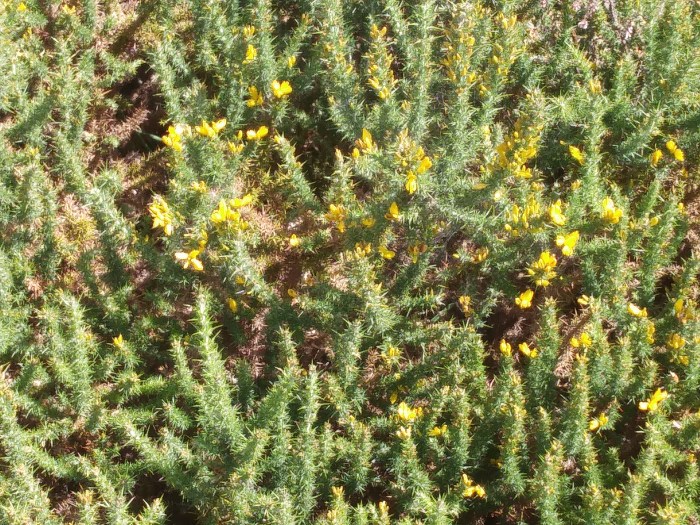


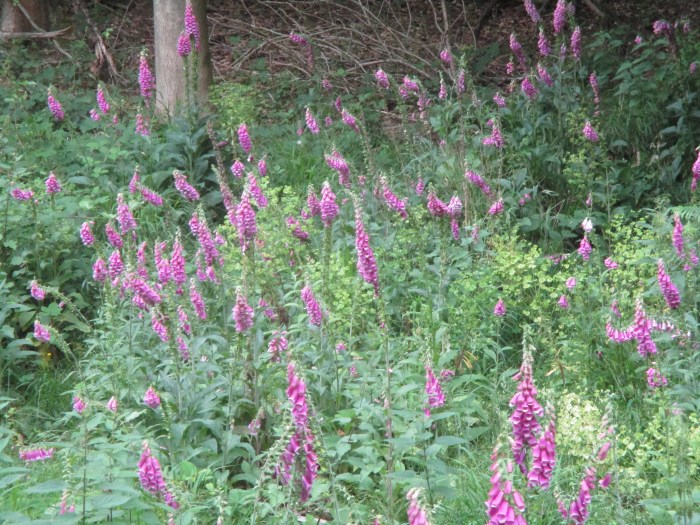


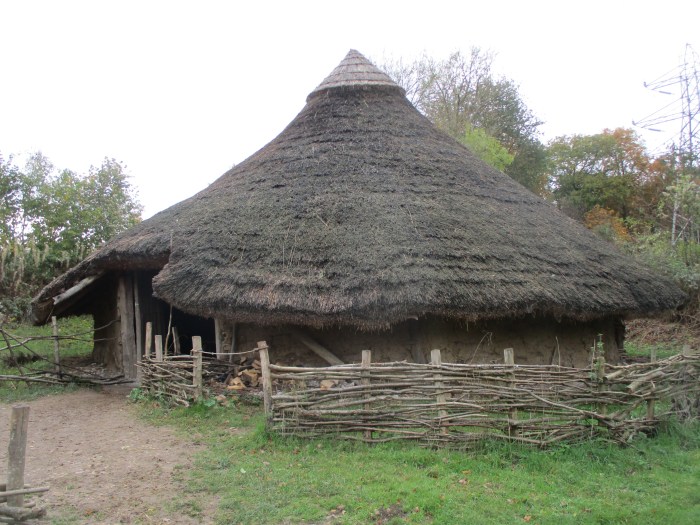


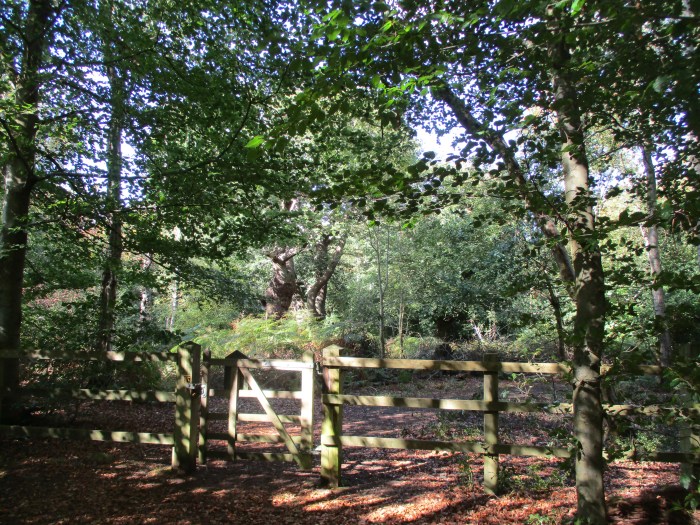


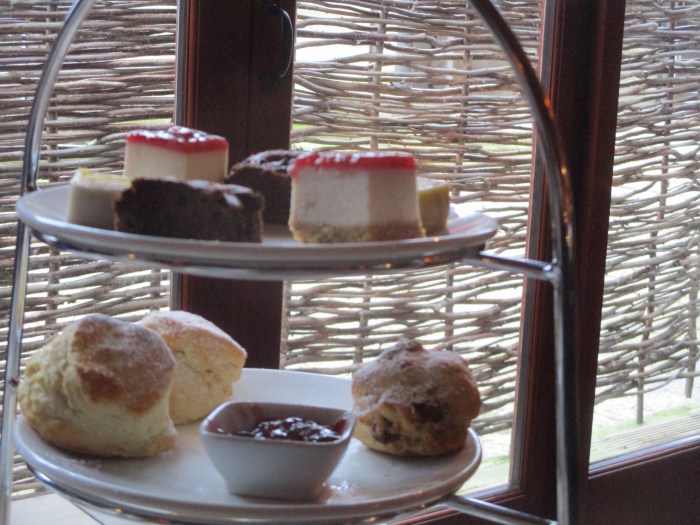




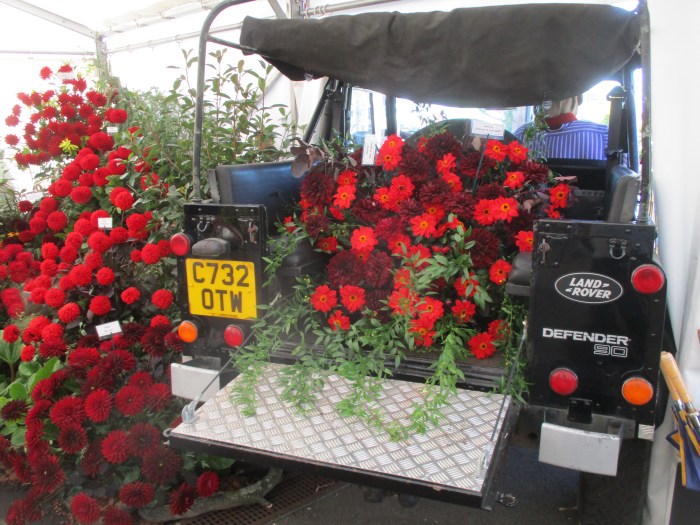


![Daniel Webb [Credit line] Photo_ © Ollie Harrop 2018. Image courtesy of Everyday Plastic](https://i0.wp.com/thebeyonder.co.uk/wp-content/uploads/2019/01/Daniel-Webb-Credit-line-Photo_-%C2%A9-Ollie-Harrop-2018.-Image-courtesy-of-Everyday-Plastic.jpg?resize=700%2C596&ssl=1)