AFTER all the mist and mud of those grubby December days, the first crisp, clear nights of a New Year provide a joyful if chilly contrast.
At night, a Cheshire Cat moon smiles down on silvery woods, the stars projected with crystal clarity on the night sky, turning it into a glorious outdoor planetarium.
But it’s on those morning walks that the pleasure is most keenly felt, when the sky is aglow with orange and gold and the landscape is full of colour once more.
Countless literary works celebrate the first golden rays of the sun peeking over the horizon as a symbol of renewal and rebirth, the “mellow blush of day” banishing the fears and worries of night, and it’s easy to see why.
GOLDEN GLOW: a symbol of renewal PICTURE: Lesley Tilson
Spectacular sunrises make us reach for our smartphones to capture the fleeting beauty of the moment in the same way that our ancestors searched for the right word or phrase to capture the ethereal glory that accompanies the pulse of a new day.
A symbol of hope and enlightment, beauty and illumination, dawn sees the canvas of the countryside splashed with hues of gold and pink as the landscape awakes to the promise of heat and light.
SUBTLE HUES: the countryside awakes PICTURE: Gel Murphy
And with these first sunny days of 2026 people are out in force to make the most of those all-too-brief rays of sunshine, the parks filling up with families and dog walkers eager to enjoy the novelty.
At times the colours hark back to those wonderful hues of autumn, even if the undergrowth has all died back. But that won’t last long, we fear.
Word is that there’s even colder weather on the way, so we’d better soak up those lukewarm rays while we can.
AUTUMNAL FEEL: sunlight on dead leaves PICTURE: Andrew Knight
Of course it’s not long into the new year before there’s heavy snow sweeping the country and causing widespread travel disruption.
COLD COMFORT: temperatures drop fast PICTURE: Lesley Tilson
In the Chilterns, the blizzard is brief for most: a picturesque dusting of white reminding us of Mary Oliver’s wind-bird with its white eyes summoning clouds from the north which thicken and fall into the world below “like stars, or the feathers of some unimaginable bird”.
DUSTING OF WHITE: sledgers search for a hill PICTURE: Lesley Tilson
But while we’ve been spared snowdrifts and flooding, the frosts have been cruel and uncompromising. The glitter is picturesque, but it’s the sort of bone-chilling cold that brings an icy sheen to pavements and roads, striking fear in the hearts of learner drivers and fragile pensioners.
As the sun rises, it’s enough to burn off the frosty layer and bring a deceptive appearance of warmth to those picnic tables in the park.
But it’s very much an illusion: even in the sunlight the temperature is sub-zero and we’re wrapped up warm against the freezing wind, with no temptation to linger.
BRIGHT SPOT: picnic tables in Farm Wood PICTURE: Andrew Knight
Our canine friends have no such hesitation about wanting to get out and about in all weathers, eager to sniff out news of last night’s visitors, their enthusiasm indomitable and infectious.
NO TIME TO LOSE: canine friends are eager to explore PICTURE: Gel Murphy
And however cold the morning air, there are other creatures out and about too: hungry birds searching for food, a disconsolate white egret plodding along the river bank, a dishevelled kestrel slumped on a post in the park, drizzle falling on his gorgeous feathers.
In a sunlit glade, a deer keeps a watchful eye on the morning dog walkers, wary but too comfortable to move.
On many mornings it’s still grey and drab, with little to catch our attention. It’s a bleak time of the year for those reluctantly returning to work after the holiday season, conscious of the shorter, darker days.
But on crisper mornings when there’s a renewed chill in the air after a cloudless night, the outdoors comes to life again and those colours shine rich and clear and true.
Doubtless the unpredictability of the weather contributes to the January mood swings affecting so many people, but just as unrelenting frosts still set the theme for many morning walks, glorious sunrises help to raise the spirits.
MORNING HAS BROKEN: a Chilterns sunrise PICTURE: Lesley Tilson
Some writers, like the Pre-Raphaelite poet and painter Dante Gabriel Rossetti, have portrayed this time of year with a shameless idealism, recalling a mythical era of “mighty fires in hall, and torches lit” and capturing images of fellowship, silk sheets and baked sweetmeats.
For other poets it is a rawer month, where the snow “feels no pity” for RS Thomas’s wounded fox or when “every friendly stream” is frozen fast and Death “leers in at human windows” for Hilaire Belloc.
It’s a time when the harshness of the weather may accentuate our feelings of love and loss, heightening the pain of those who are grieving.
Back in 2004, psychologist Cliff Arnall even came up with a scientific formula for the January blues, identifying the third Monday of the month (Blue Monday) as the most depressing of the year, thanks to a combination of factors ranging from post-holiday blues and bleak weather to people’s debt worries and low motivation levels.
But while many charities recognise how hard it can be to remain positive when struggling with feelings of loneliness or loss at this time of year, there are plenty of rays of light in the darkness too.
As well as those glorious sunrises and sunsets we are treated to sneaky glimpses of shy animals and intriguing patterns in the icy hedgerows.
ICY PATTERNS: an extra sparkle PICTURE: Lesley Tilson
Yes, there are days where the skies are bleak, the paths muddy, the hedgerows bare. But that’s when the sight of a brazen blackbird singing loudly or a red kite whistling overhead can transform our mood.
Or what about that gorgeous little vixen prancing along looking very healthy and well groomed? She’s looking very curious and brave, this formidable night-time predator, approaching close to the photographer, that intense gaze watchful but unafraid.
HEALTHY LOOK: an inquisitive vixen PICTURE: Malcolm Cridlan
Though we know foxes for their fear-inducing screams, barks and howls in the night and dog owners despair over the smell of their poo, we also know that they can be intelligent, friendly and playful, with videos capturing them bouncing on trampolines or stealing balls from gardens and golf courses.
Tame foxes are capable of bonding closely with humans and that those cute cubs play like puppies when they are in their “skulk” (a small group that typically includes a mother and her cubs).
INTENSE GAZE: a vulpine encounter PICTURE: Malcolm Cridlan
This vixen looks well fed and healthy, and her presence and proximity is enough to brighten the dullest of days.
Off she trots, ears alert for any small animals hiding in the hedgerow or high grass, an expert hunter in her element, unfazed by her human encounter.
NEW BEGINNING: a welcome sunrise PICTURE: Anne Rixon
Catching such glimpses of our local wildlife is good for our mental health, but let’s face it: few of us have ever seen a mole or weasel, stoat or vole. Britain’s wild animals can be furtive and elusive, fast-moving and hard to spot.
Even animals like hedgehogs or hares that might have seemed commonplace years ago are more difficult to stumble across than they were half a century ago. No wonder young people may tend to lose interest in spending time in the great outdoors once they’re past the Pooh sticks and conkers stage.
We know the causes of the dramatic decline in UK wildlife since the 1970s: the threats posed by plastics and pesticides, intensive farming and urban sprawl.
INTENSIVE FARMING: sheep in the mist PICTURE: Gel Murphy
But if young people find it impossible to engage with the natural world, the prospects of reversing the decline are bound to suffer. It’s a thought we ponder after remonstrating with a couple of young girls throwing their empty plastic bottles into the hedgerow.
They stare at us as if we’re insane to care what they do, never mind complain about it. And they certainly have no intention of picking up their litter.
But while it’s easy to despair at the state of the nation or bemoan the rudeness of (some) young people, things won’t improve until we can win over their hearts and minds to love and care for our countryside.
CHILLY VISTA: the January landscape PICTURE: Lesley Tilson
Many young people today despair about their futures and their lack of personal agency. Priced out of the housing market and weighed down by cost-of-living and debt worries, they see a world where taxes are rising and their prospects of living a stable, fulfilling life may seem to be crumbling.
With many battling mental health worries and feelings of anxiety and despair, the disillusionment isn’t just financial, but extends to existential fears about global conflict, the climate crisis and uncertainty about the prospect of inheriting a livable planet for themselves and their children.
MISTY MOMENT: a new day dawns PICTURE: Lesley Tilson
If many youngsters feel unhappy and isolated, let down by society and struggling to find meaning in their lives, we somehow we need to convince them that nature holds solutions to their problems and is not just a sad, drab outdoors space to be avoided, despised or abused.
Thankfully there is an army of young naturalists out there able and willing to pick up the baton thrown down by the likes of Chris Packham and David Attenborough.
They won’t face an easy task. But while it’s easy to despair at the scale of the challenge, there’s no better time than in the first few days of a new year to look on the bright side of life: after all, it’s a beautiful world out there, and it’s the only one we’ve got.
WOLF MOON RISING: fire in the sky PICTURE: Anne Rixon
A YEAR ago, inspired by the work of our extraordinary photographers, we set about documenting daily life in the Chilterns over the space of two months in autumn.
For 61 days between Halloween and New Year’s Day, diary entries recorded the changing sights, sounds and smells of the local landscape.
From frosty mornings to chilly nights, the daily forays provided an opportunity to take time to savour the small delights we so often take for granted: cobwebs glinting in the sunlight, fabulous fungi lurking in the leaf litter or glorious sunsets bathing the fields in pinks and purples.
Lazy rambles were a chance to listen out for rutting deer and hooting owls, contemplate the eyeshine of foxes or reflect on some favourite poetry about the natural world.
From fog over the heath to the “smoky smirr o rain” amid the trees, November is a time of mists and mirk, first frosts and chilly moonlit nights.
It’s a month of poppies and fireworks too, of peak leaf fall, the wonders of “leaf peeping” and the simple pleasure of wrapping up warm to guard against the plummeting temperatures.
It’s a perfect time for reflection about the outstanding natural beauty all around us, with the weathered brick and flint of ancient cottages, pubs and farmhouses providing a glorious backdrop for an autumn outing.
On these ancient paths, generations of invaders and settlers trudged across the Chilterns and built their castles, forts and palaces along the banks of the Thames.
MISTY START: Cock Marsh on the Thames PICTURE: Phil Laybourne
Beneath our feet amid the fallen leaves are those miraculous glimpses of colour and texture which have such an intriguing story to tell about life on earth.
Fungi are everywhere around us, largely hidden from view and poorly understood despite providing a key to understanding the planet on which we live through their extraordinary symbiotic relationship with plants and trees.
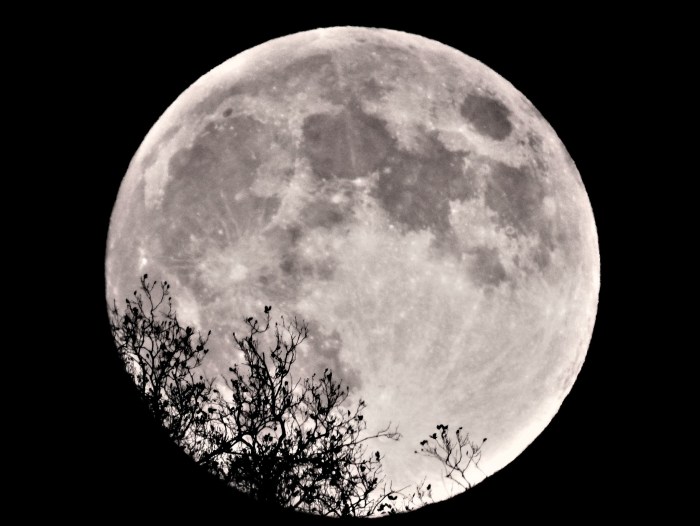
As local villages light up to welcome the season of advent, out in the woods the trees come alive in the gleam of a supermoon, slowly, silently walking the night “in her silver shoon”, as Walter de la Mare so memorably captured in a book of children’s poems back in 1913.
“This way, and that, she peers, and sees / Silver fruit upon silver trees” he wrote, a suitably poetic reflection on the closing moments of a glorious November day and a reminder that it will not be too long before the rosy-fingered goddess Aurora will be rising from her marriage bed to bring daylight back to us mere mortals…
SUPERMOON: November’s Beaver Moon PICTURE: Carol Ann Finch
Day by day, November in the Chilternsincludes a selection of pictures taken talented local photographers. If you would like to contribute any pictures, favourite moments or seasonal suggestions to our future calendar entries, join our Facebook group page or write to editor@thebeyonder.co.uk.
SOMETIMES you need a little help to capture your favourite wildlife on camera.
Hiring a hide for a morning could be one way of getting up close to fast-moving kingfishers, for example, which so often fly at lightning speed low over the water.
Even those living beside chalk streams often struggle to see more than a fizzing flash of turquoise that disappears round the bend and out of sight, giving the merest glimpse of those unmistakable blue and orange colours.
TURQUOISE FLASH: a kingfisher on the Chess PICTURE: Carol Ann Finch
Knowing a favourite hunting perch could be another way of capturing the birds at rest, and young Hertfordshire photographer Will Brown favours the wetland reserve at RSPB Rye Meads beside the River Lee, which is a firm favourite with birdwatchers and photographers thanks to its many trails and hides.
Down on the Chess at Sarratt, Carol Ann Finch and friends enjoyed a relaxing morning beside the river watching a colourful friend on the lookout for minnows, sticklebacks and small insects, using an Olympus camera with a 70-300mm macro lens to capture the action in close-up.
HUNTING PERCH: on the lookout PICTURE: Carol Ann Finch
Kingfishers can’t swim, so they tend to favour slow-flowing rivers or motionless water, making picturesque chalk streams like the Wye and Chess the perfect environment for a spot of fishing.
The birds hunt from riverside perches, occasionally hovering above the surface before diving at high speed into the water with their wings open and eyes protected by transparent eyelids. Once the fish is caught, it is taken back to the perch where the kingfisher usually stuns it before swallowing it head first.
MONDAY, DECEMBER 2
ARE foxes really as sly and cunning as they’re painted? It’s a pretty persistent stereotype that seems to date back millennia.
Foxes epitomise trickery and deceit in Shakespeare’s plays but references to their artfulness can be found much earlier, including repeated mentions in the fables collected by Aesop, a slave and storyteller living in ancient Greece centuries before Christ’s birth.
In medieval European folklore and literature foxes in general have the same dubious reputation and the specific character of Reynard is a legendary anthropomorphic red fox portrayed in some two dozen tales deceiving and outwitting his adversaries.
Doubtless much of the reputation is based on close observation of these highly adaptable, opportunistic animals. We know the common fox, vulpes vulpes, is a rapid learner, remembers where food is stashed and has adapted well to the presence of humans.
They appear bold around our cities, thrive in urban environments and farmers know them to be resourceful and ingenious in their hunting techniques, which probably helps to give the impression that they’re using their wits to get ahead.
But rather than being elborate tacticians, it’s their versatility that has been the key to their evolutionary success, allowing their survival in such substantial numbers despite being persecuted by hunters throughout history for spot, as a pest or for their fur.
Elegant, ingenious and much maligned, foxes know a thing or two about survival. Or as Chris Packham puts it: “I like foxes because they are widespread, beautiful and successful. It’s always a treat to see a fox dashing through some rusty bracken.”
TUESDAY, DECEMBER 3
IT’S hard to believe that at one time a third of the land area of southern England was designated as royal forest, including whole counties like Essex.
The recollection is prompted by a chance morning encounter with a few skittish deer. These days ramblers and dog walkers are probably pleasantly entertained by such brief meetings, usually at dawn or dusk, before the shy animals slink off into the undergrowth.
But estate managers have no such affection for the growing deer population that poses a real threat to our woodlands, while motorists have different reasons to fear the animals, of which more than 40,000 die in collisions on our roads every year.
Current exact numbers are not known, but the figure is probably at its highest for a thousand years and could even top two million.
Flash back across the centuries, and William the Conqueror’s arrival marked a whole new era of forest law designed to proect game animals and their forest habitat, as we discovered last year on a visit to Epping Forest.
The Norman kings were enthusiastic hunters and huge tracts of the country were designated as hunting areas reserved for the monarch and his aristocratic guests, with deer parks like those at Stowe, Langley and Whaddon equipped for the management and hunting of deer and other wild animals to provide a constant supply of food throughout the year.
The narrative of an evil foreign tyrant disrupting prosperous settlements and evicting tenants to create space for his leisure pastime featured prominently in the folk history of England, and one vitriolic poem written in 1087 on the king’s death lambasted him for his greed and cruelty.
Forest law was designed to protect the ‘noble’ animals of the chase like deer and wild boar, along with the greenery that sustained them, with verderers policing poaching and illegal felling while overseeing the rights of locals to take firewood, pasture swine, harvest produce and cut turf.
HUNGRY MOUTHS: there are six types of deer in the UK PICTURE: Sue Craigs Erwin
Today there are six types of deer to be found in the woods: the two native species, the red deer and roe deer, along with the fallow deer introduced by the Normans and three species of deer introduced from the Far East: the sika deer, Chinese water deer and the small and mostly nocturnal muntjac.
WEDNESDAY, DECEMBER 4
BARE branches allow us a clearer view of our feathered friends than we normally get, and none is a more cheering sight on a drab December day than the gorgeous goldfinch.
A colourful finch with a bright red face, black cap and yellow wing patch, it’s a very sociable little bird with a delightful twittering song and a fine beak that allows it to extract otherwise inaccessible seeds from thistles and teasels which other birds can’t reach.
Routinely trapped in Victorian times to be kept as cage birds, they also like lavender, dandelions and niger seeds.
In English a group of goldfinches is collectively known as a ‘charm’ from the Old English c’irm, referring to the tinkling noises produced by a flock. In Irish and Scots Gaelic their name lasair choille is equally appropriate, translating as “flame of the forest”.
Some UK goldfinches migrate as far south as Spain in the winter, but many “thistle-tweakers” will stay here throughout the winter months, adding a welcome splash of colour to the undergrowth with their superhero masks.
SYMBOLIC: the robin PICTURE: Carol Ann Finch
Both the red cheeks of the goldfinch and the red breast of the robin were accorded weighty religious symbolism in medieval minds, and the goldfinch featured in hundreds of Renaissance paintings.
The colours in both birds’ plumage was said to have been acquired while trying to remove Christ’s crown of thorns in an act of mercy.
THURSDAY, DECEMBER 5
ON dreary December days, it’s easy to mourn the loss of colour in the landscape: those dull, monochrome hours where the woodland tones are shrouded in rain or mist.
Thankfully there are still plenty of glimpses of sunlight to remind us that the glow of autumn is not quite a thing of the past.
Deep in the woods at Penn the weak sunshine lights up the russets and golds again and the breaks in the cloud remind us of the real beauty of autumn leaves.
GOING FOR GOLD: autumn leaves PICTURE: Lesley Tilson
But it’s not an easy time for ramblers. Apart from the unpredictable temperatures there’s widespread flooding and over at Hedsor, wildfowl have reclaimed the footpath.
UNDER WATER: a Hedsor footpath PICTURE: Andrew Knight
The gulls seem in their element here, but as dusk falls there’s a distinct chill in the air and the Thames is flowing fast, with many fields and gardens around Cookham and Bourne End under water.
On a bright spring day, this section of the Berkshire Loop of the Chiltern Way is a delight, a wander past churches which have been holy places for a thousand years or more, picturesque cottages in brick and flint and deserted lanes where the sound of birdsong echoes above the wild garlic.
DAMP PROSPECT: flooded fields PICTURE: Andrew Knight
But with light fading as we cross the bridge at Cookham, there’s a gloomier feel to the muddy Thames Path towards Bourne End, the smell of diesel in the air as boat owners hunker down for another cold night and the river fast becoming an inky black snake in the darkness, powerful and forbidding.
As night closes in, this is an aspect of life on the river that summertime strollers don’t see, when the Thames looks deep and cold and scary and the Christmas lights of those large riverside homes a lot more appealing than spending the night on the water.
FRIDAY, DECEMBER 6
YET more wind and rain leaves our local chalk stream cloudy and the footpaths transformed into sticky mudbaths.
Yet although it’s slippery welly-boot-wearing weather for walkers, it’s still possible to stumble across a little dry land in the woods, and the skies are nothing if not unpredictable.
On our evening walk, one minute those clouds are scudding across the sky, the treetops rustling like waves on the shore…the next, there’s a clear sky overhead and the stars are shining clear and bright over our path through the trees.
It’s the sort of weather when a casual glance out of the kitchen window might deter you from the thought of venturing out into the afternoon downpour…yet taking the risk and emerging from the cosy warmth of our homes can bring immense rewards, especially when the sun finally breaks through the cloud and dazzles us with one of those wonderful December surprises we might have otherwise missed.
ANOTHER day, another named storm: this time Storm Darragh, complete with ominous red weather warnings about possible loss of life and with winds gusting over 90mph in places.
We wake to lashing rain, swaying trees and birds being buffeted across the sky.
PICTURE POSTCARD: dawn at Coleshill PICTURE: Lesley Tilson
But the calm before the storm was a time to savour across the Chilterns, from dawn vistas of sleeping villages to sunlight glinting through the trees.
December days may be short and unpredictable, but there are still those all-important moments to cherish: the smell of woodsmoke drifting across the fields, the lure of a roaring fire in a friendly pub on a freezing day or being able to curl up with a good book with your pets snoozing around you.
MOMENT OF PEACE: the calm before the storm PICTURE: Sue Craigs Erwin
Inside or out, the serenity may not last for long, but it’s good to make the most of all those little things that make life worth living, including the sound of raindrops on wet leaves and the pleasant earthy scent of the woods once the worst of the storm clears.
For now, it’s time to get the wellies on and slip-slide our way along those muddy footpaths while Darragh blows itself out, leaving closed motorways, railway lines and airports in its wake.
WINTER WARMTH: watching for the sun’s return PICTURE: Lesley Tilson
But hopefully it won’t be too long before a little calm is restored to the countryside and the sun returns to warm the winter landscape.
SUNDAY, DECEMBER 8
DAWN breaks and the wind is still whistling, whining and howling around the house.
Around town, great oaks and cedars are shaking themselves like wet dogs and local paths and roads have been blocked with the debris of a stormy night.
In the woods, the “night has been unruly”, but not quite with such an ominous overtones as in Macbeth, despite the speed of the storm clouds scudding across the sky or those strange hues they sometimes cast over the countryside.
STRANGE LIGHT: the sky appears yellow at times PICTURE: Lesley Tilson
The Met Office tells us that the sky appears blue to the human eye because the short waves of blue light are scattered more than the other colours in the spectrum, making the blue light more visible.
Light from the sun is made up of a spectrum of many different colours, as we see when they are spread out in a rainbow, with different colours all having different wavelengths, from the shorter ones of blue and violet to red light, which has the longest wavelength.
ORANGE BALL: the sun sinks over Amersham PICTURE: Gel Murphy
When the sun’s light reaches the Earth’s atmosphere it is deflected by tiny molecules of gases like nitrogen and oxygen in the air with the amount of scattering dependent on the wavelength.
This effect is known as Rayleigh scattering after Lord Rayleigh, the eminent physicist who first discovered it.
Shorter wavelengths (violet and blue) are scattered the most strongly, so more of the blue light is scattered towards our eyes than the other colours, although it tends to be the most vibrant overhead and paler towards the horizon.
Rayleigh scattering also causes the sun to appear red at sunset, when the sun’s light takes a longer path to reach the horizon, so more of the shorter wavelengths are scattered out. This leaves mostly red light, which is why the sun appears red.
SETTING SUN: light through the trees PICTURE: Gel Murphy
Storm clouds can create some unusual effects in the sky, as can dust, pollen and smoke in the atmosphere, creating eerie yellow, green, red and purple hues.
MONDAY, DECEMBER 9
“DECEMBER afternoons do something to my heart,” writes Melissa Harrison in The Stubborn Light of Things. “Perhaps it’s the early dusk combined with approaching winter: a sense of drawing in, of lighting the lamps early, and the fire…”
It’s also the warm yellow glow from windows of ancient cottages, the cawing of rooks straying back to their ancient rookery, the dusk walks along darkened country lanes, the scatter of cottages round a Norman church.
WARM GLOW: December afternoons are special PICTURE: Sue Craigs Erwin
“At their best,” she writes, “rural villages bear witness to a lasting partnership of people, place and nature, and to me there is something deeply moving – almost sacred – about that.”
As so often, the Suffolk-based nature writer is spot on in summing up the importance of buildings feeling part of the landscape. The same is true of our wonderful old Chilterns towns, of course, where the buildings are intimately woven into the fabric of the surrounding countryside.
It could be the most humble cottage, or an imposing country house. But good architecture adds soul to communities and speaks to our senses and emotions in ways we may not fully understand.
LASTING LEGACY: an ancient church PICTURE: Gel Murphy
It’s perhaps part of the reason why we stare at ancient buildings with awe, or feel so much at home in cosy pubs or country houses that have survived the ravages of the passing years.
These buildings have protected and outlived their inhabitants, transcending the impermanence of human existence to become a lasting feature of the local landscape.
TUESDAY, DECEMBER 10
COULD there be a more comforting and contented sound that the cooing of wood pigeons on a summer’s evening?
Conversely, there are few sounds more frantic and frenetic than the fluster of pigeons disturbed from their roost at night on these chilly winter nights.
The contrast is brilliantly summed up by Daphne du Maurier in her 1938 Gothic novel Rebecca:
Once there was an article on wood pigeons, and as I read it aloud it seemed to me that once again I was in the deep woods at Manderley, with pigeons fluttering above my head. I heard their soft, complacent call, so comfortable and cool on a hot summer’s afternoon, and there would be no disturbing of their peace until Jasper came loping through the undergrowth to find me, his damp muzzle questing the ground.
Like older ladies caught at their ablutions, the pigeons would flutter from their hiding-place, shocked into silly agitation, and, making a monstrous to-do with their wings, streak away from us above the tree-tops, and so out of sight and sound.
Of course there are plenty of folk driven to distraction by the cooing of pigeons and numerous pest control sites awash with suggestions of how to make the birds less happy, secure and comfortable.
EXTRAORDINARY: pigeons became wartime heroes PICTURE:Nick Bell
They have played a vital role in medicine and saved countless lives in wartime carrying vital messages over long distances when other methods of communication were impossible.
When you drive down Park Lane, there always seems to be an old lady surrounded by a crowd of hungry pigeons, reminiscent of iconic Feed the Birds song from the 1964 Disney film version of Mary Poppins, filmed on the steps of St Paul’s Cathedral.
Perhaps there’s more to that scene than meets the eye: despite being so much maligned, we’re told that those “small blue busybodies” are not just smart but have bags of character and can be extremely loving.
With so many pigeons around, we tend to take these most humble of birds for granted, oblivious to their beauty and their many talents. Time to look at our feathered friends in a fresh light, perhaps.
WEDNESDAY, DECEMBER 11
HUMANS will spend billions of pounds this year immersing ourselves in high-tech virtual reality worlds, from virtual concerts and art galleries to hyper-realistic video games.
But who needs virtual reality when the real world is so spectacular? With some teens already spending up to eight hours a day on screens, it’s no surprise this may be associated with higher anxiety and depression and a lower overall quality of life and academic achievement.
Screen time overloads the sensory system and fractures attention, making it harder to process one’s internal and external environment and sometimes leading to explosive and aggressive behaviour.
Getting out and about on a windy day helps to root us in reality and remind us of the importance of real-world experiences and relationships.
Plus, how do we expect young people to be able to relate to the natural world (and want to protect it) if they don’t experience it at first hand?
COMMUNITY SPIRIT: Christmas lights PICTURE: Gel Murphy
Generations of teenagers have baulked at the idea of being forced to participate in “family time” or engage with other adults in the community, but perhaps there’s never been a time when it’s been more important for young people to become more aware of their surroundings and fully understand what’s real and what isn’t.
THURSDAY, DECEMBER 12
YOU might not give the brown spiky seed heads of the teasel a second glance if they weren’t so beautifully backlit by the morning sunlight.
But familiar as these striking prickly wildflowers are, it’s easy to forget what a central role cultivated versions of the teasel once played in cloth production in Britain.
Popular with bees and butterflies in summer and seed-eating birds like the goldfinch in winter, they are less popular with gardeners, who find weeding them a wet and painful businesses.
STRIKING: teasels in the morning light PICTURE: Sue Craigs Erwin
But take a trip back in time and the teasel played a central role in the textile industry as well as its extracts proving important components of the medicine chest in past centuries.
A cultivated sub-species has bristle tips shaped like tiny hooks which were used to ‘tease’ out the nap of cloth, explaining why teasels were grown as a cash crop in Britain from early times and even have a place in heraldry: the 1530 coat of arms of the Worshipful Company of Clothworkers depicts a golden teasel head.
As Robert McMillan explores, they were once cultivated on a huge scale to supply the country’s booming woollen mills and the process of fulling (or tucking or waulking, depending where in the country you live) helps to explain why Fuller, Walker and Tucker are such widespread surnames.
FRIDAY, NOVEMBER 13
LIVING beside a chalk stream means you’re never quite sure who you might encounter on your morning ramble.
Ducks and moorhens are commonplace. For months, a quintet of cygnets were getting their life instructions on a nearby stretch of water.
And today, to brighten the dullest of mornings when the sky is white, the footpaths sodden and the air distinctly chilly, a glorious little egret stands on the opposite bank staring balefully into the dark, fast-flowing water.
The small white heron is an elegant character with beautiful white plumes on its crest, back and chest, a black bill and black legs with strikingly yellow feet.
It lacks the height or statuesque prehistoric-looking appearance of the grey herons which can also be sometimes spotted contemplating their next meal on these banks, but both birds share a love of the minnows, sticklebacks and brown trout that thrive in healthy chalk streams.
Once a very rare visitor from the Mediterranean, little egrets are now a common sight in the Chilterns. They first appeared in the UK in significant numbers in 1989 and after first breeding in the UK on Brownsea Island in Dorset back in 1996, they have been expanding their range northwards ever since.
Today, it’s perhaps those amazing yellow feet that grab the onlooker’s attention as the bird strides rather self-consciously along the bank, lifting each leg high in the air like an avian John Cleese.
But ironically, the glamorous little bird had an important role to play in the RSPB’s history, as the organisation was founded by ladies campaigning against the use of feathers in the hat trade. Those long white neck plumes were once more valuable than gold and populations plummeted until laws were put in place to protect them.
SATURDAY, DECEMBER 14
THE colder and damper is gets outside, the more we crave a little light and warmth.
Wandering far from home in mid-December in The WInd in the Willows, Ratty and Mole patter through a little village on soft feet over a first thin fall of powdery snow.
Around them, “little was visible but squares of dusky orange-red on either side of the street, where the firelight or lamplight of each cottage overflowed through the casements into the dark world without”.
FAR FROM HOME: Walking Through The Village ARTWORK: Chris Dunn
The small backlit vignettes they witness – a cat being stroked, a small child being picked up and huddled off to bed, a tired man knocking out his pipe on a smouldering log – give the spectators a wistful feeling at the thought of their own homes being so distant.
We may experience just the same longing for a welcoming lantern or fire, for carols by candlelight or the warm glow of a welcoming homestead. And of course at this time of year there’s the added appeal of festive lights, from the twinkling welcome of a humble cottage to the grand displays of our largest stately homes.
We know that bright lights and colours trigger happy hormones and may even help to boost energy levels and happiness. For many, of course, Christmas is a magical time of nostalgia, a time of celebrating innocence and joy as well as a time of spiritual reflection.
Like Ratty and Mole we don’t just crave the warmth of those welcoming lights and fires, but the camaraderie and conviviality they symbolise: the opportunity to spend quality time with family and friends, the prospect of feasting and merriment.
The converse, of course, is equally true. If our wintry walk through the woods is blessed by the prospect of returning to a cosy hearth and home, it reminds us of the bone-chilling loneliness experienced by the homeless at this time of year or the millions facing hunger and misery in bombed-out buildings and refugee camps as conflict, the climate crisis and economic shocks drive more and more communities around the world towards starvation.
FESTIVE MOOD: a feast for the senses PICTURE: Lesley Tilson
It’s not just in war zones that people are struggling over the festive season, though. Those battling to cope with bereavement, health or money worries may feel every bit as lonely and isolated over the holiday period, especially faced with all those images of carefree families and friends spending time together.
Christmas is a wonderful time of year, but it’s challenging for so many who feel left out in the cold.
COLD COMFORT: Christmas can be challenging PICTURE: Lesley Tilson
SUNDAY, DECEMBER 15
AFTER days of white and slate-grey skies, there’s finally a break in the clouds and some welcome rays of sunshine to brighten the spirits and restore a bit of colour to the countryside.
But with so many trees stripped bare by the recent storms, those wonderful multi-coloured falling leaves of November are rapidly turning into a dark brown mulch.
Footpaths are awash with mud and the undergrowth looks drab and damp – it’s time to seek out some evergreen solace among the conifers, mosses and lichens of a favourite local wood.
SOLACE: evergreen hues PICTURE: Andrew Knight
Here the ferns and bracken may have died back but the trees soar high into the sky, there are patches of holly everywhere and a patchwork of different greens to provide a welcome contrast to all the December murk.
It’s the perfect therapy after those depressing days of drizzle and darkness.
The sunshine may be weak and fleeting, but it’s enough to bring the woods alive with shadows and put a new spring in our step as we try to make the most of the available light.
THERAPY: sunshine after the rain PICTURE: Andrew Knight
By the time dusk falls, there’s steam rising from the river and a mist over the park, with the temperature dropping fast and December’s cold moon casting a silver sheen through gaps in the clouds.
It will clear later to expose the heavens, including the shooting stars of the Geminid meteor shower, which has just reached its peak but will be visible for a few nights yet.
While most meteor showers are associated with comets, the Geminids are caused by debris from an asteroid, with particles vapourising as they enter our atmosphere at speeds to up to 150,000mph, creating multi-coloured streaks of light in the night sky because of elements such as sodium and calcium found within the celestial debris.
WELCOME RAYS: the woods come to life PICTURE: Andrew Knight
They were first observed in 1862 and according to the Royal Observatory in Greenwich they are thought to be intensifying every year.
Just before dawn the cold moon is still bright in the sky, making the Wye look like a grey satin strip rippling across the fields. It’s a welcome reminder that even on the dullest days or darkest nights, there’s plenty of beauty to be discovered in our ancient landscape.
MONDAY, DECEMBER 16
WHY not banish those Monday morning blues with a little colour therapy from the natural world?
We started December looking at the turquoise flash of kingfishers and last week celebrated the elegant plumage (and striking yellow feet!) of the little egret, but today it’s the turn of one of Britain’s loudest, most colourful and recognisable birds, the ring-necked parakeet.
Nowadays its cheeky chatter has become familiar to a couple of generations of Londoners, but how did an ‘interloper’ unknown in the UK a century ago and still relatively rare as recently as the 1990s become quite such a familiar sight up and down the country?
Tim Blackburn, professor of invasion biology at UCL, explained something of the bird’s back story earlier this year in The Guardian, concluding that the bird’s presence in such large numbers may stem from a parrot flu health scare in the early 1950s when fears about catching psittacosis from pet birds prompting owners to liberate their beloved birds into the London skies, where they settled and flourished.
CHEEKY CHATTER: the ring-necked parakeet PICTURE: Jane Jasper Merry
Though the capital remains their stronghold, they have spread across the country and their raucous cries and long-tailed silhouettes are increasingly common in the Chilterns.
Should we fear their spread in the way we have worried about other invasive species? Blackburn concludes that we probably should be concerned about their negative impacts on other birds and bats, given that they compete with them for food and nesting sites.
They also have a voracious appetite for flowers, fruits and seeds which might eventually pose problems for Britain’s soft fruit and growing wine businesses.
But for now, we’re celebrating the cheeky appeal of a colourful character that’s popping up on bird tables across the land.
Talking of colourful characters, perhaps it’s also a good time to toast a much shyer bird which has been hiding in our woods for a lot longer than the parakeet.
Jays are the most colourful members of the crow family, known for their screaming calls, love of acorns and glorious plumage.
GLORIOUS PLUMAGE: the shy jay PICTURE: Lesley Tilson
Instantly recognisable by their brilliant blue wing patches, jays eat invertebrates like caterpillars and beetles and spend the autumn hiding away precious nuts and acorns to enjoy later in the winter.
While jays clearly have a remarkable memory for where they store their acorns, some will inevitably remain buried, meaning that many of Britain’s oak forests are thought to have been planted by the birds.
Suffolk bird lover and writer David Tomlinson provides us with a marvellous description of the bird, making us pause to consider more closely not just that rare splash of Maya blue in its plumage but a forehead which looks as though combed with boot polish, ear-coverts suggestive of ruddy squirrel ears and two black thumbprints either side of the beak which some call a moustache.
The subtlety of the bird’s colouring is not perhaps matched by its raucous cries (although they are excellent mimics) or its behaviour, with some gardeners lamenting its pilfering from fruit trees and unscrupulous egg-robbing habits.
TUESDAY, DECEMBER 17
IT’S the week of the winter solstice, a time when ancient peoples feasted to mark the shortest day and longest night of the year, the first day of winter in the astronomical calendar.
And while the run-up to December 21 is often a gloomy or chilly period, the solstice had great symbolic importance in many ancient civilisations, where it was seen as a time of renewal and hope, symbolising the return of longer days.
SHORTEST DAY: a time of renewal and hope PICTURE: Sue Craigs Erwin
For Neolithic people who were farmers growing crops and tending herds of animals, winter may have been a time of fear as the days grew shorter and colder.
People must have longed for the return of light and warmth and marking the start of this yearly cycle may have been one of the reasons that they constructed Stonehenge – a monument aligned to the movements of the sun.
WEDNESDAY, DECEMBER 18
IT WAS only natural that the earliest hunter-gatherers, shepherds, farmers and fisher folk would scan the skies with fascination and, sometimes, fear. After all, their very lives and livelihoods depended on the heavens.
Some 6,000 years ago, the ancient Babylonians were avid stargazers, erecting watch towers to scan the night sky, mapping the stars and visible planets, and recording their observations on clay tablets.
Their meticulous data provided the foundation for the first calendars, used to organise the growing and harvesting of crops and the timing of religious ceremonies.
But although their vision of the universe was based on mythological beliefs, their astronomical observations were astoundingly accurate, enabling them to track and predict the movements of the sun, moon, Mercury and Venus.
CAREFUL OBSERVATION: ancient astronomyPICTURE: Anne Rixon
They accomplished extraordinary feats of knowledge without the benefit of telescopes, satellites or computer technology but through careful observation, generational record-keeping, pattern recognition and early mathematics.
THURSDAY, DECEMBER 19
THE dawn chorus won’t begin until spring, but that doesn’t mean our woods and gardens are completely silent in December.
One bird which sings all year round is the robin, which despite its apparents tameness and demure appearance is a fiercely territorial bird, with an estimated 10% killed each year in fights with other robins.
ON SONG: robins defend their territory PICTURE: Sue Craigs Erwin
Territories are marked by singing and posturing to rivals, and if these actions fail to dissuade an intruder, fighting may ensue.
The resident bird will begin by ruffling its feathers, craning its head and dropping its wings before striking at an intruder with blows from the feet and wings. If the intruder doesn’t back down, both birds may roll around kicking and wing-beating each other, with fights recorded to last anywhere from a few seconds to well over an hour.
Robins are so territorial they have even been seen attacking stuffed robins!
FRIDAY, DECEMBER 20
AFTER clear night skies, it’s a frosty start and the fields glitter a greeting to the pale sun.
There’s a rustle in the hedgerow as crisp leaves betray the paw of a careless mouse or vole.
CHILLY START: frost sparkles in the fields PICTURE: Sue Craigs Erwin
The palette may be wintry, but there’s a freshness to the morning air that inspires optimism, or perhaps a thoughtful moment, as Coleridge found:
The Frost performs its secret ministry Unhelped by any wind. The owlet’s cry Came loud—and hark, again! loud as before, The inmates of my cottage, all at rest Have left me to that solitude, which suits Abstruser musings
THE shortest day of the year may feel a little bleak and brief, but the winter solstice is traditionally a time of renewal and rebirth, of hope and optimism.
For weeks we have looked to the skies to celebrate those glorious sunrises and sunsets that remind us of the importance of light in our lives.
WINTER SOLSTICE: a time of renewalPICTURE: Anne Rixon
With fewer than eight hours of daylight, the shortest day is less than half the length of the summer solstice, so it’s not surprising that we welcome the prospect of the days getting gradually longer from now on, even if there’s still a long way to go until the end of the winter and the prospect of the spring equinox in March, by which time day and night hours are around the same length.
From Scandinavia to the Far East, the shortest day is traditionally a time of celebration and feasting, of fires being lit to symbolise the heat and light of the returning sun, of ceremonies to placate ancient gods.
RETURNING SUN: celebrations mark the solsticePICTURE: Anne Rixon
Advent candles in our churches symbolise the four themes of hope, peace, love and joy associated with the arrival of Jesus and around the world, all the great winter holiday celebrations focus around light.
ADVENT THEMES: hope, peace, love and joy PICTURE: Sue Craigs Erwin
For early civilisations, the celebrations paid homage to the “invincible sun” that plays such a central role in our daily lives.
And as we enjoy the candles being lit for Christmas carols, the twinkling festive lights or the warmth of fires and lanterns in welcoming windows, we might recall the words of Buckinghamshire-born children’s author Susan Cooper in The Shortest Day:
And so the Shortest Day came and the year died And everywhere down the centuries of the snow-white world Came people singing, dancing, To drive the dark away.
SUNDAY, DECEMBER 22
WITH the winter solstice behind us it feels as if there can only be brighter times to come.
The problem, of course, is that the return of the longer days is a slow, incremental process, at least during the next few chilly weeks of winter.
EARLY RISERS: dawn at Coleshill PICTURE: Lesley Tilson
Sunrise remains after 8am until mid-January and doesn’t creep forward to 7am until late February.
Nonetheless we do notice the days getting gradually longer all the time, hitting nine hours in late January and 10 hours by mid-February.
WINTER SUN: a chill in the air PICTURE: Lesley Tilson
Meanwhile we’re relying on those festive lights for much of our light, along with the flickering candles at Christmas carol services and a weak winter sun trying to inject a little warmth and colour into the surroundings.
A trio of red kites are circling and crying overhead, and while the temperature is only four degrees and the wind distinctly icy, but the sky’s finally turned blue. Time to savour the moment: sunset is due just before 4pm today, so there’s not a moment to lose…
MONDAY, DECEMBER 23
ON A bright crisp frosty morning, colourful birds and berries tend to catch the eye.
And berries don’t come any more spectacular than the distinctive purple ones of the callicarpa bodinieri shrub ‘Profusion’, often planted by gardeners for a welcome splash of winter colour.
TASTY TREAT: a blackcap visitor PICTURE: Nick Bell
Trouble is, those purple berries look particularly tasty to birds like blackcaps and blackbirds, so that impressive winter display could soon be looking a lot sparser, as wildlife photographer Nick Bell discovered when a pair of blackcaps spotted his shrub and started to visit several times a day.
SEASONAL SNACK: a chill in the air PICTURE: Lesley Tilson
Red berries are a little more familiar on our woodland wanders, and equally popular as a food source for our feathered friends.
In the winter months, birds can struggle to find enough food to get by and berries offer welcome sustenance when other sources are scarce and the ground is too hard to hunt for burrowing insects.
TUESDAY, DECEMBER 24
MIST cloaks the fields this morning and dog walkers loom out of the pale damp veil.
Possibly the Chilterns’ most iconic bird of prey, red kites often to be seen circling overhead on the thermals and their distinctive mewing call nowadays once more echoes across the landscape after years of persecution saw them hunted to extinction.
COMEBACK CRY: the red kite’s distinctive callPICTURE: Carol Ann Finch
Odd to think that these magnificent and distinctive birds, with their fanned forked tails and reddish-brown bodies, were actually protected by royal decree in the middle ages because their scavenging abilities helped keep the streets clean.
That was when they were a common sight across towns and villages in medieval England, regularly diving down into busy markets and streets to snatch up scraps of food and rodents.
FRIDAY, DECEMBER 27
A FIRST random pub quiz question for 2025: who or what connects the gorgeous cascading flowers of wisteria with the nighttime bark of a small deer in the woods?
The answer lies in the name of John Reeves, a keen English amateur naturalist working in China in the early 19th century as a tea inspector for the British East India Company.
Over a period of almost 20 years he developed a notable collection of Chinese drawings of animals, fish and plants, and was responsible for the introduction to the UK of a number of garden plants, including Chinese wisteria, chrysanthemums and azaleas.
CHINESE IMPORT: Reeves’ muntjac PICTURE: Malcolm Cridlan
By 1816 he was chief inspector of tea in Canton, where he obtained a pair of cuttings from the garden of a merchant and despatched them on two ships to the Horticultural Society of London.
Reeves returned to England in 1831 and was honoured by having his name, reevesii, applied to nearly 30 species of animals, including a variety of reptiles, a colourful pheasant he brought to Europe and Reeves’ muntjac (Muntiacus reevesi).
At least seven species of muntjac are known around the world, but the one that set up home in Britain is the Reeves’ muntjac, a small stocky Chinese deer introduced to the country not by Reeves himself but almost a century later by the then Duke of Bedford, who brought some to Woburn Abbey in Bedfordshire and later released them into the surrounding woods.
Other deliberate releases doubtless helped in the spread of the shy but voracious browsers, which are a russet brown colour for most of the year, turning to a dull grey in winter.
SATURDAY, DECEMBER 28
MISTY mornings and drizzly evenings aren’t conducive to great photographs, but there’s something immensely atmospheric about those damp grey days when the mist drapes itself around the trees and muffles the senses.
Strange shapes loom out of the ethereal haze: a twisted tree stump or startled muntjac, perhaps – or in Bushy or Windsor Parks, the rather more statuesque silhouette of a huge stag.
STATUESQUE: a stag in Bushy Park PICTURE: Lesley Tilson
Some sounds seem deadened, but the birds are still on song, and as dusk falls the hoots of owls calling to each other in the woods sound distinctly eerie.
ON SONG: a blackbird in the mistPICTURE: Carol Ann Finch
For a moment the mist lifts in a clearing and the line of the footpath is suddenly visible again. But the illusion of clarity does not last long before the clammy tendrils thicken and merge, and the trees start to recede back into the invisibility cloak.
CHILLY PROSPECT: deer at Amersham PICTURE: Lesley Tilson
On an unknown path fog in the forest at night time could be scary and disorientating, but these woods are friendly and familiar and there’s a mystical beauty to the scene as night descends on our homeward journey through a damp fantasy land of moss-covered trunks and dripping branches.
From Tolkein’s hostile forests of Middle-earth to the dreaded Wild Wood, foggy forests play havoc with our imaginations with their ominous shadows and strange noises.
Hazy days saturate the colours around us and blur the edges of everything, lending an extra air of mystery and ambiguity to the most mundane surroundings.
Deep in the woods, those feelings are dramatically heightened. Woodland is often portrayed as a place of danger, wild and untamed, awash with fearsome creatures lurking in the shadows waiting to pounce on unsuspecting travellers.
But they can be a place of refuge too, of shelter and sanctuary, an opportunity to confront our demons and overcome the fears and challenges that stand in our path.
And as the mist clears, the colours return and the small details stand out sharp and clear again, dispelling any doubts and worries we may have had.
Once again, the woods are a place of magic and mysticism, of connection and immersion with the natural world, monsters and predators banished from our thoughts with the last vestiges of mist.
BRIGHT BERRIES: colours return to the woods PICTURE: Sue Craigs Erwin
MONDAY, DECEMBER 30
AS the light starts to fade, the wood erupts in a veritable cacophony of sound.
Tonight it’s not just the pheasants whirring and crowing in the trees, but the cawing of crows and the wavering ‘hoo-hoo’ of a male tawny owl echoing through the branches.
The mist has lifted but there’s been no real sunlight to penetrate the deeper sections of the wood and the air is cold. But for all that it’s a peaceful, serene place to walk as darkness falls like a curtain along our route.
CACOPHONY OF SOUND: evening in the woods PICTURE: Andrew Knight
The evergreens here are towering, but there’s nothing sinister or forbidding about this place. Mirkwood it is not.
“The woods are lovely, dark and deep” wrote the American poet Robert Frost back in 1922 (he of The Road Not Taken fame):
The woods are lovely, dark and deep, But I have promises to keep, And miles to go before I sleep…
We do not have far to go, and Teddy the labrador rustles along in the undergrowth in companionable silence, oblivious to the whirring, cawing and hooting. By the time we leave the trees behind us and pad quietly along unlit country lanes towards the welcoming lights of the village, the birds have fallen silent again.
There’s talk of wilder weather to come in the New Year, but for now the night is blissfully calm and we feel blessed.
TUESDAY, DECEMBER 31
ON A cold winter’s night with storm clouds gathering, the sinuous black snake of the river could hardly look less inviting.
Surely this can’t be the same river which provided such idyllic surroundings for lazy picnics and other aquatic adventures in The Wind in the Willows?
In the timeless children’s classic, it acts as a catalyst for Mole’s coming of age, a place of freedom and independence. For Ratty the water vole, it’s home: a refuge of stability and familiarity where he finds peace.
And for generations of children, it became a place of intrigue and excitement, a joyous celebration of nature, camaraderie and loyalty that still feels fresh more than a century after it was penned.
IDYLLIC SETTING: Tranquil River ARTWORK:Chris Dunn
For many it would pave the way to their first experience of live theatre, with older readers perhaps recalling a visit to one of the many West End Christmas shows staged in the 1960s.
And for artist Chris Dunn, whose artwork is featured here, Ratty and Mole played a crucial role in establishing his career as a full-time children’s book illustrator.
Tonight, the river looks dark and cold, a far cry from those heady days of summer, despite New Year’s Eve fireworks casting an array of dancing colours across the rippling surface.
But since this is a night of hope, joy and optimism about the year to come, perhaps we’re allowed a glance ahead to sunnier days ahead when the grey skies are behind us and the prospect of messing about on the river will once again sound appealing.
For now, with the wind getting up and a night of rain and gales forecast, it’s perhaps a night to hunker down with friends and stay close to home, But wherever you end up at midnight, Happy New Year! And thank you all for your support, friendship and encouragement throughout 2024…
As always, we’re enormously grateful to the talented photographers who have been out and about in all weathers to chronicle the changing seasons and who have allowed us to publish their pictures throughout the past year. If you would like to contribute any pictures, favourite moments or seasonal suggestions to our regular calendar entries, join our Facebook group page or write to editor@thebeyonder.co.uk.
MISTY mornings and damp evenings often set the tone for November, so it was perhaps unsurprising that after all the hi-jinks of Halloween, many local photographers found haunting and atmospheric shots felt the most appropriate way to welcome in the new month.
Our calendar entry for November includes more than three dozen shots across the five counties which comprise our extraordinary Chilterns landscape, capturing the wildlife, flora and sunsets that help to make it such a magical time of year.
SEA OF GOLD: cobwebs at Princes Risborough PICTURE: Anne Rixon
In the run up to Halloween, a field of cobwebs near Princes Risborough caught the eye of Anne Rixon, transformed into a delicate sea of gold.
But a glorious picture which seemed to capture the magic of All Saints’ Day was Sue Craigs Erwin’s misty woodland scene which got widespread exposure through the Chesham Wildlife group and the Oxford Mail and Watford Observer camera clubs.
SATURDAY, NOVEMBER 2
FOR Graham Parkinson, there’s nothing to beat the glorious autumnal colours of our fabulous fungi, and his macro lens captured an array of stunning shapes and textures during a trip to Davenport Wood at Marlow.
It’s hard to pick a favourite from the selection, but few fungi are more startling than the bright yellow coral-like branches of the stagshorn.
The beautiful inedible fungus jumps out of the leaf litter, looking like a freshly set fire emerging from conifer stumps or roots, and is also known in the States as jelly antler fungus.
The enduring fascination of fungi lies in their enormous variety, with thousands of different species offering an unlimited array of shapes and colours to be detected among the foliage.
Not that the uninitiated will want to get too close, perhaps: some of them are deadly and boast spine-tingling names like the destroying angel, funeral bell and death cap.
SUNDAY NOVEMBER 3
FOR some, getting out and about in nature is all about the wildlife, even if so many of our native creatures are quite difficult to spot.
LYING LOW: deer in Bushey Park PICTURE: Lesley Tilson
The undergrowth may be barer at this time of year, but that doesn’t always help, and the abundant leaf litter provides plenty of hiding places on the ground.
But larger mammals stand out against the bracken and even familiar farmyard friends can have their own beauty in this autumnal landscape, the sheep looking well insulated against the chillier of the season’s winds.
MORNING GLOW: deer in Bushey Park PICTURE: Lesley Tilson
And when the skies oblige, there’s nothing like an early morning glow to lend a mystical feel to the most comfortable of silhouettes.
MONDAY NOVEMBER 4
IT’S the tail end of the deer rutting season, when stags are fighting for territory, and that can mean some pretty dramatic displays by competing males pumped full of testosterone.
CALL OF THE WILD: the rutting season PICTURE: Lesley Tilson
The rut begins in September and lasts until around early November, during which time stags engage in a series of behaviours aimed at showing off to the hinds and establishing their dominance.
If they’re not roaring fiercely or stamping the hround, they could end up literally locking antlers to fight for the right to mate with all the hinds in a “harem”.
WINNER TAKES ALL: the victor gets mating rights PICTURE: Lesley Tilson
Fights are ferocious and decisive and the winner takes all, but although the rut can be an amazing natural spectacle to witness, visitors to local deer parks are warned not to get too close to the competing stags.
TUESDAY, NOVEMBER 5
AT one point in The Essex Serpent, Sarah Perry writes: “A vixen drew near and turned her gaslight eyes upon him, then drew back and sat surveying him a while.”
“Gaslight eyes” is a gloriously poetic phrase to capture the extraordinary stare of a curious fox and that remarkable bright amber glow we associate with the mammals.
Perhaps it also has echoes of the “eyeshine” we associated with noctural creatures whose glowing eyes may be the first thing we see reflected in a torch or headlight at night.
The tapetum lucidum is a layer of tissue immediately behind the retina which reflects visible light back through the retina, increasing the light available to the photoreceptors.
When light shines into the eye of an animal having this “bright tapestry”, the pupil or the eye, appears to glow, emitting a range of colours from white and yellow to red, blue, pink and green.
This unique adaptation allows for excellent night vision for nocturnal predators.
According to the Walking Mountains Science Center in America, generally mountain lions and bears have eyeshine in the yellow-to-red range. Deer and elk eyeshine is white, but moose eyeshine tends to be red. Rabbits and pikas have red eyeshine. Blue eyeshine is seen in other mammals, including horses. Foxes and domestic cats and dogs usually have green eyeshine, but cat eyeshine can also be orange to red.
WEDNESDAY NOVEMBER 6
LONDON poet and journalist Thomas Hood was no fan of November, it seems.
CLEAR VIEW: a Chilterns stream PICTURE: Lesley Tilson
Back in 1844 at the conclusion of his poem No! he penned the words:
No warmth, no cheerfulness, no healthful ease, No comfortable feel in any member— No shade, no shine, no butterflies, no bees, No fruits, no flowers, no leaves, no birds,— November!
But perhaps we need to remember that Hood was more familiar with the all-encompassing London smog of the mid-19th century rather than the clear air of the Chilterns: and indeed he was to die there from dropsy the following year.
So to combat his vision of a landscape with “No sky—no earthly view— No distance looking blue”, we’re published a trio of November views which rather give the lie to the idea of the month being one of smog and gloom!
LIGHT FANTASTIC: an Amersham sunset PICTURE: Gel Murphy
THURSDAY, NOVEMBER 7
IF Thomas Hood preferred to conjure up a somewhat bleak portrait of November, one Georgian poet had a distinctly more upbeat vision of the natural world.
Elizabeth Craven’s fascinating life was full of travel, love-affairs and scandals. Born into the upper class, she was pushed into marriage at 16 to Lord Craven and became a celebrated society hostess and beauty, as well as mother to seven children.
She went on to write a variety of poems, stories and plays, moving from Berkshire to France following separation from her husband in 1780 and living in seclusion there before travelling extensively all over Europe.
Later she went to live in Germany as the companion and eventually second wife of the Margrave of Ansbach before returning to England and mixing with the more rakish of the Regency set.
CLOSE OF DAY: blooms at sunset PICTURE: Gel Murphy
In her old age, she moved to Naples where she passed her time sailing, gardening and writing her memoirs, though a number of enigmatic gateposts at Hamstead Marshall near Newbury in Berkshire still stand as a reminder of the Craven family’s estates in the area.
But what’s all this got to do with the Chilterns countryside, you ask? Perhaps because we know Elizabeth Craven best for her most famous poem, one which remains popular at funerals today.
FAITHFUL EYES: Teddy the labrador
It’s a song of gratitude which begins:
I thank thee God, that I have lived In this great world and known its many joys: The songs of birds, the strong sweet scent of hay, And cooling breezes in the secret dusk; The flaming sunsets at the close of day, Hills and the lovely, heather-covered moors; Music at night, and moonlight on the sea, The beat of waves upon the rocky shore And wild white spray, flung high in ecstasy; The faithful eyes of dogs, and treasured books, The love of Kin and fellowship of friends And all that makes life dear and beautiful.
Even on the bleakest of November days, it’s easy for us to relate to the “many joys” of which she writes and perhaps add our own favourites to her list of things that make life “dear and beautiful”.
FRIDAY, NOVEMBER 8
MIST and fog get a bad press in literature, and we have dozens of words capturing the dank, dreary and drizzly associations of such weather.
Around the country we get mizzle and mirk, smirr, fret and haar: and none of them sound particularly healthy.
In many novels, not least Susan Hill’s The Woman In Black, fog and mist roll in to warn us of impending doom. Her fog creeps in and out of alleyways and passages, “seething through cracks and crannies like sour breath”, a yellow, filthy, evil-smelling fog, menacing and sinister, disguising the familiar world and confusing the people in it.
BLIND MAN’S BUFF: en route to Widmer PICTURE: Carol Ann Finch
For her, it’s as if people were “having their eyes covered and being turned about, in a game of Blind Man’s Buff”, whereas Dickens in Bleak House envisions people on the bridges peeping over the parapets into a nether sky of fog, with fog all round them, as if they were up in a balloon and hanging in the misty clouds.
SENSE OF FOREBODING: fog among the trees PICTURE: Anne Rixon
But if authors like Dickens have helped us to associate such images with the smog of Victorian London or the bleak expanses of the Kent coast or Essex marshes, other writers paint a gentler and more kindly picture of such weather conditions.
In his 1948 poem The Smoky Smirr o Rain, George Campbell Hay writes evocatively:
The hills aroond war silent wi the mist alang the braes. The woods war derk an’ quiet wi dewy, glintin’ sprays. The thrushes didna raise for me, as I gaed by alane, but a wee, wae cheep at passin’ in the smoky smirr o rain.
Unlike the fog’s sinister associations in The Strange Case of Dr Jekyll and Mr Hyde, Hay’s morning mist drifts gentle down, cool and kind and whispering, till land and sea disappear and all becomes “still an’ saft an’ silent in the smoky smirr o rain”.
Much as we love the delicious shiver of darker associations and images, of Gothic novels where the grey pall recalls the wild moors of Wuthering Heights or the chilling howl of the Hound of the Baskervilles, we can relate to Hay’s softly silent world too.
When the edges of the landscape close in on us in a fine grey blur, sounds are muted and the air is damp, it may be that we feel blissfully calm and at peace with our silent surroundings, rather than fearing an approaching monster in the mist….
SATURDAY, NOVEMBER 9
SOMETIMES a sneaky snapshot of a cheeky squirrel is enough to brighten the greyest of days.
CHEEKY SMILE: a squirrel poses for the camera PICTURE: Sue Craigs Erwin
This ubiquitous woodland mammal may not be universally loved, but their incredible agility and cheerful demeanour often endear them to photographers struggling to capture more fast-moving, elusive or nocturnal wildlife, like weasels and stoats, bats and owls.
November’s glorious autumnal colours provide a spectacular backdrop on a sunny day, of course, but even some of our largest wild animals can blend into the background quite convincingly, and are alert to the sound of approaching footsteps.
Wildlife photographers rely on a subtle combination of patience, skill and luck to produce their most spectacular shots, but for Phil Laybourne, one particular animal has been at the top of his bucket list for some time: the European polecat (Mustela putorius), part of the weasel family.
Detested by poachers and persecuted to the brink of extinction, polecats are roughly the size of their domesticated cousins, ferrets, but are nowadays a protected species in the UK under the Wildlife and Countryside Act 1981 and have been making something of a comeback in recent years.
BUCKET LIST: the European polecat PICTURE: Phil Laybourne
Part of the mustelidae family which includes species such the stoat, weasel, pine marten, otter and badger, as Phil’s startling portrait shows, polecats have a distinct bandit-like appearance, with white stripes across their dark faces.
They boast a two-tone coat with dark brown guard hairs covering a buff-coloured underfur, with a short, dark tail and rounded ears. Living in lowland wooded habitats, marshes and along riverbanks, they prey particularly on rabbits and have one litter a year in early summer.
SUNDAY, NOVEMBER 10
NOVEMBER is a month of remembrance, of poppies and poppy-strewn memorials, of old soldiers and wreath-laying ceremonies, of sombre thoughts of past battles and lost loved ones.
And in the wake of all the noise and light of bonfire night celebrations, Remembrance Sunday events across the world recall Armistice Day 1918, the end of hostilities in World War I.
LEST WE FORGET: poppies in Amersham PICTURE: Lesley Tilson
In countless brief, non-religious commemorations, wreaths are laid, the Last Post sounded and two minutes’ silence observed.
At the heart of these Royal British Legion events lies the reciting of the Exhortation, the best-known stanza of a poem written by British poet Laurence Binyon and published in The Times in 1914:
They shall grow not old, as we that are left grow old: Age shall not weary them, nor the years condemn. At the going down of the sun and in the morning We will remember them.
REMEMBRANCE: recalling the fallen PICTURE: Lesley Tilson
Down on the North Cornish coast a couple of plaques commemorate the spot near Pentire Point, north of Polzeath, where Binyon composed the poem while sitting on the cliff-top looking out to sea a few weeks after the first British casualties of the war, at Mons.
In 1945 the second Sunday of November was adopted as a day of remembrance for both World Wars.
SILENT REFLECTION: the Amersham display PICTURE: Lesley Tilson
Over time, despite concerns at the occasion being hijacked by politicians and others to justify or promote military engagement, Binyon’s words have been claimed as a tribute to all casualties of war, regardless of state, with the events, wreaths and memorials offering an opportunity for silent personal reflection about all that is lost in times of war.
MONDAY, NOVEMBER 11
AFTER all the noise and light of bonfire night and diwali celebrations, as the plaintive Armistice Day notes of the Last Post die away it’s time to get out into the damp woods and soak up the sights and sounds of nature’s most spectacular fireworks show of the year.
For this fortnight in mid-November our woodlands are at their finest, clothed in a glorious array of yellow, gold and russet hues before the bright colours begin to fade and a spate of windy weather strips the branches bare.
It’s at this time of the year that our beech woods come into their full glory, with the gold and yellow foliage standing out against the wrinkled textures of the bark and littering paths in a riot of wonderful tints.
Mosses, lichens and intriguing fungi begin to disappear among the leaf litter, while youngsters and puppies rustle along the paths and more curious souls perhaps try to spot the difference between the leaves of the oak, hazel, birch or field maple.
Is that a lime or hornbeam, elm, larch or sycamore? Even if leaf fall occurs earlier than usual, as in 2010, 2015 and 2020 when there was a sudden rush of colour at the end of October, some foliage may still last till late November or even December.
COLOUR CURTAIN: dozens of shades PICTURE: Gel Murphy
Of course when it comes the realisation that autumn colours are gone and the leaves are bare is always a sombre moment. But for now, it’s time to make the most of that glorious fireworks display, when even on a cloudy day the trees themselves seem to be radiating light and dozens of different shades of colour delight the senses.
TUESDAY, NOVEMBER 12
AFTER so many dark, dank, dreary November days, clearer skies and plummeting temperatures can offer a dramatic change of perspective.
And what better way of boosting our spirits than watching the sun come up?
In a world where staring at our mobile phones takes a huge toll on our physical and mental health, escaping into nature to watch the sun rise can be a transformative experience, helping to boost our mood and immune systems, not to mention inspiring us with a feeling of awe and helping us to see the world in a different light.
Sunlight is good for our soul, they say: and perhaps setting the alarm a little earlier could be just the boost we need to help banish those November blues.
WEDNESDAY NOVEMBER 13
WHEN the skies finally clear of mirk and smirr, there’s no sight more cheering than a red kite soaring on the thermals against a deep blue sky.
Beloved by poets, ramblers and dog walkers but detested by gamekeepers and once persecuted to the brink of extinction, today their shrill, distinctive whistle has become synonymous with country life in the Chilterns.
The graceful wings and distinctive forked tail cast a familiar shadow as they turn to catch the wind, several of them at a time wheeling effortlessly above the ridge, russet bodies catching the sun, sharp yellow bills glinting as those eyes scan the fields and hedgerows far below.
The poet David Cooke captures their place in history in the first stanza of Red Kites:
Plague birds, exquisite and focused, who scavenged Shakespeare’s unspeakable streets, they have drifted back from the borderlands of extinction on tense, splayed wings.
Given that they generally prefer scavenging for carrion, including roadkill, rather than hunting, the persecution seems even more misguided and unnecessary, but many are grateful that they are back in our skies again, soaring and serene, and in such numbers.
THURSDAY, NOVEMBER 14
NOWHERE does the past feel more vividly present in our daily lives than on the banks of the Thames.
The pattern of the river we know today would have been familiar to settlers thousands of years ago, and generations of invaders and settlers built their castles, forts and palaces along its banks.
MISTY START: Cock Marsh on the Thames PICTURE: Phil Laybourne
Phil Laybourne’s glorious portrait of Cock Marsh by Cookham lies far from the Roman city of Londinium, but this National Trust-owned land is a perfect place for a circular wander through a picturesque and unspoilt landscape of meadows and grassland slopes with panoramic views over the valley.
Here, shrouded in early morning mist, it’s easy to recall how the terraces above the Thames were colonised by nomadic hunter-gatherers of the Old Stone Age tens of thousands of years ago.
Habitation here has continued ever since, evident from Bronze Age tumuli and huge amounts of Roman pottery removed from the foot of Winter Hill in 1906, which is thought to have once been the site of a ferry across the river.
FRIDAY, NOVEMBER 15
IT MAY lack the scale and sheer spectacle of New England in the Fall, but autumn in the Chilterns lacks none of the vibrancy or splendour of displays “across the pond”.
Here, in countless woodland settings from Burnham Beeches to Penn and on towards the Vale of Oxford and the Cotswolds, or sleepy villages in Hertfordshire and Bedforshire, the annual display brings an extraordinary range of colours to the landscape.
In America, the leaf fall attracts travellers from across the world to the pretty villages and rugged landscapes of Vermont, New Hampshire, Maine and parts of Massachusetts.
There, they call it “leaf peeping”, when the crowds descend to view and photograph the dramatic colour changes in the autumn foliage, or set off on hiking trips to capture the colours at close hand.
In Japan, there’s a similar tradition called momijigari of going to visit scenic areas where the maple leaves have turned red in autumn.
We may not have a specific word for such outings in the Chilterns, but perhaps there should be.
LEAF PEEPING: autumn foliage at Burnham Beeches PICTURE: Andrew Knight
We are blessed to live in an area of outstanding natural beauty which pretty much epitomises quintessential English countryside, the weathered brick and flint of ancient cottages, pubs and farmhouses providing a perfect backdrop for an autumn walk.
But then again, perhaps it’s just as well the crowds haven’t cottoned on to the seasonal beauty of the Chilterns.
In the States, fuelled by Instagram and social media influencers, some areas are inundated with bumper-to-bumper traffic, with hiking routes becoming dangerously overcrowded and locals complaining of inconsiderate tourists littering beauty spots and overunning small communities.
Whisper it quietly, then. When the skies clear, get out and savour the woodsmoke and simple pleasures of dogs and children rustling their way through the fallen leaves. We don’t need crowds to remind us just how beautiful our local landscape is.
SATURDAY, NOVEMBER 16
EVEN deep in the dark woods, the bare branches and piles of leaves are bathed in silver.
Overhead, the skies are clear, the air is cold and the final supermoon of the year is casting its glow into the furthest recesses of our footpath through the trees.
SUPERMOON: November’s Beaver Moon PICTURE: Carol Ann Finch
Our breath hangs warm in the chill evening air and the full Beaver Moon is now high in the sky, the last of four consecutive supermoons to brighten our night skies since August.
Teddy the labrador nuzzles among the leaf litter unaware. A startled muntjac thumps off through the bushes, unimpressed by our intrusion.
DISTANT MEMORY: golden afternoon hues PICTURE: Gel Murphy
The gleam seems surreal, the gold and russet hues of the afternoon a distant memory now that the moon “walks the night in her silver shoon”. This is the world of which Walter de la Mare wrote:
A harvest mouse goes scampering by, With silver claws and a silver eye; And moveless fish in the water gleam, By silver reeds in a silver stream.
It’s called the Beaver Moon, probably because beavers are particularly active at this time of year as they prepare for the winter months ahead before sheltering in their lodges, or because this is when Native American fur trappers would set beaver traps before the swamps froze to ensure a supply of warm winter furs.
Supermoons occur when the moon is at its closest point to the Earth, when it appears bigger and brighter than usual, providing a treat for stargazers and photographers alike.
The next supermoon does not occur until October next year, so it could be worth catching it over the next night or two while we can.
SUNDAY, NOVEMBER 17
THOUGHT the fungi season was over? Think again.
They may be lurking under leaf litter and hidden from view, but those metabolic marvels are definitely out there, using cocktails of potent enzymes and acids to break down some of the most stubborn substances on the planet.
METABOLIC MARVELS: mushrooms in the woods PICTURE: Graham Parkinson
They come in all shapes and sizes and a startling of array of colours and textures, but it’s only in recent years that we’ve begun to realise quite how remarkable these extraordinary life forms are.
Merlin Sheldrake helped to open our eyes to that world in his book Entangled Life, introducing us to a hugely diverse kingdom of organisms that support and sustain nearly all living systems.
When we think of fungi, we probably think of mushrooms. But mushrooms are only the fruiting bodies of fungi, where spores are produced and dispersed.
Fungi are everywhere around us, but largely hidden from view, undocumented and poorly understood despite, as Sheldrake argues, providing a key to understanding the planet on which we live.
Perhaps it’s time to give those intriguing life forms a second glance, then. They may not look much lurking among the leaf litter, but they have a genuinely intriguing story to tell about life on earth.
MONDAY, NOVEMBER 18
ANOTHER day, another wet wander in the woods, another stunning range of fungi to delight the senses.
This time it’s the wood-rotting turkeytail, a bracket fungus which comes in a glorious array of colours and takes its name from its similarity to turkeys’ fan-like tail feathers.
Watching the dogs snuffling among the fallen leaves may make us wonder what wonderful scents they are discovering.
But then our own powers of smell are quite extraordinary too, even though we tend to take it for granted that we can tell the difference between, say, mustard and coal, or different fruits, herbs and flowers.
It’s said we have the capacity to detect a trillion different odours and can split complex mixtures into their constituent chemicals. But animals, plants and fungi do the same, changing their behaviour in response to the scent signals around them.
Truffle fungi use chemicals to communicate to animals their readiness to be eaten, for example, and the huge sums paid by top chefs for ripe truffles ensure that truffle hunting is a business steeped in dark tales of skulduggery.
So valuable are those white truffles of Piedmont or Perigord black truffles that all kinds of crimes have been committed by unscrupulous souls eager to cash in.
TUESDAY, NOVEMBER 19
THERE are flakes of snow falling and the temperature has plummeted, but there’s a final chance to reflect on the magical properties of those extraordinary organisms under our feet.
MAGICAL PROPERTIES: the humble mushroom PICTURE: Graham Parkinson
The rich autumn colours are still vibrant in the Chilterns, but cold air from the north is sweeping across the country and schools across Scotland, Wales and the north are closing in preparation for the anticiated snowfall.
There’s just time to savour some of those remarkable fungi before they disappear beneath the falling leaves, not to mention any potential snow and slush.
It’s at this time of year that Merlin Sheldrake takes us to the hills around Bologna at the height of the truffle season to find out at first hand about the secret world of those spore-producing organs.
Closer to home, we meet a dog walker deep in the woods using a ball coated in truffle oil to practise scent work with his faithful companion. Truffle hunting may be big business in France and Italy, but across the UK there are training workshops and experience days for those wanting to discover more about the subtle art.
For Sheldrake, part of the fascination of mycorrhizal fungi like truffles is not just the symbiotic relationship between fungus and plant roots, but the way this involves understanding the importance of subtle variations in soil, season and climate: a intellectually stimulating mix of disciplines from agriculture and forestry to microbiology, ecology and climate change.
WEDNESDAY, NOVEMBER 20
THE frost is penetrating and we walk under a canopy of branches where yellow leaves fall like rain.
A pair of blackbirds, brazen as ever, rootle among the crispy leaf litter oblivious to the proximity of our huge, curious black labrador.
SANTA’S HELPER: the humble robin PICTURE: Lesley Tilson
Back at the kitchen door, a robin cocks his head expectantly. Folklorists recall a variety of superstitions surrounding Britain’s favourite garden bird, used by generations of parents as a warning to children that “Santa’s robin” was keeping a watchful eye over their behaviour in the run-up to Christmas, reporting regularly back to the North Pole.
Tame and friendly, the birds have had a place in our hearts for centuries, prompting one aggrieved magazine writer in the early 18th century to ask why people had “so good an esteem of this bird” given that the robin was “as malicious and envious a bird as any that flies”.
Yet the common belief was that of all wild birds, the robin was not to be harmed. As A E Bray put it in 1838: “Very few children in this town would hurt the redbreast, as it is considered unlucky to do so; this bird being entitled to kindness… above every other.”
THURSDAY, NOVEMBER 21
IF plummeting temperatures bring an icy chill to the Chilterns countryside, the cold also lures wildlife into closer contact with their human neighbours.
CHILL WIND: the first snowfall of winter PICTURE: Sue Craigs Erwin
Clear skies bring out the sun, offering photographers the prospect of capturing better portraits of more elusive garden visitors like nervous muntjac or a hungry red-legged partridge.
GARDEN GUEST: the red-legged partridge PICTURE: Graham Parkinson
Pictured against ice-covered fields or snuffling through the fallen foliage, this is the time to catch a glimpse of an elusive fox or badger hunting for food, an owl swooping low at dusk or hungry birds silhouetted against bare branches.
A GLORIOUSLY clear night sky may have been a delight for stargazers, but bone-chilling temperatures meant many ramblers were content to gather round the fire rather than venture out into the frosty fields to survey the heavens.
The correspondingly icy start meant slippery footpaths and chilly looking wildlife until the weak afternoon sun brought a little warmth and light back into the landscape.
COLD COMFORT: horses enjoy a nuzzle PICTURE: Lesley Tilson
The autumn colours are still evident, but the frosts have taken their toll on the trees and much of the colour is now on the ground, in great drifts of crisp leaves. And with storms forecast, we have perhaps now passed the peak days for “leaf peeping”.
BROWN CARPET: fallen leaves in the woods PICTURE: Lesley Tilson
As dusk falls amid the trunks of a soaring conifer plantation we hear the reassuringly rasping “koch koch” calls of a dozen pheasants taking refuge among the trees.
Our evening stroll is punctuated by their brief moments of panic: one male rushes out of the undergrowth in his chestnut tweed suit, white silk scarf and big red cheeks, jinking and twisting down the path like a ridiculously overdressed sprinter trying to avoid a hail of gunfire.
LIGHT FROSTING: a frozen track PICTURE: Lesley Tilson
In the trees above, the mumbling and grumbling continues, punctuated by an occasional unearthly crow of alarm and drumming of wings as another victim is flushed and neighbours echo the call of alarm.
We leave them to their peace, roosting in the chilly branches as night falls fast, draining all remaining colour from the woods.
SATURDAY, NOVEMBER 21
AT DAWN, there are only the most modest signs that Storm Bert is on the way: grey clouds scudding across the sky and some ominous waving of upper branches.
The temperature is milder than it’s been of late, in the Chilterns at least. But from the north come warnings of heavy snow, strong winds and blizzards, with the prospect of flooding and widespread travel disruption.
CALM BEFORE THE STORM: high winds are forecast PICTURE: Lesley Tilson
By mid-afternoon the deluge is well and truly under way and the winds are getting up, with country parks and Burnham Beeches closed because of the dangers of falling branches. It won’t be a great day for pictures, but luckily we have yesterday’s to remind us of just how cold we’ve been. . .
WARMING UP: temperatures are rising PICTURE: Lesley Tilson
SUNDAY, NOVEMBER 24
STORM Bert is still rustling its way through the Chilterns woodlands, but while this windy weekend is stripping much of the natural colour from our trees, there are villages and towns across the region lighting up with Christmas trees and seasonal decorations.
Traditionalists may despair that the switching on of Christmas lights marks the start of a secular spending spree in the run-up to the holiday period, but for Christians Advent, which begins next Sunday, is the start of the liturgical year, a four-week-long period of reflection on the coming of Christ into the world at his birth.
Advent candles symbolise the four themes of hope, peace, love and joy associated with the arrival of Jesus and mark a time of shared meditation and prayer in Protestant, Roman Catholic, Orthodox and other Christian traditions.
TIME OF PRAYER: All Saints, Marlow PICTURE: Phil Laybourne
MONDAY, NOVEMBER 25
AFTER the ravages of Storm Bert, what a delight to see the sun again and realise that the golden glow of autumn is not a distant memory quite yet.
All trees rely on leaves to capture carbon in the form of carbon dioxide from the atmosphere through photosynthesis and scientists are still finding out just why trees have evolved leaves of so many different shapes and structures.
TUESDAY, NOVEMBER 26
WHY do conifers have thick needle-shape leaves whereas deciduous trees like maples have thin, flat leaves? Why are some leaves thicker than others?
CLEAR SKIES: colour contrasts outside Amersham PICTURE: Sue Craigs Erwin
We don’t know all the answers but it’s partly about capturing carbon as efficiently as possible according to local conditions.
In recent decades, scientists have discovered that leaf longevity is the cornerstone of two distinct strategies for trees: slow return on investment versus fast return.
CARBON CAPTURE: harnessing energy PICTURE: Gel Murphy
In harsher environments, where nutrients are scarce and the growing season is short, those thin evergreen needles acquire carbon over the long term and improve nutrient conservation, whereas short-lived leaves favour rapid carbon acquisition
Where resources like sunlight, water, and nutrients are plentiful, deciduous species generally thrive and outcompete evergreens, growing quickly and shedding their leaves once the growing season ends.
WEDNESDAY, NOVEMBER 27
CHALK streams are fascinating. A distinctive feature of the Chilterns landscape, they are important habitats for wildlife and support a massive range of species, including some of our most threatened plants and animals such as water vole and brown trout.
IMPORTANT HABITAT: the Misbourne PICTURE: Gel Murphy
Of all the world’s chalk streams, 85% are in Southern and Eastern England, making them one of the world’s rarest habitats, the most diverse of all English rivers and home to a profusion of invertebrates, fish, birds and mammals.
Despite being such rare ecosystems of global significance and having an intriguing history, supporting many thriving industries in the past, they are also under threat from a variety of dangers, from over-extraction to pollution, population growth, the HS2 project and invasive species.
WILD ON THE WATER: birds on the Misbourne PICTURE: Gel Murphy
Of the 283 English chalk streams, nine are in the Chilterns, among them the Wye, Chess and Misbourne, flowing south-eastwards down the chalk escarpment towards the River Colne and the Thames.
From ancient times, permanent settlements began to emerge clustered around the chalk streams and industries of all types have thrived over the millennia along the banks, from watercress beds to dozens of mills turning grain into flour and rags into paper.
RIVERBANK LIFE: a thrush looks for food PICTURE: Sue Craigs Erwin
Waterside locations have also been used for spiritual and religious activity since prehistoric times, from the Bronze Age burnt mounds on the Chess to Roman shrines and temples on the Ver and Hamble Brook.
THURSDAY, NOVEMBER 28
FROM wind and rain to chilly nights and frosty mornings, November can be a fickle month. But when the sun finally breaks through the clouds or dawn breaks on a clear day, there’s nothing more uplifting.
Sunlight shapes how we feel about the world, and it bathes our landscape in a range of glorious colours, from the lilacs and oranges of a misty morning ramble to the rosy glow of a mid-afternoon outing.
ROSY GLOW: a goldfinch poses for the camera PICTURE: Sue Craigs Erwin
And if it’s great for our health and wellbeing, even during winter, it’s good for our photography too, giving depth and contrast to our portraits of local wildlife.
DIFFERENT LIGHT: sunlight gives portraits depth PICTURE: Sue Craigs Erwin
Access to natural light during the day helps to improve our sleep, productivity and mood, but it seems we are spending longer and longer indoors: up to 90% of our days, according to one recent study. And as jobs become more automated and computer-focused, we are becoming even more severed from our natural environments.
How energising then to be out on the banks of a chalk stream on a frosty morning watching the mist rise on the water, escaping our screens and embracing the light.
FRIDAY, NOVEMBER 29
THERE’S nothing to beat a glorious sunrise when it comes to boosting our spirits.
It may be bitterly cold outside, but when dawn banishes the dark, it brings a promise of hope and anticipation, of new beginnings and fresh adventures.
Back in Homer’s day, dawn was personified by the rosy-fingered goddess Eos (Aurora in Latin), rising from her marriage bed to bring light to us mortals.
But whether this is a moment for quiet reflection, joyful thanksgiving or thoughtful preparation for the day to come, lacing up our boots for that dawn outing can be good for the soul, as well as our health.
VAPOUR TRAILS: the skies over Amersham PICTURE: Sue Craigs Erwin
It’s a chance to soak up the sights and sounds of nature in a very intimate and personal way, while our neighbours are still asleep and the countryside has not yet woken to the busy thrum of morning traffic or the pressures and time constraints of the school run.
EARLY SWIM: Rickmansworth Aquadrome PICTURE: Lesley Tilson
Wrapped up warm against the frost, walking in nature clears the mind of busy thoughts, each step part of a gentle rhythm keeping us in touch with the earth and alert to the sounds and movements of the wildlife braving the elements alongside us.
SATURDAY, NOVEMBER 30
LIGHT cheers us up in times of darkness. It reminds us that winter won’t last forever, and the sun will someday return.
Across ancient Europe, pagan peoples like the Anglo-Saxons celebrated the solar solstices and equinoxes, while the Celtic peoples marked the four midpoints between them.
CHEERING SIGHT: Christmas lights PICTURE: Phil Laybourne
Around the world, all the great winter holiday celebrations focus around light, and from the 1800s Christmas lights were added to the mix of candles, lamps, fireworks and roaring yule logs, reminding us of the divine connotations of the holiday season.
For early civilisations, the celebrations paid homage to the “invincible sun” that plays such a central role in our daily lives.
Hanukkah is also known as the festival of lamps and recalls how, following the reclaiming of the Temple of Jerusalem, a tiny cask of oil was made to last eight days — a token that God was still present with His people.
The Hindu festival of light, Diwali, is a time of music, feasting, family time and new beginnings while across the Pond, the seven candles in the kinara represent the seven principles of Kwanzaa, the holiday celebrated by African Americans, and people of the African diaspora, since 1966.
For Christians, the Star of Bethlehem may have inspired the custom of placing lights in Christmas trees, while Advent Sunday marks the start of the liturgical year, with advent candles symbolising the four themes of hope, peace, love and joy associated with the arrival of Jesus.
At a time of war and suffering, light represents the presence of divinity or enlightenment, a reminder of the first Biblical miracle recounted in Genesis, Chapter 1, Verse 3: “And there was light.”
We’re enormously grateful, as always, to the talented photographers who have allowed us to publish their pictures this month. If you would like to contribute any pictures, favourite moments or seasonal suggestions to our future calendar entries, join our Facebook group page or write to editor@thebeyonder.co.uk.
SEPTEMBER. Suddenly, there’s a chill in the morning air.
It’s as if nature knows you have just changed the month on the kitchen calendar and wants to tell you to forget all about those long humid dog days of summer – autumn is definitely on its way.
It’s the time of year when we dust off our warmer coats and cardies and bemoan the loss of those long summer evenings.
SIGN OF THE TIMES: a footpath outside Amersham PICTURE: Sue Craigs Erwin
It’s not as if this should be a surprise. Days have been shortening since the summer solstice. But it’s the pace of change that suddenly seems to quicken.
From late May until near the end of July, sunset in the south-east is after 9pm. But we lose around three minutes of daylight every day from August through to late November…it just may take us a little time to notice.
CHILL IN THE AIR: sunset over Chesham PICTURE: Lesley Tilson
That’s why, on a crisp morning in early September, we suddenly start muttering about the nights drawing in and winter being around the corner.
The children have settled into the new school year after the long holidays, universities are reopening their doors and dramatic skies are warning us of more changeable weather to come.
EVENING LIGHT: the sun casts a warm glow over farmland PICTURE: Sarah How
Even though in practice September is often a month of long hours of sunshine and relatively warmth, sunset is now before 8pm and will be almost an hour earlier by the end of the month.
Psychologically, those long sunny summer evenings are already feeling like a distant memory, especially with the children back at school after the long holidays.
The colour palette is subtly changing too, the greens gradually giving way to golds, russets and browns.
NATURAL PATTERNS: a study in textures PICTURE: Sue Craigs Erwin
It’s still getting light early, and we’re woken by the reassuring honking of geese flying past in perfect formation – just one of some 4,000 species of birds around the world migrating in search of milder weather and more plentiful food.
It’s a friendly sound, as if the family are having a lively conversation, although scientists speculate that it is actually a way of keeping the flock together on their long flights, with those behind honking encouragement to the ones in front.
MORNING CALL: a small skein of pink-footed geese PICTURE: Tim Melling
The shape makes sense too, creating uplift for the bird immediately behind and adding much more flying range than if a bird flew on its own.
They swap positions en route, so that when the lead goose gets tired, it rotates further back in the ‘V’ and another goose heads up front.
TEAM SPIRIT: wild Canada geese in North America PICTURE: Tim Melling
Even more amazingly (and much quoted on team-building courses around the world), when a goose gets sick or is wounded and falls out of formation, a couple of other geese obligingly fall out with their companion and follow it down to lend help and protection, staying with the fallen goose until it is able to fly or until it dies; only then do they set off to catch up with the rest of the group.
The geese aren’t the only ones of the wing. The skies are hectic with criss-crossing migrants and down at the local gravel pit the numbers of gulls and cormorants will be building.
KNOTS LANDING: knots and dunlins at the Humber Estuary PICTURE: Tim Melling
Around the country from the Tweed estuary to Flamborough Head in Yorkshire and Spurn Head at the mouth of the Humber, birds are arriving in huge numbers, pausing before pushing on with their remarkable journeys.
Bats and owls are busy too, while baby birds like tits, robins, blackbirds and starlings are beginning to look a lot less scruffy as autumn approaches.
SHOWER TIME: baby blue tits get spruced up PICTURE: Nick Bell
Meanwhile in the woods, it’s conker season for pupils wandering home from school and the acorns have been dropping like rainfall.
As botanist and author @LeifBersweden puts it: “One of my favourite September activities is to sit in the sun near an oak tree, close my eyes and listen for the quiet plick-plock-thump of acorns pinballing between branches before falling to the ground. It might not sound like much, but that sound is just utterly wonderful.”
FUNGUS FORAY: many of the more colourful toadstools and berries are poisonous
Fungi are springing up on dead trees and fallen branches to the woodland floor and spiders are out in force, spinning their elaborate webs, intricate patterns glistening in the morning dew.
The foragers are out looking for mushrooms and other edible delicacies, although many of the toadstools and berries are far from safe.
Start nibbling the fly agaric, destroying angel, death cap or white bryony and you could face vomiting and diarrhoea, stomach cramps, hallucinations and even death. Maybe not such a great idea for the uninitiated, then.
Ants and hornets are busy at work building their nests in the woods, bats are swarming and the baby moorhens are skittering around on their lily pad rafts.
Hedgerows, shrubs and trees are bursting with berries, fruits and nuts, providing a welcome feast for birds and small mammals and a welcome splash of colour in the woods.
Some babies are still being looked after carefully by doting parents, while others are getting their first taste of independence ahead of the harder winter months.
MUM’S THE WORD: mother and fawn enjoy a family moment PICTURE: Lesley Tilson
Some dragonflies are still on the wing too for those photographers with the patience, stealth and a zoom or macro lens for close-up shots.
ON THE WING: a migrant hawker dragonfly PICTURE: Graham Parkinson
Around the country, harvest has been under way for weeks, with early finishes in some areas where the weather has allowed, and heavy rain delaying the combines elsewhere.
Normally falling towards the end of September or early October, the harvest thanksgiving festival dates from pagan times, traditionally held on the Sunday nearest the Harvest Moon, the full moon closest to the autumn equinox (September 22 or 23).
Once Lammas Day at the beginning of the harvest season on August 1 was the time of celebration, when farmers made loaves of bread from the new wheat crop and gave them to their local church for ‘loaf Mass’ to be used as the Communion bread during a special mass thanking God for the harvest.
THANK THE LORD: a prosperous harvest was a time for prayer and thanksgiving
The custom ended when Henry VIII broke away from the Catholic Church and nowadays we have harvest festivals at the end of the season which usually include singing hymns, praying, dancing and decorating churches with baskets of fruit and food.
Michaelmas Day is traditionally the last day of the harvest season: the feast of Saint Michael the Archangel on September 29. St. The patron saint of the sea, ships and boatmen, of horses and horsemen, he was the Angel who hurled Lucifer down from Heaven for his treachery.
In the past, the harvest festival differed, based on when all the crops had been brought in, and was a matter of life and death that would involve the whole community working together, including children.
LAND OF PLENTY: harvest was once a matter of life or death PICTURE: Sarah How
A prosperous harvest would allow a community to be fed throughout the potentially barren winter months and would be cause for much celebration.
As an occasion steeped in superstition, it’s no surprise that so many ancient customs and folklore pre-date Christianity but still reflect the importance of crop gathering and the reverence in which the harvest was held.
Even 150 years ago all the work was done by hand – including the cutting of cereal crops like wheat, barley and oats – and everyone was roped in to help out, including wives, children and roaming groups of migrant labourers who would seek employment from farms at the start of the season, especially in the eastern arable counties.
HARVEST HOME: hi-tech help in the fields PICTURE: Sue Craigs Erwin
Gathering sheaves into stooks was back-breaking work too and days were long, from 5am till dusk, but the compensation was extra pay, a midday meal and often all the beer or cider needed to keep a labourer going through a hot day.
After the harvest came the celebration – one of the great village festivals shared by all the local community and culminating in an evening of dancing and merry-making.
With daytime temperatures occasionally still straying up into the 20s, it’s clear that summer’s not quite over – but as September moves into October it’s the changing colours of our deciduous trees that provide one of the big natural spectacles of the year.
RICH PICKINGS: hedgerows are bursting with berries PICTURE: Lesley Tilson
Coupled with the bright red flashes of the berries and fungi, the glow of those dramatic sunsets and the spectacular hues of our birds and insects, it’s the perfect time to venture back into the woods and soak up some of that autumnal sunshine before winter really takes a grip.
As always, we’d like to give a very big thank you to all the keen local photographers who have allowed us to use their work this month. If you would like to contribute any pictures, favourite moments or seasonal suggestions to future calendar entries, contact editor@thebeyonder.co.uk on email or via our Facebook group page.
AUGUST is a time of plenty, when gardens are in full bloom and the combines are rolling across local farmland.
TIME OF PLENTY: harvest time in the Chilterns PICTURE: Sue Craigs Erwin
It’s ironic that in recent years Britain’s farmers have an unlikely source to thank for thousands of us watching those crops being harvested with a more knowledgable eye.
Who would have thought that Jeremy Clarkson would end up as something of an agricultural hero, introducing a whole new generation of TV viewers to the trials and tribulations of farming life?
FRESH INSIGHTS: TV viewers tuned into farming PICTURE: Sue Craigs Erwin
Yet amid all the mysterious talk about spring beans and winter wheats, moisture content and disappointing yields, four series of Clarkson’s Farm have offered some unexpectedly revealing insights after Jeremy took personal charge of running the 1,000-acre Cotswolds farm near Chipping Norton that he bought back in 2008.
And despite all the hapless bumbling and frustrated swearing at the continual setbacks, we were treated to a warm-hearted gem of a series that potentially taught us more about farming than any other agricultural programme on the box.
OPEN OUTLOOK: the view from Chinnor Hill PICTURE: Anne Rixon
From cultivation to harvest, misty dawn starts to exhausted night shifts, the series introduced us to Clarkson as we have never seen him before, in a world where failures have real emotional and financial consequences.
The whole experience has changed his outlook too, he confesses. He told monthly magazine Farmers Guide back in 2021: “I get annoyed with what people think about farming. It’s either the huge barns in Texas where they brutally grow pigs or cows, or Kate Humble with a freshly scrubbed baby lamb on a clean bed of hay. Farming is somewhere in between.
CHANGED VIEWS: out in the fields PICTURE: Anne Rixon
“Farmers are trying to fill the supermarket shelves with cheap good food, and at the same time look after the countryside.
“Every one of them I talk to is responsible and doing this all the time, despite what is going on with Covid, Brexit or idiotic political decisions.
FRIENDLY FACES: sunflowers in August 2021 PICTURE: Lesley Tilson
“We should give farmers a lot more respect. We’re all eating what they produced.”
The majority of Chilterns crops are cereals like wheat and barley, used in a variety of foodstuffs from bread, cakes and biscuits to beer and whisky and part of the farmed landscape’s familiar patchwork of seasonal shades.
But there are glorious splashes of colour too, from sunflowers to poppies, from linseed and borage to oilseed rape, with its distinctive yellow flowers and pungent aroma.
FLYING HIGH: a kestrel at Whiteleaf Hill PICTURE: Anne Rixon
Those colours form part of a rich landscape famous for its windswept downlands, ancient woods, clear chalk streams and flower-filled meadows, home to a huge array of wildlife and plants.
Stretches of chalk grassland and pockets of ancient heathland offer habitats that are both rare and fragile, where butterflies dance in the breeze and lizards and snakes bask in the sun.
JOYFUL DANCE: a common blue butterfly PICTURE: Graham Parkinson
From the purple and yellow of heather and gorse on the heath to those glorious glimpses of butterflies and moths in the woods, this is a time of year when the countryside echoes to the buzz of insects and chirrup of crickets.
And above it all, from the cherry orchards to the sundrenched vineyards, the whistles of red kites are a welcome reminder of how birds which had become virtually extinct by the end of the 19th century have become commonplace in the Chilterns again.
WELCOME RETURN: the red kite PICTURE: Martin Allen
The birds are a favourite with photographers for their acrobatics and agility, as well as their glorious colours.
In Wales, the kite is a national symbol of wildlife and was even voted the country’s favourite bird in a public poll.
FIRM FAVOURITE: the poll-winning kite PICTURE: Graham Parkinson
While the arable farmers are busy with haymaking and silage collection, insects, birds and baby mammals are abundant too, the annual wildlife population at its highest this month, even if the birds are too busy moulting to make much noise.
ON THE PROWL: a hungry fox PICTURE: Martin Allen
Lambs born in the spring are back out in the fields, baby squirrels are beginning to put on weight and fox cubs are out playing and learning how to hunt as dusk falls.
Shy deer are losing their hiding places among the ripe crops as the combines gather in the grain and there’s a definitely chill in the morning and evening air that hints at the start of a new season, even if we are hoping there are plenty of sultry September days still to enjoy.
HIDING PLACE: a startled deer PICTURE: Sue Craigs Erwin
According to meteorologists, August 31 marks the end of summer, although it’s too early for the real golds, reds and browns of autumn.
The start of the month saw the annual Big Butterfly Count organised by Butterfly Conservation, and although it’s too early for this year’s results, there have been widespread concerns about the long-term trends.
WORRYING TRENDS: butterflies and moths have declined in numbers
As well as forming a vital part of the food chain, butterflies and moths are considered significant indicators of the health of the environment.
VITAL ROLE: the speckled wood PICTURE: Graham Parkinson
As we mentioned last month, the UK has 59 species of butterflies – 57 resident species and two regular migrants (the painted lady and clouded yellow). Moths are much more numerous, as our 2021 post explained – and they can be equally colourful.
DISTINCTIVE: the six-spot burnet moth PICTURE: Graham Parkinson
One of the most common and distinctive is the six-spot burnet moth, one of half a dozen similar species in the UK but the only burnet moth with six red spots on its long, narrow, glossy black wings.
COMMON SIGHTING: the comma PICTURE: Ron Adams
Other common August sightings include the comma, painted lady, common blue and small tortoiseshell.
But getting close enough to picture these fluttering beauties clearly poses its own challenges, of course.
UP CLOSE: the gatekeeper PICTURE: Ron Adams
Close-up photography is a must to capture the small and intricate details of insects, using a macro lens and possibly a tripod.
But it takes patience to capture that perfect moment when an insect lands on a colourful flower and stays still long enough not to be an indistinct blur.
FAST MOVER: a dragonfly at Chinnor Lakes PICTURE: Anne Rixon
Flying insects provide even more of a challenge, with photographers needing to choose a fast shutter speed or use flash to freeze the action.
Despite the difficulties, wildlife photography brings plenty of rewards too, not least the opportunity to immerse yourself in the natural world and explore new surroundings.
DELICATE: dragonfly wings PICTURE: Graham Parkinson
For some, it’s not just a technical challenge but the opportunity to capture a pose that conveys the character or behaviour of the bird or insect.
For others the excitement lies in the juxtaposition of sunlight and shadow, or a dramatic contrast in textures.
CAUGHT ON CAMERA: a contrast in textures PICTURE: Sue Craigs Erwin
But even if you don’t have the skill or equipment to capture an elusive weasel at dusk or a restless butterfly fluttering, just getting out and about in the summer countryside with a Smartphone is bound to offer some photographic possibilities.
Those glorious sunsets and the textures of stone against the greenery, scudding clouds or the gnarled bark of an ancient tree trunk…
LOOKING UP: cloud patterns at Amersham PICTURE: Gel Murphy
September is a big month for bird migration, with the British Isles a crossroads for millions of arrivals and departures, but the first to head south are already on the move in August.
Swallows, house martins and swifts are all migratory birds that winter in Africa. Swallows and house martin arrive back in the UK in late March to early April and leave again in September to October, but the swifts are first to leave, and young swallows and house martins are honing their flying skills and enjoying the abundance of insects before joining the exodus.
FEEDING FRENZY: insects are plentiful PICTURE: Sue Craigs Erwin
Other food is plentiful too, from bilberries and crabapples to wild damsons and mushrooms, ensuring a fertile feast for many species of birds, especially those eager to gorge on berries before their long migration.
Across the Chilterns, it still feels as if summer is with us, but this is a time when the leaves are beginning to dry out on plants and trees, flowers are fading and days are becoming shorter.
LAST BLOOMS: summer is starting to fade PICTURE: Gel Murphy
Whisper it quietly, but autumn is sneaking quietly in. We haven’t had the dramatic drop in temperature yet or the growing awareness that the leaves are beginning, ever so gradually, to change colour.
But it won’t be long, so enjoy the September sunshine while you can, before autumn finally makes its presence felt.
As always, we’d like to give a very big thank you to all the keen local photographers who have allowed us to use their work. If you would like to contribute any pictures, favourite moments or seasonal suggestions to future calendar entries, contact editor@thebeyonder.co.uk on email or via our Facebook group page.
FEW writers have captured the mood of midsummer quite as colourfully and evocatively as the poet and novelist Laurie Lee.
We may not live in Gloucestershire but Lee’s portrait of summer still resonates just as strongly here in the Chilterns, especially after a month of warmer days and long golden evenings.
SCENTS OF SUMMER: hay bales outside Amersham PICTURE: Sue Craigs Erwin
Lee’s portrait of the country lanes of sleepy Gloucestershire at the tail end of the First World War was already a history lesson by the time his famous Cider With Rosie was published in 1959.
Yet there is an easy familiarity to many of his images that still manages to bring the countryside vividly to life as he recalls a lost boyhood world from an age before the Second World War and the invasion of the petrol engine.
He wrote: “Summer was also the time of these: of sudden plenty, of slow hours and actions, of diamond haze and dust on the eyes, of the valley in post-vernal slumber; of burying birds out of seething corruption; of Mother sleeping heavily at noon; of jazzing wasps and dragonflies, haystooks and thistle-seeds, snows of white butterflies, skylarks’ eggs, bee-orchids, and frantic ants; of wolf-cub parades and boy scouts’ bugles; of sweat running down the legs; of boiling potatoes on bramble fires, of flames glass-blue in the sun; of lying naked in the hill-cold stream; begging pennies for bottles of pop; of girls’ bare arms and unripe cherries, green apples and liquid walnuts; of fights and falls and new-scabbed knees, sobbing pursuits and flights; of picnics high up in the crumbling quarries, of butter running like oil, of sunstroke, fever and cucumber peel stuck cool to one’s burning brow.
SUNSET SONG: dusk over Stoke Common PICTURE: Andrew Knight
“All this, and the feeling that it would never end, that such days had come for ever…”
Of course the whole thrust of Lee’s memoir is that change was just round the corner: a way of life which had survived for hundreds of years would be altered forever by the arrival of motor cars and electricity, the death of the local squireand the declining influence of the church.
But he manages to freeze a moment in time for us with his mesmerising descriptions, not least that of his unforgettable encounter with the bewitching Rosie of the book’s title: “She was yellow and dusty with buttercups and seemed to be purring in the gloom; her hair was as rich as a wild bee’s nest and her eyes were full of stings.”
COLOURFUL CROP: poppies outside Amersham PICTURE: Sue Craigs Erwin
The “real” Rosie, Lee’s cousin Rosalind Buckland, died in 2014 just days before her 100th birthday. But for generations of readers, she will always be remembered as the intoxicating Rosie Burdock, sharing a stone jar of cider under a hay wagon in the Cotswolds all those decades ago.
MAKING HAY: out on the farm PICTURE: Sue Craigs Erwin
It’s the time of year when arable farmers are out and about haymaking and collecting silage which will be used to feed sheep and cattle during the winter months. July is the start of the combine season for cereal crops, so larger machines are an increasingly common sight in fields and on country roads.
For nature lovers, it’s the season to enjoy the antics of baby birds and squirrels, and probably the best month of the year for butterflies and moths.
Butterflies that usually fill meadows and woods this month include the ringlet, marbled white, dark green fritillary and silver-washed fritillary.
But butterfly numbers this year have been the lowest on record in the UK after a wet spring and summer dampened their chances of mating, Butterfly Conservation has warned.
The UK has 59 species of butterflies – 57 resident species and two regular migrants (the painted lady and clouded yellow). Moths are much more numerous, as our 2021 post explained – and they can be equally colourful.
It’s not only moths which are colourful, either. The distinctive striped cinnabar caterpillars turn into equally colourful pinkish-red and black moths, and they’ve been seen in abundance across the Chilterns this month as ragwort has flourished across the countryside.
TASTY TREAT: cinnabar moth caterpillars PICTURE: Sue Craigs Erwin
Detested by horse and pony owners for its poisonous attributes, the “toxic weed” has many supporters among conservationists as a native wildflower vital for pollinating insects, as our post from Stoke Common last summer explained.
But then July is the month of plenty, from beetles to baby hedgehogs, spiders to hairy caterpillars, all popping up against the glorious backdrop of a countryside in full bloom, where meadows are full of wildflowers, the woods are rustling with baby squirrels and the skies resound to the whistles of red kites.
HAIRY HORROR: a vapourer moth caterpillar PICTURE: Roy Middleton
Poppy fields are still pulsating with colour across the Chilterns, the fields of red heralding the arrival of summer across western Europe, as we highlighted last month.
STUDY IN SCARLET: a field of poppies at Pednor PICTURE: Leigh Richardson
But away from those startling reds, a short drive might replace the colour scheme with the rich blue of linseed, or flax – the stems of which yield one of the oldest fibre crops in the world, linen.
The flowers would have been familiar to the ancient Egyptians, and the trade played a pivotal role in the social and economic development of Belfast, for example.
BLUE CARPET: linseed flowers outside Chesham PICTURE: Lesley Tilson
Or stray into north Hertfordshire and on the rolling slopes of Wilbury Hills, the family flower farm at Hitchin Lavender has become something of a local landmark over the past 20 years, providing a pick-your-own experience over 30 acres of lavender where visitors can also find sunflowers, take photographs and enjoy a family picnic.
Away from the woods and meadows, there’s the Thames and its tributaries to explore too, or a quiet stretch of canal towpath providing a welcome change of pace from the hustle and bustle of busy high streets.
GO WITH THE FLOW: the Thames at Bourne End PICTURE: Lesley Tilson
Mind you, you may not need to go far to come face to face with an exotic visitor: nature has the habit of springing surprises on us in the most unlikely places…even when you think you’ve managed to find a safe, quiet corner to park the car.
ROOF WITH A VIEW: a heron at Wycombe Rye lido PICTURE: Andrew Knight
Ah, glorious summer, with the whole world “unlocked and seething”, as Laurie Lee put it. Or, to quote another famous author, this time Evelyn Waugh in Brideshead Revisited: “If it could only be like this always – always summer, always alone, the fruit always ripe…”
As always, we’d like to give a very big thank you to all the keen local photographers who have allowed us to use their work this month. If you would like to contribute any pictures, favourite moments or seasonal suggestions to our calendar entries, contact editor@thebeyonder.co.uk on email or via our Facebook group page.
POPPIES. If there’s one iconic image of what the Chilterns landscape should look like in June, it’s that vibrant splash of colour we see when the corn poppies come into bloom.
STUDY IN SCARLET: a deer among the poppies PICTURE: Carlene O’Rourke
Of course, those scarlet fields herald the coming of summer across western Europe and have long been associated with the terrible sacrifices made by the millions who fought in past wars.
SPLASH OF COLOUR: a poppy among linseed flowers PICTURE: Lesley Tilson
The poppies – papaver rhoeas – spring up naturally in conditions where soil has been disturbed, and just as the destruction brought by the Napoleonic wars of the early 19th century transformed bare land into fields of blood-red poppies growing around the bodies of the fallen soldiers, the fields of Northern France and Flanders were ripped open again in late 1914.
SUMMER BLOOMS: poppies at Pednor PICTURE: Gel Murphy
During the war they bloomed between the trench lines on the Western Front and after the war ended, they were one of the few plants to flourish on the barren battlefields of the Somme where so many men had died in one of the bloodiest battles in human history.
POETIC INSPIRATION: John McCrae’s In Flanders Fields PICTURE: Leigh Richardson
And the sight of those poppies inspired Canadian surgeon John McCrae to write In Flanders Fields, a poem which would come to cement the poppy as a potent symbol of remembrance:
We are the Dead. Short days ago We lived, felt dawn, saw sunset glow, Loved and were loved, and now we lie In Flanders fields.
The poppy quickly became a lasting memorial to those who died in World War One and later conflicts. It was adopted by The Royal British Legion as the symbol for their Poppy Appeal, in aid of those serving in the British Armed Forces.
POPPY APPEAL: an insect visitor PICTURE: Gel Murphy
This distinctive red flower is not the only June highlight in the great outdoors, though.
Ferns and foxgloves provide the focus of woodland forays in June, with splashes of purple among those glorious greens dancing in the dappled sunlight.
WOODLAND FORAY: foxgloves amid the ferns PICTURE: Andrew Knight
It’s also the month of brambles and bee orchids, dog and field roses, of paths cutting through fields bursting with ripening crops of wheat and barley.
RIPENING CROPS: fields of barley PICTURE: Sue Craigs Erwin
And the striking blue of a field of flax in full flower is a remarkable sight too, the stem of the linseed yielding one of the oldest fibre crops in the world: linen.
Hans Christian Andersen wrote in his fairy tale The Flax: “The flax was in full bloom; it had pretty little blue flowers as delicate as the wings of a moth, or even more so.”
ANCIENT CROP: linseed flowers near Chesham PICTURE: Lesley Tilson
Like wheat and barley, the crop is believed to have originated in the fertile valleys of west Asia, including Jordan, Syria and Iraq, and was certainly being made in ancient Egypt, with drawings on tombs and temples on the River Nile showing flax plants flowering.
Linseed oil is also traditionally used in putty, paints and for oiling wood, especially cricket bats, and the flower even features in the emblem of the United Kingdom’s Supreme Court in Parliament Square, representing Northern Ireland, in recognition of the fact that Belfast was the linen capital of the world by the end of the 19th century.
PUTTING ON A SHOW: daisies at Amersham PICTURE: Sue Craigs Erwin
And yet one of the strangest features of flax is the fact the flowers open only in full sunlight and usually close shortly after noon, the petals normally dropping off the same day if there is the slightest breeze.
PURPLE PYRAMIDS: orchids at Great Missenden PICTURE: Lesley Tilson
It’s not just the floral displays grabbing our attention in June, though, as Laurie Lee recalled in Cider With Rosie.
We may live at a faster pace today, but we can still relate to many of his images of rural life from almost a century ago, even if the wildlife is less plentiful and chance of hearing a cuckoo much more remote.
“Summer, June summer, with the green back on earth and the whole world unlocked and seething,” he wrote, “with cuckoos and pigeons hollowing the woods since daylight and the chipping of the tits in the pear-blossom.”
FEATHERED FRIEND: a long-tailed tit PICTURE: Graham Parkinson
From baby birds leaving their nests for the first time to millions of tiny baby frogs and toads emerging from lakes, ponds and ditches, this is the month when the countryside really springs to life, from baby bunnies lolloping around the fields in the warmer evenings, fox and badger cubs play-fighting in the woods and some dramatic-looking moths on the wing, like the large pink elephant hawk moth.
TINY TERROR: a bunny at Little Marlow PICTURE: Carlene O’Rourke
Colourful damselflies are flitting over the ponds and baby bats the size of 50p pieces can be spotted in the warm evening air over the river. Early risers can watch the mist rise over the water at Spade Oak, or down by the Thames.
DAWN CALL: an early morning study at Spade Oak PICTURE: Nick Bell
After the bluebells of April and the hawthorn blossom, horse chestnuts and rhododendrons of May, the wildflowers are in full bloom, the wildfowl are out on the lakes and the summer visitors are flooding back to local country parks again.
There may not be the same plethora of natural life Laurie Lee wrote about, but at times you may still have that peculiar sensation of which Melisssa Harrison writes: “…of the past coexisting with the present, the England that existed for so long and exists no longer haunting the modern landscape, almost close enough to touch”.
SWAN SONG: on the water at Spade Oak quarry PICTURE: Nick Bell
As always, we’d like to give a very big thank you to all the keen local photographers who have allowed us to use their work. If you would like to contribute any pictures, favourite moments or seasonal suggestions to our next calendar entry, contact editor@thebeyonder.co.uk on email or via our Facebook group page.
WHEN spring finally arrives at the Spade Oak Lake in Little Marlow, the old quarry suddenly comes into its own.
The same can be said for the nearby stretch of the Thames path, the perfect place for an evening stroll in the spring and summer months, watching the world go by on the river.
WATERING HOLE: the Spade Oak
Leisurely circular strolls around here start from the free car park in Coldmoorholme Lane, but there’s nothing like a ramble to whet your appetite, so where better to start and end your walk than at the Spade Oak country pub?
It’s an upmarket watering hole in a perfect location close to the River Thames between Bourne End and Marlow, with a relaxed ambience and extensive menu.
From here you can strike out across a field towards the former gravel pit which has become a welcoming haven for wildfowl since becoming a nature reserve more than 20 years ago.
SPRING IN THE AIR: the old quarry at Spade Oak
It was here during the 1960s that aggregate was extracted that would be used for the M40 and M4 motorways.
Much of the restoration work focused on encouraging birds to use the site as a breeding sanctuary, making it a popular destination for birdwatchers.
DEEP WATERS: the lake is a sanctuary for water fowl
Ducks, gulls and geese who provide a cacophony of background sound on a still evening as the bats come out to flit and flicker around in the gloaming on the permissive path which runs around much of the lakeside perimeter.
This is one of nine fishing venues operated by Marlow Angling Club and is said to host carp, tench, bream, pike, perch, roach, rudd and eels.
GONE FISHING: anglers fish around the lake
It was back in 1966 that the Folley Brothers began to dig the former farmland in Coldmoorholme Lane to extract the valuable flood plain gravel that was in great demand for the motorway building program.
But flash forward to the millennium and the local parish council began discussing plans for a permissive path around the lake, officially opened back in 2002.
MOTORWAY BUILDING: gravel was in great demand
Gravel is no longer dug from Spade Oak and today the area offers a very pleasant waterside ramble it is on a spring or summer’s evening, with the gulls and geese shrieking in dismay at some temporary disturbance and the gentle clank of a two-coach train lazily meandering its way from Bourne End to Marlow alongside the lake.
From one corner of the lake walkers can cross the line to take in a short stretch of the Thames which forms part of the 185-mile long-distance walking trail tracing the route of England’s best-known river as it meanders from its source in the Cotswolds into the heart of London.
LONG-DISTANCE WALK: the Thames Path
With feathered families out on the water in the spring, there’s plenty to hold the attention, ducks and geese out in force alongside the walkers, sailors and rowers.
Train buffs could opt for a trip on the single-track branch line to Bourne End or Marlow, but for those happy to just watch the train clattering by, a pint or a bite is close at hand at the Spade Oak after a lazy day by the river.
It’s not the cheapest pub meal around, but tempting menus and a relaxed dining area make it somewhere people tend to return to, with al fresco dining an option on warmer days.
LIKE many teenagers, Teddy finds the world can be a pretty confusing place.
All that testosterone, for example, and other dramatic hormonal changes.
No more of that delicate squatting for a neat and orderly pee. Suddenly, there’s obsessive free-form leg-cocking on every bush and tree trunk in the park.
But just when you want to test the boundaries, get more independence and explore the world, everyone seems determined to cramp your style.
TESTING TIMES: Teddy the teenager
Mum and Dad seem determined to get you to walk to heel, older dogs are looking distinctly unimpressed at the idea of playing games and many of the male dogs you bump into appear suspicious, grumpy or actively aggressive.
For owners too this can be a confusing time, we’re told. After making it through all the toilet training and puppy biting, suddenly that cute little bundle of fluff has turned into a rebel.
The vets and dog trainers are great at warning what to expect, but it’s still a difficult time for owners when it seems as if their pride and joy has forgotten a lot of their training and developed an insolent streak.
Typically, it’s a time of increased independence, curiosity and social desires. Thankfully, Teddy is a super-sociable soul with no hint of aggression, even when those pesky other dogs start to bark and yap at him.
LOST IN THOUGHT: chewing a stick at Burnham Beeches
Sleek, glossy and big for his age, on a quiet day he’ll potter about in the undergrowth like a contented manatee, those sensitive scent receptors working overtime.
But he’s definitely keen to explore and a little too excited about meeting everyone. His recall can be great when he’s off the lead in remote places with few distractions. But he can’t be trusted in a busy park, especially with an interesting female around.
TASTE OF FREEDOM: off the lead in the woods
The experts say it’s all completely normal, a result of those dramatic hormonal changes and a reorganization of the brain, when all the early lessons seem to have been forgotten and the lead pulling, jumping and other anti-social acts seem to reflect a general lack of obedience and selective deafness when it comes to once-familiar commands.
SELECTIVE HEARING: recall can be unpredictable
Teddy knows how to sit, stay, settle down and search, but suddenly seems reluctant to do anything so compliant when required.
And as long as there’s a risk of him jumping up on a stranger, small child or vulnerable older dog, he needs to be under strict control whenever such hazards are around.
At 34kg, he’s just too big and boisterous: and these are situations he needs to become comfortable with, without using harsh training techniques or exposing him to bad experiences that could stay with him for life.
Gwen Bailey and other authors and trainers are reassuring: “Feelings of failure are normal, but remember that this phase will pass and you will both emerge on the other side older and wiser.”
Here’s hoping. In the meantime, using a long line has been one useful technique for practising recall, though using it without getting tangled in it is a feat in itself, and sometimes he’s more interested in chewing the line than focusing on the task in hand.
USEFUL LESSONS: on the training line
Like most owners we’ve had our fair share of embarrassing encounters and anxiety-inducing moments, when our pride and joy has wanted to jump all over a stranger or has suddenly chased off into the distance, distracted by a passing spaniel or friendly looking cockapoo.
LEARNING THE ROPES: practising recall
But if there are times we despair about him ever becoming that well-mannered model citizen who sticks to your side like glue whatever happens around them, there are plenty of small daily victories to remind us this is very much a journey, and that success doesn’t come overnight.
When things do go well, it can be easy to forget them, even on those occasion when they feel momentous, like the first perfect loose-lead saunter round the park or the times when Teddy makes the “right” choice to lie down and snuffle in the grass rather than jumping all over our neighbours.
TEMPTING TREAT: even teenagers need to eat
Just lately there have been more of those moments when we’ve had that warm glow that we might finally be making progress: like his first visit to an indoor cafe where he lay down contentedly despite the presence of other dogs at the table.
Of course there are those other times too, when Teddy flumps on the grass with a stick and refuses to move or where a moment’s inattention means you fail to realise he’s just taken off at 70mph in the direction of an unwary pigeon.
But at puppy class there are smiles all round when Teddy demonstrates he can be calm and contented rather than straining at the leash, even when fun small dogs are quite close by.
PAWS FOR THOUGHT: a peaceful moment
And when he’s snoozing at your feet or gazing at your with those wonderfully expressive gorilla-like brown eyes, there’s no hiding the fact of just how dramatically he’s wormed his way into our hearts in four short months.
Other labrador owners are perhaps the most reassuring, even if their messages are mixed. “Oh, he’s gorgeous,” they coo. “Such a handsome boy!”
LIVE WIRE: Teddy pauses for thought
And as Teddy leaps and jumps with excitement at the attention, that slight pause when they reflect back over the years. “And so lively too,” they add. “Don’t worry, he’ll be calmer when he’s two.”
AFTER those dull, muddy early weeks of the year, the world suddenly seems to explode into life in March.
CHEEKY CUSTOMER: a grey squirrel PICTURE: Sue Craigs Erwin
Suddenly – and only after long grey days of eager anticipation – the natural world is alive with activity, with something new to spot every day.
BEADY EYE: a kestrel on the lookout for prey PICTURE: Sue Craigs Erwin
Well, that’s the theory, anyway. Except that in 2024, the rain seemed to be unrelenting and the mud lingered remorselessly on until the end of the month.
WATERLOGGED: downpours leave their mark PICTURE: Sue Craigs Erwin
Fields languished under water and footpaths turned into claggy quagmires. But amid all the deluges and unpredictable temperatures there were still all those small, familiar, welcome signs that spring is inexorably pressing on with the business of encouraging new life to flourish.
CHILLY PROSPECT: wintry skies in Chesham PICTURE: Leigh Richardson
With the weather so grubby, nature lovers have been alert to the smallest changes in our local flora and fauna that signal those new beginnings and have been watching them with fascination.
MISTY MORNING: deer at Windsor PICTURE: Lesley Tilson
Delight in the little things, said Kipling – yet all too often simple daily pleasures slip past us without us taking the time to savour them.
FURRY FACE: a cute youngster PICTURE: Sue Craigs Erwin
But on a bright day in March, with the sun streaming in through the bedroom window after what seems like weeks of gales and torrential downpours, the birds are in full song.
DRESSED TO IMPRESS: a pheasant in full finery PICTURE: Sue Craigs Erwin
And to quote Wodehouse: “The snail was on the wing and the lark on the thorn – or, rather, the other way around – and God was in His heaven and all right with the world.”
First it was the daffodils and primroses replacing the snowdrops, a welcome splash of colour around nearby villages, prompting the predictable outpouring of Wordsworth quotes.
SPRING LAMBS: new arrivals PICTURE: Lesley Tilson
And if that old favourite is a little too familiar, what about a less well known one from the Twitter account of @A_AMilne: “I affirm that the daffodil is my favourite flower. For the daffodil comes, not only before the swallow comes, but before all the many flowers of summer; it comes on the heels of a flowerless winter. Yes, a favourite flower must be a spring flower.”
SEA OF BLOSSOM: fruit trees and hedges come to life PICTURE: Sue Craigs Erwin
Almost overnight, it seems, the blackthorn hedges have become awash with abundant small white flowers, like sea foam splashing against the shoreline.
EARLY PROMISE: a long-tailed tit at Dorney Wetlands PICTURE: Graham Parkinson
But while the earliest hedgerow shrub to flower may herald the onset of spring, country folk warn of the so-called ‘Blackthorn Winter’, when the white blossoms can be matched in colour by frost-covered grass, icy temperatures and even late snow flurries.
EARLY RISER: a muntjac deer in the mist PICTURE: Graham Parkinson
Although depicted in fairy tales throughout Europe as a tree of ill omen, blackthorn is given a rather magical reputational makeover by Dutch storyteller Els Baars, who suggests the “innocent” white flowers are the Lord’s way of telling the world that theblackthorn bush was not to blame for its twigs being used to make Christ’s crown of thorns.
And it’s far from being the only colour to catch the eye. Plumes of fragrant apple and cherry blossom appear all around too, a delight to bees and other pollinators before they start to shower to the ground like pink, white and red confetti.
Wonderful magnolia trees and glossy everygreen camellias and mahonias are fighting for attention in local gardens, while yellow gorse flowers have opened up across the heathland at Stoke Common and Black Park.
PRICKLY CUSTOMER: gorse flowers on Stoke Common PICTURE: Andrew Knight
The air is thick with birdsong in morning and early evening, robins, blackbirds and wrens shouting about territory while the local wood pigeons strut and coo. There’s frogspawn aplenty in local ponds and nest-building is under way in earnest.
FRIENDLY FACE: a fluffy garden favourite PICTURE: Graham Parkinson
Sometimes even the most familiar local residents are worth a much closer look. Living close to a river, we tend to take for granted the birds and animals we see every day: the squirrels, pigeons and the ducks who amiably wander through the garden or quack for food at the front door.
DRESSED TO IMPRESS: the distinctive head of a drake PICTURE: Graham Parkinson
But as Graham Parkinson’s remarkable portraits show, even the ubiquitous mallard is a remarkably handsome fellow, and while the female lacks such dramatic colours, she has a remarkable depth and subtlety to her plumage that is equally striking.
SUBTLE PLUMAGE: the female duck PICTURE: Graham Parkinson
There’s an important advantage to not being so dramatically dressed, though – camouflage. Nesting alone means female ducks suffer a higher mortality rate than males, so it makes perfect sense to blend into the vegetation on their nesting areas.
Warmer days are encouraging the first butterflies out for a flutter, like the bright yellow brimstone, peacock, small tortoiseshell or red admiral.
UP FOR A FLUTTER: a peacock butterfly PICTURE: Sue Craigs Erwin
Many beetles have been waking up after their winter hibernation too, most noticeably the bright red seven-spot ladybirds, glistening like little red jewels as they warm their bodies in the morning sunshine.
The warmer daytime temperatures also lure adders out of hibernation, but they can hard to spot, even when sitting motionless in the sun.
ON THE MOVE: scudding clouds in Chesham PICTURE: Leigh Richardson
Early morning is the best time to see them while they’re still cold from the previous night and a little slower on the move – once warmed up they can wriggle with remarkable alacrity.
Those early mornings and sunny evenings are the best time for photography, as well as catching the sounds of woodland creatures stirring – the yaffle of a woodpecker, perhaps, or the agitated chittering of argumentative squirrels.
ROAD LESS TRAVELLED: the Chiltern Way PICTURE: Andrew Knight
Country lanes are beginning to look a little more welcoming, with splashes of colour to offset the brown: the cowslips and coltsfoot, dandelions and winter aconites providing welcome dots of yellow against an increasingly green backcloth.
Although many think of wild flowers like dandelions as a nuisance, Brtiain’s wild flowers are increasingly being recognised as a valuable asset, with people rediscovering their ancient medicinal properties and old recipes being dusted off for salads, wines and health tonics.
OLD FAVOURITE: the common cowslip PICTURE: Graham Parkinson
Spring lambs are gambolling in the fields and local farms are a hive of activity too, with chicks hatching, vegetables to plant and spring cleaning to organise as the earth begins to warm – even if there are still plenty of frosty mornings and chill clear nights to freeze the bones.
MOTHER’S DAY: sheep at Great Missenden PICTURE: Lesley Tilson
Whichever aspect of spring gives you most enjoyment – those insects emerging from hibernation, early blooms, noisy rooks or natterjacks, frosty morning walks or the antics of playful baby goats, squirrels and lambs, it’s an extraordinary time of year.
WORM MOON: nights can still be chilly PICTURE: Sue Craigs Erwin
As Melissa Harrison says in her nature diary The Stubborn Light of Things: “It’s the oldest story: the earth coming back to life after its long winter sleep. Yet spring always feels like a miracle when at last it arrives.”
MORNING CALL: a barn owl hunting at dawn PICTURE: Graham Parkinson
As always, we’d like to give a very big thank you to all the local photographers who allow us to use their work. If you would like to contribute any pictures, favourite moments or seasonal suggestions to our calendar entries, contact editor@thebeyonder.co.uk on email or via our Facebook group page.
BLUEBELLS. If there’s one word which conjures up the Chilterns landscape in spring, it’s the flowers that have become such an intrinsic part of our woodland heritage.
SITTING PRETTY: bluebells among the trees PICTURE: Sue Craigs Erwin
And if there’s one abiding positive image which emerged during that horrendous lockdown month of April 2020, it will be those vistas of bluebells dancing in the local woods.
POSITIVE IMAGE: bluebells in the woods
We were lucky, of course. Living on the edge of open country, it was easy to disappear into the woods for our vital daily permitted escape from the house.
And what a great healer nature was during those difficult months. From the deluge of Twitter and Instagram pictures being shared from woodlands across the Chilterns, it seems we were not alone in finding this a welcome respite from the grim tally of deaths and infections on the news feeds.
CARPET OF COLOUR: respite from the news
It’s not a luxury we took for granted either – friends in Italy, Spain, China and Argentina were under virtual house arrest, unable to get out for anything more than a tightly controlled shopping trip.
Not to mention those trapped on cruise ships or stranded in a drab hotel in a foreign country stressing about how to get home.
CALL OF THE WILD: woods were a blaze of colour
But those walks offered so much more than just a welcome escape from the house, a breath of fresh air and all-important exercise.
From the moment that the prime minister addressed the nation on March 23 about government plans to take unprecedented steps to limit the spread of coronavirus, it was clear we were in uncharted and scary territory – not just in the UK, but all over the world.
UNCHARTED TERRITORY: lockdown begins PICTURE: Sue Craigs Erwin
Doubtless many volumes will be written about the awful spring of 2020, and it’s hard to write anything positive about that time without being conscious of the terrible human toll – some 27,500 deaths in the UK by the end of April, with all the associated individual family tragedies those figures reflect.
For a while, it felt as if we might be joining the statistics. A long feverish weekend paved the way to a fortnight of slow recovery. But lying in the night coughing and sweating, listening to relentless government press conferences and stories of doom from around the world, it was all too easy to succumb to the paranoia.
NATURAL HEALER: the great outdoors
Every cough and tickle took on a new significance. What if there was a problem breathing? Would this mean dying on a ventilator in a hospital unable to say anything to your nearest and dearest? And the social media feeds didn’t help – this was real, and friends around the world were already having to cope with the loss of loved ones.
Thankfully, the symptoms subsided and strength returned. And nothing felt quite so exhilarating as the fresh air of that first tentative walk, even if we couldn’t smell the flowers.
FIRST STEPS: the road to recovery PICTURE: Sue Craigs Erwin
It made those bluebell paths all the more enchanting, of course, a month-long carpet of colour on so many of our local paths…English bluebells, naturally, so long associated with the ancient woodlands of the Chilterns and a constant source of inspiration for local artists like Jo Lillywhite (below), whose paintings reflect the landscapes near her home in South Oxfordshire.
INSPIRATION: one of Jo’s paintings
As our first steps outdoors became a little more confident and we managed to stray further from home, there were new copses and paths to discover.
Enchanting and iconic, bluebells are said to be a favourite with the fairies – and the violet glow of these bluebell woods is an incredible wildflower spectacle that really does lift the spirits and warm the heart.
SPRING SPECTACLE: bluebells in Hodgemoor Woods
“There is a silent eloquence/In every wild bluebell” wrote a 20-year-old Anne Bronte in 1840.
The vivid hues may have begun to fade by the end of April, but the secret beauty of our ancient local woods helped to set us firmly on the road to recovery back in 2020 and provided a welcome gentler vision of a terrible month which will haunt so many for years to come.
ELOQUENT: bluebells delight the senses
Five years on, and paths across the Chilterns are set to spring into colour when April arrives.
From Henley to Cliveden, from the Ashridge Estate to Wendover, private gardens, huge estates and public nature reserves start to put on stunning displays, many of which will last well into May.
ELOQUENT: an April wander in the woods
Poets have written of blue bonnets, silken bells and dancing sapphires, waves of mystical blue and the fragrance of a thousand nodding heads.
It’s not hard to see why these modest blue flowers have won such a precious place in our hearts. As Anne Bronte realised, their “silent eloquence” still speaks volumes about the wonders of the natural world and the beauty of the ancient woodlands we are so blessed to know and love.
FEW Chilterns characters are quite as gloriously colourful as the male mandarin duck.
And although these stunning wildfowl originally hail from the Far East, nowadays they are a common sight on lakes and wetlands across the south-east of England.
MAKING A SPLASH: a mandarin duck PICTURE: Graham Parkinson
The unmistakable plumage features bright orange cheek plumes and ‘sails’ on their back, though females are much less ostentatious, with grey heads, brown backs and a white eyestripe.
Normally shy, the ducks breed in wooded areas near shallow lakes and marshes, often in tree cavities, with Springwatch managing to catch the cute fledging process back in 2018, as a succession of tiny fluffballs leaped to the ground.
BREEDING SEASON: grey herons are building nests PICTURE: Graham Parkinson
Equally dramatic in a more prehistoric-looking way are the silhouettes of grey herons taking a break from their solitary fishing expeditions to set about the business of building their nests.
This is the time of year the distinctive birds come together to breed, often in busy heronries where they have returned for many generations.
ICONIC: the red kite PICTURE: Sue Craigs Erwin
Other bright spots amid the February mud and mire include the glimpse of a graceful red kite soaring on the thermals: the birds were rescued from extinction to become virtually synonymous with the Chiltern Hills in recent decades.
More humble but equally popular feathered friends at local bird tables include the cheeky robins that follow gardeners around as they dig the ground, sometimes becoming tame enough to be fed by hand.
GARDEN FRIEND: the cheeky robin PICTURE: Lesley Tilson
Fluffy long-tailed tits are another endearing visitor, sociable and noisy in their small excitable flocks as they rove the woods and hedgerows building domed nests out of moss in bushes and tree forks.
These are majestic little homes, camouflaged with cobwebs and lichen, and lined with as many as 1,500 feathers to make them soft for the eight to twelve eggs the birds will lay.
ENDEARING: the long-tailed tit PICTURE: Graham Parkinson
But for an unparalleled avian spectacle, the photographers were out in their droves in 2024 to capture an extraordinary starling murmurations at Tring reservoir and watch thousands of birds swoop and glide in stunning patterns over their communal roosting sites as the last of the daylight fades.
Lesley Tilson was well placed to capture the drama of the aerial displays before that final moment when an unspoken signal seems to tell the group to funnel towards the ground with one last whoosh of wings.
DAZZLING DISPLAY: starlings swoop over Tring PICTURE: Lesley Tilson
Early February is the peak season for badger cubs to be born, but if we can’t look inside their very private underground homes, we can spot other mammals up and about, especially at dawn and dusk.
Early risers might be rewarded by deer moving shyly around or later in the day catch them lying in a sheltered spot resting, ruminating and dozing.
COLD START: deer in Windsor PICTURE: Lesley Tilson
At the other end of the day it’s the time of year when toads start plodding back to their breeding ponds and sometimes need the help of human volunteers to help them cross busy roads.
Floods, snow and sub-zero temperatures can make February a month of contrasts in the Chilterns, but a welcome flurry of warmer days may help to herald the first true signs of spring.
HAZY DAYS: the view from West Wycombe Hill PICTURE: Siddharth Upadhya
For those with better lenses it’s also a time to capture the insect world in close up: a female bumblebee, perhaps, venturing out of hibernation to refuel on early blooming plants before looking for a suitable place to lay their eggs.
Despite the flooded fields and footpaths, there’s plenty to see for those with an eye for detail, from the squiggly trails left by caterpillars to poisonous fungi helping to break down dead wood or hazel trees opening their optimistic catkins to release their pollen.
WATERLOGGED: fields near Coombe Hill PICTURE: Lesley Tilson
But with tree branches bare and vegetation withered, it’s a good time of year to pick out birds as the dawn chorus begins to pick up volume, and as the first flowers start to poke through the soil crust, ramblers are on the lookout for snowdrop displays, crocuses and early daffodils.
On patches of heathland, the gorse has begun to provide a backdrop of yellow flowers but elsewhere colours are still muted, at least until the last few days of the month.
Nonetheless, it’s the shortest month, when hibernation is coming to an end and spring is slowly starting to assert itself, so those early optimistic signs are important.
SPLASH OF COLOUR: gorse in bloom PICTURE: Lesley Tilson
Many need little encouragement to head off to the woods to revive body and soul, whatever the weather. But it’s perhaps understandable that teenagers might find the prospect of wandering around in a rain-soaked wood less than appealing.
Chris Packham bemoans the growing prevalence of “nature deficit disorder”, not an official mental health condition but an increasingly recognised reason for the disconnection from nature that both children and adults feel.
ON THE LOOKOUT: a kestrel hunts for food PICTURE: Graham Parkinson
The phenomenon was first identifed back in 2005 by child advocacy expert Richard Louv and linked to some of the most disturbing childhood trends, such as the rises in obesity, attention disorders, stress, anxiety and depression.
Louv argued that direct exposure to nature is essential for healthy childhood development and for our physical and emotional health.
HEALTHY OUTLOOK: the great outdoors PICTURE: Sue Craigs Erwin
Packham laments parents keeping youngsters indoors to protect them from danger and perhaps in the process perhaps exposing them to far more horrors in the online world that has nowadays become a replacement for outdoors adventures.
Back in 2018 it was already clear that British youngsters were spending twice as long looking at screens as playing outside, and for inner-city kids the opportunities to engage with the natural world may be minimal.
LAST LIGHT: a Chilterns sunset PICTURE: Sue Craigs Erwin
Louv’s book sparked an international movement to connect children and families to the natural world, as well as a growing recognition of the problem among the medical community.
Thankfully our photographers need no persuading to get out and about in all weathers, and we’d love to hear from any other nature lovers wanting to make the most of the Chilterns countryside, rain-soaked or otherwise.
If you would like to contribute any pictures, favourite moments or seasonal suggestions to future calendar entries, join our Facebook group page or write to editor@thebeyonder.co.uk.
CRISP mornings and plummeting temperatures replace the dreary days of December as the New Year casts a welcome sparkle over the timeless Chilterns landscape.
DAWN SPARKLE: mist on the fields PICTURE: Lesley Tilson
The branches may be bare and the fields covered in frost, but the first spring-flowering bulbs are beginning to poke through the leaf litter: snowdrops and winter aconites providing a welcome source of nectar for hungry bees at a time of year where other food may be hard to find.
WATERLOGGED: it’s wet in the woods PICTURE: Gel Murphy
As soon as the land heats up some paths are still waterlogged and our main roads are depressingly lined with litter, but as soon as you leave the main thoroughfares behind, the ramblers and dog walkers leave much less of an imprint on the surroundings.
OPEN COUNTRY: leaving the litter behind PICTURE: Sue Craigs Erwin
Here the birds are much more visible against the bare branches as they hunt out berries and there will be carpets of yellow and white flowers among the trees before too long.
BREAKFAST BERRIES: a robin finds a feast PICTURE: Lesley Tilson
From frosty dawn forays to chilly, starlit evening strolls, this is a time of year when the countryside may look asleep but small signs of life are everywhere now that the daylight hours are increasing.
DAWN LIGHT: a morning encounter PICTURE: Sue Craigs Erwin
You can hear the first signs of a dawn chorus, as our feathered friends start to prepare for the breeding season after the long hard winter and begin to realise there’s more to life than bickering over the scraps on the bird table.
TASTY TREAT: a blue tit finds some nuts PICTURE: Lesley Tilson
The volume will grow day by day during the month as the sparrows, robins, dunnocks and tits all start to get in on the act, switching from clicking call notes to more coherent song, full of thoughtful phrases issued from the highest perches.
BATH TIME: a wren takes a dip PICTURE: Nick Bell
It’s still a delicate balance, though. The nights are still interminably long for small birds fighting to find enough food during the short chilly days to avoid starving during the hours of darkness.
BALANCING ACT: a marsh tit gets peckish PICTURE: Graham Parkinson
2024 proved to be a waxwing winter, with the berry-loving birds flocking to the UK in large numbers and brightening up our town centres with their swooping crests, distinctive black “eyeliner” and orange, grey and lemon-yellow tails.
WAXWING WINTER: a colourful visitor PICTURE: Lesley Tilson
Another distinctive figure is the grey heron, the largest bird most of us will ever see in our garden with a wingspan of around 6ft, and also one of the earliest nesters.
EARLY NESTER: the grey heron PICTURE: Lesley Tilson
It’s not unusual to see herons picking up sticks and twigs towards the end of January, and some birds lay their first eggs in early February, though the normal start is early March.
ON SONG: a robin pointing the way PICTURE: Sue Craigs Erwin
Watching these dinosaur-like birds patrolling our river banks in search of a fishy snack, it’s hard to believe that roast herons were popular at medieval banquets. But they seem to be thriving these days, and they’re sociable birds, invariably nesting in long-established heronries which can include dozens or even hundreds of nests.
MAKING A SPLASH: a chilly swan PICTURE: Lesley Tilson
Early morning forays to local woods and beauty spots provide a vivid reminder of just how much wildlife is around us, even if many animals are still sheltering from the wintry blast or are quick to disappear at the sound of an approaching footstep.
FISHING TRIP: a heron on the lookout for breakfast PICTURE: Graham Parkinson
Mammals are on the move this month too: as well as secretive deer and badgers, the fox breeding season peaks after Christmas and January is a peak month for foxes fighting and being run over as they trespass on each other’s territories and range further afield in search of mates.
WHO GOES THERE?: a curious muntjac PICTURE: Sue Craigs Erwin
From the sounds of barking deer and fox mating calls in those first daylight hours to the thrum of a woodpecker or whistle of a red kite, there are plenty of audible clues to the wealth of wildlife around us, even if it sometimes requires a sharp eye, zoom lens and early morning start to spot that heron, egret or well camouflaged owl.
WELL HIDDEN: an owl at Cassiobury Park PICTURE: Carol Ann Finch
If the ancient wings of the heron make the bird look positively Jurassic, the owl has long been a symbol of wisdom in literature and mythology. Their hunting prowess and night vision, in particular, impressed the Ancient Greeks, who believed that this vision was a result of a mystical inner light and associated the owl with the Goddess of Wisdom, Athena.
SILENT HUNTER: a barn owl hunting PICTURE: Graham Parkinson
The late American poet Mary Jane Oliver expressed it in a rather different way in her poem Little Owl Who Lives in the Orchard:
His beak could open a bottle, and his eyes – when he lifts their soft lids – go on reading something just beyond your shoulder – Blake, maybe, or the Book of Revelation.
The ubiquitous grey squirrels are also very lively just now. Cheeky and incorrigible, as they enter the breeding season they can be seen chasing each other madly through the treetops in a frantic courtship dance.
CHEEKY: the acrobatic grey squirrel PICTURE: Nick Bell
The invasive greys may have many detractors but there’s no doubting just how clever, ingenious and adaptable they are, as we recalled in an article marking Squirrel Appreciation Day.
ADAPTABLE: the ubiquitous grey squirrel PICTURE: Sue Craigs Erwin
Smaller mammals like voles and mice may not be quite so outgoing, but rustles in the leaf litter might give away their presence as they trundle around on their daily chores, or you might stumble across one of the network of trails leading to their underground homes.
SHY RUSTLE: a bank vole at Warburg PICTURE: Graham Parkinson
Even if the birds are wildlife are too quick on the move to pose for your camera, there are plenty of lichens and mosses to provide glorious patterns on trees and walls alike, as well as perfect nesting materials for birds and food and shelter for invertebrates.
Fungi provide welcome splashes of colour too, and an array of intriguing patterns and shapes amid the soggy leaf litter.
FILLING THE GAP: bracket fungus on a tree bark PICTURE: Carol Ann Finch
The skeletal vegetation allows new vistas to open up too, however, exposing the earthworks, trails, mileposts and ditches so often hidden amid the undergrowth.
WELL TROD PATH: a mossy holloway PICTURE: Sue Craigs Erwin
While most plants tend to fruit or flower later in the year, you might spot the vivid yellow of mahonia or winter-flowering heather, the first hazel catkins starting to appear along hedgerows and the splashes of colour from the winter berries or vibrant red and yellow dogwood stems.
FEATHERED FRIEND: a tiny silhouette PICTURE: Sue Craigs Erwin
And if the landscape often lacks colour at this time of year, glorious sunsets and cloudless nights can often compensate.
COLOUR CONTRASTS: January’s wolf moon PICTURE: Carol Ann Finch
Clear January skies offer stargazers and nature photographers some great opportunities to turn their cameras skywards, as we examined in our full moon feature.
WOLF MOON RISING: January’s full moon PICTURE: Anne Rixon
Anne Rixon‘s stunning shot of this month’s Wolf Moon perfectly captured the timeless wonder of that striking vision when the moon shows its “face” to the earth.
Wolf moons and snow moons, blood moons and strawberry moons, harvest moons and worm moons…long before calendars were invented, ancient societies kept track of the months and seasons by studying the moon.
SLICE OF LIGHT: the moon’s surface PICTURE: Sue Craigs Erwin
Their shots reflect some of the amazing colour contrasts to be seen at this time of year, especially on dawn and dusk walks.
SKY’S THE LIMIT: sunset near Amersham PICTURE: Sue Craigs Erwin
It’s a wonderful antidote to the relative bareness of the countryside, and a reminder of just how spectacular the Chilterns can be throughout the changing seasons.
SEA OF MIST: dramatic colours at Coombe Hill PICTURE: Lesley Tilson
As always we’re greatly indebted to our wonderful team of photographers who have been out and about in all weathers trying to capture the perfect shot, and we’re always keen to hear from other contributors who may be out and about across our circulation area, from Berkshire to the Dunstable Downs, from the outskirts of London to the wilds of Oxfordshire.
LOCAL LANDMARK: Brill windmill PICTURE: Lesley Tilson
If you would like to contribute any pictures, favourite moments or seasonal suggestions to our future calendar entries, join our Facebook group page or write to editor@thebeyonder.co.uk.
In milder years the Chilterns may be spared the travel chaos caused by icy roads and seasonal storms but suffer dreary days of drizzle and mirk when we yearn for those clear skies and chilly mornings that make it feel like a proper winter.
THIN ICE: winter arrives witha vengeance PICTURE: Gel Murphy
Muddy footpaths don’t quite create the same Christmas spirit as sparkling frosts, and mild temperatures strike fear in our hearts about climate change.
Christmas Eve 2023 was the warmest for 20 years at Heathrow Airport, for example. And in 2022, New Year’s Day was the warmest on record, with temperatures thought to have been boosted by warm air wafting in from the Azores.
But even in those wetter weeks when steady downpours dampen our spirits and cause heavy flooding, as the festive lights go up in villages across the Chilterns, occasional breaks in the rain allow us the chance to enjoy the more subtle winter hues and the undoubted relief that nature can offer to those dispirited by the short, dull days.
IN THE PINK: birds silhouetted against a winter’s sky PICTURE: Paula Western
2021 saw the dullest December in 65 years, with only around 26.6 hours of sunshine across the UK, leaving many feeling dispirited.
CHILL IN THE AIR: 2022 saw a cold start to winter PICTURE: Lesley Tilson
But if 2023 was worryingly mild, the first two weeks of the previous December saw the coldest start to meteorological winter since 2010.
Even on the coldest days, bare branches and frozen berries provide striking patterns on early morning rambles, while the weak winter sunshine can create dramatic light effects.
DELICATE PATTERN: a spider’s web encased in ice PICTURE: Gel Murphy
And while there may be fog and mist to contend with, on crisper days when the ice forms delicate filigree patterns on spiders’ webs and animals’ breath hangs in the cold air, such rambles can be a genuine delight.
It’s a time of year when the past feels very close at hand in our ancient Chilterns landscape, where small villages sit clustered round their ancient churches as they have done for centuries, spirals of woodsmoke curling into the air as dusk falls and the inviting glow of lamps and lanterns lights up the cottage windows.
IN TOUCH WITH THE PAST: the Chilterns in winter PICTURE: Gel Murphy
Here, even those hallmarks of our industrial past, the railway bridges and canal towpaths, feel wholly immersed in the natural world, their weathered bricks polished and aged by time and the elements until it feels as if they must have always been here.
WEATHERED BRICKS: the canal at Wendover PICTURE: Lesley Tilson
Yet for many, especially those coping with bereavement, illness or personal tragedies, this is a particularly challenging time of year.
FIRE IN THE SKY: dawn and dusk offer dramatic contrasts PICTURE: Sue Craigs Erwin
For some, seasonal affective disorder is a more serious type of depression that comes and goes in a seasonal pattern, symptoms of which include a persistent low mood, loss of interest in everyday activities, an extreme lethargy and feelings of despair, guilt and worthlessness.
AWASH WITH COLOUR: fields outside Amersham PICTURE: Lesley Tilson
Even nature lovers can struggle with winter depression on those short days when the sun is obscured and the landscape full of greys and browns, but many find refuge and comfort in the great outdoors from the cares and tribulations of daily life.
MUTED COLOURS: a frosted tree outside Amersham PICTURE: Gel Murphy
For some, that renewed relationship with the natural world may be even more dramatic. As Catherine Arcolio explained in 2023, for her, nature became a genuine life-saver, a way of overcoming despair and addiction.
WOODLAND ESCAPE: peace among the trees PICTURE: Sue Craigs Erwin
“Each day was an abyss,” she recalled. “All the colour, light, purpose and connection had drained out of my life.”
PLACE OF REFUGE: the healing power of nature PICTURE: Lesley Tilson
That was before a move from the city to a tiny rural community offered her the chance to reclaim her life amid the quiet of the woods, the natural world allowing room to breathe, unwind and recover.
ROOM TO BREATHE: Amersham nature reserve PICTURE: Lesley Tilson
Catherine’s tale may be particularly dramatic, but she is far from alone – and even veteran blogger Peaklass admits to finding the dark of winter days very difficult.
WINTER LIGHT: savouring the outdoors PICTURE: Lesley Tilson
“Sometimes, on the darkest winter days, the very best place to be is in the woods,” she says. “Among the noisy rattle and creak of bare branches and the constant seethe of water over rocks, there’s a strange kind of peace and stillness.
Nonetheless, she writes with delight of the winter solstice: “From tomorrow, the sunset ticks later minute by tiny minute and the light gradually returns, ready to coax awake the sleeping seeds and fill the forests with gold again.”
SHORTEST DAY: a winter solstice sunset PICTURE: Anne Rixon
That’s when those snatched snapshots can provide a welcome foretaste of the excitement of spring, when a ray of sunlight falls perfectly on a leaf or the mist clears to suddenly leave the landscape awash with colour.
DAWN TO DUSK: the sky glows outside Amersham PICTURE: Gel Murphy
The sparse foliage makes it easier to pick out feathered friends against bare branches and first-time birdwatchers find it a perfect opportunity to begin recognising the different shapes and colours.
Plummeting temperatures can make winter a challenging time for small birds, but they have several adaptations which help them through the colder months, including a range of feathers which perform a range of different functions.
EVERGREEN APPEAL: a mistle thrush at Cliveden PICTURE: Nick Bell
Wing and tail feathers are used for flight, contour feathers cover their body and thousands of tiny downy and semi-plume feathers sit next to a bird’s skin for insulation.
Contour feathers have a waterproof tip and a soft, downy base and are arranged like roof tiles over the bird’s body, overlapping so the downy part of one feather is covered by the waterproof tip of another.
For those wanting to identify birds by the sounds they make, there couldn’t be a better starting point than Mark Avery’s guides to different types of birdsong, worth exploring in plenty of time ahead of the spring, when the dawn chorus starts to grow in volume and variety.
CHOCKS AWAY: a red kite launches into action PICTURE: Graham Parkinson
Certainly for those out in all conditions the occasional glimpses of winter sunshine help to expose some cheerful splashes of colour, like the rich plumage of a mandarin duck lit up like a painting-by-numbers gift set against dark water.
And once the sunlight finally does break through the mist and murk, the clarity of the winter air can provide some startling contrasts – the sails of a windmill silhouetted against the winter sky, the glorious colours of a red kite dramatically backlit by the afternoon rays or vibrant berries glittering like jewels among the winter foliage.
Some distinctive landmarks have dominated the skyline for hundreds of years, like the magnificent post mill at Brill which has timbers dating from the 17th century.
Over in Oxfordshire, the stone tower mill at Great Haseley suffered years of neglect before being fully restored to its original working order in 2014.
MILLER’S TALE: the Great Haseley windmill PICTURE: Siddharth Upadhya
For winter ramblers, dusk and dawn are favourite times to brave the elements, not just in the hope of a spectacular sunrise or sunset but because those quiet times are also often the most promising for catching wildlife unawares.
Even when nature is looking at its lowest ebb and many creatures are dormant or hibernating, the hoot of a tawny owl or bark of a fox or muntjac reminds us that our local wildlife is never too far away, even if we can’t always see it.
SLIM PICKINGS: a red kite looks grumpy in the snow PICTURE: Anne Rixon
The welcome whistle of red kites is familiar to anyone living in the Chilterns, while buzzards too are an increasing common sight above our woodlands once more, having quadrupled in number since 1970.
FROZEN TRACKS: leaves crackle underfoot in the woods PICTURE: Gel Murphy
Furtive and fast-moving, or sleepy and nocturnal, our stoats and weasels, dormice and badgers are not easy to spot, but tracks in the snow and rustles in the hedgerows may give away their presence.
WINTRY WANDER: a path through the trees PICTURE: Sue Craigs Erwin
At night the owls are calling loudly too, and on clear nights those with their lenses trained further afield have the chance of capturing the appropriately named “cold moon” or other features of the night sky.
COLD MOON: the final full moon of the year PICTURE: Anne Rixon
Wrapped up warm against the elements, a woodland wander on a winter’s evening can make it much easier to imagine how much more familiar early civilisations were with those night skies and glorious constellations.
FAMILIAR SIGHT: the night sky in December PICTURE: Sue Craigs Erwin
For those communities, the cycles of the lunar phases helped to track the changing seasons, with different Native American peoples naming the months after features they associated with the northern hemisphere seasons (including howling wolves, which give us January’s Wolf Moon).
FROSTED BERRIES: icy treats for hungry birds PICTURE: Lesley Tilson
Throw in some more of those spectacular sunsets to lift the spirits and it’s easy to forget the torrential downpours and muddy footpaths.
BLUE-SKY THINKING: a misty morning near Amersham PICTURE: Lesley Tilson
With the winter solstice behind us, the days start getting longer from here on. There’s plenty of grim winter weather to come, but it’s beginning to feel as if spring is just around the corner.
LONGEST NIGHT: the winter solstice PICTURE: Anne Rixon
Perhaps it’s hardly surprising that around the world the day should have been seen as such a significant time of the year in many cultures, with midwinter festivals marking the symbolic death and rebirth of the sun, and with some ancient monuments like Stonehenge even aligned with the sunrise or sunset at solstice time.
Wildlife may be hard to spot on these short days, especially when the sun is obscured and the countryside can appear bleak, but snatched snapshots provide a welcome foretaste of the excitement of spring, like a juvenile great crested grebe surfacing amid water glinting like mercury.
MERCURY RISING: a young great crested grebe PICTURE: Graham Parkinson
Even back at the bird table, the humble robin is dressed to impress, a welcome splash of colour on the drabbest of days.
Come rain, hail or shine, our photographers are out in all weathers capturing the beauty of the Chilterns countryside, and we are enormously grateful for their evocative portraits of our local flora and fauna throughout the year.
If you would like to contribute any pictures, favourite moments or seasonal suggestions to our future calendar entries, join our Facebook group page or write to editor@thebeyonder.co.uk.
IT’S four years since Pete Hawkes and Matt Kirby teamed up to produce The Best of Chilterns Wildlife, but the little square book is still a marvellous introduction to the fascinating species that make the Chiltern Hills so very special.
IN FOCUS: The Best of Chilterns Wildlife
From badgers and bats to moorhens and moths, the book contains more than 150 photographs chronicling the most familiar flora and fauna of the area, along with a selection of rarer visitors – nearly all taken by enthusiasts while out and about exploring the local landscape.
It’s not quite a spotter’s guide, but the pocket-sized volume is divided into helpful sections which include mammals, birds, amphibians, reptiles, invertebrates, fish, plants, lichen, fungi, slugs and snails.
CHANGING SEASONS: harvest time PICTURE: Karen Woodward
Inspired by Matt Kirby’s Chesham Wildlife facebook page, where for years local people have posted their nature photographs, the book contains a glorious cross-section of colour pictures and even includes some photographic advice from those fascinated by the challenges posed by different types of wildlife.
With more than 4,000 members and a focus on the 10-mile radius around Chesham, the group features daily posts exploring popular haunts from the Pednor Valley and Chartridge to the Chess Valley, Tring Reservoirs, Marlow and Ashridge estate.
GARDEN FAVOURITE: the chirpy robin PICTURE: Graham Parsons
From the glorious front-cover portrait of a brown hare captured by Ben Hartley to wasps and beetles, the book is not intended as a comprehensive guide, but captures a good range of the species which thrive in the different habitats in and around the Chilterns Area of Outstanding Natural Beauty.
The AONB runs north-eastwards from Goring to Luton and Hitchin, encompassing the core circulation area of The Beyonder.
FISHING TRIP: an egret on the hunt for a meal PICTURE: Carol Scott
Amid the ancient beech woodland and rare chalk streams are a huge array of birds, for example, from woodpeckers, nuthatches and jays to egrets and owls, from kingfishers, kestrels and buzzards to the iconic red kite that has become such a familiar symbol of the region.
Short sections focus on some of the different habitats of the area, from hedgerows and rivers to chalk grassland and gardens, while the book also guides readers to nature reserves and Sites of Special Scientific Interest managed by a range of conservation bodies.
ICONIC: red kites have become a familiar sight PICTURE: Graham Parsons
Local author, publisher and gallery owner Pete Hawkes stresses that one aim of the book was to increase awareness and understanding of local wildlife, helping people to differentiate between various species and deepening their respect for nature and the countryside.
From woodland flowers and butterflies to orchids, beetles, fungi and grasses, smaller and less familiar species are not forgotten, either.
Something of a labour of love, it took a couple of years to collate the pictures and put together the text, but the compact volume has proved popular, with more than 2,000 copies sold since its launch in 2019.
FOR some it’s the most evocative, magical and colourful month of the year: a time of misty mornings when a chance ray of sunlight might highlight the delicate filaments of a spider’s web or a dramatic sunset provide the perfect finale to a rain-soaked ramble.
SUNSET SONG: spectacular colours at Coombe Hill PICTURE: Gel Murphy
After the fun and games of Halloween, the noise and lights of bonfire night bring our caveman origins to the fore: bathed in woodsmoke and the acrid smell of gunpowder, we draw closer to the flames and huddle together for warmth and light.
Mosses, lichens and intriguing fungi flourish in the damp woods, while for a fortnight or so the trees are draped in the glorious yellow, gold and russet hues that mark the most spectacular natural fireworks show of the year.
November is a month of remembrance too, of poppies and poppy-strewn memorials, of old soldiers and wreath-laying ceremonies, of sombre thoughts of past battles and lost loved ones.
LEST WE FORGET: November is a time of remembrance PICTURE: Sue Craigs Erwin
It can be a bleak, damp time, and with darkness falling by teatime and a fine drizzle all too often washing the colour out of the landscape, it can be all too tempting for us to stay close to the fire.
Making the extra effort to dress up warm and shrug off the rain can bring its own rewards, though.
RICH PICKINGS: a blue tit feasting on berries PICTURE: Lesley Tilson
There’s wildlife aplenty flourishing among the trees, with birds feasting on berries and hedgehogs settling down for the winter to a backdrop of whistles from the red kites that have become synonymous with the Chilterns in recent years.
Once a common sight in the towns and cities of medieval Britain, the birds had become virtually extinct by the end of the 19th century after 200 years of human persecution.
PERFECT CAMOUFLAGE: a kite among autumn leaves PICTURE: Anne Rixon
These days the Chilterns is one of the best places in the UK to see the birds, thanks to a successful re-introduction project between 1989 and 1994 which now sees them soaring on the thermals across the region.
IN FULL FLIGHT: red kites are flourishing PICTURE: Sue Craigs Erwin
Not that they are the only birds of prey to be spotted on a November day. Owls and buzzards, kestrels and sparrowhawks can also make an appearance, squatting on a fencepost or swooping over the fields.
EAGLE EYED: a juvenile female sparrowhawk PICTURE: Graham Parkinson
We are blessed to live in an area of outstanding natural beauty which pretty much epitomises quintessential English countryside, with its sweeping chalk hills, quaint market towns, historic pubs and breathtaking views.
PICTURE POSTCARD: a quiet country lane PICTURE: Gel Murphy
The weathered brick walls of a pretty cottage down a quiet country lane reflect the final blaze of autumn colour before the icy blast of December arrives and the trees get stripped bare by fierce winds and driving rain.
CHEEKY FACE: the ubiquitous grey squirrel PICTURE: Sue Craigs Erwin
The squirrels are stocking up too, their cheeky faces one of the most familiar wildlife sights in local woods.
STAR PERFORMER: the grey squirrel PICTURE: Carol Ann Finch
On bleaker days, it may be hard to find much to photograph among the drab, dripping branches, though more inventive souls are good at spotting those small shapes, shadows and textures that can still produce the perfect picture.
SMALL DETAILS: textures and shapes stand out PICTURE: Gel Murphy
For some, it’s the small details which catch the eye, from veins on leaves, unfamiliar fungi or seed cases strewn among the leaf litter.
OUT ON A LIMB: leaf patterns catch the light PICTURE: Ron Adams
Up in the Lake District they call the sullen no man’s land between autumn and winter “back End”, a lost “fifth season” of the year recalled by author and friend Alan Cleaver, better known as @thelonningsguy.
Writing in his blog back in 2013, Alan wrote: “It’s such a blindingly obvious fact to most Cumbrians that you really do wonder how the rest of the world copes with a mere four seasons.
SOFT EDGES: trees loom out of the mist PICTURE: Sue Craigs Erwin
“It comes between autumn and winter when autumn’s lost its glory but winter is yet to bite.” It’s a perfect phrase for summing up the dank, drab atmosphere on some days in late November, when the light feels bleached and the undergrowth sodden.
CARPET OF LEAVES: walking the dog PICTURE: Gel Murphy
But not all days are like that – chilly glimpses of winter sunshine uncover the glories of the Chilterns landscape, from colourful fungi to foraging birdlife.
And even on days when the landscape starts feeling somewhat bleak and unwelcoming, it’s a time when our bird tables come alive with tiny visitors and crisper mornings reveal gloriously intricate spiders’ webs and colourful mosses carpeting old tree stumps.
Some less familiar faces may join the native birds feasting on the hawthorn, holly and juniper berries, while hedgehogs and badgers are seeking out comfortable spots for a wintry snooze – and there might even be a chance to catch sight of a stoat in its winter coat of ermine…a camouflage tactic that offers somewhat less protection now that our winters are becoming less and less snowy.
As November comes to a close, there may be a true icy blast to remind us that winter is just around the corner.
CHILLY OUTLOOK: looking out over Aylesbury Vale PICTURE: Lesley Tilson
Chilly it may be, but our timeless Chilterns landscape has not lost all its colour yet, tempting us out in our scarves and mittens in the hope of hearing the whistle of a kite or hoot of an owl, watching the wildfowl squabbling at the local quarry or the bats coming out to hunt as darkness falls.
Evergreen trees and bushes provide an array of berries for native birds and migrants alike, while foxes are on the move, younger dog foxes and some vixens leaving their home territory to try to establish territories of their own.
Badgers too are are pulling moss, leaves and bracken into their underground setts where they spend so much time snoozing, while round in the gravel pit the wildfowl are squabbling and the migrants have arrived in force.
When the sun is low on the horizon, the rays pass through more air in the atmosphere than when the sun is higher in the sky, and there are more moisture and dust particles to scatter the light and produce those vivid red and orange hues we love so much.
GRAND FINALE: an evening display PICTURE: Lesley Tilson
Some of the most dramatic sunsets occur when clouds catch the last red-orange rays of the setting sun or the first light of dawn and reflect the light back towards the ground.
MOONSHOT: our nearest astronomical neighbour PICTURE: Sue Craigs Erwin
The skies offer plenty of other photographic opportunities too. And on a chilly November night in the heart of the woods, there’s nothing more atmospheric than a full moon casting a ghostly glow through the ancient branches.
Only an hour ago, the place was awash with autumn colour, the last afternoon rays of sunlight lighting up the russets and browns of the fallen leaves. Now, although it’s not late, there’s little stirring among the frost-tipped leaves. The dog walkers have long headed home and most creatures with any sense have burrowed down for the night.
LENGTHENING SHADOWS: in the woods near Latimer PICTURE: Sue Craigs Erwin
The call of an owl pierces the cold night air and the occasional explosive flurry of a startled pigeon or muntjac is enough to get the heart beating a little faster, but for the most part these dark woods seem deserted.
That’s something of an illusion, of course. It may be quiet, but this is still a refuge for wildlife of which we often catch only tantalising glimpses.
How often have we spotted a weasel or dormouse, for example? The occasional rustle among the leaf litter reveals we are not alone, and the reassuring hoots of the owls are a reminder that food is plentiful if you know where to look for it.
CHANCE ENCOUNTER: otters have been spotted on the Thames PICTURE:Nick Bell
But although a fortunate wild swimmer might bump into an otter in the Thames, or spot a bank vole preening its whiskers, you have to get up with the lark or mooch silently around at dusk to stand a chance of catching a glimpse of our more elusive mammals.
On night walks like these, it’s easy to have a sense of time standing still: of past generations sharing the same sounds and emotions as they trudged along the local drovers’ roads and ridgeways on just such a wintry evening in a past century.
FAMILIAR ROAD: time stands still on old footpaths PICTURE: Sue Craigs Erwin
Chilterns woodlands reek of history – of charcoal burners and iron age forts, of lurking highwaymen and wartime military camps.
Amid this picture postcard landscape, Romans built their ancient roads out from London, stagecoaches swept past on their way to Oxford or Amersham, and displaced Polish families lived for years among the trees after the Second World War…
IF TREES COULD TALK: ancient boughs at Burnham Beeches PICTURE: Andrew Knight
If the trees could talk, they could tell countless tales of past generations, of royal parks and medieval manors, entrepreneurs and philanthropists, poachers and politicians.
SPLASH OF COLOUR: autumn puddles PICTURE: Lesley Tilson
Speaking of one of her November rambles a couple of years ago, Melissa Harrison writes in The Stubborn Light Of Things: “Dusk is my favourite time to go out walking. As the light fades, the night shift clocks on: rabbits come our to feed, owls call from the copses and spinneys, and foxes, deer and bats begin hunting as darkness falls…”
GO WITH THE FLOW: the Thames at at Cliveden PICTURE: Siddharth Upadhya
She goes on: “But there’s another reason I love to be out of doors at day’s end. Here in Suffolk traces of the past are everywhere, from horse ponds glinting like mercury among the stubble fields to labourers’ cottages like mine with woodsmoke curling from brick chimneys hundreds of years old.
WHO GOES THERE?: a fallow deer buck PICTURE: Graham Parkinson
“In the half-light of dusk, the old lanes empty of traffic, it’s possible to leave behind the present day with its frightening uncertainties and enter a world in which heavy horses worked the land, the seasons turned with comforting regularity and climate change was unheard of.”
Here in the Chilterns too, the buried flints and pots beneath our feet remind us that this landscape has been home to people like us for thousands of years: we can smell the woodsmoke rising from ancient chimneys, watch the silvery Thames slicing through the fields and feel just a little more connected with the natural world around us.
AT THE CROSSROADS: a signpost at Ley Hill PICTURE: Sue Craigs Erwin
If you’d like to contribute to our “calendar” articles, contact us by email at editor@thebeyonder.co.uk or come and join us on our Facebook group page.
As always, a huge thank you to all the local photographers who have allowed us to use their work this month: click on their pictures to find out more about our regular contributors.
WE DON’T normally like to blow our trumpets here at The Beyonder, but this week’s picture choice is the latest original artwork that my lovely wife Olivia has been able to turn into a greetings card for our online shop.
It’s a suitably autumnal portrait of a rather gorgeous fox who looks as if he’s stepped out of a fairytale, and it’s the seventh piece of art Ollie has been able to transform into a smart greetings card with the help of Tom Allnutt at Amersham Business Services.
Other portraits include a couple of inquisitive badgers, a duck, teddy bear and a pair of endearing dogs, much of the artwork notable for its vibrant colours and celebration of the natural world.
The cards are also for sale on Ollie’s new Etsy shop, where she explains how she has only recently rediscovered her love of painting while struggling to recover from Long Covid.
“It has been such a tonic for me to be able to paint peacefully and prayerfully for just a few minutes each day,” she says. “I have found the process of working with colour to be very restorative and restful as well as uplifting.”
She adds: “I haven’t been able to get out and about in the natural world as much as I would like recently, so escaping into nature via paintbrush and canvas has lifted my spirits.”
Her cards are also stocked in a small number of select local outlets, including Bella Luce in Watlington and The Good Earth Gallery in Chesham.
IT’S a joy to be relaunching our Picture of the Week feature after an extended break, and to kickstart the new series we have a delicate portrait of a saffrondrop bonnet mushroom taken by regular contributor Graham Parkinson.
MUSHROOM MAGIC: a saffrondrop bonnet PICTURE: Graham Parkinson
It’s one of a series of recent fungi photographs he’s posted on local nature and wildlife forums, some of which featured in our October calendar feature about the Chilterns.
Inspired with a love of wildlife as a child, Graham found that lockdown in 2020 proved the perfect opportunity for him to explore his longstanding interest in photography, and in the past three years his pictures have proved a big hit with nature lovers.
SPREADING SPORES: common puffballs PICTURE: Graham Parkinson
Birds and insects feature prominently, but his great pleasure has been embarking on seven- to 10-mile walks exploring new areas around his Marlow home and capturing what he can of the local flora and fauna.
Using his Ordnance Survey OS Maps app to plan new routes, his journeys have taken him from local favourites like Homefield Wood and Quarry Wood to Bisham, Burnham Beeches and beyond, from the banks of the Thames to the many walks between Ibstone and Christmas Common.
MINIATURE MARVELS: clustered bonnets PICTURE: Graham Parkinson
“It’s been extremely rewarding, capturing wildlife I’ve never seen before,” he says. For a long time he didn’t bother with fungi, lacking a good lens that would enable him to take “interesting” shots.
“I’ve now got a macro lens and From a photography point of view what has interested and challenged me is trying to create a lovely photo of them rather than just a record shot,” he says.
PURPLE HUE: an amethyst deceiver PICTURE: Graham Parkinson
“They’re fascinating organisms, really quite beautiful. It’s sort of like landscape photography in miniature.
“I was out again yesterday in beautiful woods and sunlight. It’s quite magical walking through the woods trying to first find fungi and then find ones where I can make a nice shot.
“An added bonus is that there’s always something else to see. Yesterday I watched two bats hunting all around me, in bright sunshine at 1pm.”
IT’S the month of first frosts and stormy nights when the sights, smells and sounds of autumn really bring the countryside to life.
GLORIOUS TEXTURES: fallen leaves and fungi PICTURE: Andrew Knight
The rapidly-changing colours and glorious textures of October make it a favourite with photographers, especially deep in the woods where the yellow, green and russet hues contrast so beautifully with the rugged outlines of ancient trees.
Amid all the leaf mulch, autumn is also one of the best times to head out foraging, with woods and hedgerows filled with a feast of delights from hazelnuts and rosehips to blackberries, sweet chestnuts and crab apples.
LEAF MAGIC: striking outlines at Penn PICTURE: Sue Craigs Erwin
It’s a month of ripe berries and falling fruit, with trees and bushes bursting with tasty treats for birds, insects and mammals alike and a huge array of startling fungi hiding beneath the fallen leaves.
FIERY FLAME: the yellow stagshorn PICTURE: Graham Parkinson
From the foul-smelling stinkhorns to poisonous toadstools, it’s thought there are more than six million species of fungi in the world, and we’re only really beginning to fully appreciate what an impact they have on our lives.
MUSHROOM MAGIC: fungi come in all colours PICTURE: Ken Law
They can change our minds, heal our bodies and even help us to avoid environmental disaster, as Merlin Sheldrake showed us in his fascinating 2020 book Entangled Life.
DELICATE OUTLINE: a saffrondrop bonnet PICTURE: Graham Parkinson
But although we may have only formally identified around 150,000 of the millions of fungi out there, they are a source of fascination for photographers and nature lovers alike.
FASCINATING: texture contrasts at Hughenden PICTURE: Ken Law
The colours and shapes fascinate us, even though we know their beauty can be deceptive and that there could be deadly consequences of dabbling with the most poisonous of them.
SUBTLE TONES: an amethyst deceiver PICTURE: Graham Parkinson
They vary in size from the microscopic to the largest organisms on earth and boast the most intriguing array of sinister-sounding names, from gelatinous jelly ears to toxic beechwood sickeners.
SPINY OUTLINE: a puffball in Bisham Woods PICTURE: Graham Parkinson
If you can’t tell a tasty morsel from a destroying angel, funeral bell or death cap, it’s perhaps best to give those colourful mushrooms and toadstools a wide berth.
TOXIC TOADSTOOL: fly agarics in Penn Wood PICTURE: Andrew Knight
Widely regarded as magical and equally frequently mistrusted, toadstools and mushrooms are associated with ancient taboos, dung, death and decomposition.
PEACEFUL SPOT: mushrooms at Penn PICTURE: Sue Craigs Erwin
But as the Woodland Trust explains, trees and many other species rely on fungi and we’re only just starting to fully understand how close this relationship is: great woodland networks that link and support life.
VITAL RELATIONSHIP: fungi play a crucial role PICTURE: Gel Murphy
As Gillian Burke explained in a previous Autumnwatch series: “90 per cent of our plants are utterly reliant on fungi for survival. By breaking down dead wood, cleaning the soil and recycling nutrients by the most intimate relationship with living plants, fungi are vital to life on Earth.”
SUPPORT NETWORK: many species rely on fungi PICTURE: Gel Murphy
At this time of year, those forest floors and woodland glades are full of colourful and intriguing characters, from puffballs and stinkhorns to earthstars and jelly fungi – and while many of them could be poisonous for us to touch and eat, it’s fascinating just how important they may be for our survival.
If you have a picture or two you would like us to feature in a future post, drop us a line by email to editor@thebeyonder.co.uk, join us in our Facebook group or contact us on Twitter @TheBeyonderUK or Instagram at thebeyonderuk.
THEY’RE our most faithful and trusted companions, and they’ve been close by our side for centuries.
Now we want to hear from dog lovers across the Chilterns about what makes your pets so very special.
GOOD COMPANY: Ted among the bluebells PICTURE: Sue Craigs Erwin
Our recent feature reflects how dogs have won our love and admiration for their skills, intelligence and character, and we know that thousands of nature lovers rely on the companionship of their canine chums when they set out to explore the countryside.
FURRY FRIEND: dogs win our love and admiration PICTURE: Olivia Knight
Do you have a favourite place to walk or memory to share? Is your pet a pedigree champion or a scruffy rescue dog? It doesn’t matter — we’d love to feature your pictures and stories in our regular ‘dogsofthechilterns’ feature and social media feeds.
You don’t have to give away personal information or precise locations, but send us landscape-shaped pictures of your dog along with any details you’re happy for us to share — and remember to tell us who in the family took the picture.
With more than 200 breeds to choose from, Britain really is a national of dog lovers, and we’d like to celebrate the best aspects of responsible dog ownership on our pages.
As well as sharing your shots on our Twitter and Instagram feeds, we’re keen to hear your own stories about the impact and importance of four-legged friends in your life.
Your pictures should comply with the guidelines of The Kennel Club’s Canine Code and pleasure ensure you own the copyright to any picture you submit.
Contact us by email at editor@thebeyonder.co.uk or our social media links — we look forward to hearing from you.
ROUND our way it sometimes seems as if everyone has a dog.
Little and large, fluffy and hectic or aloof and unflustered, they come in all shapes and sizes, from purebred aristocrats with a proud pedigree to scruffy scoundrels rescued from the streets.
BEST FOOT FORWARD: loyal companions PICTURE: Lucy Parks
But whatever their size, breed and provenance, we love them just as they are, taking them into our hearts and our families in their millions as part of an extraordinary symbiotic relationship where it can be hard to tell who needs the other more.
Dogs and people have lived together for thousands of years, and we have bred different breeds to hunt and to guard us, to herd sheep, retrieve game and just keep us company.
Domestic dogs may share 99% of their DNA with wolves, but they are social pack animals which thrive on attention and affection, helping them to win our love and admiration for their skills, intelligence and character.
FURRY FRIEND: dogs win our love and admiration PICTURE: Olivia Knight
They may need us to survive but it seems that we need them just as much: our most loyal and faithful companions cock a listening ear to our worries, give us a paw to hold and an unconditional love that sometimes borders on obsession.
Mind you, it’s an obsession that is mutual. Britain boasts a canine population of more than nine million, with more than 200 breeds to choose from.
Joyce Campbell, the Armadale farmer whose squad of collies were a hit with viewers of This Farming Life, said: “We really are a nation of dog lovers – my team of dogs have also been inundated with fan mail. We have genuinely all been blown away with everyone’s kindness.”
FAN MAIL: the dogs from This Farming Life PICTURE: Joyce Campbell
That’s why we’re setting out to meet some of the best-loved dogs in the Chilterns, and asking you to send us your pictures of them out and about enjoying our wonderful countryside.
As well as sharing your shots on our Twitter and Instagram feeds, we’re keen to hear your own stories about the impact and importance of four-legged friends in your life.
Most dog owners will tell you that their dog is a family member – and for many, dog ownership has proved a life-changing experience.
CHILTERN ADVENTURES: rescue dog Yella PICTURE: Lucy Parks
Lucy Parks has written in detail about her adventures with Cypriot rescue dog Yella as the four-legged arrival adjusted to a new life in the Chiltern Hills.
“She was my first ever dog, although I’d wanted one for ever,” says Lucy. “I finally got her aged 50 and she’s totally changed my life!
“Yella has got me out into the local countryside exploring new places and has introduced me to the dog-owning community in Amersham. I’ve got new friends as a result, as has Yella, and we know far more about the area we live in.”
FRESH PERSPECTIVE: Yella explores her new home PICTURE: Lucy Parks
From beagles to greyhounds, lapdogs to St Bernards, each breed has its own ardent fans, and although dog attacks have contributed to some chilling headlines in recent weeks, millions of responsible owners know how crucial it is to spend time training their pet to ensure that wagging tails and stress-free greetings help to put strangers at their ease.
The rewards are huge. No animal can surpass dogs for their devotion and intelligence, and it’s that unwavering loyalty and pure delight in our company that wins us over so readily. We know that our furry companions accept us for who we are, flaws and all, without reserve or judgement.
For Beyonder photographer Sue Craigs Erwin, energetic sprocker spaniel Ted has been at her side for the past six years.
BEST OF FRIENDS: Sue and Ted at Coombe Hill PICTURE: Sue Craigs Erwin
“He has given me a reason to go out walking again after losing my husband six years ago,” she says. “I have become more aware of our beautiful surroundings. I always take my camera with me, capturing the day’s walk and sharing the beauty of the wildlife and changing seasons with my Facebook friends.
“We have recently made friends with a beautiful little robin in the woods. Ted now runs ahead of me and searches him out before I get there. I can’t resist a few shots of the friendly little chap everyday.
“It’s so therapeutic to be walking in the fresh air whatever the weather. Dogs are just the best company.”
GOOD COMPANY: Ted among the bluebells PICTURE: Sue Craigs Erwin
Sue isn’t alone in appreciating Ted’s constant companionship. In a fast-paced world where human connections sometimes feel fleeting or even confrontational, dogs offer us vital emotional support, helping to reduce stress, anxiety and loneliness.
Says Jennifer Wynn, proud owner of a Great Swiss mountain dog: “Fearne is more than just a companion for exploring the beautiful Chilterns.
“She’s a friend for both of my teenage children, one of whom is autistic and the other is awaiting assessment. She listens without judging, loves no matter what and gives 50kg cuddles!”
Dogs have been our friends and protectors for centuries, and although they have transitioned from being primarily working animals to cherished family members, today they perhaps bring more joy and comfort than ever.
BIG HUGS: Great Swiss mountain dog Fearne PICTURE: Jennifer Wynn
They teach us responsibility and help youngsters learn the importance of kindness, while formidable sheepdogs and astonishing therapy dogs startle us with their skill, sensitivity and ability to perform complex tasks.
Of course, the individual breed we favour will vary according to our own preferences and lifestyles. Do we want a snuggly cockapoo happy to flop around the house like a supersoft chenille throw, or a livewire collie who’s panting to head for the hills every morning?
Do we need a miniature dachsund getting under our feet or an Irish wolfhound or Great Swiss mountain dog edging our guests off the sofa?
SITTING PRETTY: Fearne at home PICTURE: Jennifer Wynn
It’s all very personal, as author Patrick Gale writes in The Returns Home, a chapter of Duncan Minshull’s 2022 collection of walking stories, Where My Feet Fall.
“Hounds are not emotionally needy dogs when walking; whippets and greyhounds have none of the collie’s need for constant affirmative interaction with its human but seem quite content to trot independently from smell to fascinating smell, occasionally breaking off to send up a pheasant or make a show of chasing a rabbit. They enjoy walks hugely but they’re not forever nudging you to say, ‘I’m enjoying my walk. I am. Are you? Are you enjoying yours? Are you really?'”
LIVEWIRE: COAM sheepdog Bang PICTURE: Chiltern Open Air Museum
Whatever our personal choice of companion, those rambles allow us to come across a dozen other breeds, making new friends along the way, from doe-eyed whippets and gentle golden retrievers to inquisitive terriers or rumbustious young labradors.
Back in the Middle Ages, European nobles had close relationships with their dogs. Ladies doted on their fashionable lap dogs and noblemen went hunting with hounds — a practice that grew so popular that breeding hunting dogs became a trend throughout Europe.
By the Victorian era, dogs had wormed their way into the heart of family life and Britain had become a centre for dog breeding, with the first formal competitive dog shows held in the middle of the 19th century.
BEST BEHAVIOUR: TV dog trainer Graeme Hall PICTURE: Channel 4
Canines played such vital roles in military operations during the two World Wars that they steadily gained increasing recognition of their intelligence and abilities throughout the 20th century, with films depicting the adventures of Lassie and Rin Tin Tin capturing the hearts of millions in the 1950s.
The Queen’s fondness for corgis helped to popularise the breed, while on the small screen Blue Peter presenter John Noakes became so inseparable from his excitable border collie that “Get down, Shep!” became a catchphrase so well known that it was even immortalised in song by The Barron Knights when the pair left the show in 1978.
INSEPARABLE: John Noakes and Shep PICTURE: BBC
These days dogs have become a much more familiar presence on TV and social media, with the Crufts dog show attracting an unbelievable 18,000 competitors and almost nightly programmes highlighting different aspects of canine behaviour and welfare, from sheepdog trials to different training techniques.
Of course, the difficult down side of our love affair with dogs is the pain we feel at losing them.
Countless online commentators attest to the fact that the death of a beloved pet is excruciating. With their shorter lifespans, it’s also unfortunately an inevitability, made all the more intense by their unconditional love and constant presence by our side.
Shepherdess Alison O’Neill has won a Twitter following of almost 50,000 for her glorious photographs and homely posts from her small hill farm in the Yorkshire Dales, where sheepdog Shadow is a star attraction.
“Dogs are the best,” she says. “But yes, I’ve known the loss of a dog. It’s no different than any family member passing.”
Coping when they are suddenly not there at our side can be devastating. But then perhaps that works both ways.
Many dog trainers and behaviourists believe that dogs feel grief too, being highly intuitive and sensitive animals — perhaps much more than people give them credit for.
It may not quite be on the scale of devotion demonstrated by the apocryphal Greyfriars Bobby in Edinburgh, but artist Sir Edwin Landseer summed up the sense of loss memorably in his 1837 oil painting, The Old Shepherd’s Chief Mourner.
SENSE OF LOSS: Landseer’s 1837 portrait PICTURE: Victoria & Albert Museum
In a sparsely furnished room, a moping dog rests its head on the coffin of its master, the shepherd, whose staff and hat lie underneath a table supporting a closed bible.
The pathos of the scene made it popular with both collectors and the Victorian public in general, but it’s a striking representation of loss, described by the influential art critic John Ruskin as one of the “most perfect poems…which modern times have seen”.
Sentimental it may have been, but the painting also became an important part of animal advocacy campaigns in the 19th century, a reminder of the shared experiences and strong emotional bonds that can exist between human and non-human animals, and few 21st-century dog lovers would argue with the importance of that message.
We’d love to share your pictures and stories about your own dogs enjoying our wonderful Chilterns countryside. Contact us by email or our social media links — you don’t have to include personal details or precise locations, but we’d love to hear from you about the four-legged friends in your life.
So after an unseasonally mild October, perhaps it’s a relief to finally feel the chill in the air on a starry Chilterns November night.
SEPTEMBER SKIES: birds on the wing outside Amersham PICTURE: Gel Murphy
Back in the hot, dry summer, temperatures soared to a new UK record temperature of 40.3C in Lincolnshire and much of the local countryside looked brown and parched, with hosepipe bans in place across large areas.
EARLY START: morning mist creates an inviting haze PICTURE: Gel Murphy
The joint warmest summer on record for England, and the fourth driest, it meant wildlife enthusiasts having to rise early to catch the countryside at its best before the searing heat of the midday sun.
It takes patience and perseverance at the best of times to capture our native species on camera, but all the more so when they are taking refuge from such unpleasant heat.
POLLEN COUNT: hundreds of insect species pollinate plants PICTURE: Gel Murphy
What a delight, then, to savour the mellower temperatures of autumn and watch the sights, sounds and smells slowly switching to a different pace and palette.
Suddenly it’s crisper and colder in the mornings and darker evenings, though the woods are ablaze with colour as families look out their scarves and winter coats to make the most of the seasonal spectacle.
With Autumnwatch back on our screens and pumpkins suddenly swamping the shelves of local farm shops, a host of animals and birds are stocking up for the winter months.
And from the banks of the Thames to Ivinghoe Beacon, there’s no better time of year to venture outdoors to smell the ripening fruits and admire the beauty of the leaves as they change colour.
In just a few short weeks, the landscape has been transformed: from the August fields of sunflowers ripe for the picking, we have seen the dust of the combine harvesters blowing across the land and subtle changes in the light deeper in the surrounding woods.
In the grounds of Windsor’s Great Park the autumn rutting season may have had an extra resonance for visitors this year following the death of the Queen.
After so many thousands swamped the town to pay their final respects, many returning ramblers might be only too keenly aware of the monarch’s absence from her beloved castle, with the current herd all descendants of 40 hinds and two stags introduced in 1979 by the Duke of Edinburgh.
And from the historic Ridgeway to the depths of Burnham Beeches, a myriad other changes are taking place in this ancient and fascinating landscape, most noticeably the sudden golden glow as nature puts on its most spectacular fireworks display of the year.
The autumnal leaf fall is a clever form of self-protection, allowing deciduous trees to drop thin leaves that would otherwise rupture during the winter, making them useless for photosynthesis, giving the tree a fresh start in the spring while the nutrients from the decaying leaves are recycled to help grow the next generation.
RECYCLING PLANT: fallen leaves and fungi in Hodgemoor Wood PICTURE: Andrew Knight
Amid all the leaf mulch, autumn is also one of the best times to head out foraging, with woods and hedgerows filled with a feast of delights from hazelnuts and rosehips to blackberries, sweet chestnuts and crab apples.
FORMIDABLE: the woods are home to a huge variety of fungi PICTURE: Gel Murphy
The woods play host to a formidable array of mosses, lichens and fungi too, but not all of the intriguing range of shapes and colours to be found among the soaking foliage are safe to eat, as their spine-tingling names might suggest.
FRIEND OR FOE?: many fungi are poisonous PICTURE: Gel Murphy
If you can’t tell a tasty morsel from a destroying angel, funeral bell or death cap, it’s perhaps best to give those colourful mushrooms and toadstools a wide berth.
ANCIENT TABOOS: not all mushrooms are magical PICTURE: Gel Murphy
Widely regarded as magical and equally frequently mistrusted, toadstools and mushrooms are associated with ancient taboos, dung, death and decomposition.
SUPPORT NETWORK: many species rely on fungi PICTURE: Gel Murphy
But as the Woodland Trust explains, trees and many other species rely on fungi and we’re only just starting to fully understand how close this relationship is: great woodland networks that link and support life.
As Gillian Burke explained in a previous Autumnwatch series: “90 per cent of our plants are utterly reliant on fungi for survival. By breaking down dead wood, cleaning the soil and recycling nutrients by the most intimate relationship with living plants, fungi are vital to life on Earth.”
VITAL RELATIONSHIP: fungi play a vital role PICTURE: Gel Murphy
At this time of year, those forest floors and woodland glades are full of colourful and intriguing characters, from puffballs and stinkhorns to earthstars and jelly fungi – and while many of them could be poisonous for us to touch and eat, it’s fascinating just how important they may be for our survival.
As always, we’d like to give a very big thank you to all the keen local photographers who have allowed us to use their work.
If you have a picture or two you would like us to feature, drop us a line by email to editor@thebeyonder.co.uk, join us in our Facebook group or contact us on Twitter @TheBeyonderUK.
FEBRUARY. It might be one of the coldest, bleakest months of the year, but it’s also the shortest – and a time when families out on muddy wintry walks are eagerly on the lookout for the first signs of spring.
Not this year. This year, come February 24 and everyone’s eyes are on the other side of Europe and the shock Russian invasion of Ukraine.
LILAC WINE: a February sky outside Amersham PICTURE: Sue Craigs Erwin
Suddenly it seems a little trite to be chatting blithely about the Chilterns countryside awakening after winter. Instead, we are all glued to the television and the unthinkable images of war engulfing Europe.
As days turn into weeks and weeks turn into months, whole streets and towns are turned into rubble, sparking the biggest refugee crisis since World War II.
PALE HUES: dramatic colours over Coombe Hill PICTURE: Lesley Tilson
The devastation is already reminiscent of the streets of Syria and Iraq, and with families streaming over the border to Poland and other neighbouring countries, the fear is palpable and the threat is real.
How ironic then, that in the same week that war broke out we are visiting the Polish resettlement camp at Northwick Park in Gloucestershire and recalling how a previous Russian invasion more than 80 years ago changed the course of world history.
WARTIME ECHOES: Northwick Park camp PICTURE: Olivia Rzadkiewicz
It’s one of many reminders around the UK of those terrible events from the spring of 1940, made all the more painful by history being repeated so many years later.
Marysia, the wonderful woman we are visiting with, lived briefly in this camp when she first came to England as a teenager after the war – like so many others after a long and arduous journey via Russia, Persia and Africa.
LIVES IN TRANSIT: the monument at Northwick Park PICTURE: Olivia Rzadkiewicz
She was seven when the Russian soldiers arrived and her family was deported from their forest home to the icy wastes of Siberia.
After the war, Northwick Park was a brief stopping-off point before she was moved on to Herefordshire, but with many of the Nissen huts used to house families then still in use today for local businesses, in many ways the place looks very like it did more than 70 years ago, bringing memories flooding back.
FOREST CAMP: Polish families lived in Hodgemoor Woods until 1962 PICTURE: Andrew Knight
Many of the Polish families relocated to the UK lived in camps like this for years – including those in Hodgemoor Woods beside Chalfont St Giles, where the camp remained open until 1962.
Indeed by October 1946, around 120,000 Polish troops were quartered in more than 200 such camps across the UK.
All of which is an all-too-vivid reminder that the events being played out in the towns and cities of Ukraine today will have an impact on people’s lives for decades to come.
SHEPHERD’S DELIGHT?: a Chesham sunset PICTURE: Lesley Tilson
As the pale skies and dramatic sunsets of February give way to the brighter weather of March, we stumble across a young woman looking a little lost in local woods at sunset.
She has no dog and seems a little disorientated as dusk falls, but when we ask if she is OK she assures us that she is. She’s from Ukraine and adjusting to a new life in the Chilterns, insisting that she is fine.
FLYING HIGH: on the wing outside Amersham PICTURE: Sue Craigs Erwin
But as she wanders back to the village, we’re left wondering just how many families will be torn apart by the current conflict – and how many decades it will be before the shockwaves stop reverberating across Europe.
Here, the dawn chorus is beginning to pick up volume as the branches begin to look a little less bare and the first flowers poke through the frost: snowdrops and primroses, later to be followed by the daffodils and bluebells.
SPRING DANCE: daffodils brighten the hedgerows PICTURE: Sue Craigs Erwin
Once more photographers across the Chilterns are up with the lark, capturing the sights and sounds of the changing months as hungry badgers and foxes get braver in their hunt for an easy snack and insects and reptiles emerge from their slumbers.
There may still be a chill in the morning air, but the morning dog walk is no longer a battle against the elements.
THE EYES HAVE IT: a hare pauses for the camera PICTURE: Graham Parkinson
Beyonder stalwarts Nick Bell and Graham Parkinson are on the hunt for less usual sights, tiptoeing through the undergrowth on the trail of an elusive hare, fox cub or cautious deer.
Regular contributors Sue Craigs Erwin and Lesley Tilson also have their eyes peeled for those spectacular sunsets or rare moments when a bird or insect stays long enough on a twig for the perfect shot.
FIRST FLUTTER: a peacock butterfly PICTURE: Sue Craigs Erwin
Deep in the forest, there’s new growth everywhere, with fluffy lichen and moss coating tree barks and warmer weather tempting walkers back out onto footpaths no longer submerged in a sea of mud.
As the weather warms, there’s more time to study the colourful plumage of regular garden visitors, enjoy the first butterflies or spot a muntjac foraging in the woods or a fox returning proudly to its den with breakfast for the family.
We are so lucky to live here: only an hour from central London, yet a haven for wildlife, with a network of thousands of miles of footpaths stretching across the 320 square miles designated as an Area of Outstanding Natural Beauty.
Suddenly, after long grey days of eager anticipation, the natural world seems alive with activity with something new to spot every day, the green shoots and bursting buds a welcome reminder that spring has once again returned with a vengeance.
WARMER DAYS: Chess Valley reflections PICTURE: Andrew Knight
From historic market towns to sleepy hamlets, this is a landscape dotted with quintessentially English coaching inns, ancient churches and picturesque chalk streams.
It many no longer boast charcoal burners or “bodgers” in the woods, or an abundance of watercress farms and cherry orchards, but it’s still a world of muddy boots and excited dogs, log fires and historic pubs.
ANCIENT LANDSCAPE: St Nicholas’ church at Hedsor PICTURE: Andrew Knight
In the spring, the air is thick with birdsong in morning and early evening, robins, blackbirds and wrens shouting about territory while the local wood pigeons strut and coo.
There’s frogspawn aplenty in local ponds and nest-building is under way in earnest, though it’s still hard to fully concentrate on all the intimate daily changes in quite the same way it was before the war started to dominate the news agenda.
FURRY FRIEND: a holly blue butterfly PICTURE: Sue Craigs Erwin
After the anxieties and distractions of lockdown we are once again free to explore the local landscape fully, yet it feels almost insensitive to be savouring that freedom against the backdrop of the apocalyptic pictures and real-world horror stories emerging from Ukraine.
Pandemic, climate change, war – no wonder our teenagers are worried about the world and find it hard to concentrate in class.
But then just as lockdown gave us time to re-examine our relationship with the natural world, we know too just what an important role nature can play is maintaining or re-establishing our mental health.
Yes, we must do what we can to provide practical help to those fleeing the war, but it’s no bad thing for us to be immersing ourselves in nature again too.
SUMMER STORM: an ominous sky PICTURE: Sue Craigs Erwin
It’s easy to get depressed by the pointlessness, chaos and destruction of war, but perhaps it’s even more important that we celebrate beauty at such a time and remind ourselves of the importance of those small daily delights that still matter so much.
Whether it’s the sounds of woodland creatures stirring in the early morning sunshine, country lanes awash with spring colour, the screech of an owl as dusk falls, the spring lambs gambolling in the fields or a family of little ducklings learning to swim, the Chilterns landscape has the power to soothe our fears and revitalise us to face new challenges.
RUNNING FOR COVER: red-legged partridges PICTURE: Nick Bell
Our timeless landscape has witnessed its fair share of bloodshed and conflict across the centuries, but the froth of hawthorn blossom in the hedgerows, dancing bluebells in the woods, and nodding poppies in the cornfields remind us that life must go on, and sustain us at times when our spirits are low.
When the news feels overwhelming, there could be no better way of keeping a grip on reality, clearing away the cobwebs and banishing our own fears and anxiety among the bluebell woods and country paths of the Chilterns.
FIELD OF DREAMS: a deer among the poppies PICTURE: Lesley Tilson
As Melissa Harrison says in her nature diary The Stubborn Light of Things: “It’s the oldest story: the earth coming back to life after its long winter sleep. Yet spring always feels like a miracle when at last it arrives.”
As always, we’d like to give a very big thank you to all the keen local photographers who have allowed us to use their work. If you would like to contribute any pictures, favourite moments or seasonal suggestions, contact editor@thebeyonder.co.uk on email or via our Facebook group page.
A CHILTERNS farm has been designated as a local wildlife site, reflecting one family’s 20-year battle to turn their land into a haven for wildlife.
PROUD MOMENT: Andrew Stubbings at Manor Farm
Andrew Stubbings has spent two decades turning the National Trust’s Manor Farm at Bradenham into a stronghold for nature and the new designation of more than 550 acres of land as being among the most exceptional and valuable wildlife areas in the UK is unprecedented.
Mr Stubbings said: “It’s so great to know that I am doing my bit to help our wildlife to thrive and has given me an extra buzz as I am out and about on the tractor.”
A tenant on the Bradenham Estate, Andrew first began working with his father on the process of reverting a good deal of their arable land back to a species-rich chalk grassland, a habitat which has suffered a 97% loss in the last century.
In summer 2020, the Chilterns Conservation Board and Buckinghamshire & Milton Keynes Environmental Records Centre carried out botanical surveys across the farm – made possible by the Chalk, Cherries and Chairs Landscape Partnership bankrolled by the National Lottery Heritage Fund.
The survey findings were submitted to a panel of local ecologists and other experts on the Local Wildlife Site Panel who awarded the designation set against strict criteria.
They found no fewer than 280 species of plant, with four different species of orchids and a large population of the increasingly uncommon Chiltern Gentian.
As well as various threatened plants found in the arable field margins, reseachers were impressed by the sheer diversity of plants, birds, butterflies and even reptiles to be found on a commercially viable working farm.
Mr Stubbings said: “I’m so proud to think that I started this with my Dad 20 years ago. Before the surveys I didn’t really know what I had living on the farm and have been blown away by the results.
Wildlife on the farm also includes breeding barn owls, common lizards, and breeding corn buntings – a locally scarce and endangered farmland bird. 35 species of butterfly have been recorded, including the Duke of Burgundy, chalk hill blue, Adonis blue, dingy skipper, grizzled skipper and the silver-washed fritillary.
Nick Marriner, landowner engagement officer at the Chilterns Conservation Board, said: “Andrew is leading the charge in supporting Nature’s Recovery in the Chilterns and has shown that commercial farming and wildlife can work together. He is an inspiration.”
Andrew is one of 18 farmers in the Central Chilterns farmer cluster (supported by the National Lottery Heritage Fund), all of which are committed to do more to support wildlife on their farms too.
Julia Carey from the Buckinghamshire & Milton Keynes Environmental Records Centre added: “We couldn’t believe the scale of what Andrew has achieved. Field after field of our surveys throwing up so many important rare arable flora and chalk grassland species. Manor farm is a powerful example of how species and habitat conservation can be built into a working landscape, and a great example of how diverse land uses can support rare, threatened and unusual species.”
THE final portrait in our short series of pictures taken beside the Thames comes from the blog of Mary Tebje, whose posts have chronicled some four years of rambling around the Chilterns.
What began as a year-long project celebrating life in the Chilterns – that extraordinary space between London and Oxford that has such a rich heritage and such a variety of landscapes to explore! – turned into a much longer and more meaningful venture.
TIMELESS THAMES: the view of the river from Danesfield House PICTURE: Mary Tebje
A Year in the Chilterns started life as a quiet celebration of people and places with quirky and unusual stories to tell, but soon turned into a labour of love, a journey of exploration and self-discovery charting the changing seasons and extraordinary beauty of local landscapes.
Says Mary: “I thoroughly enjoy tramping around the Chilterns, looking, listening, loitering even and meeting lovely people.”
Nothing gives her more pleasure, she maintains, than “capturing the beauty in the mundane, the small things that the locals have stopped noticing”.
RIVER OF ADVENTURE: Cliveden Reach PICTURE: Mary Tebje
As a tourism marketing professional she also began to realise that her pride in living and working in the area could translate into a way of helping to sustainably support the local businesses and destinations featured in her pages.
The pandemic only served to emphasise the importance of the Chilterns landscape and the businesses it supports, and Mary’s posts have continued throughout, providing a kaleidoscope of beautifully illustrated rambles stretching from Bedfordshire to Berkshire.
LOCAL LANDSCAPES: several of Mary’s rambles can be found on our Local Walks page
From haunted houses to tales of scandal and intrigue, her stories help to bring people and places to life, regularly echoing many of the aims and enthusiasms that we share at The Beyonder.
Whether visiting a historic manor house or ancient hill fort, her journeys have been accompanied by stunning pictures and even video diaries, social media feeds on Instagram and Twitter and even a range of Chilterns gifts.
TALES OF THE RIVERBANK: exploring Marlow PICTURE: Mary Tebje
“I am part of lovely community celebrating. collaborating and sharing what we know and love about where we live,” says Mary.
And so say all of us. Check out Mary’s latest posts on her blog here.
IT’S been a year since we launched our Picture of the Week series – and what a year it’s been.
Inspired by the open studios events staged across Oxfordshire, Buckinghamshire and Hertfordshire each year, the series was launched at a time when months of lockdown had prevented artists from getting out and meeting potential customers face to face.
Such events offer a great opportunity for artists and makers to throw open their doors and showcase their work, but if the lockdown put paid to such intimate contact, it certainly did not the cramp the enthusiasm and ingenuity of creative souls from all over the Chilterns.
Some turned to local walks near their homes for inspiration, while others took the opportunity to go back through old sketchbooks, sort out old photographs and revisit settings which had never quite made it on to canvas.
STOCKTAKE: Beaconsfield artist Tim Baynes searched old sketchbooks for inspiration
And many seized the chance to improve their virtual galleries and reach out to customers through blogs, instagram posts and online shops.
PERSONAL TOUCH: Dorset artist Sam Cannon launched a monthly newsletter
Of course that’s not quite the same as getting to meet your customers in person, but as lockdown restrictions started to ease, those exhibitions, pop-up displays and working studio visits soon began to emerge again.
PERSONAL TOUCH: self-taught artist Sabbi Gavrailov from Hemel Hempstead
For wildlife and nature lovers, highlights of the weekly series have included many works inspired by or reflecting the natural world, including animal portraits and sculptures, and paintings rooted in the local Chilterns landscape, from the Ridgeway views of Anna Dillon and Christine Bass to the colourful Oxfordshire scenes captured by Alice Walker, Jane Peart and Sue Side.
VALE VIEW: Inchombe Hole, Buckinghamshire by Anna Dillon
A score of those local artists can be accessed through our Local Landscapes page, and their subject matter ranges from portraits to seascapes and abstract works.
Further afield, Chilterns artists have taken on us on journeys from Cornwall to West Wales, while guest artists have hailed from as far afield as Dorset and the Lake District.
Photographers have featured too, patiently waiting for the perfect wildlife shot, whether otter or kingfisher, red kite or dragonfly.
Over 52 weeks, the collection has grown into a formidable showcase of local talent, punctuated by occasional more unusual contributions, ranging from the fairground art of Joby Carter and family to a step back in time to enjoy the 1930s art of Eric Ravilious, the “happy little trees” of TV art legend Bob Ross or the stunning works of Belgian artist Jean-Michel Folon.
Do you have a nomination for an artist who should be featured in our weekly series? Write to editor@thebeyonder.co.uk explaining the reasons behind your choice.
ARTISTS and makers across Buckinghamshire throw open their doors in June to showcase their work.
But even when the event is over, online galleries give visitors the chance to explore the work of dozens of creative souls from all over the Chilterns throughout the year.
MINDFUL MOMENTS:Sharon Bailey draws inspiration from the Chilterns landscape
The Bucks Arts Weeks project – which follows similar events across Oxfordshire in May – allows the public a unique opportunity to hear artists, sculptors, printmakers, photographers and jewellery makers talk about their work and see them in action.
The open studios scheme has been running in Buckinghamshire since 1985 and all the events are free to the public – including exhibitions, pop-up displays and dozens of working studios.
From calligraphy to ceramics and sculpture to digital art, the skills on display include printmaking, jewellery, drawing and painting, metalwork and photography.
For wildlife and nature lovers, highlights include many works inspired by or reflecting the natural world, including animal portraits and sculptures, and paintings rooted in the local Chilterns landscape.
Many of the local artists, from Anna Dillon and Jane Duff to Sue Graham and Christine Bass, have featured in The Beyonder’s Picture of the Week series and can be accessed through out Local Landscapes page.
ANIMAL MAGIC: Highland Moo visits Pitstone Windmill by Katie Nathan
Geographically the open studios and exhibitions stretch from Milton Keynes and Buckingham in the north to Aylesbury, Chesham, High Wycombe, Chorleywood, Henley and Maidenhead, on the southern edge of the county.
Some towns like Princes Risborough, Amersham and Chesham organise their own trail maps during the live event and exhibitors are grouped geographically to make it possible to visit a number at a time.
And while many artists draw inspiration from the Chilterns countryside, subject matter ranges from portraits to seascapes and abstract works.
LIGHT AND DARK: oils provide a favourite medium for Joe Little
During the fortnight of displays and demonstrations, visitors can buy or commission work – or even try their hand at some of the skills or sign up for classes. Prices range from postcards and small gifts costing a few pounds to major pieces of original artwork or sculpture costing hundreds.
Any artist or maker interested in taking part next year should contact the organisers on admin@bucksartweeks.org.uk.
ARTISTS and makers across Buckinghamshire throw open their doors in June to showcase their work.
But even when the event is over, online galleries give visitors the chance to explore the work of dozens of creative souls from all over the Chilterns throughout the year.
MINDFUL MOMENTS:Sharon Bailey draws inspiration from the Chilterns landscape
The Bucks Arts Weeks project – which follows similar events across Oxfordshire in May – allows the public a unique opportunity to hear artists, sculptors, printmakers, photographers and jewellery makers talk about their work and see them in action.
The open studios scheme has been running in Buckinghamshire since 1985 and all the events are free to the public – including exhibitions, pop-up displays and dozens of working studios.
From calligraphy to ceramics and sculpture to digital art, the skills on display include printmaking, jewellery, drawing and painting, metalwork and photography.
For wildlife and nature lovers, highlights include many works inspired by or reflecting the natural world, including animal portraits and sculptures, and paintings rooted in the local Chilterns landscape.
Many of the local artists, from Anna Dillon and Jane Duff to Sue Graham and Christine Bass, have featured in The Beyonder’s Picture of the Week series and can be accessed through out Local Landscapes page.
ANIMAL MAGIC: Highland Moo visits Pitstone Windmill by Katie Nathan
Geographically the open studios and exhibitions stretch from Milton Keynes and Buckingham in the north to Aylesbury, Chesham, High Wycombe, Chorleywood, Henley and Maidenhead, on the southern edge of the county.
Some towns like Princes Risborough, Amersham and Chesham organise their own trail maps during the live event and exhibitors are grouped geographically to make it possible to visit a number at a time.
And while many artists draw inspiration from the Chilterns countryside, subject matter ranges from portraits to seascapes and abstract works.
LIGHT AND DARK: oils provide a favourite medium for Joe Little
During the fortnight of displays and demonstrations, visitors can buy or commission work – or even try their hand at some of the skills or sign up for classes. Prices range from postcards and small gifts costing a few pounds to major pieces of original artwork or sculpture costing hundreds.
Any artist or maker interested in taking part next year should contact the organisers on admin@bucksartweeks.org.uk.
ARTISTS and makers across Buckinghamshire throw open their doors in June to showcase their work.
But even when the event is over, online galleries give visitors the chance to explore the work of dozens of creative souls from all over the Chilterns throughout the year.
MINDFUL MOMENTS:Sharon Bailey draws inspiration from the Chilterns landscape
The Bucks Arts Weeks project – which follows similar events across Oxfordshire in May – allows the public a unique opportunity to hear artists, sculptors, printmakers, photographers and jewellery makers talk about their work and see them in action.
The open studios scheme has been running in Buckinghamshire since 1985 and all the events are free to the public – including exhibitions, pop-up displays and dozens of working studios.
From calligraphy to ceramics and sculpture to digital art, the skills on display include printmaking, jewellery, drawing and painting, metalwork and photography.
For wildlife and nature lovers, highlights include many works inspired by or reflecting the natural world, including animal portraits and sculptures, and paintings rooted in the local Chilterns landscape.
Many of the local artists, from Anna Dillon and Jane Duff to Sue Graham and Christine Bass, have featured in The Beyonder’s Picture of the Week series and can be accessed through out Local Landscapes page.
ANIMAL MAGIC: Highland Moo visits Pitstone Windmill by Katie Nathan
Geographically the open studios and exhibitions stretch from Milton Keynes and Buckingham in the north to Aylesbury, Chesham, High Wycombe, Chorleywood, Henley and Maidenhead, on the southern edge of the county.
Some towns like Princes Risborough, Amersham and Chesham organise their own trail maps during the live event and exhibitors are grouped geographically to make it possible to visit a number at a time.
And while many artists draw inspiration from the Chilterns countryside, subject matter ranges from portraits to seascapes and abstract works.
LIGHT AND DARK: oils provide a favourite medium for Joe Little
During the fortnight of displays and demonstrations, visitors can buy or commission work – or even try their hand at some of the skills or sign up for classes. Prices range from postcards and small gifts costing a few pounds to major pieces of original artwork or sculpture costing hundreds.
Any artist or maker interested in taking part next year should contact the organisers on admin@bucksartweeks.org.uk.
THE Chilterns Walking Festival returns this month with a programme of more than 80 walks and outdoor events.
Running from May 22 until June 6, the walks help people explore the landscape, villages, nature and heritage of the Chilterns.
The activities and events are designed to appeal to different age groups, interests and levels of fitness, from those wanting to sample local drinks and produce to families finding out more about local heritage or explore nature reserves, churches or film locations.
Chilterns Conservation Board People & Society Officer Annette Venters said: “After months of lockdown we are delighted to be offering such a full programme of events. It will be a chance to explore and enjoy the beautiful landscape of the Chilterns in small groups, led by experienced guides.”
Details of all guided walks, events and activities available in the spring programme can be found at www.visitchilterns.co.uk/walkingfest. Most are free, though some require a small fee.
The festival is being sponsored by Brakspear, a family owned and run Henley brewer and award-winning pub company which has been at the heart of British life for over 200 years. Many of the company’s 132 pubs are located in picturesque rural and town centre settings across The Chilterns. www.brakspear.co.uk.
THERE are more dark deeds afoot this weekend in Britain’s deadliest county when Midsomer DCI John Barnaby is back on the murder trail.
The Stitcher Society is the second of six feature-length episodes making up Season 22 of the popular crime drama, with Neil Dudgeon enjoying his tenth year in the starring role.
CRIME SCENE: Neil Dudgeon and Nick Hendrix investigate PICTURE: ITV/Mark Bourdillon
Tension mounts after a local outcast controversially acquitted of a brutal murder years previously returns to the area – and a death on the village green means Barnaby and sidekick DS Jamie Winter (Nick Hendrix) are called in to investigate before the body count starts to rise.
Locals may not be expecting an early solution to the mystery – since the show launched 24 years ago the area has witnessed more than 400 deaths.
Renowned for its dark humour, stunning scenery and high-profile guest stars, the show is not only the country’s longest-running crime drama but also its most popular drama export.
ON THE CASE: DCI Barnaby and DS Jamie Winter PICTURE: ITV/Mark Bourdillon
Chilterns residents get an additional delight from spotting local venues used as a backdrop for the series, as Joan Street can testify – over the past 20 years she has chronicled more than 120 locations on her Midsomer Murders website.
Says Joan, who lives in London: “I was inspired to start the site having recognised some of the locations in a very early episode called Written in Blood. Initially it was only going to be a website for the locations but somehow or other it grew and grew!
“I launched the first pages way back in 1999, never envisaging the series would still be going on in 2021. It was a bit of fun but gradually almost became like a second job. Midsomer’s popularity increased every year with more and more locations being used; something that fascinated many viewers.”
LOCAL LANDMARKS: historic pubs across the Chilterns have featured in the series
It wasn’t long before the site had more than a million hits, with more than 2,300 members joining a forum linked to it.
“A friend and I used to go out on weekends trying to track down some of the locations used,” Joan recalls. “We were very naive at first but soon learnt that a lot of detective work needed to be done in advance to find them. The quirkiness of Midsomer was also a huge appeal. We became totally addicted.”
The series became such a worldwide success that a series of guided and self-guided tours have been launched across the region showing tourists favourite locations, from Henley and Marlow to Thame and the Hambleden Valley.
WINNING FORMULA: Season 22 launched on April 4 PICTURE: ITV/Mark Bourdillon
Joan admits: “Prior to Midsomer I’d never visited any of the places used in the Chilterns. It was a voyage of discovery. I now know almost every town and village and we both ended up loving the area.”
The latest episode sees the detectives return to The Lee near Wendover, scene of numerous earlier investigations over the show’s 24-year history.
The picturesque village was Badger’s Drift in the very first pilot episode back in 1997, when the Cock & Rabbit village pub was rebranded the Rose and Chalice.
This week the famous village green was the location for more murder and mayhem, this time as Tamworth Springs, home to an ill-fated social and health club for recovering heart bypass patients.
The Stitcher Society is broadcast on Sunday at 8pm on ITV. Midsomer Murders is made by Bentley Productions, part of ALL3Media.
“I CAN barely remember a time when I didn’t paint, or wasn’t thinking about painting,” says Sue Graham.
Last week the Chilterns artist took us to the west coast of Scotland as she reflected on the challenges of a year like no other, and the need to put a remarkable family rewilding adventure on hold because of the pandemic and ongoing hospital treatment for cancer.
But this week’s picture choice takes us to the other end of the country and a hamlet on the edge of Dartmoor called Water.
BABBLING BROOK: Water, Dartmoor, oil on canvas board by Sue Graham
“Some of my favourite paths wind through it, crunching along stream beds, splashing through rivulets,” says Sue. “And everywhere there’s the music of water, gurgling, burbling, dripping. Such a life-affirming place.
“Parts of the trail are not quite stream, not quite path: my walking boots make a resonant crunching splash. There’s a half-derelict cottage on the edge of the path. It has the best location.”
Closer to home, another location with a story to tell is Henley-on-Thames in Oxfordshire.
“This painting marked a bit of a stylistic turning point for me in that it was my first mixed-media piece: I used spray paint, paint diffuser (that’s like a right-angled straw with a hole that you blow into), acrylic ink and acrylic paint,” says Sue.
SOUNDS OF SUMMER: Henley on Thames, Swifts by Sue Graham
Known for her colourful, expressive and atmospheric paintings in acrylics and oils, Sue frequently finds inspiration in natural landscapes and soundscapes.
“There is nothing (other than blackbird song, maybe) that brings me into a state of summery bliss than the screaming sounds of swifts. It’s the sound of childhood summers, of long evenings, of softness in the air, of possibilities as yet undreamed of.
“In this painting I tried to evoke that sense of ethereal joy: to honour the beauty of the bridge at Henley, without being over-literal in its depiction – photographs can do that better. I wanted to convey the the flow of the Thames and capture the sweetness of an early morning in summer, with the human world not yet making its presence felt, just the flow of water below with swifts wheeling overhead.”
NO single picture of the week this week – just a sincere Christmas “thank you” to all those local artists whose talent has been in the spotlight in our weekly feature during the past few months.
Since August we’ve been able to focus on the work of a dozen different creative folk working in a variety of different formats, from oils and watercolours to photography, linocuts and textiles.
The formats and materials may vary enormously, but what all our guest artists have in common is a love of local landscapes and wildlife, which frequently provide them with sources of inspiration.
In some cases that inspiration has proved a life-changing experience, as for Sue Graham, whose reflections on the disappearing dawn chorus ended up with her family buying a croft and planting hundreds of trees on a remote Scottish island.
Other artists whose work is inextricably bound up in local landscapes include Jane Duff, a volunteer for The Earth Trust and an avid supporter of their efforts to create new wetlands and improve water ecosystems, and Rosie Fairfax-Cholmeley, who with colleague Robin Wilson has a permanent base among the trees of Wytham Woods in Oxfordshire.
From windmills to bluebell woods, local landscapes provide a visual escape for many artists, whether working in textiles like Rachel Wright or acrylics like Christine Bass, who spends many hours outside among the whistling red kites before developing paintings from her drawings back in the studio.
If Chilterns landscapes from Ivinghoe Beacon and Pulpit Wood to Hertfordshire parks have provided many of the settings featured in the weekly articles, there have been occasional forays further afield too, with Tim Baynes providing an online escape from lockdown restrictions with his portraits of Kent marshlands and West Wales shorelines.
We’ve already had plenty of nominations of artists across the Chilterns whose works should feature in future instalments of the series, but keep them coming.
Times are tough for artists in the current climate and we’re eager to do all we can to help promote such a vast array of local talent – particularly in a year when so many of the local open studios events have had to be cancelled.
Thank you to all those who have supported the feature and especially to those talented individuals whose art gives so much pleasure to so many.
To nominate an artist or painting we might feature in the future, simply drop a line to editor@thebeyonder.co.uk with a link to the work and the reason for your choice.
THIS week’s picture is a stunning Chilterns landscape taken from a winter exhibition organised by Herts Visual Arts featuring the work of more than 40 artists from across Hertfordshire.
The hand-signed oil painting is by self-taught artist Sabbi Gavrailov, who lives with his wife and two sons in Hemel Hempstead and only fully rediscovered his love of art earlier this year.
A keen photographer and cyclist, Sabbi is originally from Bulgaria, where he studied architecture and civil engineering before settling in the UK in 2003 to pursue a career in luxury hotels and hospitality.
A fascination with digital photography over the past decade has helped to encourage his love of local landscapes, but despite always wanting to become an artist one day, the opportunity had never really presented itself.
One of Sabbi’s extraordinary high-definition photographs
“When I was young, art was everything to me,” he says. Then in April, when his father died from cancer back home in Bulgaria, it seemed to unleash a creative outpouring of emotion.
“I must have produced about 50 paintings in the past five months,” he admits with a smile, having startled friends with the ease with which he began producing everything from classic portraits to eye-catching landscapes, using single strokes of a palette knife with feeling and precision.
Sabbi Gavrailov in his studio
Often using his own high-definition photographs as a source, he was soon hard at work, putting down some of the roots of his inspiration to the fact he spent his childhood and teenage years in a small town which has extraordinary artistic connections.
Brezovo is the birthplace of two iconic Bulgarian artists: Zlatyu Boyadzhiev, who died in 1976 and is known for his portraits and landscapes depicting the Old Town of Plovdiv, Bulgaria’s second largest city, and village life in the region, and Mincho Katsarov, an artist celebrated in France but virtually unknown in his home country.
Whether or not there is anything in the Brezovo water to explain Sabbi’s artistic endeavours, there’s been no stopping him this year.
“The devastating event of my Dad’s death has triggered an overwhelming desire to paint again,” he confesses. “It’s like something I have never known or done before in my life.”
As well as using his digital photographs and cycling trips into the Chilterns countryside as a starting point for his art, he has produced still lifes, portraits and seascapes too.
“I see no sign of stopping, quite the opposite,” he says. Spurred on by his friends’ enthusiasm for his work, he has become an active member of Herts Visual Arts, where he now has a gallery in addition to his own art website and social media links on Facebook and Instagram.
With some of his paintings available as originals and others as high-res prints, he has also been undertaking commissions.
“My college years gave me a different perspective on art while I studied architecture. Then I got drawn to digital photography very quickly and I felt the need to educate myself further to get the most out of it.
“I got my diploma in digital photography and this opened a different world, through the lens. Now inevitably the painting and photography for me go hand in hand,” he says.
“I constantly experiment with different styles of painting and push myself to learn new techniques. I love to paint portraits, seascapes and landscapes. I feel the power of nature and human expression around me: it is the greatest inspiration one can find and I express it through my paintings.”
ANCIENT landscapes provide the inspiration for many of our favourite artists, and Anna Dillon is no exception.
“As someone who enjoys long-distance walks, travel and exploration I am determined to visit and paint as many landscapes as possible within my life,” she says.
That sense of exploration is reflected in her output, which includes collections ranging from First World War battlefields in France to Irish coastlines, and encompasses dozens of vibrant paintings portraying half a dozen different English counties from Cornwall to the Cotswolds.
But our choice for this week’s featured picture takes us to a painting entitled Whipsnade, showing the view from Ivinghoe Beacon looking out towards the famous chalk lion which has overlooked the Dunstable Downs in Bedfordshire since 1933 and was restored in 2018.
Born in Wallingford, Anna trained as an illustrator at Falmouth School of Art in Cornwall and ditched her job as a graphic designer in 2009 when she decided to paint for a living. “It was the best thing I have ever done,” she says. “I feel lucky and my passion for the landscape gets deeper each year as I learn.”
From her Oxfordshire studio she shows off some of the works which have been taking shape during months of lockdown, including a new series of Chilterns landscapes and aerial views for a collaboration with drone pilot Hedley Thorne.
The locations of each painting and photo connect with local history to provide a narrative which the pair hope will give valuable insights at their Airscapes exhibition planned for 2021, providing a ‘birds-eye’ view of the Oxfordshire and Berkshire countryside.
Lockdown has also provided opportunities to explore the local landscape on foot, and Anna incorporates notes from her walking diary to accompany some of the paintings, like that from Lodge Hill, north of Bledlow Ridge in Buckinghamshire.
It’s October and the elements are against her, she recalls, with strong winds and flurries of rain.
“Walking through the outskirts of Chinnor, the track becomes lined with beech trees in wonderful colours of yellow and orange. As I shuffle through the fallen leaves The Ridgeway takes a sharp turn right into a large, expansive and attractive piece of downland called Wain Hill as I cross into Buckinghamshire,” she writes.
“The track steadily climbs on to Lodge Hill where the grass on the track is like a green, velvet covering. The views from up here are spectacular with a 360 degree panoramic of the Chilterns.”
Frequently Tweeting about her enjoyment of the local countryside, from frosty walks by the Thames to visits to the “mother of all hillforts” at Maiden Castle, she has developed her style using bold and strong colour which reflect the form, contours and light of the land, using thin layers of oil paints built up gradually and slowly.
Original paintings might sell for up to £2,500 but many of her original paintings are also available as limited-edition Giclee prints and greetings cards.
One suitable seasonal walk portrays Incombe Hole at the end of December and forms part of her extraordinary Ridgeway series of oil on board paintings, of which prints are available.
“To my right I can see Dunstable Downs and behind me is the famous Whipsnade Lion,” she writes. “I bought my first house not far from here in a village called Slip End on the edge of Bedfordshire. The sun sets on an inspiring walk and the last day of a brilliant year.”
Further afield, her Battlelines Redrawn project started as a study of how some of the wartorn battlefields of the First World War in France and Belgium have regenerated over the last century and exploring poetic connections with the chalk landscapes of the North Wessex and Berkshire downs.
She also cites war artist Paul Nash as a particular inspiration and his special affinity for the wooded hills in South Oxfordshire called The Wittenham Clumps has been reflected in many of her own paintings.
IT’S been a month of first frosts and misty mornings, fading fungi and the smell of fireworks.
WINTRY WEB: Willow Wood, Amersham PICTURE: Sue Craigs Erwin
It began with a final blaze of autumn colour in the run-up to Bonfire Night and Armistice Day, and ended with an icy blast, a reminder that winter is definitely on the way.
BLAZE OF COLOUR: Burnham Beeches PICTURE: Olivia Rzadkiewicz
November is a ‘game of two halves’ in many respects, starting with a fortnight of burnished golds, yellows and russet hues before the trees get stripped bare by fierce winds and driving rain, and we enter an altogether bleaker period of the year.
BURNISHED GOLD: Burnham Beeches PICTURE: Andrew Knight
Wordsmith, author and friend Alan Cleaver, better known in his neck of the Lake District by his Twitter monicker @thelonningsguy and for writing about the “corpse roads” of Cumbria, reminds us that Cumbrian farmers identify a fifth season of the year covering the dull, drab fortnight or so before winter properly sets in.
INTO THE SUNSET: Willow Wood, Amersham PICTURE: Sue Craigs Erwin
“Back End” is the term they use, and it somehow perfectly encapsulates this sullen no man’s land between autumn and winter, the ‘scrag end’ of the year.
Writing in his blog back in 2013, Alan wrote: “It’s such a blindingly obvious fact to most Cumbrians that you really do wonder how the rest of the world copes with a mere four seasons.
LOST SEASON: ‘Back End’ sees the last of the leaves falling PICTURE: Sue Craigs Erwin
“We’ve just entered the ‘lost’ season of Back End. It comes between autumn and winter when autumn’s lost its glory but winter is yet to bite. There’s some dispute but most people will place it around the first two weeks in December.”
No one is quite sure of the precise timing of this season, he concedes: “But we want to keep the rest of the world guessing. We’ve revealed there’s a fifth season – now let them work out when it is!”
INTO THE WOODS: misty walks mark the end of November PICTURE: Sue Craigs Erwin
As literary translator Antoinette Fawcett put it a couple of years later, “backend” is a “blunt-sounding word, plain and to the point. and…firmly associated with the northern counties of England”.
Northern roots or not, it’s perfect for summing up the dank, drab, lifeless feeling of some days in late November, when the light feels bleached and the undergrowth sodden. But not all days are like that – and chilly glimpses of winter sunshine uncover some hidden attractions.
FROZEN IN TIME: morning frost reveals some stunning patterns PICTURE: Sue Craigs Erwin
For a start, those crisper, clearer mornings reveal some stunning cloud patterns, glorious sunrises and mist-coated fields.
MORNING MIST: sunrise in Amersham PICTURE: Lesley Tilson
Evergreen trees and bushes provide a pleasant colour contrast and the array of berries provide rich pickings for native birds and migrants alike, like the wintering redwings arriving from Scandinavia, Russia and Iceland, or this tiny goldcrest, pictured at Burnham Beeches.
SMALL WONDER: a goldcrest at Burnham Beeches PICTURE: Nick Bell
Hawthorn, holly and mountain ash all provide valuable food sources for birds and small mammals during the winter months, along with blackthorn, juniper and dog rose.
TWISTED TREES: walking in Amersham PICTURE: Lesley Tilson
It’s that time of year when ladybirds huddle together in large groups and start looking for suitable sites to hibernate, sheltering under tree bark or leaf litter perhaps. Hedgehogs are seeking out a comfortable den after escaping the perils of bonfire night and badgers are pulling moss, leaves and bracken into their underground setts where they spend so much time snoozing.
RED MIST: sunset at Whiteleaf Hill PICTURE: Anne Rixon
Out on the local lakes and quarries the wildfowl are squabbling, the migrants have arrived in force and under and around the feeders the usual array of tits, squirrels, pigeons and blackbirds have been boosted by the occasional less familiar markings of a magpie, nuthatch, pheasant or parakeet.
SURPRISE VISITOR: a parakeet drops in for a peanut Hill PICTURE: Andrew Knight
Out in the woods the fungi may have faded but the mosses and lichens are creating a colourful carpet over the roots and branches, with many trees looking as if they are boasting furry green pyjamas.
GREEN CARPET: mosses and lichens coat the tree roots PICTURE: Sue Craigs Erwin
December is almost upon us, with the forecasters warning of icy blasts, though with no immediate threat of snow on the horizon, here in the south at any rate. Does that mean we are still in the “backend” season, then? I guess we need our farming friends in Cumbria to let us know about that.
A big thank you to all the keen local photographers who have allowed us to use their work this month. If you would like to contribute any pictures, favourite moments or seasonal suggestions to our calendar entry for December, contact editor@thebeyonder.co.uk on email or via our Facebook group page.
THE incredible thing about this week’s Picture of the Week is that it is not a painting but a work of intricate embroidery, created by textile artist Rachel Wright.
“Embroideries enable me to draw and paint through the medium of fabric and stitch,” says Rachel. “My embroideries stand out because of the striking use of rich colour, which captivates and draws the viewer in. My aim is simply to delight the eye.”
Her Brill Windmill piece was part of a commission completed during lockdown earlier this year which also incorporated seven miniature pieces of the churches that form the Bernwode Benefice.
“The windmill part of the brief didn’t bother me at all as the subject matter was right up my street,” she says. “I loved creating the sky, giving a sense of drama with the feeling of wind and movement. The little churches were a much greater challenge. Working at such a small scale was new to me and trying to put in enough detail at that scale was tricky.”
Rachel studied fashion and textiles at Birmingham City University and set up her own business in 1994, selling her work through various galleries and shops and exhibiting regularly.
“I grew up with art all around me because my father is a fine artist,” she says. “He paints in oil and watercolour and does wonderful wood engravings. We used to spend lots of weekends in galleries and museums. My dad was a huge influence on me. He taught me so much about drawing and especially how to observe. I think that’s why I have an eye for detail.”
Her particular love of textiles stemmed from sitting at her grandmother’s knee as a child. “She was always stitching or mending something and she had an old sewing box full of sewing curiosities, which I found endlessly fascinating and just loved to root through,” Rachel recalls.
“I loved to draw and paint when I was young but I wasn’t very good at mixing up paint colours. Fabrics are like a ready-made paint-box full of glorious colours, textures, patterns etc. I realised that I could paint with the fabrics, using them as my palette of colour and the stitching like the stroke of a fine brush to add in details.”
She takes her inspiration from landscapes and cityscapes and has a particular love of the sea, harbour towns, boats and lighthouses. But Chilterns landscapes have featured in her work too.
She explains: “I am inspired by the beauty we find all around us, by the forces of nature which shape our surroundings, carving out our coastlines, sculpting landscapes and twisting mighty trees and painting wondrous sunsets in the expansive skies above our heads.”
One particular picture was inspired by a walk with her son. “It was one of those blustery days in March when the clouds were racing across the sky urged on by the wind and the light on the landscape was changing second by second.
“We were on the Waddesdon estate and I noticed a clump of trees with a stripy ploughed field in front of them. Something about the light and the feel of the day made me give my phone to my son and ask him to try to capture what I’d seen. I knew I wanted to make a piece based on that day and this was the result.”
She works a lot from photographs – “often taken by my family because they are better with a camera than I am” – and sketches directly onto her base fabric, which is cotton calico.
“Once I have a basic sketch I begin to gather together a palette of fabrics, which offer me the colours, markings, textures etc that I will need. I start to cut tiny pieces of fabric, choosing them very carefully and begin to lay them down, painting with them in small areas.
“Sometimes I use pins to hold them in place and then I begin to free motion stitch on my machine, a beloved old Bernina from the 80s.”
Dozens of works in her portfolio focus on animals and birds, as well as seascapes and landscapes – like one archetypal Chilterns view of bluebell woods near Christmas Common.
“This piece was also inspired by a family walk and I worked from photographs taken by my son on my phone again,” says Rachel.
“Apart from the obvious glory of the carpets of bluebells in the woods up by Christmas Common, I was drawn again to the light, dappled and soft as it filters through the bright spring green leaves on the branches.
“It is both exciting and terrifying to see a piece of work emerging, battling through the tricky stages when it really isn’t working until at some point it turns a corner and everything comes together and finally you have the piece that you imagined in your mind’s eye at the start of the whole process.”
OCTOBER has been a spectacular month in the Chilterns – and you have been sharing some of your favourite images of local landscapes and wildlife during that time.
With Autumnwatch back on our screens and the woods ablaze with colour, families across the area have been getting outdoors at every opportunity to make the most of the seasonal spectacle.
FALLING LEAVES: a bench in Penn Wood PICTURE: Andrew Knight
And with half the country under strict lockdown restrictions, the natural world continues to provide a vital escape from the stresses and strains of mask wearing and social distancing – and for many, an absolutely essential boost to mental health.
WOODLAND WANDER: Hervines Park in Amersham PICTURE: Lucy ParksCOLOUR CONTRASTS: a footpath in Amersham PICTURE: Sue Craigs Erwin
But which sights, sounds and smells best sum up the spirit of the month for you? We asked fellow Beyonders to help us expand our selection of favourite pictorial memories of the past month for our online Chilterns calendar and the response was rapid and generous, as you can see.
LIGHT AND SHADE: Brush Hill near Princes Risborough PICTURE: Anne Rixon
This October was perhaps most memorable for its astonishing array of fungi – like these colourful but toxic fly agaric toadstools in Penn Woods (above) – prompting our appeal for help in identifying some of the less obvious local species.
TOXIC TOADSTOOL: fly agarics in Penn Wood PICTURE: Andrew KnightMUSHROOM MAGIC: fungi flourishing at Whiteleaf Woods PICTURE: Anne Rixon
It’s been a month of ripe berries and falling fruit, of eager foraging for humans and rich pickings for birds, insects and mammals, with trees and bushes bursting with tasty treats.
In kitchens across the Chilterns, pots and pans have been bubbling with jams and jellies, crumbles and preserves. Windows have been steamed up as cooks have dusted off their recipes for rosehip syrup, sweet chestnut stuffing or crab apple jelly.
RIPE FOR THE PICKING: rosehips can make tasty syrup PICTURE: Olivia Rzadkiewicz
The rich, rapidly-changing colours and glorious textures of October make it a favourite with photographers, especially deep in the woods where the green, yellow and russet hues contrast so beautifully with the rugged outlines of ancient bark.
COUNTRY CROSSROADS: footpaths meet at Latimer PICTURE: Sue Craigs Erwin
If the feature proves popular, it could be a regular monthly item, building into a year-round collection of shots capturing some of the natural wonders of our amazing landscape, like this stunning shot highlighted in our Picture of the Week feature.
SUNSET SILHOUETTE: stags locking horns at Grangelands PICTURE: Anne Rixon
If you have a picture or two you would like us to feature, drop us a line by email to editor@thebeyonder.co.uk, join us in our Facebook group or contact us on Twitter @TheBeyonderUK.
Let us know a little bit about where the picture was taken and make sure you include your full name for the picture credit.
FUNGI IN FOCUS: mushrooms in Whiteleaf Woods PICTURE: Anne RixonWATERLOGGED: the River Thame flood plain at Aylesbury PICTURE: Ron Adams
I’D HAD Yella, my first dog, for a few weeks and we were both settling into our new routine. She was adjusting to life in the UK and I spent a lot of time on Google, checking that I was doing the right things, too.
Yella was six months old and in season when she came to me from Cyprus; she was growing nicely with good food, exercise and lots of love. We’d noticed that her teats had started to get bigger and, over the course of a few days, she started “nesting”, gathering all her toys into different places around the house. Google told me she was probably having a phantom pregnancy. I wasn’t overly concerned.
NESTING INSTINCT: Yella three days before the birth
I’d decided that I needed a local, part-time job and was delighted to secure a role as a veterinary receptionist at a practice just down the road. I started my new job on the Monday. By the Friday, I was getting worried about Yella.
She was getting fussy about eating, she didn’t want to go for walks and – when I got home from work on Friday lunchtime – she was clearly in distress, shaking and howling like a lamb being slaughtered.
I called the vet to make an appointment and tried to encourage Yella into the garden for a pee before we left. She wouldn’t pee, the howling got worse and, when she came back into the house, she started squatting on the carpet.
“Oh, for heaven’s sake,” I thought, “you poor thing – you must be in a bad way.” And then, before my very eyes, as she continued to squat, a tiny bag of puppy popped out of her. I uttered a profane expletive as I continued to stare at the small bag. What on earth to do?
DOUBLE TROUBLE: Yella becomes a mum
I called my partner, who was driving to my house at the time: “Yella’s just had a puppy and I’m not even effing joking,” I said. “But I think it’s dead… oh no! It’s not! Gotta go.”
Yella had broken through the sac the puppy was born in, bitten the umbilical cord, eaten the placenta and was licking the tiny, mewling creature, no bigger than a hamster.
Through the haze of astonishment, practical issues kicked in. Right, we had an appointment to make. I scoured the house for a suitable receptacle for the puppy: yes, the recycling bin. I lined it with a towel, picked up the puppy and popped it in. Yella went nuts, trying to get to her baby in a bin. How on earth was I going to get them into the car?
I called the vets to let them know that Yella had delivered a puppy and that we might be a bit late for our appointment. Two minutes later, Holly the vet nurse called back: “Would you like me to come over?” Yes, please. “One more thing, Lucy: there might be more than one puppy.” What? WHAT? “Keep Yella and the puppy calm, if another comes out, you can help her by breaking the sac. Make sure they’re comfortable and warm. I’ll be there in five minutes.”
UNEXPECTED ARRIVALS: the two puppies
By the time Holly and my partner arrived at the house, Yella had delivered, cleaned up and was suckling a total of two puppies. For a street dog who was abandoned by her own mother at birth, she was doing an amazing job. I was a mess.
I’d gone from having one dog to three in eight weeks and one day. I was a new dog parent and now grandparent. I had no idea what was going on, while Yella’s maternal instinct had kicked in and she seemed to know exactly what to do.
Lucy Parks lives in Amersham, in the glorious Chiltern Hills. She adopted Cypriot rescue Yella in July 2018, her first dog.A journalist by trade, Lucy left corporate life in 2018 and set up her business, Parkslife, as a freelance journalist and artist. She’s also a veterinary receptionist, allowing her to indulge in her love of animals.
NEXT TIME: Yella and Lucy get to grips with motherhood.
NATURE is in the spotlight next month when a programme of outdoors events, walks and activities is being held across the Chilterns Area of Outstanding Natural Beauty.
The Chilterns Conservation Board hopes the nature-based activities will inspire families, young people and adults of all ages to get out and explore the AONB.
A new October festival marks a month-long ‘season of celebration’ aiming to bring communities together and inspire people to explore and enjoy the heritage and landscape on their doorstep.
Naturalist, TV presenter and environmental campaigner Chris Packham will be the keynote speaker at the first ever ‘Chilterns Champions’ conference, discussing the importance of citizen science and how everyone can get involved.
There’s a chance to explore a new heritage trail around the Wycombe Rye, get creative in art workshops with local wildlife champions the Chiltern Rangers and enjoy a range of walks, talks and local produce tastings.
The festival runs from October 1-31 and is also designed to help support communities and businesses following the Covid-19 pandemic.
Also in October, the Chilterns Walking Festival is now in its seventh year and boasts more than 50 guided walks, activities and events over 16 days, running from October 17.
The walks, all guided by experienced leaders, provide opportunities to meet countryside rangers, farmers, archaeologists, historians, food producers and storytellers of the Chilterns.
Annette Venters, the Chilterns Conservation Board’s people & society officer, said: “We are delighted to be offering lots of new walks that showcase the best of our stunning landscapes, wildlife and local producers.
“There are still plenty of challenging hikes, but we’ve included a greater number of shorter walks too, with the emphasis on learning and discovery, meeting the people and producers of the Chilterns, and spending time in our inspirational landscape.”
The Chilterns Area of Outstanding Natural Beauty was designated in 1965 and stretches from Goring in Oxfordshire to near Hitchin in Hertfordshire. It is one of 38 AONBs in England and Wales and has a resident population of 80,000.
The Chilterns Conservation Board is an independent public body set up to conserve and enhance the natural beauty and increase awareness and understanding of the Chilterns AONB.
THIS week’s painting is a new work by Chilterns artist Sue Graham, who has often drawn inspiration from local landscapes.
A feature in April revealed how a series of paintings inspired by her love of the dawn chorus prompted her family to buy a croft and start planting hundreds of trees on a remote Scottish island.
One of her latest completed works takes its inspiration from a landscape at the other end of the country, in Cornwall.
EXPLOSION OF LIGHT: Sundown, St Ives, acrylic on board by Sue Graham
Sue explains: “In 2019 I decided to organise a group exhibition in St Ives, famous for its artist colony and a place I had always wanted to visit.
“It was a great week: off to have a beer and yoga on the beach every evening after I shut the exhibition doors, and wonderful company from my fellow artists. It was just a fabulous hard-working but energising experience.
“One evening I climbed up on the grassy slope above Porthmeor Beach as the sun was setting. The whole bay was lit up and the air itself seemed to glow.
“I wasn’t interested in catching a precise rendition in paint of St Ives viewed from the hill, more an expression of how it felt to be there at that moment: intoxicated by the sense of space, light, the natural world and infinite possibilities.
“I started painting this in August 2019 when I got home: it started well and then I got lost in it. So I put it away, then Covid came and cancer came and by the time I felt like painting again I pulled it out and by then somehow in my mind I had resolved how to make it work.
“It’s often best to put things away when they get stuck, though I did at one point almost chop it into pieces. This is painted on board: it’s a weird surface, ungiving and thirsty, but it makes for some great textures if you layer the paint and scrape it back again. That’s the technique I used for the foreground, which is my favourite part.”
THERE must be something enormously reassuring about having a centuries-old link to the land you live on.
Like those great old aristocratic English families whose estates have been passed down from father to son across the centuries, history oozing from every brick of the ancestral home.
Or hill farmers who can look back across the generations knowing every square foot of their local landscape in exactly the same way as their grandfather and great-grandfather once did.
In our fast-changing modern world, that certainty in one’s own identity must surely be comforting. But does it really matter that much?
We know identity has been a powerful theme in literature across the ages, and in a world of mass migration and climate change it will remain so in the future. But isn’t it possible for new arrivals to feel an immediate connection with their surroundings and be able to relate to their local landscape without those historical links?
Perhaps an awareness of history helps – and it’s certainly possible to soak up that sense of the past in the Chilterns countryside, however recently you have arrived…
Here, amid the rolling chalk hills and cathedral-like beech woods, the old days never seem too far away, and there’s always a strong awareness of people from the past who have walked this way before, from Iron Age families and Roman soldiers to 20th-century chair bodgers working in the woods or passengers on a steam train thundering along the old Great Central Railway.
I’m reminded of that on a wander round our “patch” – necessarily curtailed in my meandering by the requirements of the coronavirus lockdown.
Although we have only been here a few years, those links with the past make us feel a lot less like strangers.
Our parish magazine recalls how early hunter-gatherers adept at curing and stretching animal skins may have used coracles on waterways like the Thames, where flint tools and Roman remains hark back to a time before the Norman invasion, when two manors became the focal points of local life.
A short wander along part of the Berkshire Loop of the Chiltern Way gives you glimpses of churches which have been holy places for a thousand years or more, of picturesque cottages in brick and flint, of deserted lanes where the sound of birdsong echoes above the cow parsley and wild garlic.
Sauntering down the Church Path footpath towards St Nicholas’ church at Hedsor on a fine spring evening, it’s not hard to imagine the Chilterns equivalent of Thomas Hardy’s Mellstock choir heading homewards with their instruments and lanterns for a celebratory pint or two.
Iron Age roundhouses and hillforts excavated in the Chilterns remind us how this part of England has been continuously inhabited for thousands of years, with more than 20 sites harking back to a more dangerous age where communities needed to keep their possessions and livestock safe from marauders.
The earthworks are virtually the only major constructions that have survived from this ancient time, although the Chiltern Open Air Museum has done its bit to recapture something of the atmosphere of life in those times.
The Romans trod these paths too, finding ways of crossing the Thames, while footpaths and bridleways often traverse routes well known as ancient droving routes along which thousands of cattle, sheep, pigs, geese and turkeys were once driven, or sunken lanes known as hollow-ways or holloways, thoroughfares worn into the landscape by cartwheels, hooves and feet across the centuries.
It’s a landscape of coaching inns and highwaymen tales and of ancient woodlands which supplied vast quantities of charcoal before canals allowed easier access to coal from the Midlands – and later allowed the furniture industry to flourish.
The carefully managed beech woods supplied excellent raw materials for chair-making for the rapidly-expanding industrial population of London and small workshops flourished in the villages around High Wycombe, with the Chiltern “bodgers” toiling in the woods to produce the millions of chair legs needed.
The bodgers and paper mills may be long gone, but the past is still very much alive in the landscape, with woodland still making up around a fifth of the AONB landscape, making it one of the most heavily wooded areas in England.
The influence of the industrial past is hard to ignore, from brick-making to chalk and gravel extraction, but in the depths of a bluebell wood it feels easier to relate to those varied individuals who walked these paths across the years, savouring the same ancient woodlands, downlands and commons.
London may not be far away – and of course the proximity of the capital contributed to the establishment of those small furniture factories, paper mills, orchards and watercress beds, as well as fuelling an influx of day trippers once the railways and Tube stations began to open.
So is it a problem not to have centuries of family tradition to fall back on to help appreciate this ancient landscape? Hopefully not. Like countless other newcomers, it’s been easy for us to fall in love with the Chilterns.
That’s as much to do with marvellous neighbours as the sweeping views, leafy lanes and wonderful wildlife, but it makes for a winning combination.
So thank you, all the locals, businesses and new friends who have made it so easy to love your “area of outstanding natural beauty” (and it is): there’s no place like home, they say, and this place certainly feels like home…from those sweeping views over the Vale of Oxford to the timeless paths meandering through the beech woods or the stolen glimpse of a tawny owl in the treetops.
NATURE enthusiasts across the Chilterns are being invited to help monitor and protect local species on their patch.
A four-year citizen science project has started to recruit volunteers who can study how birds, butterflies and plants across the area are coping with climate and habitat changes.
WHAT’S OUT THERE?: a Duke Of Burgundy butterfly and cowslip PICTURE: Roy McDonald
Volunteers will survey the state of nature in the Chilterns and benefit from training courses in species identification and surveying techniques, with enthusiasts and experts joining forces to “own their patch”.
The data will then be used to track trends across the landscape and inform practical woodland, grassland and farmland habitat management projects.
Following on from the recent State of Nature report the project is calling for amateur surveyors to work with the experts across 50 1km survey squares to tell the story of the landscape, through understanding the relationship between different species groups.
BIRD IN THE HAND: a corn bunting PICTURE: Roy McDonald
The project will dovetail with existing national recording schemes (Breeding Bird Survey, Wider Countryside Butterfly Survey and National Plant Monitoring Scheme) to bolster coverage in a ground-breaking new partnership.
Unique to the project is its mentoring programme for those who can identify quite a few birds, butterflies or plants but want to learn more about surveying these local species.
The project will last initially for four years, starting in spring 2020. Volunteer surveyors are needed during the spring and summer.
To register an interest or find out more, contact the project lead, Nick Marriner, at nmarriner@chilternsaonb.org.
Chalk, Cherries & Chairs is an ambitious five-year scheme which aims to connect local people to the wildlife and cultural heritage of the Central Chilterns through 18 interweaving projects.
The Berks, Bucks and Oxon Wildlife Trust (BBOWT) is one of 46 Wildlife Trusts working across the UK to protect .wildlife and special places for generations to come.
The British Trust for Ornithology (BTO) is a UK charity that focuses on understanding birds and, in particular, how and why bird populations are changing.
Butterfly Conservation (BC) is the UK wildlife charity dedicated to saving butterflies, moths and our environment.
NOISE is all around us – and much of the time it’s not even the sort of sound we want to hear.
Even if it’s not the intrusive irritation of someone else’s music on the train or other people’s children arguing, we frequently want to tune out of the environment around us by plugging into a podcast or our favourite music.
But what about all the noise we are not listening to which might just have huge benefits for our mental health and wellbeing? That’s where Echoed Locations comes in, a project aiming to create the first ever sonic map of the Chilterns.
The project has designed sound recording workshops for local schools and community groups which focus first on attentive listening before moving on to practical recording techniques.
Elizabeth Buckley, communications and community engagement officer for the partnership scheme, explains: “It’s the seemingly ordinary sounds which make the Chilterns a unique and special place to live.
“Echoed Locations was developed because soundscapes are unique and important and inform how we feel about a place.”
The sounds they hope to collect for the project might range from birdsong in the local park to rush-hour traffic, a babbling stream or hoot of an owl at night. It might be a steam train in the distance, rain on a window pane or even a poem, song or interview.
“When you step off the bus as you arrive home, it is not just the smell of your neighbours’ garden or the sight of your front gate that makes you feel at home,” says Elizabeth (below).
“It is likely also the steady hum of a radio nearby, your mother’s voice calling you inside, far away traffic rumbling by.
“It is only when these sounds are lost from our day-to-day lives do, we really begin to listen. For example, when you arrive in a wood where no birds are singing, it feels odd and we notice the absence of a familiar sound. “
From the chatter of children walking to school to the buzzing of insects or hum of traffic, the project aims to encourage residents, visitors and especially young people to contribute to the sonic map.
Anyone can participate by adding audio recordings via the Echoed Locations website page and schools, local community groups and youth groups are encouraged to reach out to book a free sound recording workshop in 2020, although spaces are limited.
Volunteers willing to act as ‘Sonic Champions’ in High Wycombe, Amersham, Aylesbury and Princes Risborough (or the surrounding areas) will help promote the project and be given full training.
Contact Elizabeth on lbuckley@chilternsaonb.org to sign up for a sound recording workshop or as a volunteer, or with any other questions about the project.
IT MIGHT be a barn owl, steam train or buzzing insect.
But whatever the sound, young people across the Chilterns are being encouraged to “listen to their landscape” in a unique project designed to promote mental health and wellbeing.
The ‘Echoed Locations’ project encourages 16- to 20-year-olds to get out into nature and urban spaces which are significant to them and contribute to the first sonic map of the Chilterns.
As part of the five-year Chalk, Cherries and Chairs Landscape Partnership Scheme funded by The National Lottery Heritage Fund and spearheaded by the Chilterns Conservation Board, the project will provide free sound recording workshops and online resources to empower youth groups and schools to map the sounds of the Chilterns.
Echoed Locations wants audio recordings from across the Chilterns, from the hoot of an owl to the first songs of the dawn chorus or the morning rush hour.
As the world becomes noisier and yet increasingly focused on the visual, Echoed Locations aims to reconnect people with their local wildlife and cultural heritage through the medium of sound.
Sometimes we can forget to listen to the world around us in an active way, and the project encourages residents to record the sounds around them and help create a sonic legacy of the Chilterns today.
Sound recording workshops help to hone people’s ability to disconnect from the hubbub and distractions of day-to-day life and enjoy the natural sounds all around them.
Anyone can participate by adding audio recordings via the Echoed Locations website page and schools, local community groups and youth groups are encouraged to reach out to book a free sound recording workshop in 2020, although spaces are limited.
Volunteers willing to act as ‘Sonic Champions’ in High Wycombe, Amersham, Aylesbury and Princes Risborough (or the surrounding areas) will help promote the project and be given full training.
Contact Elizabeth Buckley on lbuckley@chilternsaonb.org to sign up for a sound recording workshop or as a volunteer, or with any other questions about the project.
Guest writer Dr Wendy Morrison, project manager of Beacons of the Past, explains how local people can help uncover the secrets of our ancient Chilterns landscape
THE Chiltern Hills have been a focal point for people for thousands of years.
Any walk or ride through the Area of Outstanding Natural Beauty will take you past sites and monuments that stretch across huge spans of time and yet have survived the ravages of millennia and subsequent human activity.
In between Ice Ages, the region was sporadically occupied by people in search of game to eat and flint for making tools. These ancient artefacts are found all over the Chilterns, left by hunter-gatherers from 150,000 years ago up until the last of the Ice Ages (c. 11,000 years ago).
The warming landscape was filled with herds of deer and horse which were the main diet for the Mesolithic (9000-4500BC) people. The chalk streams and valleys were the perfect place for these nomadic groups.
The first substantial human alterations to the Chilterns begin in the Neolithic (4500-2200 BC) when farming technology begins to be practiced. Although the homes people lived in have long disappeared, we can see traces of what they were up to at places like Waulud’s Bank, a monumental enclosure in Marsh Farm, Luton.
We also know some of the places they buried their dead, in long barrows at Halton, Gerrards Cross, and Whiteleaf Hill. Some of the trackways they used to get around the landscape are still in use today!
The introduction of metals in the Bronze Age (2200-800 BC) to the Chilterns opened up a lot of possibilities to the people living here.
We can see the field systems that outline their agricultural activities at Pitstone Hill as well as their cemeteries – collections of barrow mounds – at Dunstable Downs and at Ivinghoe Beacon, where the Chilterns’ earliest hillfort was built around 1100 BC and where an incredible bronze sword was found.
The enigmatic earthworks collectively known as Grim’s Ditch are seen at various points across the AONB but can best be visited along the Ridgeway National Trail between Nuffield and Mongewell. Although little is known about these features, this particular section of Grim’s Ditch has been dated to the Iron Age.
BRAVE NEW WORLD: an Iron Age farmstead at the Chiltern Open Air Museum
The period we call the Iron Age ushered in the ability to increase production of grain on the Chiltern fields. Iron tools meant that more difficult soils could be tilled, surplus crops could be grown, and the resulting prosperity mean that some people could show off their wealth and power through the construction of enormous earthworks.
Some of our Chiltern hillforts were certainly these kinds of expressions of power. Some, however, may have had more humble functions, such as places of refuge during conflict or enclosures for livestock.
In the Chilterns we have at least 20 hillforts, varied and unique, and with stunning views. Visit Pulpit Hill, Cholesbury Camp, Church Hill, or Medmenham Camp to take in a sample of these ancient monuments.
PULPIT HILL: the Iron Age enclosure PICTURE: National Trust / Hugh Mothersole
The Chilterns are steeped in prehistoric remains, and a new LiDAR survey of the entire area is revealing hundreds of new features.
Beacons of the Past – a National Lottery funded project to discover more about the Chilterns Iron Age hillforts – flew a bespoke LiDAR survey of the Chilterns earlier in the year, the first of its kind in this area and the largest high-resolution archaeological survey ever flown in the UK.
RAMPARTS: traces of the past at Pulpit Hill PICTURE: National Trust / Hugh Mothersole
Encompassing 1400 km2, the survey is revealing hundreds of new archaeological sites across Oxfordshire, Buckinghamshire, Hertfordshire, and Bedfordshire.
The project team are asking for the public’s contribution to view and interpret the results of the data gathered by the LiDAR visualisations; in many cases these will be people who may have spent decades exploring the Chilterns landscape or those who live in it, and who will bring a unique perspective to the project.
The team will offer comprehensive training and tutorials to teach LiDAR interpretative skills, allowing users to decipher the results of the data and enter the findings on an online portal at chilternsbeacons.org.
This will enable anyone in the world to discover new archaeological features in the Chilterns from their computer. Encouraging people from all walks of life to engage with a resource that is usually accessible to a handful of researchers will open up the landscape for greater understanding and appreciation, and when we appreciate and understand a place, we begin to take more active roles in caring for it.
Funded by a £695,600 grant from The National Lottery Heritage Fund and a number of partners such as the National Trust, Chiltern Society and local authorities, Beacons of the Past is providing a real focus for community and public involvement through techniques such as remote sensing and survey, practical excavation, and research, as well as a programme of events and educational activities.
Results will be used to further engage communities with their heritage, through work in schools, with youth groups, public talks and workshops. The new discoveries will be made available to the relevant Heritage Environment Record officers in the four counties and will also help heritage managers, archaeologists and policy makers to consider how they look after the Chilterns landscape.
LiDAR, standing for “Light Distance and Ranging,” also known as Airborne Laser Scanning (ALS), is a survey technique that has been used by archaeologists for nearly 20 years. It has aided in the discovery of new sites and is particularly important for its ability to show archaeology beneath tree cover.
The Chilterns Conservation Board was set up following the passing of the Countryside and Rights of Way Act, 2000, to conserve and enhance the natural beauty and increase awareness and understanding of the Chilterns AONB. The Board, which also aims to foster the social and economic well-being of local communities, is supported by Defra and all local authorities in the area.
For further information follow @ChilternsAONB, @Hillfortian, and @edpev7 or search #Chilforts. Dr Morrison can be contacted atwmorrison@chilternsaonb.org.
THE SHEER sense of serenity you encounter at Stonor on a sunny day makes it hard to associate the place with persecution and torture.
But this extraordinary Oxfordshire home has some remarkable stories to tell and played a unique part in the history of English Catholicism.
Today, basking in the September sunlight, the only sound to be heard across the 1760 deer park is the clack of a cricket ball and occasional cries from approval from the small crowd round the green at the Stonor Cricket Club across the main Henley road, which overlooks the estate.
But although Stonor Park has been home to the same family for 850 years, it was let to the National Benzol Company during the war and was empty when the family moved back in 1945. Many family possessions were sold off during subsequent years of financial hardship.
It was only in 1978 that the current Lord Camoys was able to buy and start renovating the house, opening it to the public in 1979 and buying back many portraits, pictures and other possessions which had been sold.
It has been an extraordinary achievement, because there’s a wonderful sense of peace and warm about the manor house which the poet John Betjeman remarked upon – and the same sense of serenity can be found in the park and gardens.
Parts of the house date from the 13th century but the site has been inhabited for longer than that, as witnessed by the circle of standing stones by the front drive, deposited during the Ice Age and used as a pagan site of worship.
The family name (de Stonore in the 14th century) comes from the stones – and the crest, appropriately, is a hill with prominent stones.
But while the children might want to explore the adventure playground out in the woodland, it’s inside the house and 13th century chapel that the real story of Stonor Park unfolds.
This is where we first encounter those darker memories of centuries of persecution which followed the Reformation, when Elizabeth I was excommunicated by the Pope and unleashed a harsh crackdown against all those regarded as being guilty of heresy.
Any priest found on English soil was guilty of treason (as was anyone who harboured him), and that included a scholar by the name of Edmund Campion who had once found favour with the Queen as a young man.
Campion had been born in London and studied in Oxford before moving to Dublin, Douai and ultimately travelling on foot to Rome to become a Jesuit priest. He had been a professor in Prague before the Jesuit mission to England began and he arrived in London in June 1580 disguised as a jewel merchant, and began to preach.
He led a hunted life, administering the sacraments and preaching to Catholics in Berkshire, Oxfordshire, Northamptonshire and Lancashire while he started to work on his Decem Rationes (“Ten Reasons”), arguments against the validity of the Anglican Church.
Upstairs in a hidden room behind a chimneybreast at Stonor is where he and his colleagues hid their printing press which was used to print the famous tract – 400 copies were distributed on the benches of the university church in Oxford, causing a great sensation.
The hunt for Campion was stepped up and the “seditious Jesuit” was arrested at a house in Berkshire and soon publicly hung, drawn and quartered in Tyburn in London in December 1581, at the age of 41.
Back at Stonor, Dame Cecily and her son John were taken to the Tower of London too, but Dame Cecily refused to conform to the Established Church – meaning that the tiny family chapel is one of only a handful in the country to have remained Catholic despite 250 years of persecution.
Several rooms in the main house are open to the public, including the Gothic Revival hall dating from 1350, the library, drawing room and bedrooms. Throughout, there are dozens of portraits, photographs and family artefacts, meticulously documented in a “hand list” of contents.
Outside there’s time to unwind in the tranquil gardens to the rear of the house or meander up to the terraces which provide views across the roofs of the house to the park beyond, where the fallow deer may be seen grazing while red kites and buzzards glide on the thermals overhead.
Although the house and chapel are only open on Sundays in September and are generally closed until April, there are a number of special events planned, from an autumn food festival in October to candlelit tours of the house decorated for Christmas.
For full details of prices, opening times and future events, see the main Stonor House website.
One minute you’re wandering past an 18th century house wondering about its former residents and the next moment a lady in period dress has popped out to fill in some of the details and answer your questions.
She is one of a small army of committed volunteers at the museum who love nothing more than bringing the past to life in a very vivid and engaging way, whether that means baking bread in the Iron Age roundhouse or taking part in a school workshop about Victorian life.
It’s the perfect place for a school visit, of course – but what can ordinary families expect to find?
It’s the perfect antidote to anyone who finds traditional museums stuffy and offputting. There are no glass cases here, just a series of lovingly rebuilt authentic buildings dotted around the spacious 45-acre woodland site close to Chalfont St Peter and Chalfont St Giles.
It was founded in 1976 to rescue historic buildings threatened with demolition and so far more than 30 buildings have been saved and rebuilt on the site, with more in store, spanning hundreds of years of local history.
These range from medieval and Tudor barns to a toll house, forge, chapel, 1940s prefab and a working Victorian farm.
On a sunny day there’s plenty of time for a leisurely stroll around each of the different buildings – and there are a range of paths laid out in the woods for those wanting to get a little more exercise.
For older visitors there are vivid reminders of the Second World War and post-war housing crisis, with a “prefab” from Amersham vividly capturing life in the late 1940s, right down to the Anderson Shelter in the garden and pictures on the mantelpiece of the family who lived in the building from 1948.
Outside, despite the July heatwave there’s a flourishing and colourful vegetable garden and a Nissen hut salvaged from Bedfordshire fitted out as an RAF pilots’ briefing room, where guests young and old can try on military uniforms and gas masks.
Atmospheric audio tapes in some of the locations add to the period feel, while in others volunteers are on hand to provide more personal detail. Easy-to-read information boards provide an at-a-glance summary of key facts, with more information on the website and in a family guide available from reception for £3.50.
We get the personal touch at Leagrave Cottages, where a volunteer is on hand to show us round the building, which started life as an 18th century barn in Bedfordshire and was converted into cottages in the 1770s.
Interviews with the Marks family who lived in one cottage from 1913 to 1928 have enabled the museum to present one cottage accurately as it would have been in the 1920s. The other side is presented as it might have been in the 18th century.
From here, we continue to wander through different periods of Chilterns history – from the atmospheric Henton Mission Room built in 1886 in Oxfordshire to an 1830s cottage from Haddenham with walls made of a special type of local earth called wychert.
We still haven’t got to the working Victorian farm – complete with a small selection of rare-breed livestock – and by the time we have chatted with volunteers about iron age baking techniques it’s too late for an ice cream at the tea room, which closes at 3pm on weekdays.
There’s still plenty to see, though – the blacksmith’s forge, the industrial buildings and the 1826 High Wycombe tollhouse from the London to Oxford road which was home to a family of five in the 1840s.
This is perhaps the museum’s greatest strength: its focus on the houses and workplaces of ordinary people that have gradually disappeared from the landscape, particularly in an area on London’s doorstep where the pressures of redevelopment are particularly great and where much of this heritage would otherwise have been lost.
The charity relies very much on the support of more than 200 volunteers (and its association of friends) and those individuals we encountered were relaxed, helpful and not at all pushy. You take a tour here at your own pace and you don’t get history forced down your throat.
You can host a party here, take part in a variety of organised workshops and experience days, or even get married, should you fancy a civil ceremony in the roundhouse, toll house or tin chapel.
But most families will doubtless just enjoy the opportunity to ramble around the extensive site at their own speed, piecing together snippets of local history and appreciating some magical insights into the ordinary lives of people living in this landscape all those centuries ago.
Full details of prices, options and a calendar of forthcoming events are available on the museum website.